-
-
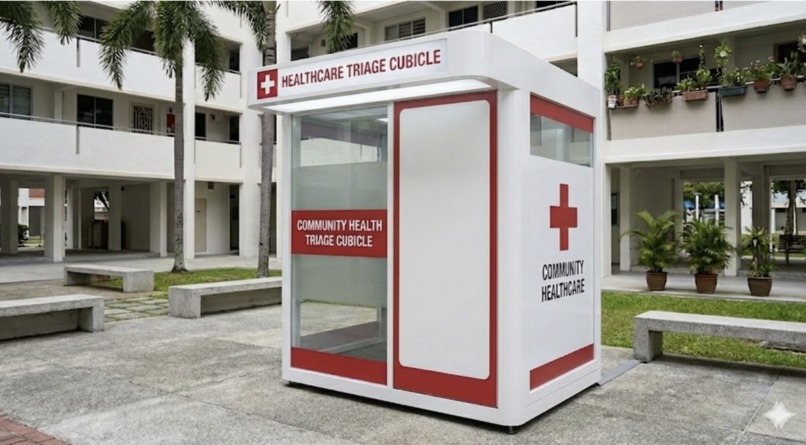
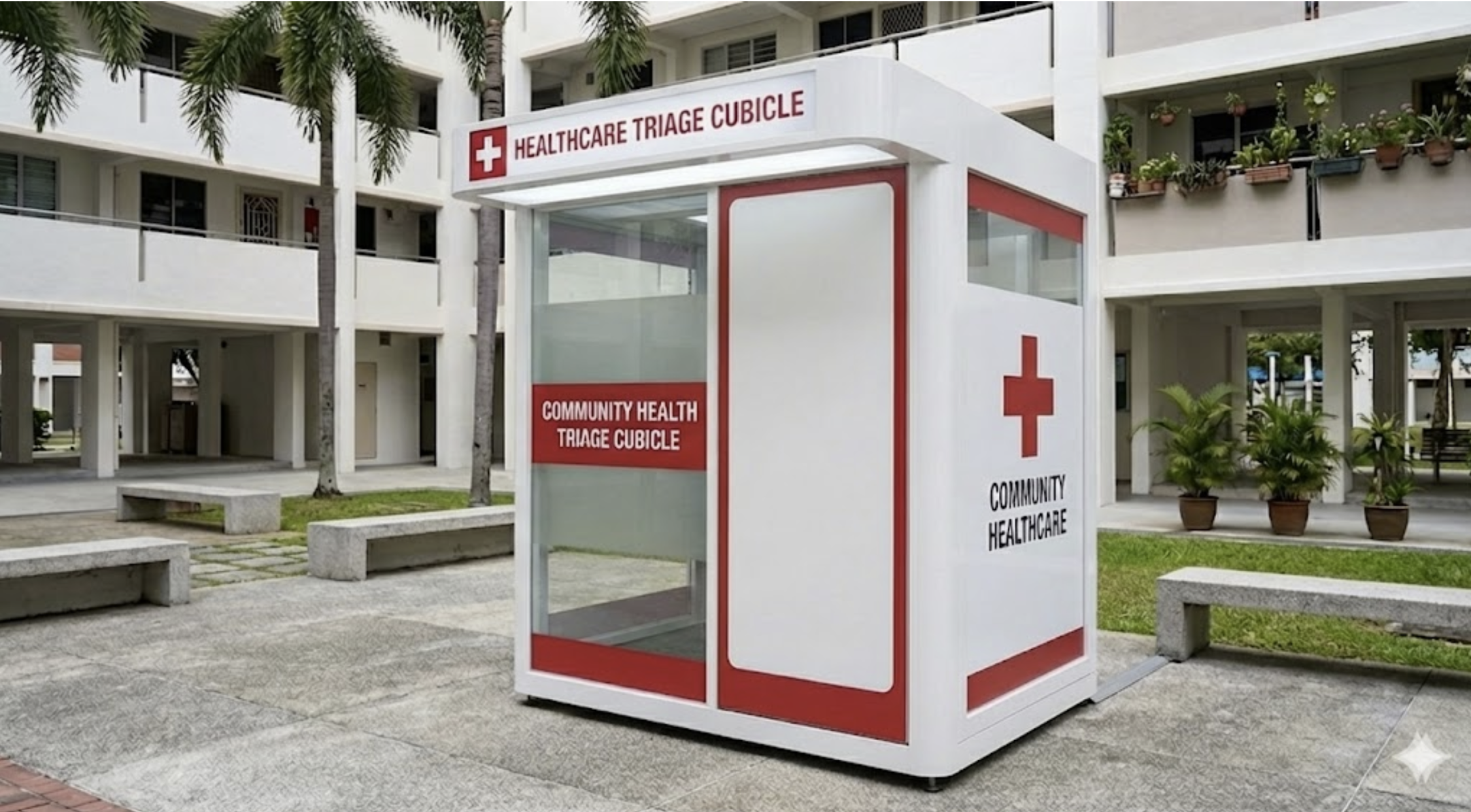
The exterior of our prototype and how it will look like to the public.
-
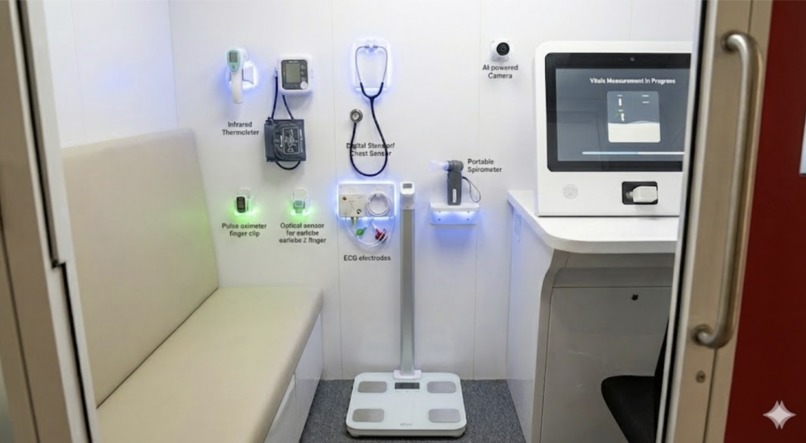
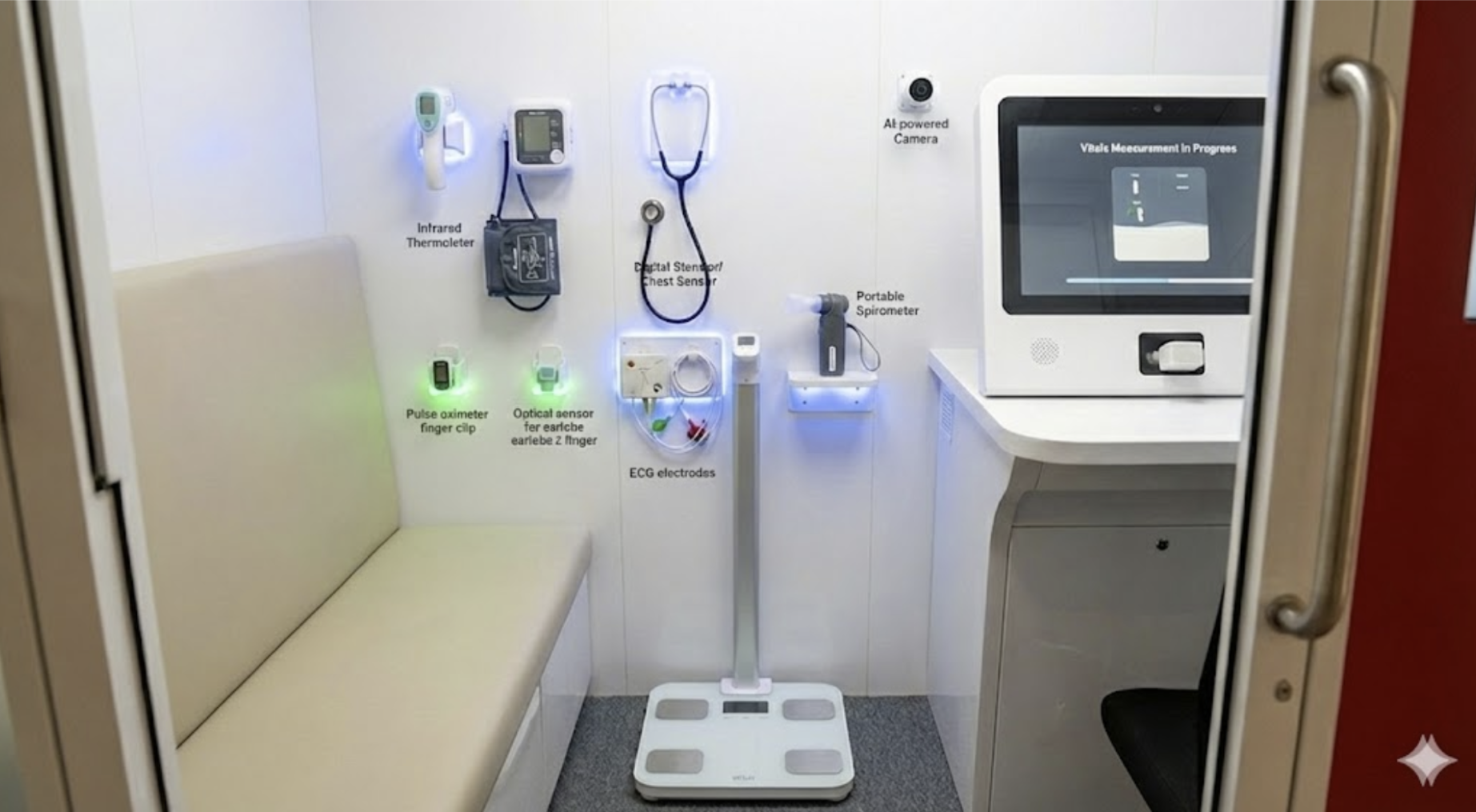
Inside the cubicle, patient interacts with the diagnosis terminal. Equipment on the left lights up when needed for patient self-examination.
-
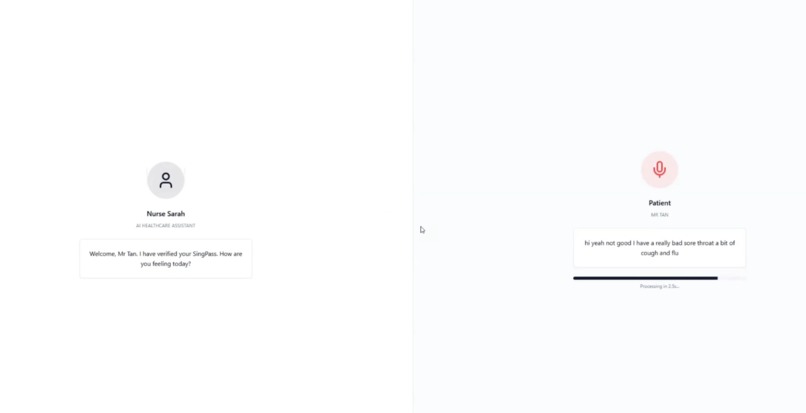
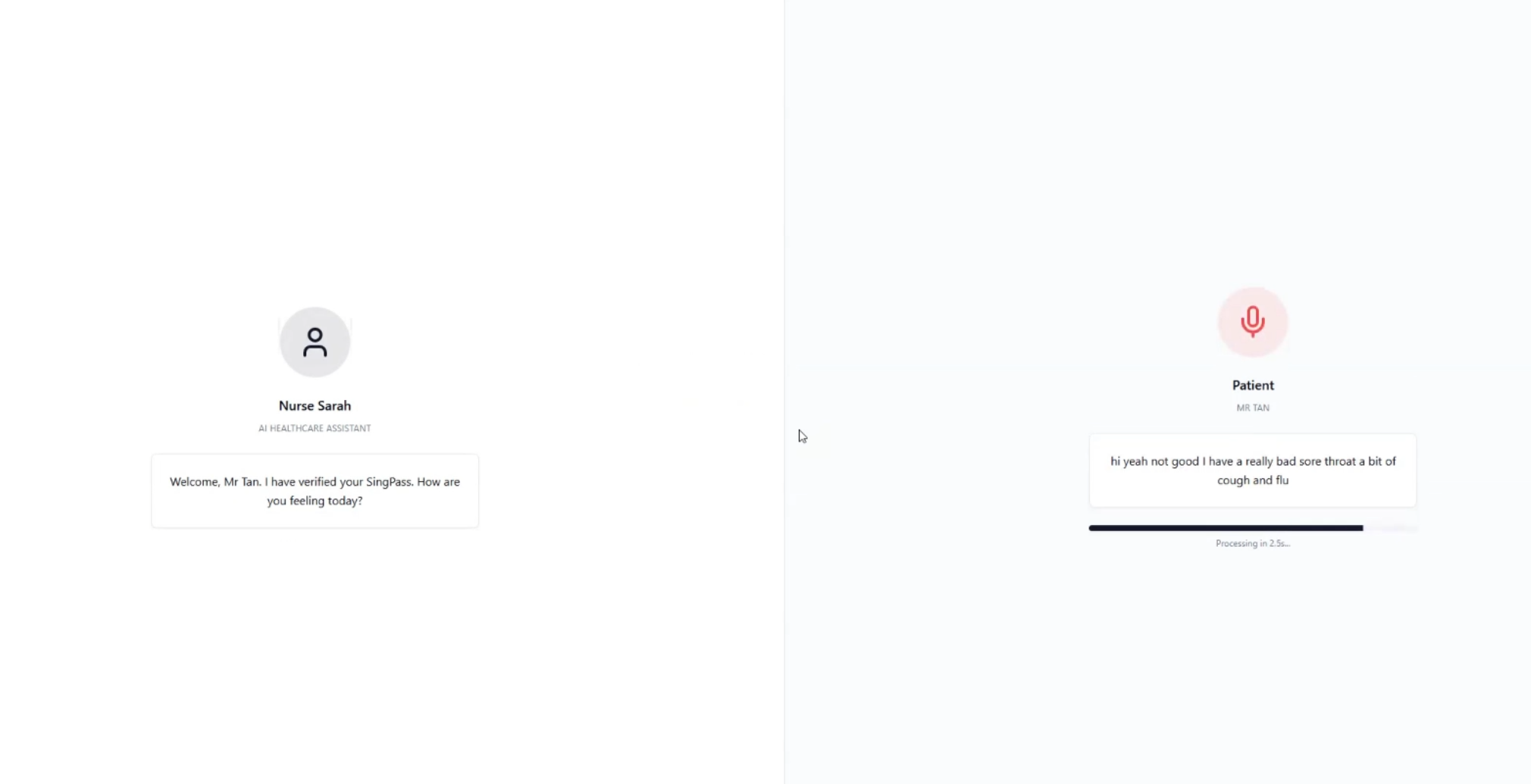
The terminal interface inside the cubicle when patient is providing details about symptoms they have, with speech-to-text translation.
The SmartLife Triage Hub project was born out of the systemic frustrations within Singapore's healthcare landscape, specifically the significant bottlenecks in Emergency Departments (EDs) and the fragmentation of patient journeys. Patients often seek care at the nearest hospital rather than the right one, a critical issue when time is of the essence for conditions requiring specific specialists. This misrouting leads to delayed treatment, unnecessary "hospital hopping," and ultimately wastes the crucial minutes of the "Golden Hour." Our inspiration was to develop a proactive, community-integrated solution to eliminate these wasted trips and ensure precise, immediate routing to the correct facility.
Our solution is a decentralised network of AI-powered medical cubicles deployed in hospital lobbies and HDB void decks. Utilizing advanced, non-invasive sensors, the cubicle performs an AI-powered risk assessment (not a full diagnosis) based on the patient's symptoms and history, generating a risk score and a Precise Routing Recommendation tailored to the patient's likely condition (e.g., stroke or cardiac risk). This system distinguishes itself from passive checkers by implementing Integrated Priority Queuing: for critical cases, the hub is designed to communicate with the destination hospital’s backend to generate a Priority Queue Number before the patient even leaves the cubicle. This functionality, coupled with the cubicle's role as a "Fast-Track Express" in hospital lobbies, ensures a seamless handover and drastically reduces the "door-to-doctor" time, essentially transforming the reactive health model into a proactive one.
The technical build focused on creating a functional, accessible, and hygienic prototype. The cubicle's physical design prioritizes accessibility, featuring a computing unit connected to simulated non-invasive sensors and an interface utilizing LED-guided medical instrumentation, where instruments light up when instructed for use, simplifying the process for the elderly. To maintain public hygiene in HDB void decks, an Automated Self-Disinfection System was integrated. Crucially, the core intelligence and routing function were simulated: the risk score was generated by a conceptual Machine Learning Classification Model running on a local environment or secure cloud server mockup. We simulated the Integrated Priority Queuing by creating a mock RESTful API endpoint with placeholder data to demonstrate the secure, real-time issuance of the queue number without performing actual database retrievals or hospital system integration. This architecture proved its capability to achieve a theoretical 90% reduction in door-to-doctor time for high-urgency cases, an accomplishment we are extremely proud of.
Despite the successful proof of concept, we faced significant challenges. The first was the Technical and Legal Hurdle of ensuring the AI output is strictly framed as an "AI-Powered Risk Assessment" and a "Routing Recommendation," given the limitations of non-invasive sensors to provide a definitive diagnosis. The most substantial challenge remains achieving real-time System Interoperability for the Priority Queueing, which would require complex regulatory and technical integration across different hospital IT systems which is a step we only mimicked in the prototype. Furthermore, deploying units in unsupervised community spaces raised concerns about Security and Vandalism, which we addressed by designing the unit to be durable and including the automated disinfection system. Moving forward, the project's next steps include partnering with a hospital cluster to pilot the actual system integration, expanding the sensor suite, and exploring integration with national digital identity systems for seamless patient data management.
Built With
- react18
- speechsynthesis
- tailwind-css
- typescript
- web-speech-api

Log in or sign up for Devpost to join the conversation.