-
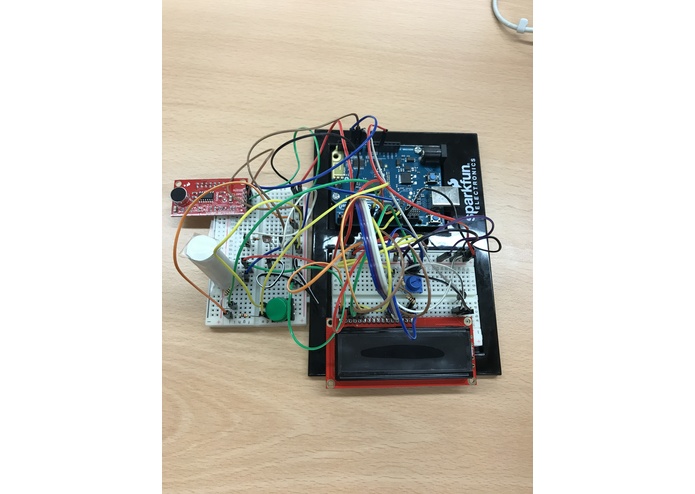
Arduino Board
-
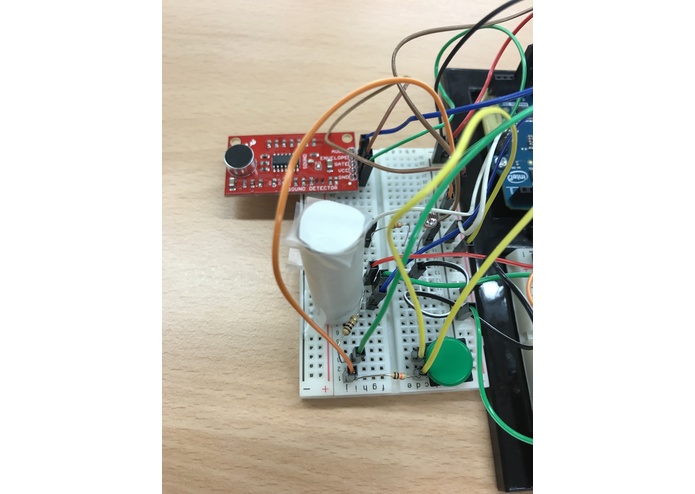
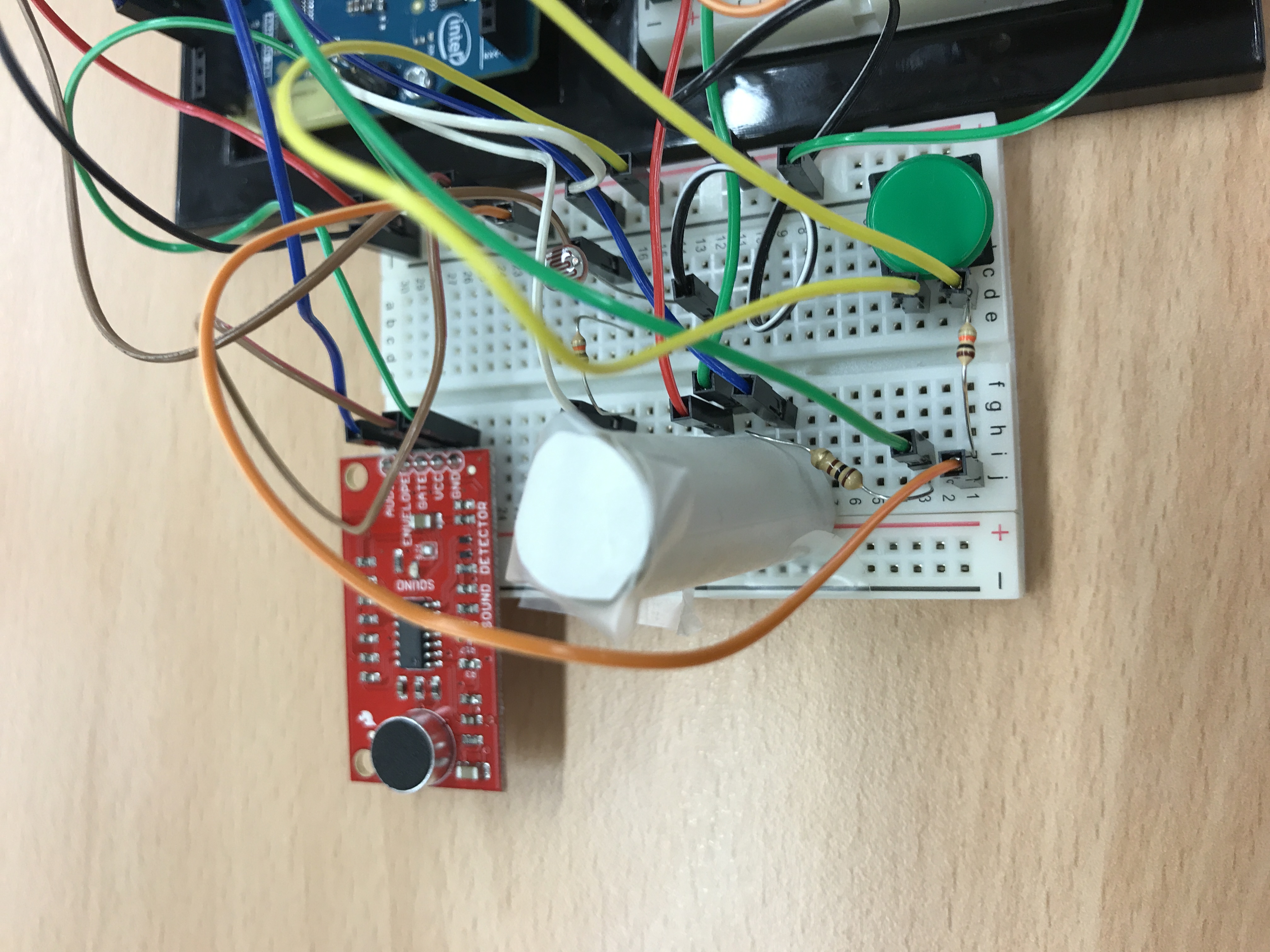
A detail of the "lamp", button, and noise sensor.
Inspiration
SmartLamp is aimed at primary-school kids and children with learning deficiencies or disabilities (e.g. children with autism). The main objective is that of creating a comfortamble environment that accompanies them during the daily activites.
What it does
The lamp measures temperature, noise level, and luminosity of the sorroundings in a continuos way. The default colour is purple. When the value of the temperature increases and this creates disconfort in the classroom (or distracts children) the lamp automatically turns to blue (but it can be easily programmed with different colours). We chose blue as the meaning and feelings associated with this color are those or calm and relaxation. When the noise increases the lamp starts blinking, thus working as a feedback for both children and teachers to reduce the noise that they are making. Also, the lamp is equipped with a button (signalling the "break time") that when pressed turns the light to green.
How I built it
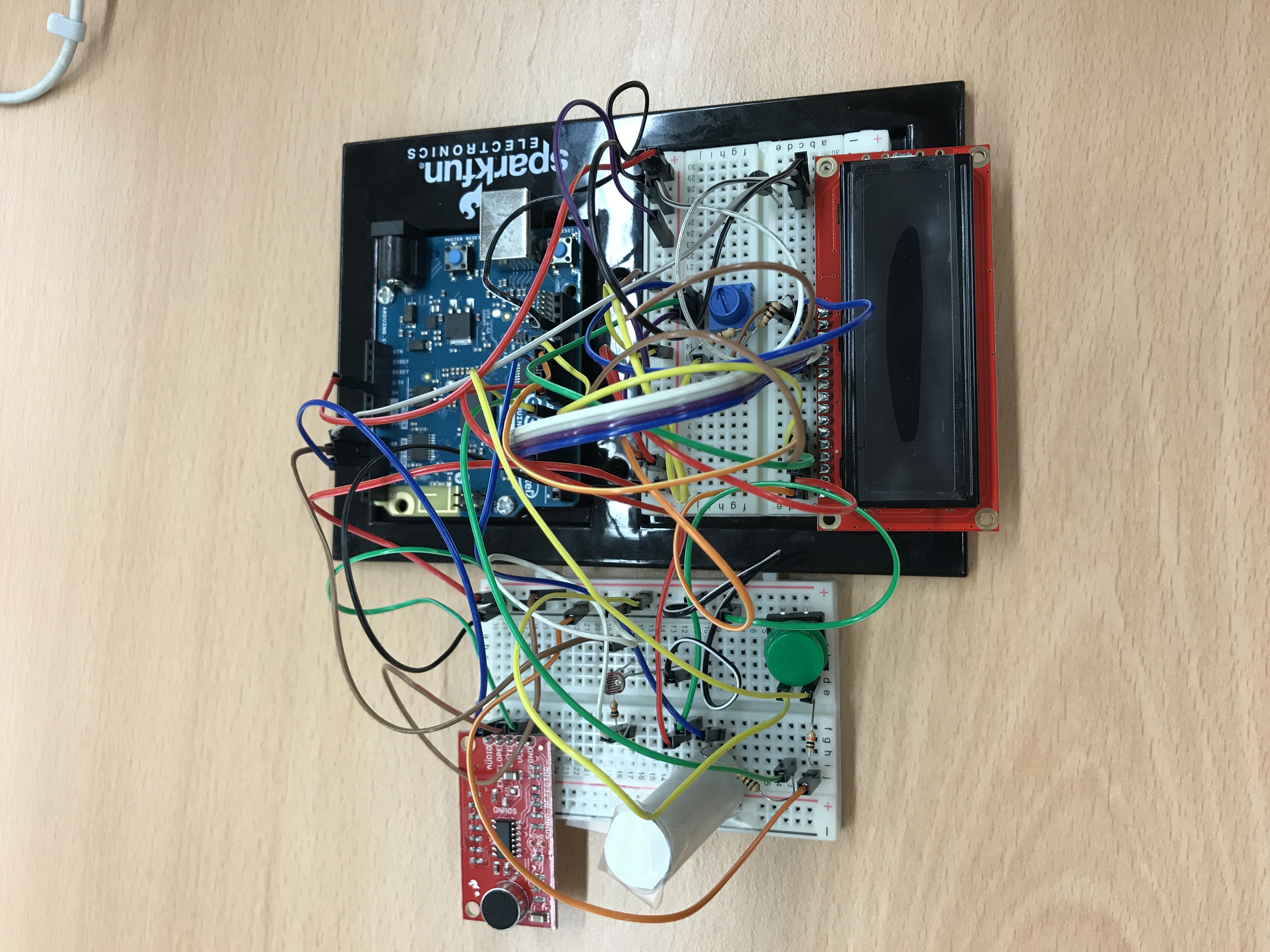
We have built the lamp using the SparkFun development kit: Arduino 101 connected to temperature, noise, light sensors, and a button as signals in input; and a single LED as output whose colour is modulated by the software.
Challenges I ran into
Getting to know the Arduino IDE and the programming constructs necessary to sinchronise the different tasks that are running in loop was definitely the hardest part.
Accomplishments that I'm proud of
We are proud of having developed a simple prototype of something useful for kids in education and for kids with special needs. Altough we are aware that this is a just a small step and a very simpe platform, we believe that it could be expanded with many more cases and features.
What I learned
From the practical perspective, we learned how to program the Arduino board and the basics electonics that we needed to build the circuit.
What's next for SmartLamp
Our idea is to add more options for the colours and how these should change depending on external factors as the time of the day (or depending on the classroom activities). Also, a way of taking into account the feedback that the children may give (even in the form of a simple feedback: "happy" and "sad" buttons) and record the parameters in the environment at each moment, so that the application could "learn" from the children response and develop a "pattern" to interpret their behaviour and reactions and modify the colours to influence the rooms accordingly.
