-
-
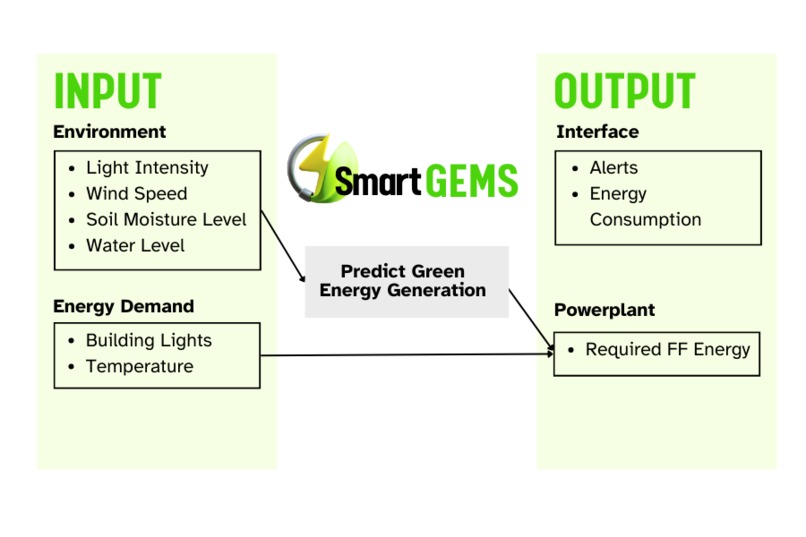
System Overview
-
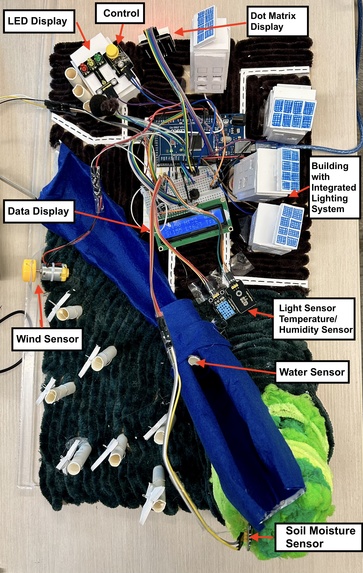
Display Top Down View
-

Display Side View

Inspiration 🌏
Energy is a big factor of the environment. As we move from environmentally damaging energy sources such as oil and natural gas to green energy sources including wind, water, solar, and geothermal we face the major challenge of inconsistency due to weather. Lack of sunlight and wind, or water-freezing temperature would cause blackouts and power shortages that conventional power grids can not resolve. Our project, the Smart Green Energy Management System (SmartGEMS), optimizes the energy source and distribution based on real time environment conditions and power demand which ensures maximum stability while using renewable energy sources.
What it does 🏙
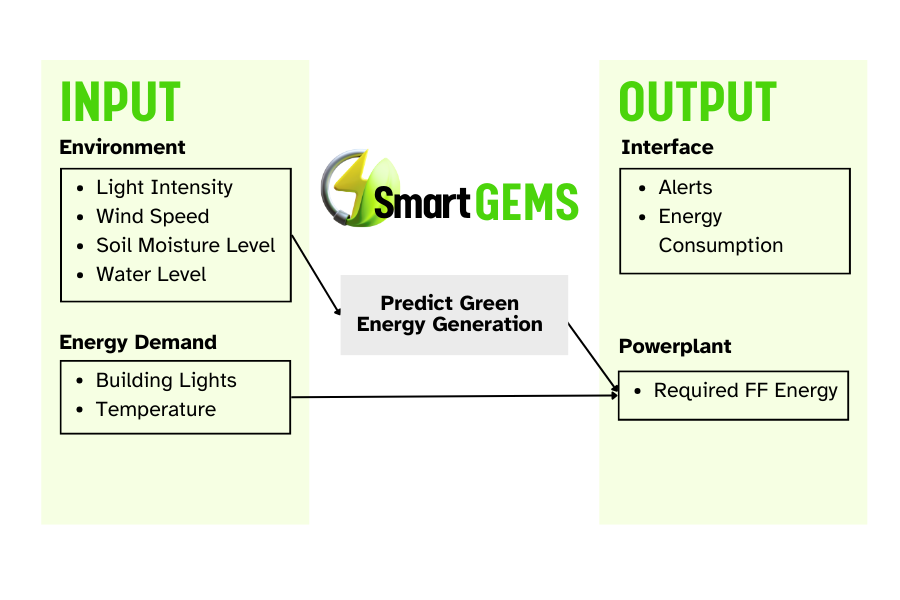
The Smart Green Energy Management System (SmartGEMS) is a display that models the implementation of a smart energy grid. It is able to detect real time instantaneous environment conditions, including the light intensity, water level, wind speed, etc, and optimize the allocation of energy sources. Based on the optimization, the model can effectively scale down the power generated by non-renewable energy sources, thus contributing to the sustainability and efficient energy use of the city. In addition, the system has a user-friendly interface, allowing both operators and residents of the city to visualize their energy use and providing tailored messages for more mindful energy use.
How we built it ⚙️
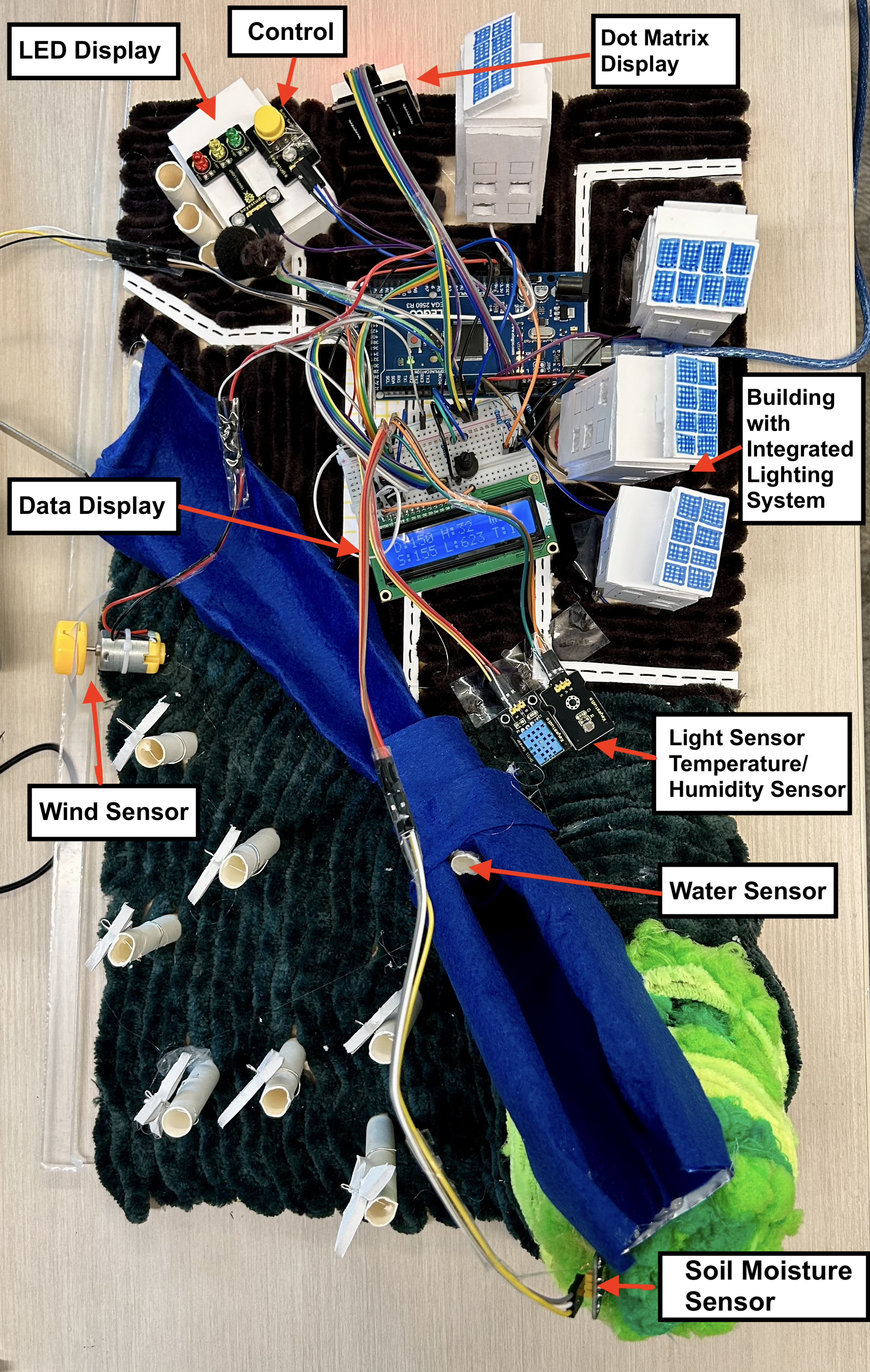
Perhaps what catches one's eye is the craft of the city model, yet the technology integrated is just as sophisticated. We used various types of sensors, such as soil moisture sensor and light sensor to perform real-time data collection. In addition, we built a wind sensor ourselves that is able to successfully measure wind speed. We used simple output devices, such as LEDS, to show the use of energy in residential areas, which can also be manually controlled to add a level of interactivity. The current status for non-renewable energy use is outputted using a dot matrix display and a three-colour light display. We used Streamlit to create a user-friendly interface and incorporated OpenAI for analysis and interpretation of the data collected, thus providing users advice on sustainable energy use. And of course, we gave it our all for the look of the model!
Challenges we ran into 🤔
None of us were very familiar with hardware components, thus a major challenge was integrating hardware devices into our design, not to mention the variety of these components. We also spent quite some time integrating front-end and back-end software with these hardware components and generating real-time graphs for the first time.
Accomplishments that we're proud of 🥳
We are proud of being able to incorporate hardware components into our system and finalize our design with a cohesive model. In addition, seeing the displays lighting up and sensors measuring the conditions around us is extremely rewarding in itself. Everything was made from scratch and we are super proud of how well everything all came together in the end.
What we learned 📝
We learned a lot about how hardware components, such as arduinos, are connected and programmed. Through hands-on experience, we learned how to successfully integrate physical prototypes with software components, thus creating a more rounded project. In addition, we conducted lots of research on efficient energy grids and learned more about the challenges and benefits around these types of smart technologies.
What's next for SmartGEMS: Green Energy Management System 🗺
Once the system has been tested rigorously, we wish to scale it up and modify our models based realistic environments and data. We also wish to implement and train a Machine Learning Model based on the real data collected in the city, thus making better and more refined responses for residents who are interested in learning about how to optimize their energy use.


Log in or sign up for Devpost to join the conversation.