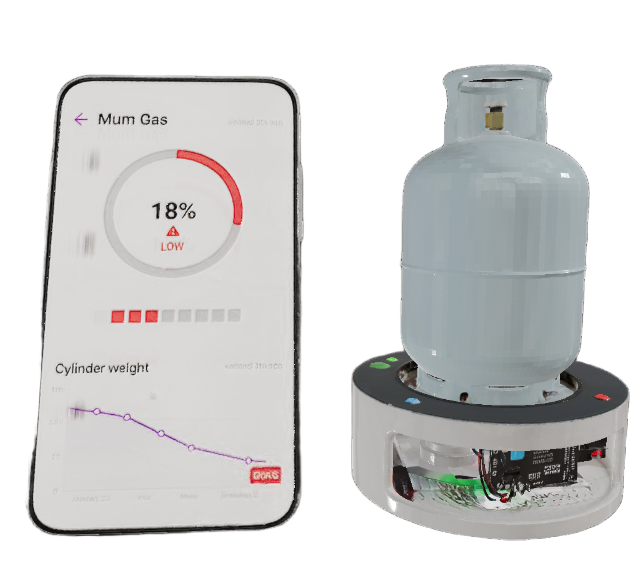
Inspiration: The idea for SmartGas was inspired by a common struggle among CMU-Africa students — running out of cooking gas unexpectedly, often at the worst times. This daily frustration revealed a deeper problem of time loss, stress, and poor resource tracking in student apartments.
What We Learned: Through user interviews, we discovered that most students do not monitor their gas levels and rely on guesswork or last-minute vendor calls. We learned the importance of designing solutions that fit seamlessly into students’ busy routines while offering both convenience and reliability.
How We Built It: Our team developed an IoT-based system using a load cell (weight sensor) placed beneath the cylinder, connected to a microcontroller with Wi-Fi and GSM modules for data transmission. A mobile app displays real-time gas levels, sends alerts when the gas is low, and automatically notifies vendors for refills. The system also tracks cylinder health to ensure safety.
Challenges Faced: We encountered hardware calibration issues when ensuring accurate gas weight readings and faced network connectivity challenges due to inconsistent Wi-Fi coverage. Integrating dual communication (Wi-Fi + GSM) required additional coding and testing to achieve real-time synchronization. Despite these hurdles, we developed a scalable prototype that effectively addresses a real pain point within our community.


Log in or sign up for Devpost to join the conversation.