Inspiration
Malnutrition remains a major public health challenge in India. Millions of children under the age of five suffer from stunting, wasting, and underweight conditions, especially in rural and tribal regions. Although government programs such as POSHAN Abhiyaan and ICDS exist, frontline health workers often lack real-time tools to quickly detect malnutrition and provide personalized dietary guidance. This inspired us to create CNIS – a Climate Nutrition Intelligence System that uses AI, climate data, and health indicators to support early detection and better nutrition decisions.
What it does
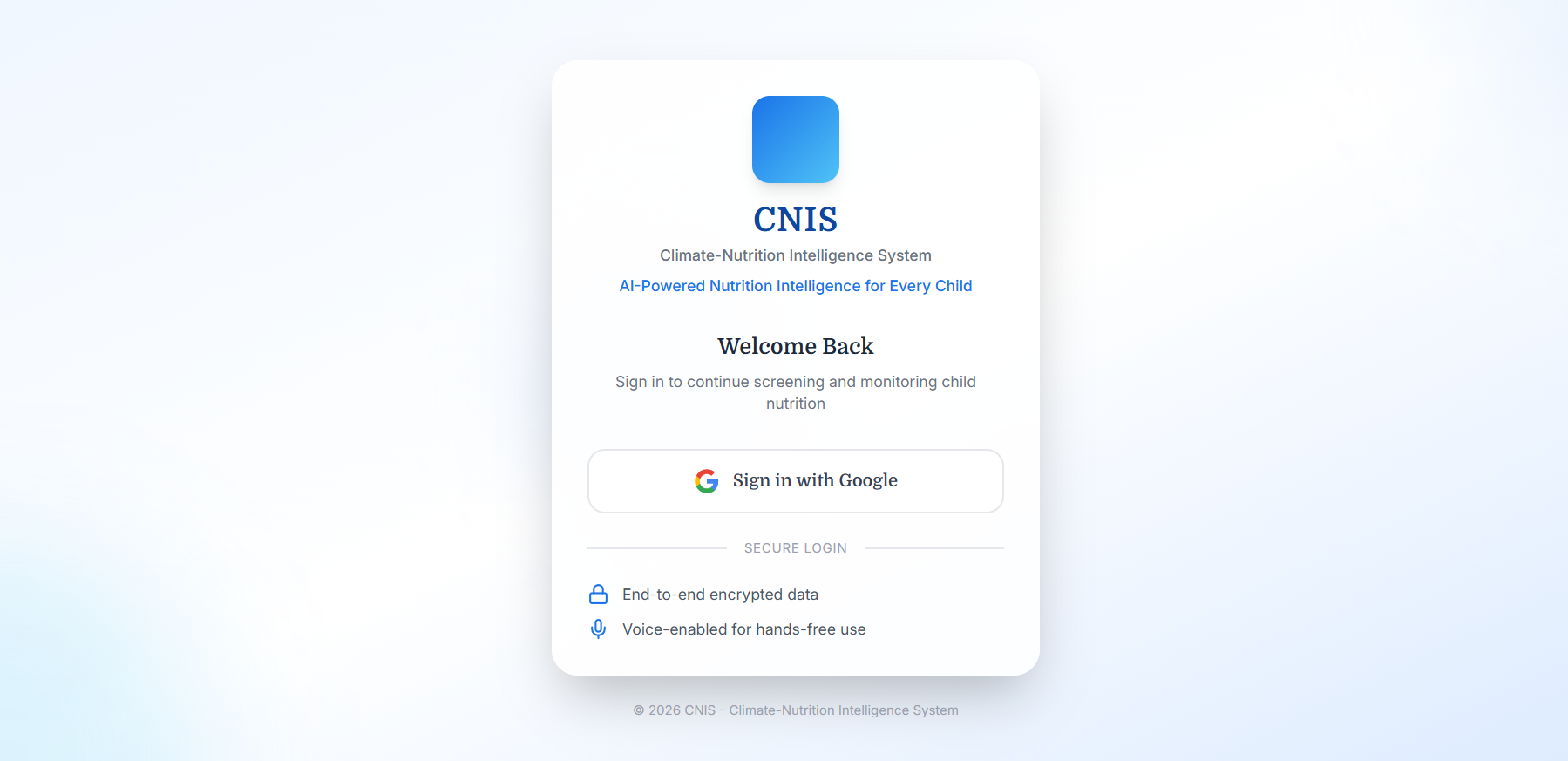
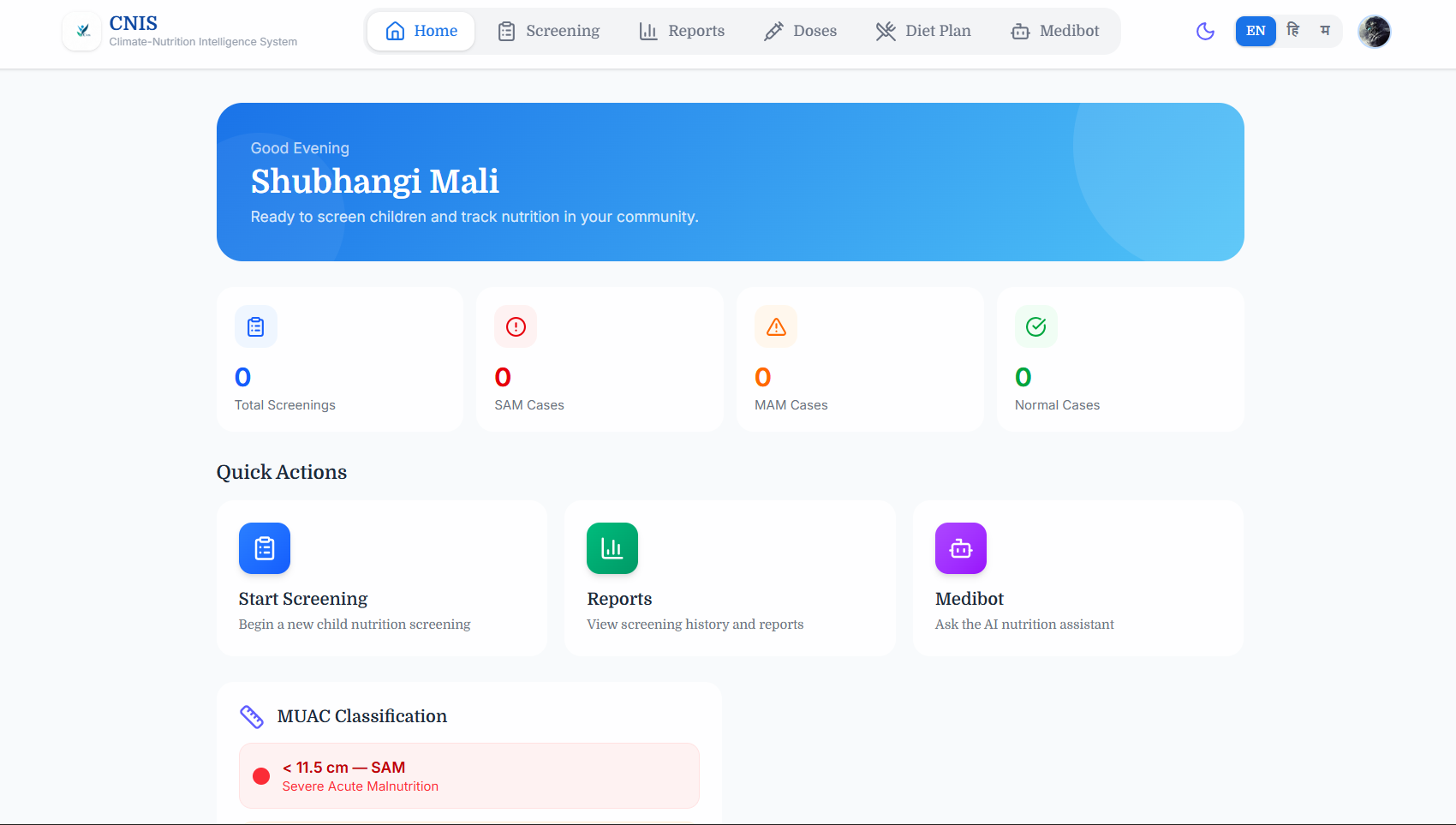
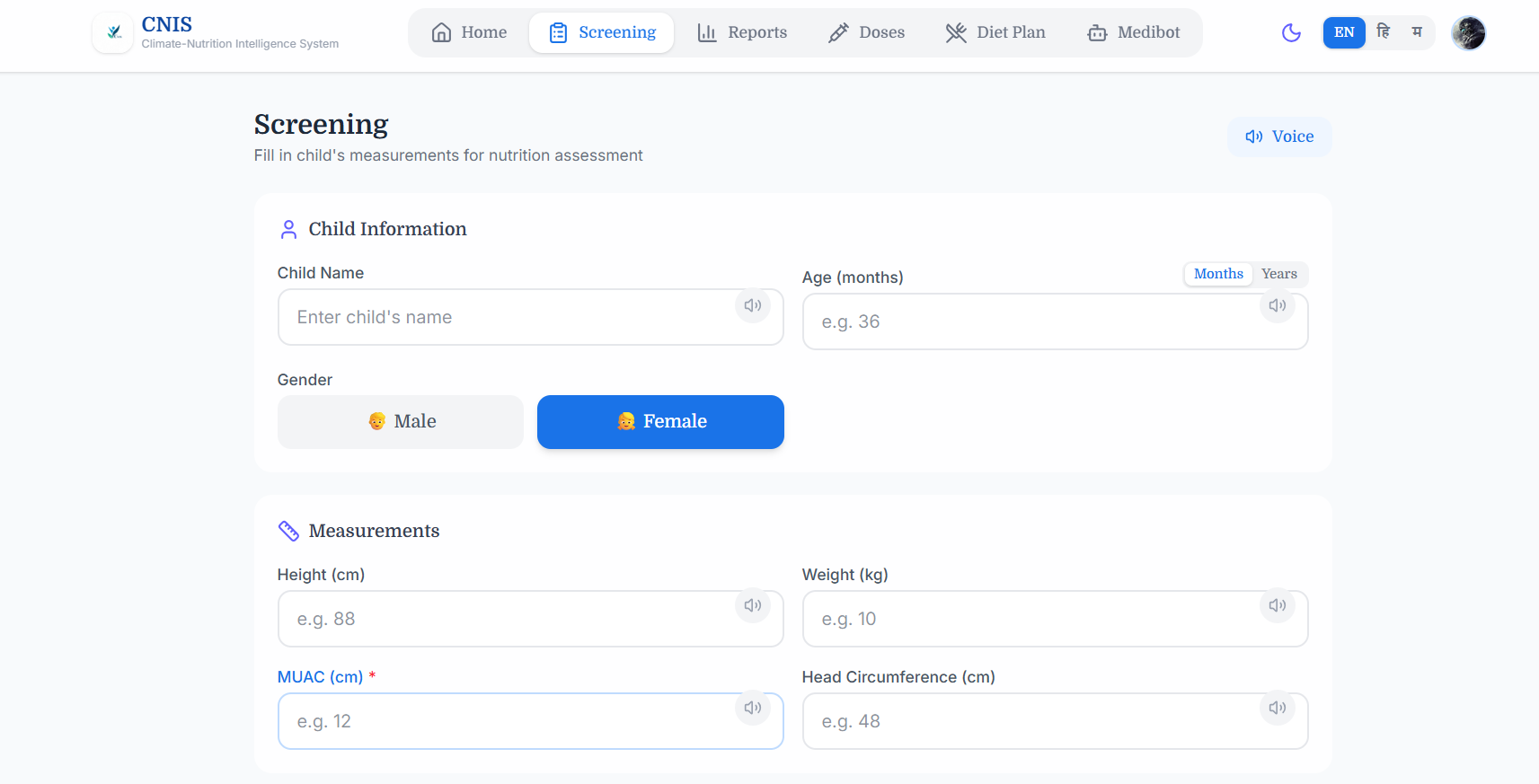
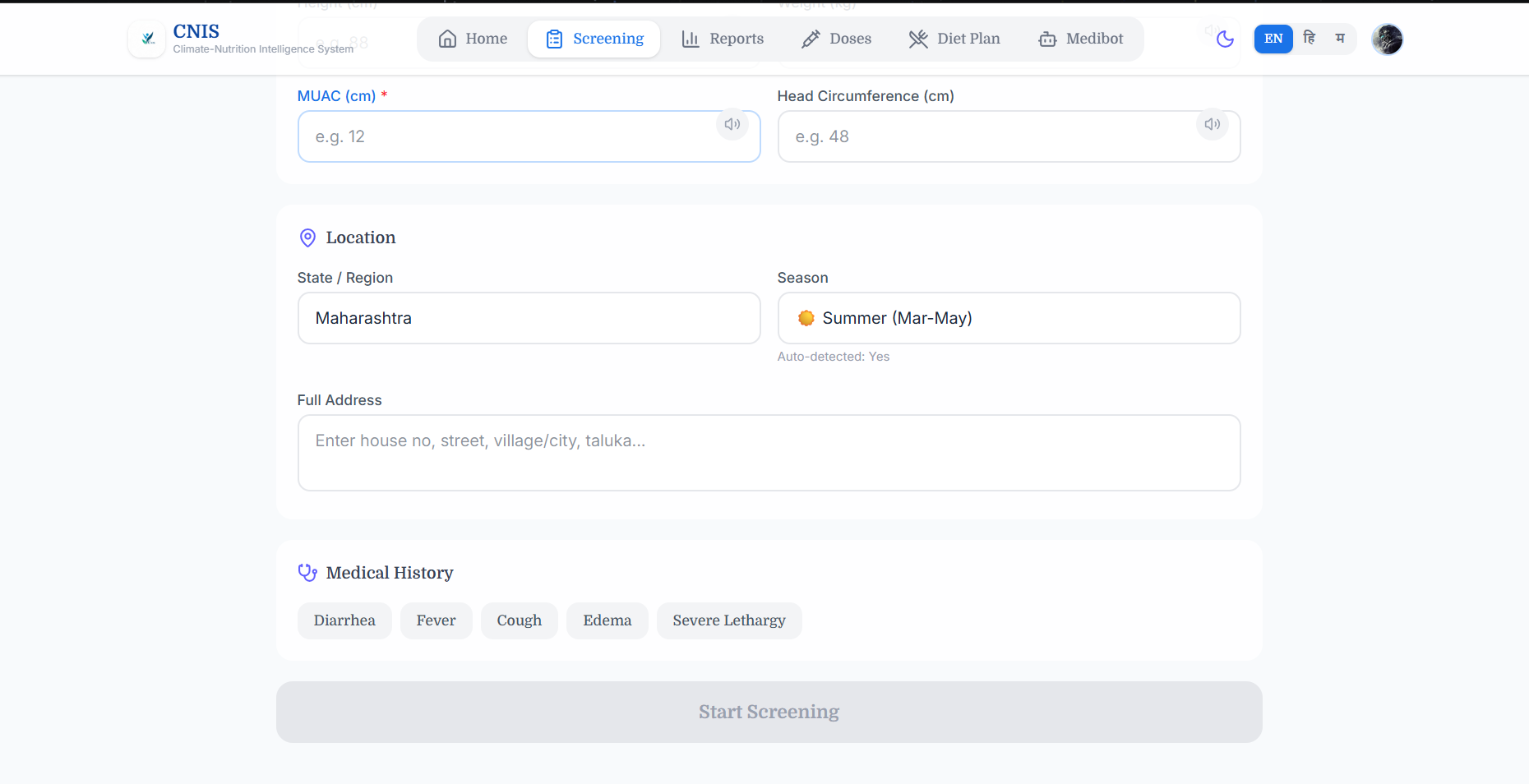
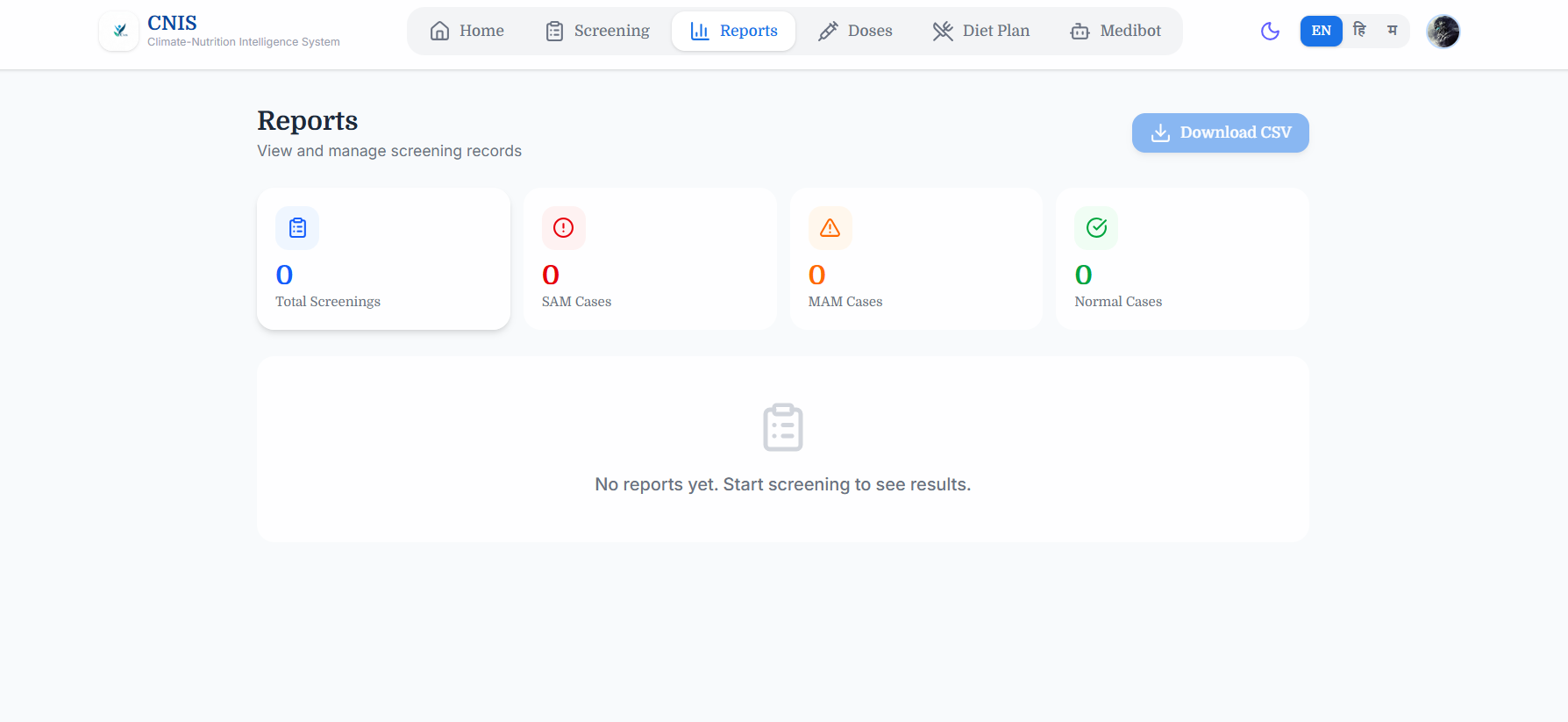
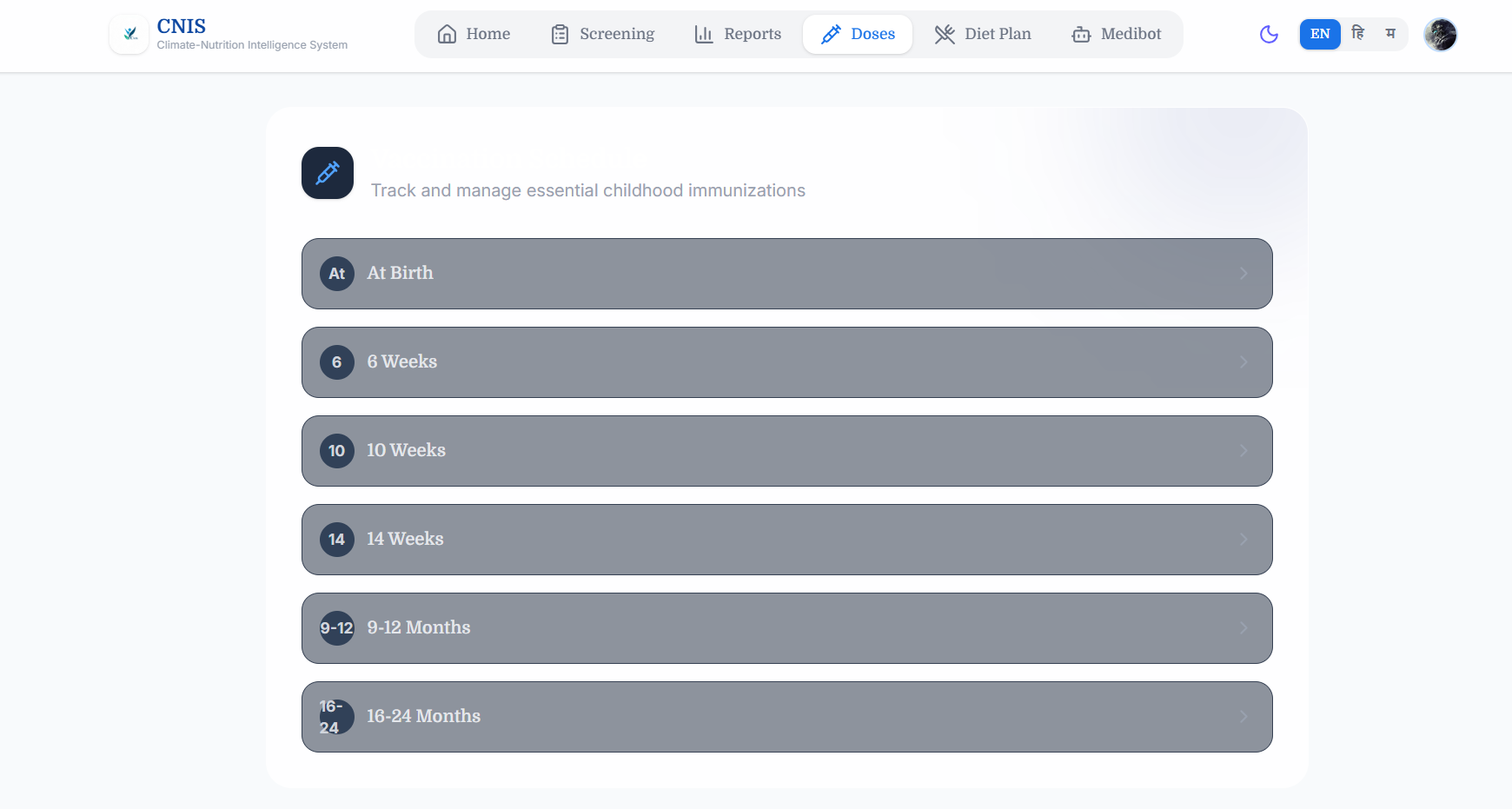
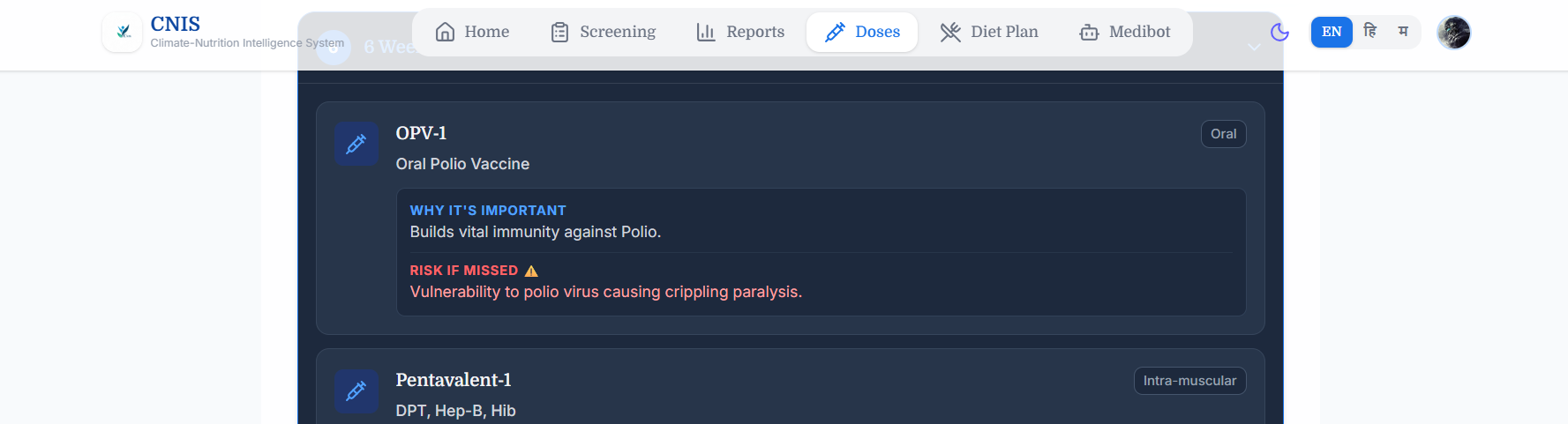
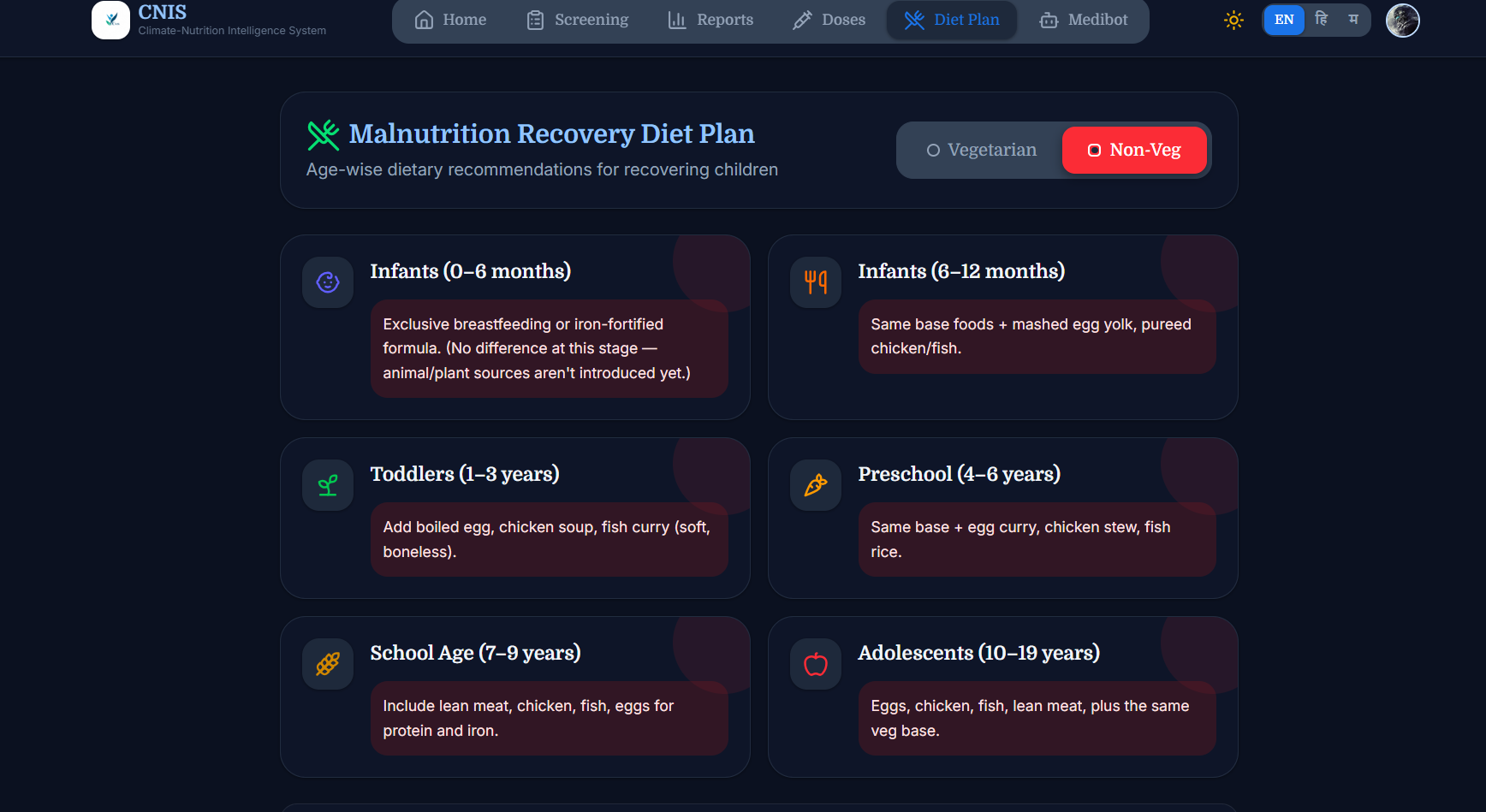
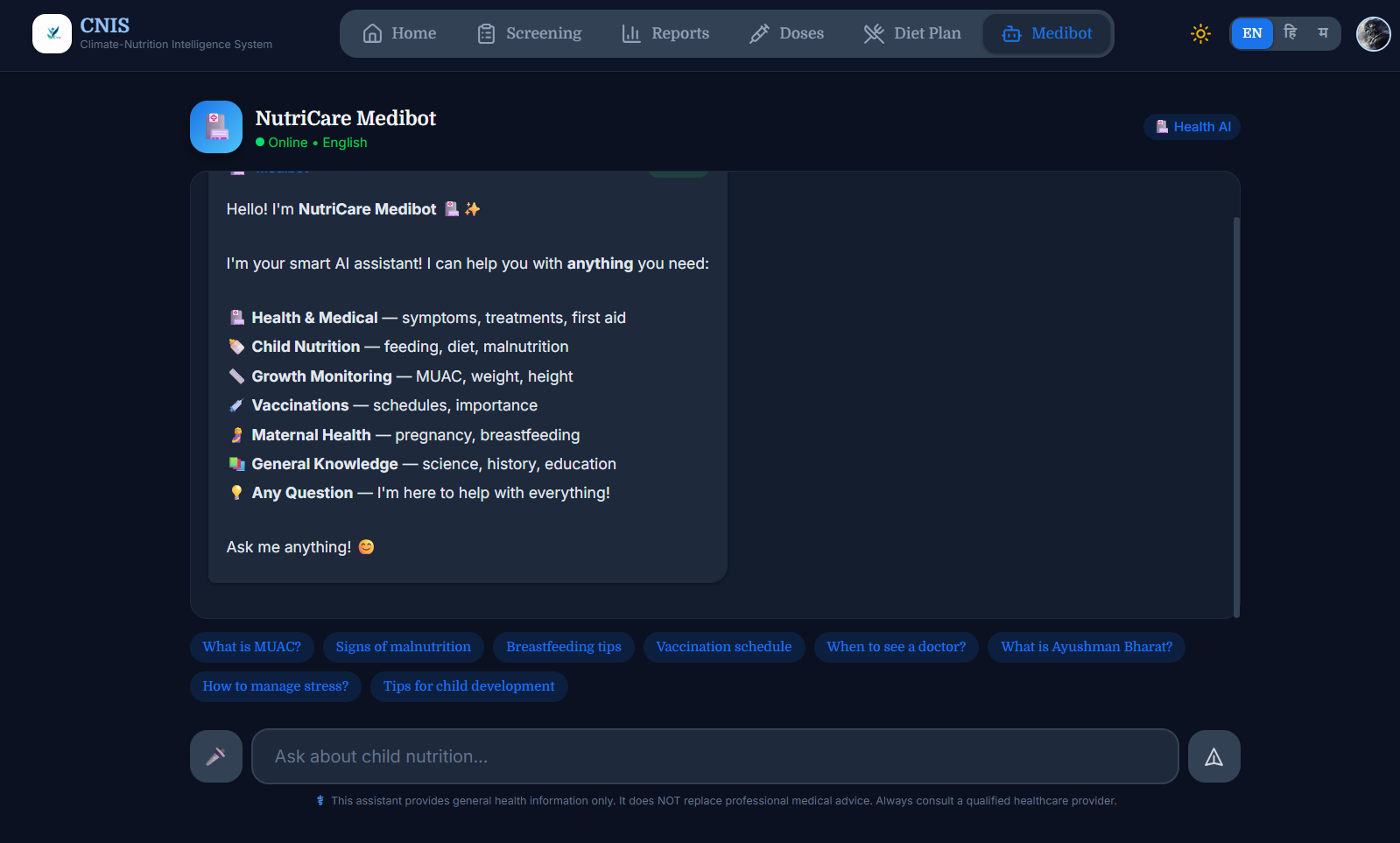
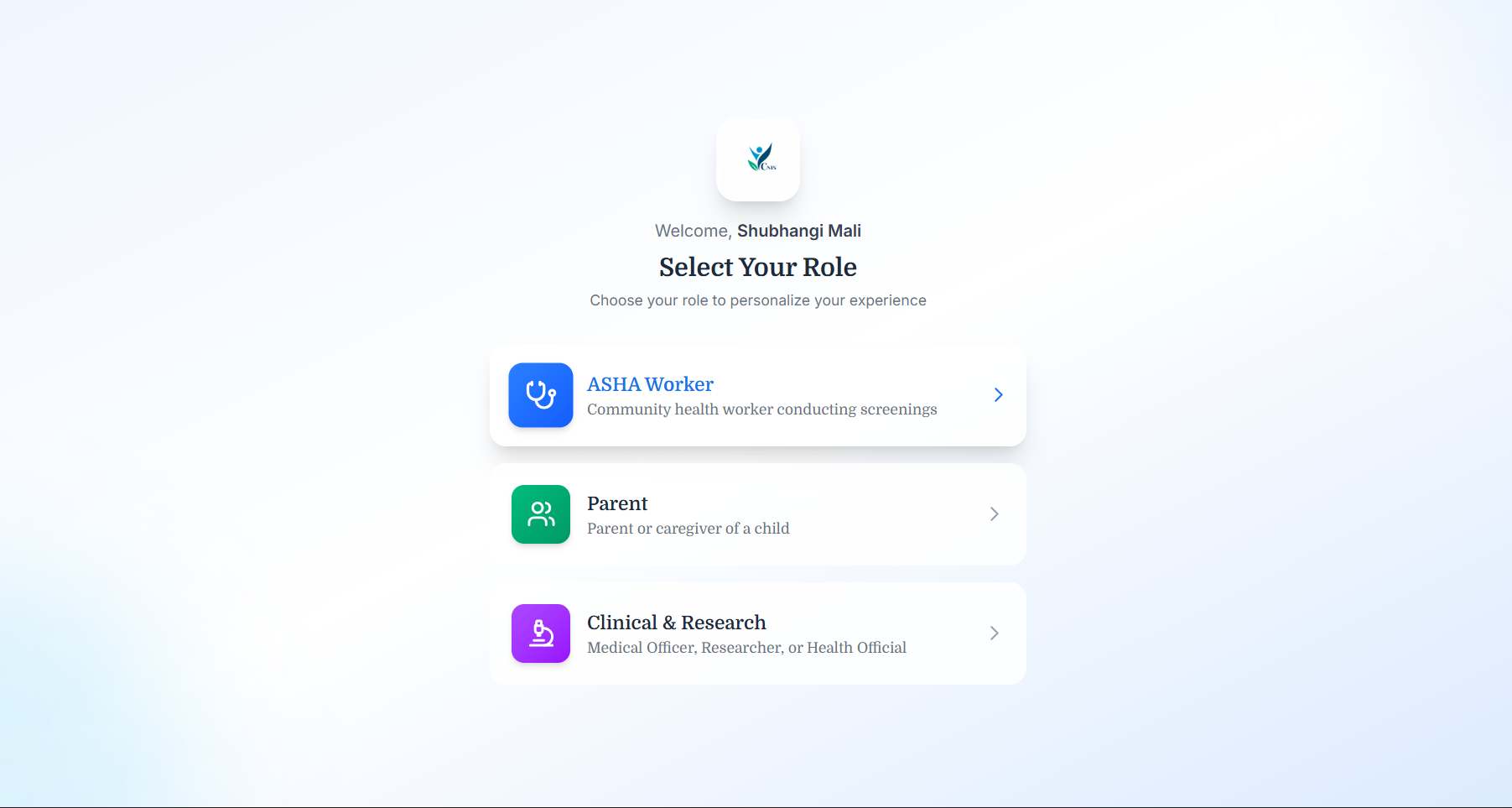
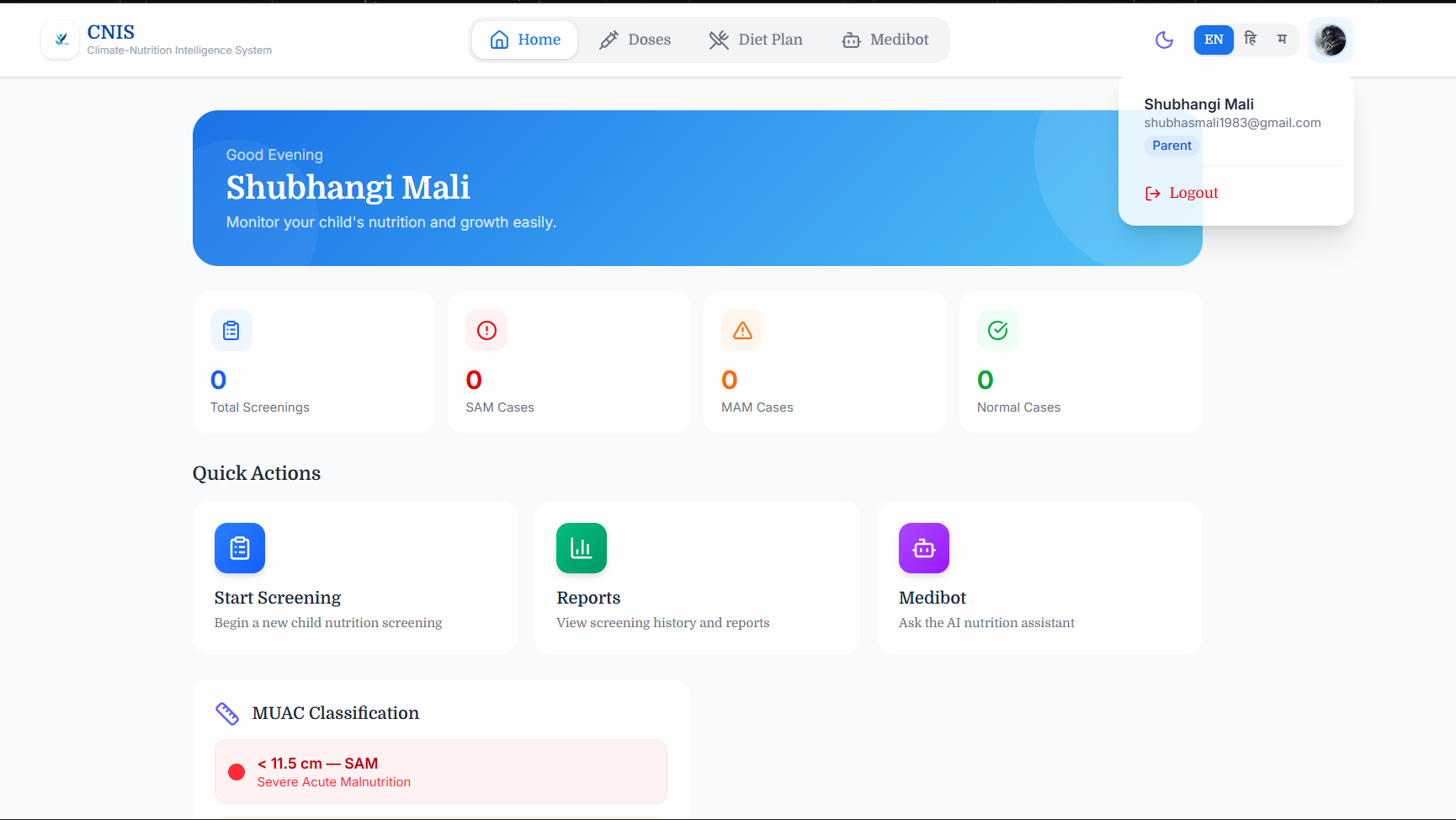
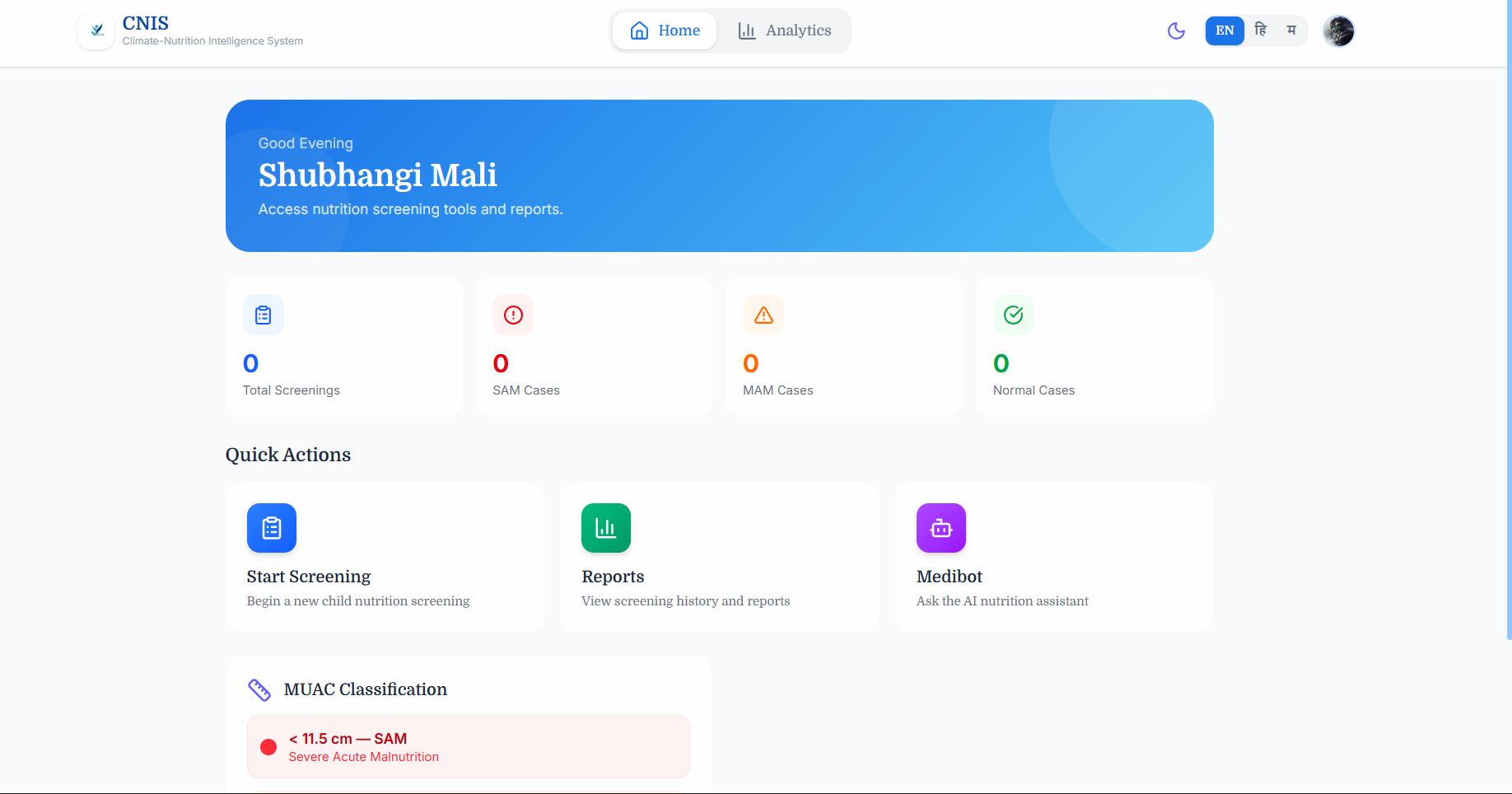
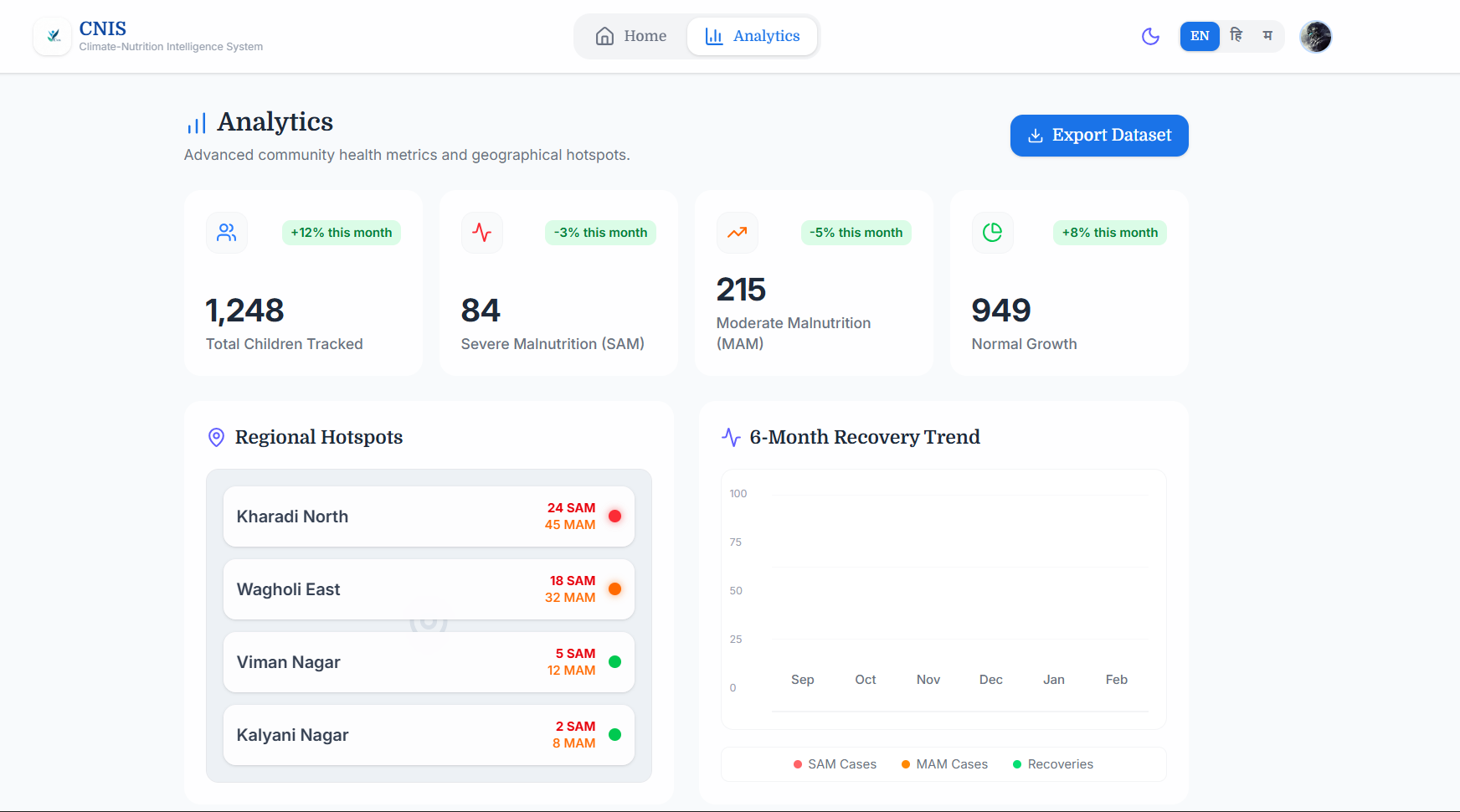
CNIS is an AI-powered web platform designed to detect malnutrition risks in children and provide personalized nutrition guidance. The system collects child health information such as age, height, weight, and location. It analyzes this data along with climate and environmental conditions to identify nutrition risks. Based on this analysis, the platform suggests suitable diet recommendations using locally available foods. CNIS also integrates additional features such as vaccination tracking, seasonal diet recommendations, and a voice-based nutrition assistant to support frontline healthcare workers and parents.
How we built it
The system was developed using modern web technologies. The frontend is built with React (Vite) and JavaScript to create a fast and responsive user interface. Firebase Authentication provides secure login functionality, while Firebase Firestore stores health records and vaccination data. TensorFlow.js is used for AI-based analysis and image validation, and Gemini AI API powers the intelligent chatbot. Voice interaction is implemented using Web Speech API and SpeechSynthesis API. The platform is deployed using Vercel for scalable and reliable hosting.
Challenges we ran into
One of the main challenges was integrating multiple technologies such as AI models, voice recognition, and cloud databases into a single platform. Ensuring accurate nutrition recommendations based on health indicators and seasonal variations was also challenging. Another difficulty was designing an interface that remains simple and accessible for frontline healthcare workers who may have limited technical experience.
Accomplishments that we're proud of
We successfully built an integrated platform that combines AI, climate intelligence, and healthcare support in a single system. The project demonstrates how technology can assist frontline workers in early malnutrition detection and decision-making. We are proud of implementing features such as AI-powered nutrition guidance, multilingual voice interaction, vaccination tracking, and seasonal diet recommendations within a scalable cloud-based architecture.
What we learned
Through this project, we gained valuable experience in building AI-powered web applications and integrating multiple technologies such as React, Firebase, TensorFlow.js, and cloud APIs. We also learned how technology can be designed to solve real-world healthcare challenges, particularly in resource-constrained environments.
What's next for CNIS "Climate Nutrition based Intelligent System"
In the future, we plan to enhance the system with improved AI models for more accurate nutrition risk prediction. We also aim to add offline functionality for rural areas with limited internet connectivity, integrate with government health databases, and expand multilingual support to reach more communities. Our long-term goal is to deploy CNIS as a scalable platform that can support national child health and nutrition programs.
Built With
- firebase-authentication
- firebase-cloud-functions
- firebase-firestore
- gemini-ai-api
- i18next
- javascript
- react-(vite)
- speechsynthesis-api
- tensorflow.js
- web-speech-api


Log in or sign up for Devpost to join the conversation.