-
-
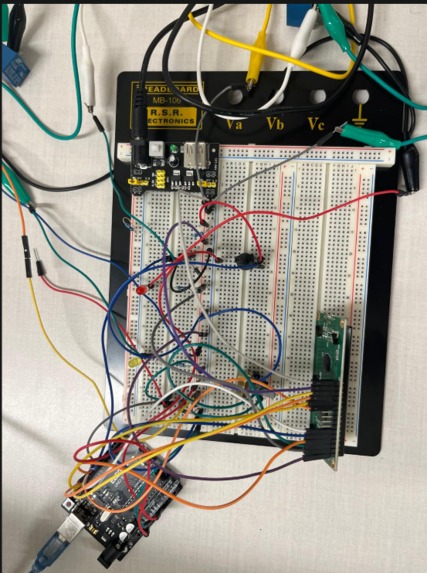
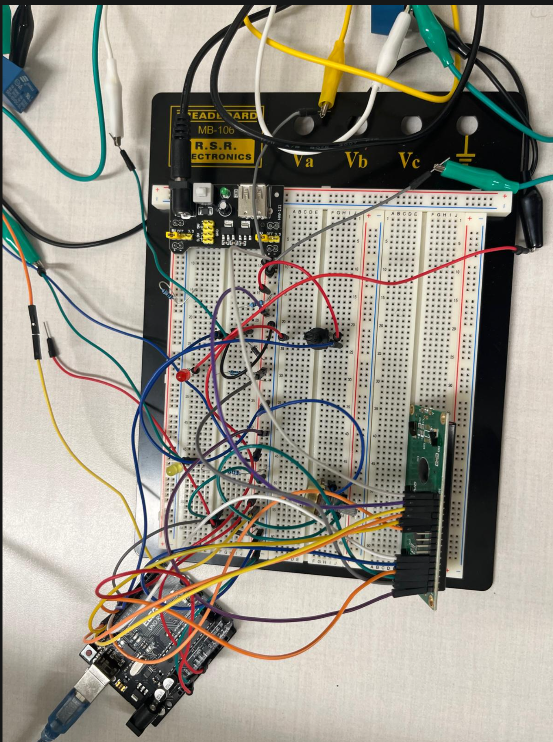
Wiring
-
Inspiration
Living in South Florida, we are front-row to the growing pains of a rapidly developing city. The changing future of Miami's infrastructure where massive urban expansion clashes with extreme weather and aging electrical grids gave us our core inspiration. We realized that relying on a stagnant, traditional AC grid is no longer viable. We wanted to build something highly resilient: an autonomous system that "perceives" its environment, detects failures, and makes real-time decisions to keep critical infrastructure alive when everything else goes dark.
What it does
An autonomous system that "perceives" its environment, detects failures, and makes real-time decisions to keep critical infrastructure alive when everything else goes dark.
How we built it
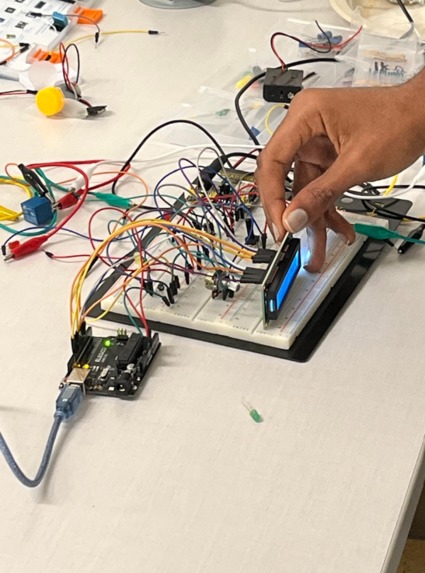
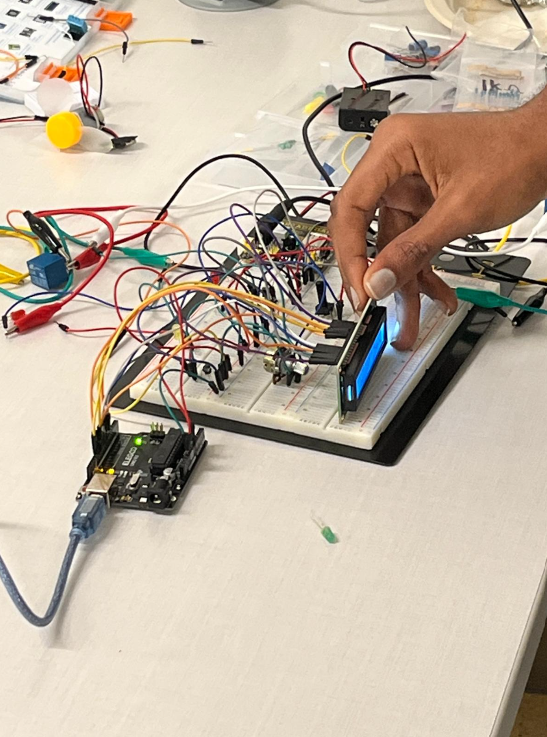
We engineered a smart grid prototype designed to continuously monitor incoming power lines. The core of the project relies on real-time sensor data fed into our Arduino microcontroller. We programmed the logic to calculate the total power consumption using the fundamental relationship P = V * I. When the system detects that the main grid voltage has dropped below a critical threshold, it instantly executes a failover protocol.
Challenges we ran into
In theory, the logic was flawless. In practice, hardware is unforgiving. Bridging the gap between our computer engineering concepts and raw, physical reality was by far our biggest hurdle. First, getting the wiring up turned into a massive logistical puzzle. Then came the relays. Working with the physical relay modules was incredibly finicky. We battled with mechanical switching delays and had to clean up the control signals from our microcontrollers to prevent rapid clicking and voltage spikes. Figuring out the exact physical timing to ensure the switch happened fast enough to maintain "continuous" energy tested our patience, our debugging skills, and our sanity.
Accomplishments that we're proud of
We are extremely proud of showing up and trying something new. We walked in a little insecure and worried but came out happy and confident that we built something from 0 to 100 in a little less than 2 days. I'd say the thing we are most proud of is the teamwork and bonding, we gained a deeper connection throughout the whole team that will carry on through many years!
What we learned
This project pushed us completely out of our comfort zone. We learned that building systems that autonomously react to their environment requires more than just optimized code—it requires a meticulous, resilient physical architecture. We walked away from this hackathon with a much deeper respect for power electronics and the absolute confidence that we can build robust, real-world engineering solutions.
What's next for SmartGrid
Our next plans are to use software simulations to demonstrate how our ideas would work on a larger scale. Currently its stuck at 2 loads, but we have hopes of reaching 5+!
Built With
- arduinor
- battery
- breadboard
- c++
- circuits
- led
- relay

Log in or sign up for Devpost to join the conversation.