-
-
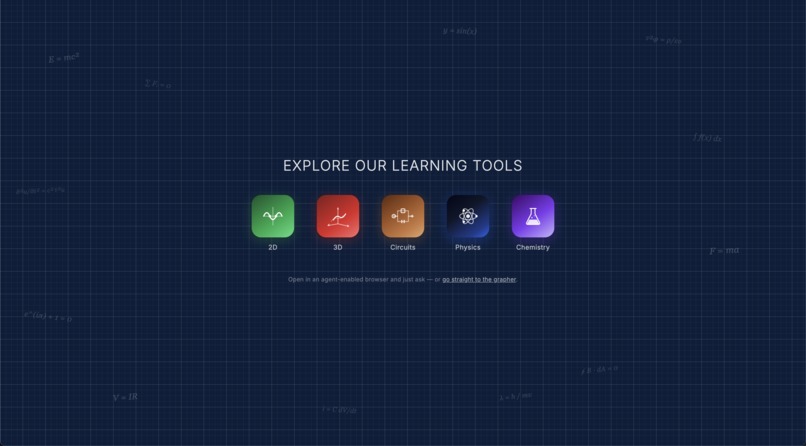
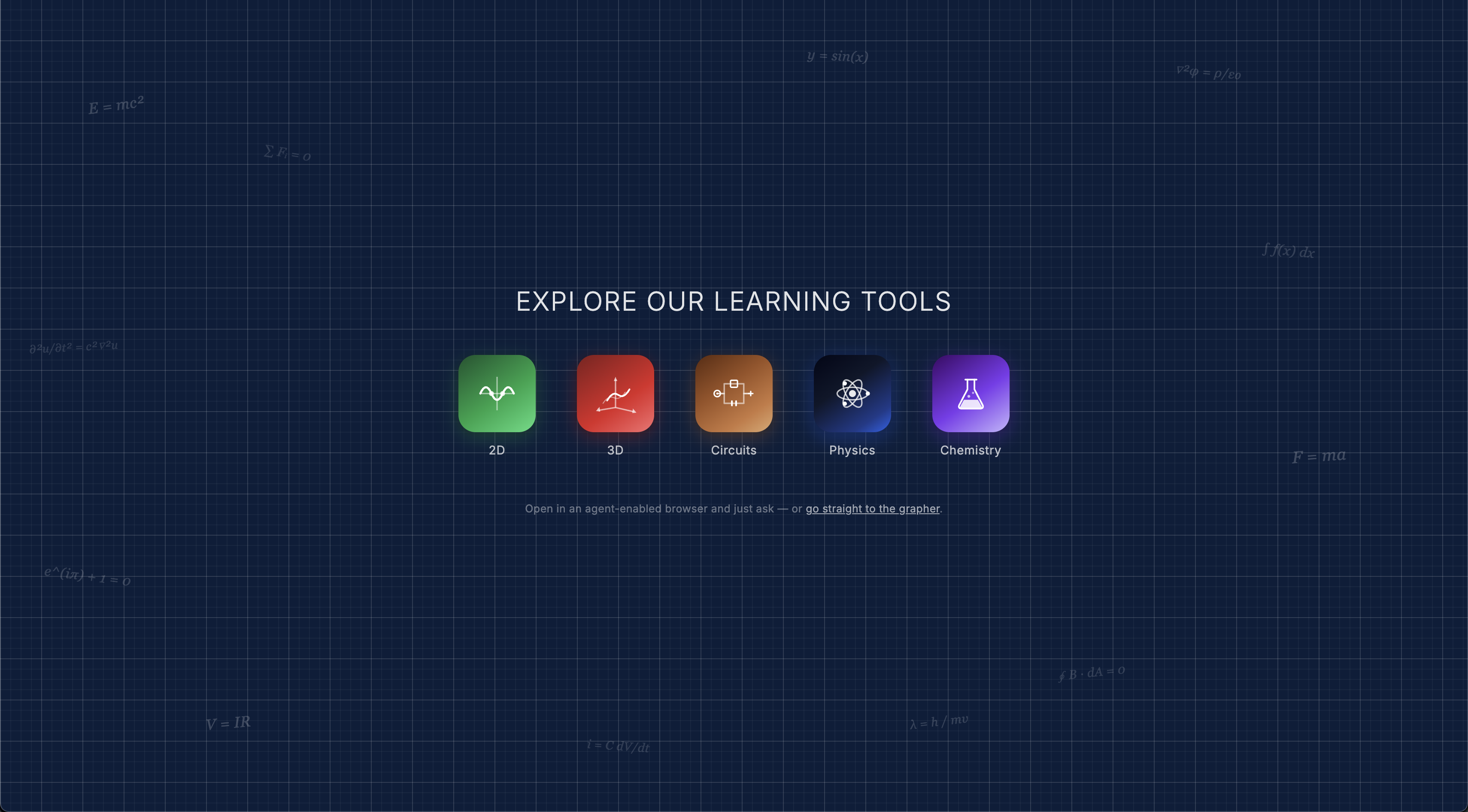
main menu
-
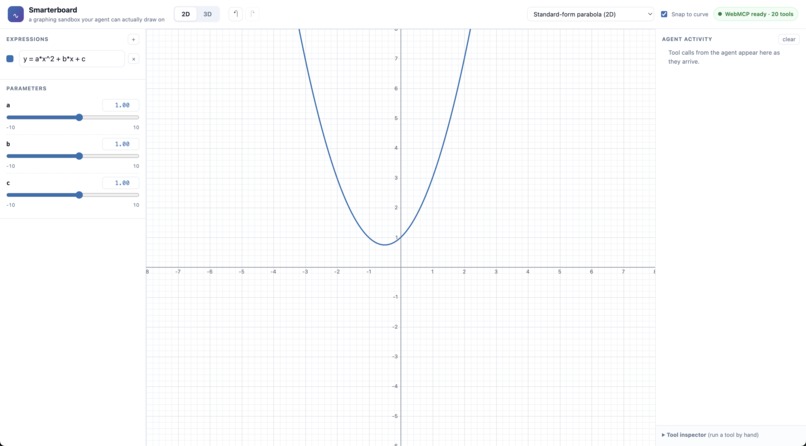
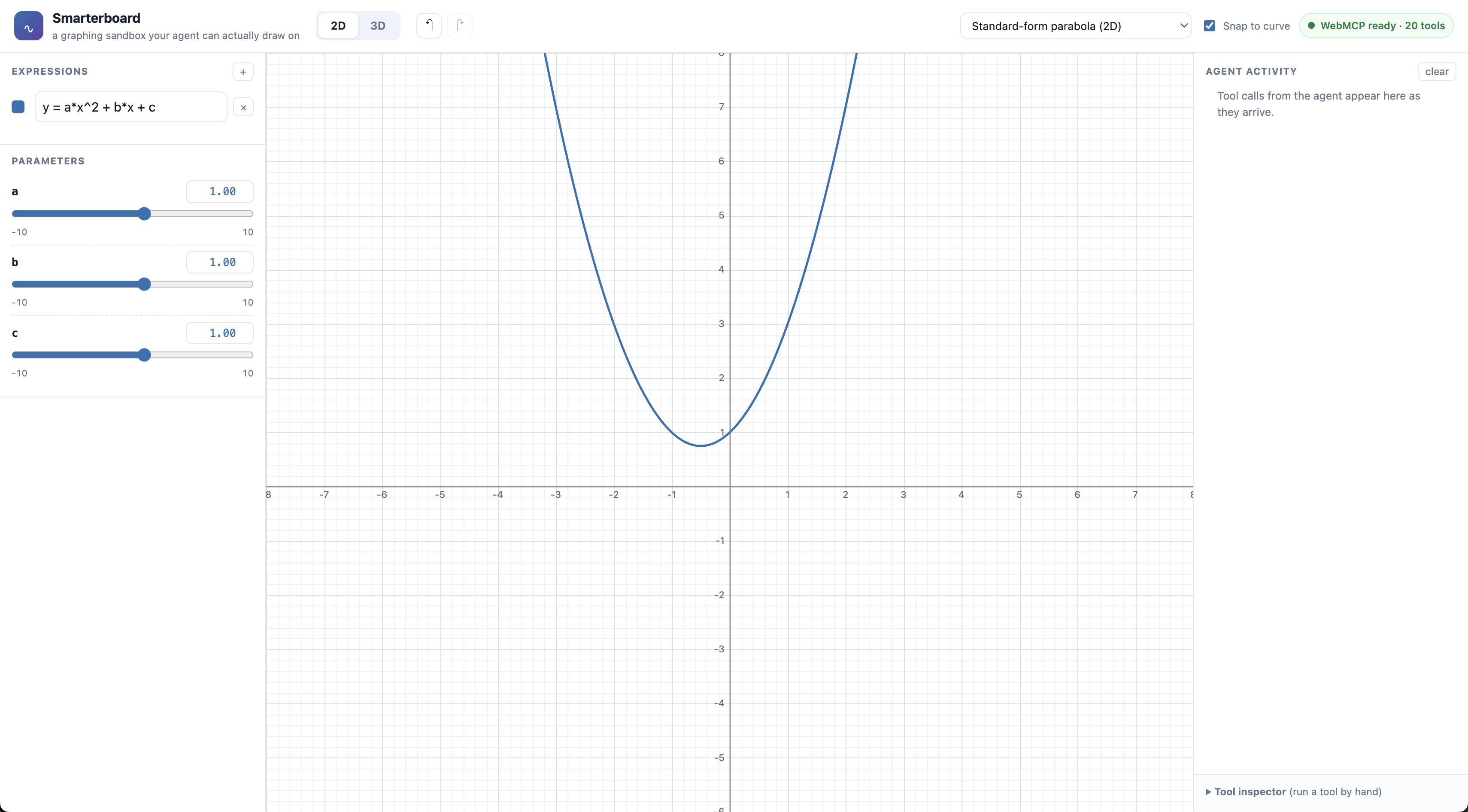
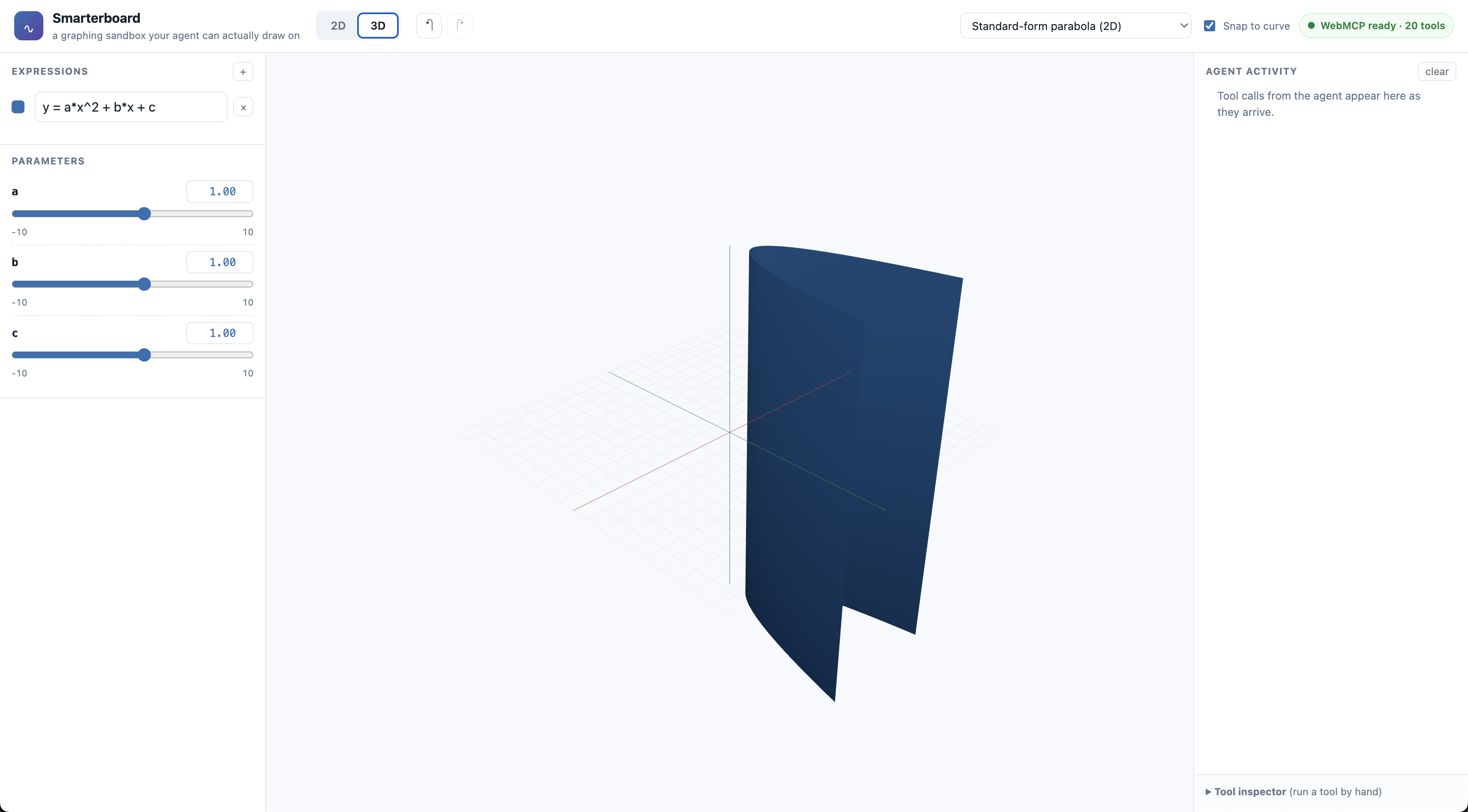
2d sandbox
-
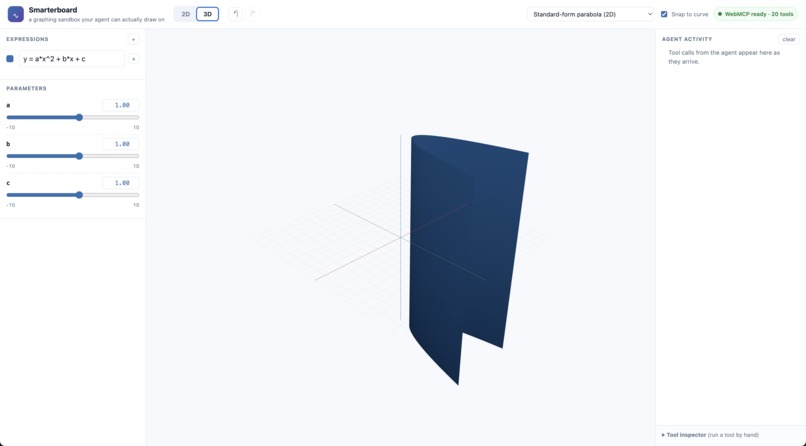
2d sandbox
-
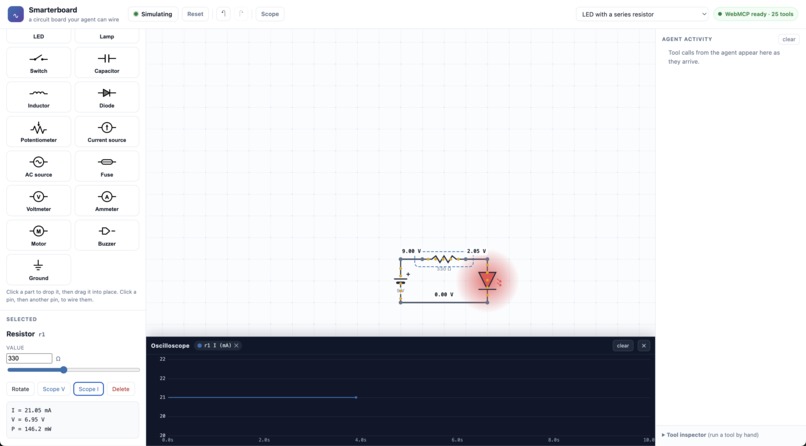
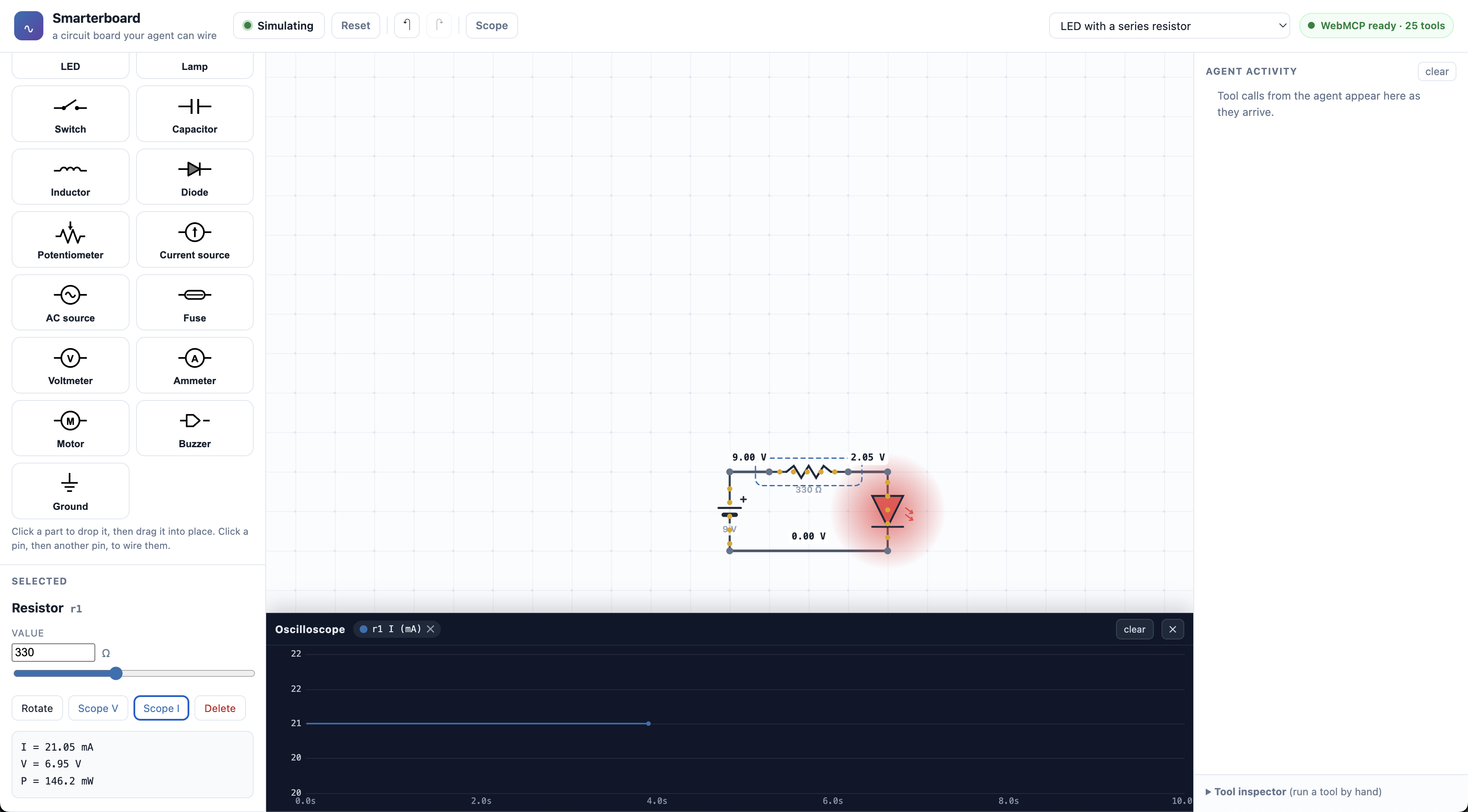
circuit sandbox
-
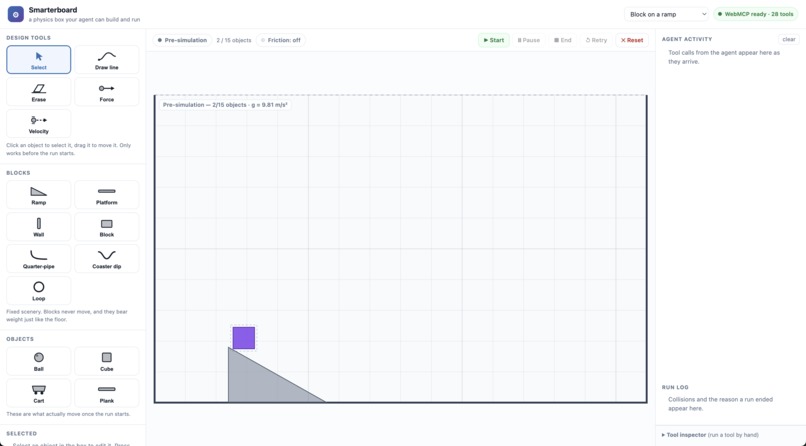
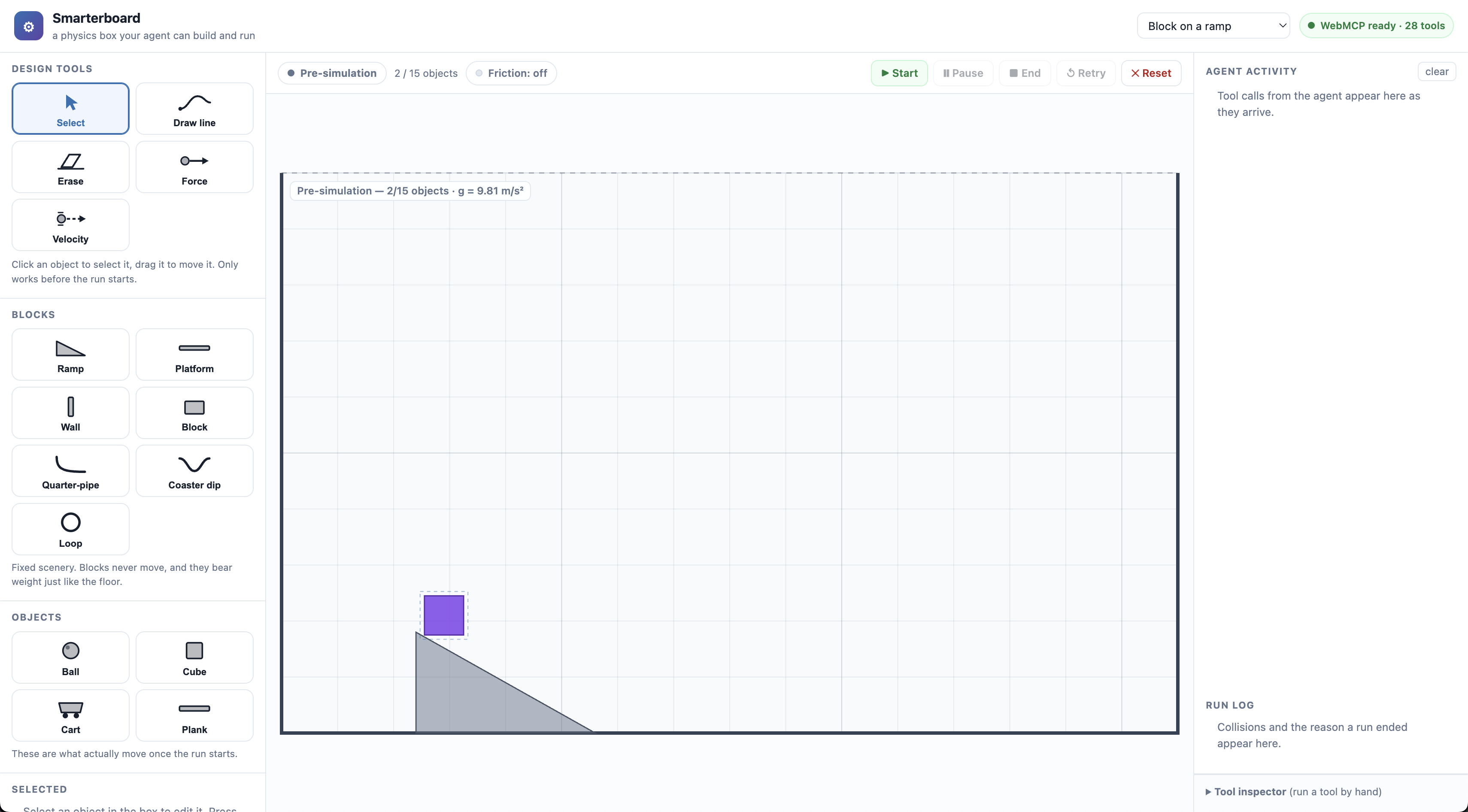
physics sandbox
-
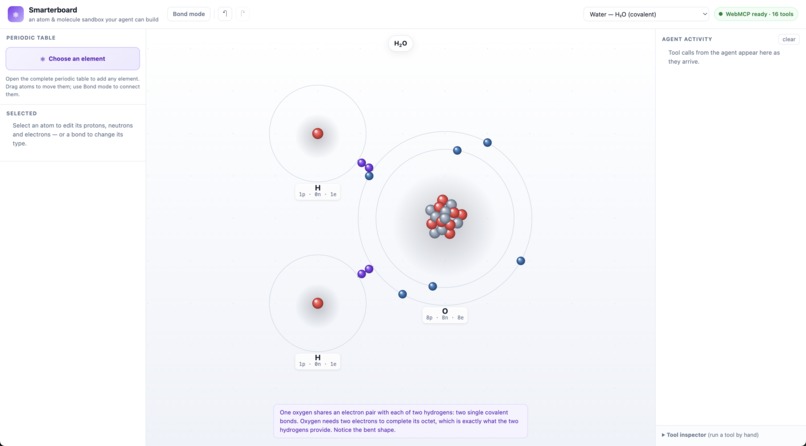
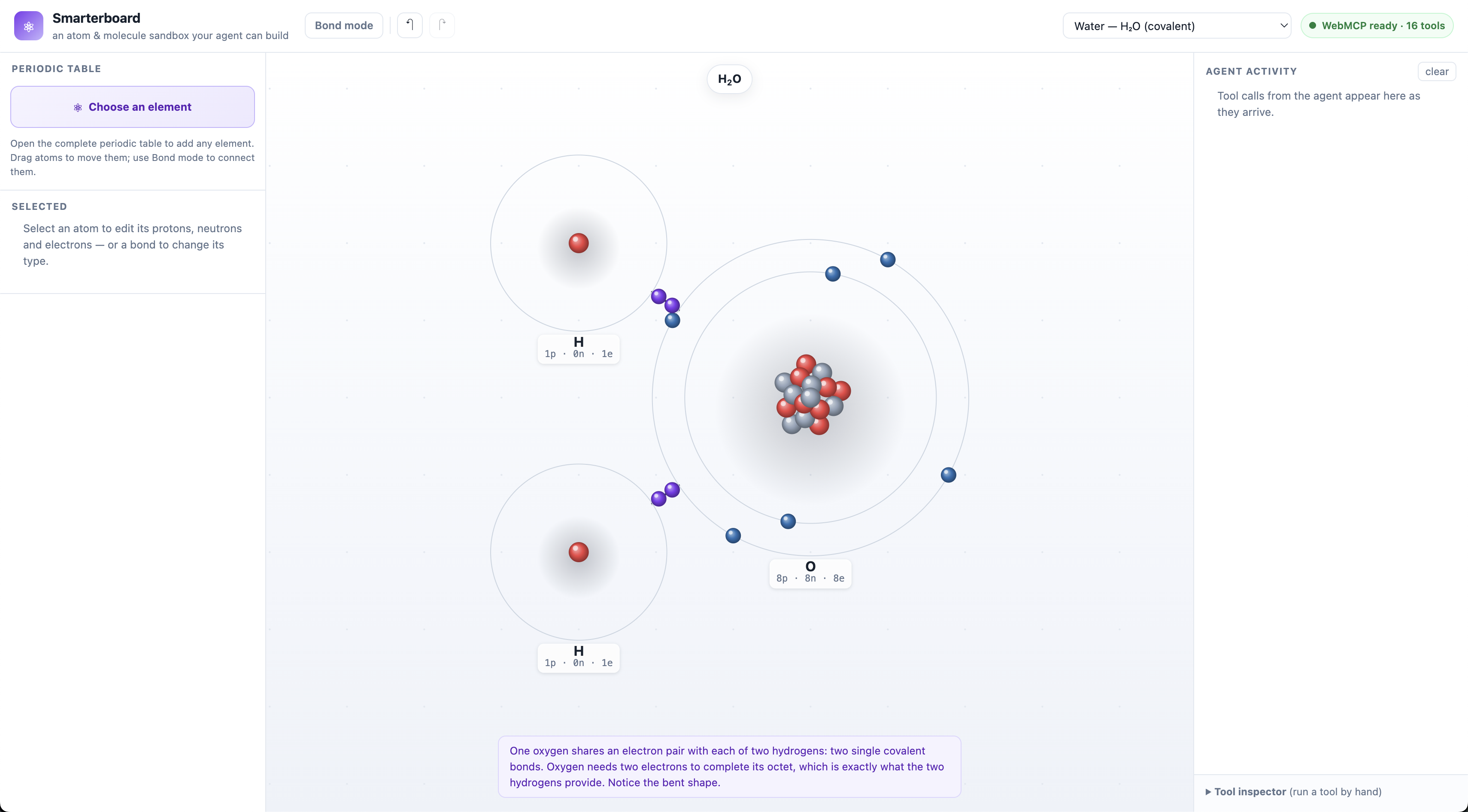
chemistry sandbox
Inspiration
Ask a chatbot "why does increasing a make the parabola narrower?" and you get a paragraph — a description of a motion you never see. The understanding lives in actually watching the curve tighten while someone talks over it, the way a good tutor works at a whiteboard. The blocker was never the model's ability to explain; it was that the model had no hands. WebMCP is the missing piece: a web page can expose its own controls as tools, so the student's own agent can operate the page instead of describing it — no extension, no API key in the page, no faulty HTML scraping.
What it does
Smarterboard is a set of learning sandboxes that an AI agent can drive. There are four sandboxes.
A 2D and 3D grapher lets you plot curves and surfaces animate a slider so a graph changes find roots and turning points and orbit shaded surfaces.
A circuit lab lets you build circuits from batteries, resistors, LEDs, capacitors and more watch current flow and plot voltage over time on an oscilloscope.
A chemistry sandbox lets you drag elements off the table build atoms from protons, neutrons and electrons and bond them into molecules.
A physics sandbox lets you drop in ramps, tracks, balls and blocks while everything floats, then run the scene under gravity and friction and read back position, velocity, forces, energy and every collision.
Each page registers its tools on document.modelContext so an AI agent can build a water molecule. Explain the bonds wire an LED so it lights safely launch a projectile or animate a parameter all while it narrates. The explanation and the thing being explained become the object.
How we built it
TypeScript and Vite were used, with no framework. Every engine has one place where state changes and the buttons a student clicks call the same code that an AI agent calls so the two can never drift apart. Math.js handles the math three.js draws the surfaces and canvas draws the circuits, atoms and physics scenes. The circuit lab runs a nodal analysis solver with time‑stepped models for capacitors, inductors and diodes. The physics lab is a rigid body engine with gravity, normal forces, friction and collisions. The chemistry lab fills electron shells the way a textbook does. There are close to ninety tools across the four sandboxes. We spent most of our time writing their descriptions because that text is the only thing the AI agent reads. Everything is deployed to GitHub Pages.
Challenges we ran into
We decided early not to write a LaTeX parser and instead normalize input into math.js, which saved us a day. The circuit solver required work from merging nodes to iterating diode states to stepping capacitors through time. Our oscilloscope moved slowly at first because we capped how far the simulation could move each frame. Switching to a fixed time step that follows the clock fixed that problem. We also learned some WebMCP details the way. The execute call wants the tool object and a stringified argument than a name and an object and tools from every open tab get merged together so two pages that both had a load preset tool collided.
Accomplishments that we're proud of
It is a product that an AI agent can genuinely run, not a chatbot with a few tools attached. The physics holds up. A capacitor reaches 63 percent of charge after exactly one time constant, sodium and chlorine form the right ions with full outer shells and a block slides down a ramp and speeds up under gravity the way it should. The page also tells the AI agent when something is wrong like an LED pulling much current and the AI agent can turn around and fix it. We got four tools working end to end in a few days and confirmed the whole AI agent round trip in a real browser.
What we learned
The tool description really is the prompt. Telling an AI agent when to reach for a tool matters more than the tool itself. Giving an AI agent an error it can correct is better than letting it fail.. Webmcp quietly changes the question from what a model can say to what a page can let it do.
What’s next for Smarterboard
Saving. Sharing a board with a link and a shared session where a student and an AI agent work on the same thing at once. Springs, pulleys and pendulums in the physics sandbox and AC analysis in the circuit sandbox. Deeper chemistry, with Lewis structures and balanced reactions.

Log in or sign up for Devpost to join the conversation.