Inspiration
Agriculture is the backbone of India and its economy. Over 40% of the population are farmers, contributing to 20% of the country's GDP. However, crop diseases pose a major threat to agricultural productivity, impacting the livelihood of millions of farmers and posing a threat to food productivity and security.
Crop disease is responsible for annual yield loss of up to 20% to 30% in India, affecting food production. Tomatoes, potatoes, and bell peppers are staple crops affected by various fungal, bacterial, and viral diseases. Blight in potatoes and mildew in peppers destroy the yield of these crops. India lost an estimated 3 million tons of potatoes due to late blight diseases alone.
The inspiration for this project comes from the critical need to support farmers facing crop losses due to plant diseases, with tomatoes, potatoes, and bell peppers being among the staple crops in India. By using AI and machine learning, this project aims to provide a reliable, user-friendly solution that empowers farmers with early disease detection, potentially transforming agriculture and improving productivity.
What it does
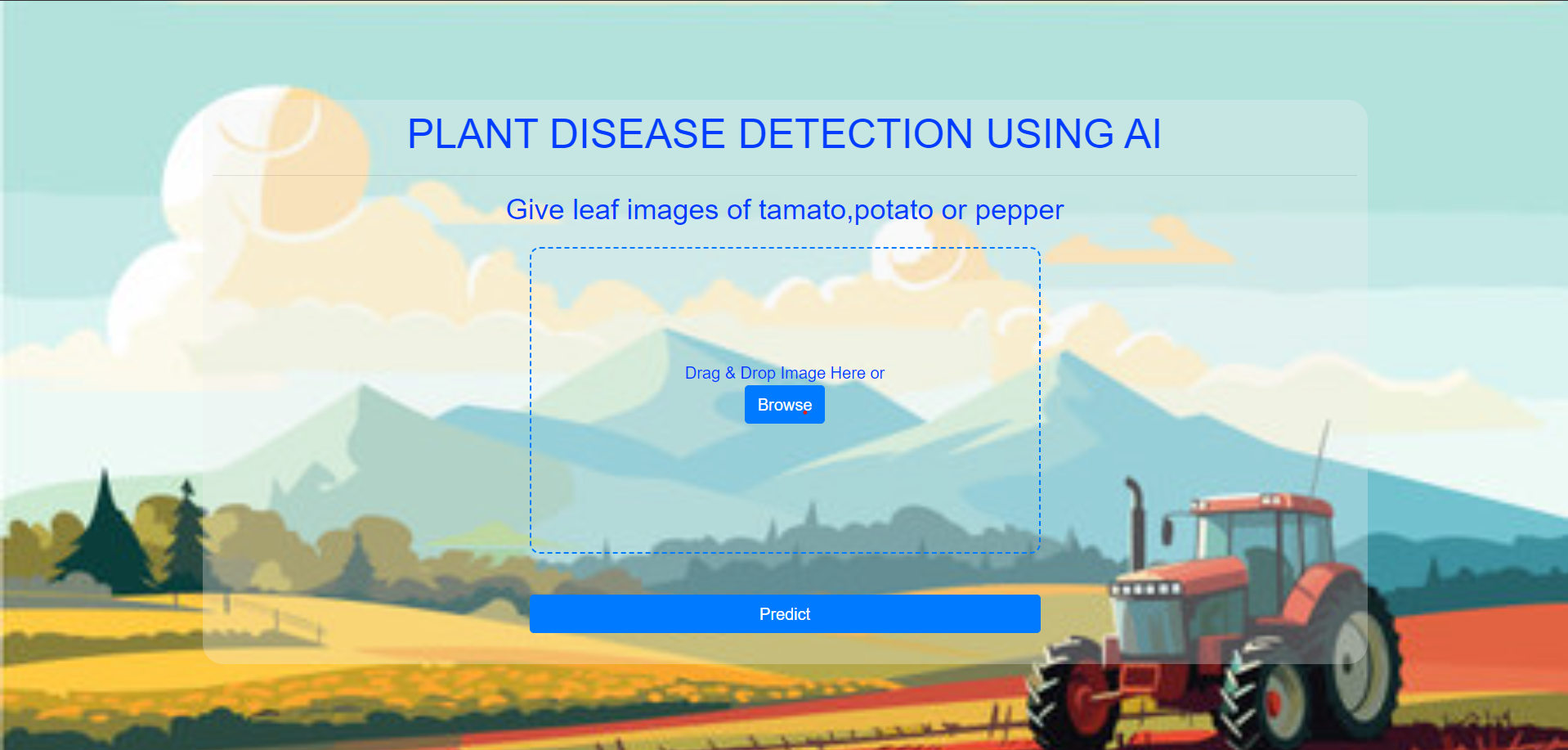
SmartCrops is an AI-powered plant disease detection tool designed to identify common diseases in crops through image analysis. Using a web interface built with Flask, SmartCrops allows users to upload images of affected plants, and the AI model quickly analyzes them to determine if any disease is present. The tool provides feedback on disease identification, helping farmers take immediate action to prevent further spread, reduce losses, and protect their yields. This simple yet powerful application in the hands of everyday farmers makes plant disease diagnosis accessible and actionable.
How we built it
The project was built using a combination of machine learning, image processing, and web development:
- Data Collection: We gathered a diverse dataset containing thousands of images across multiple classes of plant diseases for crops like tomatoes, potatoes, and bell peppers.
- Model Development: The model leverages transfer learning with pre-trained architectures (like ResNet18) fine-tuned on our dataset to improve disease detection accuracy.
- Web Application: A Flask-based web app was developed to serve as the user interface, enabling image uploads and displaying detection results. We deployed the model using a simple API, making the system accessible and efficient.
- Testing and Optimization: We refined the model and improved the web interface for better performance, accuracy, and user experience.
Challenges we ran into
Throughout the project, we encountered a few challenges:
- Data Quality: Acquiring high-quality, labeled images of crop diseases was difficult, especially for rare or less-studied diseases. We had to preprocess the data extensively to ensure accuracy.
- Model Overfitting: Given the variations in lighting and angles across images, the model initially showed overfitting on the training set. We addressed this with data augmentation techniques and regularization.
- Deployment Issues: Deploying a deep learning model for real-time use with Flask involved handling large model files and optimizing latency for quicker response times.
- Performance with Limited Hardware: Training on a dataset with such diversity required significant computational resources, which posed a challenge given our hardware limitations.
Accomplishments that we're proud of
We’re proud of several accomplishments in this project:
- Achieving High Accuracy: Our model achieved over 94% accuracy in identifying diseases, which is a significant milestone for real-time applications in agriculture. and further improvement in accuracy after fine-tuning
- User-Friendly Interface: The web app is simple to use, even for non-technical users, making advanced AI accessible to farmers.
- Scalability Potential: The architecture we’ve built can be adapted for other crops and disease types, allowing the solution to scale to more regions and farmers.
- Practical Impact: Our solution has the potential to make a real difference in the lives of farmers, helping to improve yield and reduce the financial burden caused by plant diseases.
What we learned
This project was an insightful journey with several learning outcomes:
- Importance of Data Quality: High-quality, diverse data is critical for training robust models, especially in agricultural settings with natural variations.
- Balancing Model Complexity and Accessibility: Building a complex model that can still run smoothly on web platforms taught us how to strike a balance between accuracy and practicality.
- Effective Deployment Techniques: Deploying an AI model in a Flask application offered hands-on experience with real-time model serving, which is key for practical machine learning applications.
- Agricultural Insight: We gained a better understanding of the agricultural sector’s challenges, especially how accessible technology can positively impact rural communities.
What's next for SmartCrops
- Expanding Crop and Disease Coverage: We plan to increase the range of crops and diseases that our model can detect, creating an even more comprehensive tool.
- Mobile Application: Developing a mobile app version would enhance accessibility for farmers directly in the fields, making it easier to diagnose plants on the spot.
- Real-Time Notifications: Adding alert features for disease outbreaks in specific regions could help farmers prepare in advance.

Log in or sign up for Devpost to join the conversation.