
Inspiration
Cities face daily civic problems like potholes, garbage overflow, and broken streetlights, yet reporting and resolution systems are often slow, unclear, or ignored. Citizens don’t know if their complaints are truly recorded or acted upon.
We wanted to create a platform where citizens can easily report issues while ensuring transparency, accountability, and trust using modern technologies like AI and blockchain.
What it does
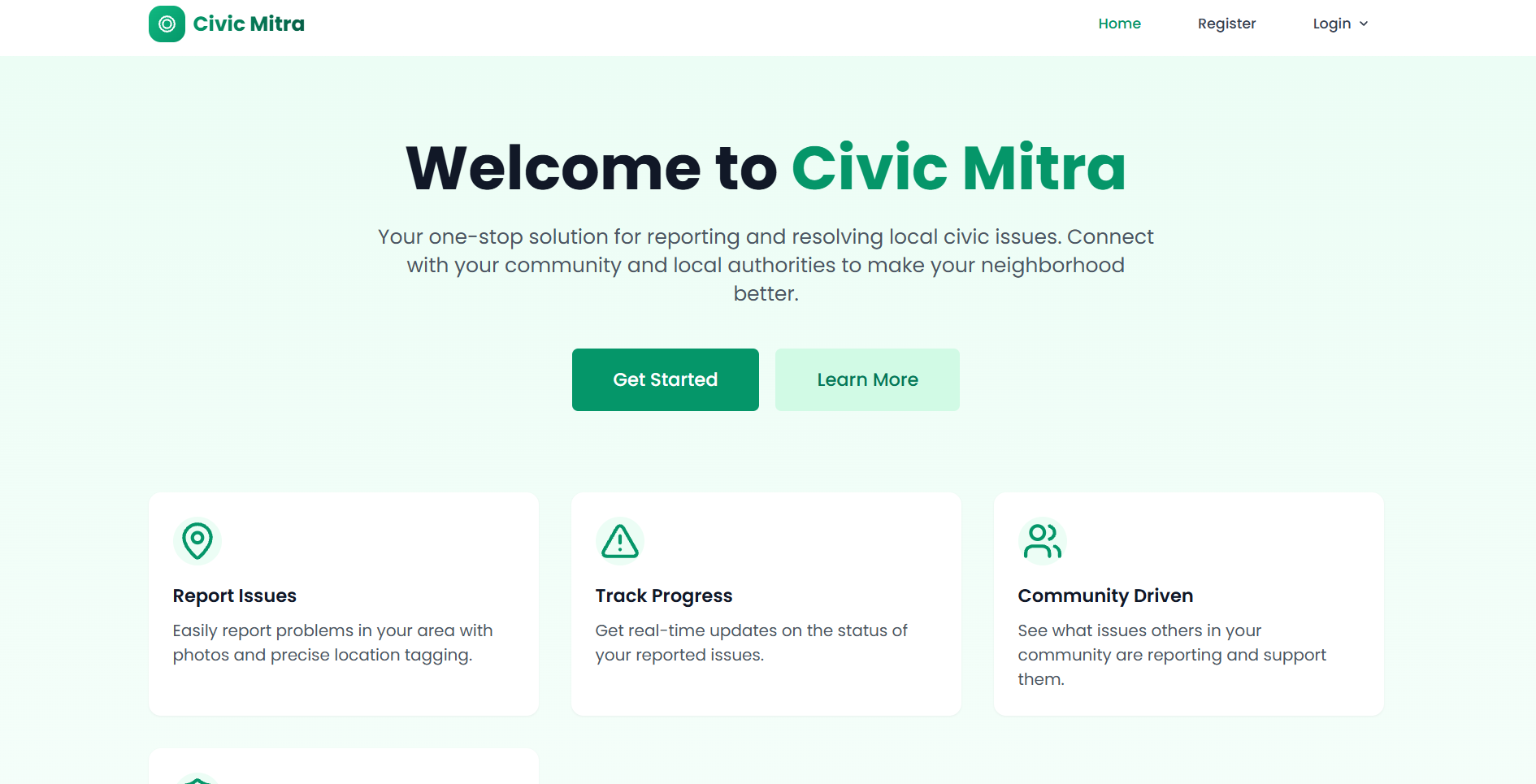
SmartCivic is an AI-driven civic issue reporting platform that allows citizens to report public infrastructure problems quickly through mobile or web devices.
The platform:
Captures issue location using geo-tagging.
Allows users to upload photos or videos as proof.
Uses AI to automatically categorize and prioritize issues.
Records complaints on blockchain to prevent tampering.
Enables real-time tracking of complaint status.
Supports offline reporting and multiple languages for inclusivity.
This bridges the gap between citizens and local authorities while ensuring transparency.
How we built it
We built SmartCivic using a modern, scalable tech stack:
Frontend: React + Vite for fast UI development
Mobile Support: Capacitor for Android & iOS deployment
Styling: Tailwind CSS + Material UI
Backend: Firebase for authentication, database, and real-time updates
AI Integration: Azure AI and Gemini for text and image analysis
Blockchain: Solidity smart contracts deployed using Hardhat
Web3 Integration: Ethers.js to connect frontend with blockchain
Storage: IPFS via NFT.Storage for decentralized media storage
Maps: Leaflet for location-based visualization
Challenges we ran into
Integrating blockchain with real-time web applications smoothly.
Managing large media uploads efficiently.
Ensuring accurate AI categorization for civic issues.
Handling offline report storage and later synchronization.
Designing a user-friendly interface for all age groups.
Accomplishments that we're proud of
Successfully combining AI and blockchain in a real civic solution.
Implementing transparent complaint verification.
Building a cross-platform solution in a limited hackathon timeframe.
Creating an easy reporting system accessible to non-technical users.
Delivering a scalable prototype with real-world impact potential.
What we learned
Blockchain can significantly improve transparency in governance systems.
AI greatly reduces manual processing workload.
User experience is critical in public-facing applications.
Collaboration and rapid prototyping are key in hackathons.
Real-world problems need practical and simple solutions.
What's next for SmartCivic – AI-Driven Public Issue Reporting
Next, we plan to:
Partner with local municipalities for pilot deployment.
Add automated issue escalation if complaints remain unresolved.
Introduce analytics dashboards for government authorities.
Implement reward systems to encourage civic participation.
Improve AI accuracy for issue severity detection.
Expand to smart city integrations and IoT sensor data.
Built With
- ai
- analysis
- and
- azure
- blockchain
- blockchain:
- connect
- contracts
- database
- decentralized
- deployed
- ethers.js
- for
- frontend
- frontend:-react-+-vite-for-fast-ui-development-mobile-support:-capacitor-for-android-&-ios-deployment-styling:-tailwind-css-+-material-ui-backend:-firebase-for-authentication
- gemini
- hardhat
- image
- integration:
- ipfs
- leaflet.js
- location-based
- maps:
- media
- nft.storage
- real-time
- smart
- solidity
- storage
- storage:
- text
- to
- updates
- using
- via
- web3
- with

Log in or sign up for Devpost to join the conversation.