-
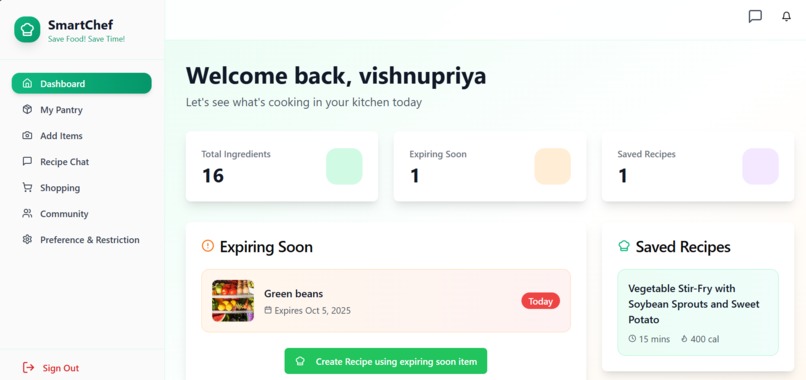
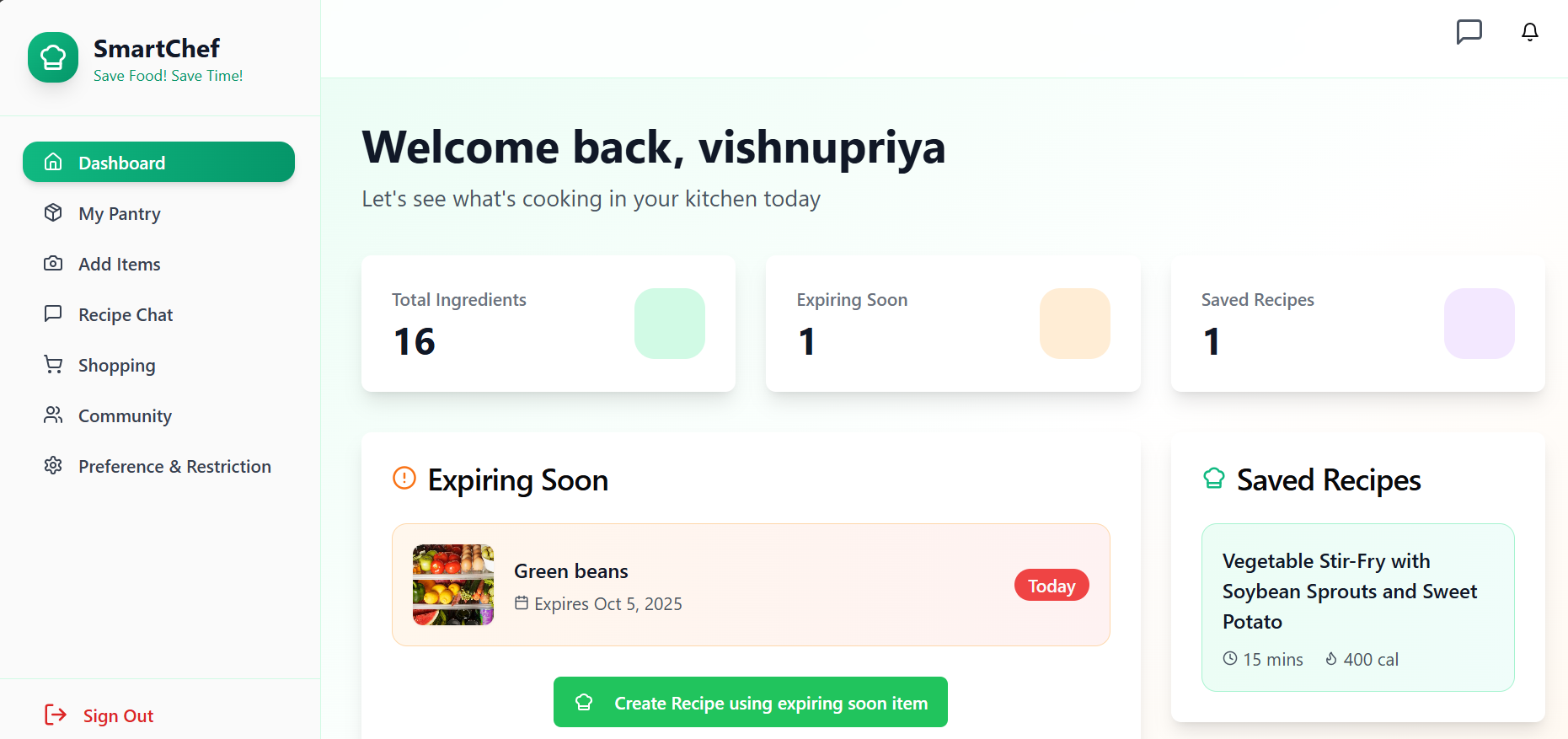
Dashboard
-
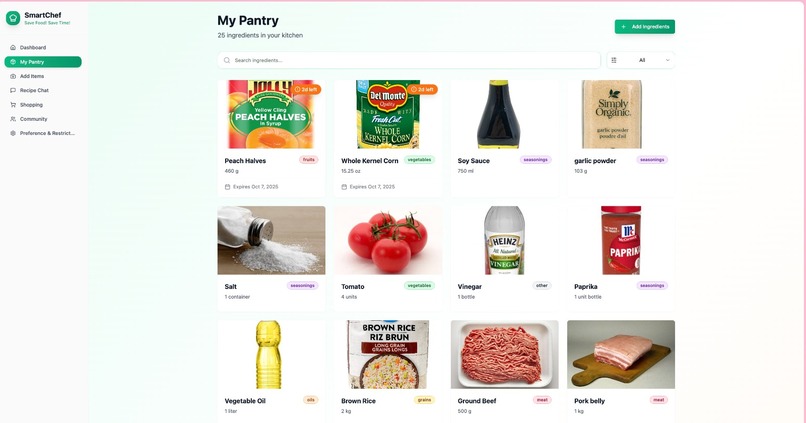
My Pantry
-
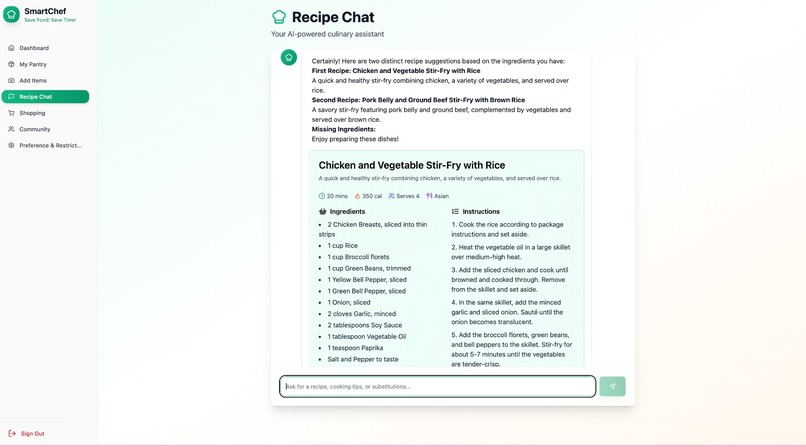
Recipe Recommendation Chatbot
Inspiration
Every day, millions of people face the same frustrating question: “What’s for dinner?” We waste time deciding, forget what’s in our fridge, and end up throwing away food that could have been a meal. Globally, one-third of all food produced is wasted that’s over a billion meals lost every day and nearly 10% of greenhouse gas emissions. We wanted to build something that helps families save money, eat better, and live more sustainably, all while fostering community sharing. That’s how SmartChef was born to make sustainability start right in your kitchen.
What it does
SmartChef is an AI-powered kitchen assistant that helps users plan, cook, and share meals efficiently. It reduces food waste and simplifies meal planning through:
- AI ingredient recognition — detect and categorize ingredients using photos
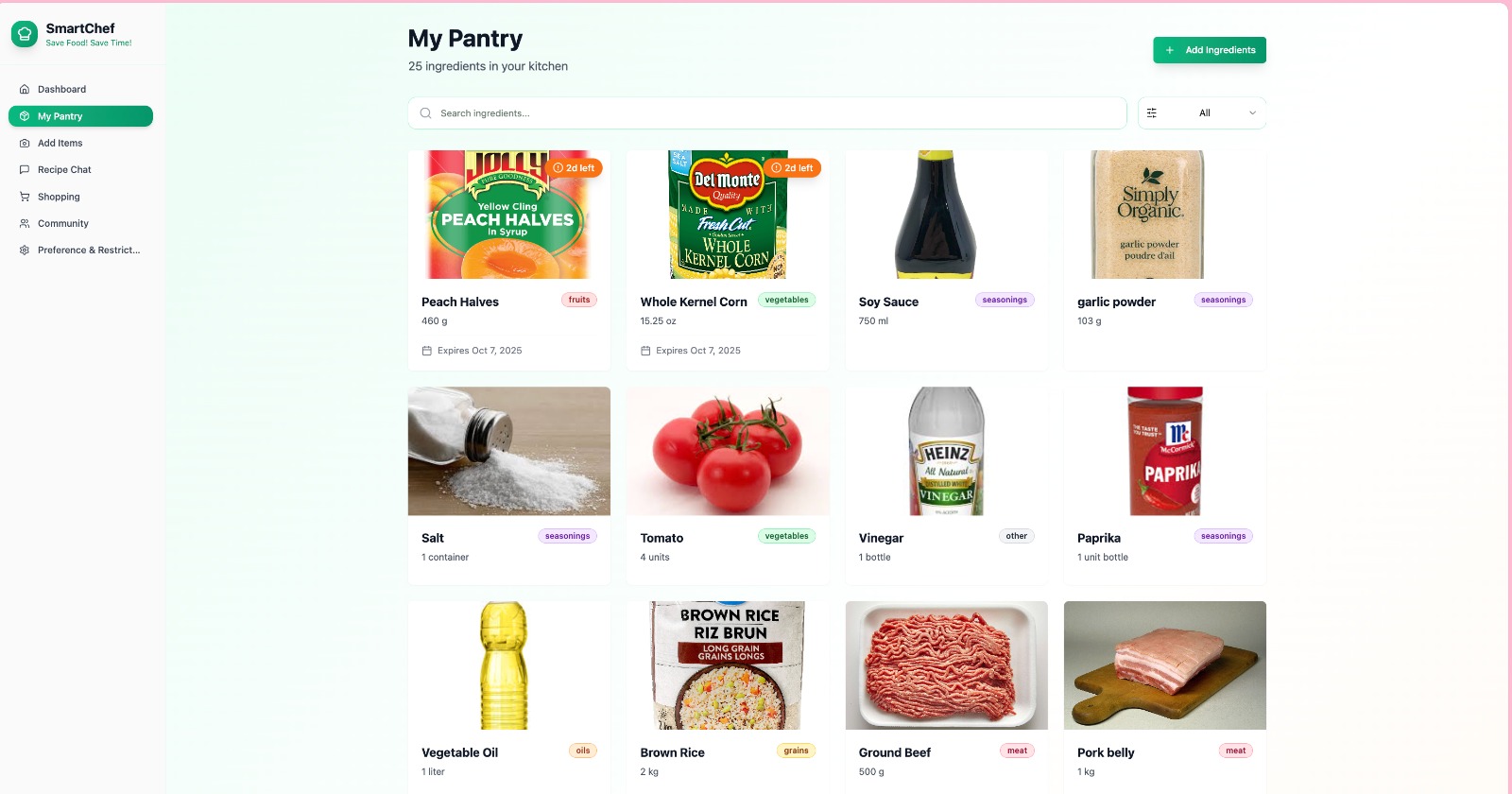
- Smart pantry management — track expiry dates and organize ingredients automatically
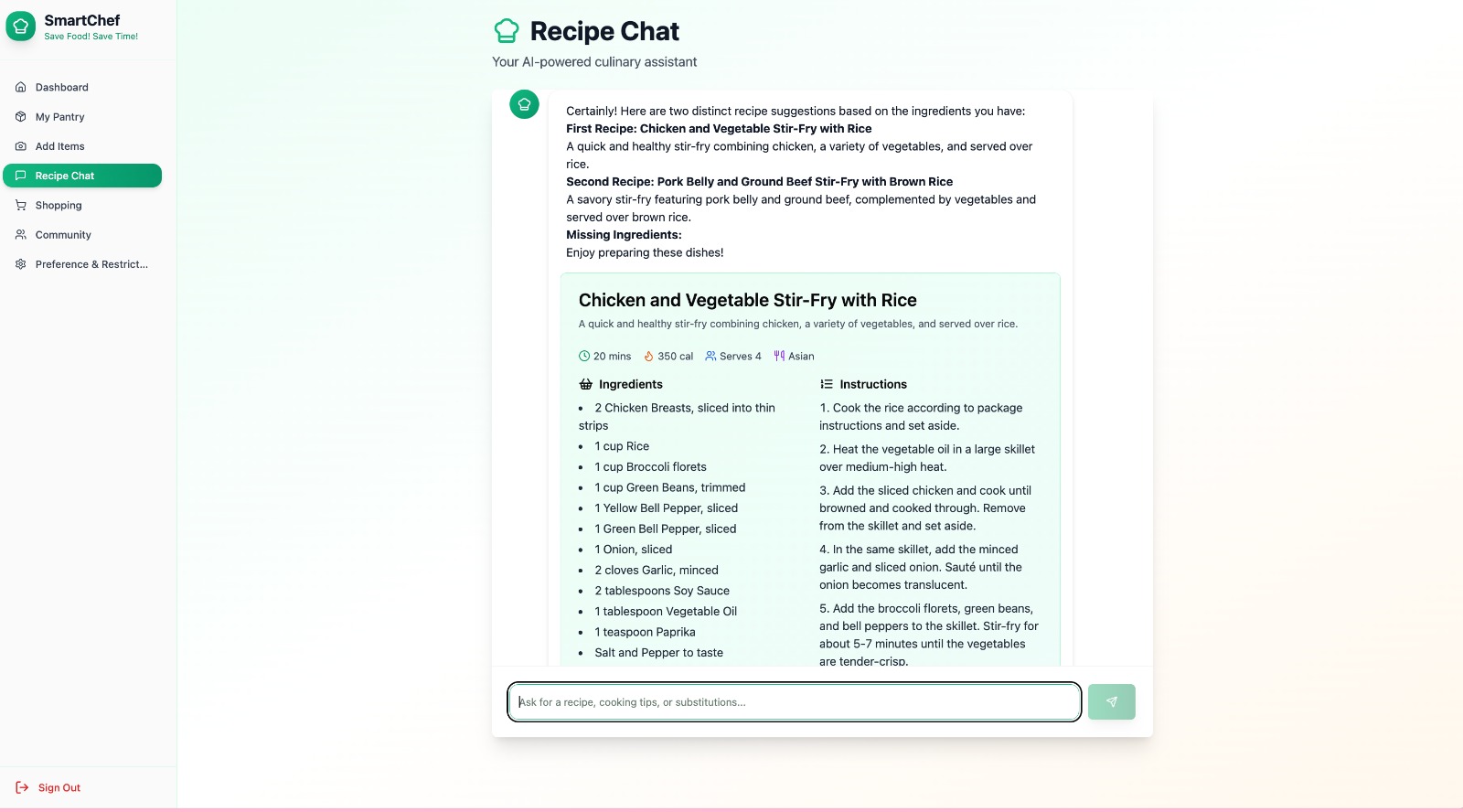
- Personalized recipe generation — AI chatbot suggests healthy recipes based on what you have, your dietary preferences, and available equipment
- Smart shopping — compare prices and direct the user to shop for missing ingredients
- Community sharing — connect with others to exchange surplus ingredients locally Together, these features turn everyday cooking into a sustainable, community-driven experience.
How we built it
We built SmartChef using vibe coding. The app is built with Vite + React, providing a fast, modular, and developer-friendly front-end framework. SmartChef communicates with the Base44 API, which powers key backend functions such as ingredient recognition, data retrieval, and recipe generation.
Challenges we ran into
One of our biggest challenges was understanding user needs, identifying how people actually interact with food inventory and meal planning in their daily routines. Translating those real-world behaviors into digital experiences required thoughtful user research and iteration. We also faced the challenge of designing a smooth, intuitive user interface that makes ingredient input and recipe browsing effortless, without overwhelming users with too many steps or options. Balancing simplicity with functionality was key to ensuring SmartChef feels helpful rather than complicated.
Accomplishments that we're proud of
We’re proud to have built a fully functional prototype of SmartChef using vibe coding. We’re especially proud that we turned a big sustainability goal into a working, user-friendly solution that can help households reduce waste, save money, and make cooking easier.
What we learned
Through building SmartChef, we learned how to effectively combine computer vision and large language models to create practical, real-world applications. We gained a deeper appreciation for the importance of user-centered design in encouraging sustainable behaviors, understanding that even small design choices such as defaulting to the photo date for purchase tracking can greatly enhance usability. Most importantly, we realized that thoughtfully applied technology can empower individuals to make sustainability a part of their daily lives, transforming the way people interact with food and their communities.
What's next for SmartChef
- Voice Recognition: Implement hands-free interaction for easier navigation and cooking assistance.
- Recipe Media Recommendations: Suggest relevant photos or videos to help users visualize each recipe.
- Recipe Ratings: Allow users to rate recipes, improving personalization and community feedback.
- Recipe Sharing: Enable users to share recipes with friends or on social media platforms.
- Categorized Recipe Saving: Let users save recipes by meal type (e.g., breakfast, lunch, dinner) for easy access.
- Nutritional Information: Display detailed nutritional facts for each recipe to encourage healthier choices.
Built With
- imagerecognization
- largelanguagemodel
- objectdetection
- vibecoding


Log in or sign up for Devpost to join the conversation.