Inspiration
AI and machine learning have been used heavily in the past decade for commercial application and the development that has taken place has bled into the consumer world. For instance suggestions on streaming services like Netflix and Hulu. When starting our project we knew we wanted to make use of these tools to enhance the user experience without increasing the complexity of the system which seems like an impossible task at first glance. But as we found out during the creation of the project, it is easier that we thought. While we could go with running the ml model locally through frameworks like CoreML we knew that would limit development and make certain features device specific so we opted to make use of API frameworks to integrate AI.
What it does
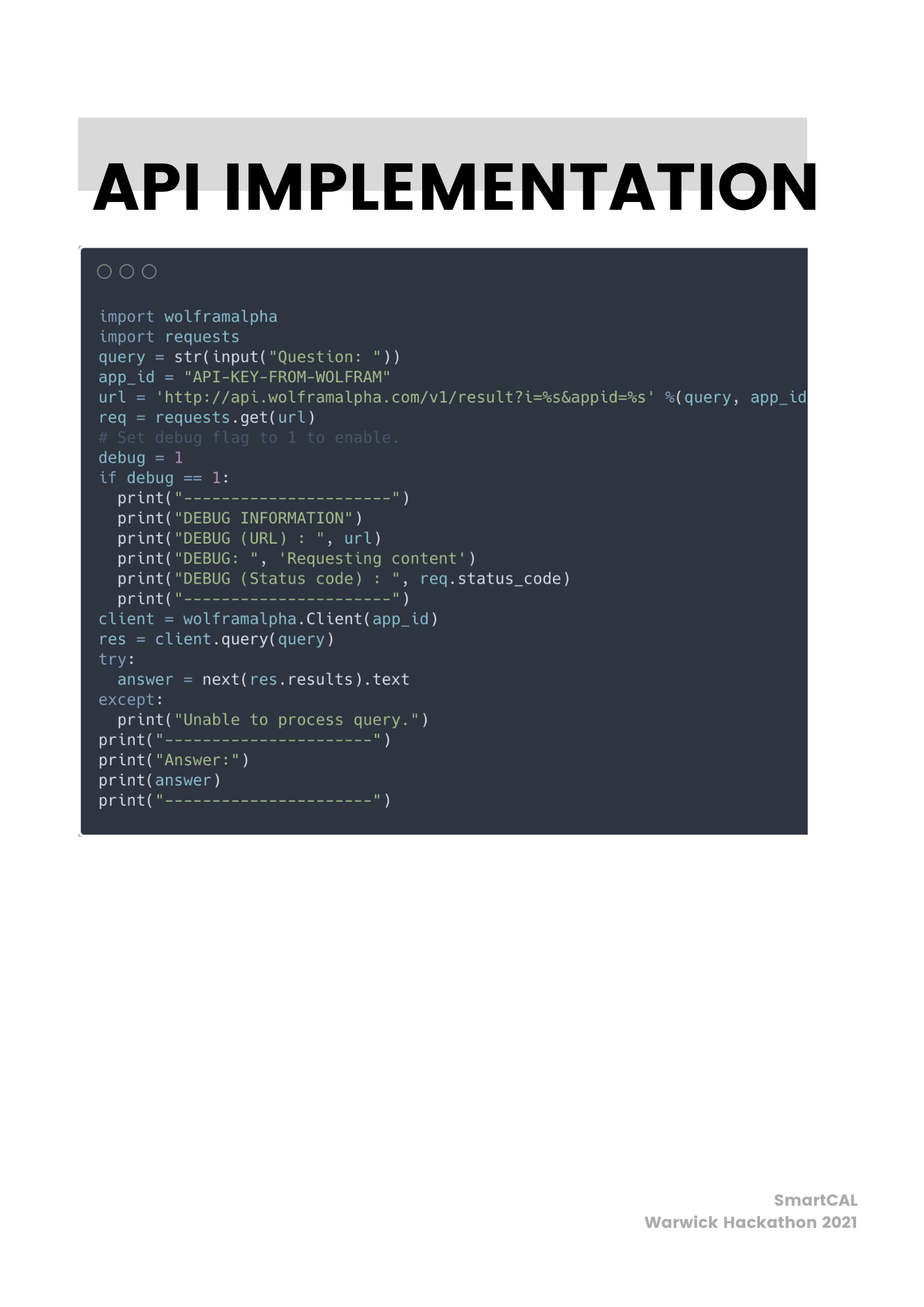
When thinking of realistic implementations of our concept we wondered 'what If we integrated AI into a calculator'. You may ask yourself, why would you integrate AI into a calculator, we thought that too, but we made it anyways. We ended up creating a calculator app that makes use of the wolfram API to perform complex calculations, this allowed us to create the most sophisticated calculator in the world and implement it in a way in which to the user it is just a simple calculator app. This allows our calculator to answer all types of complex mathematical functions without having to have everything built on it. This name concept can be applied to IoT devices as well, using cloud services any device can run utilise ml and any application and integrate ML as we did with our project.
How we built it
We made use of:
- Python
- Pyforms
- Requests
- Wolfram API
Challenges we ran into
We were going to build the entire system to react native in order to create a production-ready app that can be deployed using the help of expo.io.
Accomplishments that we're proud of
We are proud of the fact that we were able to finish this on time and submit it as this is our first hackathon. While its probably not the best project its something we were able to come up with in two days.
What we learned
Axios and react native is a pain to work with and python forms has wayy too many dependencies and for some reason needs a very specific opencv version that can't be installed using pip ???
What's next for SmartCal
I will continue to work on the react-native version of it since it If closer to the intended vision of our goal. While it's probably not the next billion-dollar idea, It seems somewhat promising.


Log in or sign up for Devpost to join the conversation.