-
-

-
-
SmartBin Prototype Design

Inspiration 💡
In a world where waste finds itself misplaced, a troubling trend emerges: a significant amount of garbage is being put into the wrong bins simply because people are unaware of where their waste truly belongs. This growing issue poses a serious challenge to effective waste management practices and worsens our earth's sustainability.
The root cause lies in the fact that many individuals lack the necessary knowledge to correctly sort their waste into appropriate bins. Without clear guidance, they unknowingly contribute to the misplacement of waste, hindering recycling efforts and creating inefficiencies in waste disposal systems.
Motivated by the urgency to address this rising problem, we draw inspiration to create a solution that tackles this issue head-on. Our goal is to alleviate the confusion and frustration experienced by people genuinely wanting to dispose of their waste properly but lacking the essential information.
Thankfully, we have a solution at our disposal: the SmartBin. This practical and efficient innovation offers a way to tackle the ongoing problem of waste mismanagement.
What it does 🎯
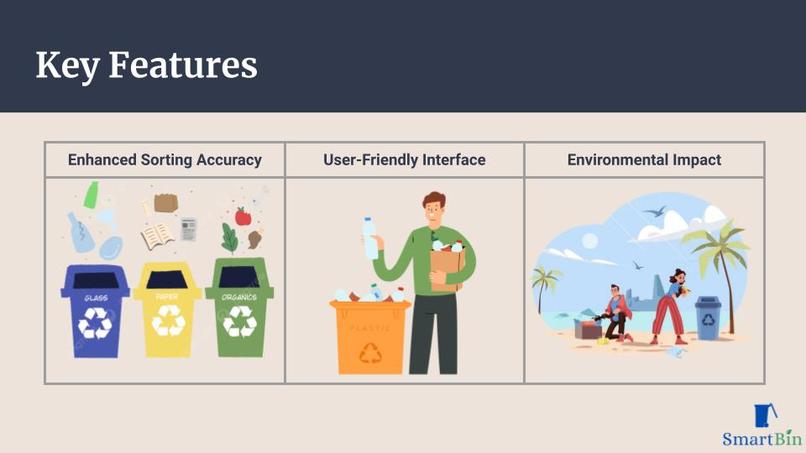
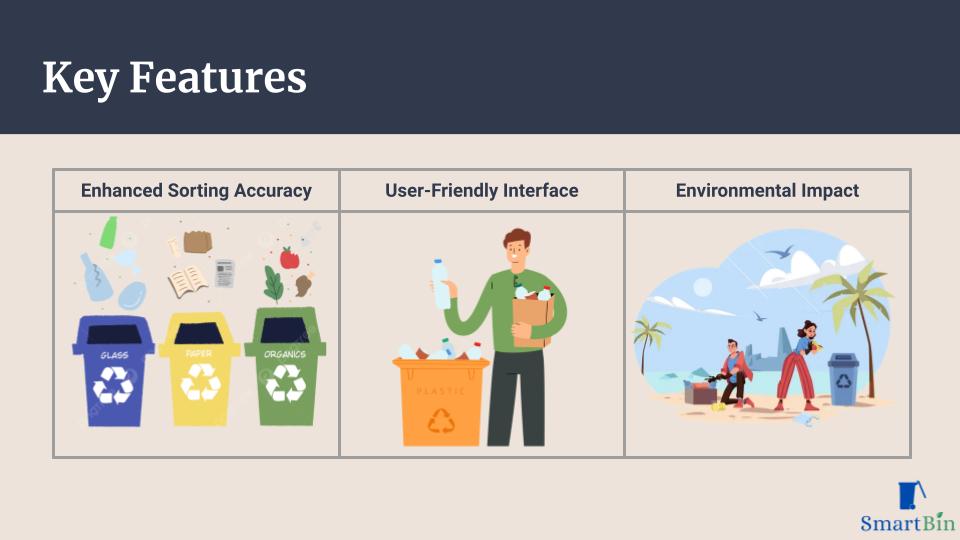
Our groundbreaking smart bin leverages the power of machine learning to revolutionize waste management. With its intelligent capabilities, this innovative solution eliminates the guesswork and confusion associated with waste disposal. The user simply places their garbage into the smart bin, and it seamlessly determines the appropriate bin for the waste, ensuring it is deposited correctly.
Powered by advanced machine learning algorithms, by analyzing various characteristics of the waste, such as its composition and type, the smart bin instantly identifies the most suitable bin for its proper disposal. With a swift and accurate decision-making process, it guarantees that waste is placed in the correct bin most of the time.
The very simple user-friendly interface of our intelligent garbage bin provides a easy way for users to see what their garbage is classified as.
Our smart bin aims to be a catalyst for change in waste management systems. By enabling precise waste categorization and reducing the chances of misplacement, it optimizes recycling efforts and minimizes the amount of waste destined for landfills. This, in turn, contributes to a healthier environment and a more sustainable future.
How we built it 🛠️
To create the intelligent garbage bin, we employed the powerful python library TensorFlow and OpenCV for the machine-learning aspect of the project. TensorFlow provided us with the tools to train and deploy our Convolutional Neural Network (CNN) effectively.
The foundation of our model was trained with a garbage classification database sourced from Kaggle, as well as a section with our own images. This database contained numerous images for each garbage classification, allowing our model to learn and generalize from a wide range of visual examples. By leveraging this dataset, we trained our machine learning model to recognize and classify different types of garbage with a decent accuracy.
Once the training phase was complete, we deployed the machine learning model within our intelligent garbage bin system. The model was integrated seamlessly, allowing us to feed it with images of garbage captured by the bin's camera. The model then utilized its learned knowledge to determine the appropriate bin for the specific waste item based on its visual features.
This combination of TensorFlow, OpenCV, a comprehensive garbage classification database, and the development of a machine learning model enabled us to create an intelligent garbage bin that accurately identifies and sorts waste items. By leveraging the power of machine learning, we have successfully simplified and automated the process of waste management, contributing to a more efficient and environmentally conscious approach to garbage disposal.
Challenges we ran into 🤔
One of the primary challenges we faced was the lack of an organic waste section in our dataset. To address this, we had to take matters into our own hands and source 600 organic waste images. This process required extensive effort and time, as we had to ensure the images accurately represented different types of organic waste. Despite the initial setback, our commitment to developing a comprehensive solution propelled us to curate a dataset that encompassed a wide range of waste categories.
Another significant challenge we encountered was the initial inaccuracy of our Machine Learning model. During the development phase, our model struggled to accurately identify and classify waste items. This presented a hurdle in achieving the desired precision and reliability for our intelligent garbage bin. To overcome this challenge, we devoted substantial time to refining and fine-tuning the model. Through rigorous experimentation, optimization, and continuous training, we were able to significantly improve the accuracy and performance of our model, ensuring it delivered reliable results.
Integrating our Machine Learning model with the camera system proved to be a complex task. Ensuring seamless communication and synchronization between the model and the camera required extensive technical expertise and troubleshooting. We encountered challenges related to data flow, compatibility, and real-time processing. However, with perseverance and collaborative problem-solving, we overcame these obstacles and successfully integrated the Machine Learning model with the camera system, enabling our intelligent garbage bin to accurately analyze and classify waste in real time.
Accomplishments that we're proud of 🌟
We take great pride in the achievements we have made through our intelligent garbage bin project. Our accomplishments include the following:
We have successfully developed a decently accurate machine learning model that classifies waste items with precision, streamlining waste disposal processes and promoting responsible waste management practices.
The user-friendly interface of our intelligent garbage bin ensures a seamless experience, making waste disposal effortless for individuals and eliminating confusion about which bin to use.
Our project has made a significant impact on environmental sustainability by accurately sorting waste items, reducing pollution, and conserving valuable resources.
The successful integration of our machine learning model with the camera system has enabled real-time waste analysis, enhancing the overall functionality and performance of our intelligent garbage bin.
These accomplishments reflect our dedication to developing innovative solutions that simplify waste management, promote environmental sustainability, and inspire responsible waste disposal habits
What we learned 🧠
Our project to create an intelligent garbage bin has provided us with valuable lessons and insights. Here are some key takeaways:
Data is crucial: We learned the importance of high-quality and diverse datasets for training accurate machine learning models.
Iteration and fine-tuning: Through iterative processes, we improved the performance and accuracy of our model by adjusting parameters and conducting thorough experimentation.
Integration challenges: Integrating the machine learning model with the camera system presented obstacles that taught us the importance of seamless hardware-software interaction.
Environmental awareness: The project deepened our understanding of waste management and the need for promoting responsible waste disposal habits.
Collaboration and teamwork: Effective collaboration and teamwork were essential for overcoming challenges and achieving project goals.
These learnings have equipped us with valuable insights for future projects centered on technology, sustainability, and social impact.
What's next for SmartBin 🚀
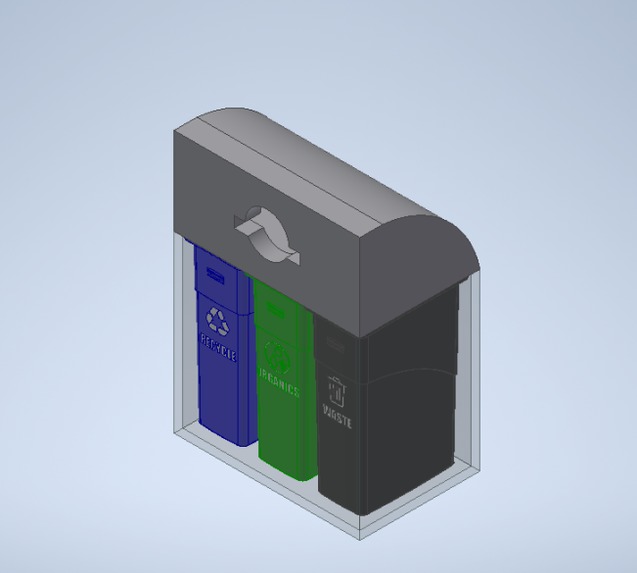
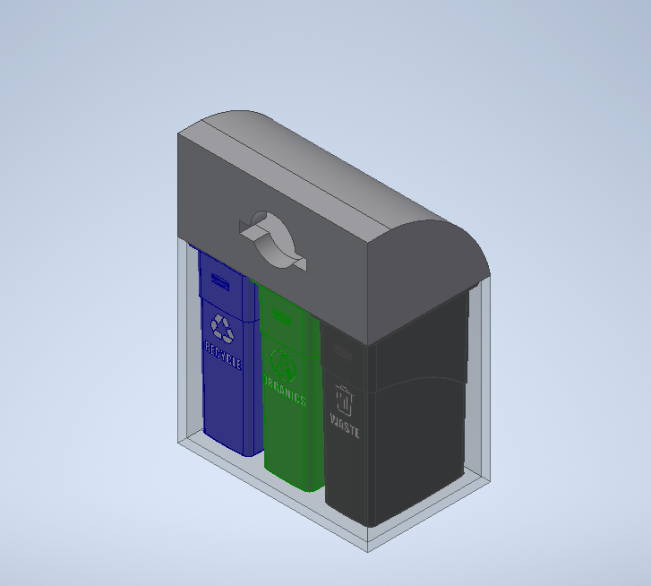
As we look ahead, our focus is centered on two primary objectives: improving the accuracy of our smart bin and transforming our CAD model into a functional reality that can be implemented in public spaces like universities.
To enhance accuracy, we are dedicated to expanding our dataset. We will actively source a diverse range of waste images, ensuring representation of all waste categories, including previously underrepresented ones like organic waste. By enriching our dataset, we provide our machine-learning model with a broader foundation for learning and generalization, resulting in improved accuracy.
In parallel, we recognize the importance of model optimization. Through rigorous testing, evaluation, and experimentation, we will explore different architectures, algorithms, and optimization techniques. This iterative process allows us to fine-tune our machine-learning model and enhance its performance, thereby increasing the accuracy of waste classification.
With our unwavering commitment to innovation and sustainability, we are confident in our ability to make the smart bin more accurate and bring it to life in public spaces like universities. We envision a future where our intelligent waste management solution contributes to a cleaner environment and fosters responsible waste disposal practices.


Log in or sign up for Devpost to join the conversation.