-
-
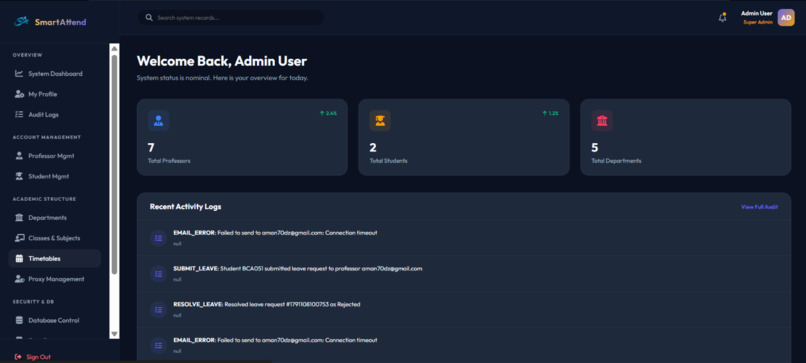
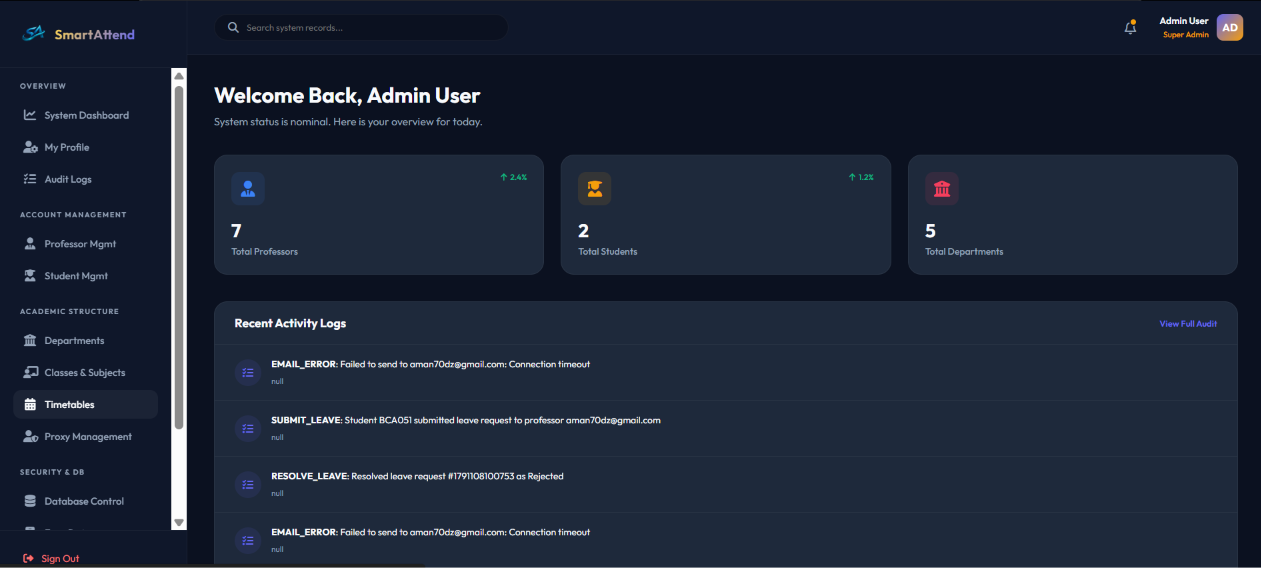
Admin
-
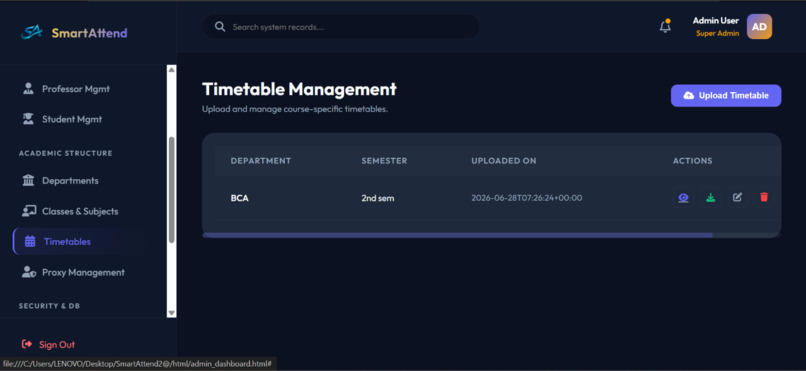
Admin
-
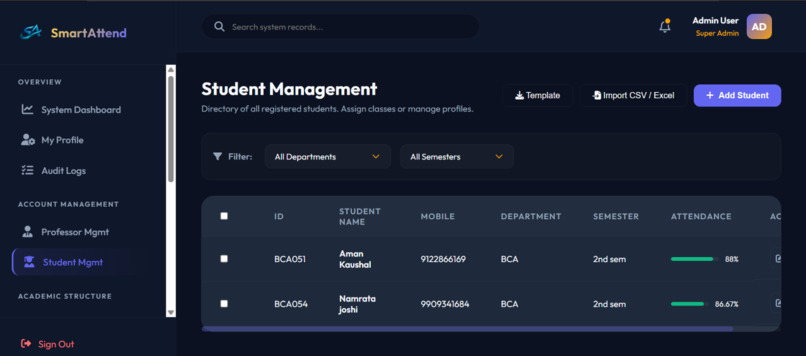
Admin
-
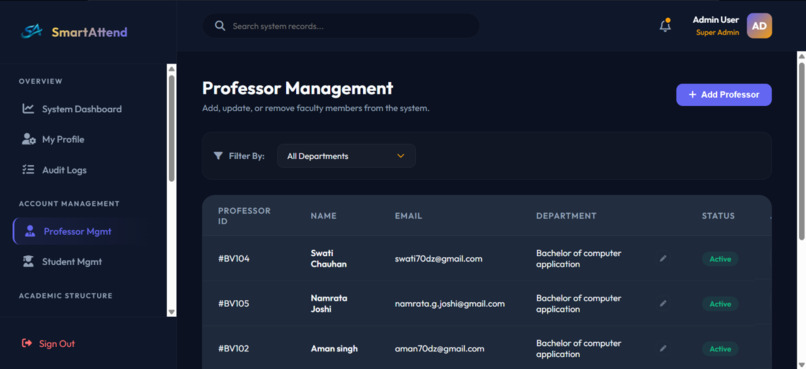
Admin
-
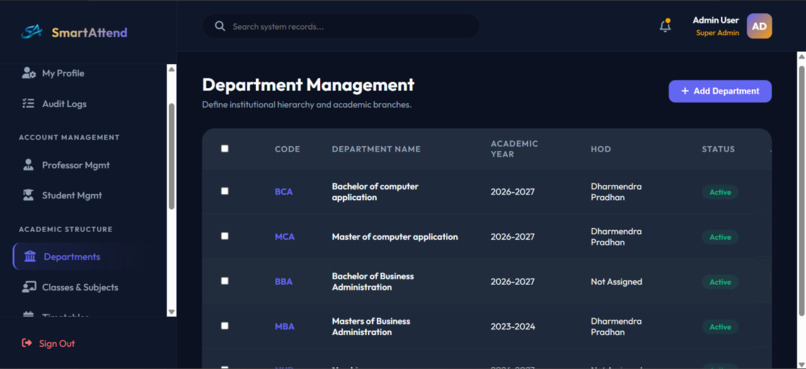
Admin
-
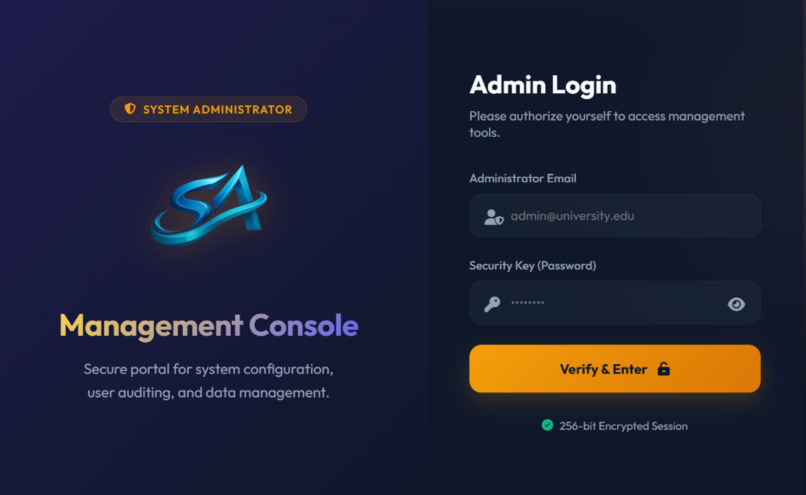
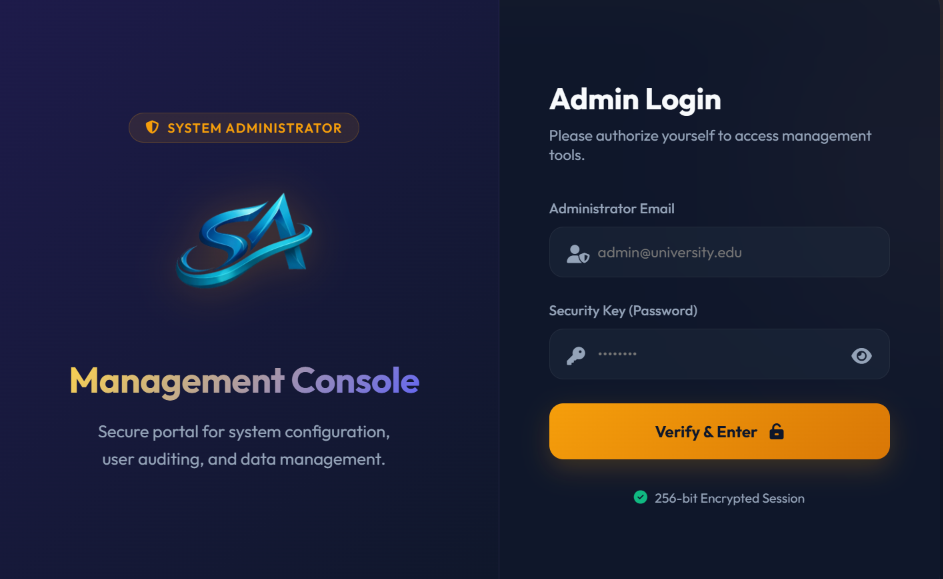
Admin login page
-
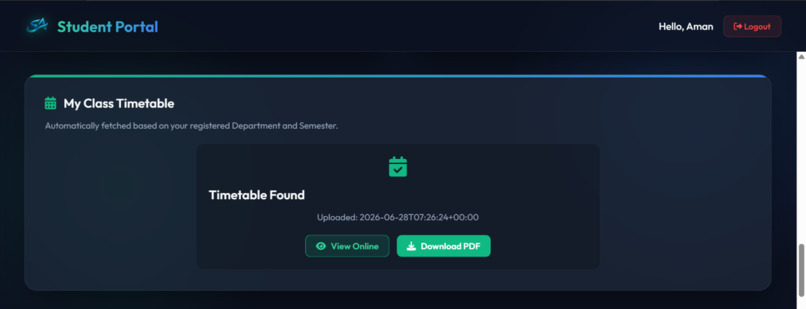
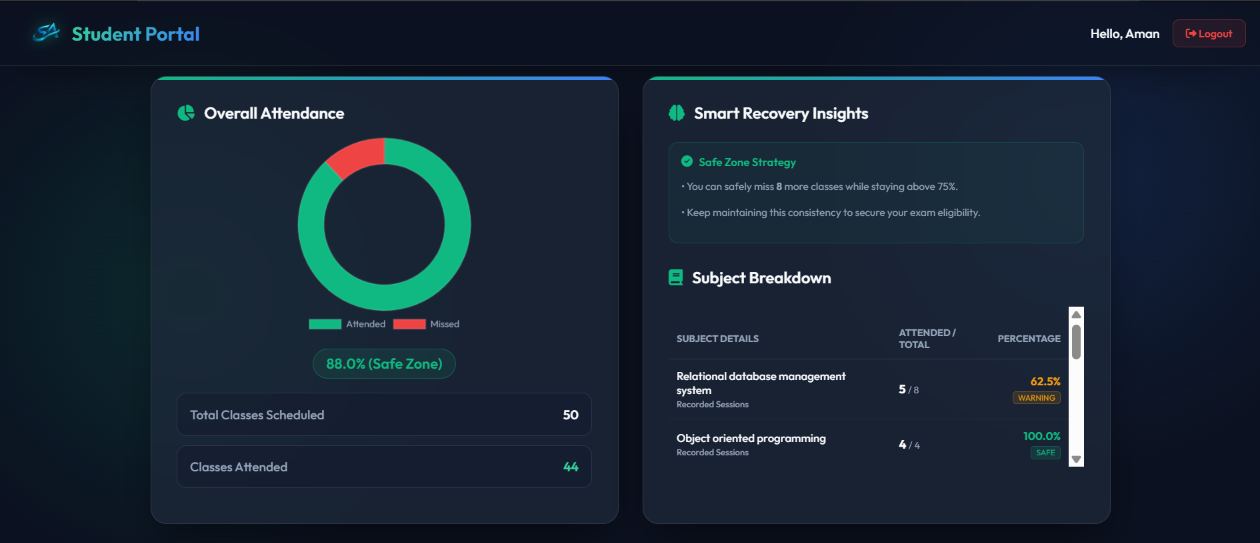
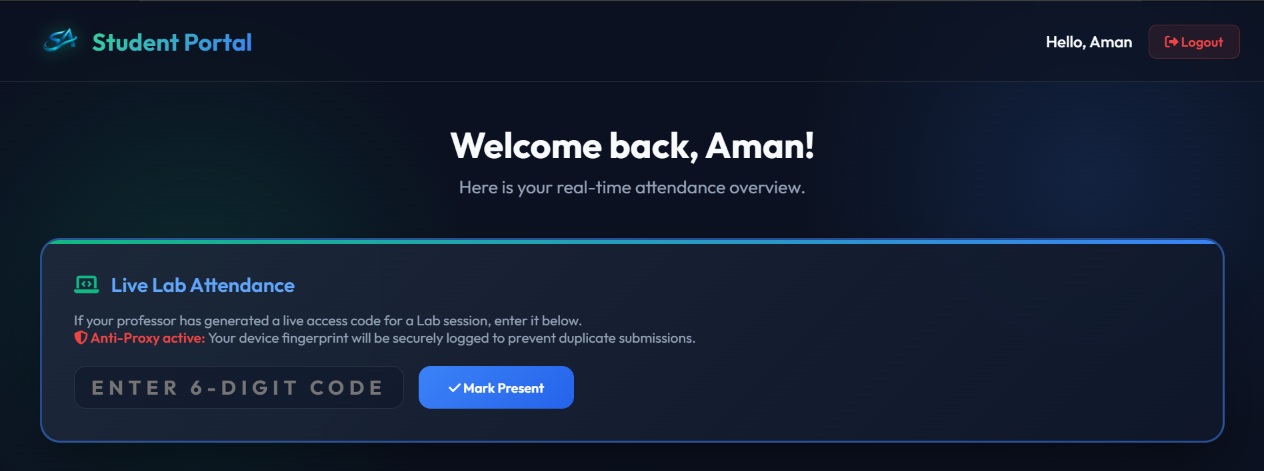
student
-
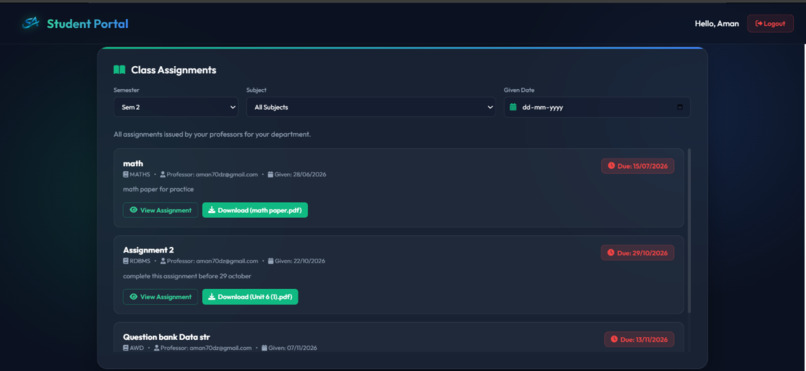
student
-
student
-
student
-
student
-
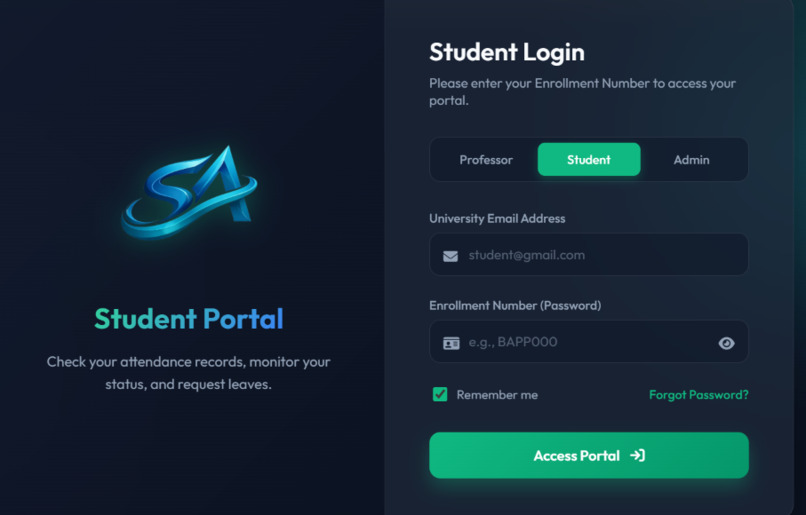
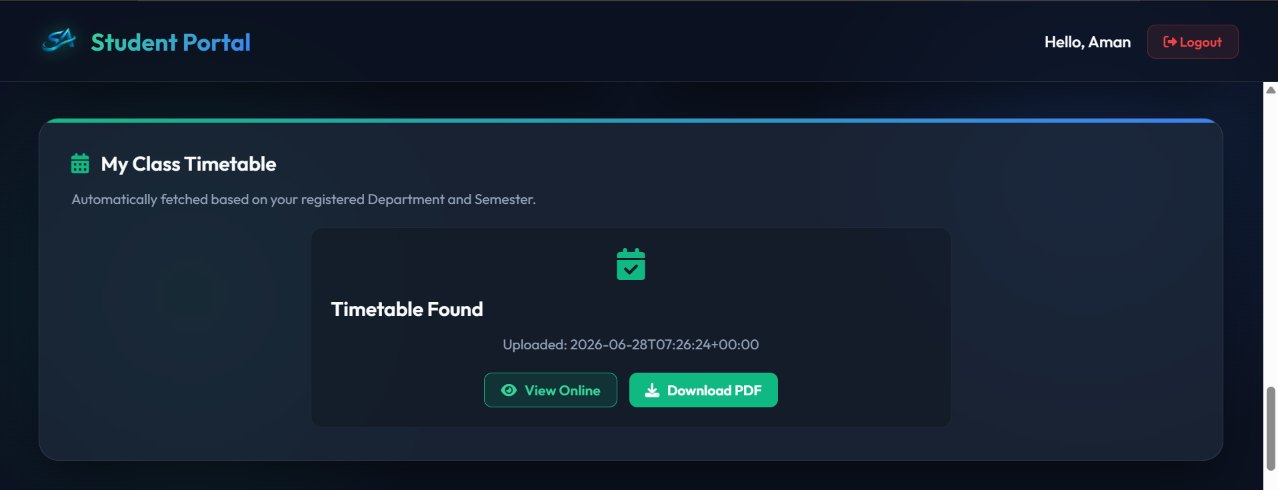
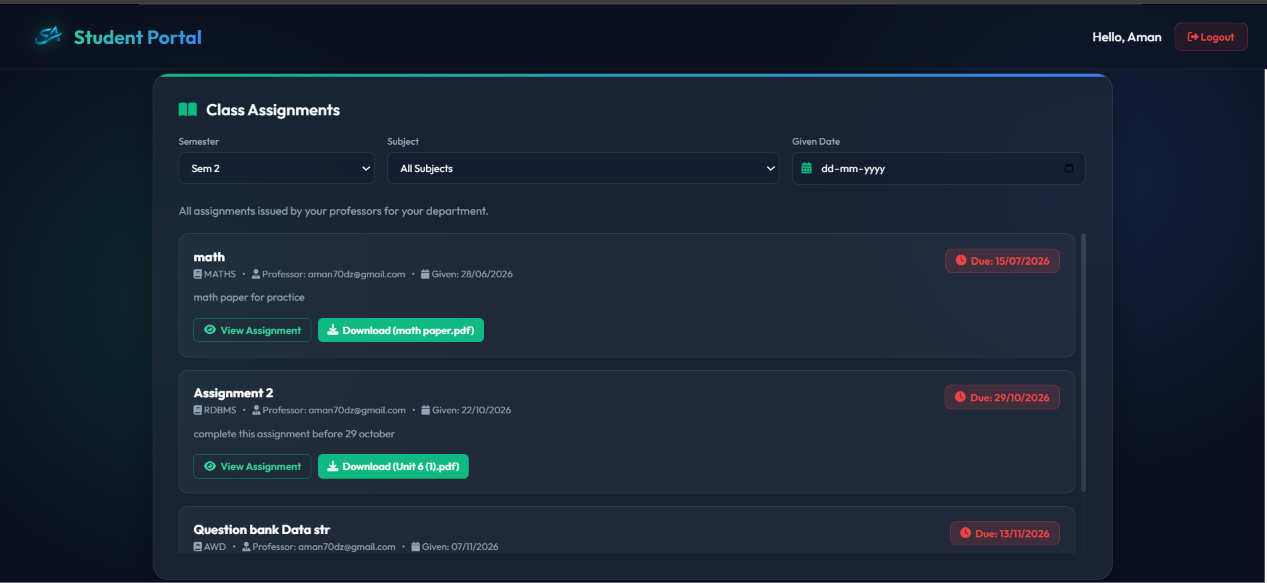
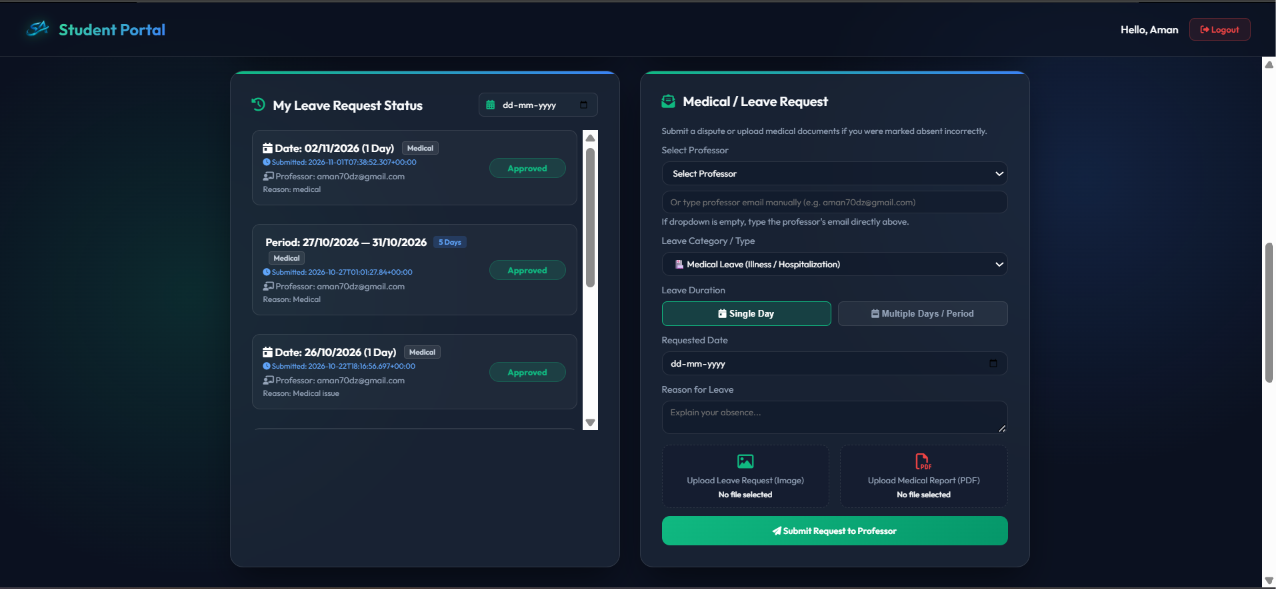
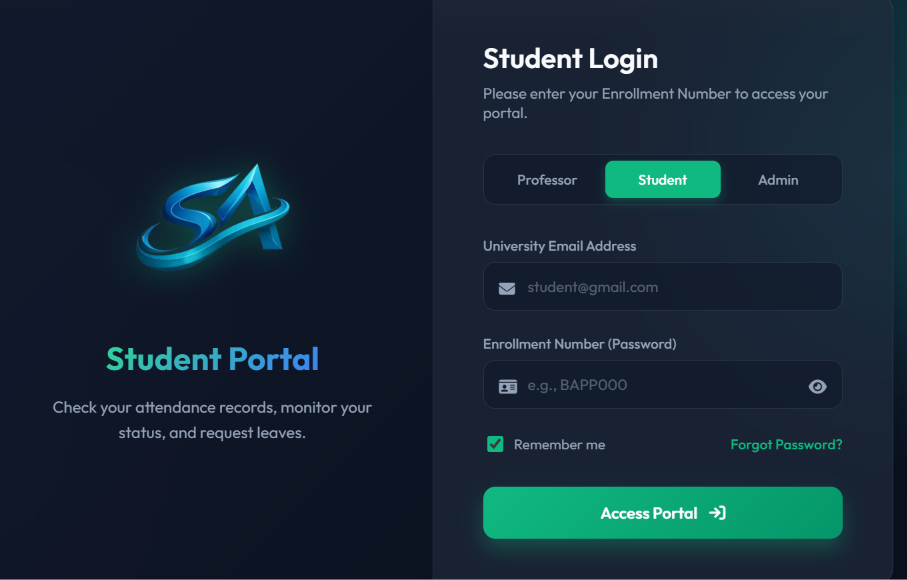
student login page
-
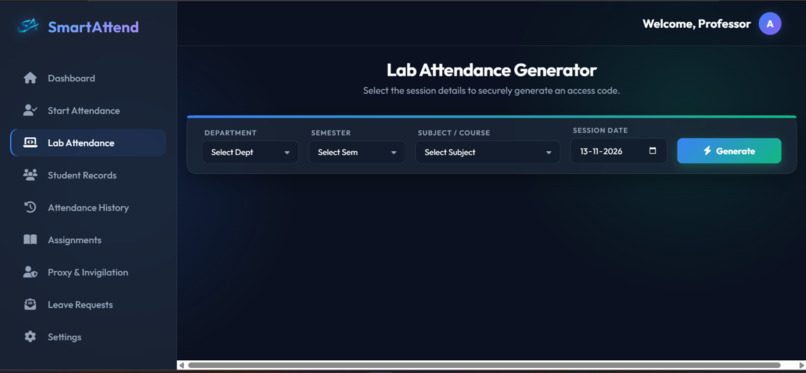
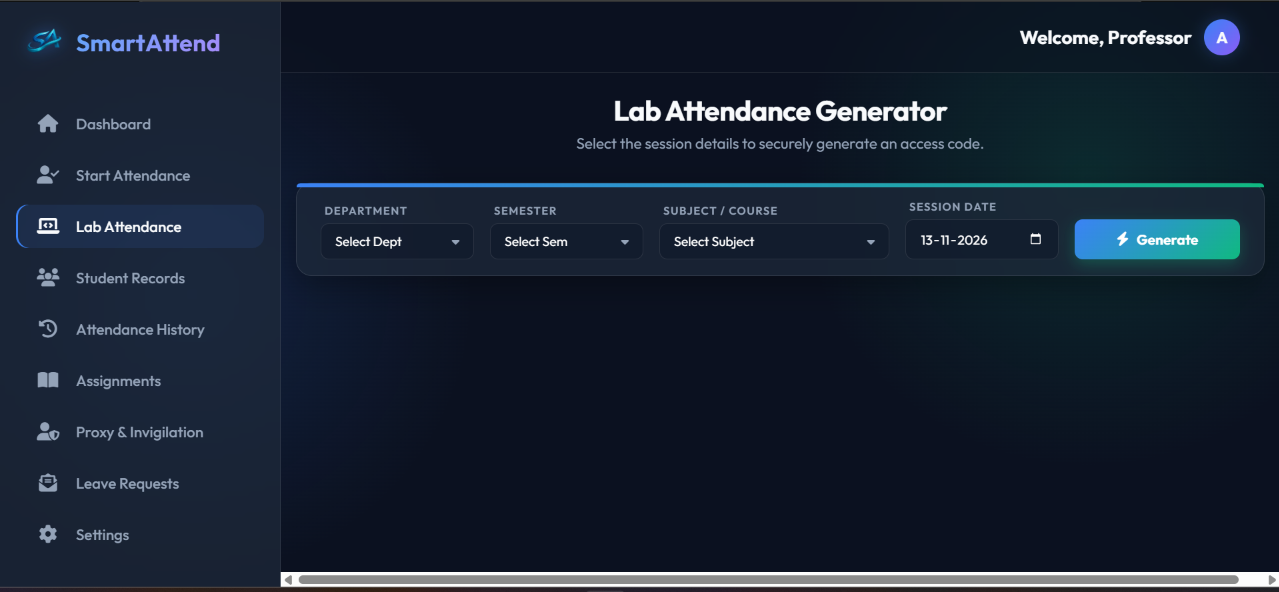
professor
-
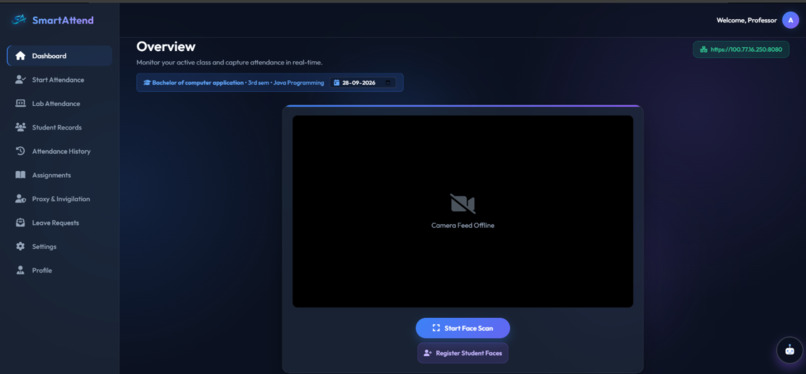
Professor
-
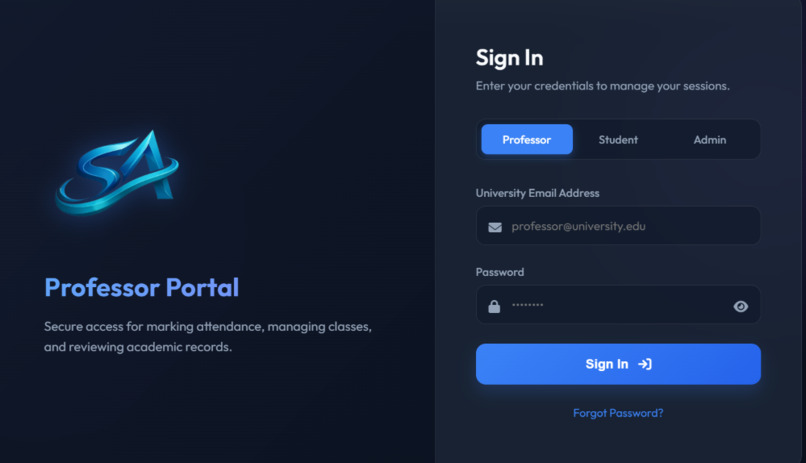
Professor
Inspiration
The inspiration behind SmartAttend came from my HOD. In our college, we were using a traditional attendance system, and I started thinking about how we could make this process smarter using modern AI technologies. Traditional attendance methods have several limitations, especially the possibility of proxy attendance, time consumption, and manual errors. I saw an opportunity to solve these problems by building an AI-powered attendance system that makes attendance more secure, accurate, and efficient.
What it does
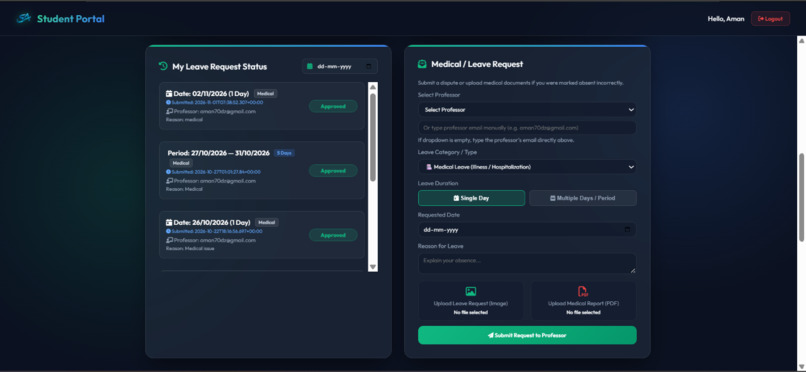
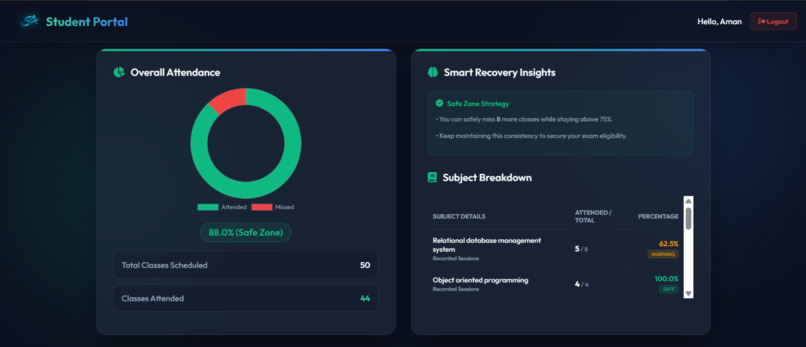
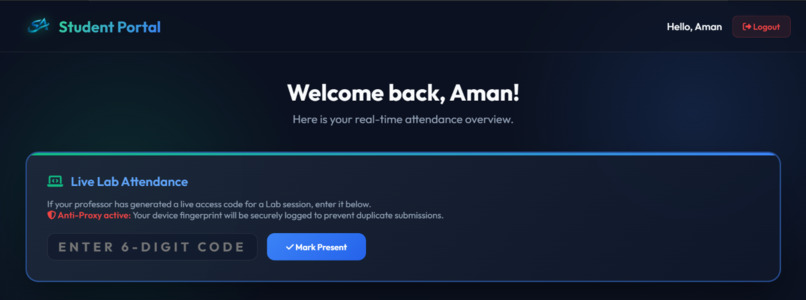
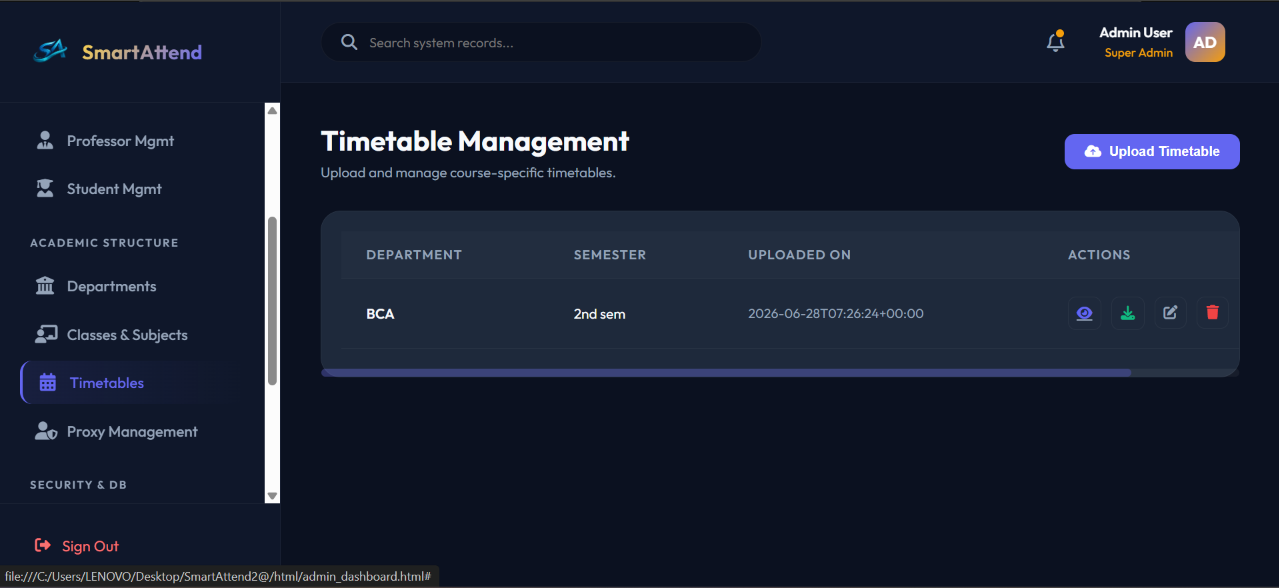
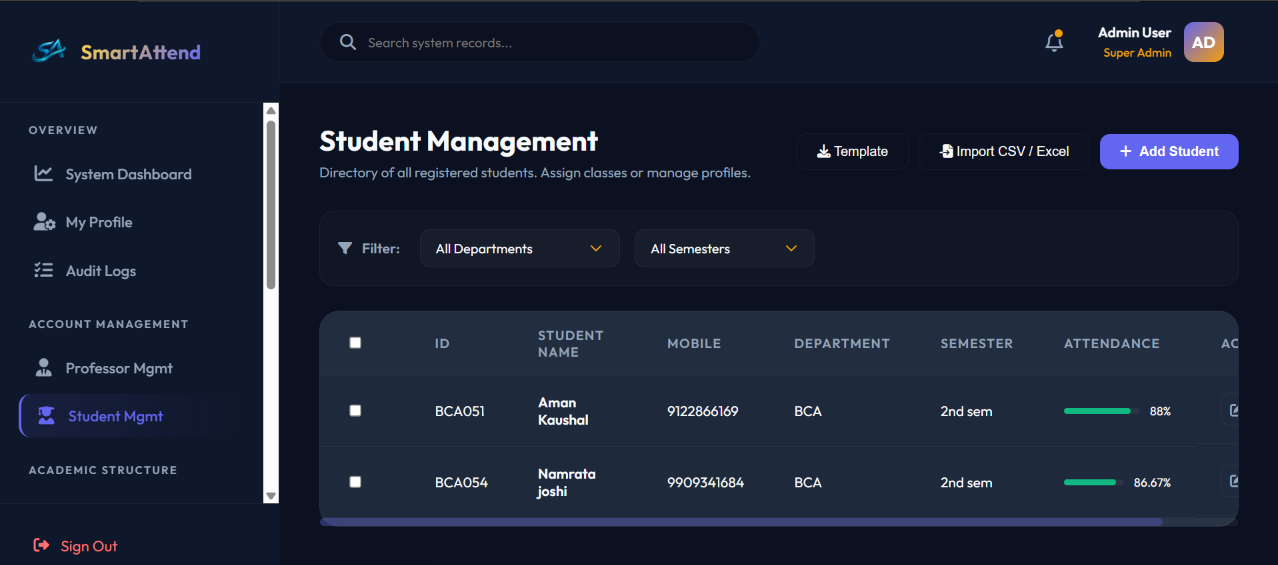
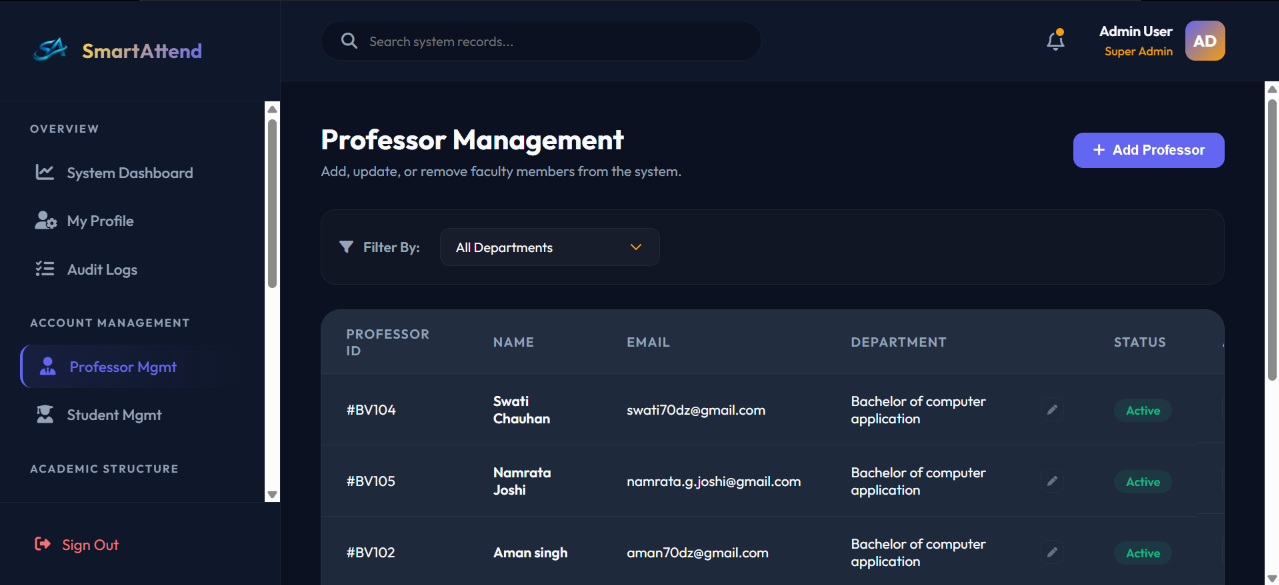
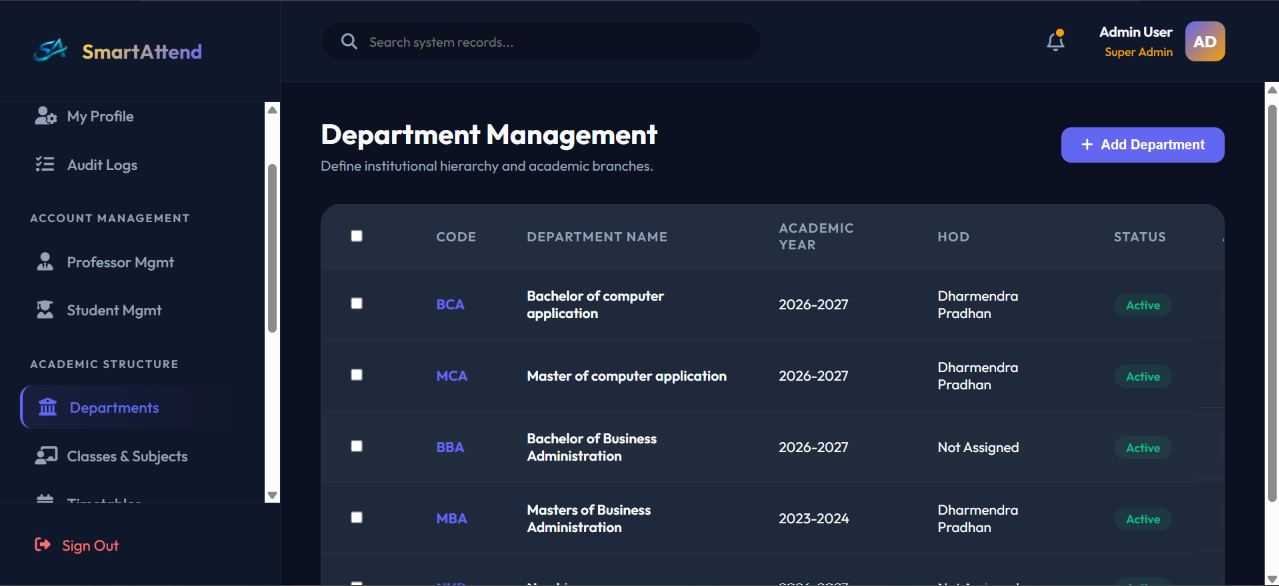
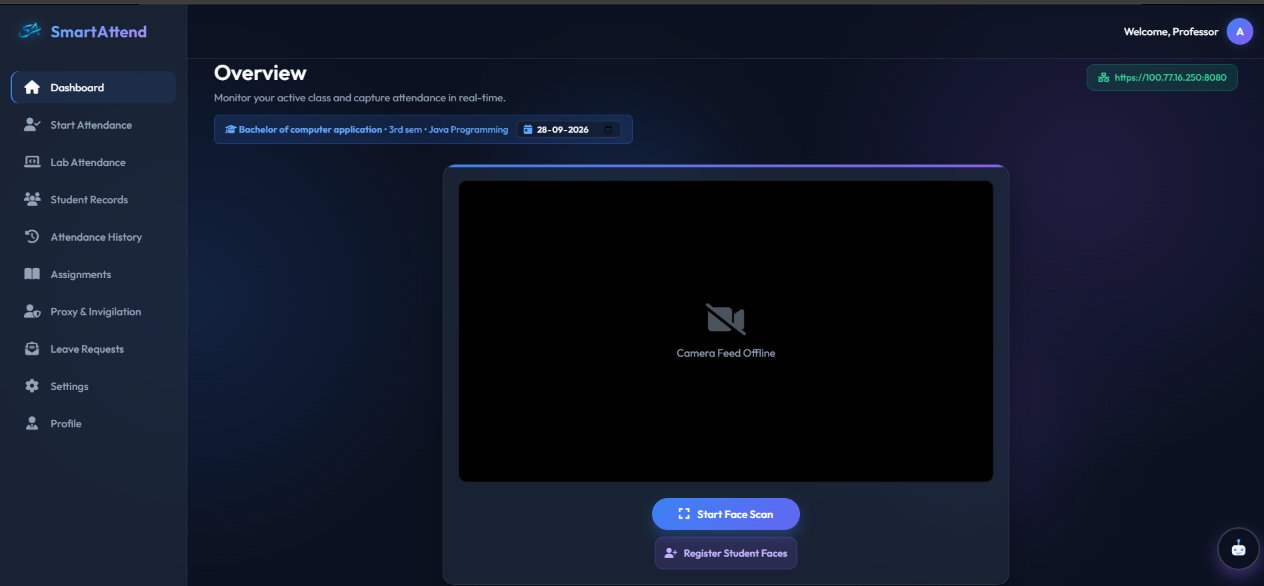
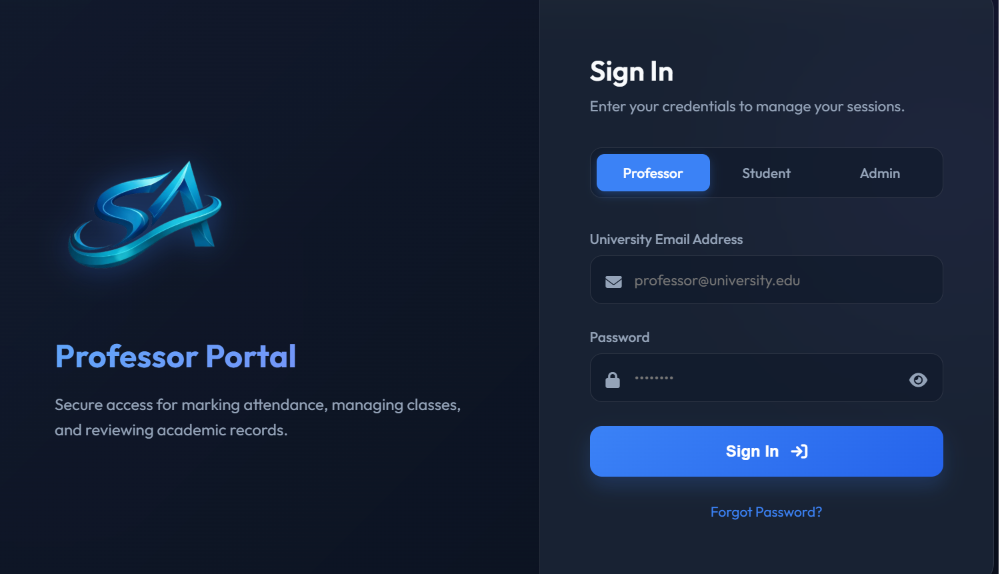
SmartAttend is an AI-powered smart attendance management system designed for Students, Professors, and Administrators. It uses AI-based facial recognition and OTP verification to mark attendance. Students can mark their attendance through face scanning, while OTP verification provides an additional layer of security for laboratory attendance. The platform also provides separate functionalities for professors and administrators to manage and monitor attendance.
Our main goal is to eliminate proxy attendance, reduce manual work, and make the entire attendance process more reliable.
How we built it
I started working on SmartAttend around six months ago. I began by identifying problems in the existing attendance system, creating a development plan, and discussing the idea with professors and friends to understand their requirements.
After that, I started developing the application using a vibe-coding approach, exploring different AI technologies and development tools along the way. I have consistently dedicated time to improving the system, adding features, and refining the overall experience.
Challenges we ran into
One of the biggest challenges was figuring out how to make facial recognition reliable enough for a real classroom environment. Another challenge was understanding how to combine different technologies into one system while maintaining a smooth experience for students, professors, and administrators.
Since I started this project independently, learning new technologies, debugging issues, planning features, and managing development alongside my studies was also challenging. However, each challenge helped me understand the project better and improve the system.
Accomplishments that we're proud of
The biggest accomplishment is that I took an everyday problem in my college and started building an actual solution for it. What initially started as an idea has gradually developed into a working application with separate functionalities for students, professors, and administrators.
I am particularly proud of the consistency with which I have worked on this project over the last six months. Instead of keeping the idea on paper, I took the initiative to learn, experiment, and turn it into something tangible.
What we learned
While building SmartAttend, I learned that developing a real-world product involves much more than just writing code. Understanding the actual problem, discussing requirements with potential users, choosing the right technologies, and continuously improving the product are equally important.
I also gained practical experience with AI technologies, application development, problem-solving, and the importance of building technology around real user needs.
What's next for SmartAttend
Our next goal is to make SmartAttend more reliable, secure, and scalable. We want to improve facial recognition accuracy, strengthen anti-proxy mechanisms, and introduce more intelligent attendance analytics.
We also aim to test the system in a real college environment, collect feedback from students and professors, and improve it based on their experience.
Our long-term vision is to make SmartAttend a complete smart attendance solution that can be adopted by colleges and educational institutions across India and eventually globally.
Built With
- android-cordova
- chartjs
- css
- express.js
- face-api-js
- gemini-ai-api
- google-apps-script
- google-cloud
- google-sheets
- html5
- javascript
- jwt-auth
- netlify
- node.js
- nodemailer-smtp
- postgresql
- pwa
- python
- render
- restful-api
- sql
- supabase
- tensorflowjs
- web-app

