-
-
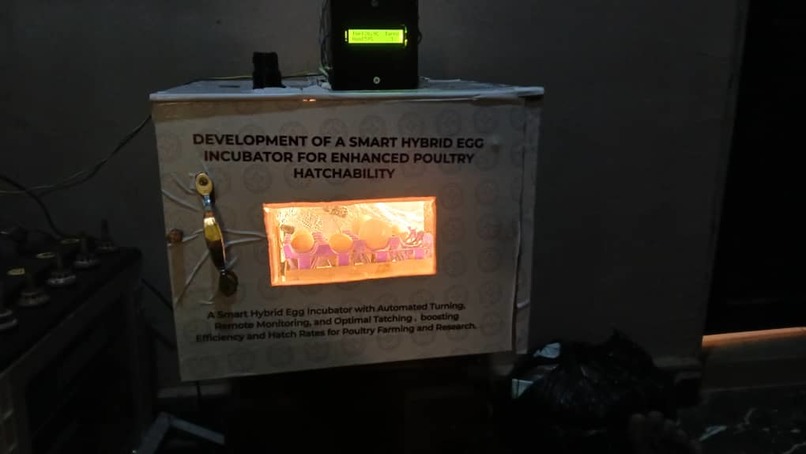
Smart Hybrid Incubator
-
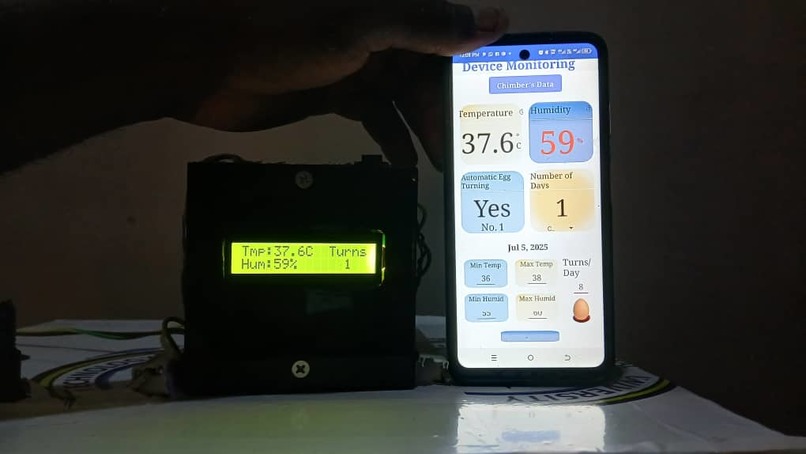
Smart Hybrid Incubator
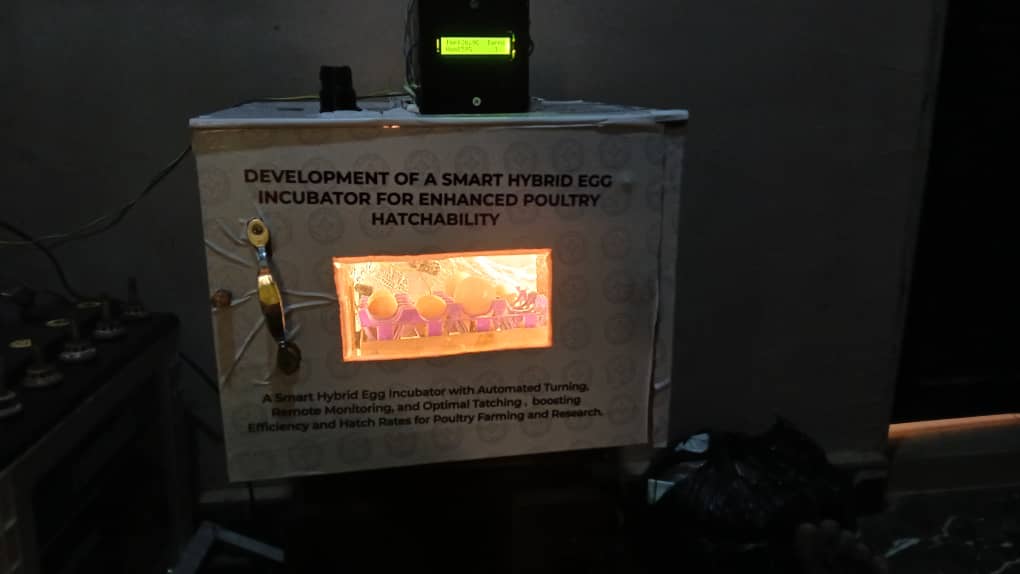
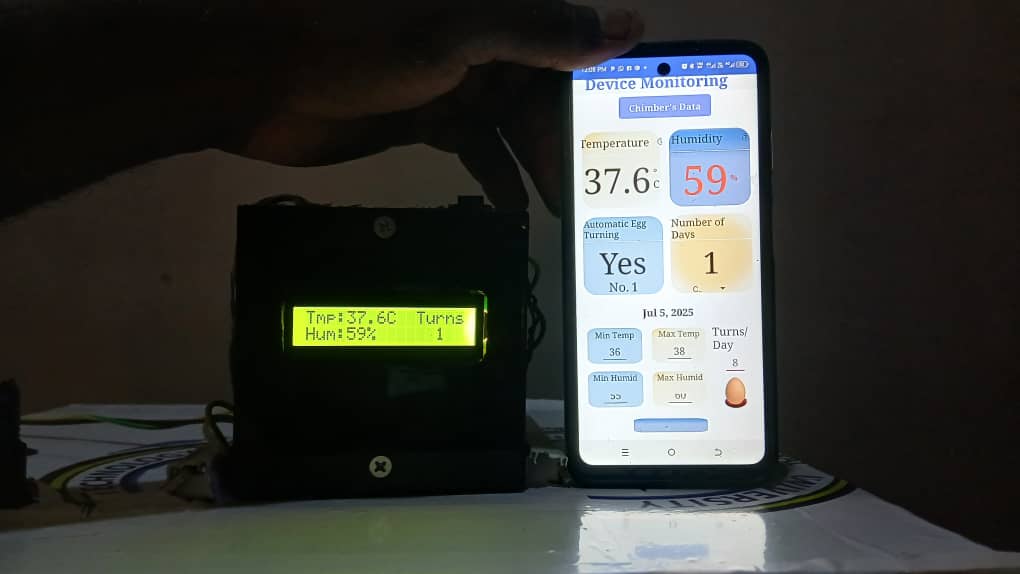
Inspiration
Growing up in Nigeria, many of us on the team witnessed the challenges faced by smallholder poultry farmers—especially one teammate’s uncle, who manually incubated eggs using makeshift heat sources and often suffered losses due to power cuts and unstable temperature conditions.
His struggles became the spark that brought our team together. With shared interests in embedded systems, IoT, and real-world impact, we asked ourselves: “Can we build a reliable, intelligent incubation system tailored for rural farmers—offering smart control, real-time monitoring, and resilient power options?”
That question laid the foundation for the Smart Hybrid Incubator System—a solution built to modernize poultry incubation in low-resource environments.
What it does
The Smart Hybrid Incubator System is a robust, IoT-enabled device that maintains optimal incubation conditions automatically and remotely.
Core Features: Temperature Control: Maintains 36°C–38°C using AC and DC heating sources, guided by real-time sensor feedback.
Humidity Regulation: Automatically activates a humidifier to sustain ideal moisture levels for embryo development.
Automated Egg Turning: Uses a motorized tray system to rotate eggs periodically, mimicking natural hen behavior.
IoT Connectivity: Connects to the cloud via Wi-Fi for remote monitoring, alert notifications, and control via a mobile app.
Mobile App Control: Enables farmers to tweak settings, schedule egg turns, and receive alerts—all from their smartphones.
Hybrid Power Support: Operates seamlessly on AC and DC power, ensuring uptime during blackouts or off-grid conditions.
LCD Display & Offline Mode: Displays live stats locally and continues functioning with preset settings when internet is unavailable.
How we built it
Planning & System Design We began by identifying the must-haves for a reliable incubator—precise environmental control, automation, remote access, and power resilience. A system block diagram guided our hardware selection and integration process.
Hardware Integration We carefully selected affordable yet effective components:
Microcontroller: ESP32 for Wi-Fi and efficient multitasking
Sensors: DHT22 for accurate temp and humidity readings
Heating: 60W AC bulb + dual 12V DC bulbs
Actuators: Humidifier module, servo/motor system for egg rotation
Display: I2C LCD
Power System: AC-to-DC converter, battery/solar input, and relay switching modules
Firmware & IoT Platform Using C++ in the Arduino IDE, we developed modular firmware to:
Monitor environmental parameters
Control heat/humidity/turning via feedback
Manage Wi-Fi with fallback to offline mode
Communicate with our cloud-based Android app using HTTP Protocol
The mobile app featured:
Live data display
Parameter control
Notifications and reminders for egg candling
Testing & Optimization We performed several rounds of testing:
PID tuning for stable temperature control
Humidity regulation with burst logic
Egg-turning validation to ensure gentle, reliable movement
Fail-safes for internet and power outages
Rural field tests to ensure 24/7 reliability
Challenges we ran into
Power Switching: Ensuring safe transitions between AC and DC sources
Environmental Precision: Dynamic tuning to maintain stable microclimates
Mechanical Design: Low-cost, non-damaging egg rotation was hard to perfect
Connectivity Handling: Creating a reliable offline mode without compromising function
Compact Integration: Fitting everything in a small, functional form factor
We committed to designing not just for labs, but for real-world, underserved settings.
Accomplishments we're proud of
Built a hybrid AC/DC powered incubator tested successfully in off-grid rural settings.
Created a safe, automated egg-turning system improving hatch success rates.
Delivered a real-time mobile app interface and full offline mode for farmer convenience.
Achieved round-the-clock operation in environments with poor infrastructure.
What we learned
This project pushed our skills across multiple domains:
Embedded Systems: Designing responsive, real-time hardware control
IoT in Unstable Networks: Ensuring reliable offline fallback and data integrity
User-Centered Engineering: Prioritizing ease-of-use and automation for non-tech users
Cross-Disciplinary Collaboration: Applying biology, electronics, and mechanical design in one product
We learned that truly impactful innovation isn’t always about complexity—it’s about building reliable, empathetic, and context-aware solutions.
What’s next for Smart Hybrid Incubator
AI-Powered Recommendations We’re integrating AI that learns from usage patterns to optimize conditions for different egg types and predict hatching success and
AI that learns from usage patterns to optimize conditions for different egg types and predict hatching success. It can also detect and predict the rotation behavior of unfertilized eggs early on — saving farmers the stress and time of waiting 14–21 days by allowing them to quickly replace unfertile eggs with fertile ones, ultimately increasing hatch rate and production efficiency.
Commercial-Scale Expansion The current prototype suits small-scale farmers. We plan to scale for large operations with multi-chamber setups and centralized dashboards.
Predictive Maintenance Using operational data, we aim to detect early signs of mechanical wear or sensor drift—minimizing failure risk.
Smart Energy Management We’re exploring AI-based prioritization of energy consumption based on available solar input or battery levels.
Market-Driven Incubation By integrating with local poultry market data, the incubator will help farmers align hatch timing with peak demand cycles.
DIY Deployment Kits We're developing affordable kits and training programs to empower local farmers, engineers, and co-ops—especially in underserved communities.


Log in or sign up for Devpost to join the conversation.