-
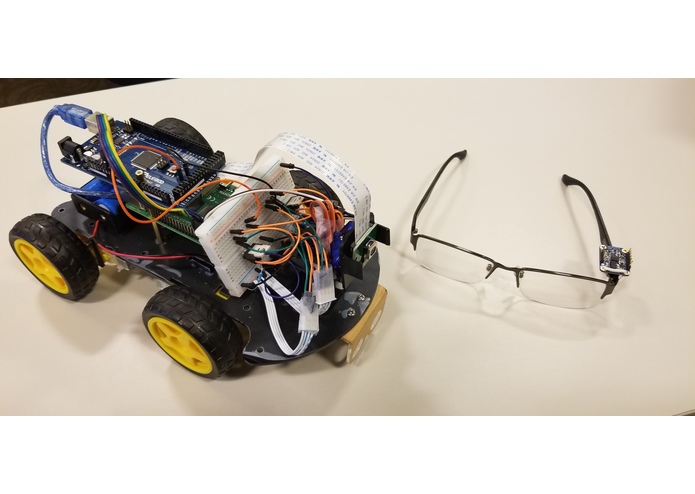
Model of the car & IMU sensor glasses
-
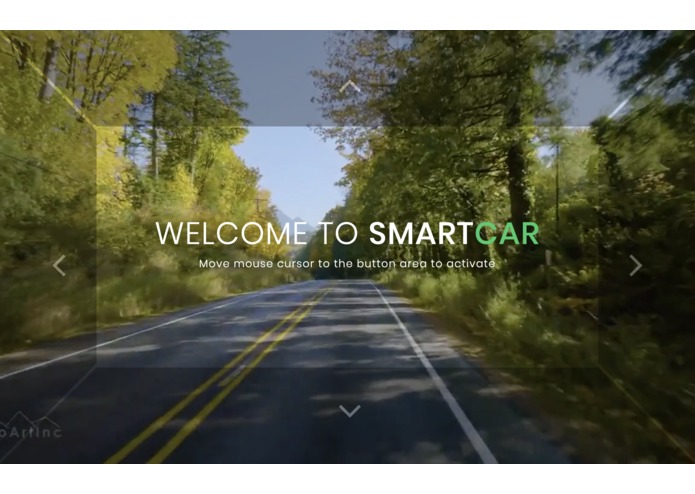
Control Page
-
Smart Car for Severely Paralyzed Patients
-
Inspiration
-
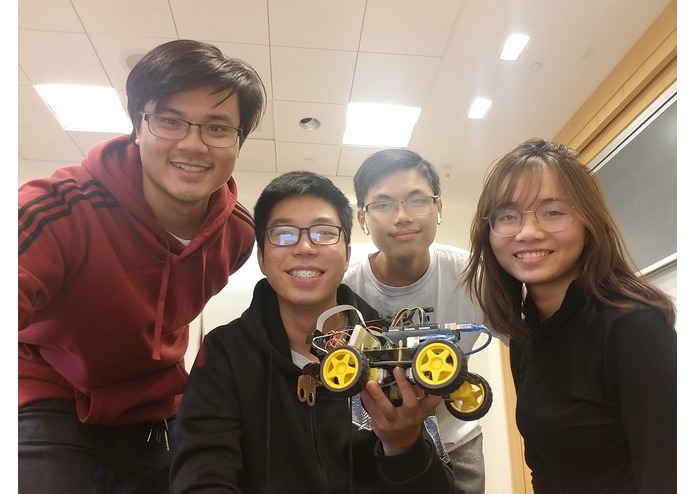
Our Team


Inspiration
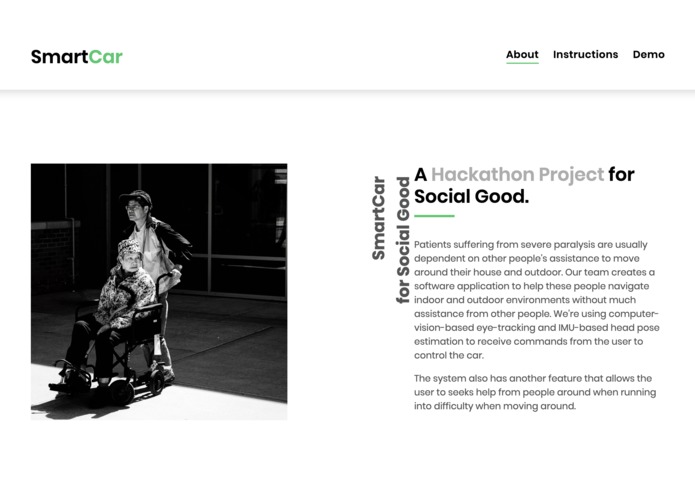
Patients suffering from severe paralysis are usually dependent on others for assistance to moving around. Our team creates a complete solution that enables them to see the world independently. The prototype is wifi-controllable and consists of an onboard Camera. We’re using computer-vision-based eye-tracking and IMU-based head pose estimation to receive commands from the user to control the car. This system helps paralyze people to physically interact with other people and explore their surroundings.
What it does
The car would stream the video from the front camera in almost real-time, which allows the user to see the front view when moving. The user can turn the car to the right or left and forward it by gazing to the buttons on the screen. The system also incorporates a camera to track the eyes' pupil movement and an IMU sensor to robustly estimate where the user is looking at the screen. The information is used to control the car according to the view direction.
How we built it
Hardware: We modified UCTRONICS Robot Car Kit which has a Raspberry-pi and an onboard Camera. We created our own Motor Driver from Arduino and Breadboard. The IMU sensor provides the absolute orientation of the user's head pose. It is attached elegantly to a glasses and sends the orientation to an Arduino. A Python program will process this raw information and estimate the point of view of users.
Software: We have 1 Python program that handles data processing, including the data from the IMU sensor and from Camera to robustly estimate user view direction. This program will send commands to the Raspberry Pi. We have 2 other software programs embedded in the Raspberry Pi, which will stream the camera to the remote machine. For head pose estimation, the camera looking at a driver’s face in a vehicle can use head pose estimation to control the vehicle. Head pose estimation using Arduino and a spy camera
Challenges we ran into
We didn't expect that there would some software restriction in the Robot Car Kit we purchased that made it difficult for us to implement the ideas we planned at the beginning of the hackathon. In addition, it was the first time for some of our members to use Arduino and Raspberry Pi; however, we manage to assemble the model of the car on time.
Accomplishments that we're proud of
We are proud that we're able to make the car from scratch and successfully develop the software to track head pose and track eyes pupil movement.
What we learned
The most valuable lesson we gained from this hackathon is how to divide tasks among members in order to make sure that we delivered the products on time. Furthermore, we are more aware of the difficulties that people with disabilities suffer from.
What's next for Smart Car for Physically Handicapped Patients
- Have the button layout combined with the real-time video streamed from the car model displayed on the website.
- Continue to develop the speech assistance and display it on the website
Built With
- adruino
- opencv
- python
- raspberry-pi

Log in or sign up for Devpost to join the conversation.