Inspiration:
Water wastage is an often overlooked problem. A common example is when people over refilling drinks while outside, only to leave them unfinished, leading to unnecessary waste, or sometimes it is overused in the house or at workplaces when filling bottles and cups. These small, daily actions collectively contribute to a larger issue of resource wastage and show the requirement for more awareness and better practices in the consumption of water. The installation of such systems in these environments can thus bring about awareness, accountability, and responsible consumption of water. This system will also be integrated with AI that analyzes drinking patterns and develops personalized recommendations to optimize consumption. Using AI would help us learn user behavior and make it more natural toward a responsible water usage method that minimizes waste, ensuring long-term conservation of the resource.
What it does:
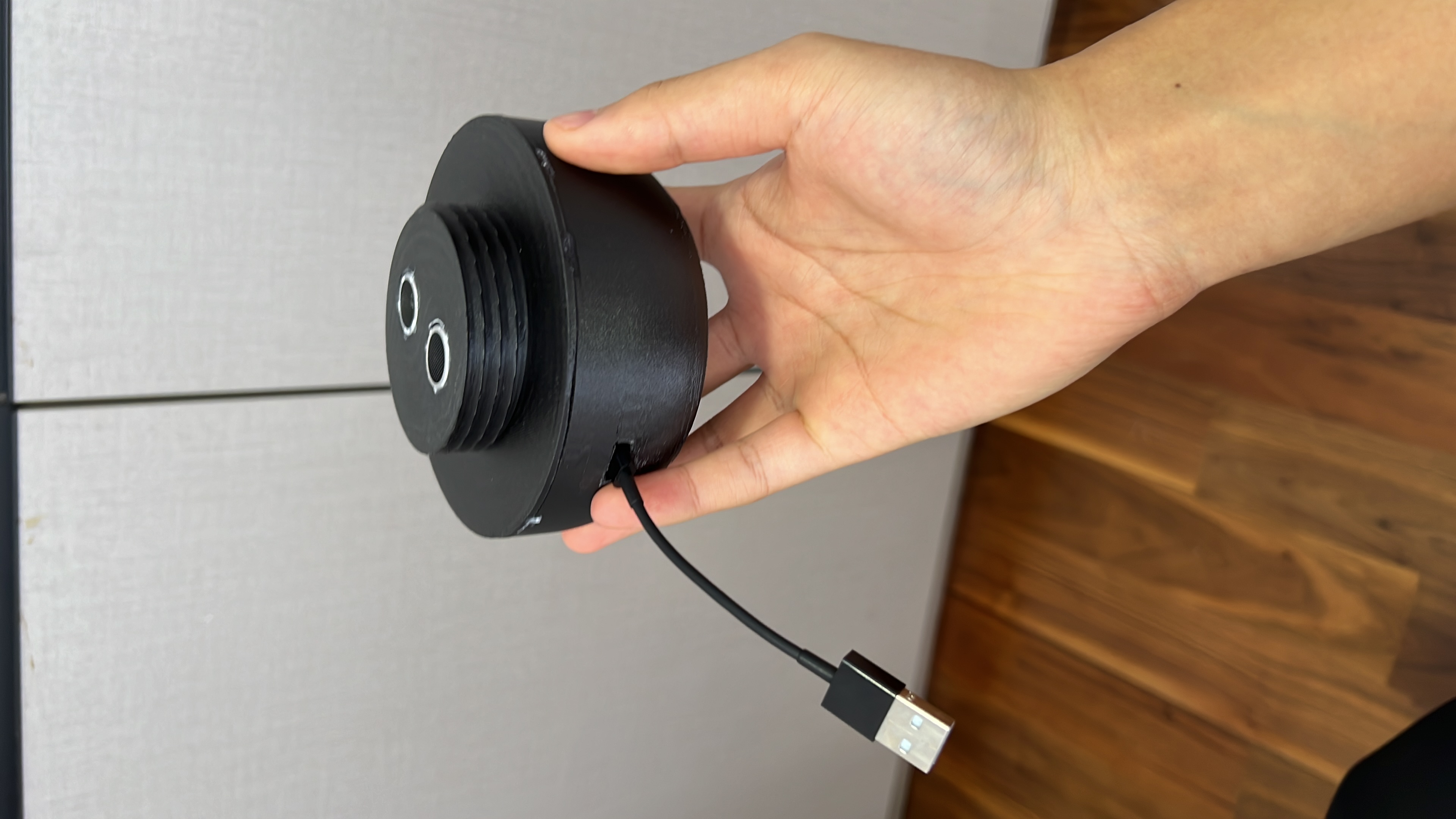
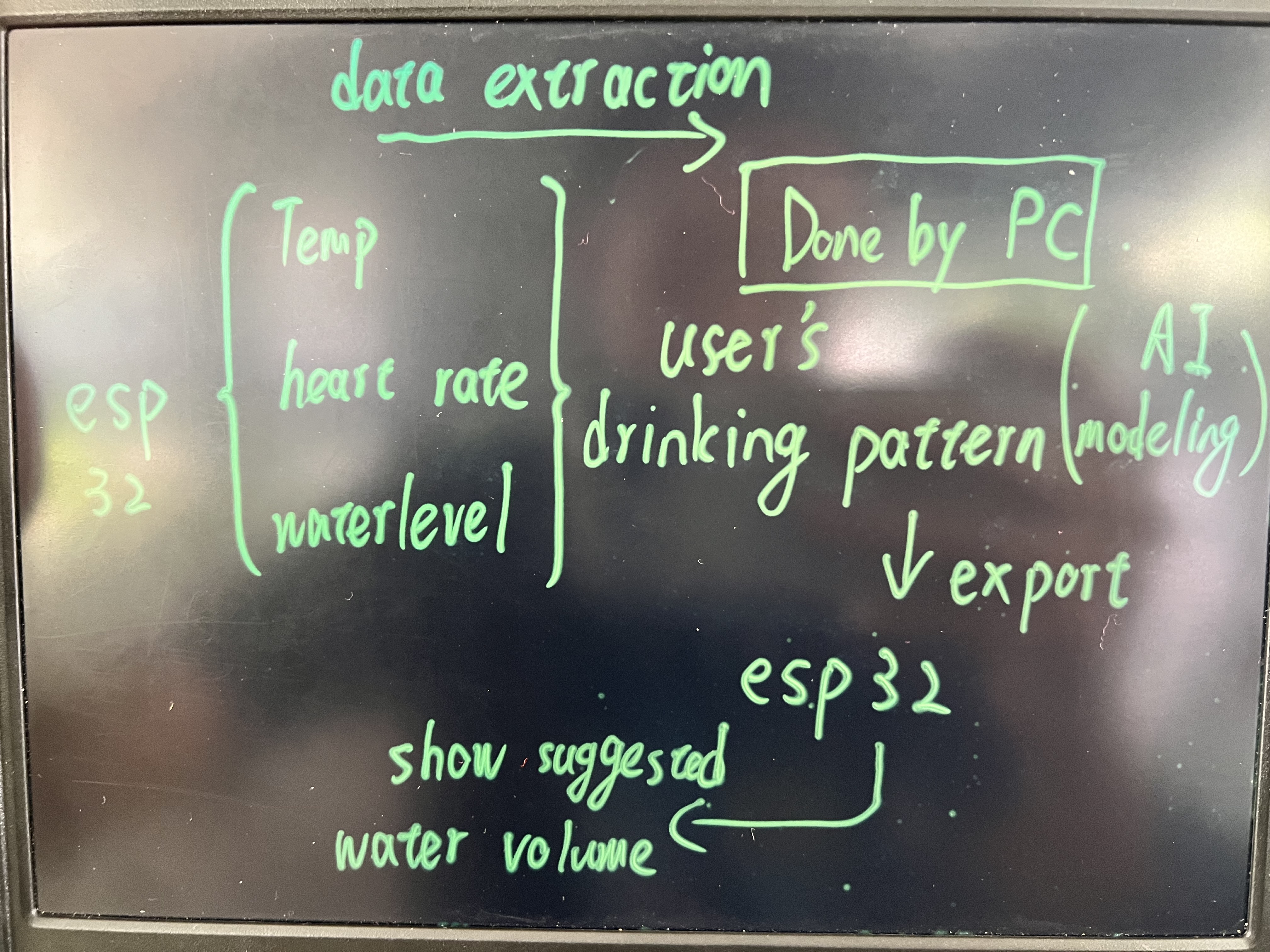
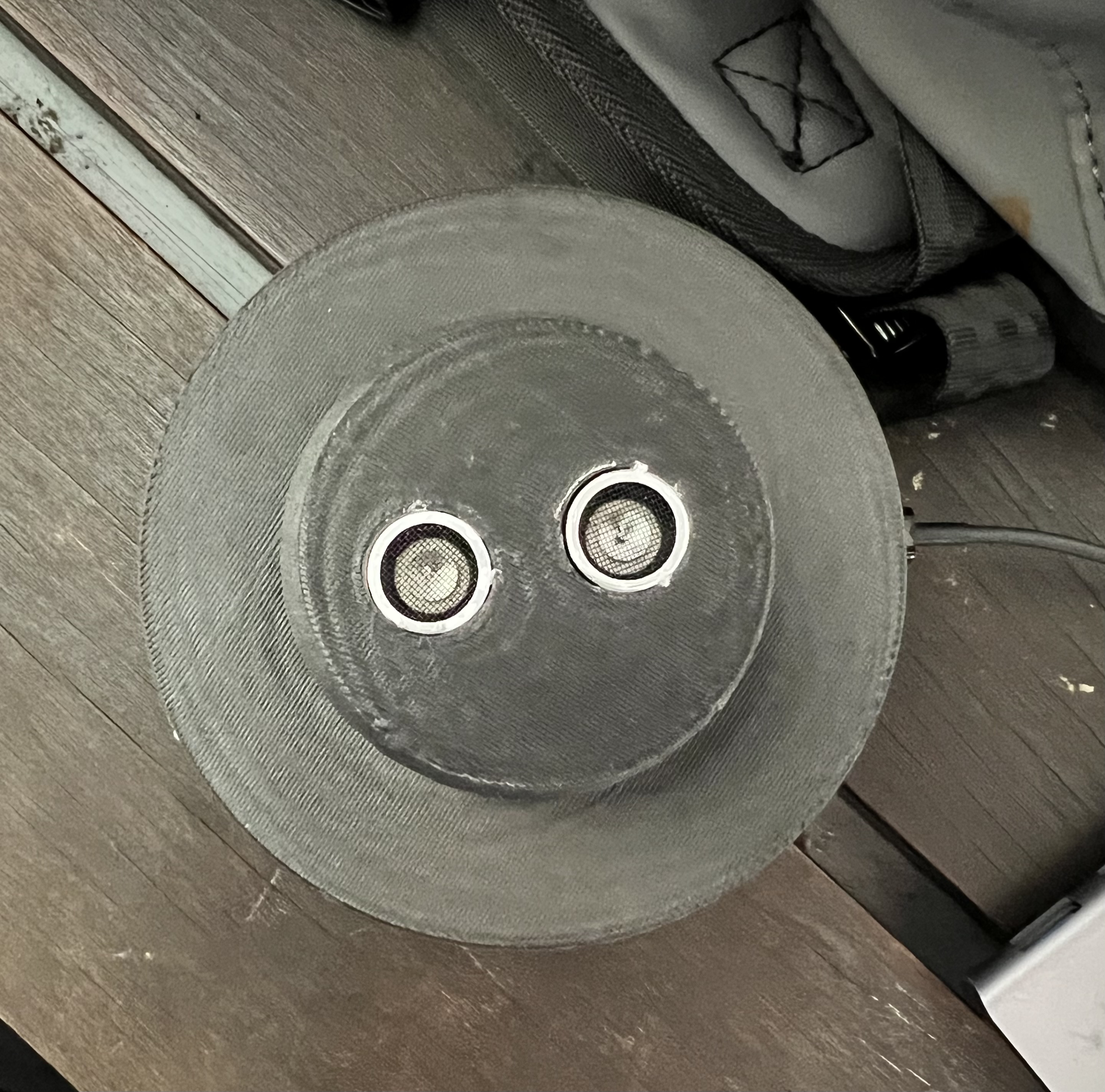
We used an HC-SR04 ultrasonic sensor to measure the water level. The sensor emits ultrasonic pulses and calculates the distance by measuring the time it takes for the echo to return after hitting the water surface. Throughout the day, the water level data is stored in the ESP32, which acts as a central hub for data collection. At the end of the day, users can extract this data either by connecting the ESP32 to their PC via USB or through Bluetooth for wireless convenience.
The extracted data is then analyzed using AI, which identifies patterns, detects wasteful habits, and provides actionable insights. AI predicts the user's optimal water intake, recommends adjustments to reduce waste, and highlights long-term trends to help users develop more sustainable water consumption habits.
How we built it:
We developed our water optimization system using an ESP32 microcontroller, a powerful and versatile device ideal for IoT applications. For water level measurement, we integrated an HC-SR04 ultrasonic sensor, which calculates the distance by emitting ultrasonic pulses and measuring the time taken for the echo to return. The data is stored on the ESP32 throughout the day.
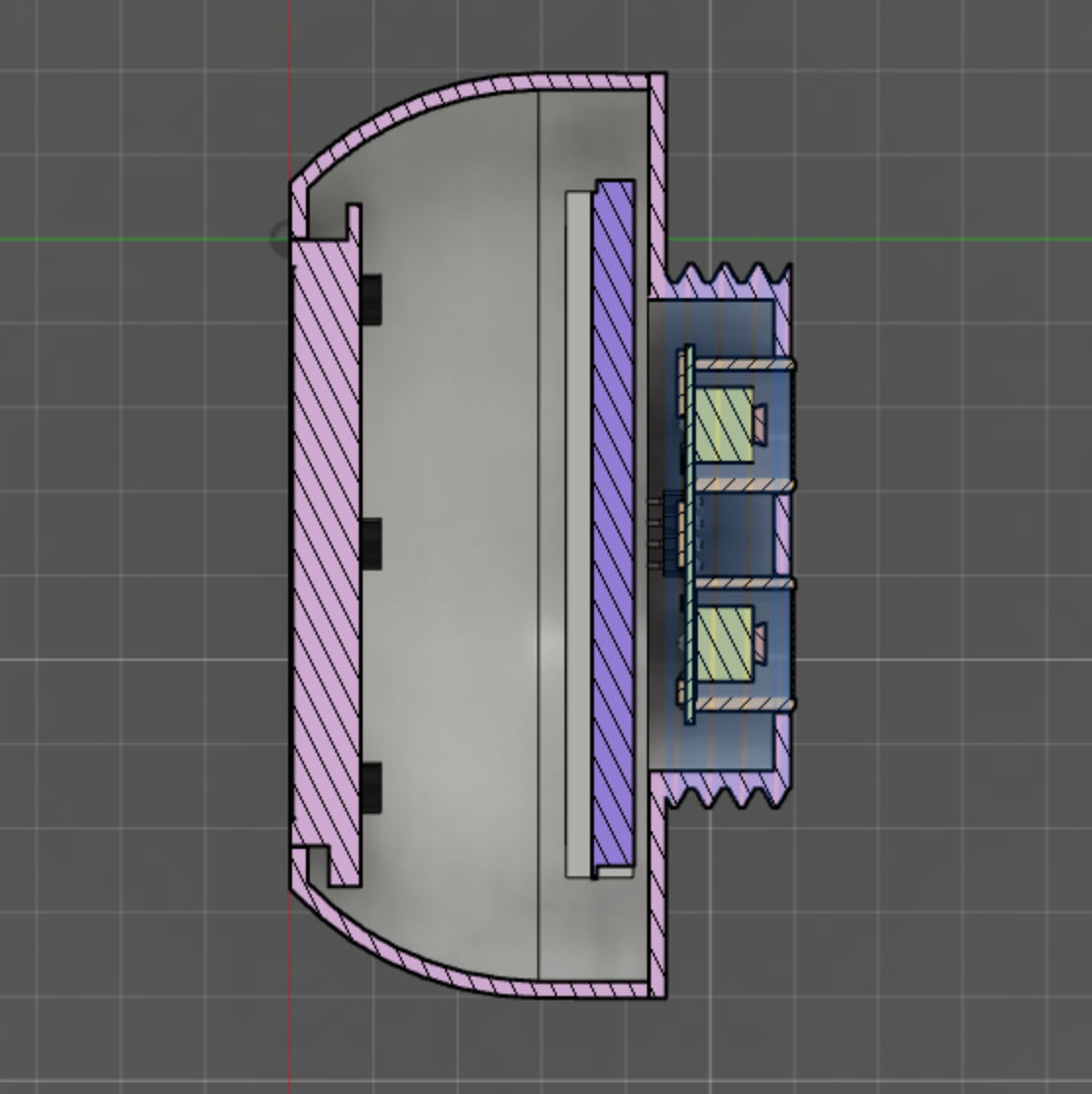
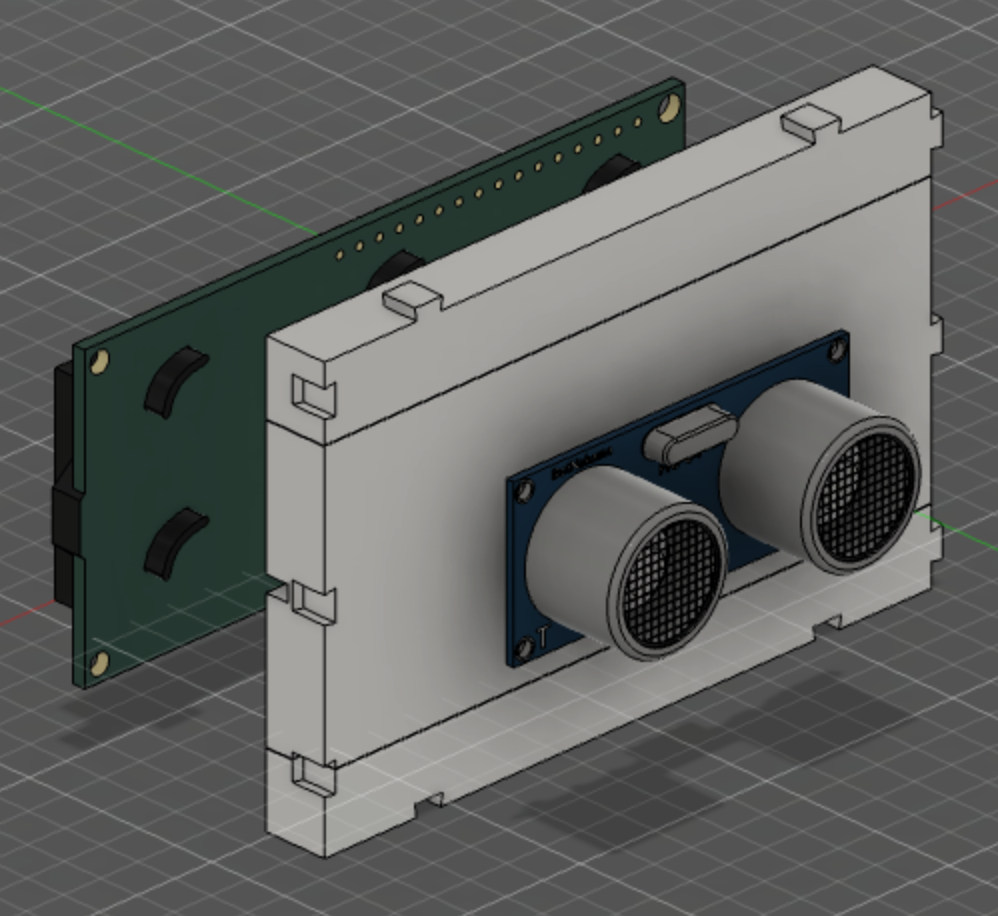
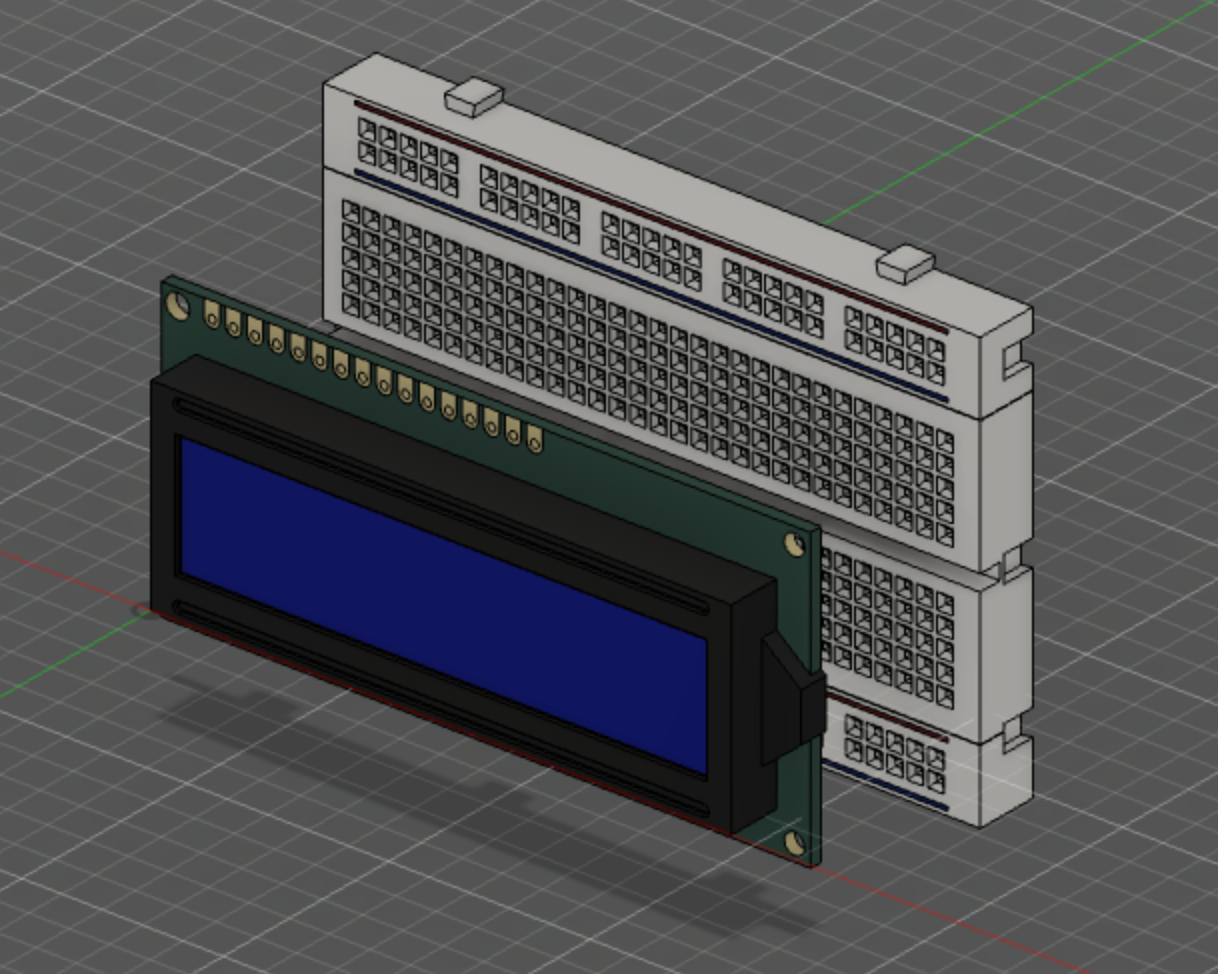
To enable user interaction, we implemented both USB connectivity for wired data extraction and Bluetooth communication for a seamless wireless experience. The collected data is processed using AI models, which analyze daily water consumption and waste patterns. This analysis helps predict optimal water intake and provides personalized recommendations to reduce waste and encourage sustainable habits. Additionally, we designed a model using Fusion 360 and 3D printed our prototype to bring our concept to life.
Challenges we ran in to:
Firstly, a major challenge we faced was our lack of experience, as this was our first ever hackathon and our first time working with the ESP32 microcontroller.
One of the primary difficulties was understanding how to properly code for the ESP32, as it required us to learn and adapt to its specific libraries and functions, which were unfamiliar territory. Writing the code for tasks such as managing the ultrasonic sensor, implementing Bluetooth communication, and ensuring data storage on the device was more challenging than we initially anticipated. Especially on the Bluetooth part, we faced challenges while attempting to connect heart rate data from the Apple Watch to the ESP32 using a bridge (iPhone). However, we were unable to successfully establish a connection between the BLE device and the ESP32.
Additionally, we struggled with uploading the code to the ESP32, as we encountered various technical issues during the process. These included driver compatibility problems, connection errors, and ensuring the correct board and port settings in the Arduino IDE. Debugging these issues took a significant amount of time and effort, especially as we had to research solutions online and troubleshoot errors without prior experience.
Finally, Inorder to protect our HC-SR04 from water, we need silicon membrane for water proof protection however currently we don’t have access to this material thus unable to accomplish this part.
Accomplishments that we're proud of:
Despite all the challenges and struggles, we successfully managed to get the device functioning and achieve the basic recording of data.
What we learned:
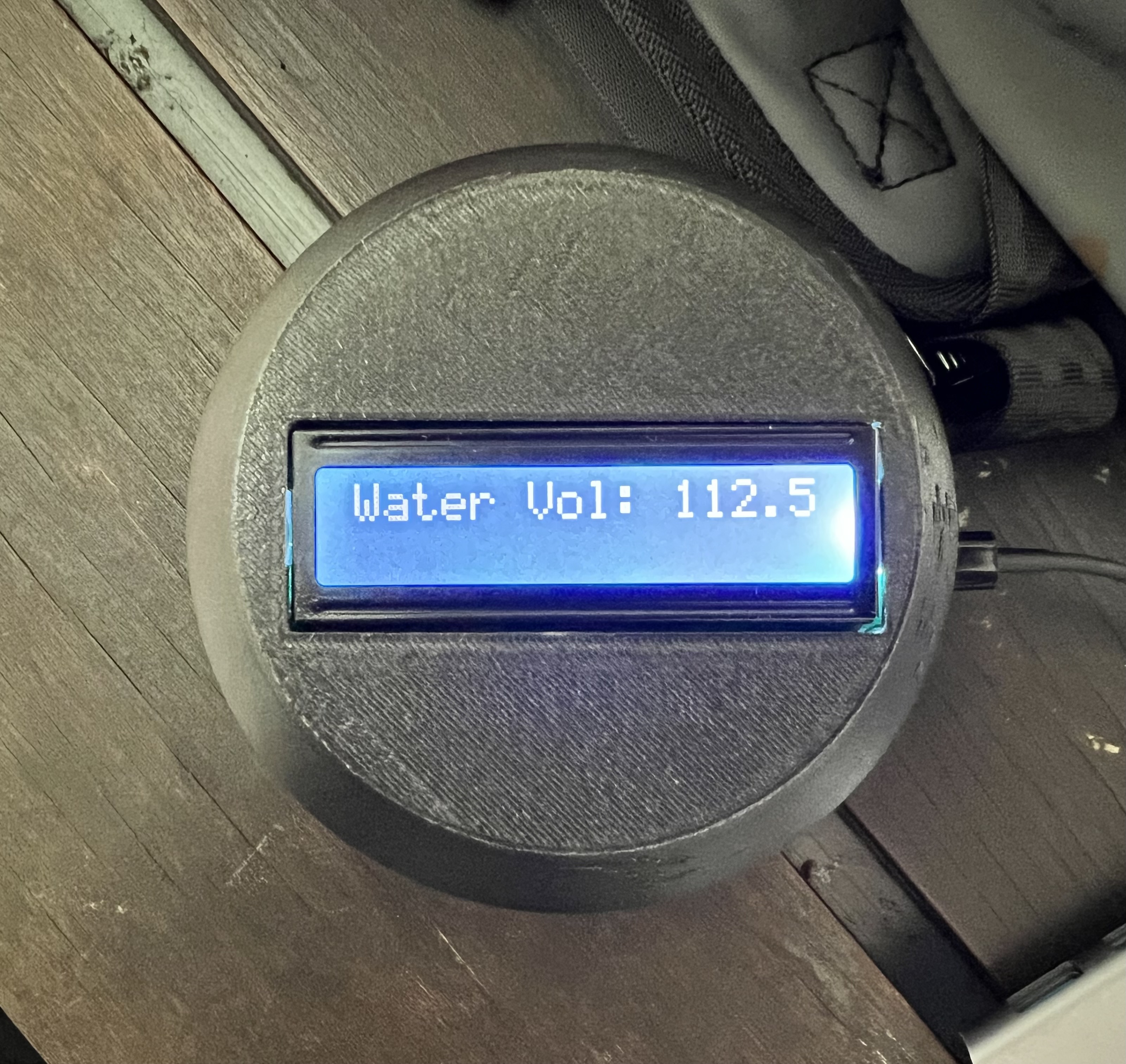
During this process, we learned to combine various skills such as 3D modeling, AI implementation to develop our project and coding for ESP 32 / LCD. As beginners with ESP32 and Arduino, we successfully prototyped and tested our project, achieving all the basic functionalities.
What’s next for our project?
Include more factors like heart rate, temperature, and diet into our AI model to generate an accurate predictions of user’s drinking behaviour, ensuring a more personalised and effective solution. Electronic component integration, to minimise complexity and size of our product. Insert water proof material for the protection of our HC-SR04, like silicon membrane (material that won’t affect the reading of the ultrasonic sensor. customised bottle cap for personal usage.

Log in or sign up for Devpost to join the conversation.