EcoSort AI: Intelligent Vision-Based Waste Segregation System
Inspiration
The inspiration for EcoSort AI came from a simple observation: despite increasing awareness about recycling, a large amount of waste still ends up in landfills because it is not segregated correctly at the source. Manual segregation is time-consuming, inconsistent, and can expose sanitation workers to health risks. Existing smart bins generally detect only whether waste has been deposited, but they cannot identify the type of waste.
This motivated us to develop an AI-powered waste segregation system that can automatically recognize waste items using computer vision and direct them into the correct bin. Our goal was to make waste segregation smarter, safer, and more efficient while demonstrating how Artificial Intelligence can contribute to environmental sustainability.
What We Built
EcoSort AI is an intelligent waste segregation system that combines Artificial Intelligence, Computer Vision, and Embedded Systems.
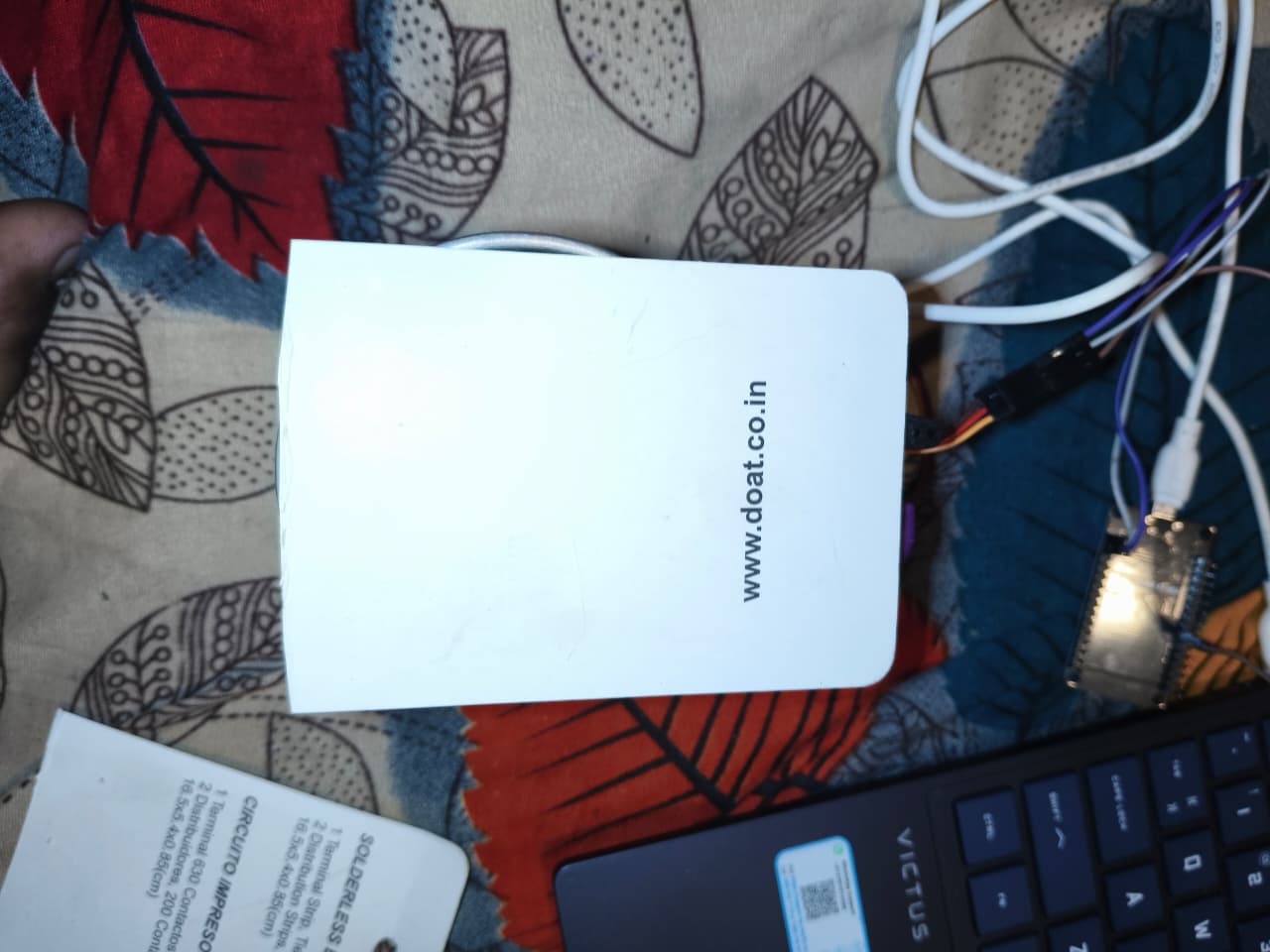
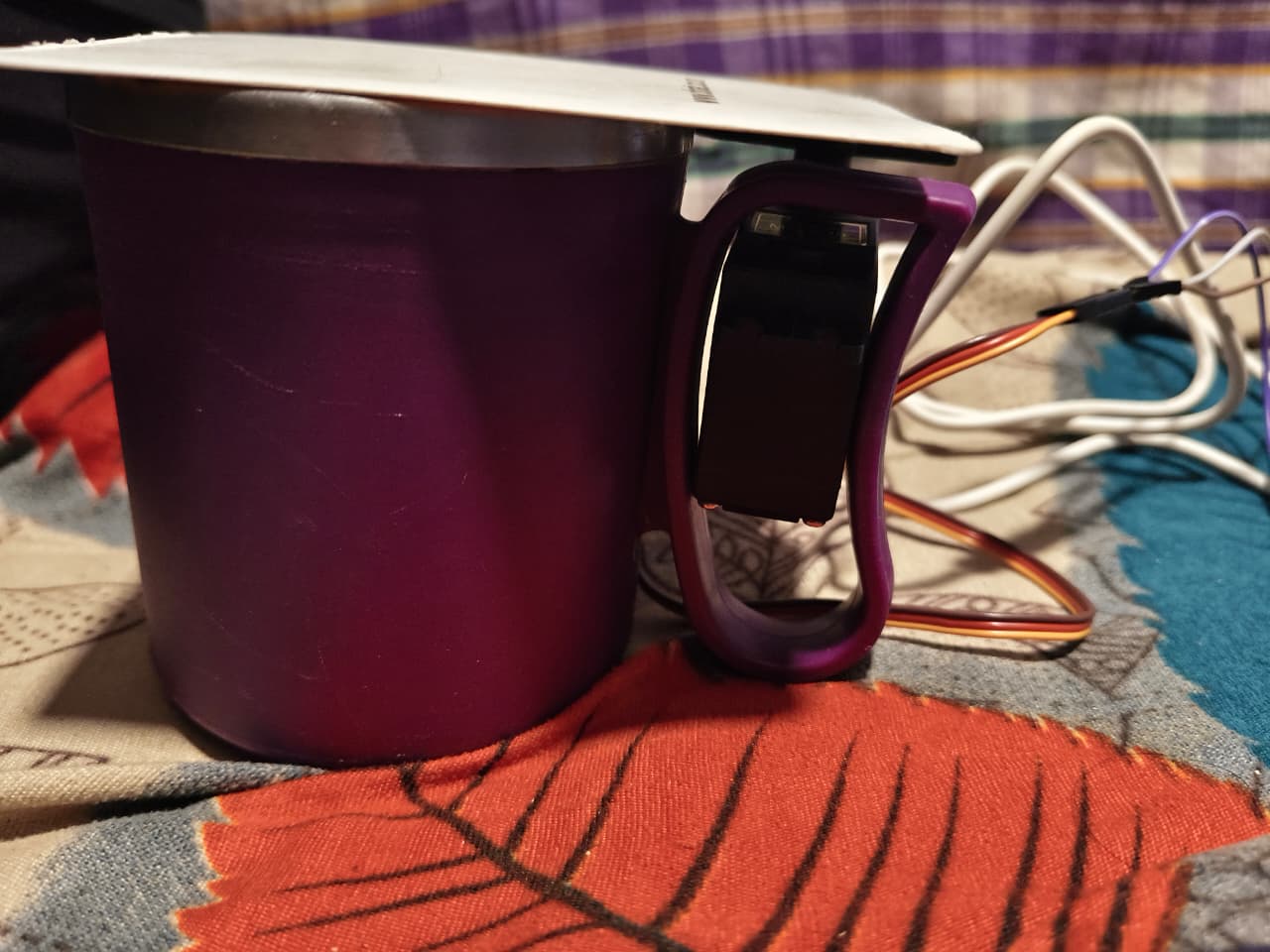
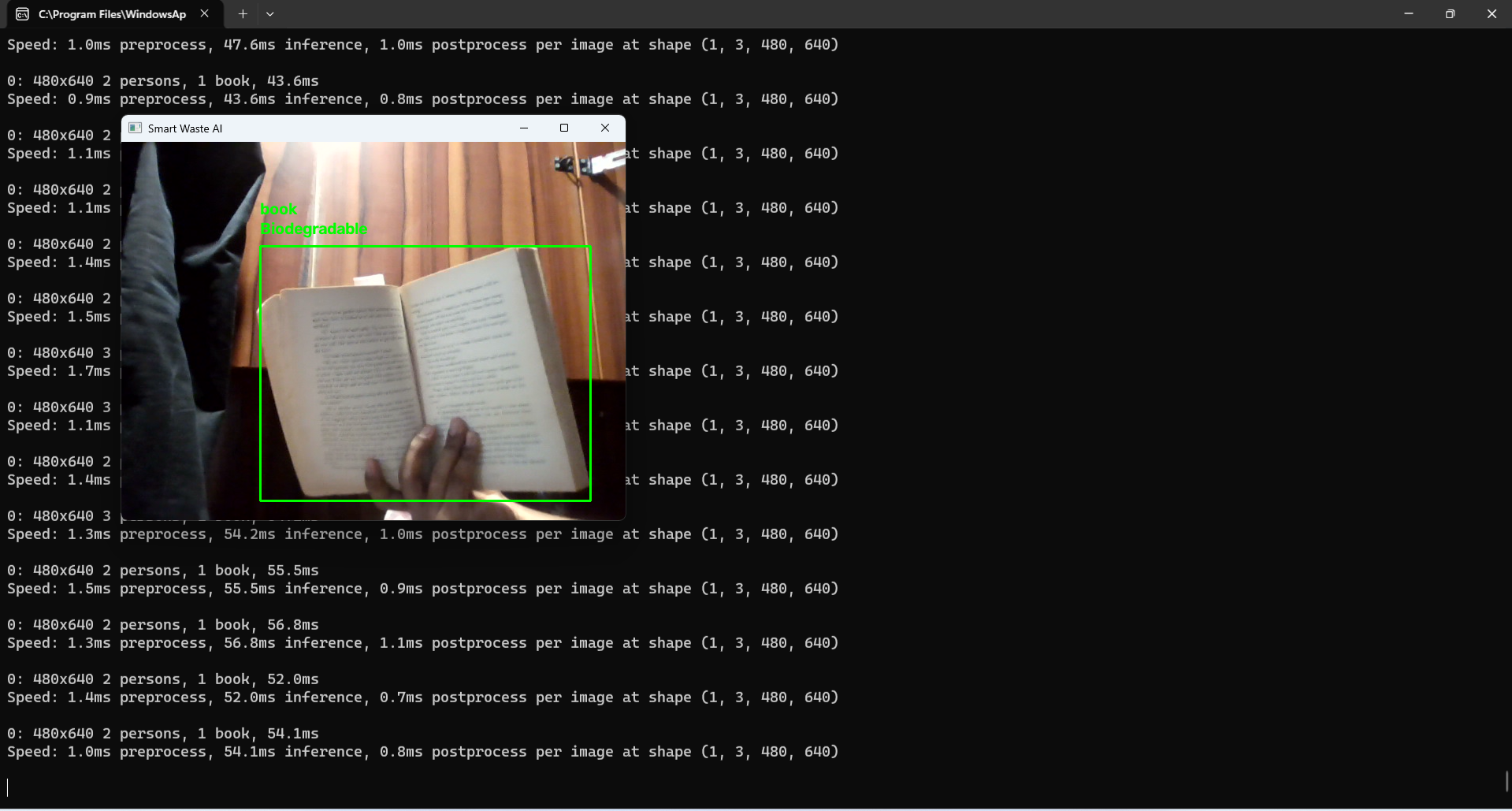
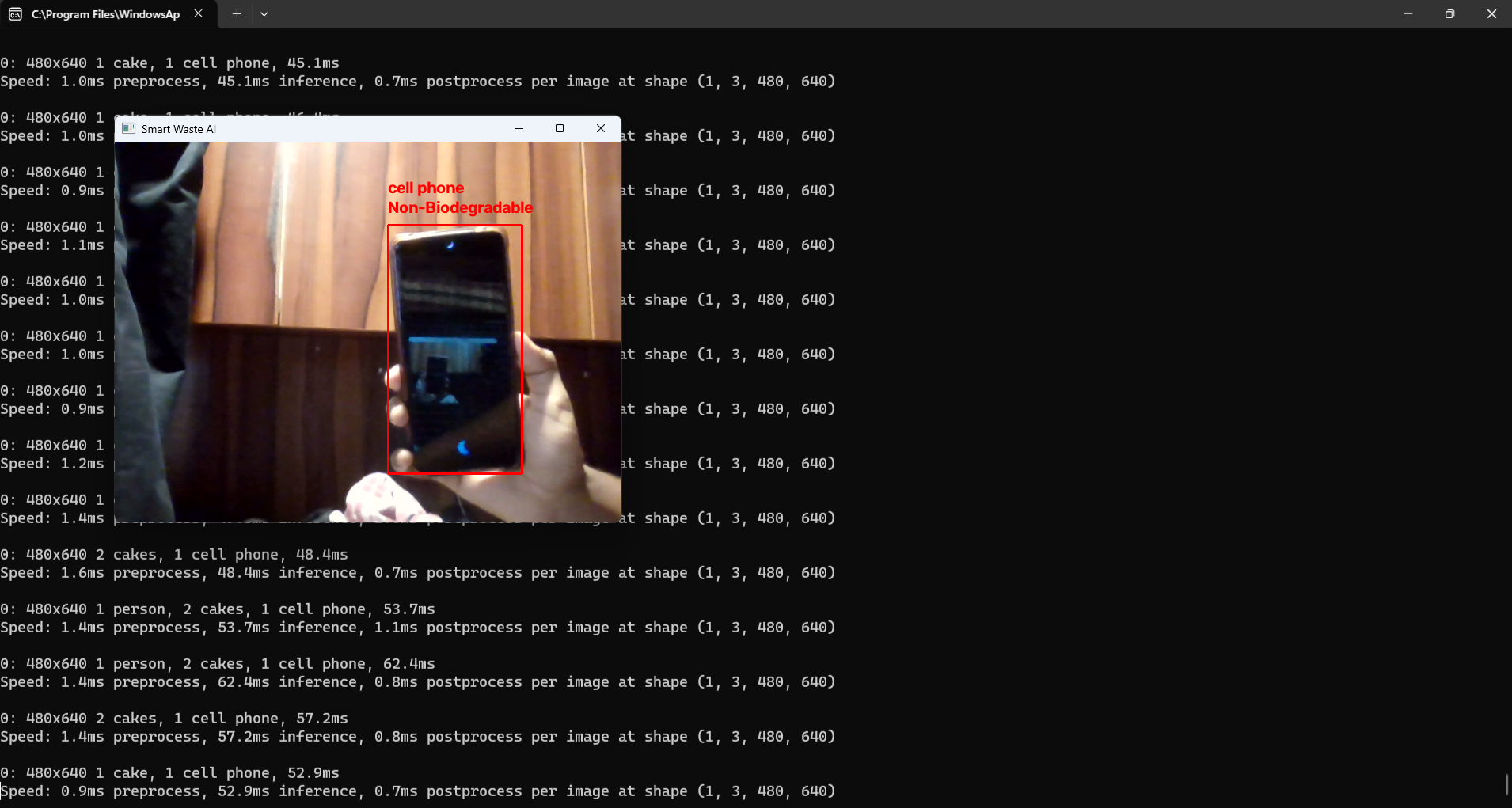
The system uses a camera to continuously capture images of waste items. A YOLOv8 object detection model identifies the object in real time, and our classification logic determines whether it is Biodegradable or Non-Biodegradable. Based on the result, the application sends a command to an ESP32 microcontroller through serial communication. The ESP32 controls a servo motor that rotates a sliding mechanism, automatically directing the waste into the appropriate collection bin.
This creates a fully automated workflow from object detection to physical waste segregation.
How We Built It
The project was developed in multiple stages to ensure reliable integration between software and hardware.
Computer Vision
- Captured live video using OpenCV.
- Integrated the YOLOv8 object detection model.
- Performed real-time object recognition.
Waste Classification
- Created a classification database that categorizes detected objects into biodegradable and non-biodegradable waste.
- Displayed the detected object and its category on the live camera feed.
Embedded System Integration
- Connected an ESP32 microcontroller with a servo motor.
- Established serial communication between Python and the ESP32.
- Sent commands (
BIOorNON) based on AI predictions.
Mechanical Sorting
- Designed a servo-controlled sliding plate.
- Rotated the plate to different angles to guide waste into separate bins.
- Returned the mechanism to its default position after each sorting operation.
Challenges We Faced
Developing EcoSort AI involved several technical challenges.
One of the first challenges was integrating Artificial Intelligence with embedded hardware. Ensuring smooth communication between Python and the ESP32 without delays required careful handling of serial communication.
Another challenge was the limitation of pre-trained AI models. While YOLOv8 recognizes many everyday objects, it does not specifically recognize all types of waste materials. To overcome this, we designed a classification layer and planned support for future custom-trained datasets.
Mechanical reliability was another important aspect. The servo mechanism had to move accurately while preventing repeated unnecessary movements caused by continuous object detection.
Finally, maintaining real-time performance while simultaneously performing AI inference, camera processing, and hardware control required efficient optimization.
What We Learned
This project provided practical experience in integrating multiple engineering domains into a single intelligent system.
We learned how computer vision models perform real-time object detection, how embedded systems interact with AI applications, and how serial communication enables seamless coordination between software and hardware. We also gained valuable insights into system integration, debugging, hardware interfacing, and designing AI solutions for real-world sustainability problems.
More importantly, we realized that Artificial Intelligence becomes significantly more impactful when it interacts with the physical world through embedded systems.
Novelty
Unlike conventional smart bins that rely only on proximity or weight sensors, EcoSort AI uses AI-based visual understanding to recognize waste before segregation. This enables intelligent decision-making instead of simple object detection.
The system has been designed with scalability in mind. Future versions will incorporate custom-trained waste recognition models, IoT connectivity, cloud-based waste analytics, and predictive waste management, transforming a simple waste bin into an intelligent waste management platform.
Future Scope
Future enhancements include:
- Training custom AI models capable of recognizing hundreds of waste categories.
- Multi-class segregation (Plastic, Metal, Glass, Paper, Organic, and E-Waste).
- IoT dashboard for monitoring waste collection in real time.
- Cloud analytics for waste generation trends.
- Smart fill-level monitoring using additional sensors.
- Mobile application for monitoring and maintenance.
- Robotic sorting mechanisms for industrial deployment.
Impact
EcoSort AI demonstrates how Artificial Intelligence can improve waste management by enabling automatic segregation at the source. The system reduces manual effort, minimizes contamination of recyclable materials, supports sustainable waste disposal, and contributes toward cleaner cities and a circular economy.
Our long-term objective is to maximize this accuracy through custom-trained AI models and continuous learning, enabling EcoSort AI to become a scalable solution for homes, campuses, industries, and smart cities.
Built With
- ai
- arduino
- artificial-intelligence
- automation
- computer-vision
- deep-learning
- embedded-systems
- esp32
- image-processing
- iot
- machine-learning
- numpy
- object-detection
- opencv
- pyserial
- python
- serial-communication
- servo-motor
- smart-cities
- smart-waste-management
- sustainable-technology
- ultralytics
- usb-communication
- vs-code
- yolov8


Log in or sign up for Devpost to join the conversation.