-
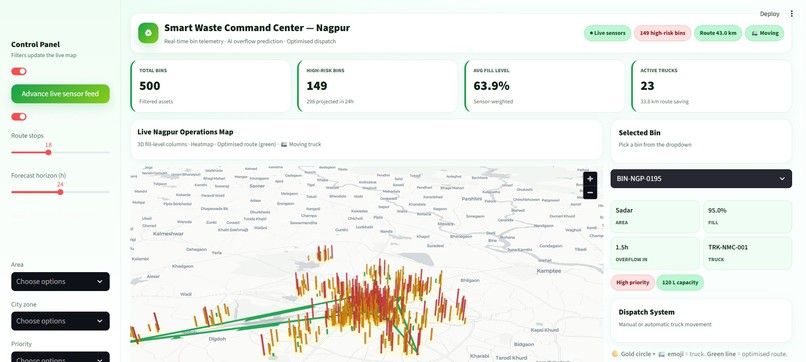
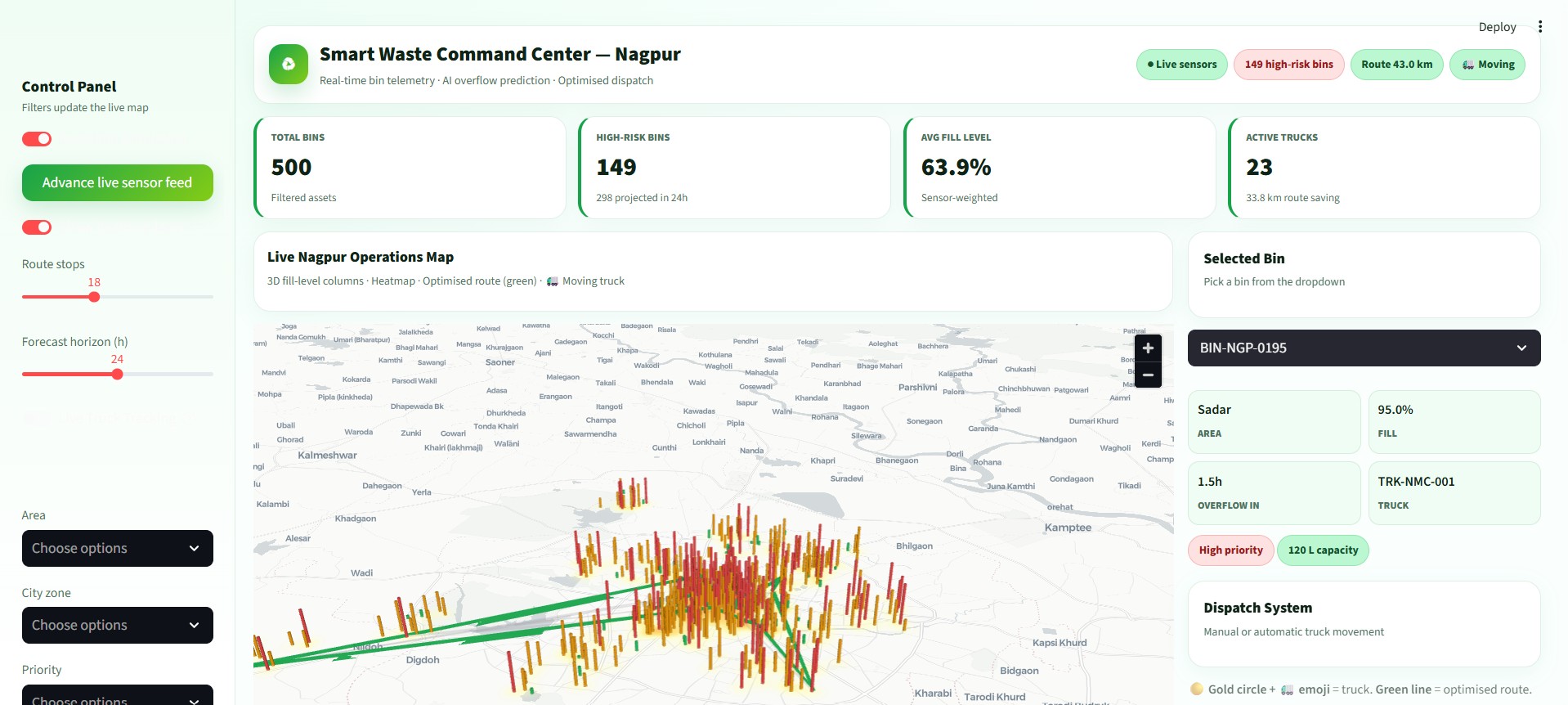
AI-powered Smart Waste Dashboard showing real-time bin status, priority alerts, and optimized collection routes for Nagpur city.
Inspiration
Urban waste management in cities like Nagpur often suffers from inefficient collection routes, overflowing bins, and lack of real-time monitoring. We wanted to build a system that moves from reactive waste collection to a predictive and optimized approach using data and AI.
What it does
This project is a Smart Waste Management System that:
- Monitors bin fill levels across the city
- Predicts future waste accumulation using machine learning
- Identifies high-risk bins before overflow
- Optimizes garbage collection routes
- Provides a real-time interactive dashboard for decision-making
How we built it
- Data preprocessing using Pandas
- Machine Learning model (Random Forest) for prediction
- Route optimization using heuristic algorithms
- Interactive dashboard built using Streamlit
- Visualization using Plotly and PyDeck maps
- Complaint system using SQLite database
Challenges we ran into
- Handling inconsistent and raw dataset columns
- Designing a clean and professional dashboard UI
- Integrating map visualization with real-time interaction
- Balancing performance with high interactivity
Accomplishments that we're proud of
- Built a fully working end-to-end system
- Developed a real-time interactive dashboard
- Successfully implemented prediction + optimization together
- Created a scalable solution for smart city use
What we learned
- Real-world data preprocessing and feature engineering
- Applying machine learning in urban problems
- Designing user-friendly dashboards
- Importance of clean UI/UX for decision systems
What's next for Smart Waste System
- Integration with IoT sensors
- Real-time GPS truck tracking
- Mobile app for citizens
- Cloud deployment for scalability

Log in or sign up for Devpost to join the conversation.