-
-
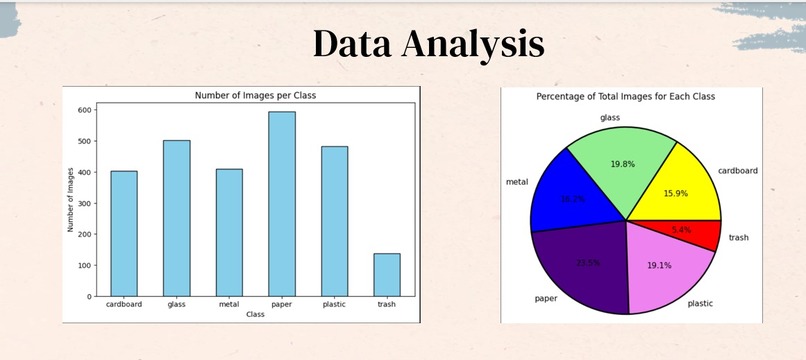
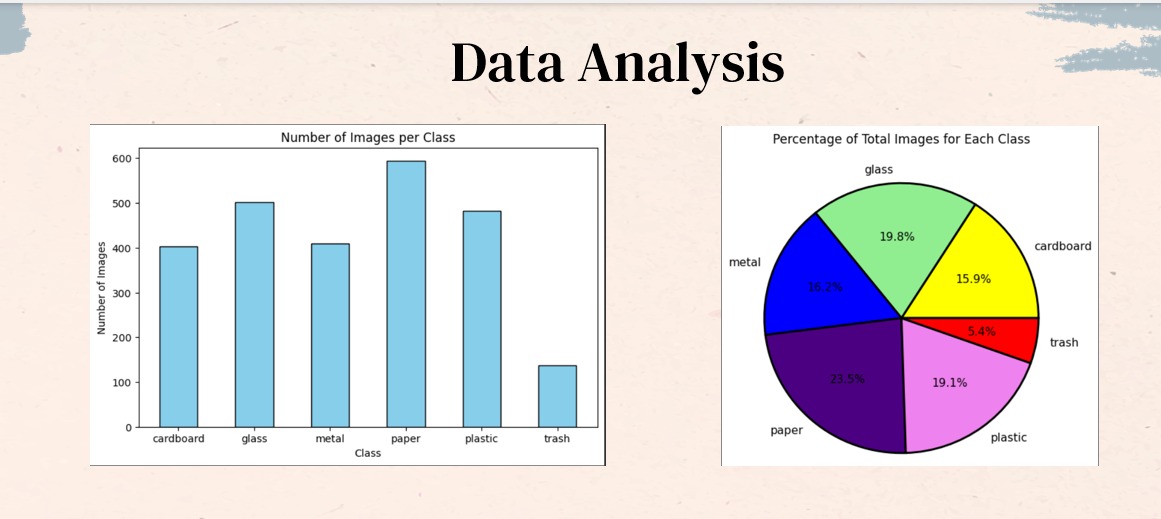
Data Analysis
-
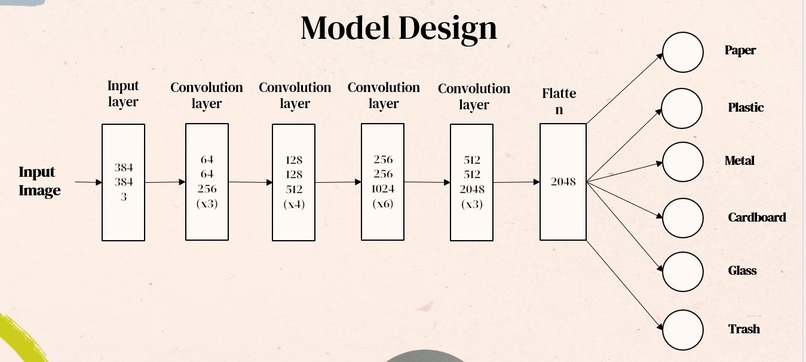
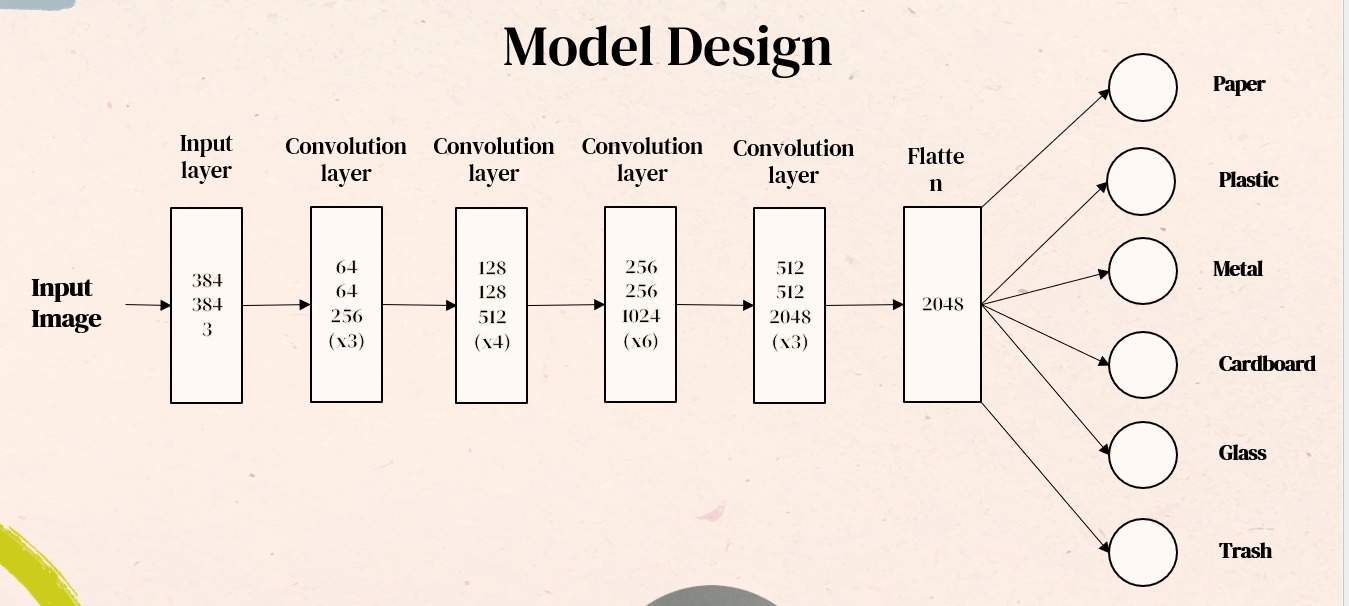
Model Architecture
-
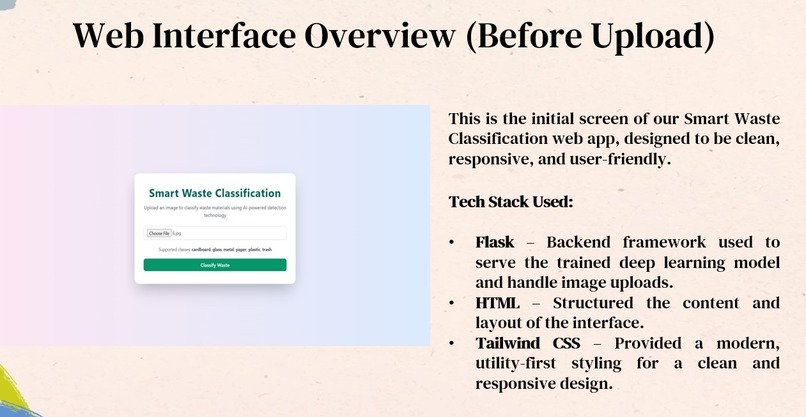
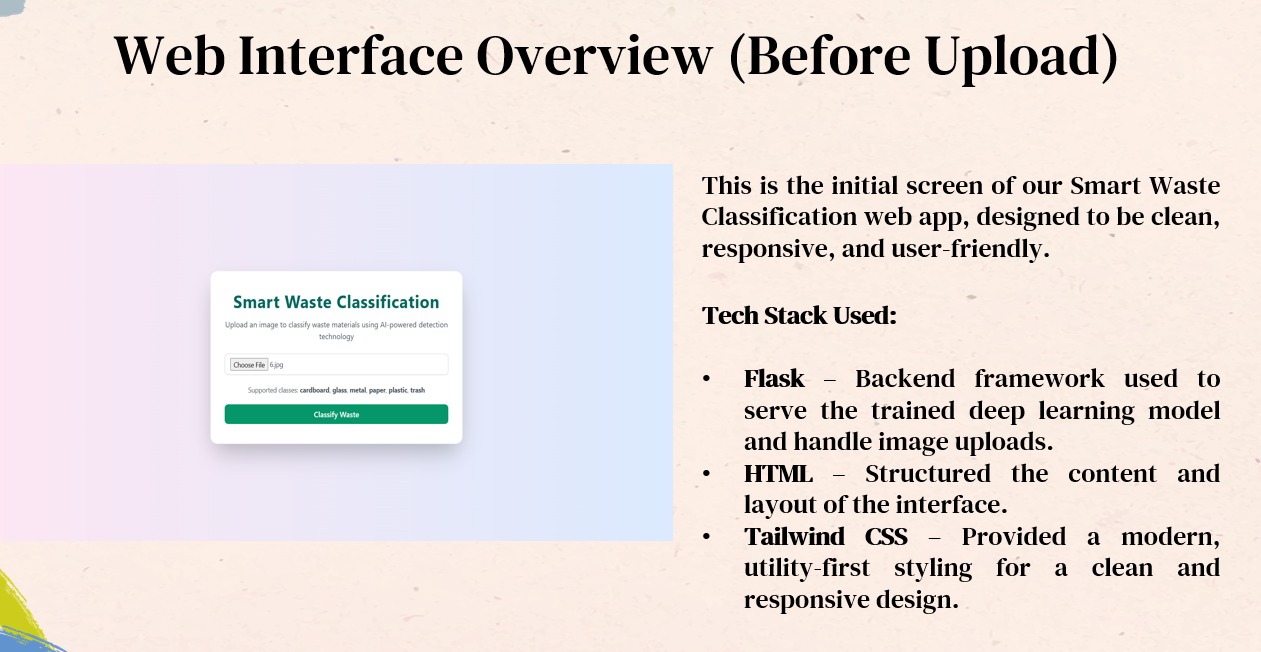
web interface before upaloading
-
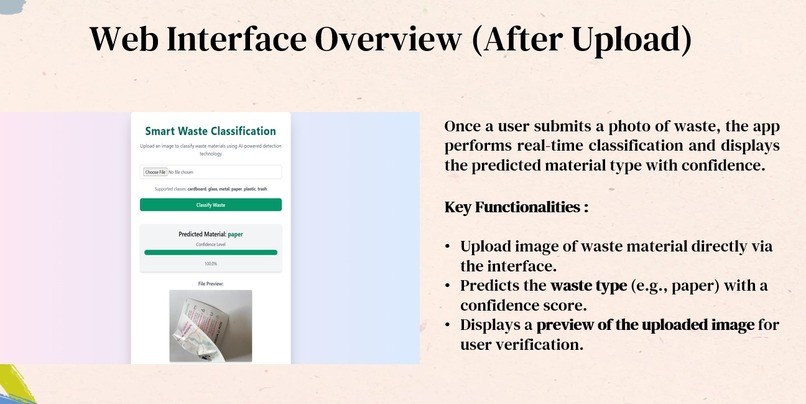
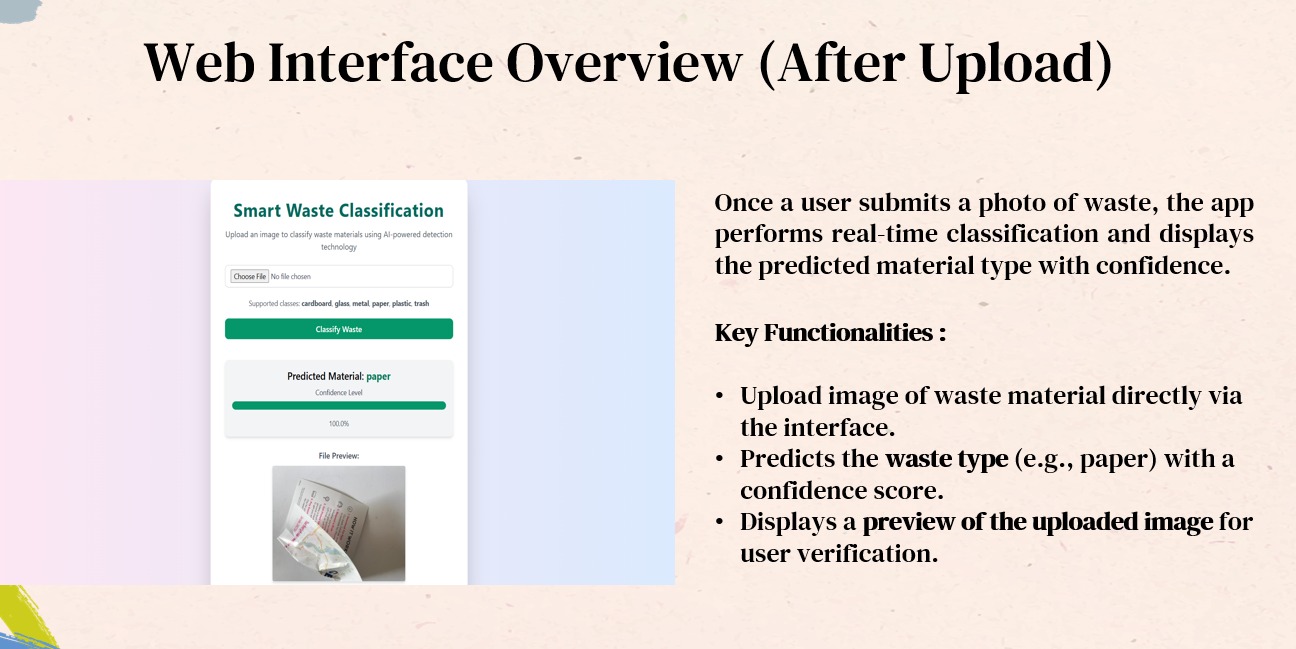
Web interface after Uploading
-
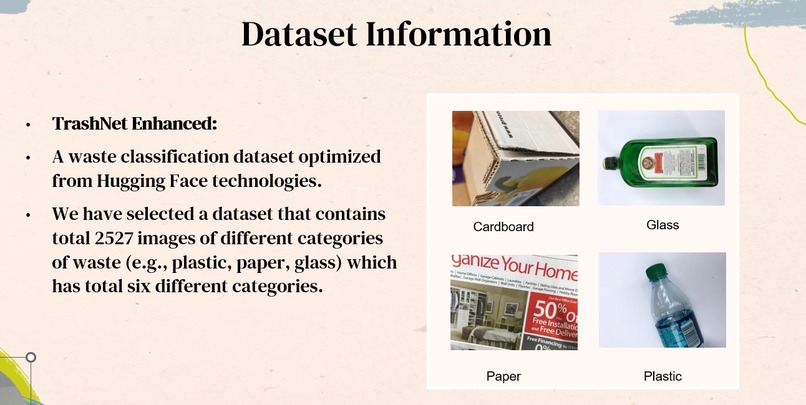
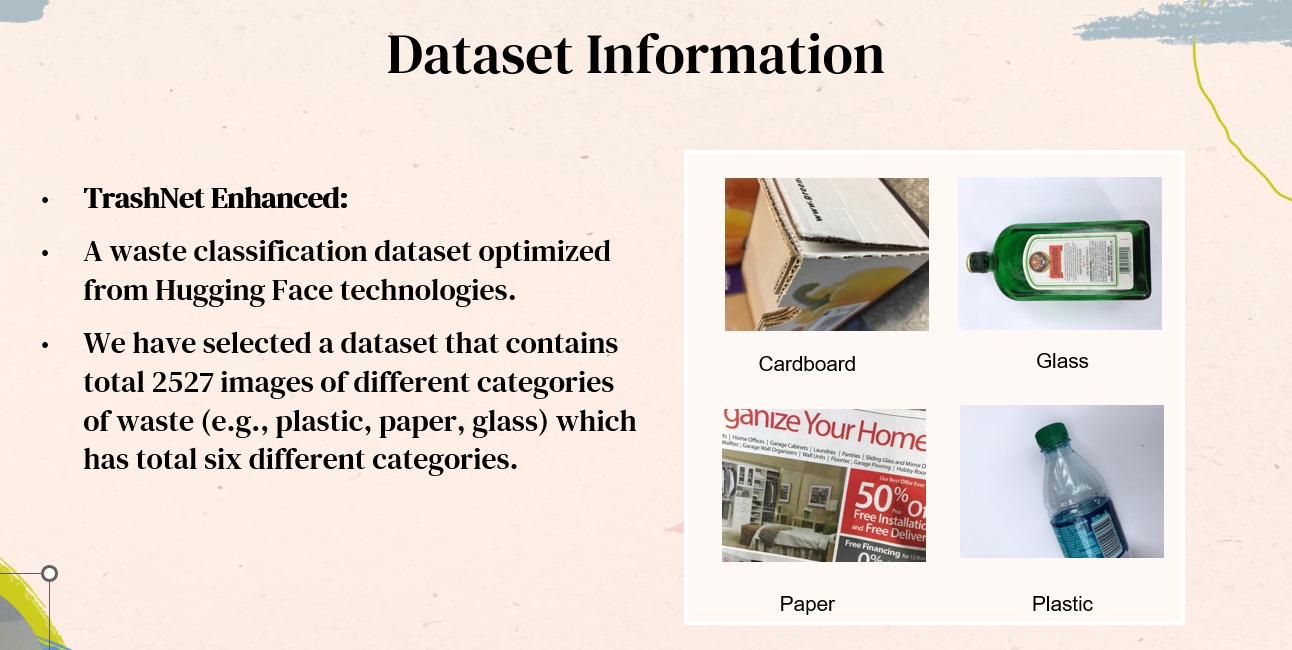
Dataset information
-
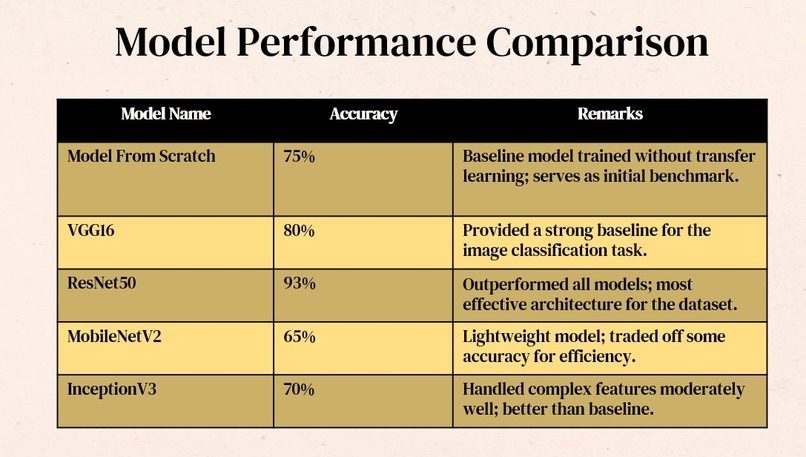
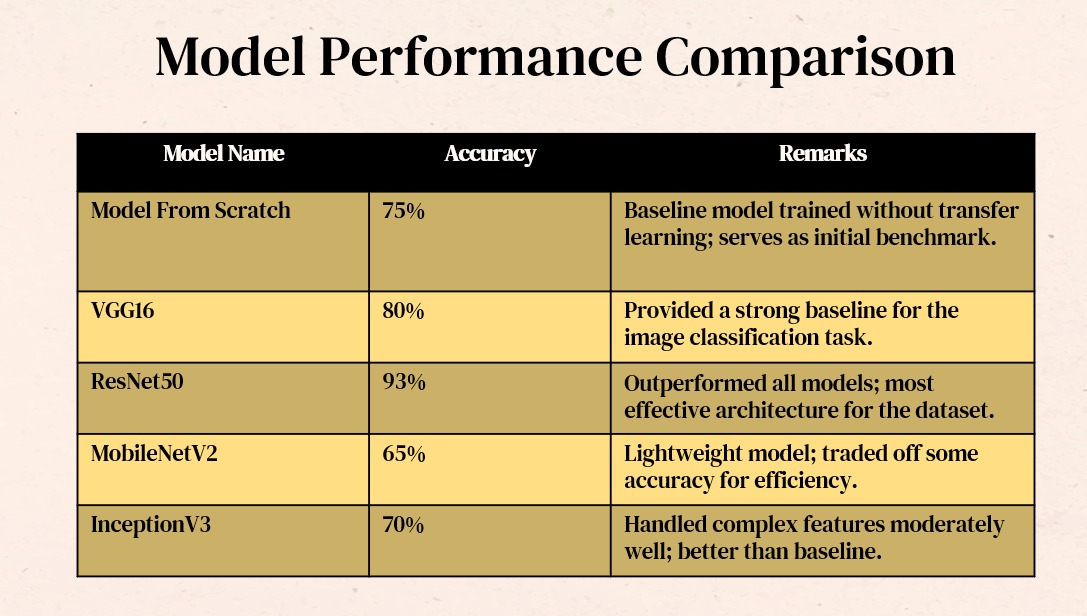
model performance Comparison
-
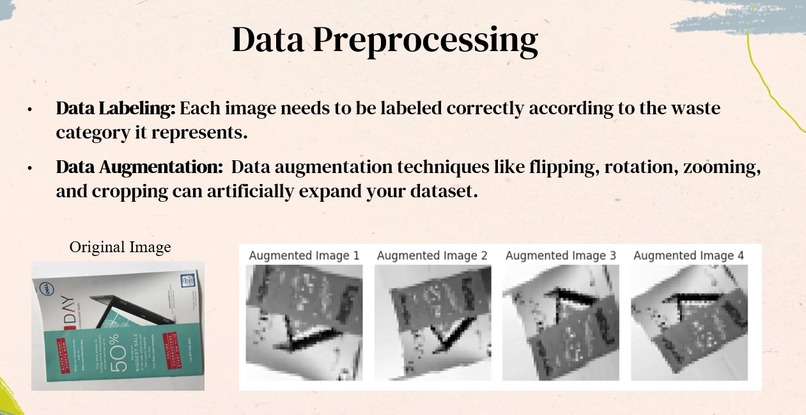
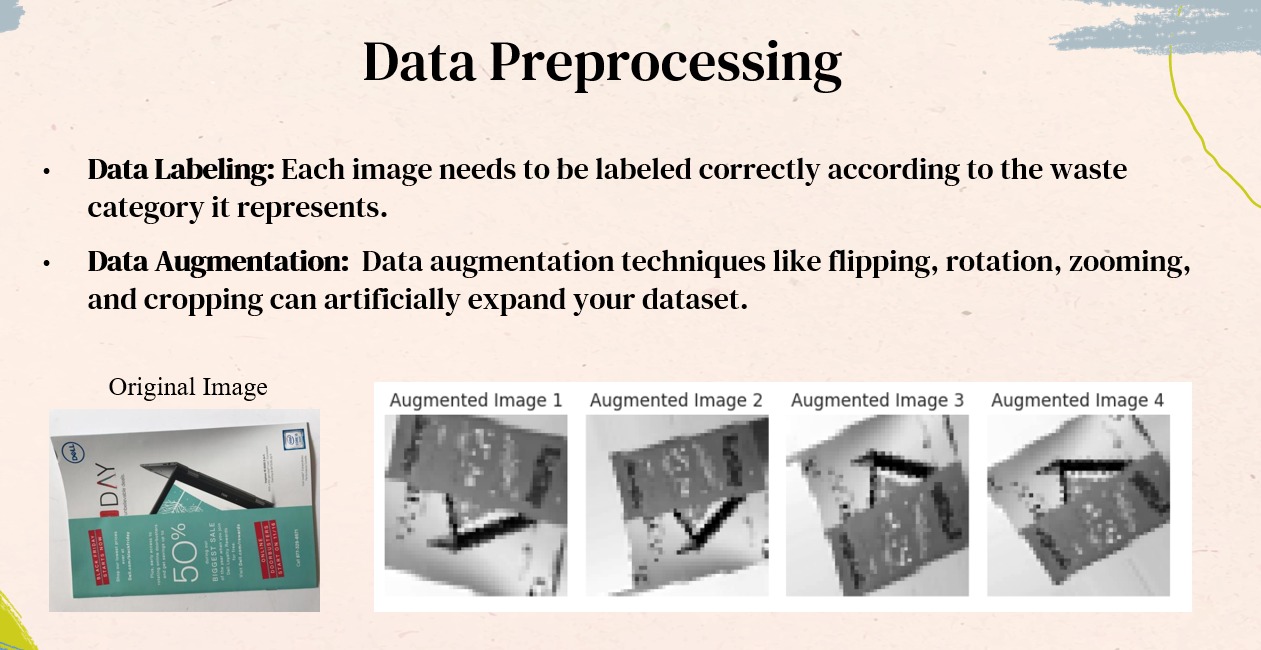
Data preprocessing
-
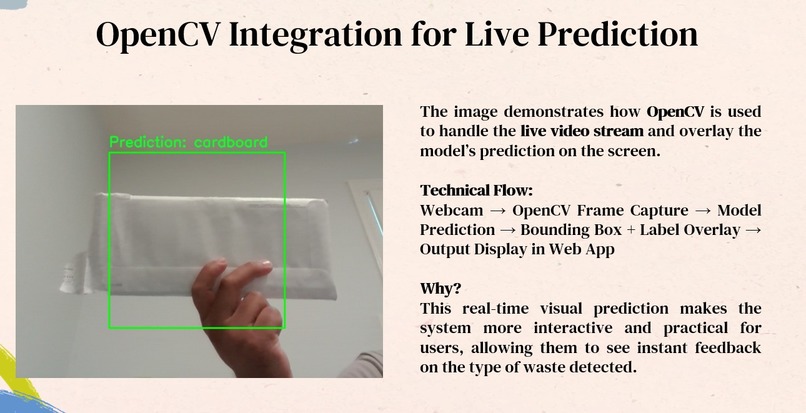
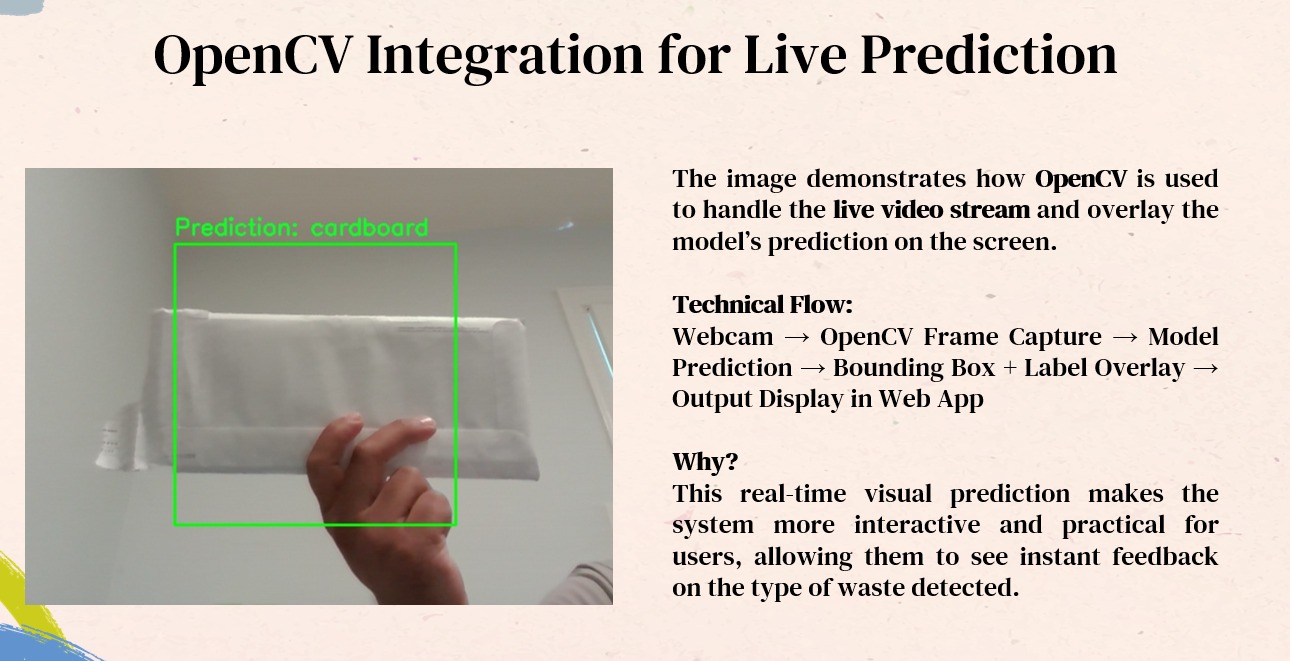
Open CV integration
Smart Waste Classification System AI-Powered Waste Segregation for Smarter and Sustainable Operations Inspiration
The project was inspired by the growing challenge of improper waste segregation across industries and communities. Every sector from corporate offices and manufacturing plants to food businesses, residential estates, schools, and social events produces waste daily. However, most of it is poorly sorted, leading to increased costs, low recycling efficiency, and environmental degradation.
We recognized a critical need for an intelligent, automated system capable of identifying and classifying waste efficiently. The goal was to leverage Artificial Intelligence (AI), Machine Learning (ML), and Cloud Computing to create a scalable solution that supports sustainability while driving operational efficiency and cost reduction across multiple industries.
Project Overview
The Smart Waste Classification System is designed to automate the process of waste segregation using AI and ML technologies. The system can classify waste into key categories such as plastic, glass, paper, metal, cardboard, and general trash using image recognition models trained on labeled data.
It combines AI algorithms with a user-friendly web application, allowing users to upload images or use a live camera to instantly identify the type of waste material. The system delivers real-time results, making it suitable for both industrial and community applications.
Development Process
Data Collection and Preparation The project utilized the TrashNet Enhanced Dataset, containing over 2,500 images across six waste categories. Each image was cleaned, resized, and augmented to ensure balanced training data.
Model Development Using Convolutional Neural Networks (CNN) and Transfer Learning (ResNet50 and VGG16), the team trained a model capable of achieving high classification accuracy. The model was optimized to generalize effectively to real-world waste images.
System Integration The trained model was deployed in a Flask-based web application with a responsive front-end built using HTML and Tailwind CSS. The application allows users to upload or capture waste images for instant classification.
Cloud and Real-Time Capabilities The system was trained and tested using Google Colab for GPU acceleration and integrated with OpenCV for real-time video-based classification.
Business and Societal Relevance
The solution provides value across multiple sectors:
Corporate and Manufacturing Industries: Automates waste segregation in offices and production plants, reducing disposal costs and supporting sustainability targets.
Food and Hospitality: Helps classify organic and recyclable waste, improving hygiene and waste management efficiency.
Residential and Real Estate: Enables property managers to integrate smart waste bins and track disposal patterns.
Education and Institutions: Promotes environmental education and sustainable campus initiatives.
Public Events and Social Gatherings: Reduces manual sorting efforts and enhances post-event cleanliness.
By combining AI with sustainability, this system demonstrates that technological innovation can also deliver business efficiency and environmental responsibility.
What We Learned
The project deepened our understanding of:
Applying AI and ML to solve real-world environmental and business challenges.
Designing end-to-end systems integrating data science, software engineering, and cloud infrastructure.
Collaborative development, version control, and deployment through platforms like GitHub and Colab.
The importance of model optimization and user experience in creating scalable solutions.
Challenges Encountered
Data Limitations: The dataset required augmentation to handle imbalanced classes.
Computational Constraints: Training large models in cloud environments demanded GPU resources and careful optimization.
Integration Complexity: Combining AI prediction with live video input required advanced synchronization.
Deployment Scalability: Hosting large AI models in low-cost cloud environments introduced memory and performance challenges.
Each challenge strengthened our technical expertise and improved our ability to build practical, sustainable solutions under resource constraints.
Conclusion
The Smart Waste Classification System represents a fusion of technology, innovation, and sustainability. It provides a scalable framework for industries and communities to manage waste more efficiently, reduce operational costs, and contribute to global sustainability goals.
Looking ahead, the system can evolve through integration with IoT-enabled smart bins, predictive analytics for waste trends, and enterprise-level dashboards for data-driven decision-making.
By transforming waste management into an intelligent, automated process, this project demonstrates how AI and cloud technology can turn environmental responsibility into measurable business value.

Log in or sign up for Devpost to join the conversation.