-
-
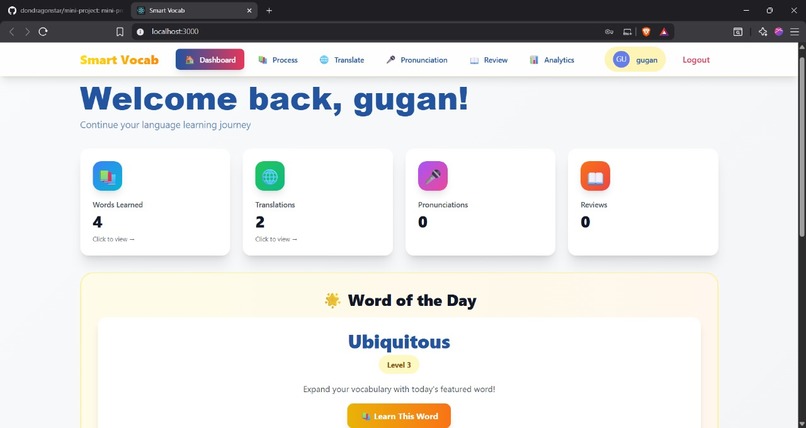
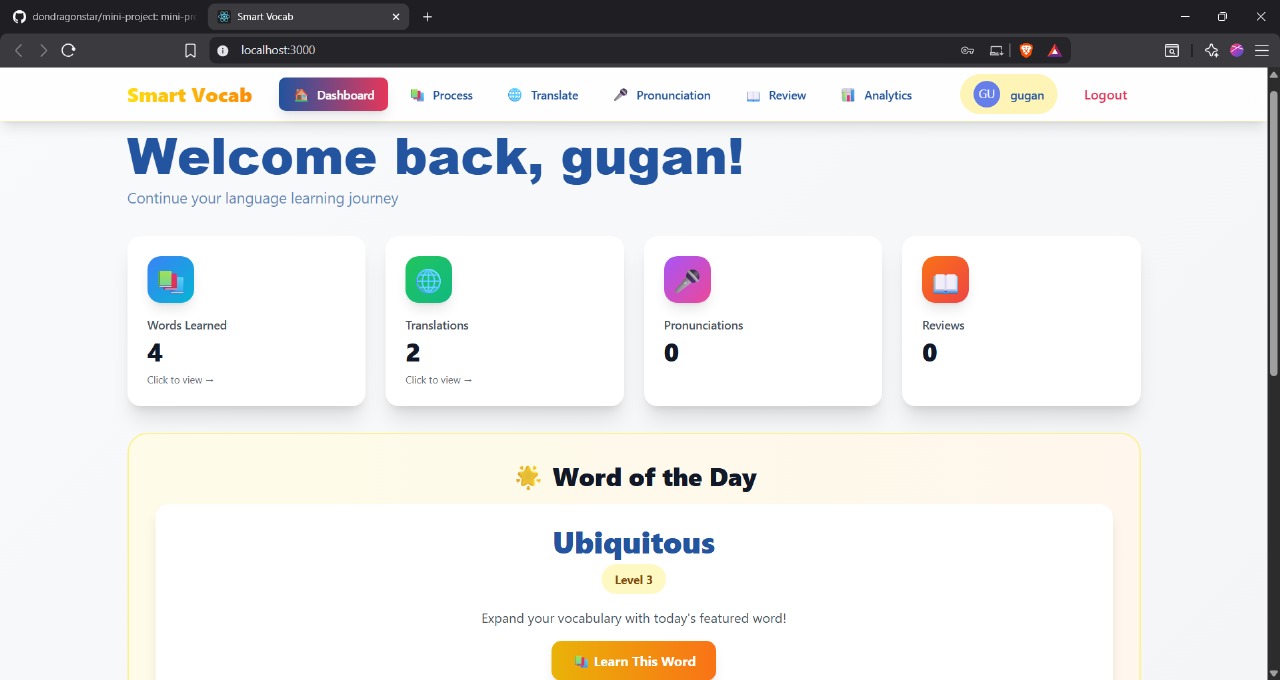
dashboard
-
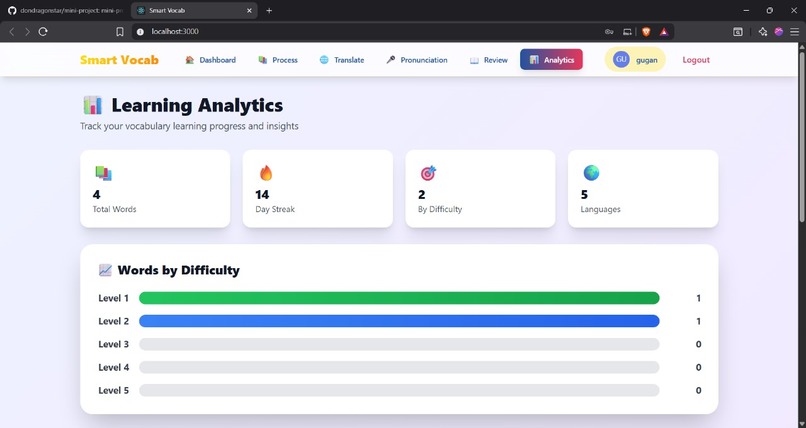
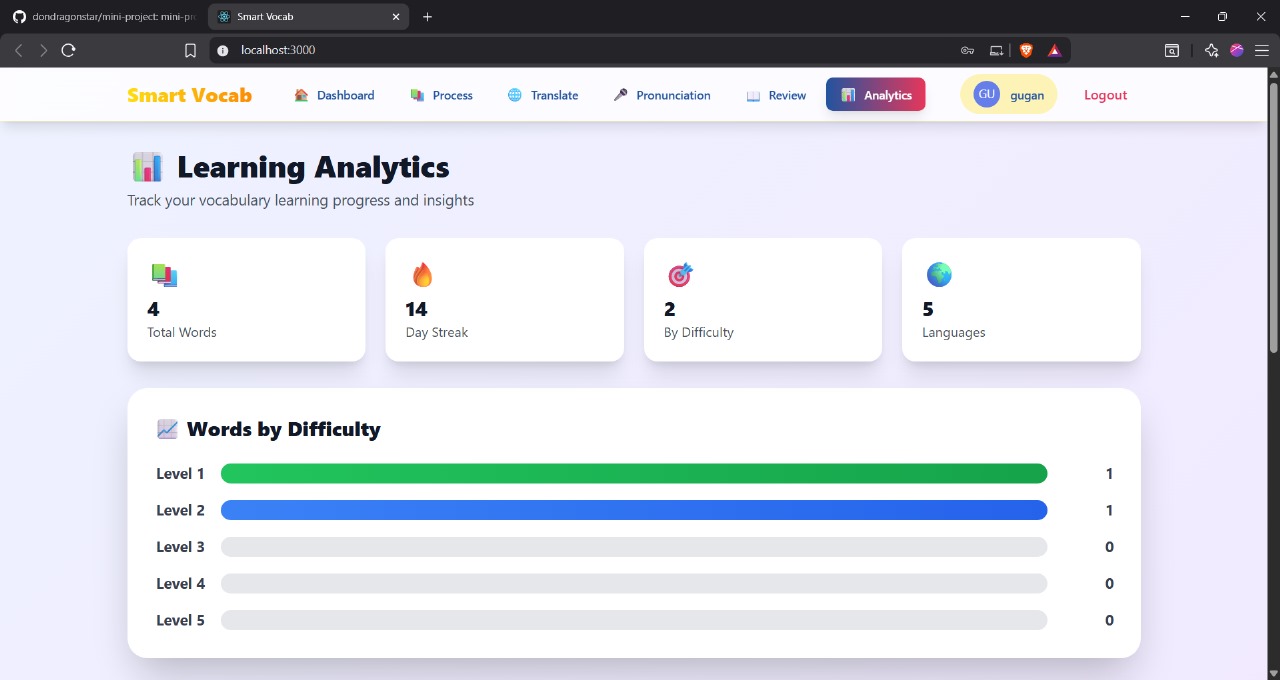
Learning Analysis
-
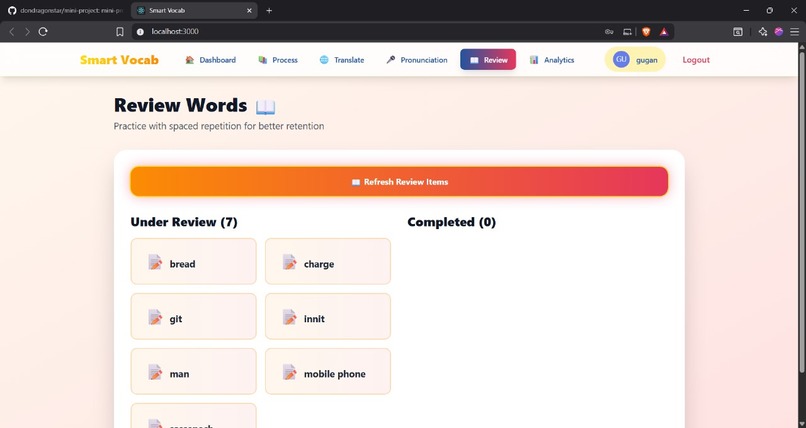
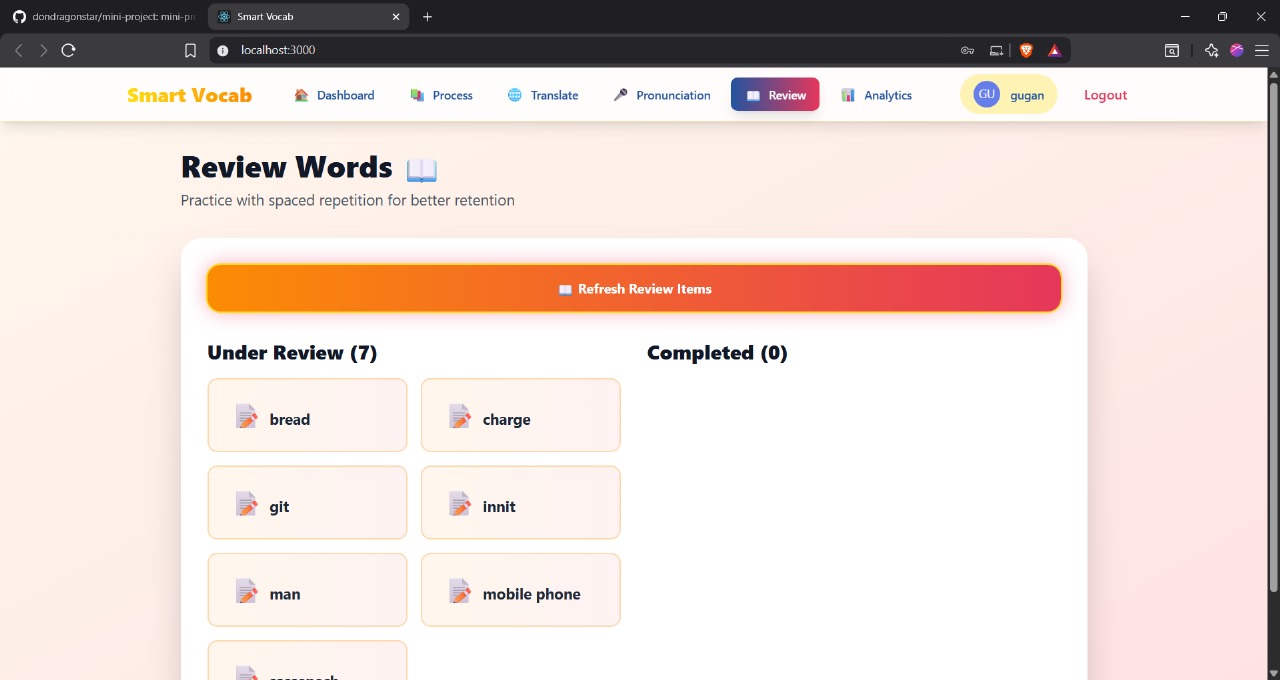
Review words Learned
-
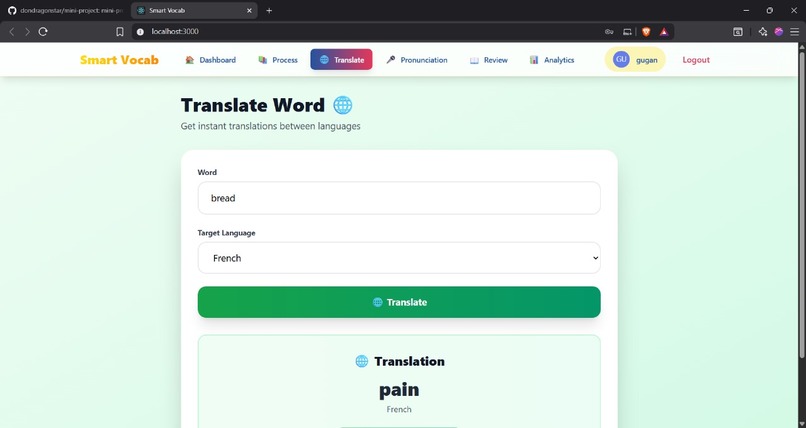
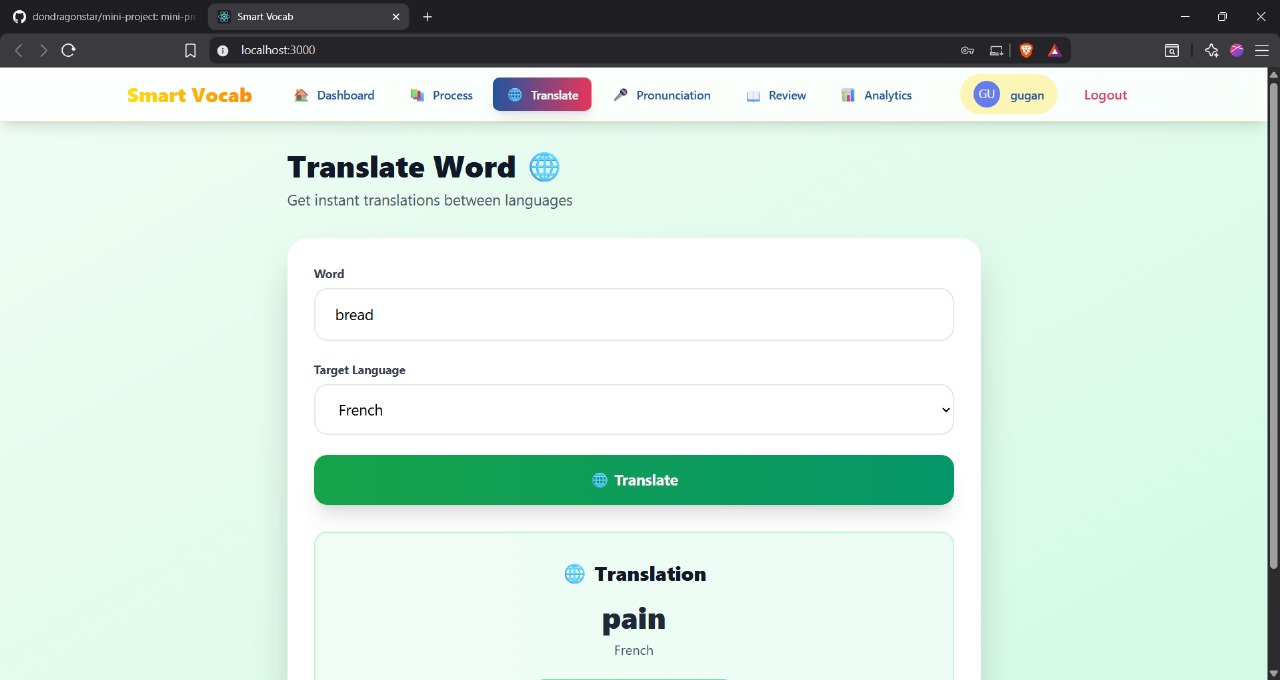
Translate word
About The Project The Inspiration I was frustrated with learning new vocabulary only to forget it a few days later. Existing apps felt like boring digital flashcards that weren't very effective. I was inspired to build Smart Vocab as a truly intelligent learning tool—one that uses proven learning science and modern AI to make new words actually stick.
How I Built It I built Smart Vocab as a full-stack application.
Backend: I used Flask (Python) to create a fast and powerful API. The core of the app uses efficient data structures to manage words and schedule reviews, ensuring the app is always quick and responsive.
AI Integration: I connected the app to Google's Gemini AI. This allows Smart Vocab to automatically generate helpful learning content for any word, like simple definitions, clever memory aids, and real-world example sentences.
Learning Science: The app uses a spaced repetition system. It intelligently tracks how well you know a word and schedules your next review at the perfect moment—right before you’re likely to forget it. This makes studying incredibly efficient.
Frontend: The user interface was built with React and styled with Tailwind CSS. I focused on creating a clean, modern, and animated design that is easy and enjoyable to use on any device.
Challenges we Faced My main challenges were getting the pronunciation checker to work with any audio file the user might upload and fine-tuning the AI prompts to get consistently helpful and creative responses. Both required building clever back-end processes and a lot of experimentation to get right.
What we Learned This project was a fantastic journey. I learned how to connect a powerful backend, smart AI features, and a beautiful frontend into a single, complete product. Most importantly, it reinforced that the best technology is useless if the user experience isn't simple and engaging. It was a deep dive into building a truly user-focused, intelligent application from start to finish.


Log in or sign up for Devpost to join the conversation.