-
-
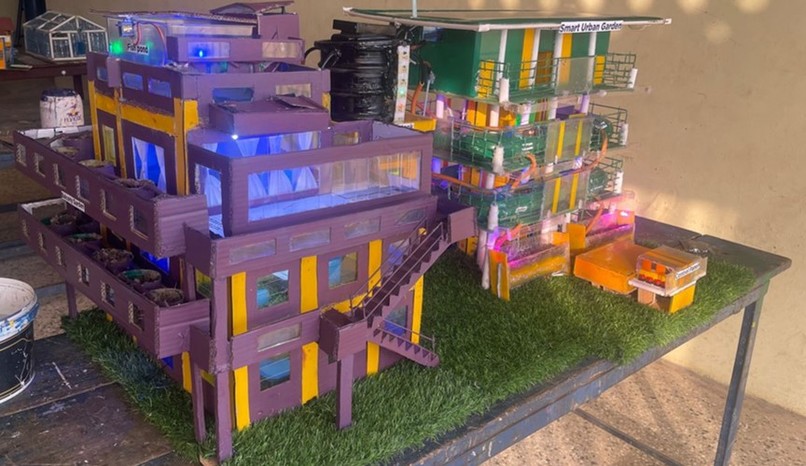
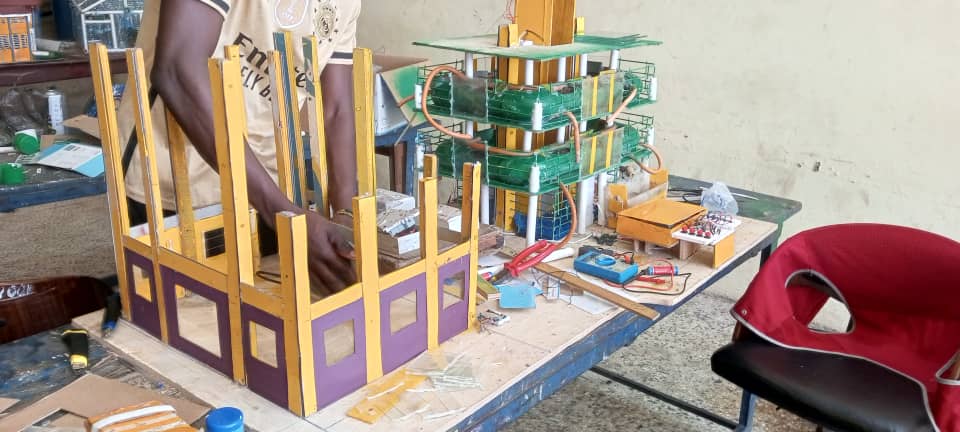
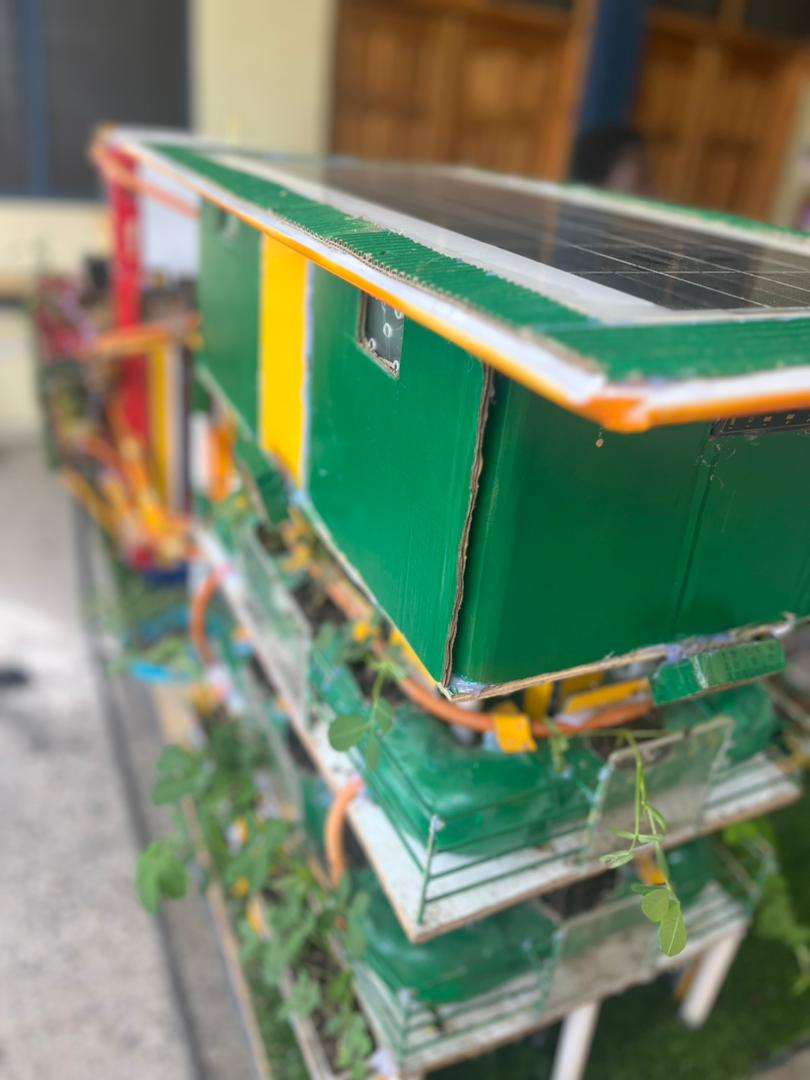
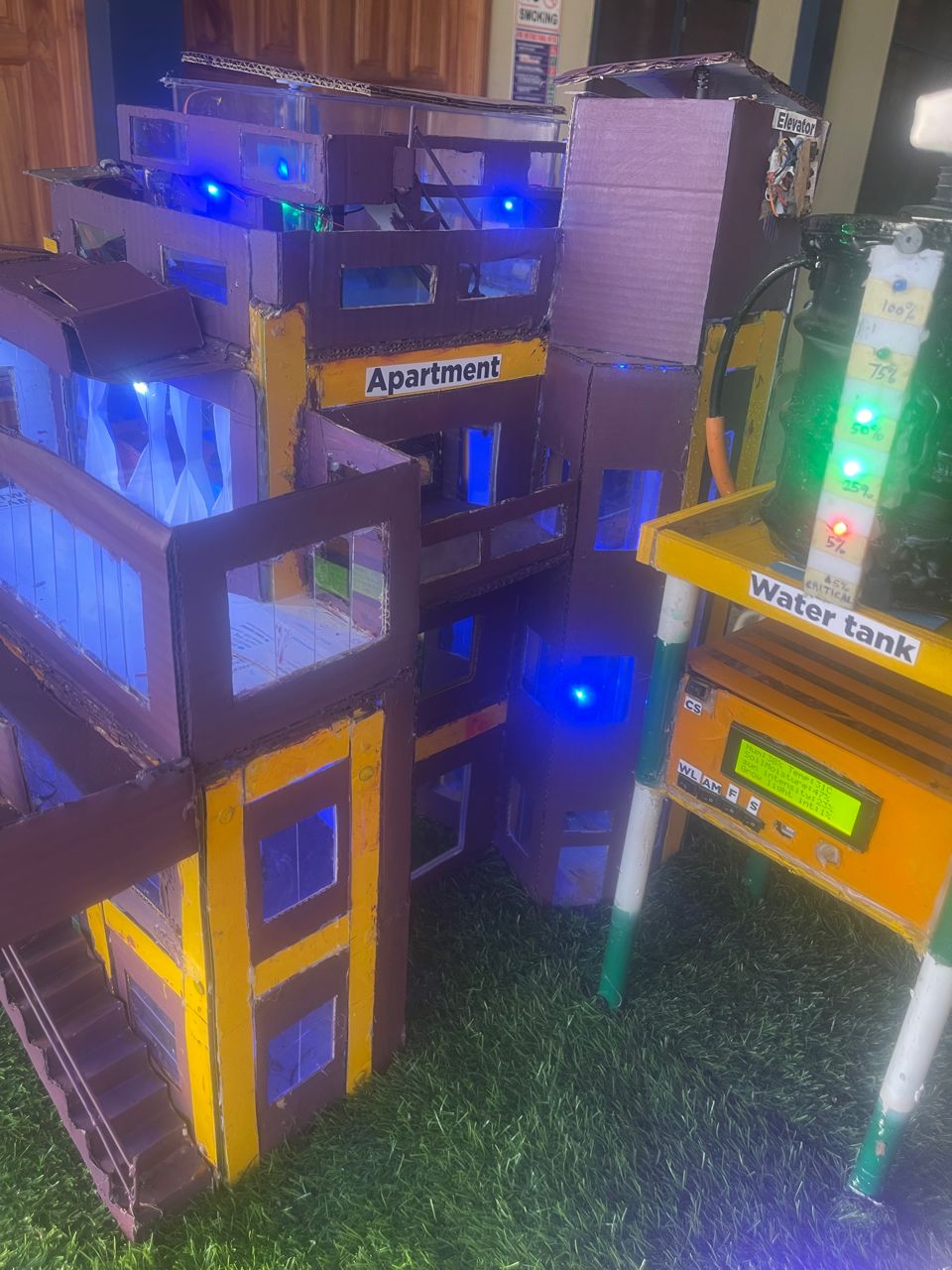
Picture of the smart Urban Garden
-
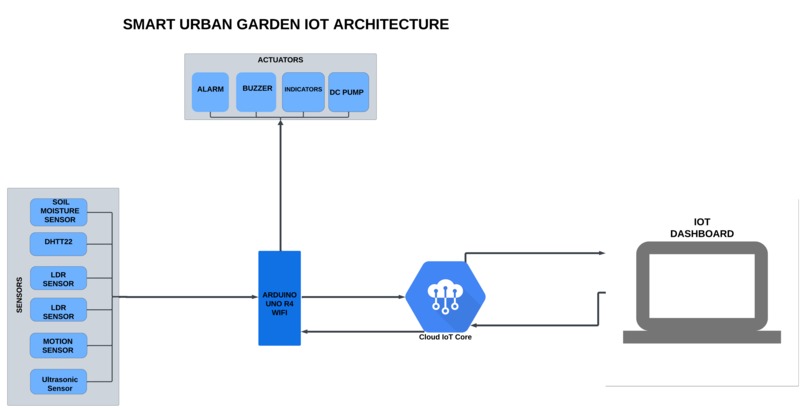
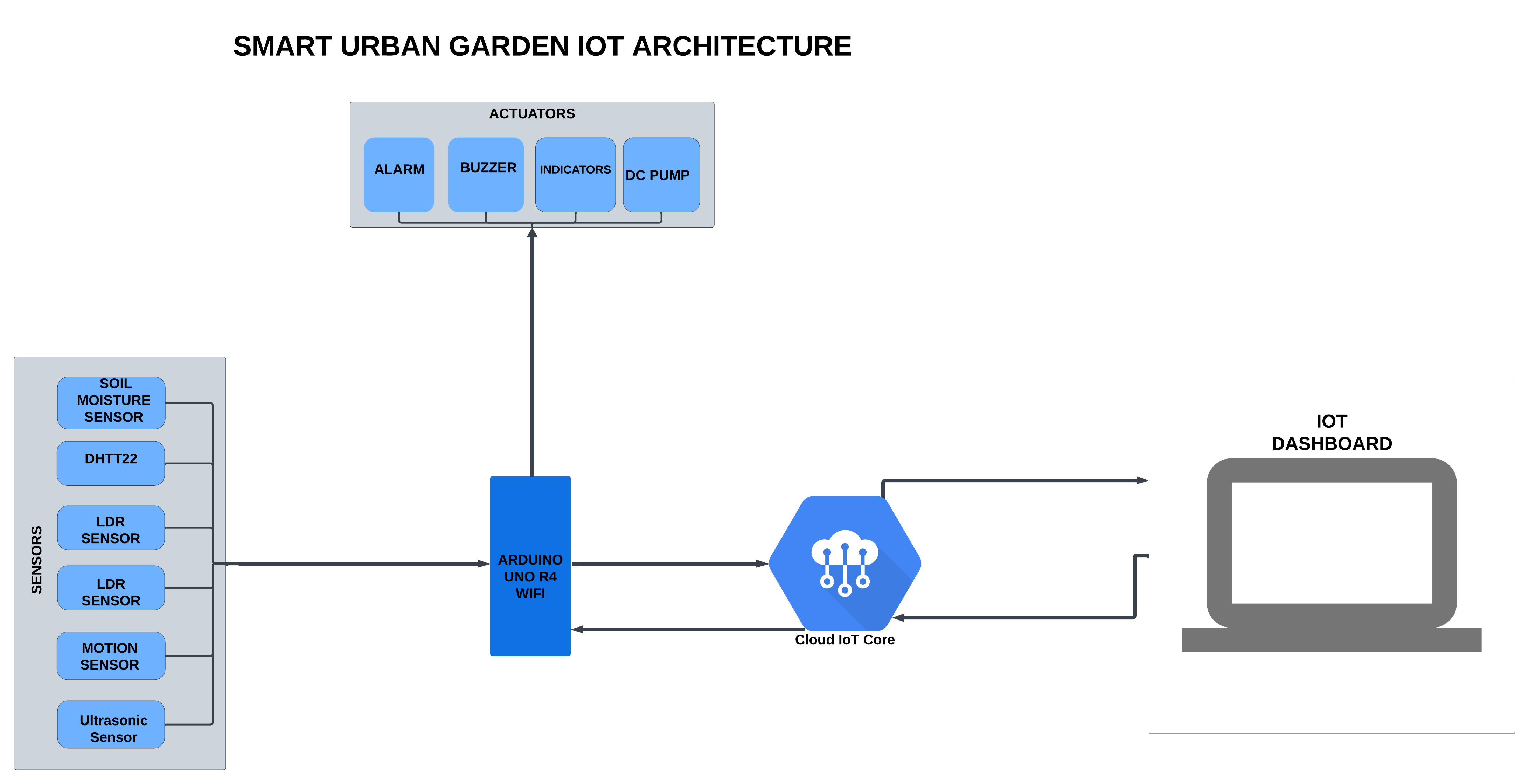
Architecture of the smart Urban Garden_iot
-
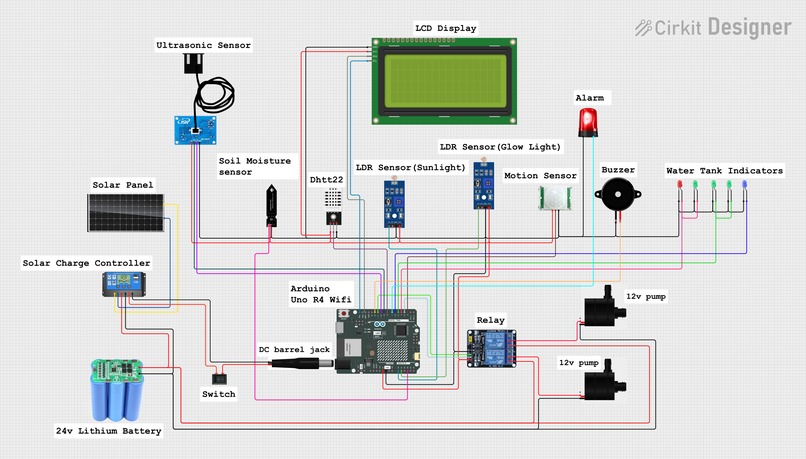
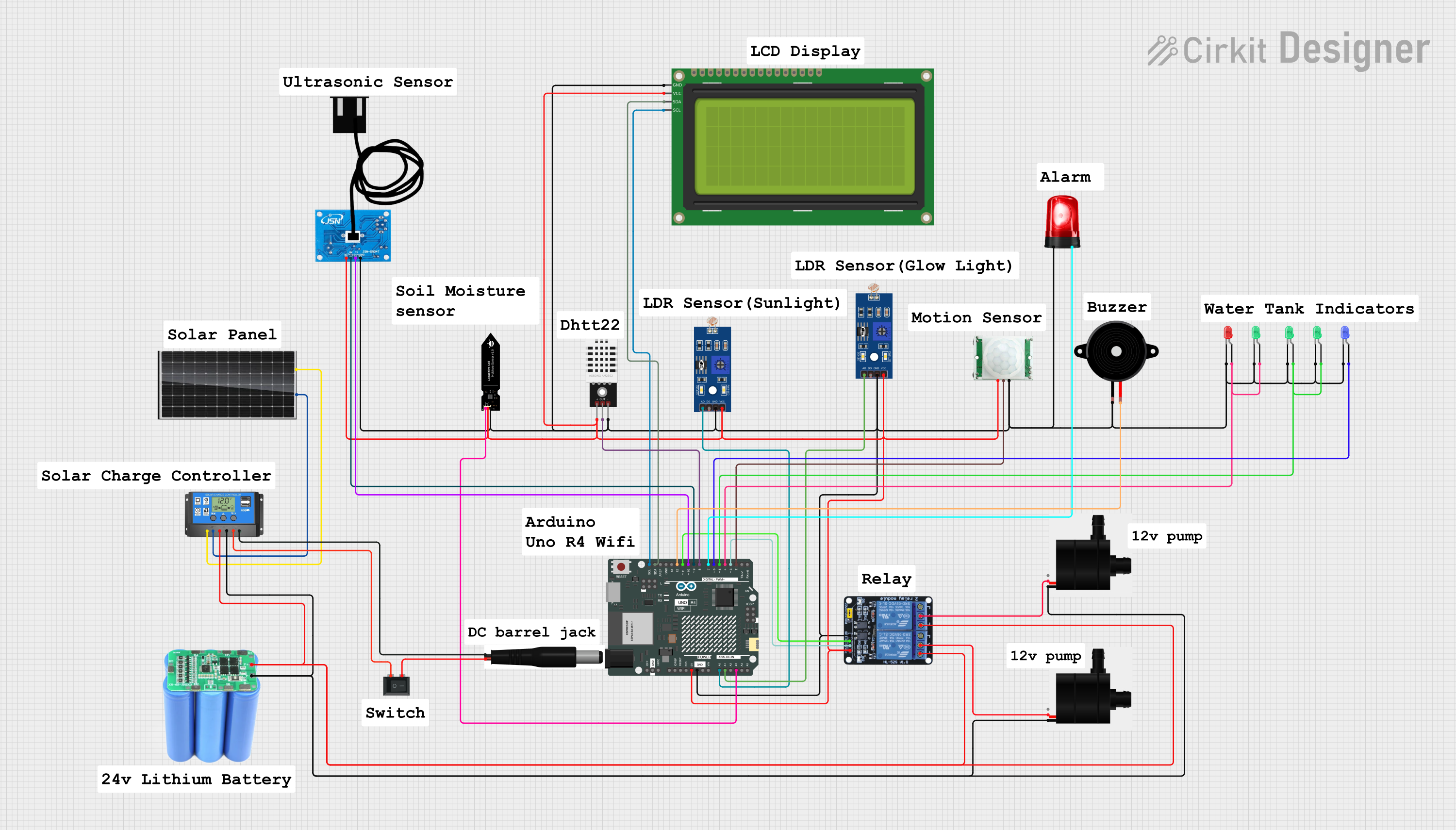
schematics of the smart urben Garden_iot
-
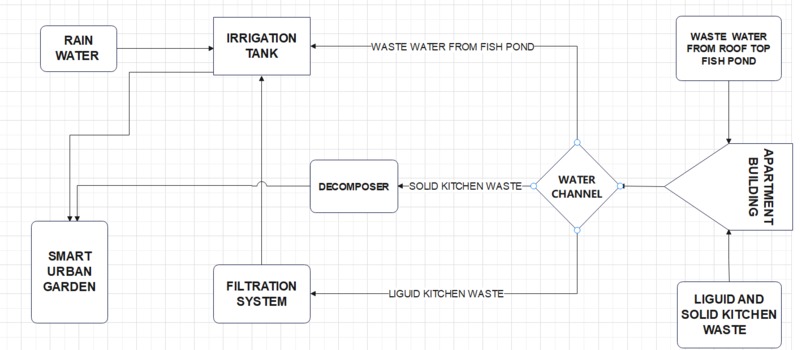
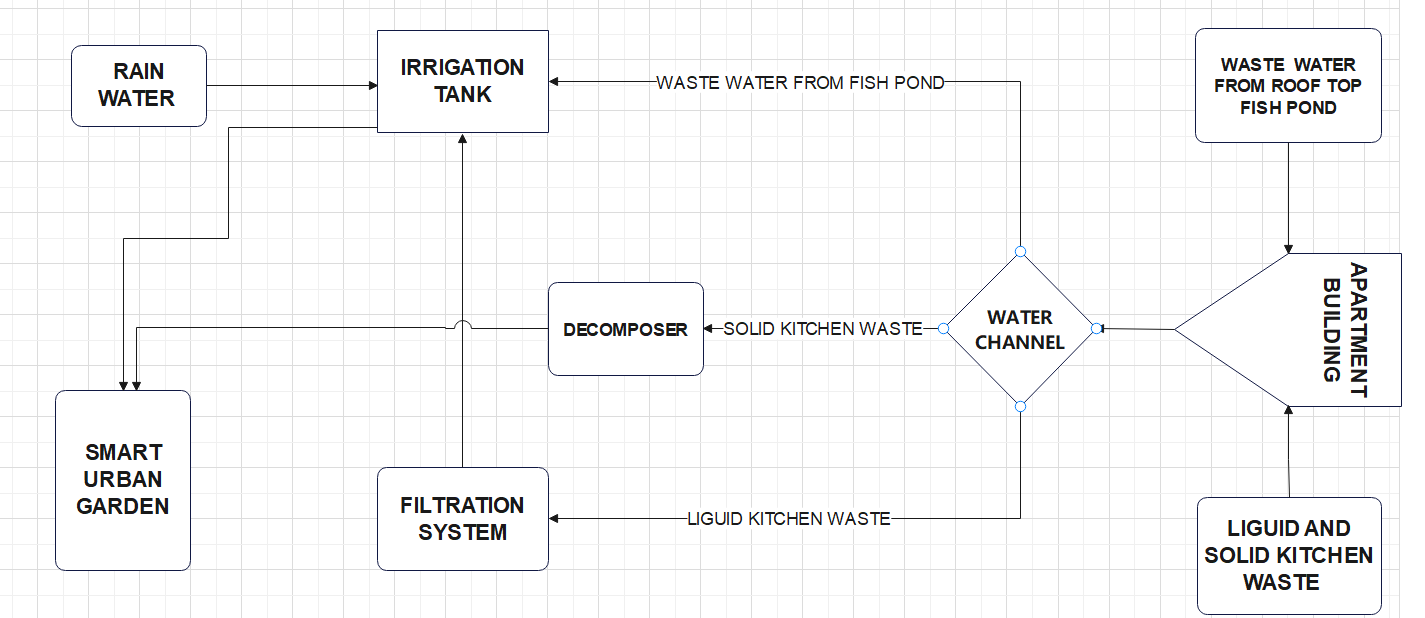
flowchart of the smart urban Garden
-
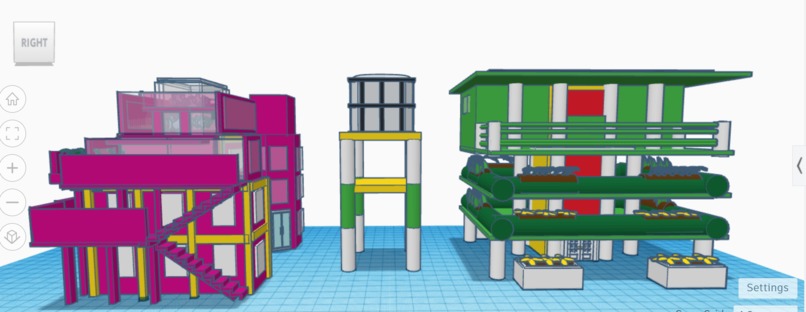
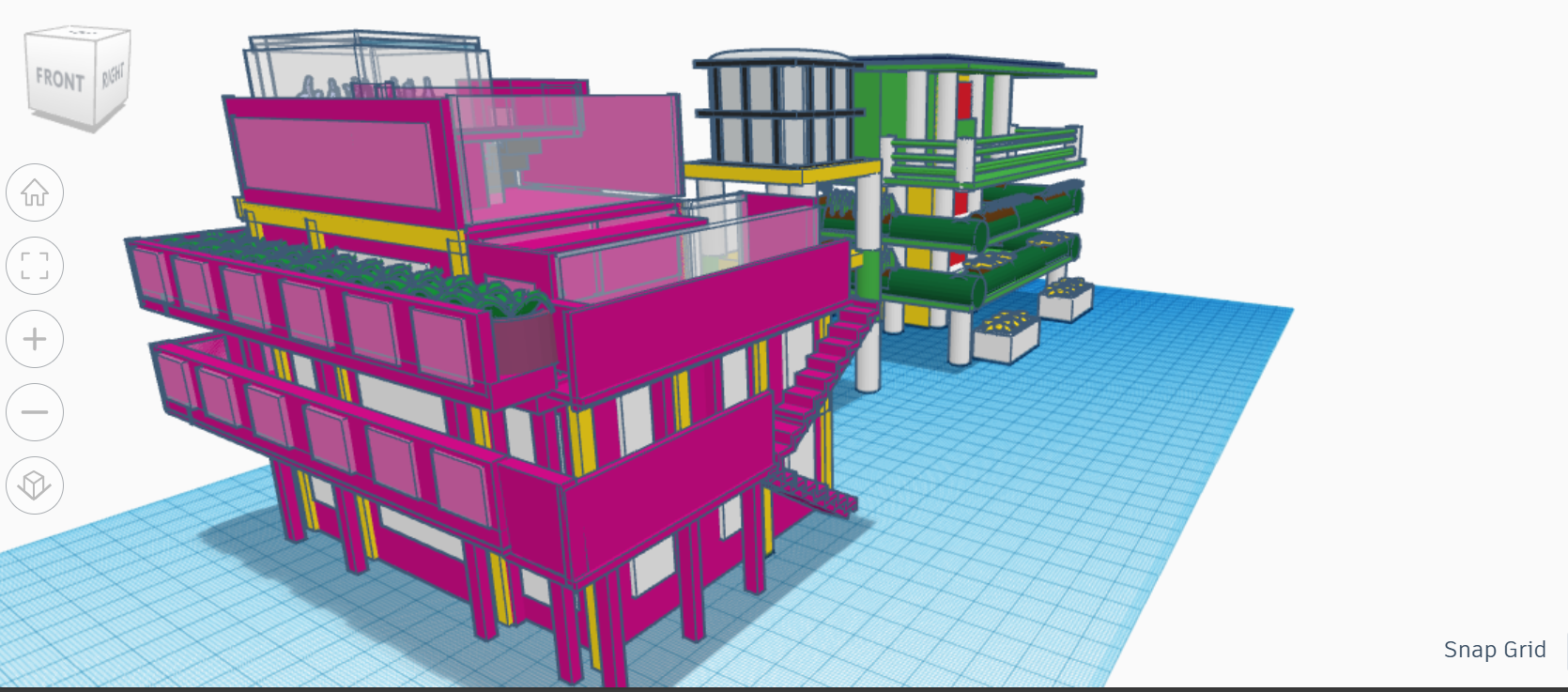
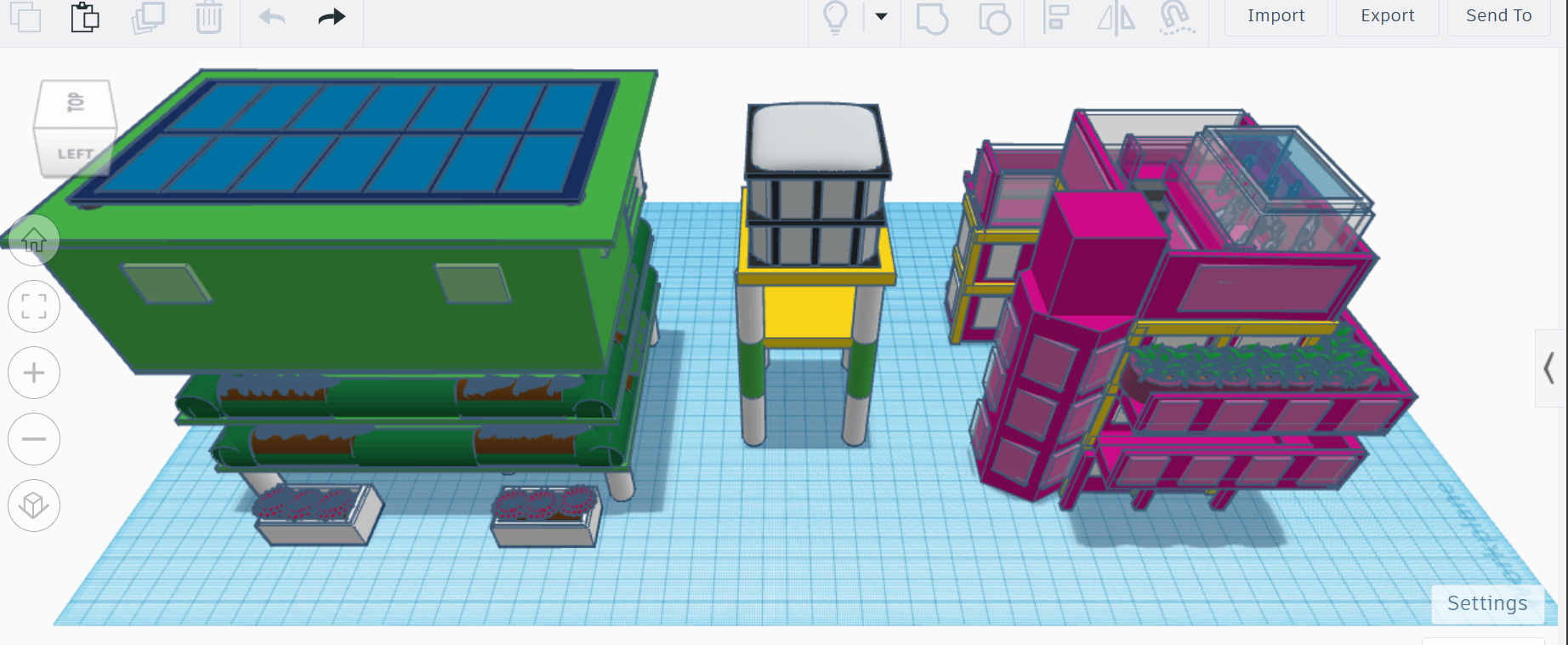
3d of the smart urban Garden
-
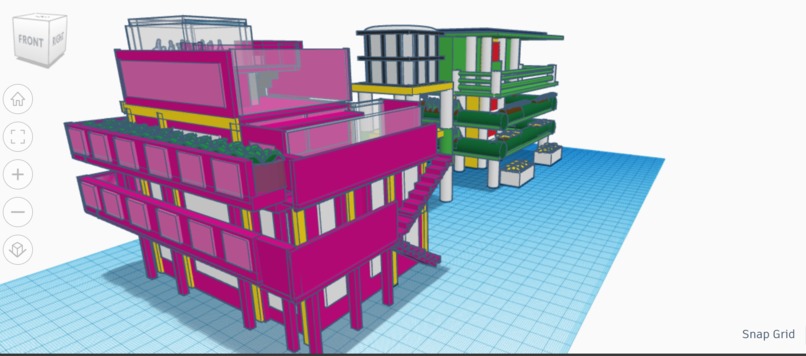
3d of the smart urban Garden
-
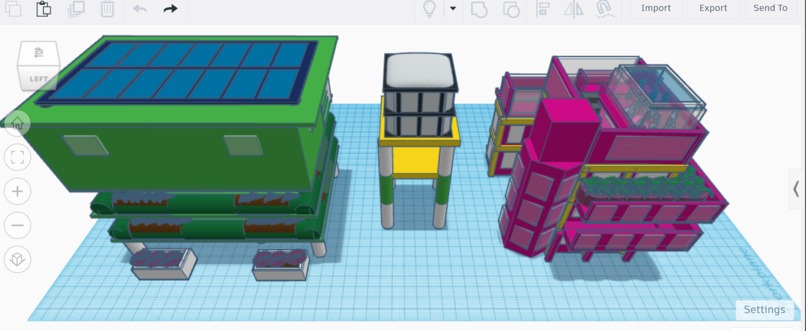
3d of the smart urban Garden
-
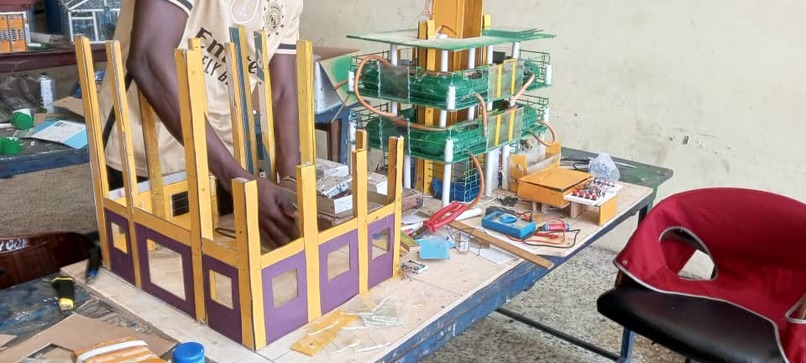
Picture of the smart Urban Garden
-
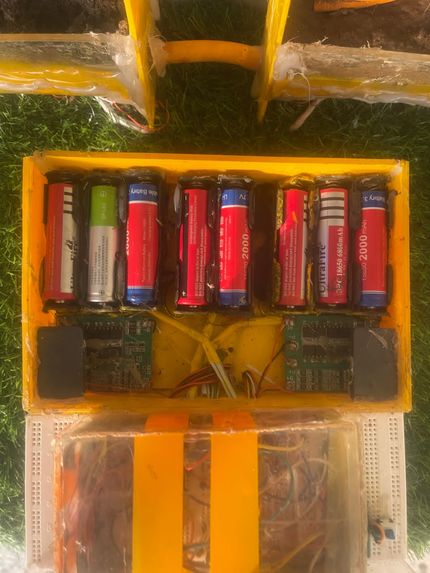
-
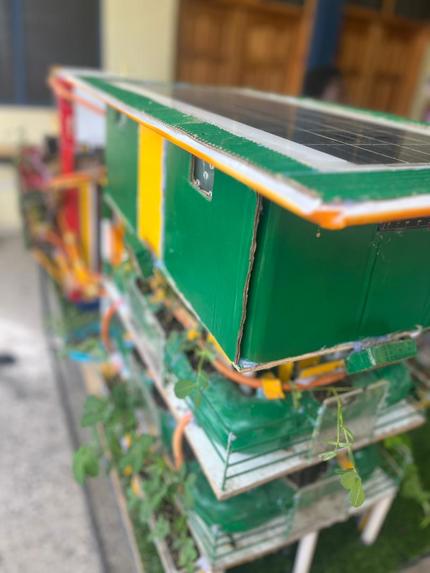
Picture of the smart Urban Garden
-
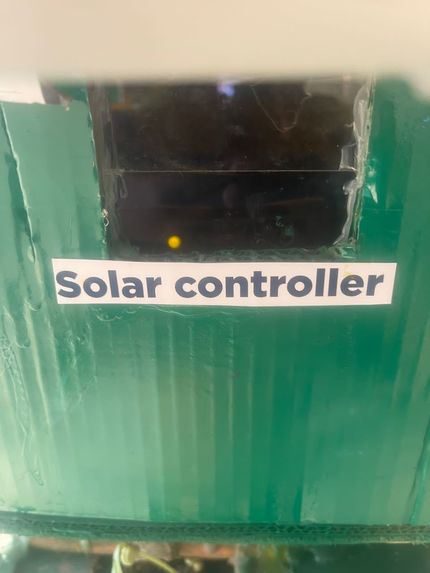
Picture of the smart Urban Garden
-
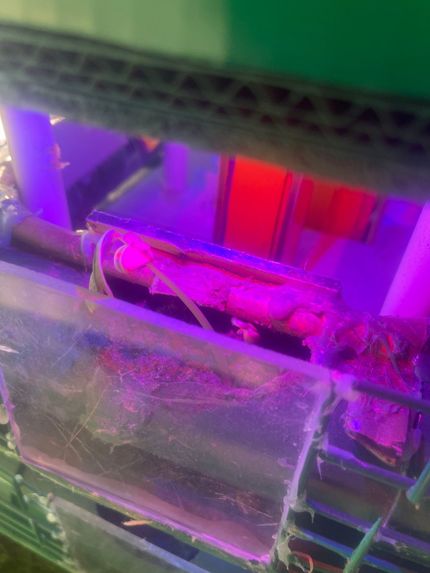
Picture of the smart Urban Garden_glow light turn on
-
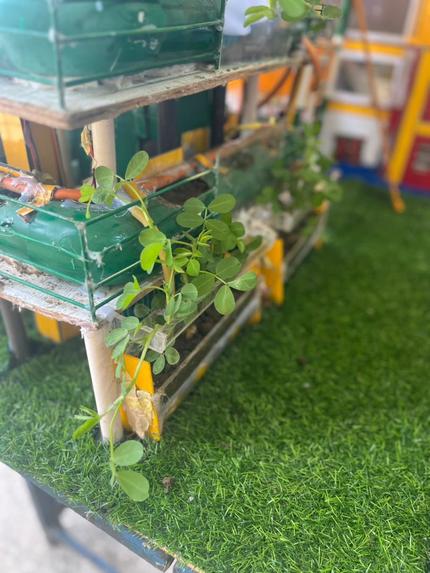
Picture of the smart Urban Garden
-
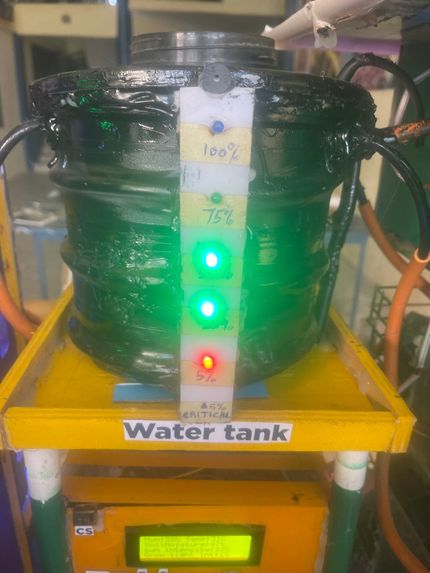
-
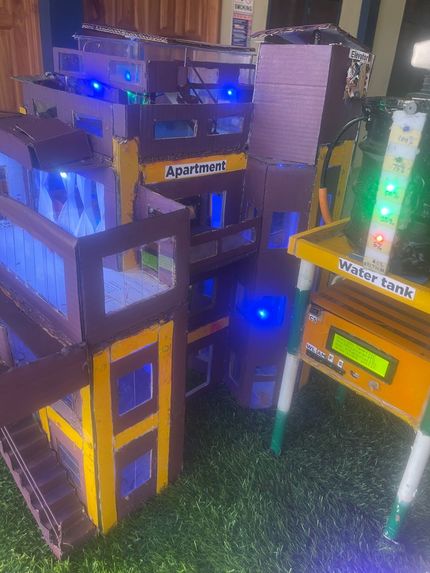
Picture of the smart Urban Garden
-
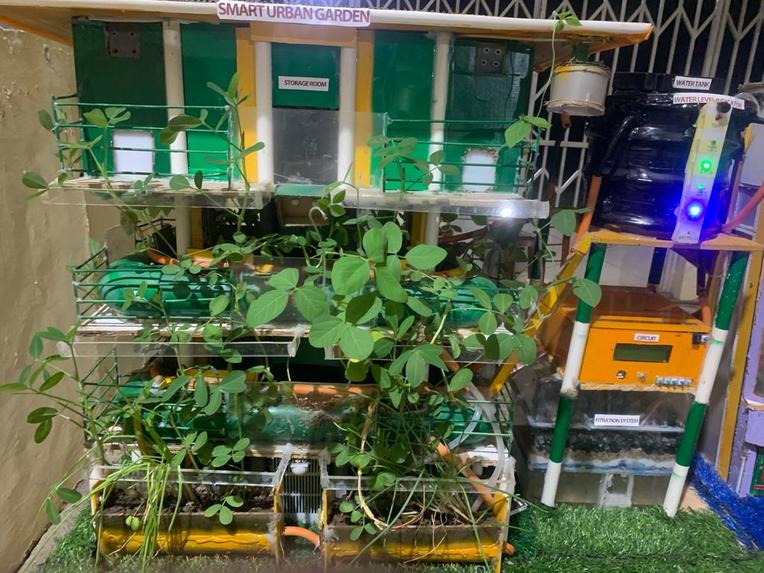
-
-
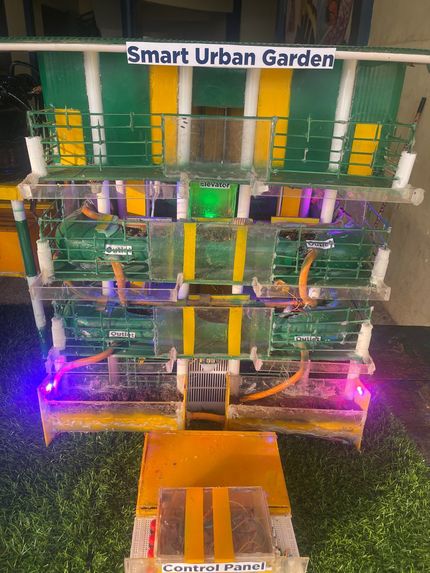
Picture of the smart Urban Garden
-
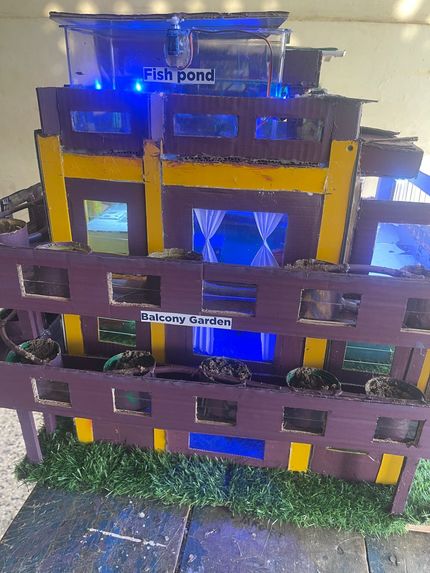
Picture of the smart Urban Garden
-
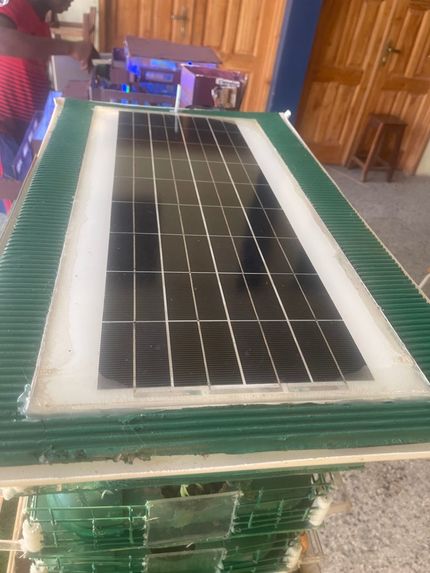
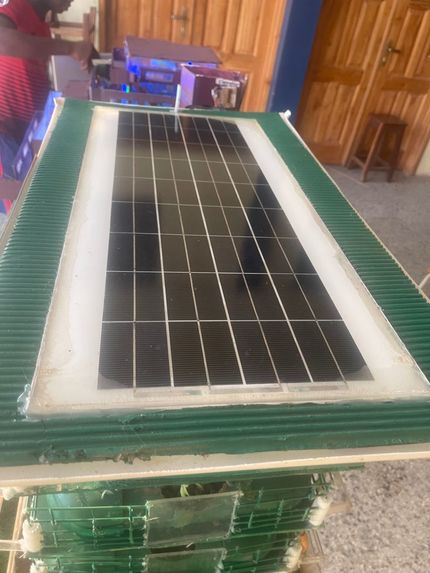
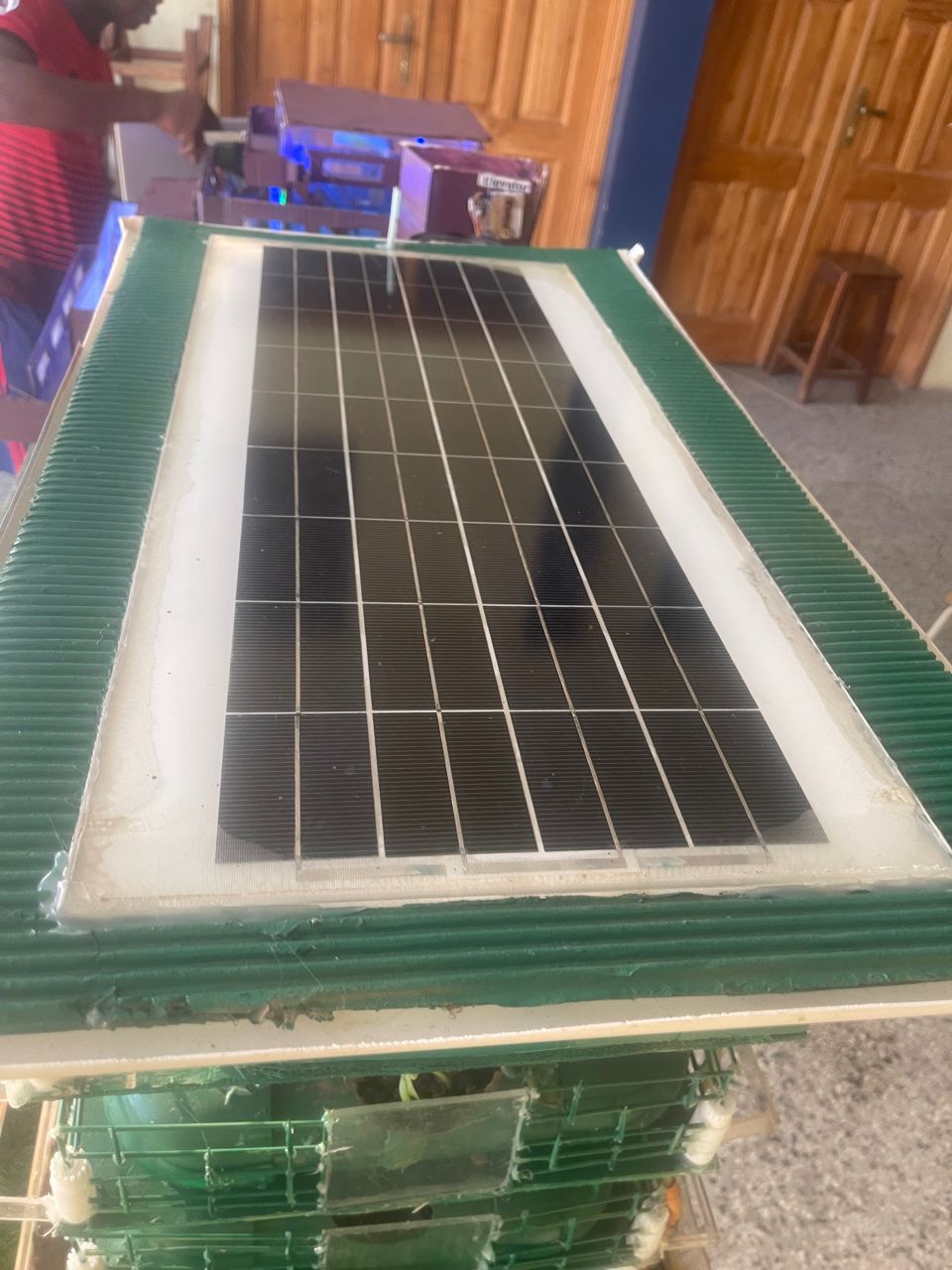
Picture of the smart Urban Garden_solar panel
-
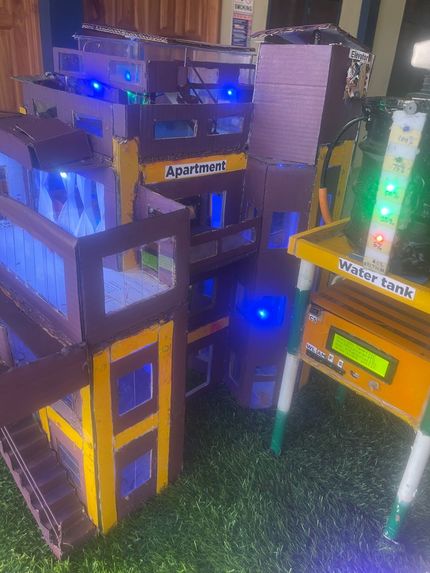
-
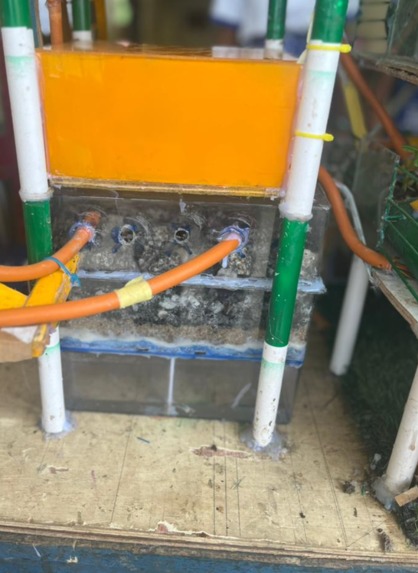
filtration System
-
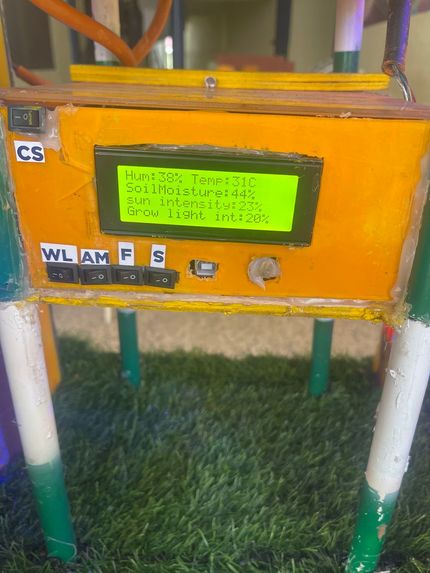
-
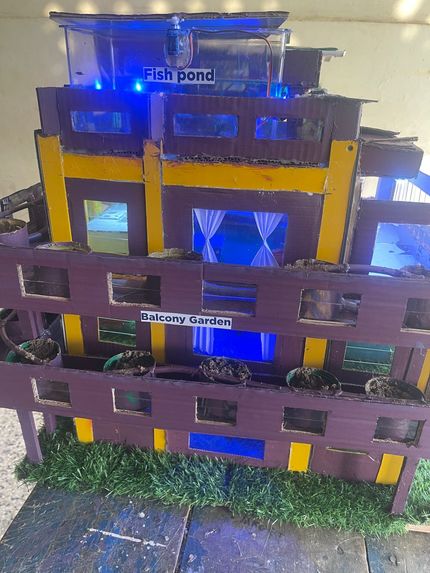
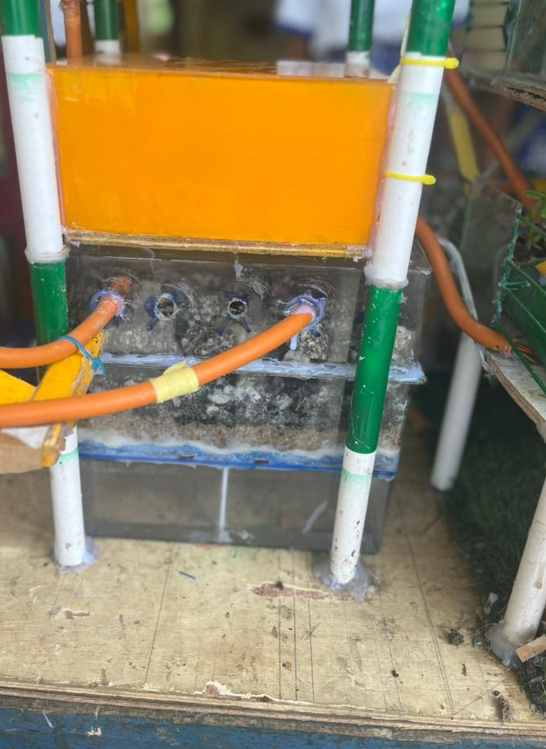
Picture of the smart Urban Garden_fishpond
-
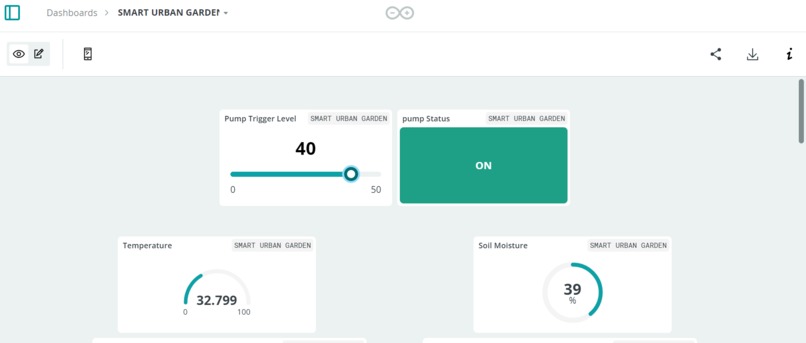
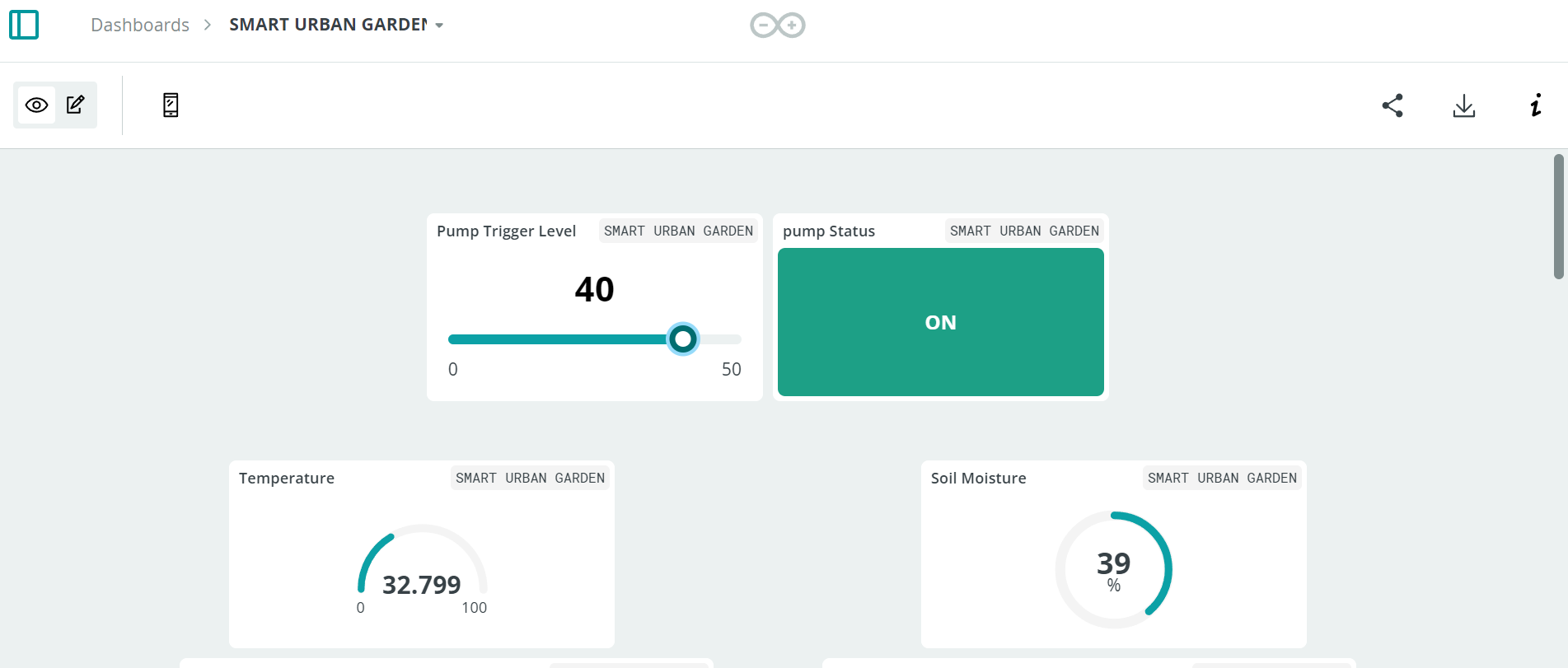
iot dashboard
-
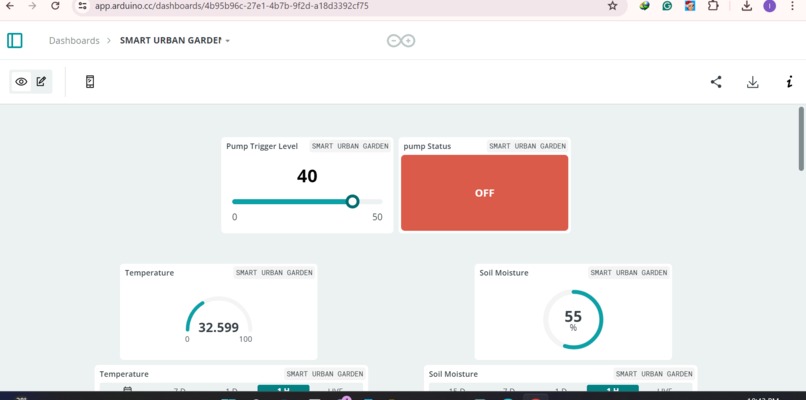
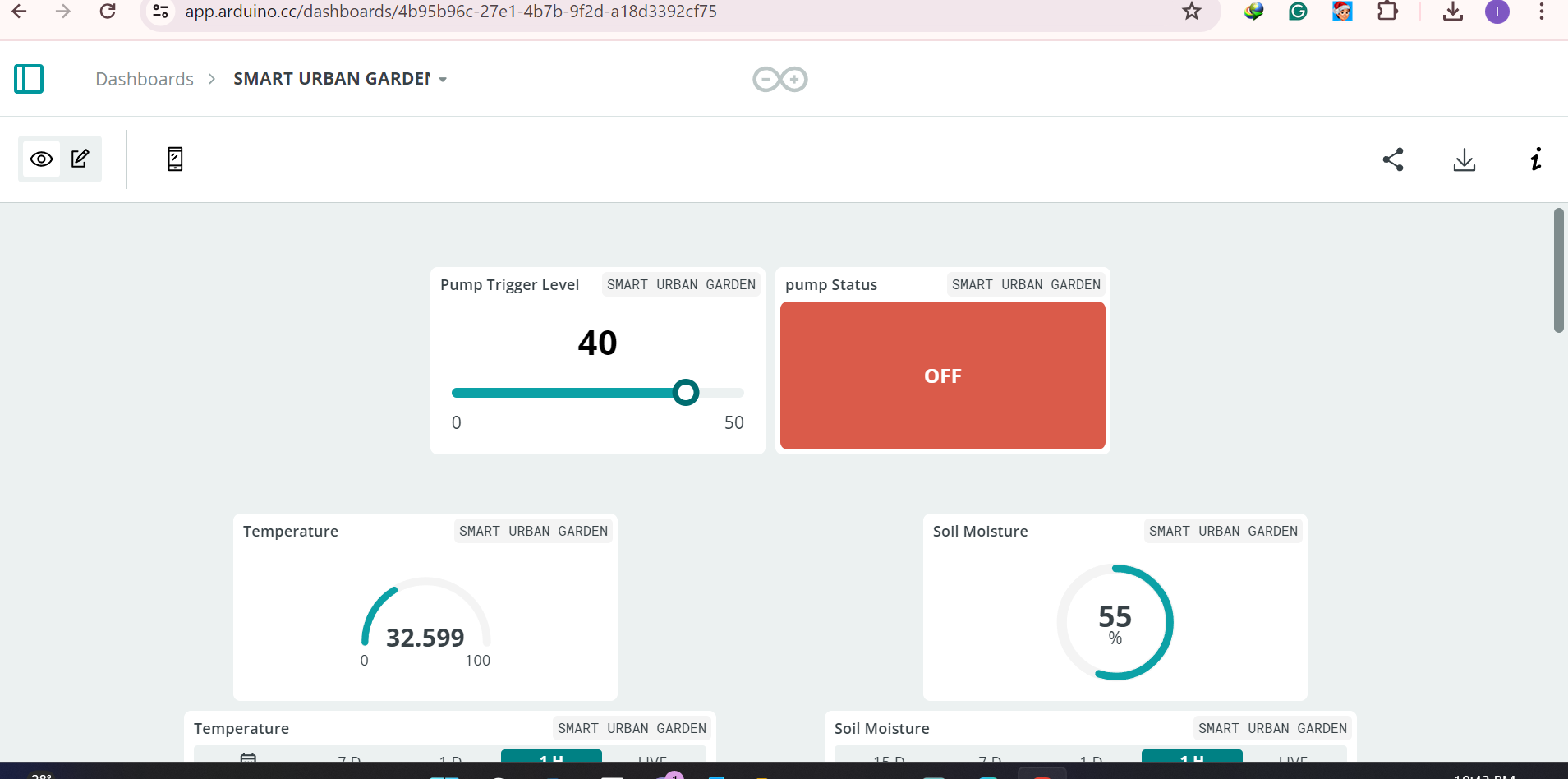
iot dashboard
-
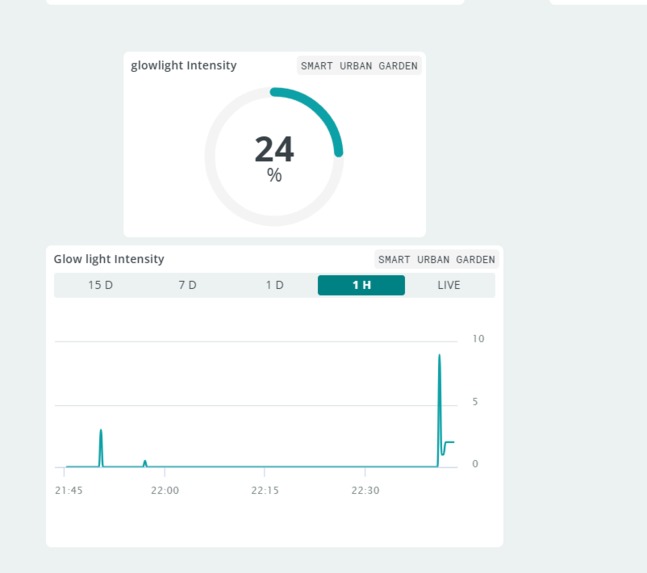
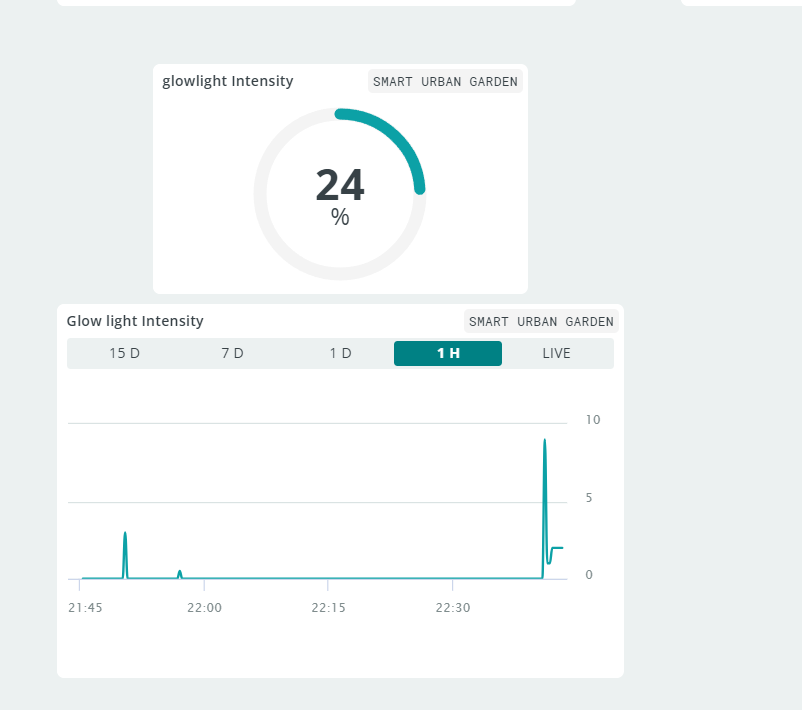
iot dashboard
-
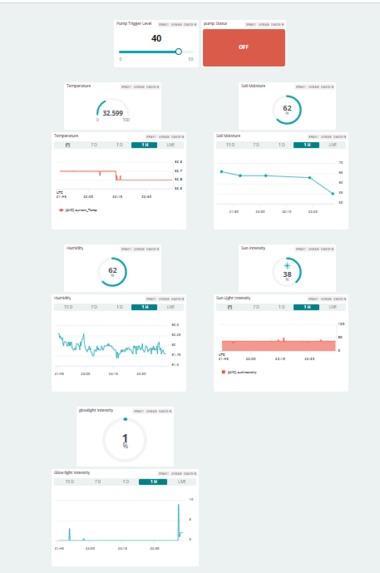
iot dashboard
-
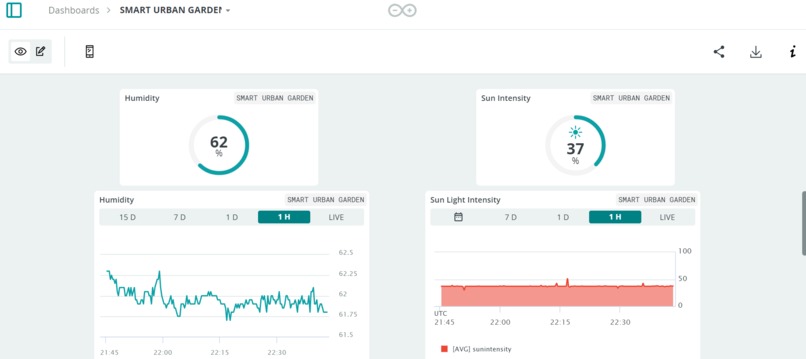
iot dashboard
-
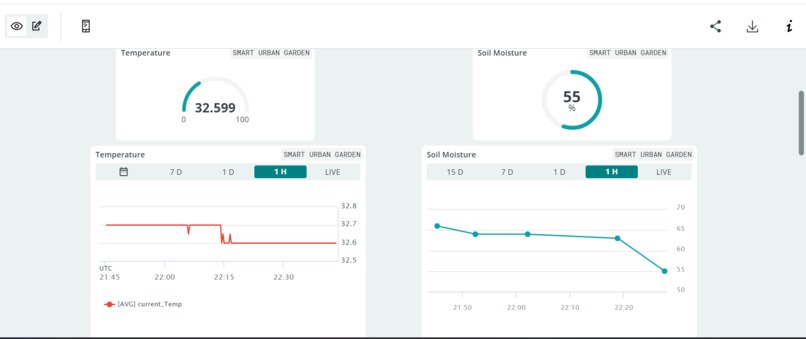
iot dashboard
-
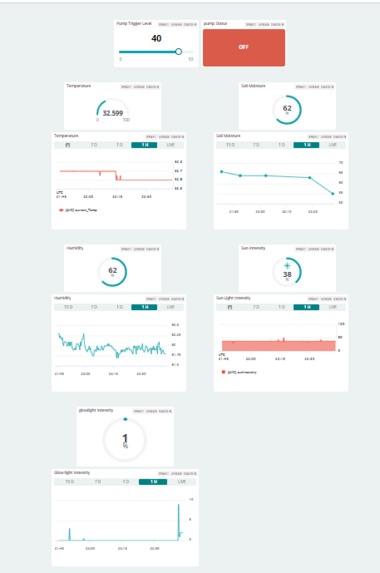
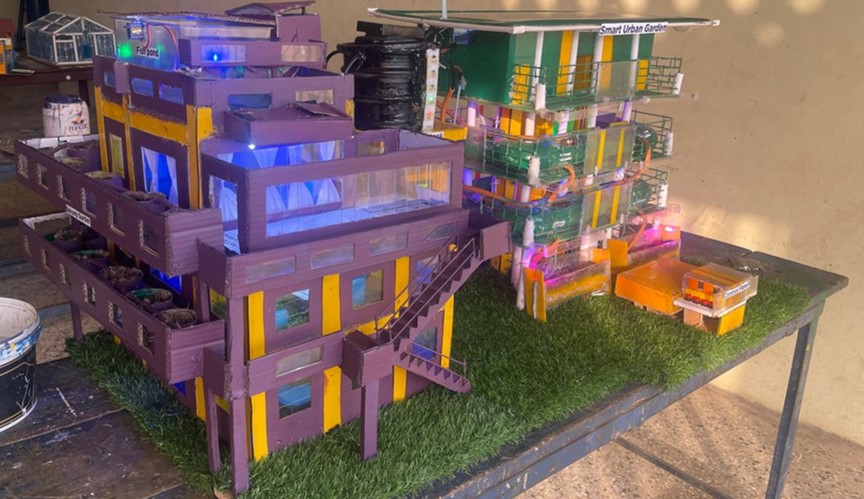


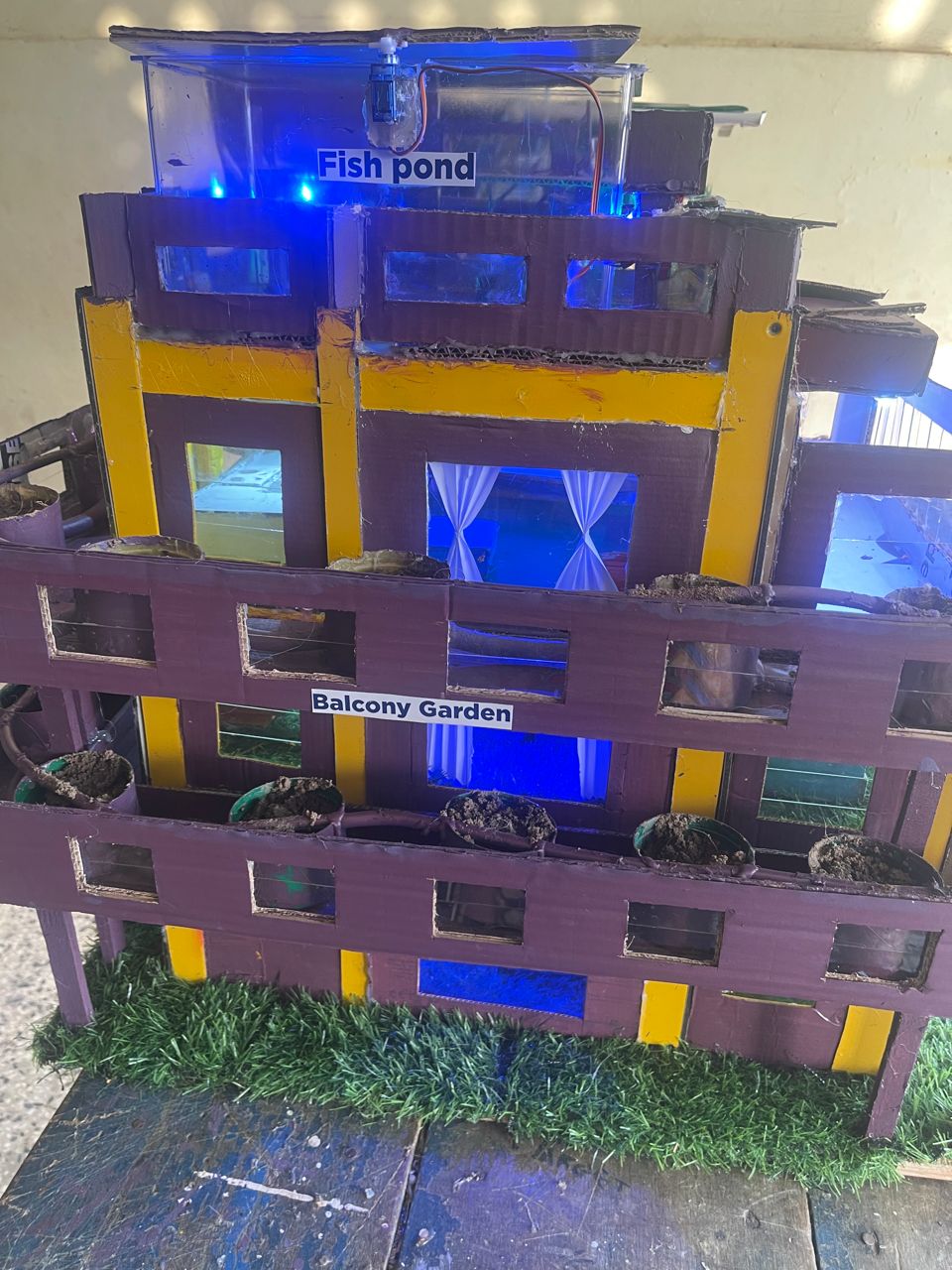

Inspiration
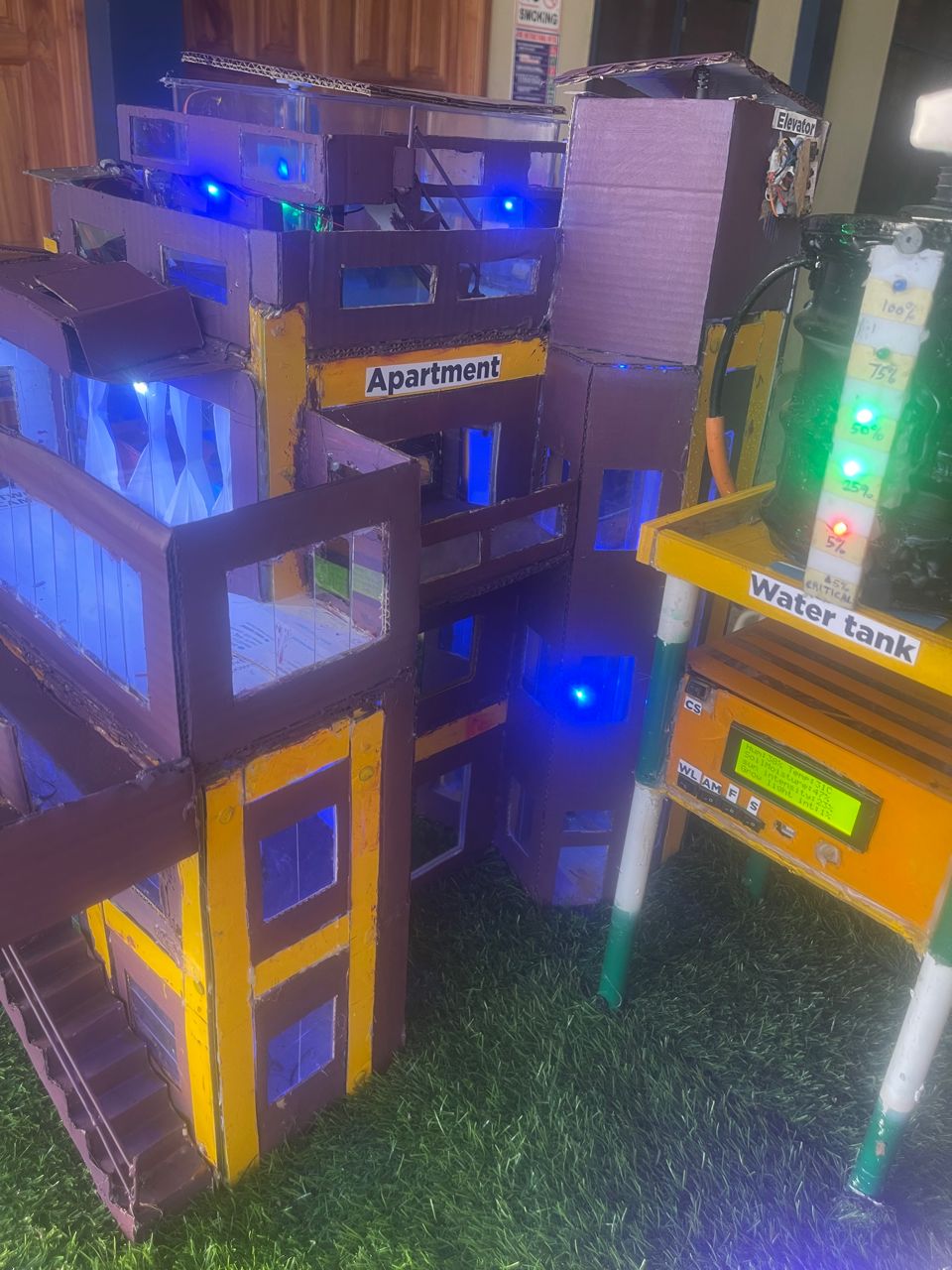
In many urban communities in Ghana, limited space and poor access to fresh produce create major challenges for sustainable living. Additionally, in regions where illegal mining activities have degraded arable land and polluted water sources, food production has drastically declined, affecting both urban and rural populations. Inspired by the urgent need for sustainable and tech-driven agricultural solutions, Smart Urban Garden was developed to empower individuals and communities to grow their food in compact spaces using automation and renewable energy. This project addresses food insecurity while promoting environmental responsibility and innovation.
Objective: The core objective of Smart Urban Gardening is to counteract the detrimental consequences of illegal mining on food production by establishing a decentralized urban agricultural network. By introducing this initiative, we aim to empower urban dwellers who typically lack access to arable land, allowing them to actively participate in food cultivation. By harnessing advanced technologies, promoting sustainable practices, and ensuring flexible electricity use, our goal is to create a framework that bolsters food production, supports environmental sustainability, and fosters community resilience.
Secondary Objectives: Through smart urban gardening, we aim to achieve environmental sustainability by implementing resource-efficient practices, simultaneously enhancing STEM education through hands-on interdisciplinary projects, and establishing a replicable model for other educational institutions, promoting widespread adoption of smart urban gardening practices.
What it does
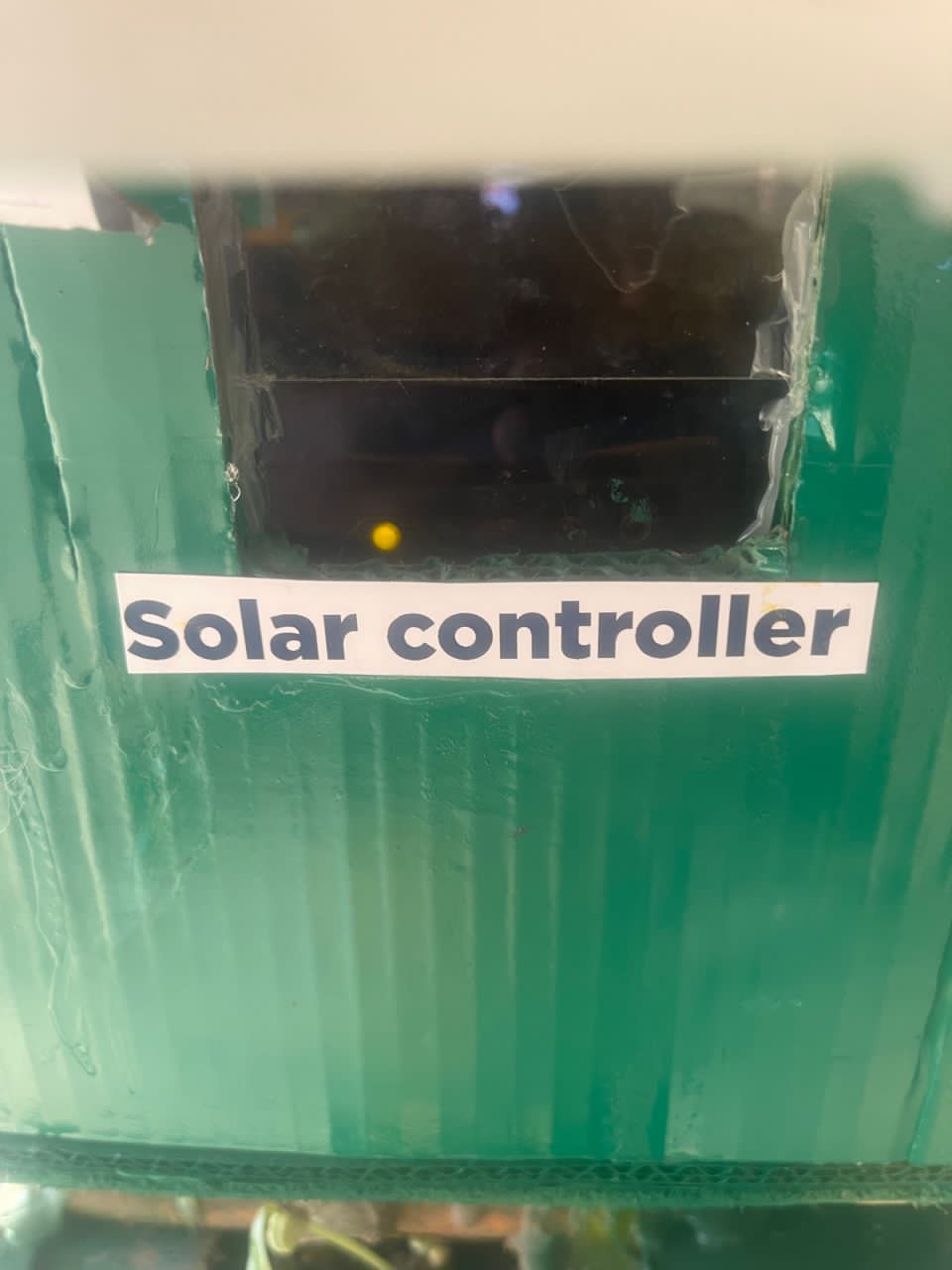
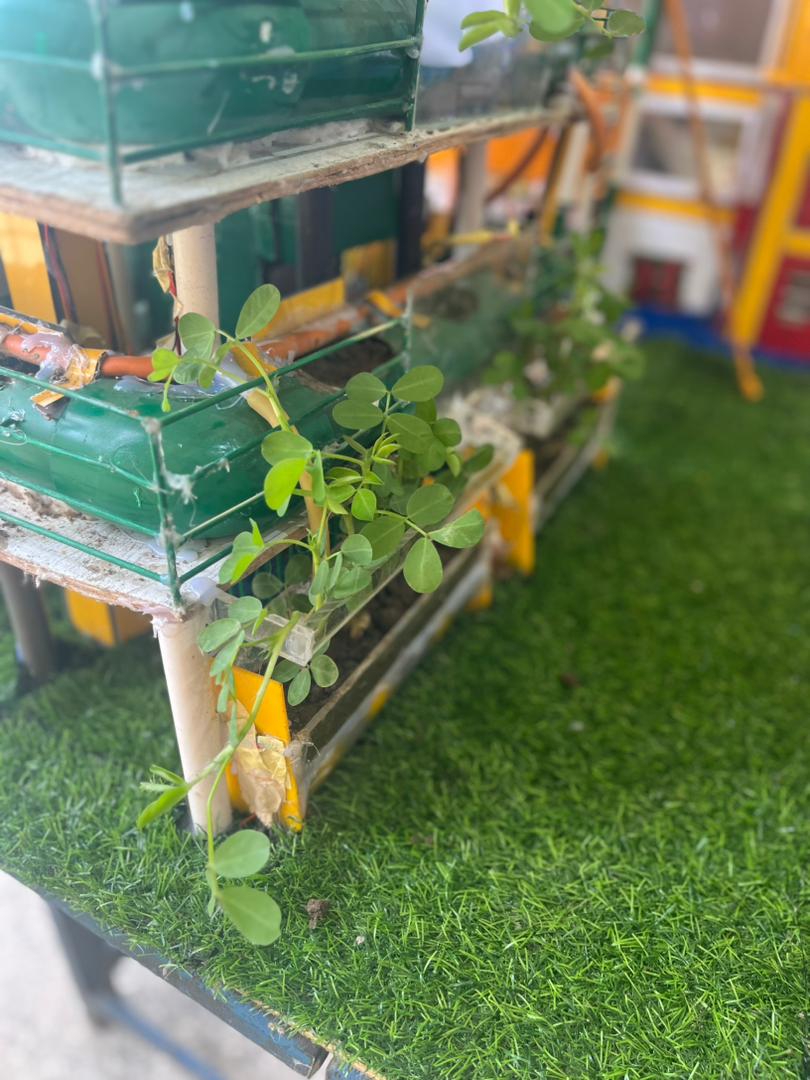
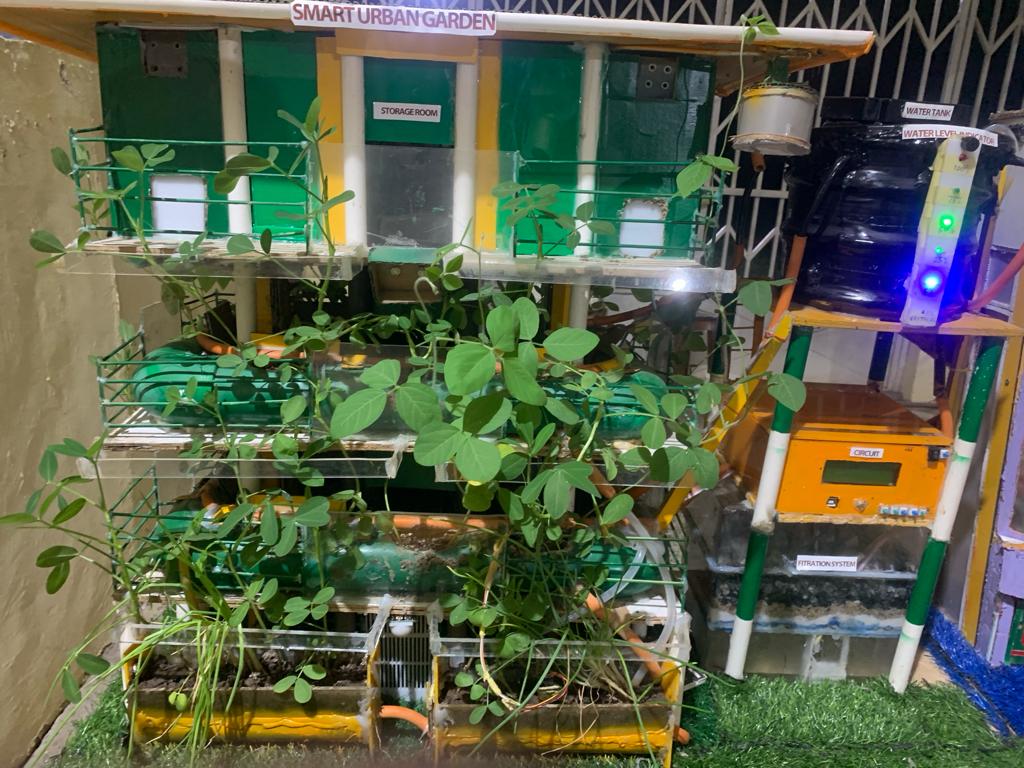
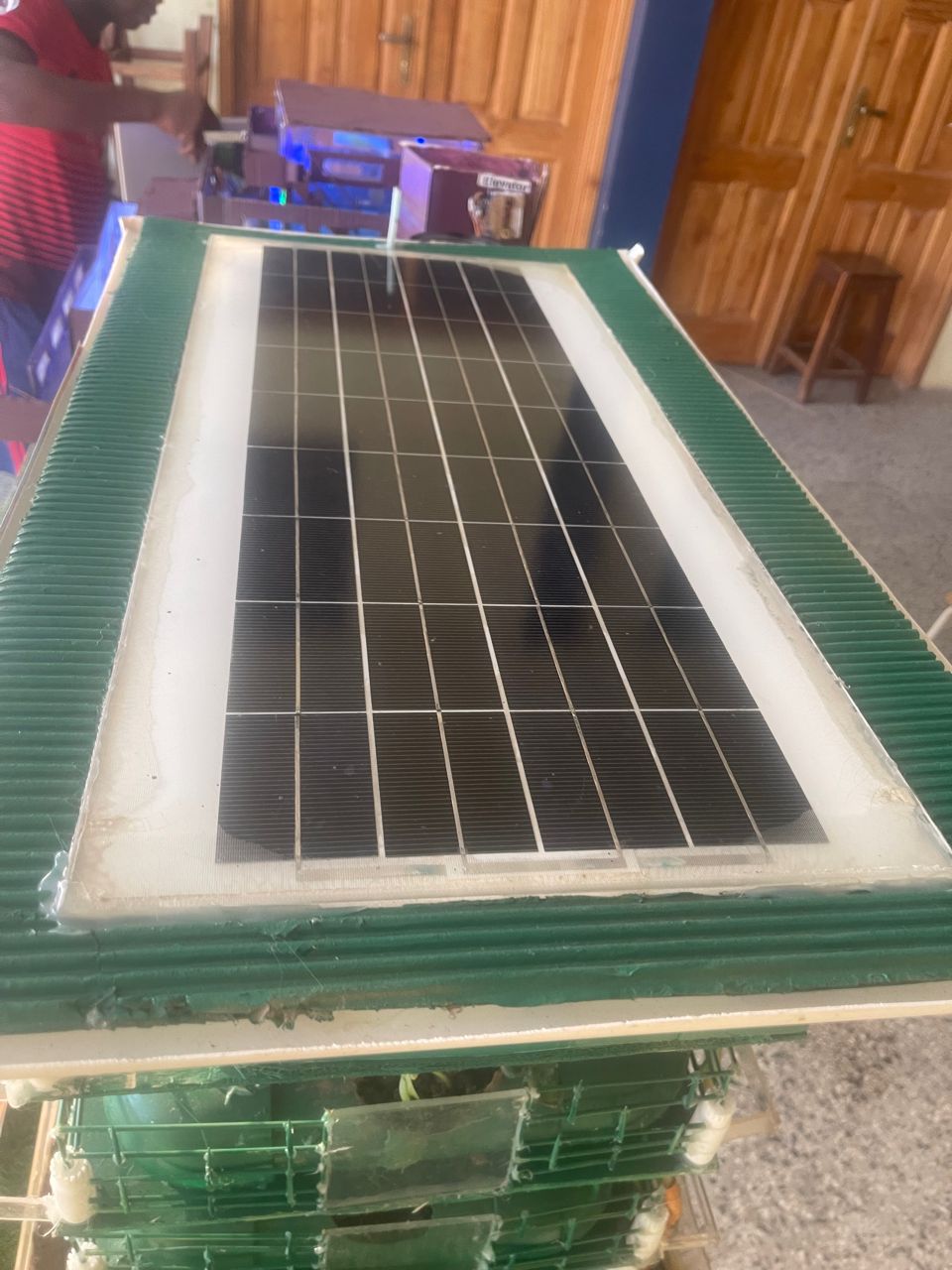
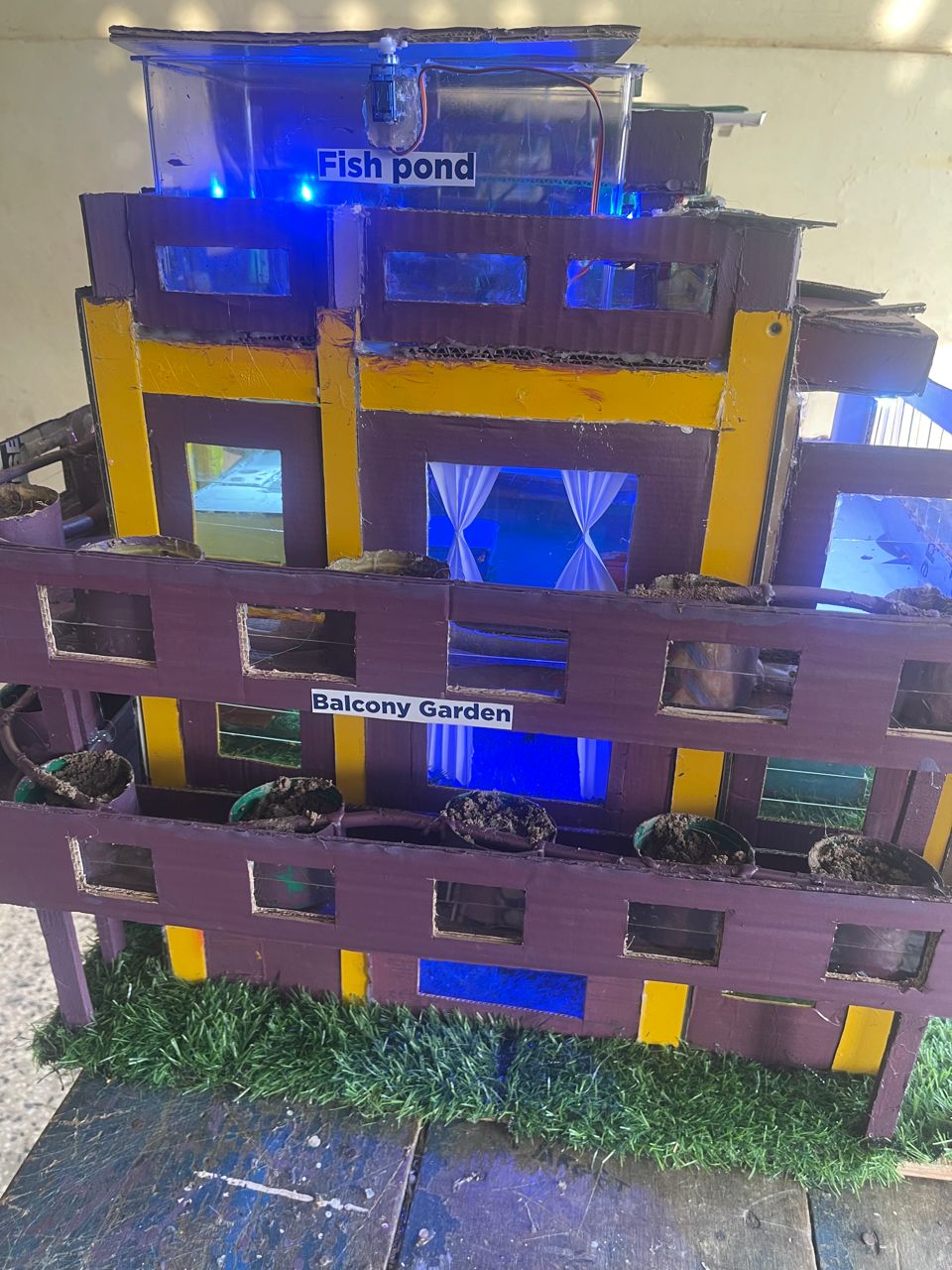
The Smart Urban Garden is an automated gardening system for urban environments with limited farming space. It monitors and controls key environmental factors like soil moisture, temperature, humidity, sunlight intensity, and water levels using IoT sensors. When conditions are unfavorable, the system automatically activates a water pump for irrigation or sends real-time data to a mobile dashboard for user alerts. It is solar-powered, eco-friendly, and helps users grow food efficiently while conserving water and energy. The system also contributes to reducing the impact of food scarcity caused by illegal mining and land degradation.
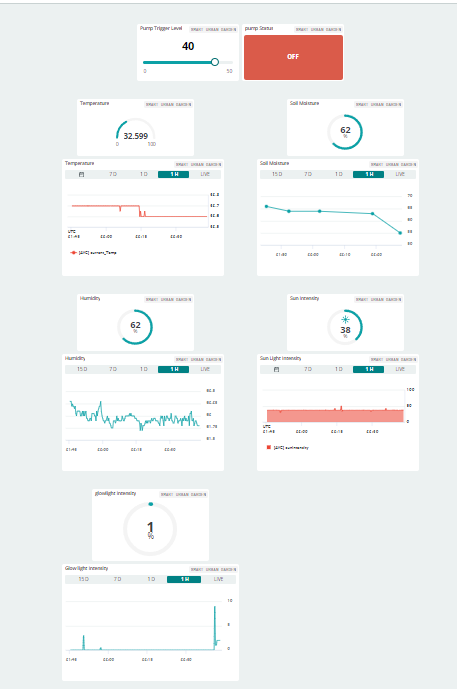
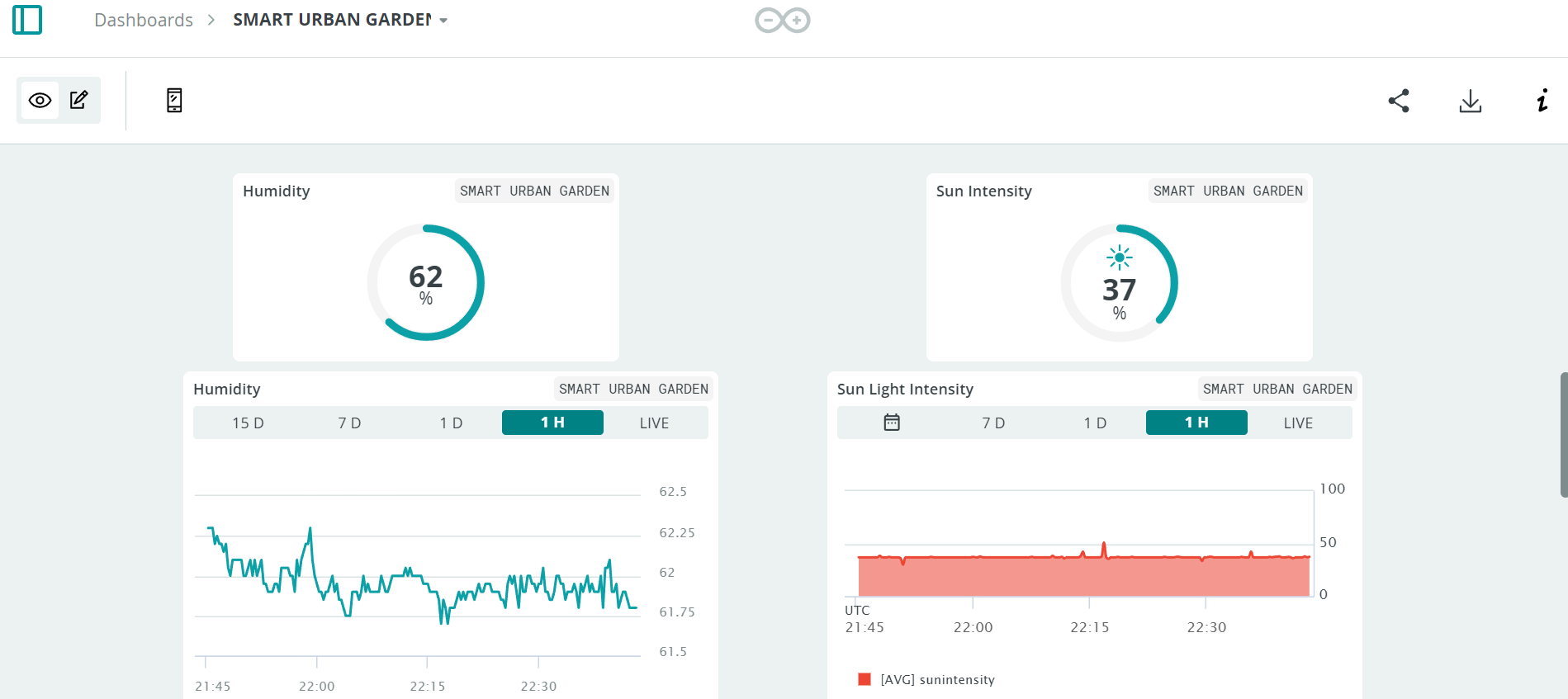
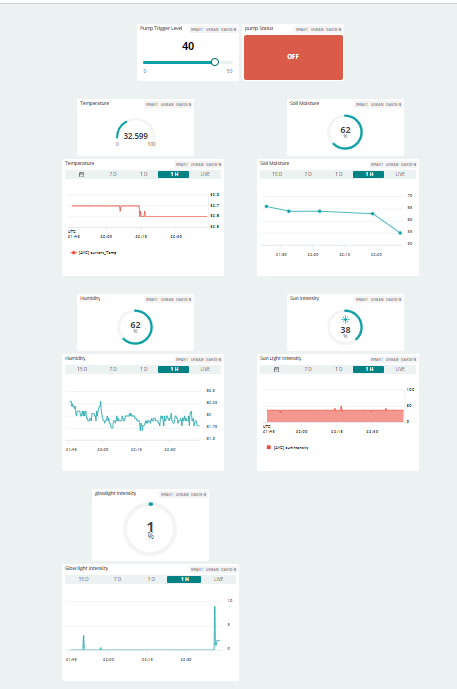
monitoring the urban garden through the Arduino Cloud: Integrating Arduino Cloud into our smart urban garden system enables seamless remote monitoring and control. With real-time access to vital data like soil moisture, temperature, and light levels, we can ensure optimal plant health from anywhere. Additionally, Arduino Cloud allows for remote adjustments to irrigation, lighting, and environmental settings, enhancing efficiency and sustainability. Its data logging and analysis features further enable informed decision-making and continuous optimization of our gardening practices
Automation System: Within the Smart Urban Gardening Initiative, the Automated Irrigation System operates as a sophisticated mechanism for precise plant hydration. Constantly monitoring soil moisture levels, the system activates a pump to commence irrigation when the soil reaches a predetermined dryness threshold. This intelligent approach ensures that our plants receive the optimal amount of water precisely when needed. This technological advancement exemplifies our commitment to efficient and healthy urban gardening.
Sustainable Waste Management: In addressing the complex challenge of waste management in urban environments, our project integrates both liquid and solid waste recycling. A liquid kitchen waste filtration system ensures responsible handling for sustainable irrigation, while efficient composting repurposes solid kitchen waste into nutrient-rich compost. Our Smart Urban Gardening initiative maximizes plant growth by leveraging nutrient-rich fish waste as a natural fertilizer.
Capacitive soil moisture sensor: The capacitive soil moisture sensor plays a crucial role in our Smart Urban Gardening project by providing accurate and real-time data on soil moisture levels. This sensor utilizes the capacitance changes in the soil to determine its moisture content, allowing us to precisely monitor and control irrigation processes. This data-driven approach ensures optimal soil conditions for plant growth, promoting resource-efficient practices and contributing to increased crop yields in our sustainable urban agriculture initiative.
Temperature and Humidity Sensor: In the Smart Urban Gardening project, the integration of temperature and humidity sensors is crucial for maintaining optimal environmental conditions necessary for plant growth. The temperature sensor monitors ambient temperature, allowing precise regulation, especially in areas with varying outdoor temperatures. Simultaneously, the humidity sensor assesses and manages air moisture levels, essential for physiological plant processes. Leveraging data from these sensors enables us to implement timely interventions, ensuring consistently favorable conditions for plant growth in ever-changing environments. This dynamic responsiveness contributes to resilient and flourishing crops in our initiative.
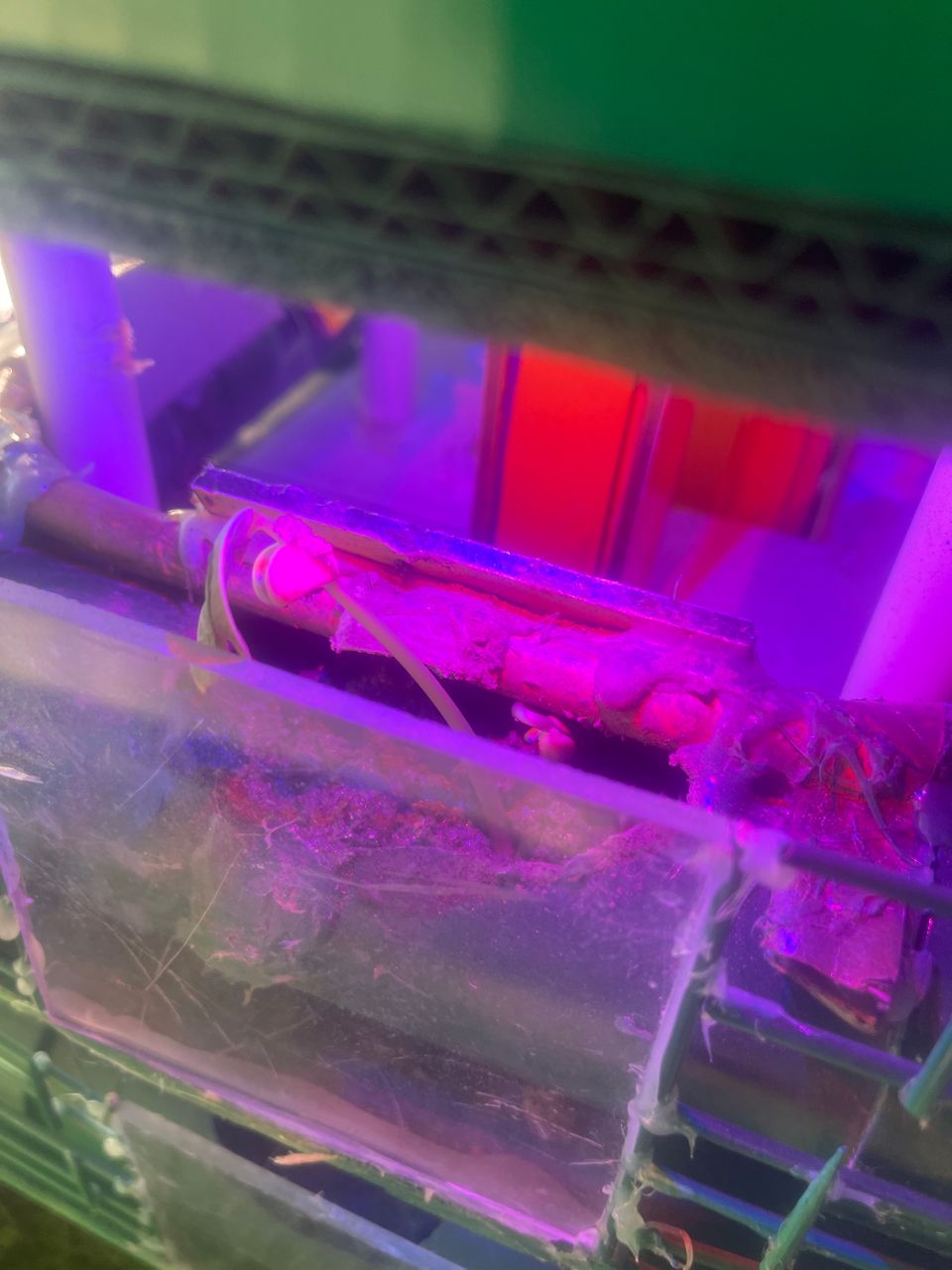
Grow Light with LDR Sensor: Our Smart Urban Gardening project incorporates state-of-the-art technology with a Grow Light System that has an LDR (Light Dependent Resistor) sensor. The maintenance of ideal circumstances for plant growth is greatly aided by this inventive technique, especially when there are weather variations that could affect the availability of natural sunlight. The ambient light intensity in the surroundings is continuously measured by the LDR sensor. The Grow Light System turns on when it senses a decrease in sunshine, which is particularly important when plants are still in their seedling stage and most susceptible. Ensuring that the plants receive the extra light they require for photosynthesis encourages strong and healthy development. Our Smart Grow Light System is a prime example of our dedication to creating an environment where plants can flourish in any situation by simulating natural sunshine conditions.
Motion Sensor: Given the urban setting of our Smart Urban Gardening project, the motion sensor serves a dual purpose. Beyond detecting human intruders, it plays a crucial role in detecting and deterring animals. When activated, the motion sensor triggers alarms, effectively scaring away animals that might pose a threat to the garden. This proactive approach not only safeguards the project but also ensures the well-being of the cultivated crops, contributing to the overall success of the urban gardening initiative.
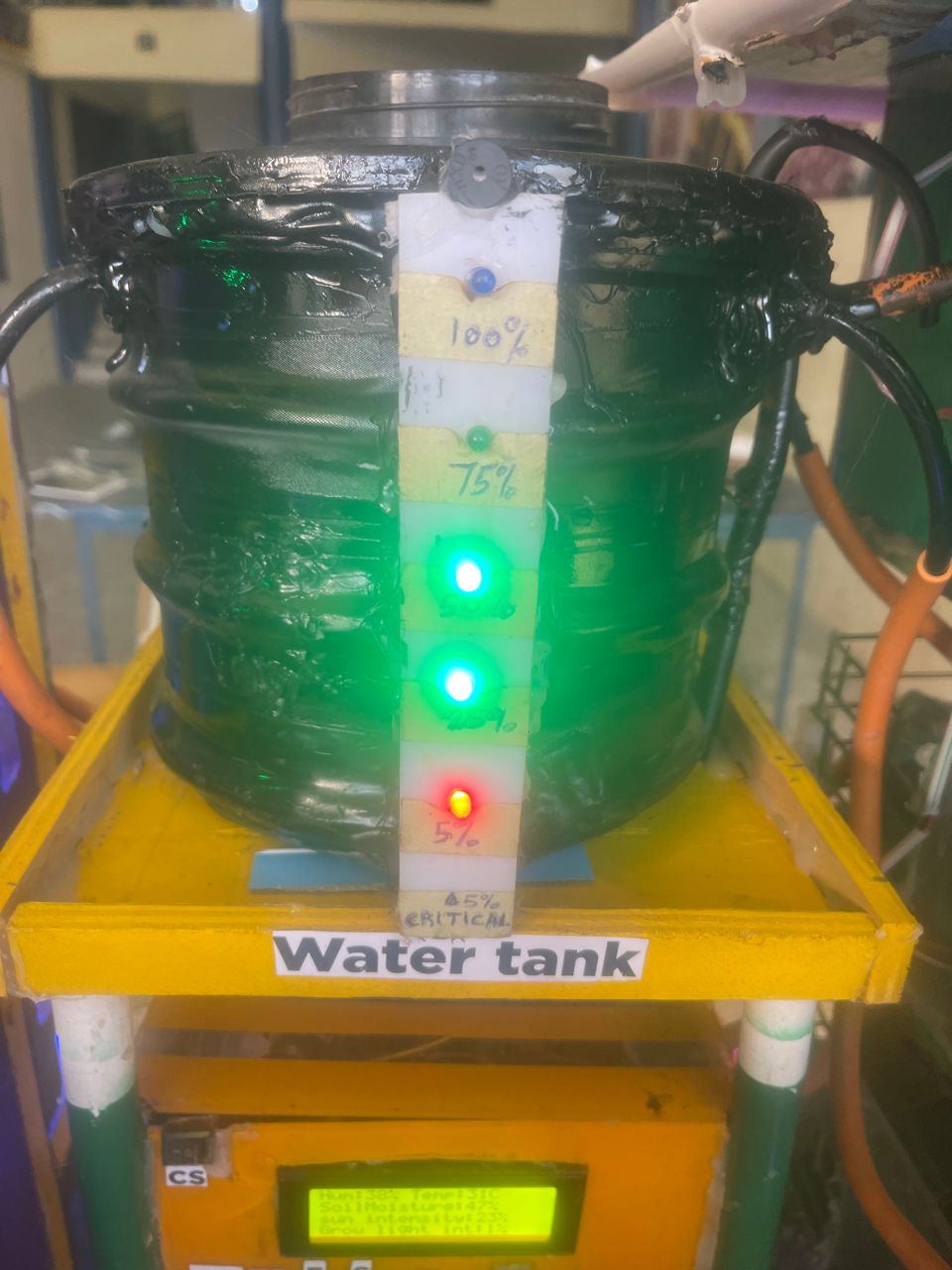
Water Management: Our Smart Urban Gardening initiative is designed to prevent water retention in the soil, ensuring an optimal balance of moisture for ideal plant growth. Through a meticulously engineered outlet system, excess water is efficiently drained, mitigating the risk of waterlogging. This precision in water management not only safeguards against soil overhydration but also maintains the essential moisture levels vital for the health and vigor of cultivated crops. In addition to this, our project incorporates advanced technology to monitor the water level in the irrigation tank, facilitating informed and efficient irrigation practices. This dual approach exemplifies our commitment to promoting a sustainable and thriving urban gardening environment.
How we built it
We identified key environmental conditions needed for optimal plant growth—specifically, soil moisture, temperature, humidity, sunlight intensity, and water level. To monitor these, we used a DHT22 sensor (for temperature and humidity), a capacitive soil moisture sensor, an LDR/photoresistor (for light intensity), and an ultrasonic sensor (for water level detection).
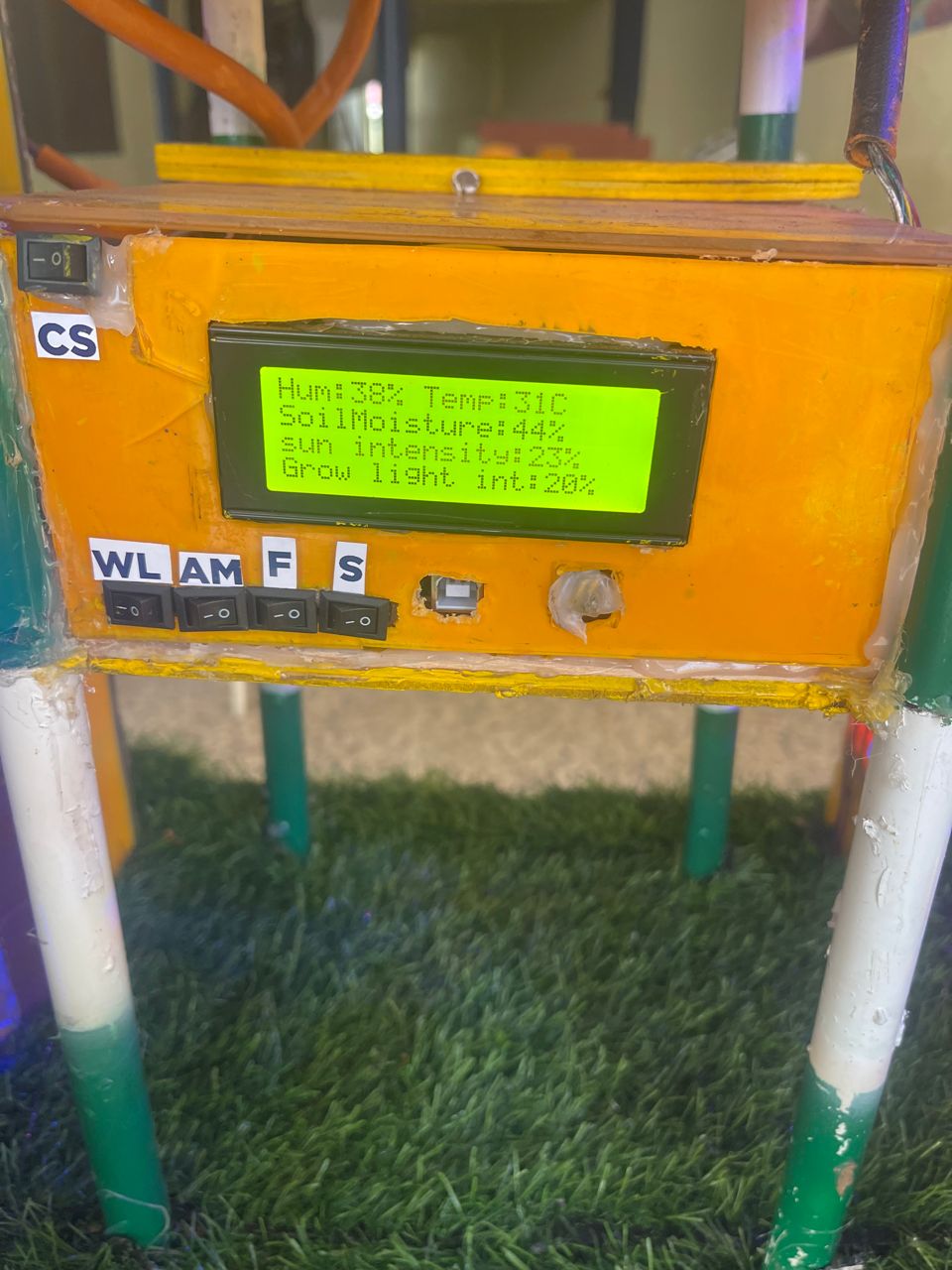
The system’s core is powered by the Arduino Uno R4, which reads sensor data and controls actuators like a relay module to operate the water pump automatically based on moisture readings. A 20x4 LCD with an I2C module is used for real-time display of sensor values locally.
We connected the Arduino Uno R4 to the Arduino IoT Cloud, allowing users to monitor live data remotely through a dashboard interface. All environmental readings—soil moisture, humidity, temperature, water level, and sunlight—are synced to the cloud.
Challenges we ran into
Sensor Calibration: Calibrating sensors like the soil moisture and ultrasonic sensors to ensure accuracy was initially difficult, especially under changing weather conditions.
Cloud Synchronization: Integrating real-time data to Arduino IoT Cloud required careful variable management and debugging to ensure seamless updates.
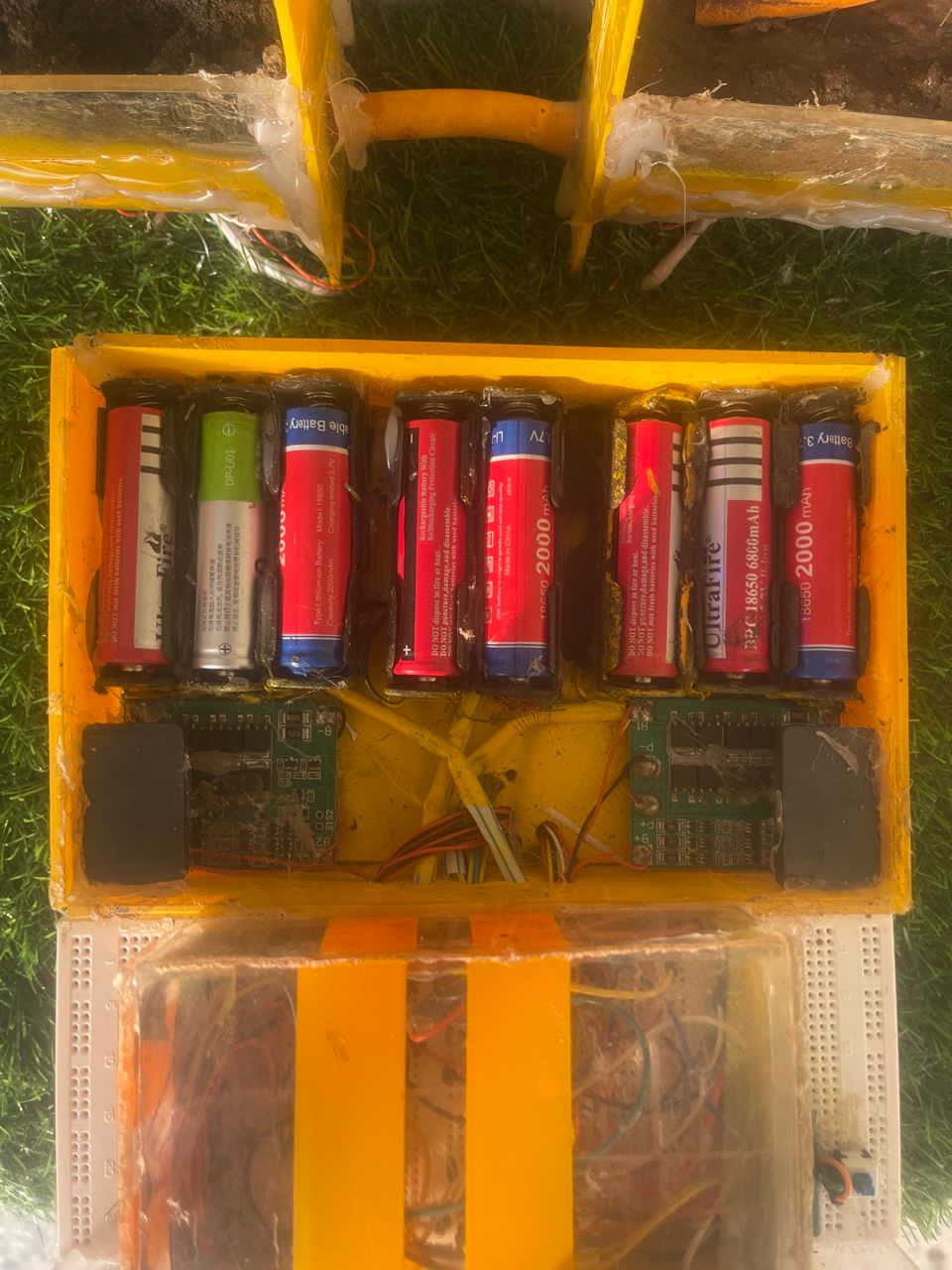
Power Management: Ensuring the system could run efficiently without frequent power failures was a concern.
Accomplishments that we're proud of
Successfully built a working prototype that monitors and irrigates based on real environmental conditions.
Designed a fully functional IoT dashboard for real-time monitoring, accessible from anywhere.
What we learned
How to integrate multiple sensors and control systems into a reliable automated setup.
Practical experience with Arduino Uno R4 and Arduino IoT Cloud.
The importance of eco-conscious design and how technology can solve real agricultural problems, especially in urban and mining-affected regions.
What's next for Smart Urban Garden
Integrate AI to predict optimal watering schedules and detect plant stress.
Expand the design into a mobile app for wider accessibility.
Partner with local farmers and NGOs to deploy and test the solution at a larger scale in mining-affected or drought-prone communities.


Log in or sign up for Devpost to join the conversation.