-
-
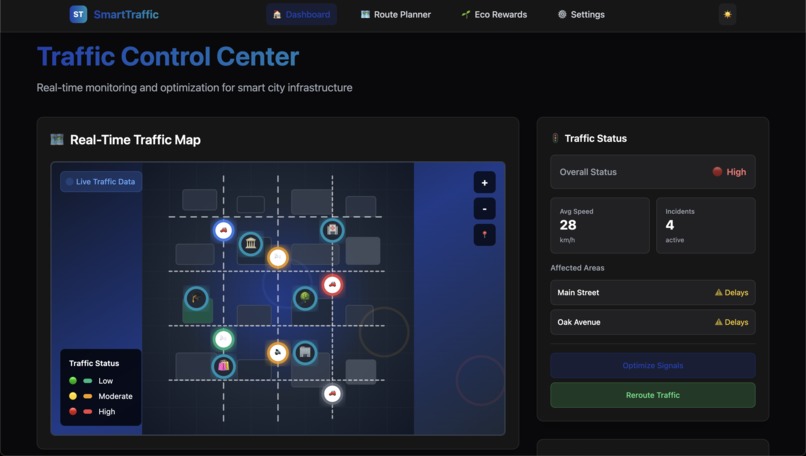
Landing_Page
-
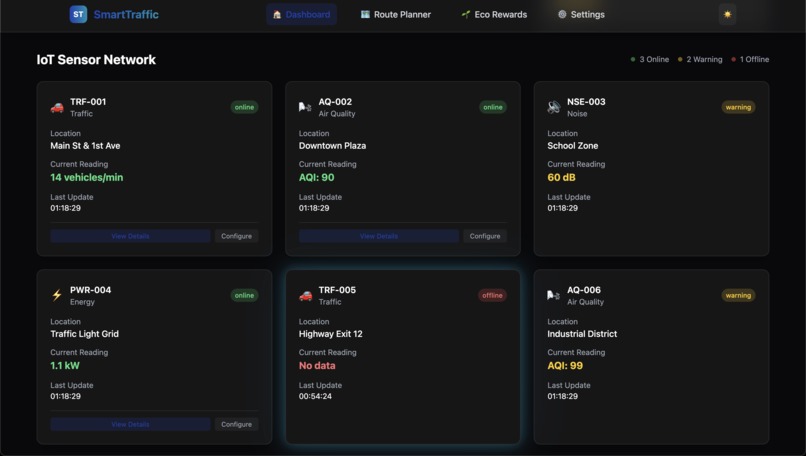
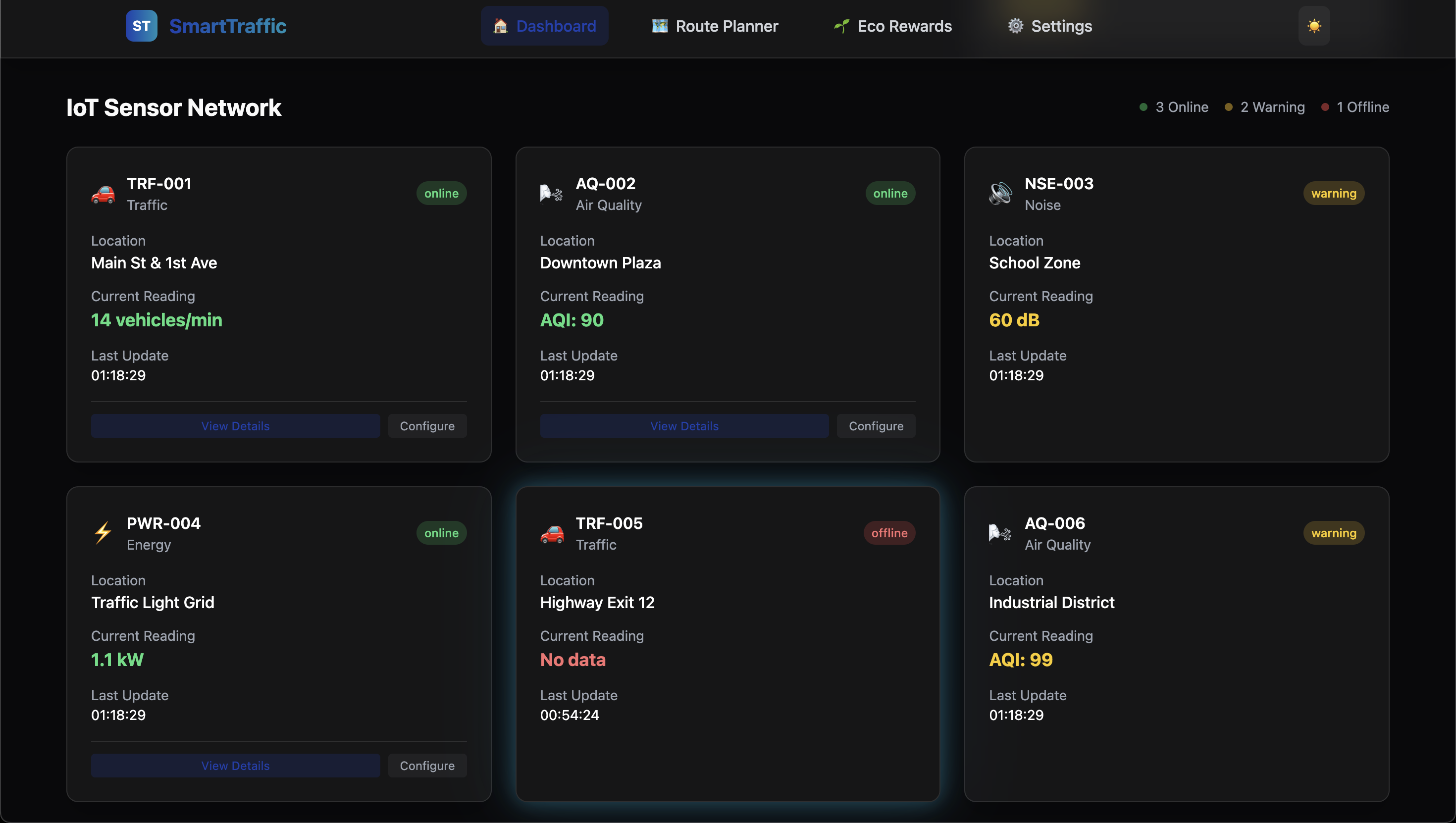
IoT_Sensor_Network
-
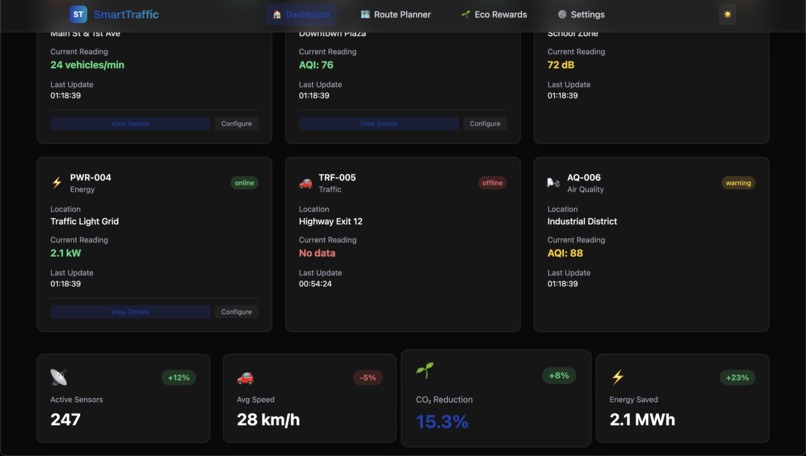
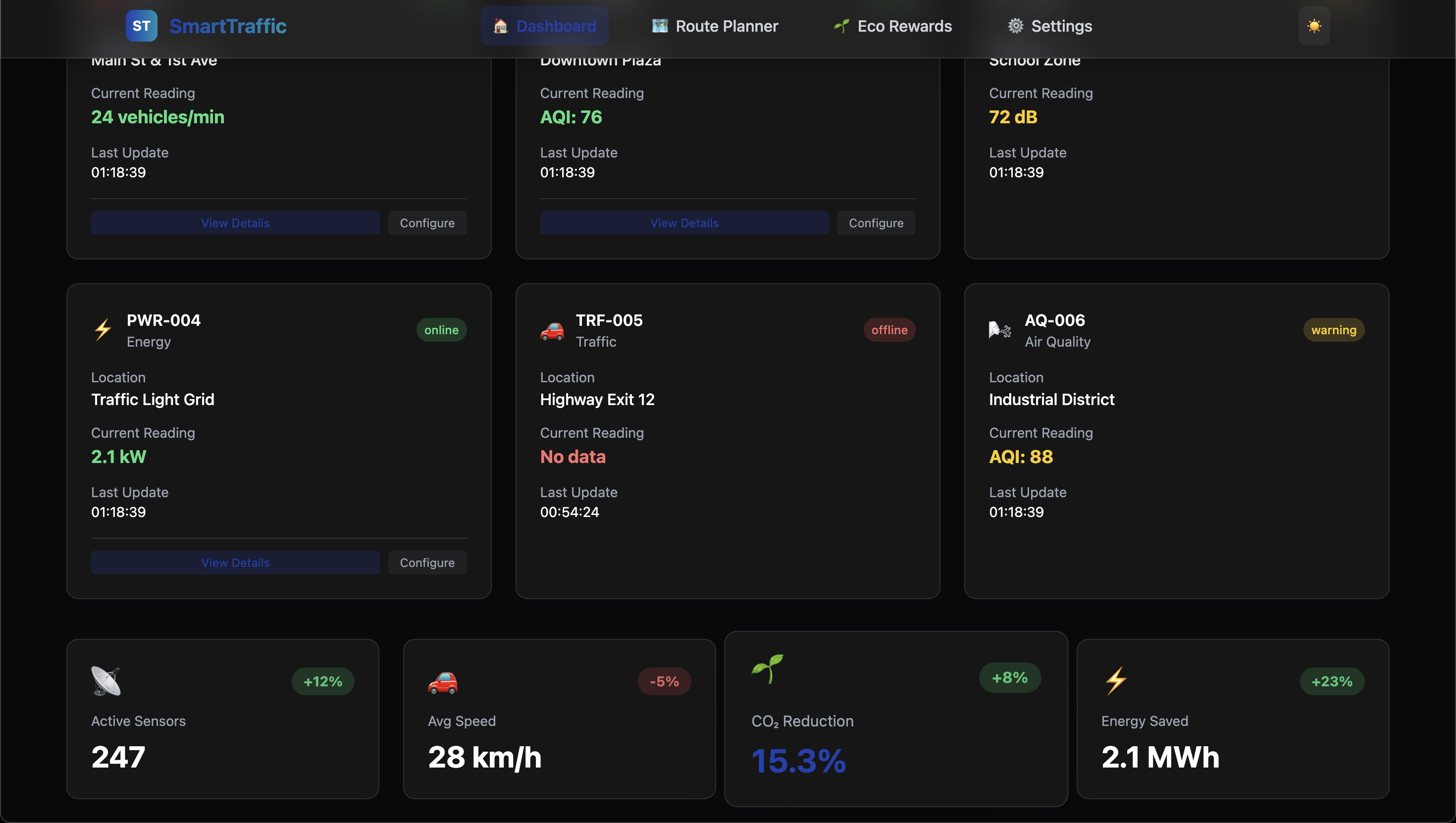
IoT_Sensor_Network_With_Analysis
-
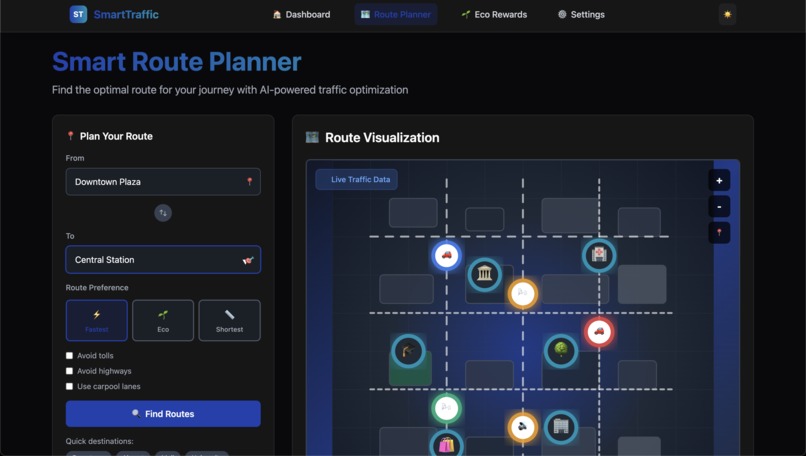
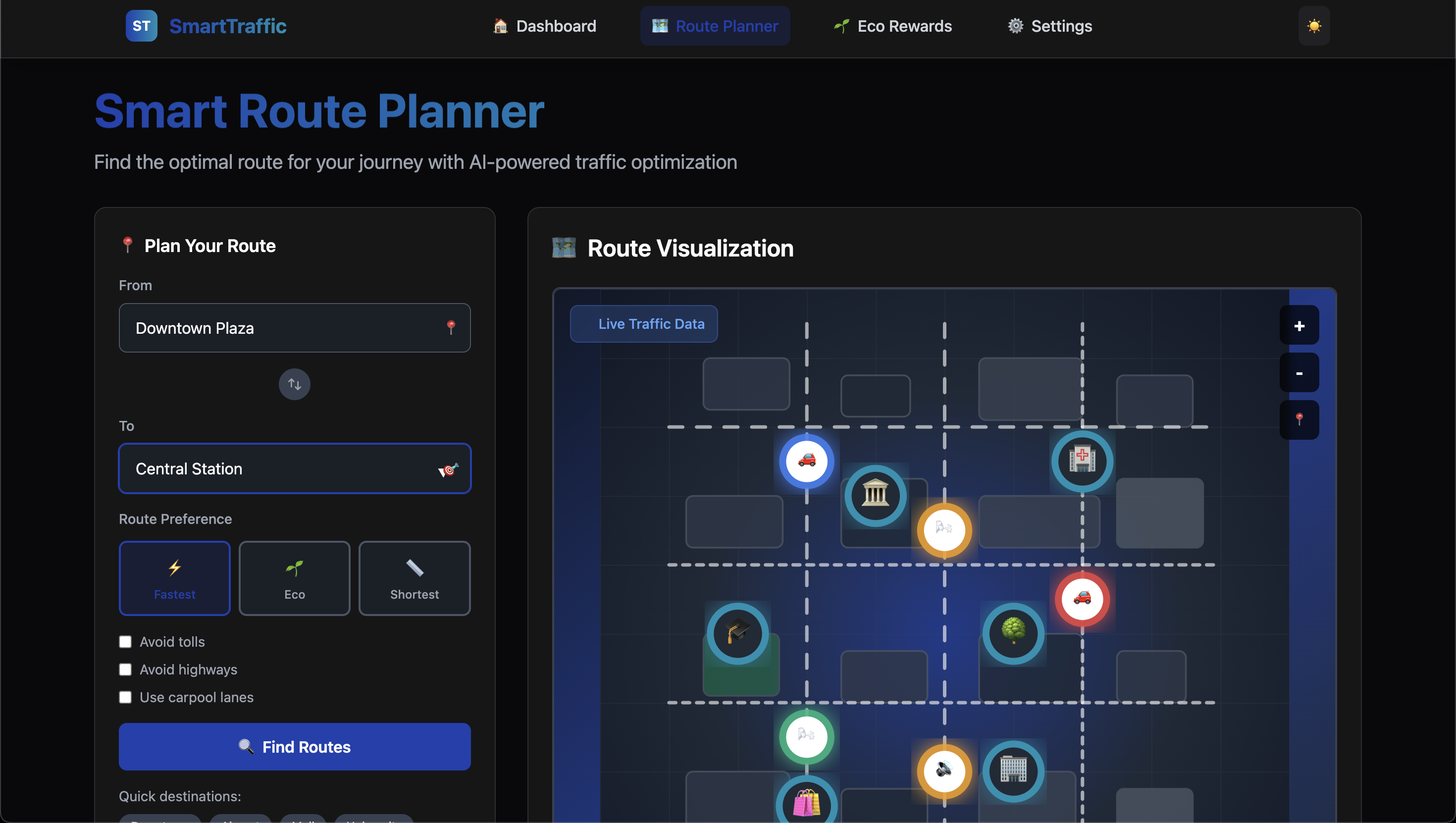
Safe_Route_Planner
-
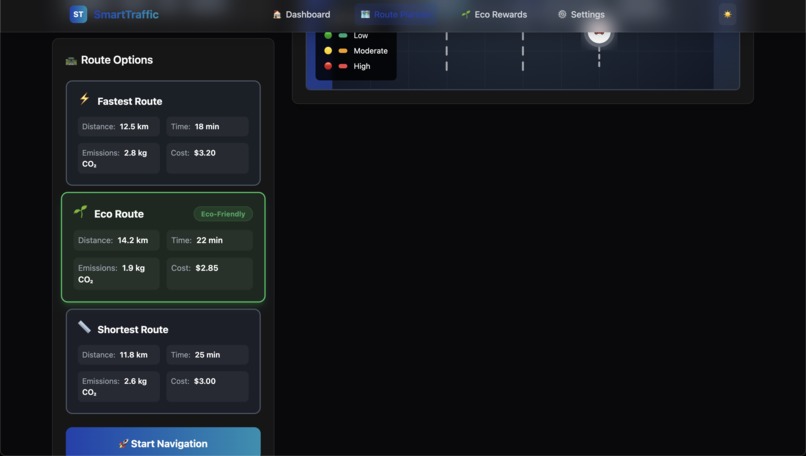
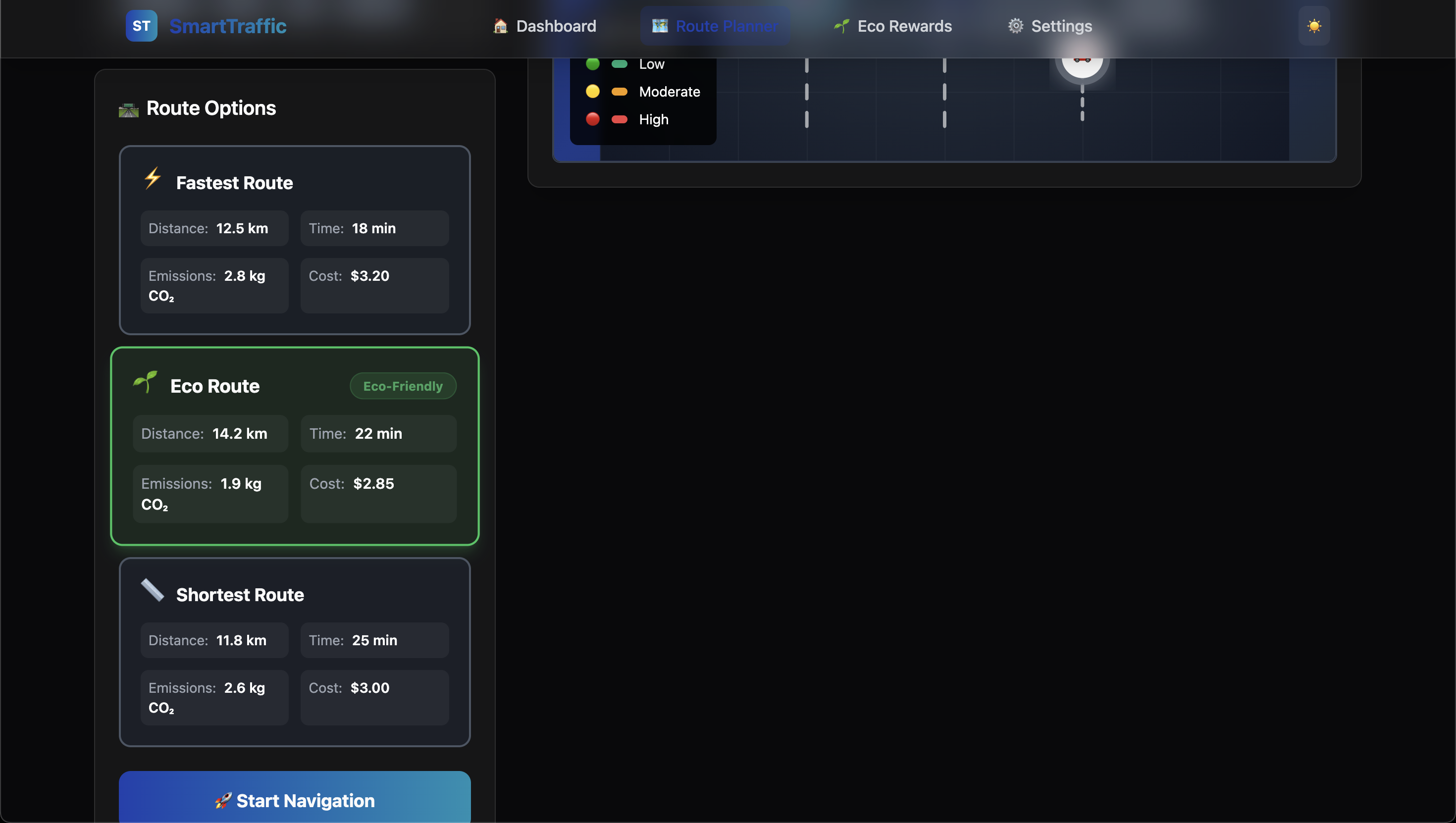
Safe_Route_Planner_Results
-
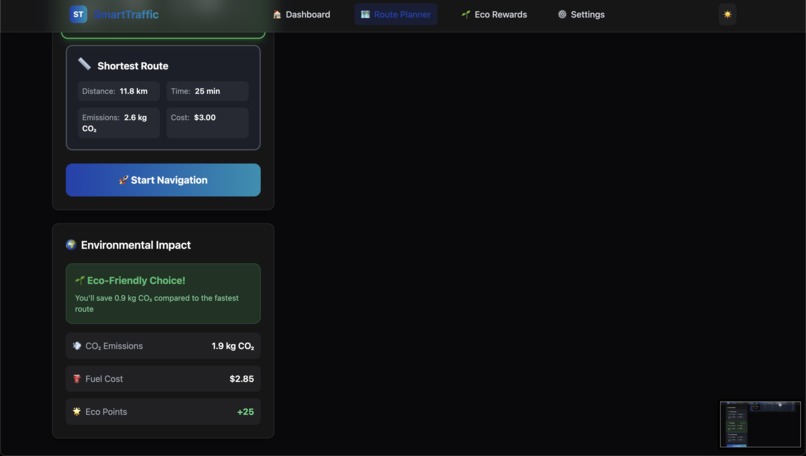
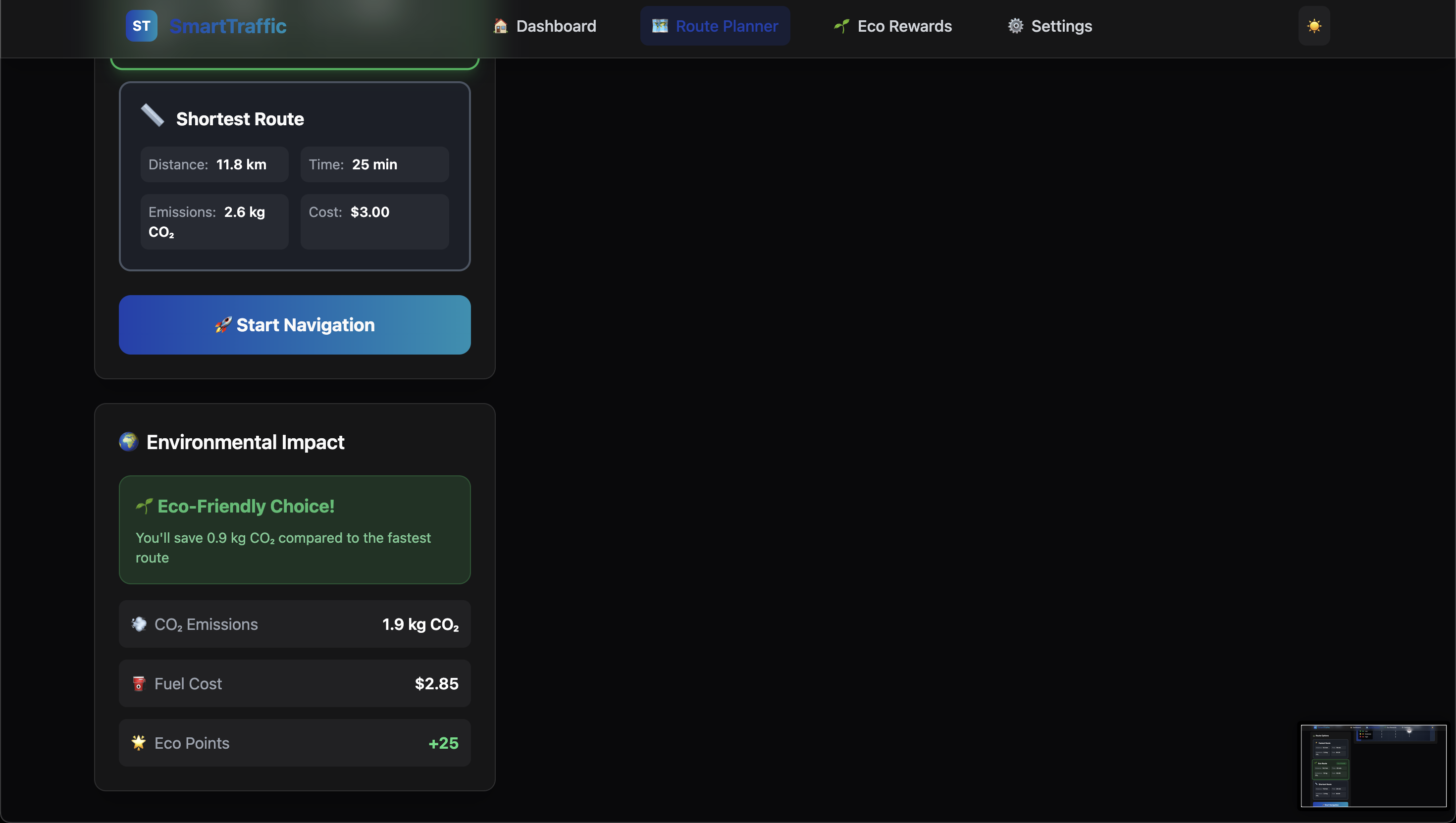
Safe_Route_Planner_Environmental_Impact
-
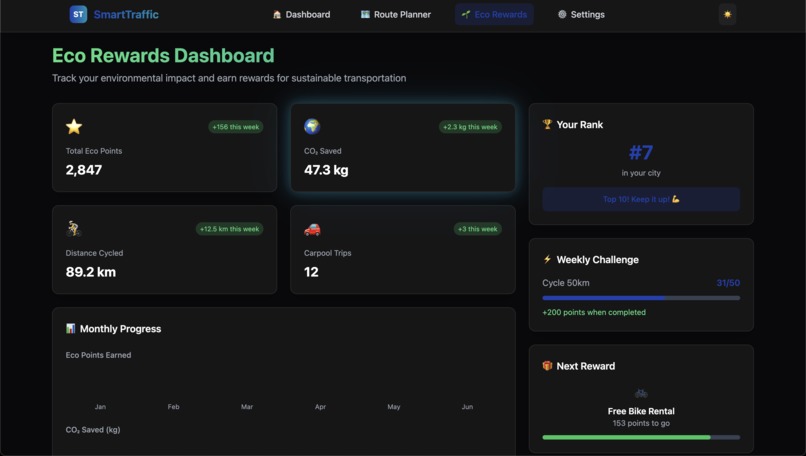
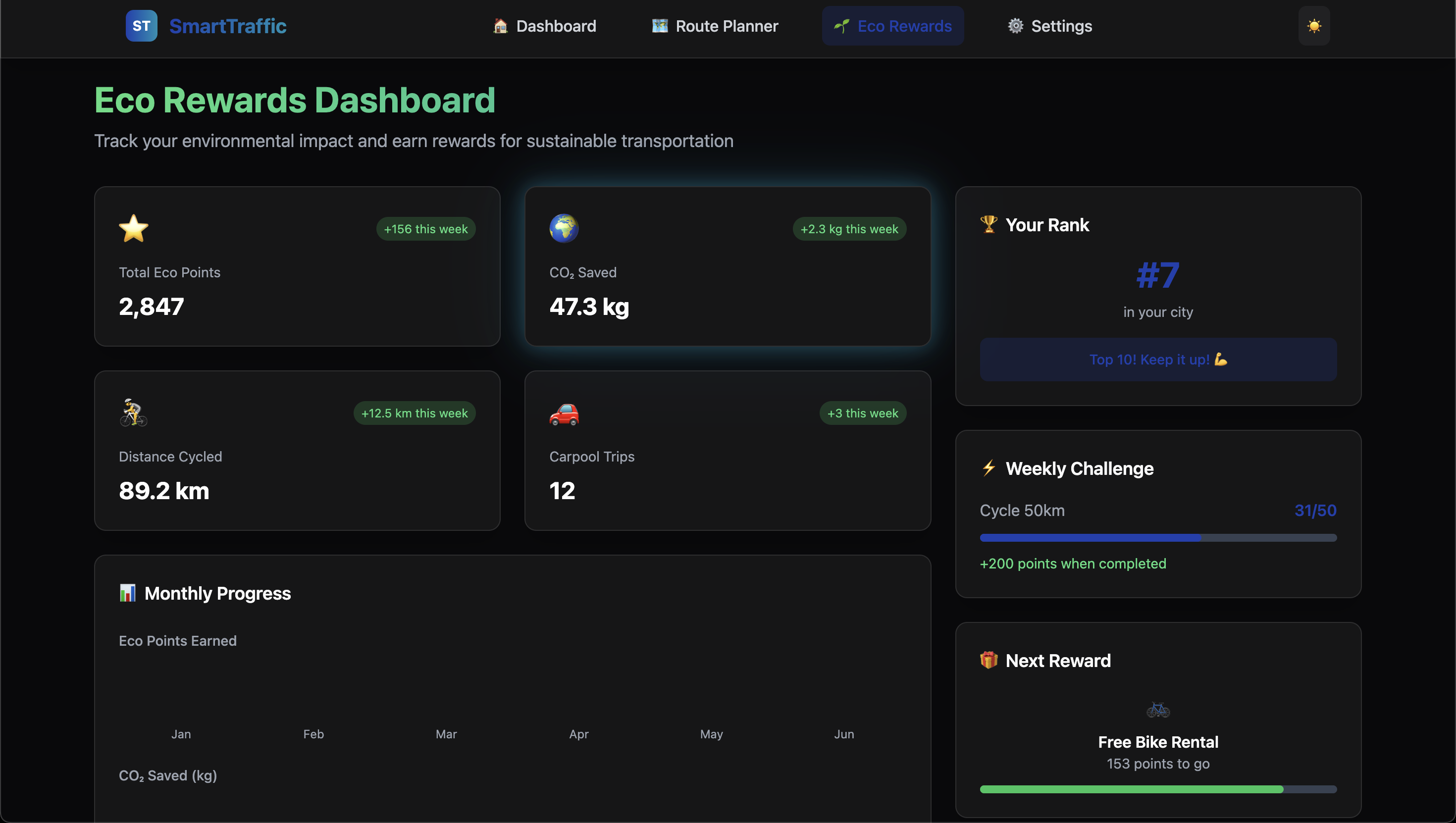
Rewards_Dashboard
-
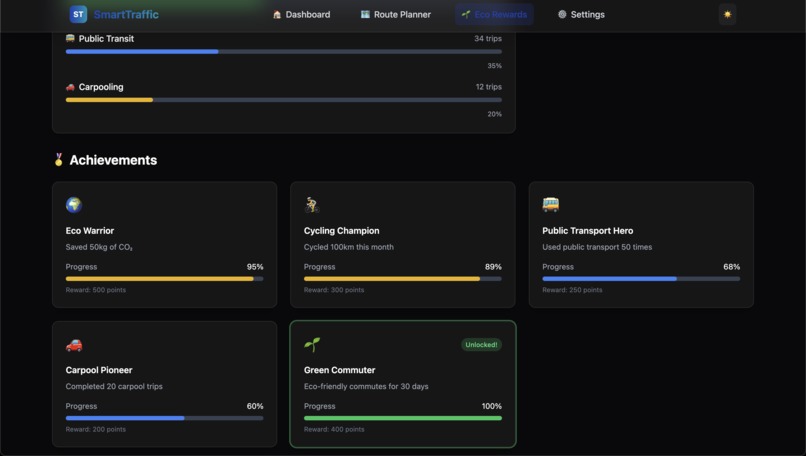
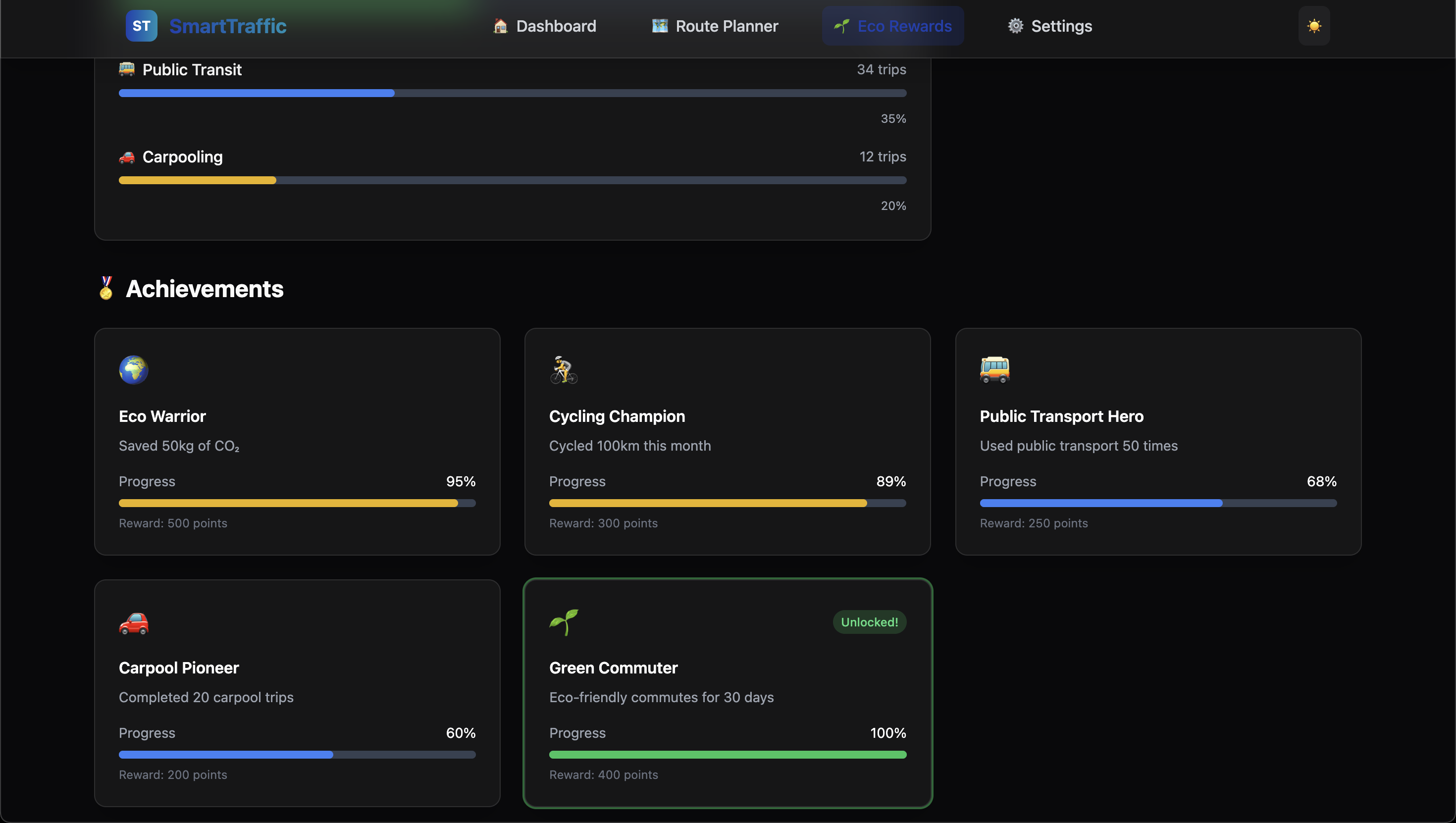
Achievements
-
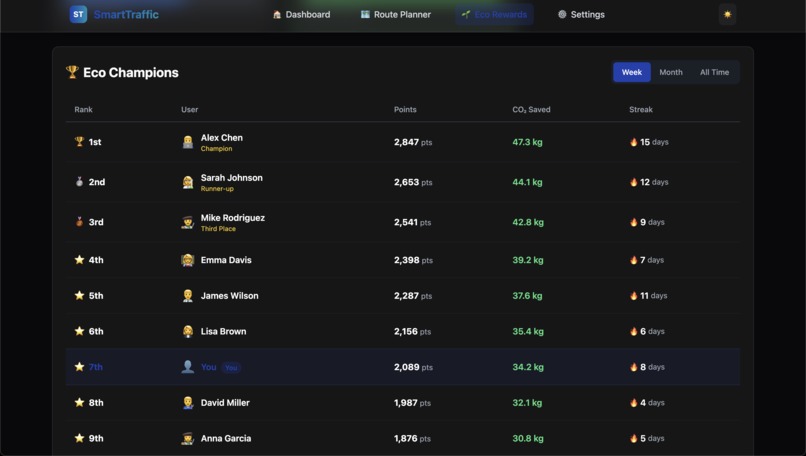
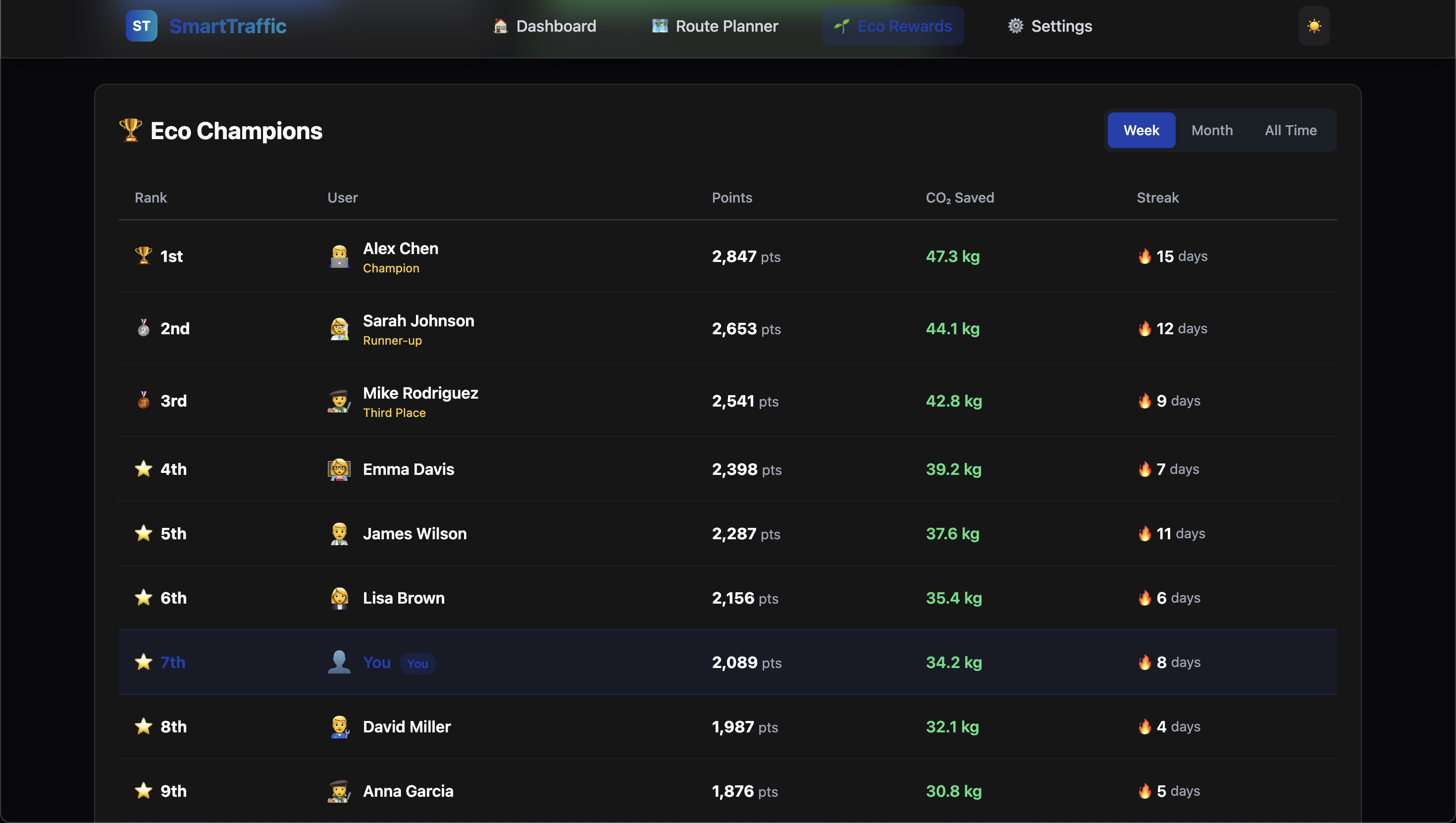
Eco_Champions_Leaderboard
-
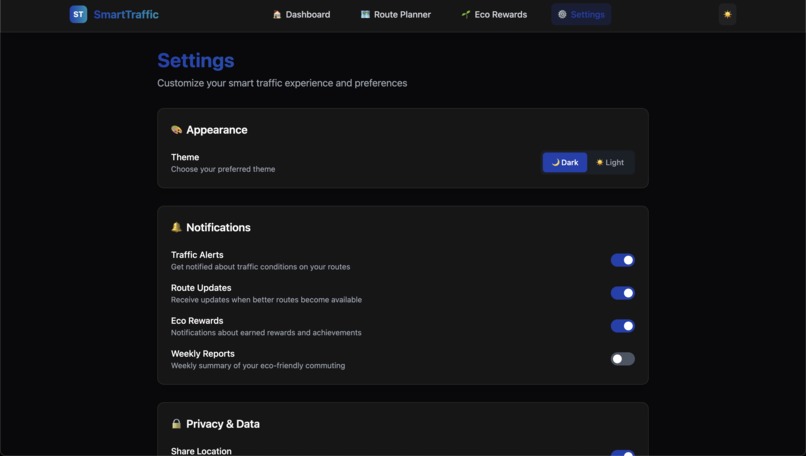
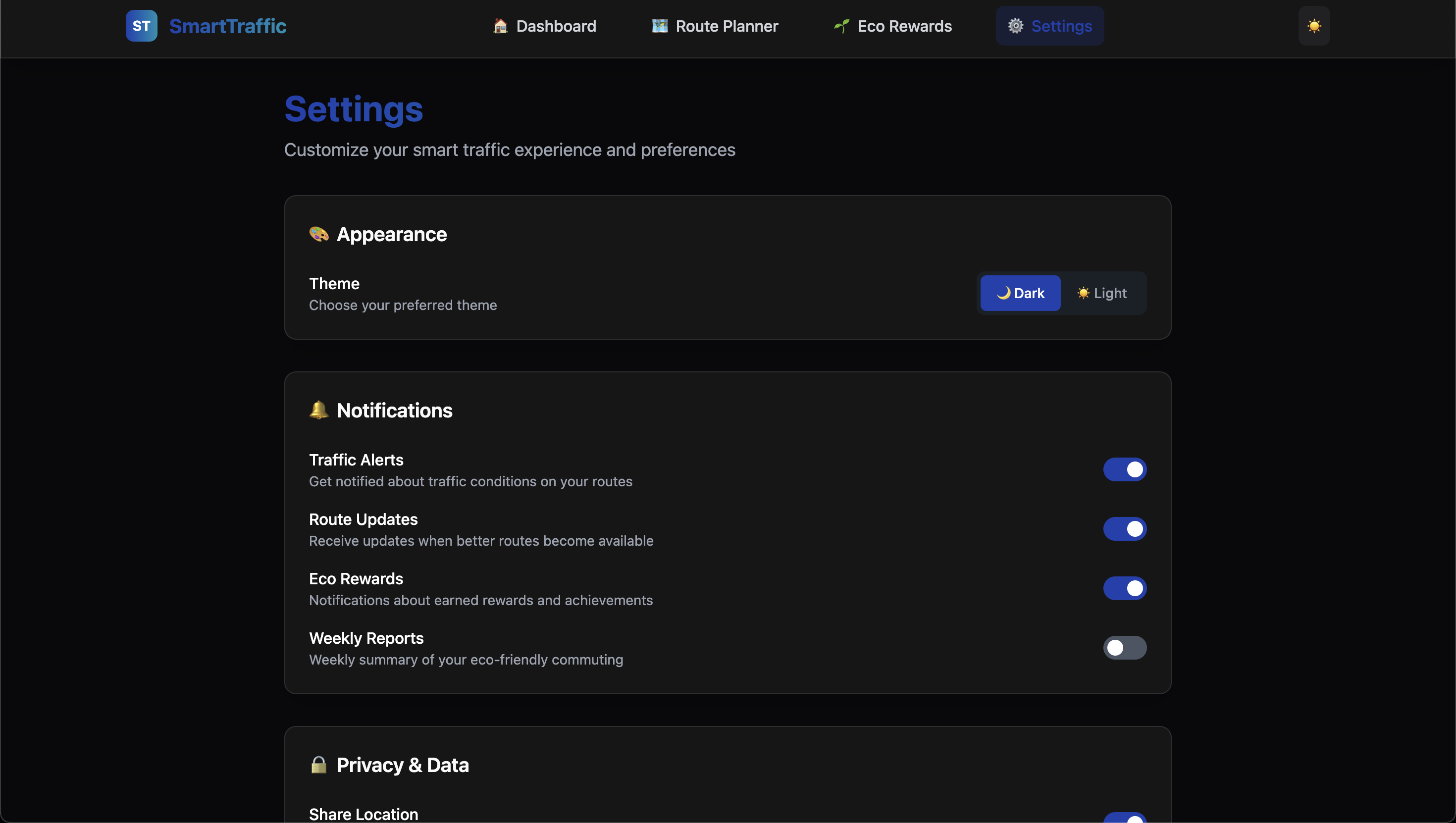
Settings_Basic
-
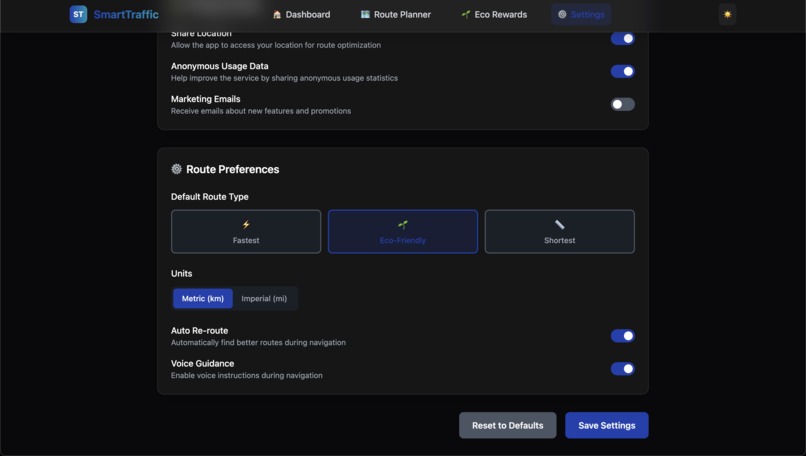
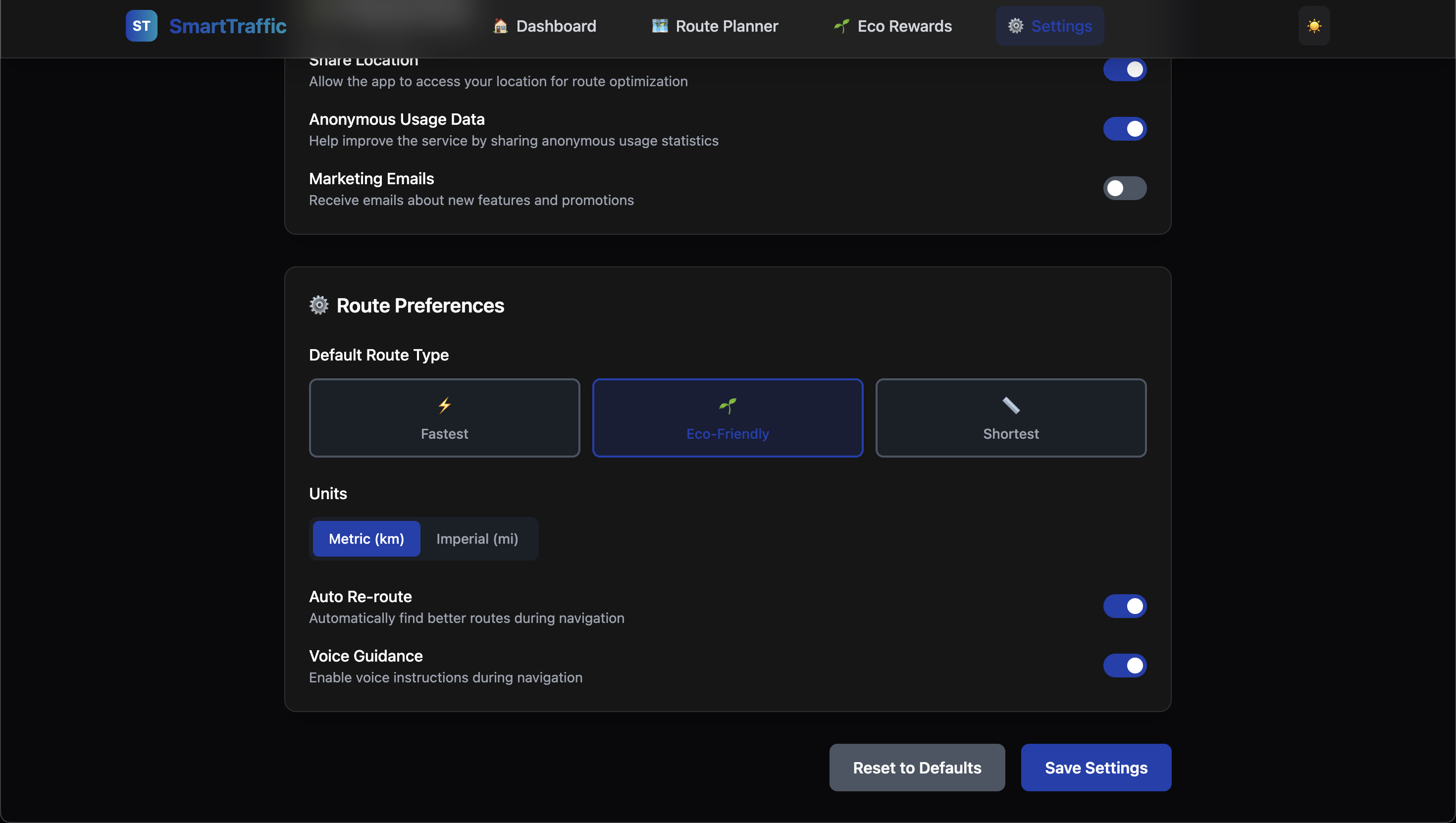
Settings_Route_Perferences
Inspiration
The inspiration for Smart Traffic came from witnessing the daily frustration of urban commuters stuck in traffic jams and the growing environmental concerns of vehicle emissions. We realized that cities need intelligent solutions to optimize traffic flow, reduce carbon footprints, and improve quality of life for residents. The vision was to create an AI-powered traffic management system that not only addresses current traffic challenges but also encourages sustainable transportation choices through gamification.
What it does
Smart Traffic is a comprehensive traffic management and route optimization platform that:
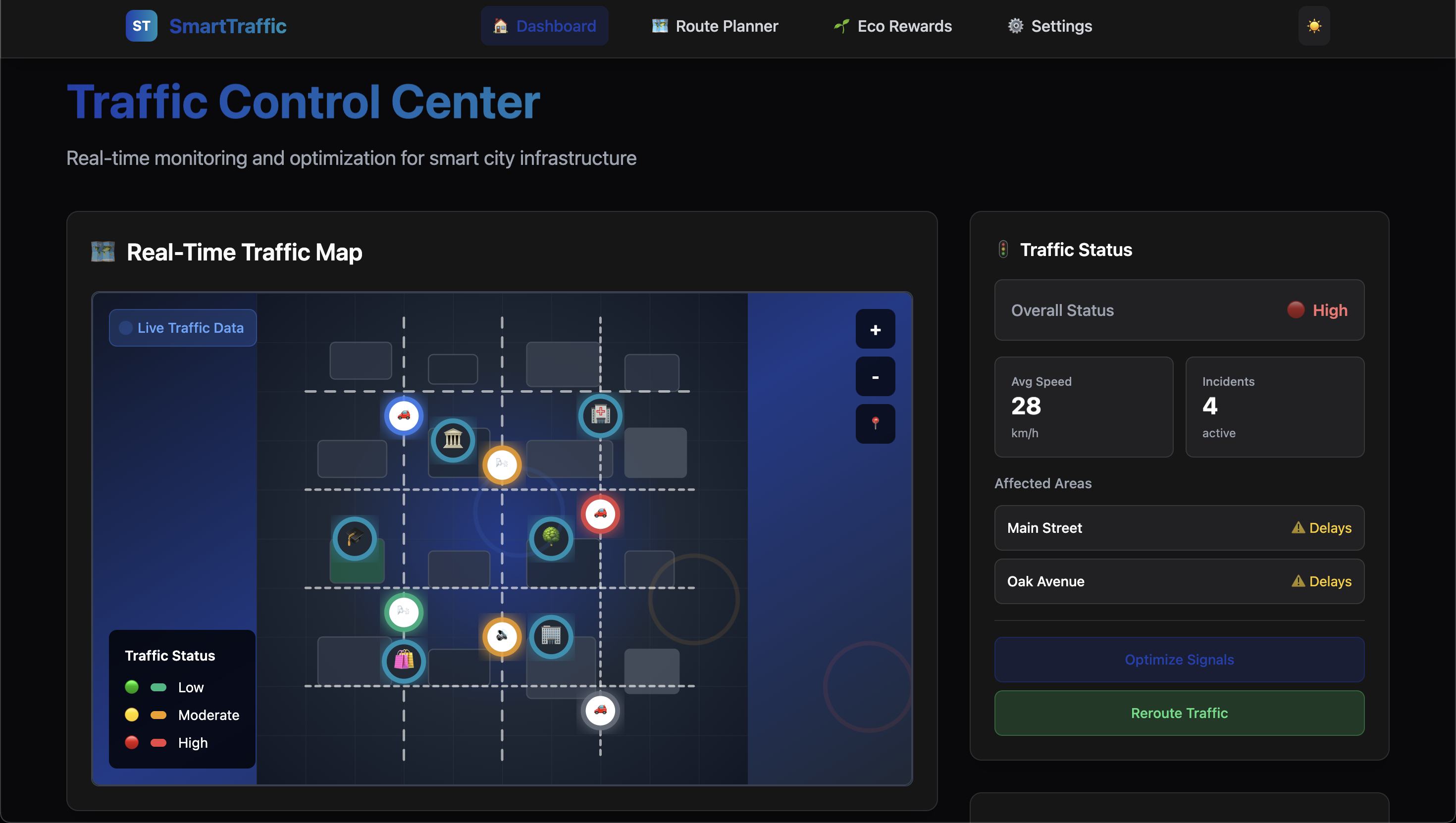
- Real-time Traffic Monitoring: Displays live traffic conditions with interactive maps showing congestion levels, road statuses, and incident reports
- Intelligent Route Planning: Offers multiple route options (fastest, eco-friendly, shortest) with detailed metrics including travel time, distance, emissions, and cost
- IoT Integration: Monitors city-wide sensors for traffic flow, air quality, and noise levels to provide comprehensive urban insights
- Eco Rewards System: Gamifies sustainable transportation by rewarding users with points for choosing eco-friendly routes, cycling, carpooling, and using public transport
- Traffic Signal Optimization: Provides tools for traffic managers to optimize signal timing and reroute traffic based on real-time conditions
- Environmental Impact Tracking: Helps users understand and reduce their carbon footprint through detailed emissions tracking
How we built it
The application was built using modern web technologies:
- Frontend: React with TypeScript for type safety and component-based architecture
- Styling: Tailwind CSS for responsive design and custom animations
- UI Components: Shadcn/ui for consistent, accessible interface elements
- State Management: React hooks and context for efficient data flow
- Build Tool: Vite for fast development and optimized production builds
- Routing: React Router for seamless navigation between different app sections
The architecture follows a modular approach with separate components for each major feature (traffic monitoring, route planning, rewards system), making the codebase maintainable and scalable.
Challenges we ran into
- Real-time Data Simulation: Creating realistic traffic data simulations that accurately represent various traffic scenarios and sensor readings
- Complex UI State Management: Managing the interaction between multiple map views, route calculations, and real-time updates
- Performance Optimization: Ensuring smooth animations and transitions while handling large amounts of simulated traffic data
- Responsive Design: Creating an intuitive interface that works seamlessly across desktop and mobile devices
- Visual Hierarchy: Balancing information density with usability in the dashboard and map interfaces
Accomplishments that we're proud of
- Intuitive User Experience: Created a clean, modern interface that makes complex traffic data easily digestible
- Comprehensive Feature Set: Successfully integrated traffic monitoring, route planning, and gamification into a cohesive platform
- Smooth Animations: Implemented engaging micro-interactions and transitions that enhance user engagement
- Scalable Architecture: Built a modular codebase that can easily accommodate new features and integrations
- Environmental Focus: Successfully gamified sustainable transportation choices to encourage eco-friendly behavior
What we learned
- The importance of user-centered design in making complex data accessible and actionable
- How gamification can effectively motivate behavior change in urban mobility
- The technical challenges of building responsive, real-time dashboard interfaces
- The value of modular architecture in managing complex applications
- How visual design and animations can significantly impact user engagement with data-heavy applications
What's next for Smart Traffic
- Real API Integration: Connect with actual traffic APIs (Google Maps, Mapbox) for live traffic data
- Machine Learning: Implement predictive traffic modeling to forecast congestion patterns
- Mobile App: Develop native mobile applications for on-the-go route planning and real-time notifications
- City Integration: Partner with municipal traffic departments for actual signal optimization
- Advanced Analytics: Add detailed reporting and analytics for city planners and traffic engineers
- Social Features: Enable community-driven traffic reporting and carpooling coordination
- IoT Expansion: Support for more sensor types including weather, parking availability, and electric vehicle charging stations
```
Built With
- mongodb
- react
- shadcn/ui
- tailwind
- typescript

Log in or sign up for Devpost to join the conversation.