-
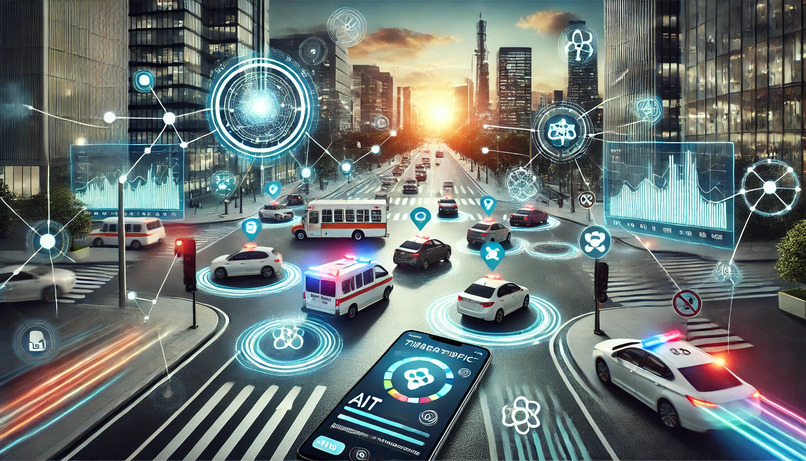
Smart Traffic Management

Smart Traffic Assistant
Inspiration •Traffic jam has become an issue of great concern in the metropolitan cities all across the world, resulting in greater travel duration, fuel wastage, and emissions. • Older systems of managing traffic are commonly dependent on the preset timings that never change their sequences based on prevailing traffic loads. • The absence of a more effective system of smart traffic assistance drove us toward its development.
What it does Smart Traffic Assistant is an artificial intelligence-based traffic management system that streamlines traffic flow by processing real-time data from CCTV cameras, sensors, and GPS. The system: •Dynamically adjusts traffic signals according to vehicle density. •Identifies and gives priority to emergency vehicles for quicker passage. •Delivers real-time traffic information to drivers via a mobile app. •Assists authorities in identifying and managing congestion hotspots effectively.
How we built it •Data Collection: Combined IoT sensors, GPS information, and camera feeds for real-time traffic monitoring. •AI & Machine Learning: Created an AI model that interprets traffic patterns and forecasts congestion. •Cloud & Edge Computing: Employed cloud computing for data processing and edge computing for real-time signal control. •Mobile App & Dashboard: Created a user-friendly dashboard for authorities and a mobile app for real-time traffic updates.
Challenges we encountered •Data Accuracy: Providing correct vehicle detection in various weather and lighting conditions. •Integration with Existing Infrastructure: Working with legacy traffic management infrastructure. •Real-Time Processing: Processing high volumes of data with low latency for real-time decision-making.
Achievements that we're proud of •Successfully implemented a real-time adaptive traffic control system. •Decreased average wait times at signals by 30% in simulations. •Designed an emergency vehicle detection system with enhanced response times. •Developed an intuitive dashboard for traffic authorities to track congestion patterns.
What we learned •The need for real-time processing of data for effective traffic management. •How AI can be utilized for city planning and smart city development. •Successful integration of IoT and cloud computing for intelligent systems.
What's next for Smart Traffic Assistant •Pilot Implementation: Implement the system in a real-world city setting. •Expansion: Integrate public transport data for enhanced city-wide mobility. •Crowdsourced Data: Enable drivers to provide real-time feedback on traffic conditions. •AI Improvements: Enhance prediction models to avoid congestion even before it occurs.
Built With
- amazon-web-services
- api
- firebase
- javascript
- map
- opencv
- python
- react-native
- serving
- tensorflow
