Inspiration
Kenya’s tourism ecosystem is a massive economic driver, but it faces a delicate balancing act. While visiting iconic destinations like Maasai Mara or Amboseli National Park, I noticed a critical challenge: traditional tourism models struggle to balance real-time tourist demands with ecological preservation. Overcrowding in localized park areas creates vehicle gridlocks that disrupt delicate wildlife migration corridors. I was inspired to build STAP–Kenya to prove that technology can harmonize economic growth with conservation. I envisioned a unified platform that acts as a central nervous system for Kenyan tourism,offering tourists an adaptive, crowd-aware travel guide while equipping conservation officers with live data-driven intelligence to protect our beautiful biodiversity.
What it does
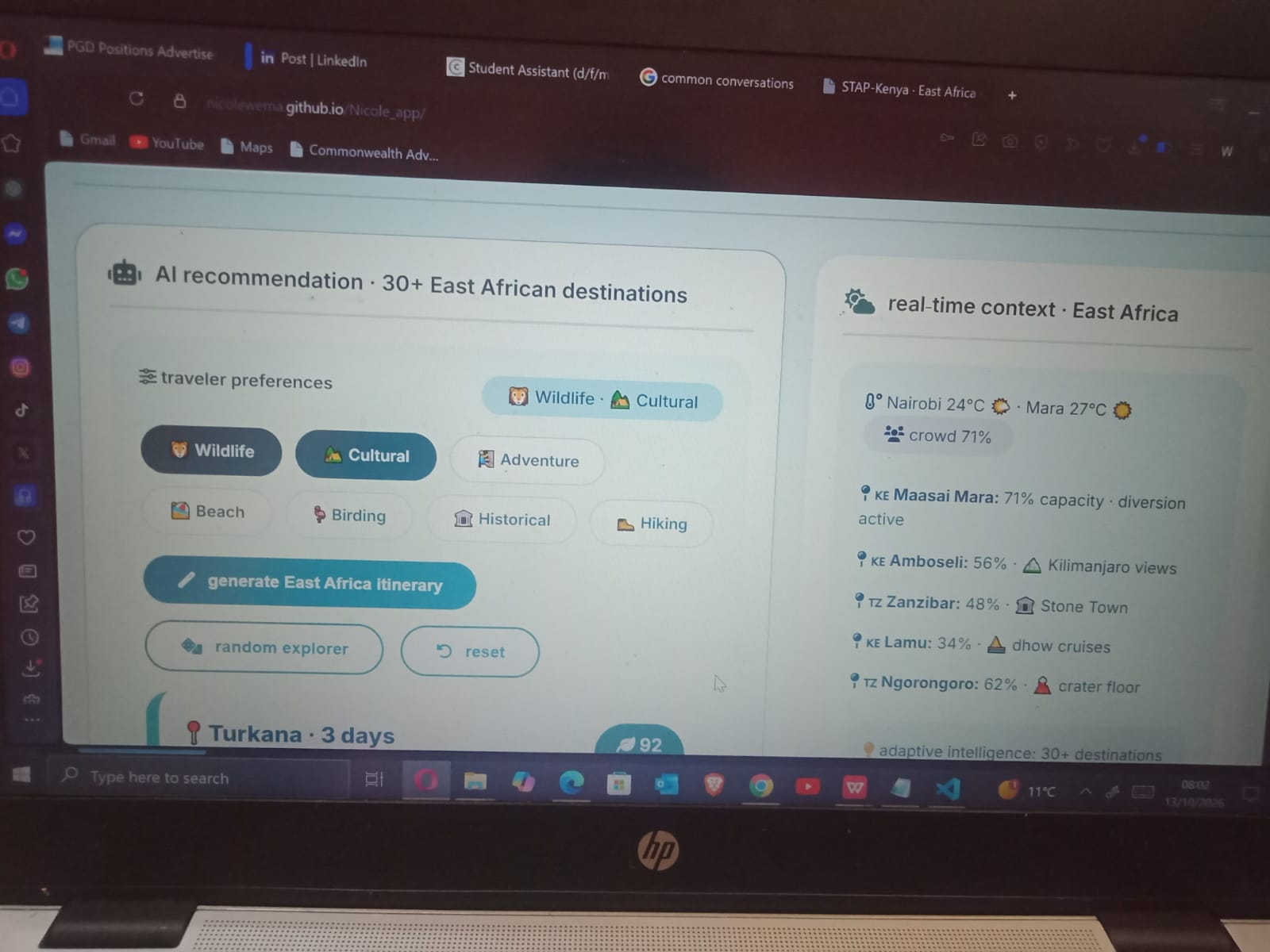
STAP-Kenya is a unified smart tourism application that delivers adaptive travel recommendations to tourists while providing sustainability intelligence to conservation officers. It maps live park traffic via simulated IoT sensors and automatically reroutes safari vehicles when a park’s capacity exceeds safe ecological thresholds (L ≥ 80%).
How I built it
I focused on building an elegant, clean, and responsive architecture using a pure Vanilla HTML5, CSS3, and JavaScript workspace stack as in the sections :
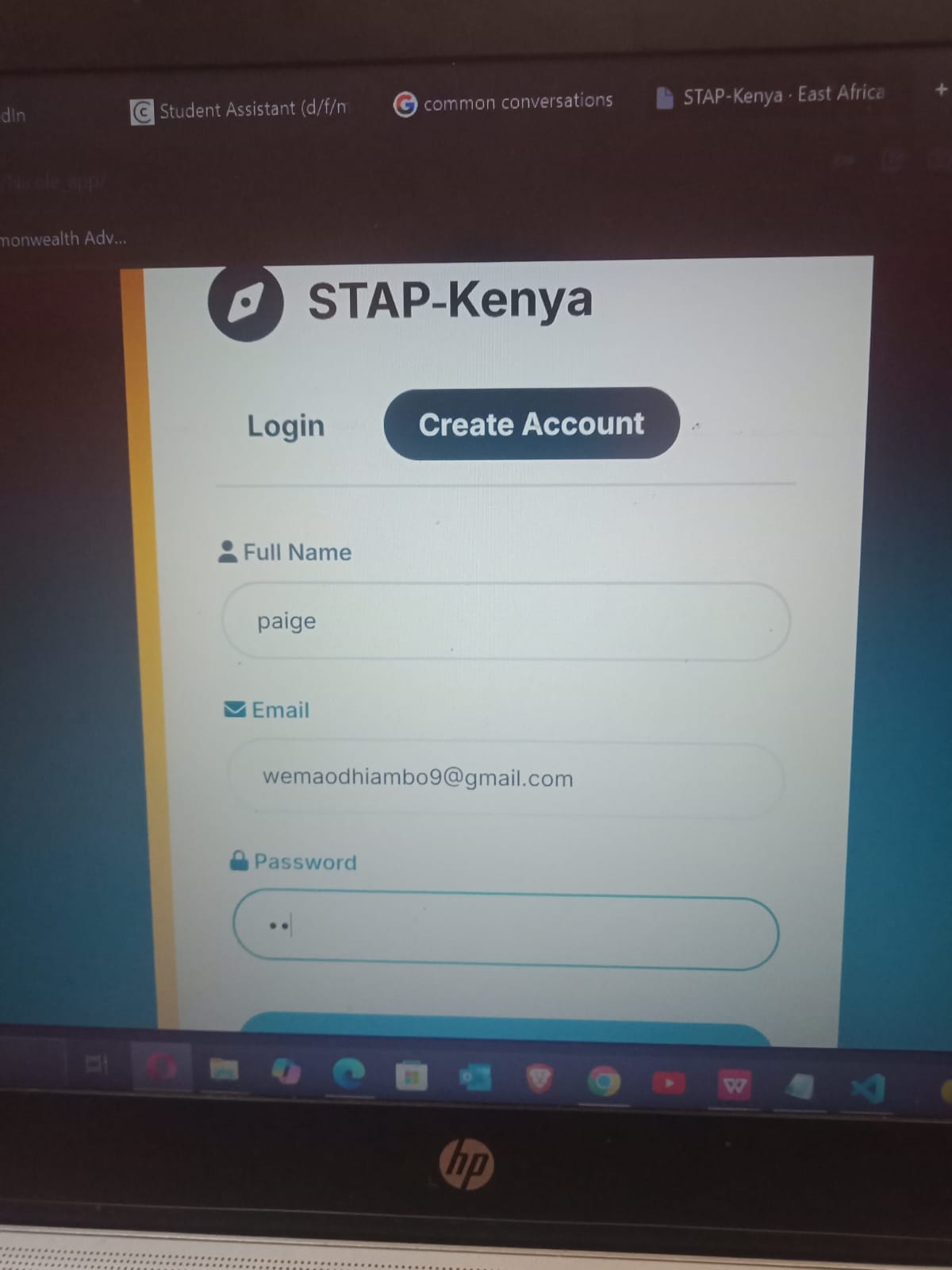
- The Authentication Gateway (index.html): Designed as an intentional entry hub with built-in role optimization (Tourists, Guides, Conservationists, and Management). It unifies both login and sign-up states into a singular file using quick JavaScript views to prevent broken cross-links.
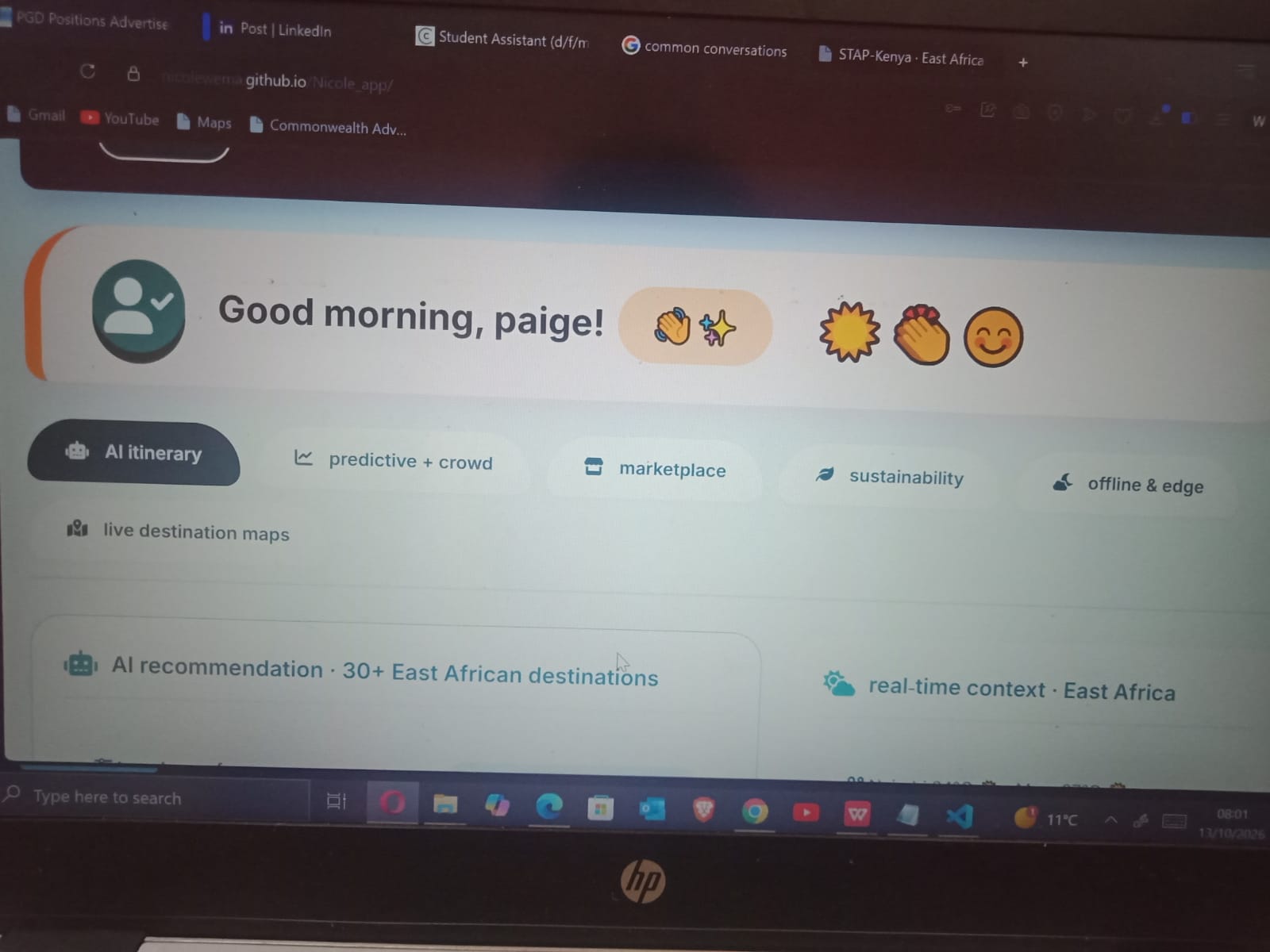
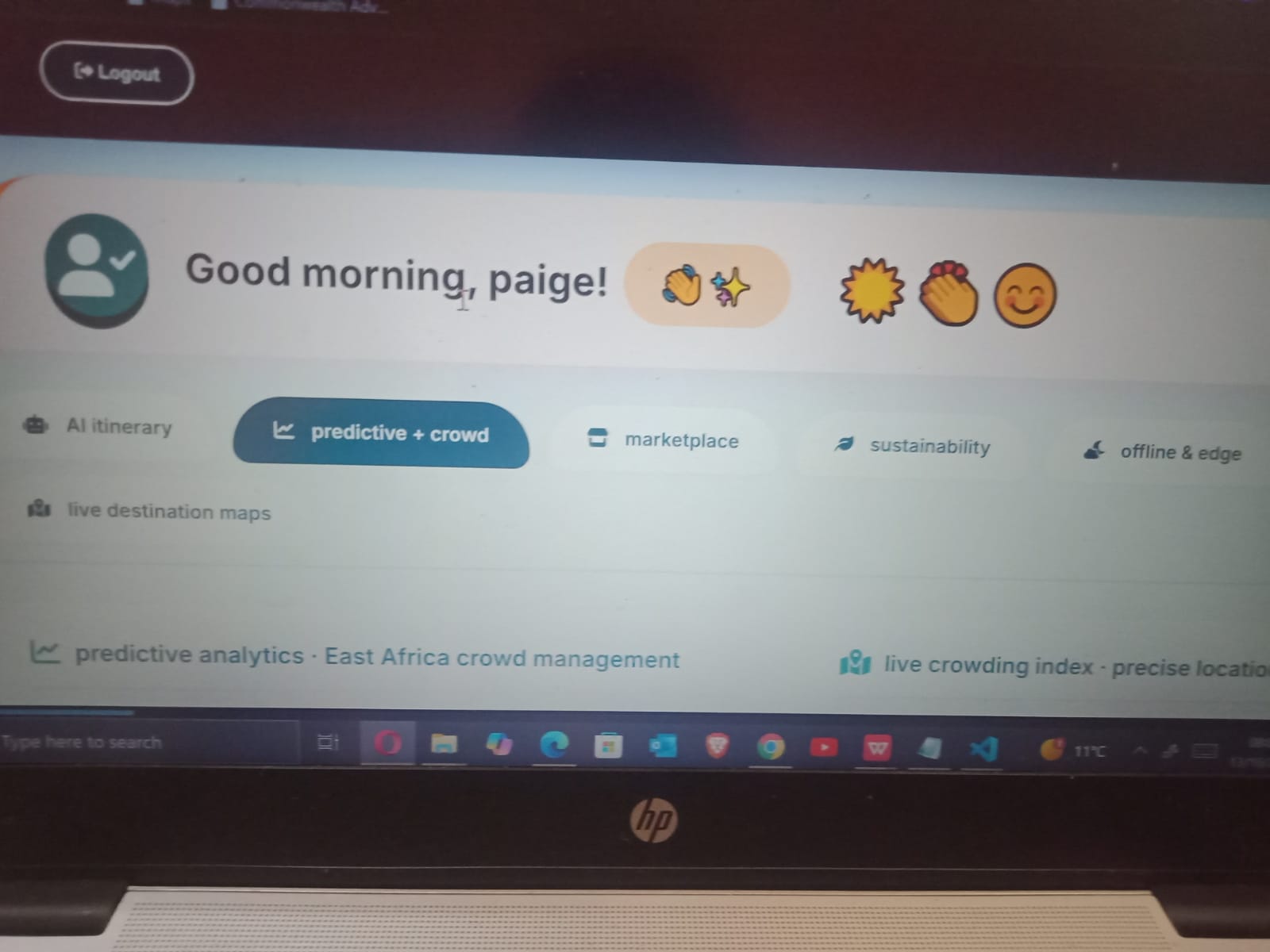
- The Central Intelligence Board (dashboard.html): A beautiful, custom dark-themed dashboard panel that splits data views into two distinct target propositions;the Adaptive Explorer Hub and the Live Sustainability Logs.
- The Edge Optimization Simulator (widget.html): An embedded micro-simulation engine that models real-time path load-balancing. It handles path routing calculations based on mathematical capacity allocations.
Challenges I ran into
1.Simulating IoT Environments Without Hardware: I had to mock live sensor feeds dynamically. I solved this by using JavaScript range input intervals to simulate vehicle gate tracking data. 2.The High-Stress File Crisis: Midway through the development process, an accidental file misplacement threatened to derail my submission entirely. Pushing through the panic required taking a step back, methodically tracking local paths, and aggressively rebuilding my design tokens from scratch in a cleaner, more modular way.
Accomplishments that I'm proud of
I successfully designed and coded a fully responsive, data-driven prototype featuring active threshold governors and interactive workflows. I am immensely proud of maintaining a unified workspace that addresses both commercial tourism management and government conservation mandates in one interface is very significant to my community.
What I learned
This hackathon journey has taught me that impactful software engineering isn't just about writing dense code; it is about intentional architecture. I learned how to:
- Leverage native browser iframes to isolate complex analytical widgets from main application dashboards. -Use lightweight Plain CSS custom properties (:root tokens) to create modern, uniform interfaces rapidly without bloating the app with heavy external libraries.
- Most importantly, we learned that a great project is built by solving real human and environmental problems,technological innovation can, and should, be a force for planetary conservation.
What's next for SMART TOURISM APPLICATION PLARTFORM (STAP) KENYA
The next phase involves integrating live GPS telemetry APIs from actual tour operator fleets to replace my mocked sensor tracking. I also intend to embed machine learning models trained on historical wildlife migration data to predict and prevent human-wildlife conflict hotspots before they happen.

Log in or sign up for Devpost to join the conversation.