-
-
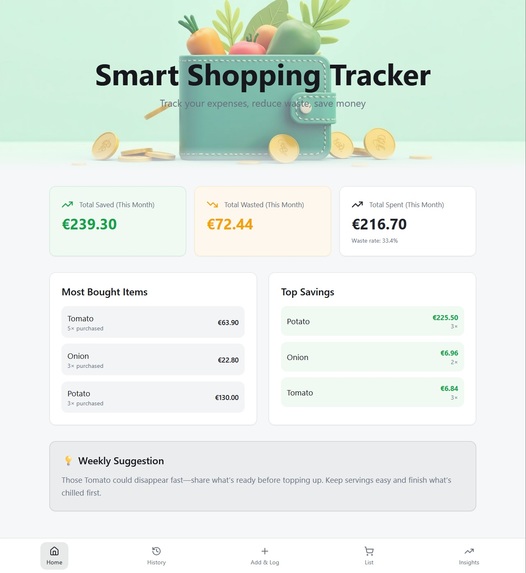
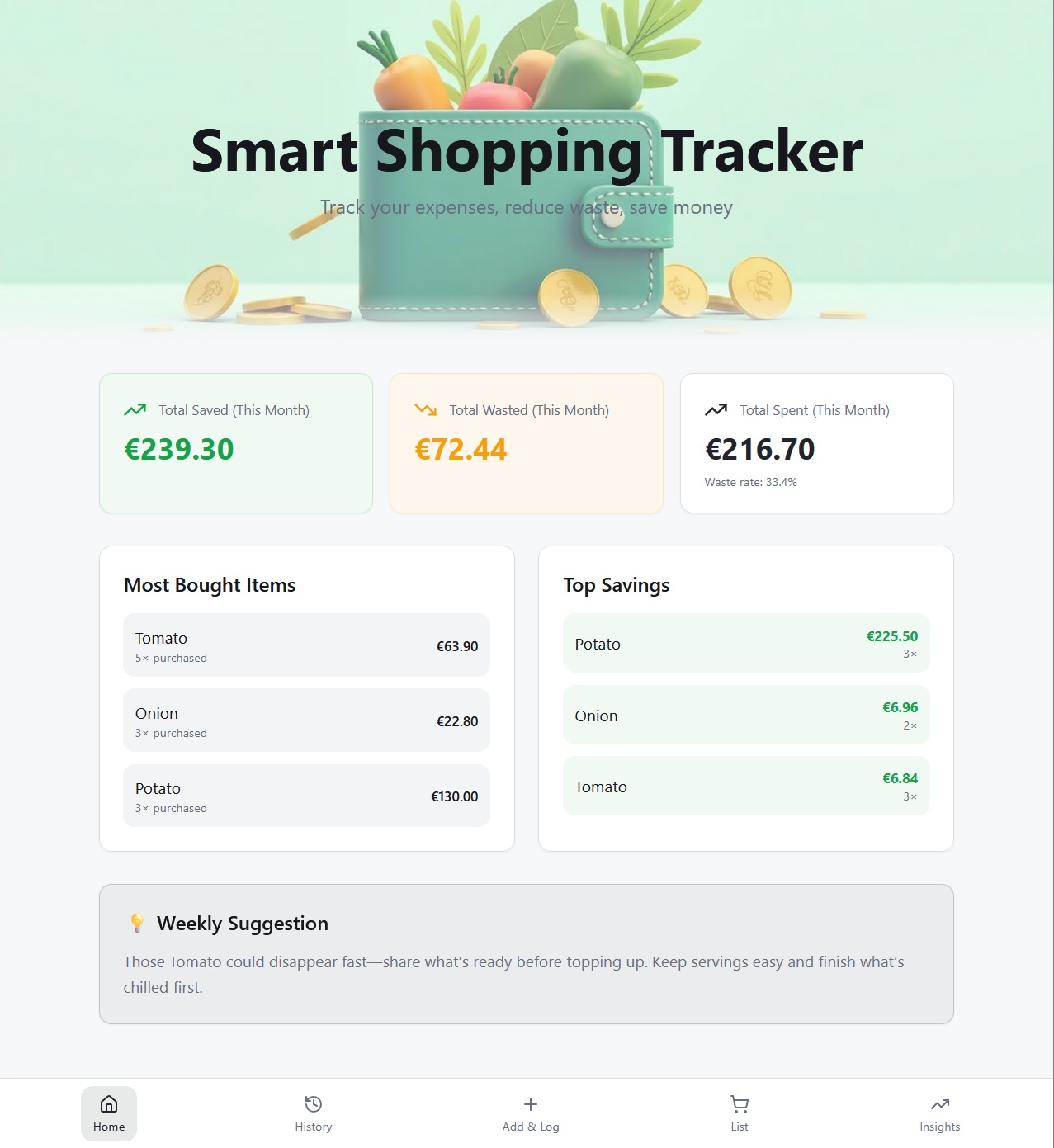
Homepage
-
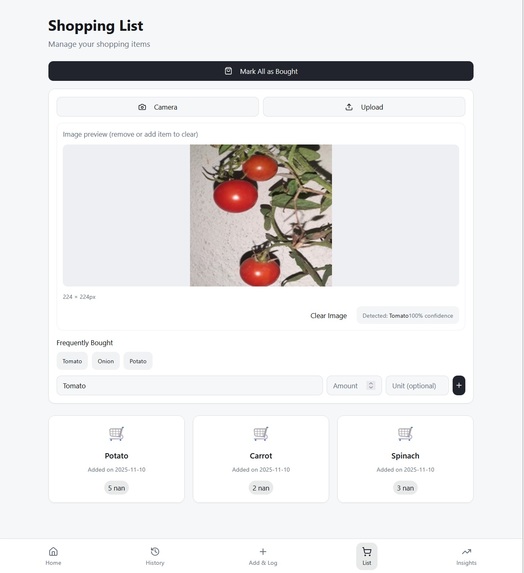
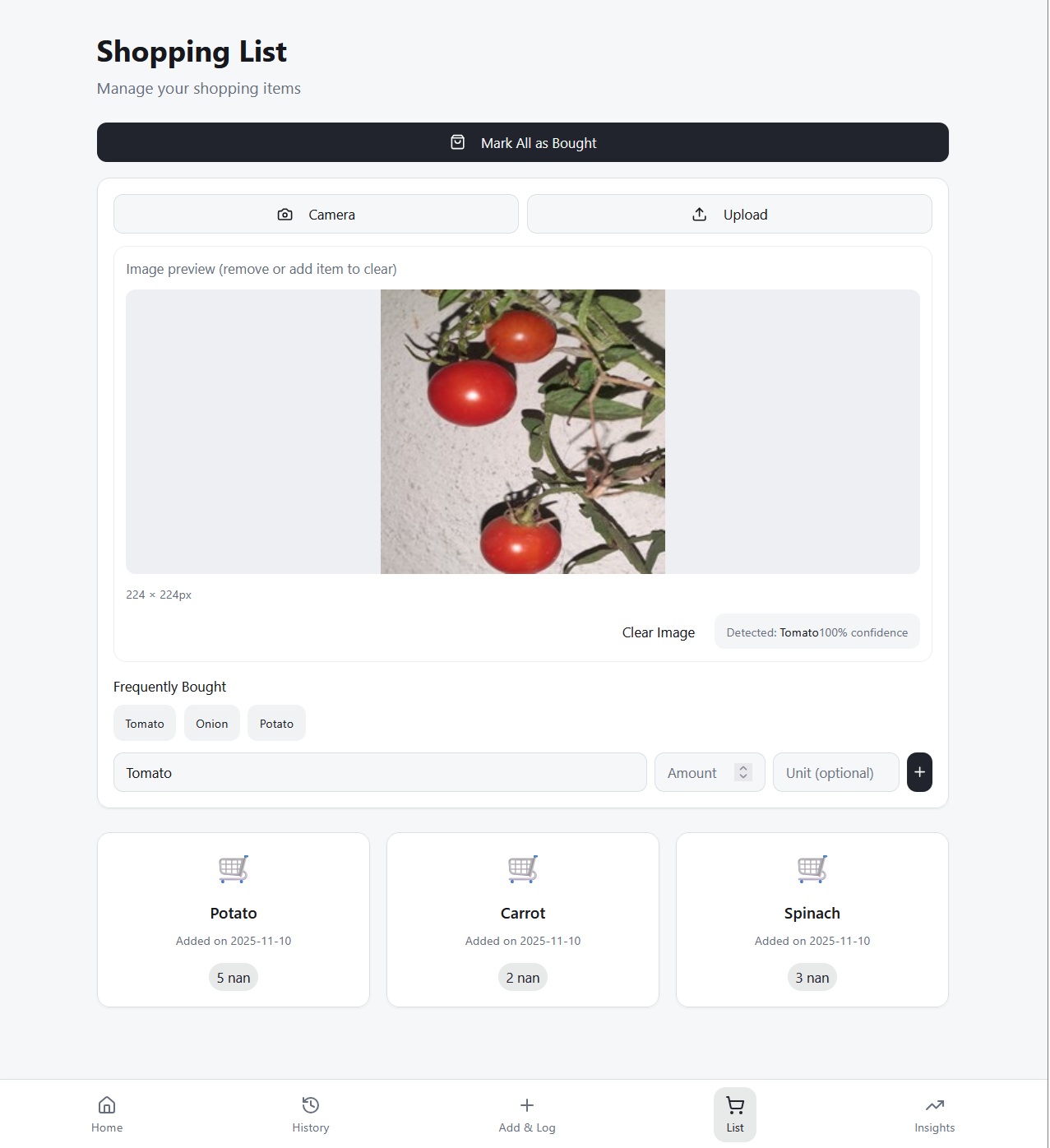
Shopping List
-
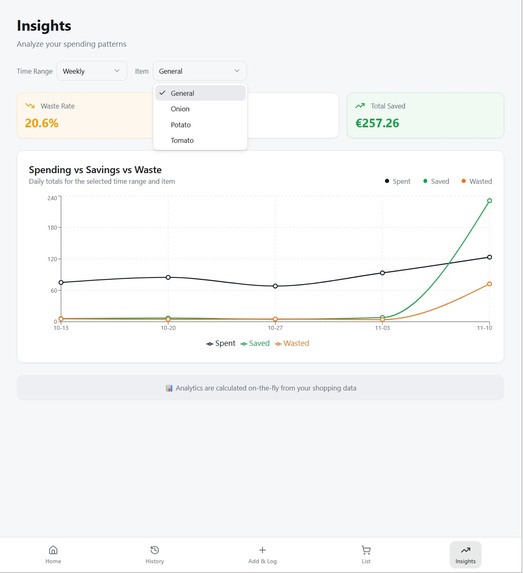
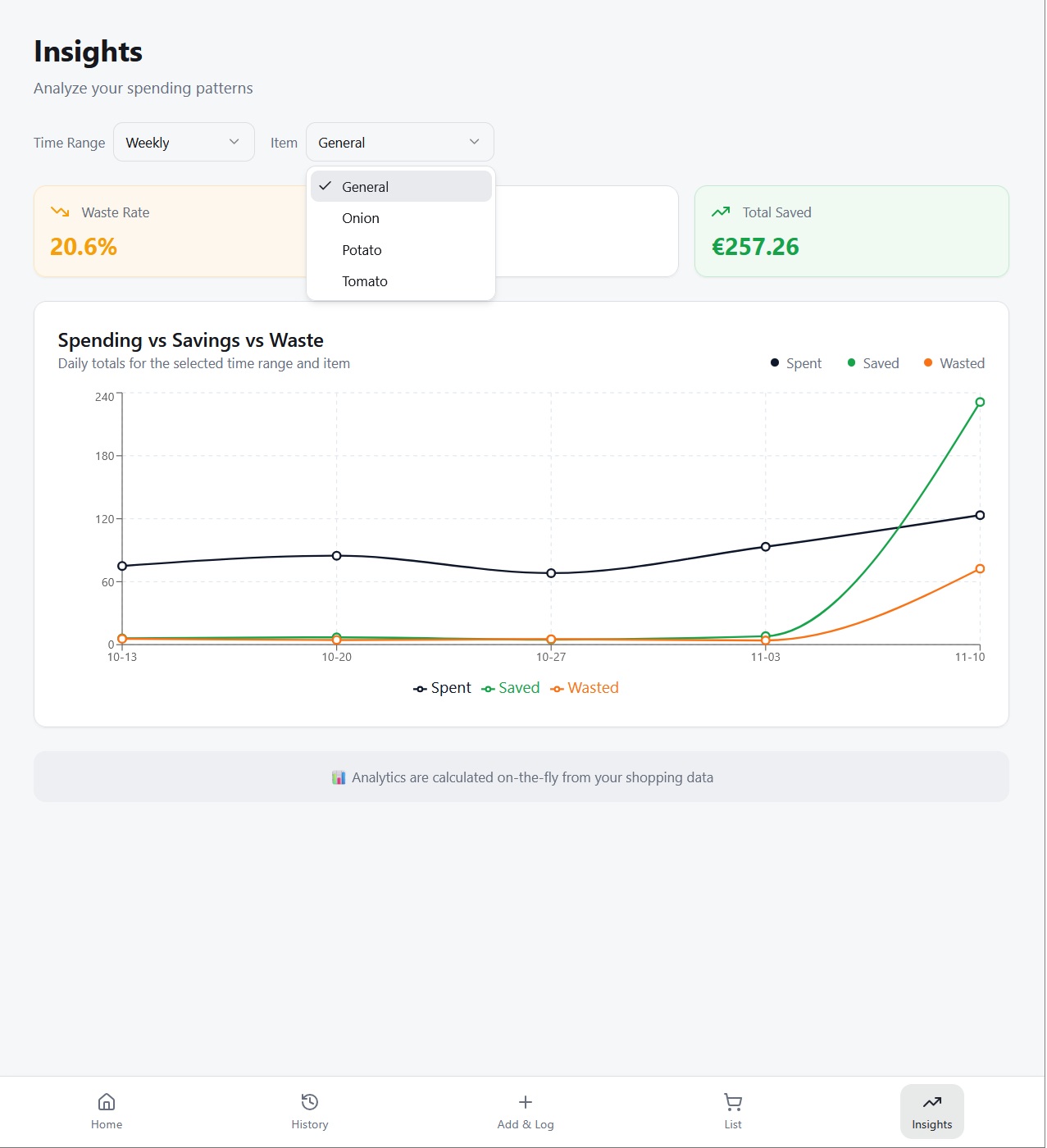
Insights
-
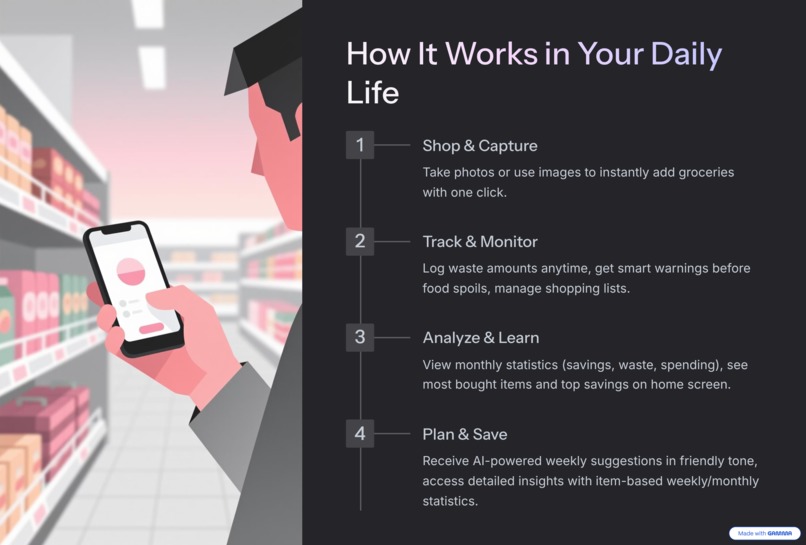
Presentation 5/10
Inspiration
We all waste food — and that means wasting our own money every single week. This daily habit adds up to an enormous economic and ecological burden. In developed countries, households waste about 30–40% of all food purchased. In the U.S. alone, that’s around 133 billion pounds, worth over US $161 billion each year. Globally, more than 1.05 billion tons of food is wasted annually, 60% of it in households, costing roughly US $1 trillion. S³A was created to change that — to help people see the impact of their waste, save money, and make sustainability effortless.
What it does
Smart Sustainable Shopping Assistant (S³A) tracks household food consumption and waste, predicts future demand, and provides personalized suggestions to reduce overbuying. It uses AI to learn user habits, warn when you’re about to waste again, and calculate how much money you’ve lost or saved. Like fitness or health tracking apps, it builds awareness and motivation — but for your kitchen and wallet.
How we built it
S³A runs on three AI models orchestrated through a lightweight agentic system:
Demand prediction model that learns household consumption and forecasts optimal purchase quantities.
Image classification model that identifies products instantly from photos or barcodes while shopping.
Reasoning agent that unifies insights and interacts naturally with the user to guide sustainable decisions. All are connected through a simple web app, built from scratch, making the whole experience smooth and intelligent while staying user-friendly.
Challenges we ran into
Our biggest challenge was orchestrating multiple AI agents while keeping the system simple for users. We wanted a seamless flow — intelligent in the background, effortless in use. Another challenge was building a web app without prior web development experience and adapting to dynamic cloud resource limits during agentic operations.
Accomplishments that we're proud of
We built a working prototype that combines real-time recognition, prediction, and reasoning in one clean interface. It transforms everyday grocery shopping into a sustainable, data-driven experience that directly reduces waste and saves money. The system now runs smoothly, intelligently connecting AI models in a minimal, practical form.
What we learned
Even ordinary ideas can have transformative effects when applied consistently at scale. Helping individuals waste less food seems simple, but across millions of households, it becomes a massive step toward economic efficiency and sustainability. We also learned the power of adaptive AI orchestration and how user-centered simplicity drives real adoption.
What's next for Smart Sustainable Shopping Assistant
Next, we’ll make S³A region-aware and partner with local markets to reduce unmatched demand and inventory loss. We aim to integrate open datasets like ASDI’s regional food indices and expand predictive models to fast food chains and offices — any place where mass consumption can become smarter, fairer, and more sustainable.
Built With
- agent
- amazon-web-services
- llm
- lovable
- python
- pytorch
- react
- time-series
- typescript
- vision


Log in or sign up for Devpost to join the conversation.