-
-
-
-
-
-
-
-
-
-
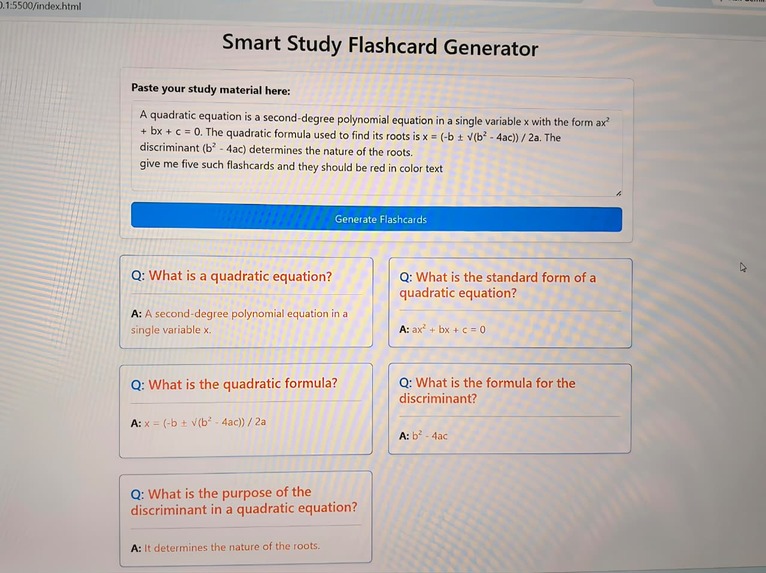
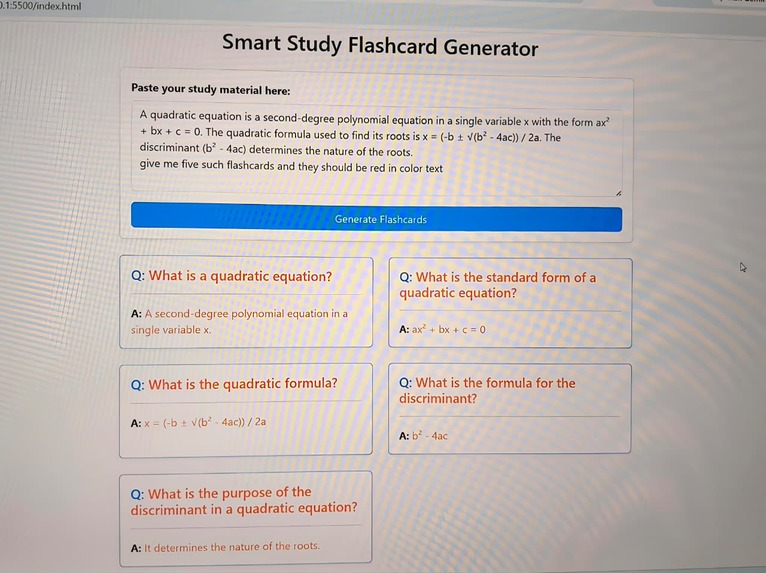
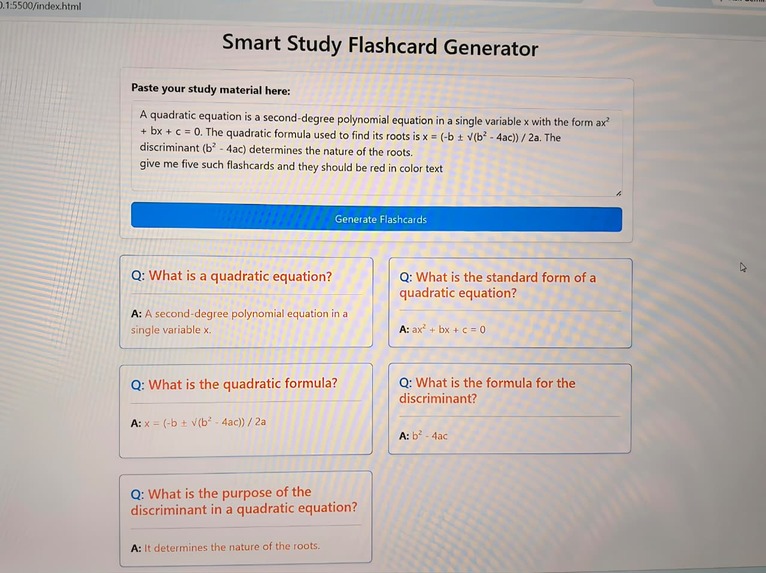
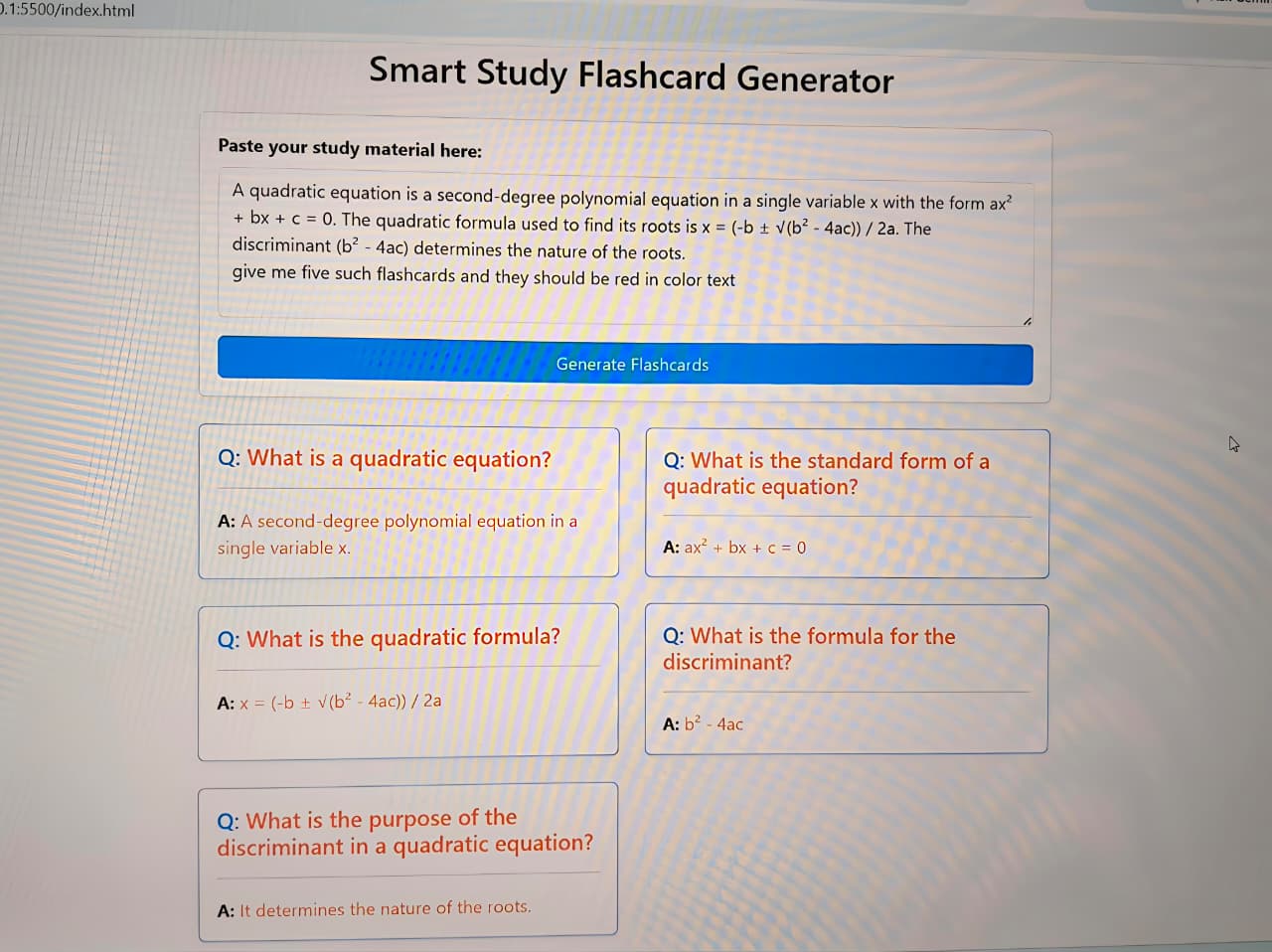
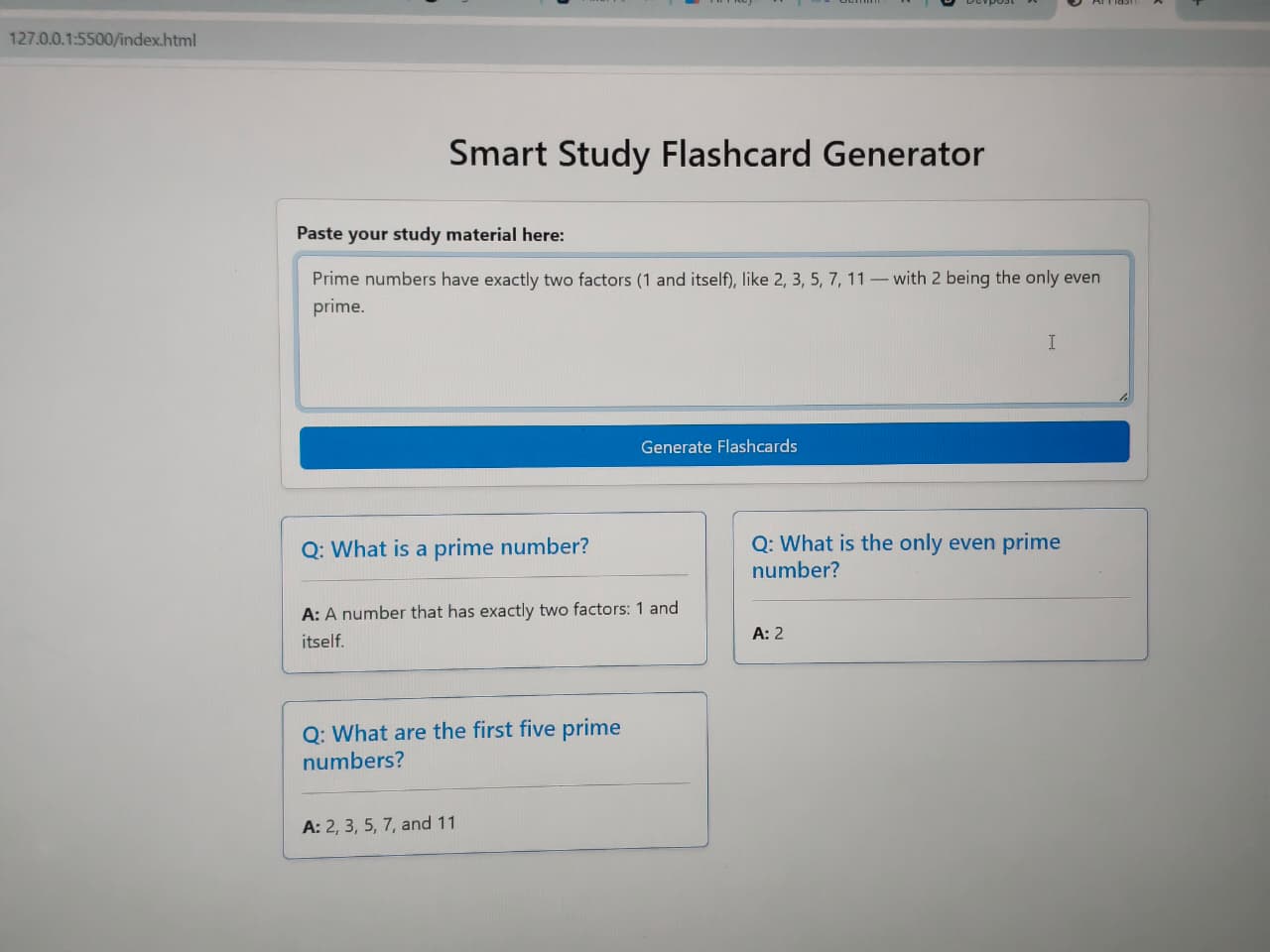
Generation of flashcards as per need in desired color
-
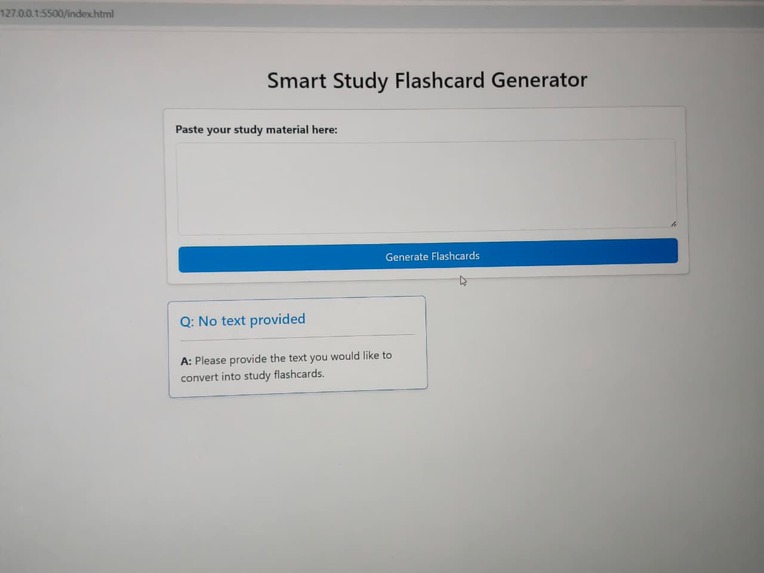
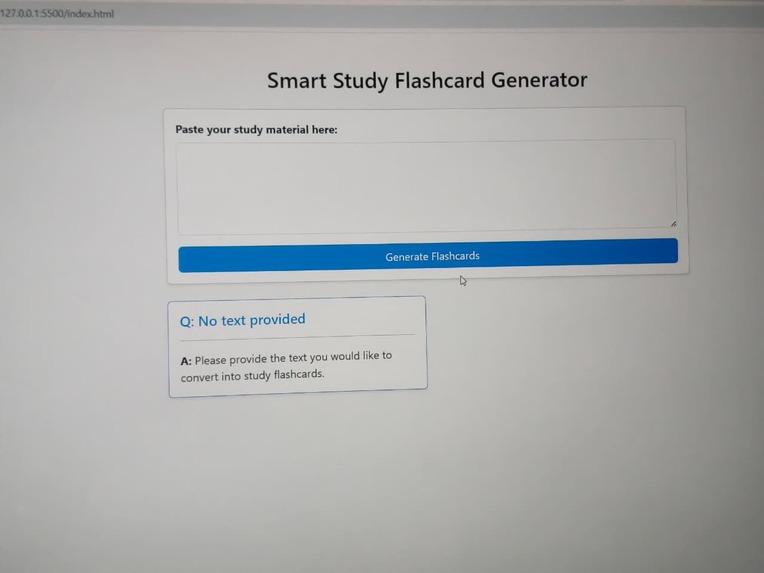
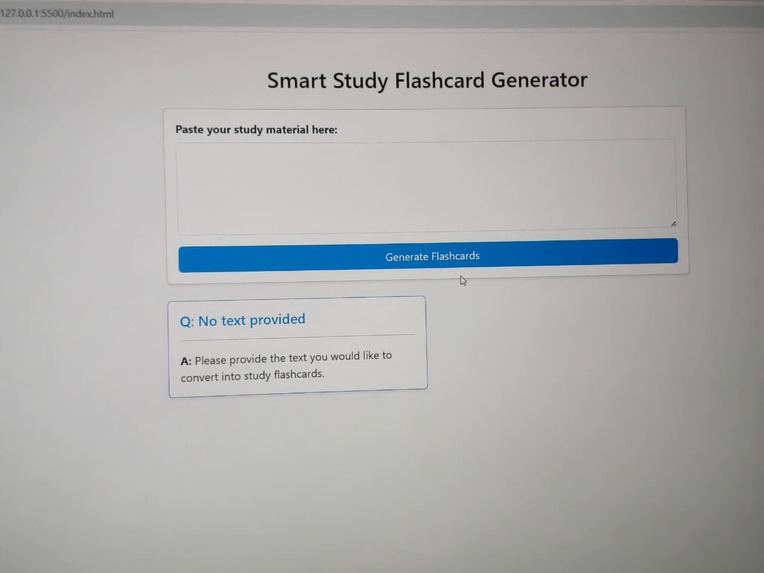
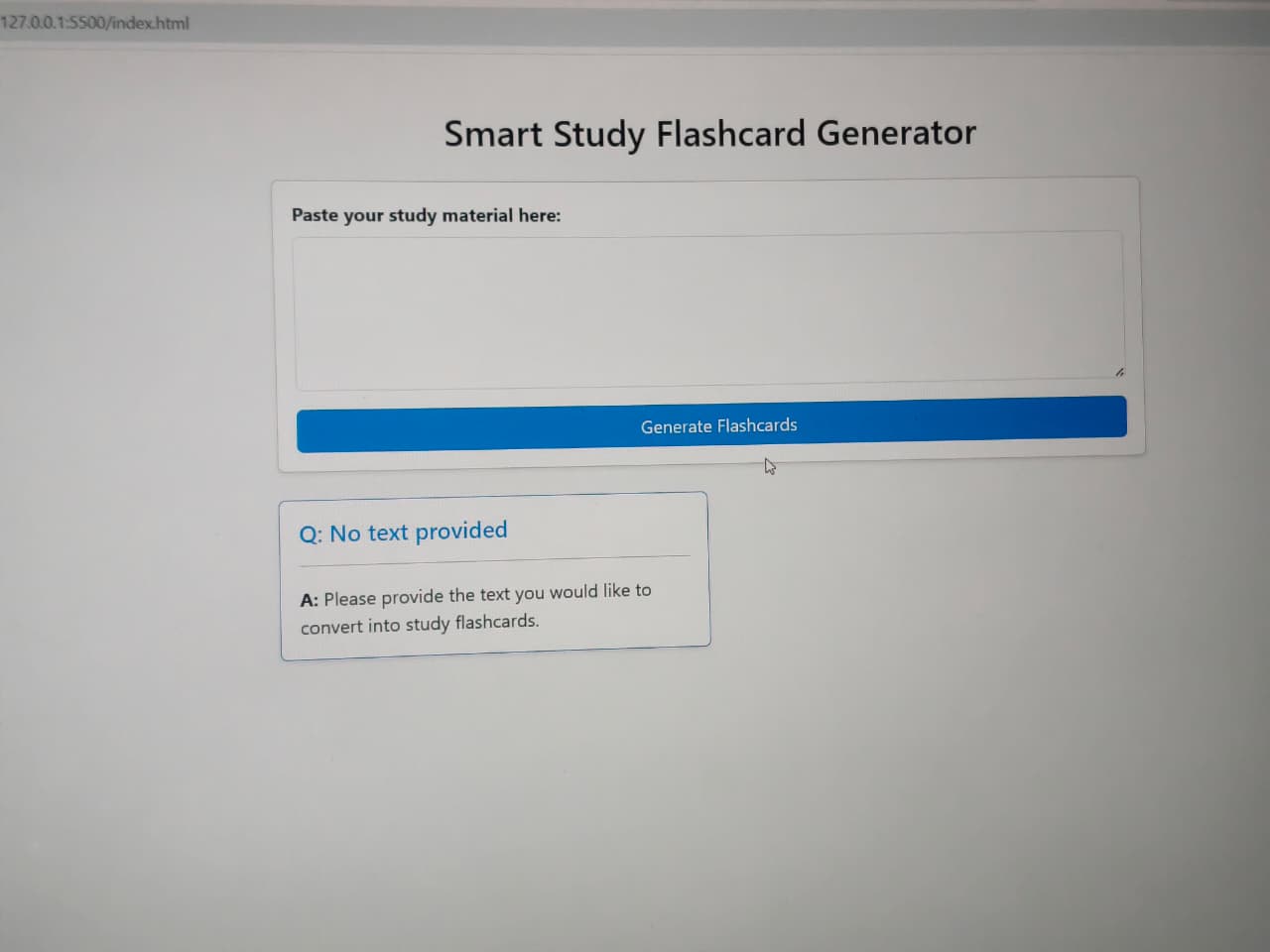
Response to invalid input
-
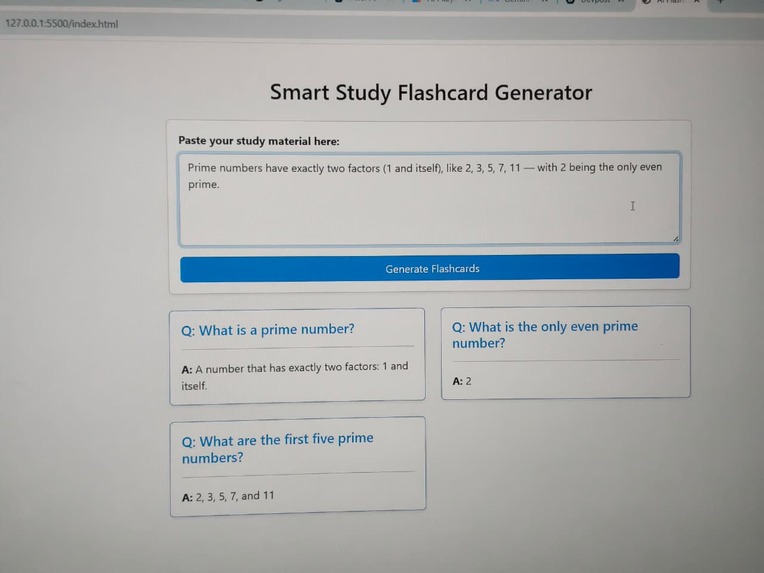
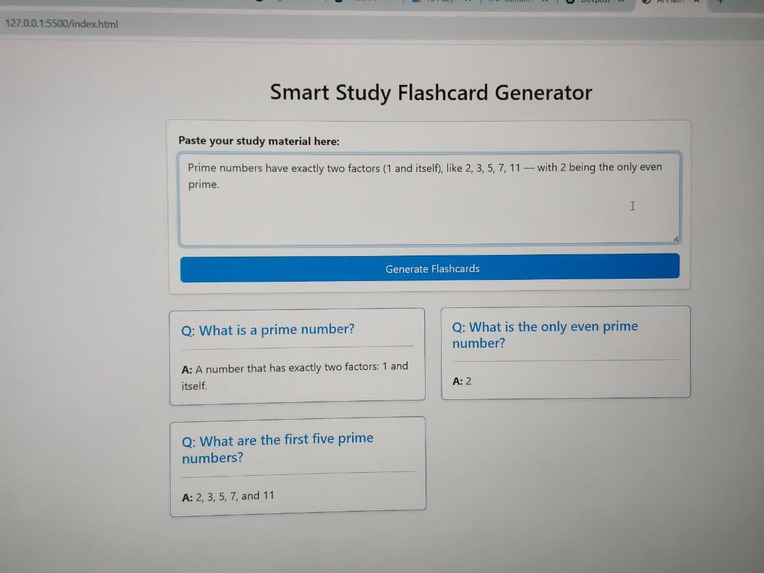
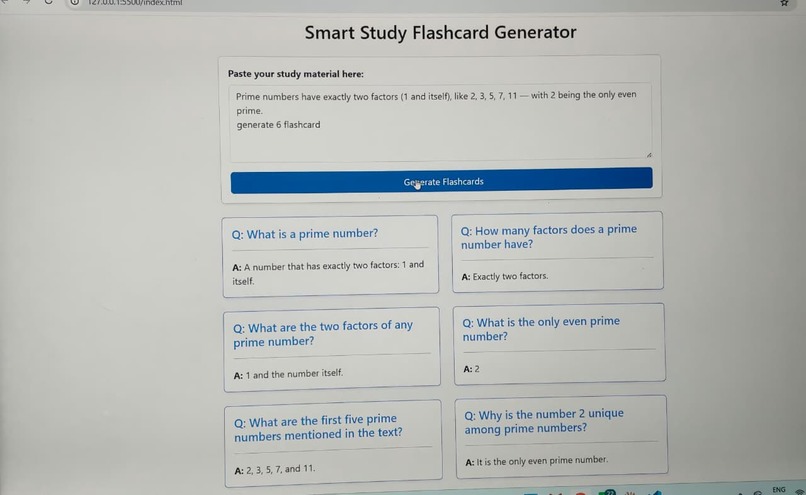
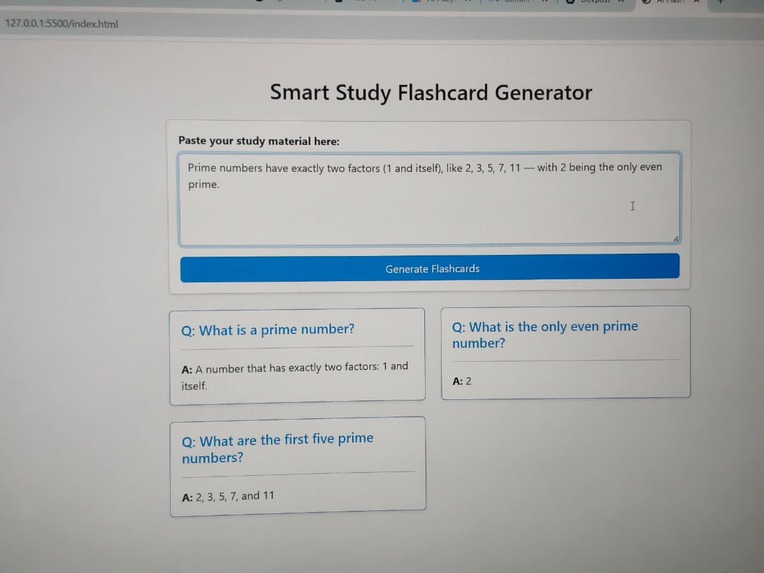
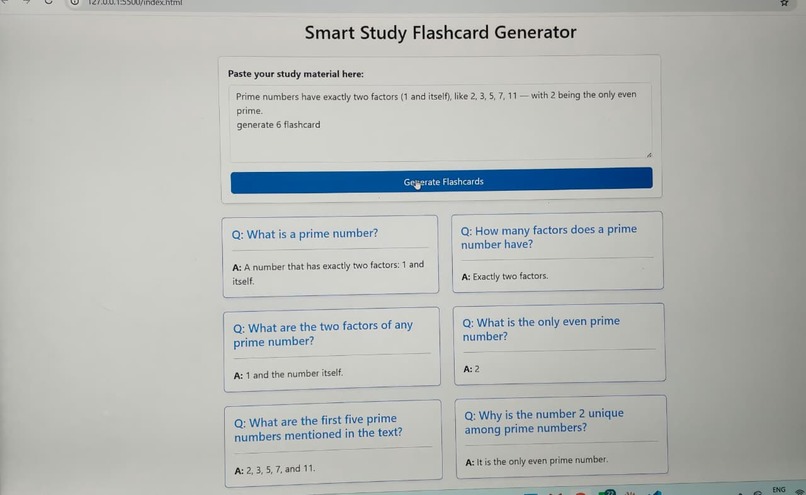
Extracting key points from a given prompt
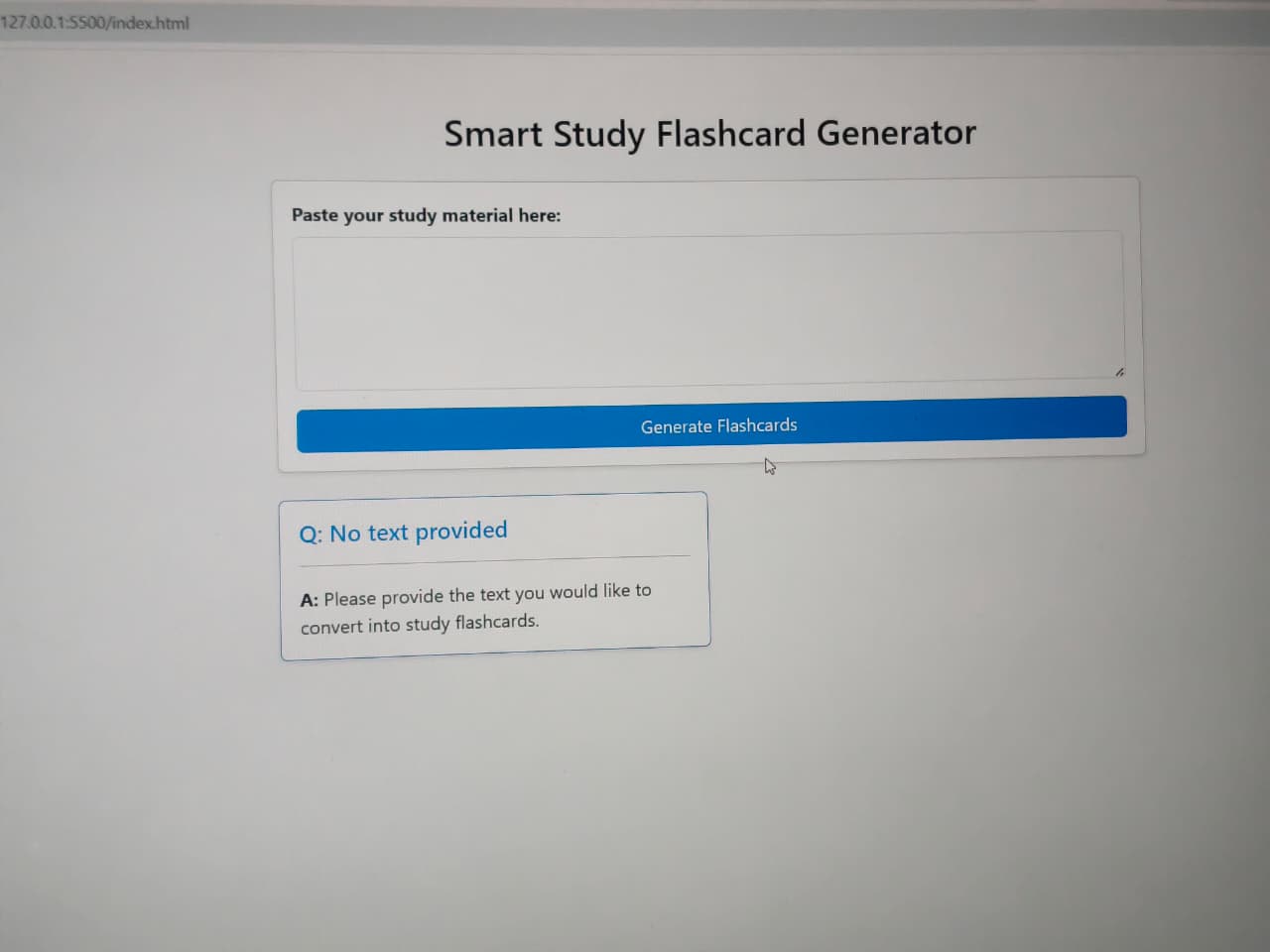
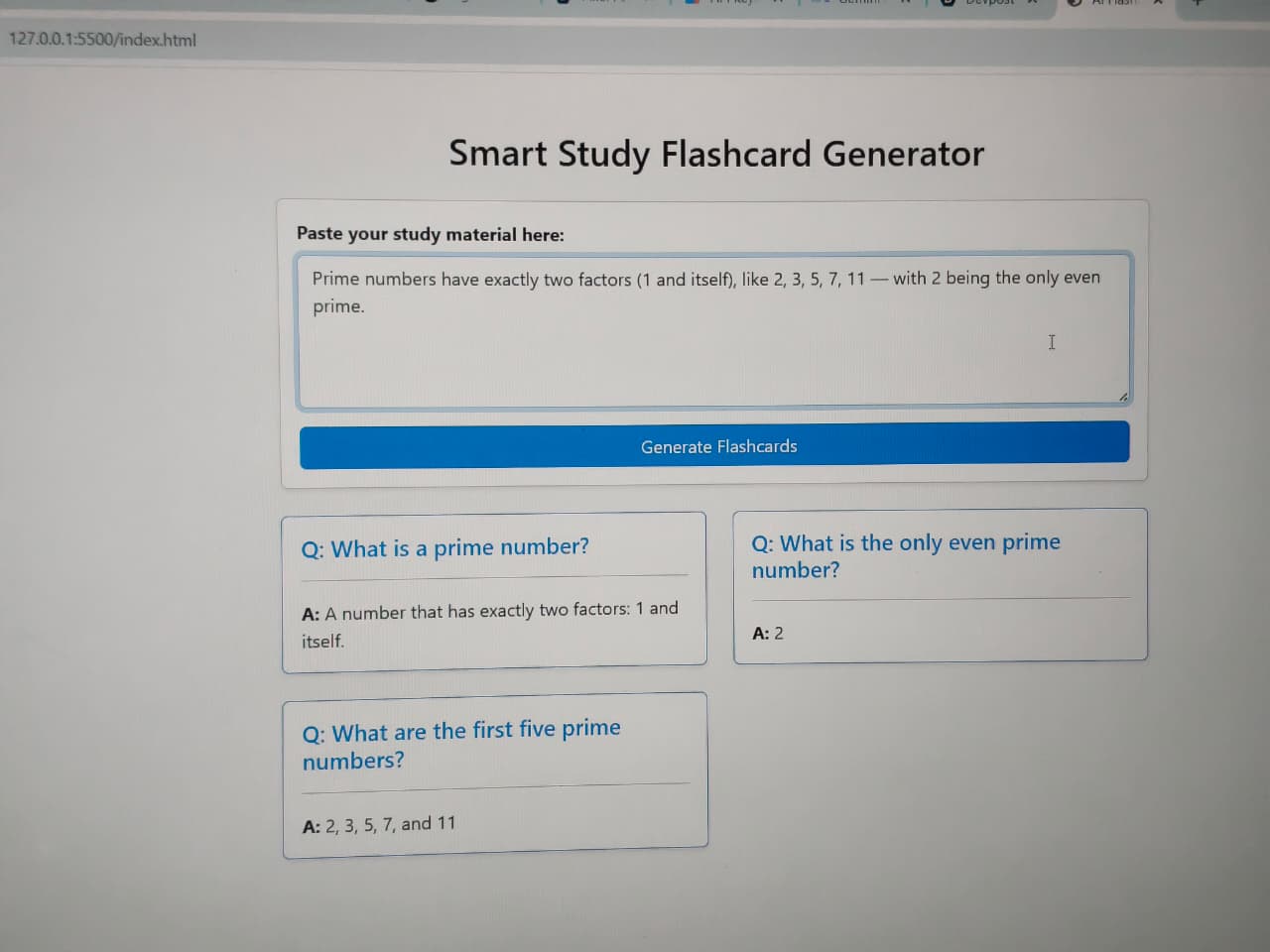
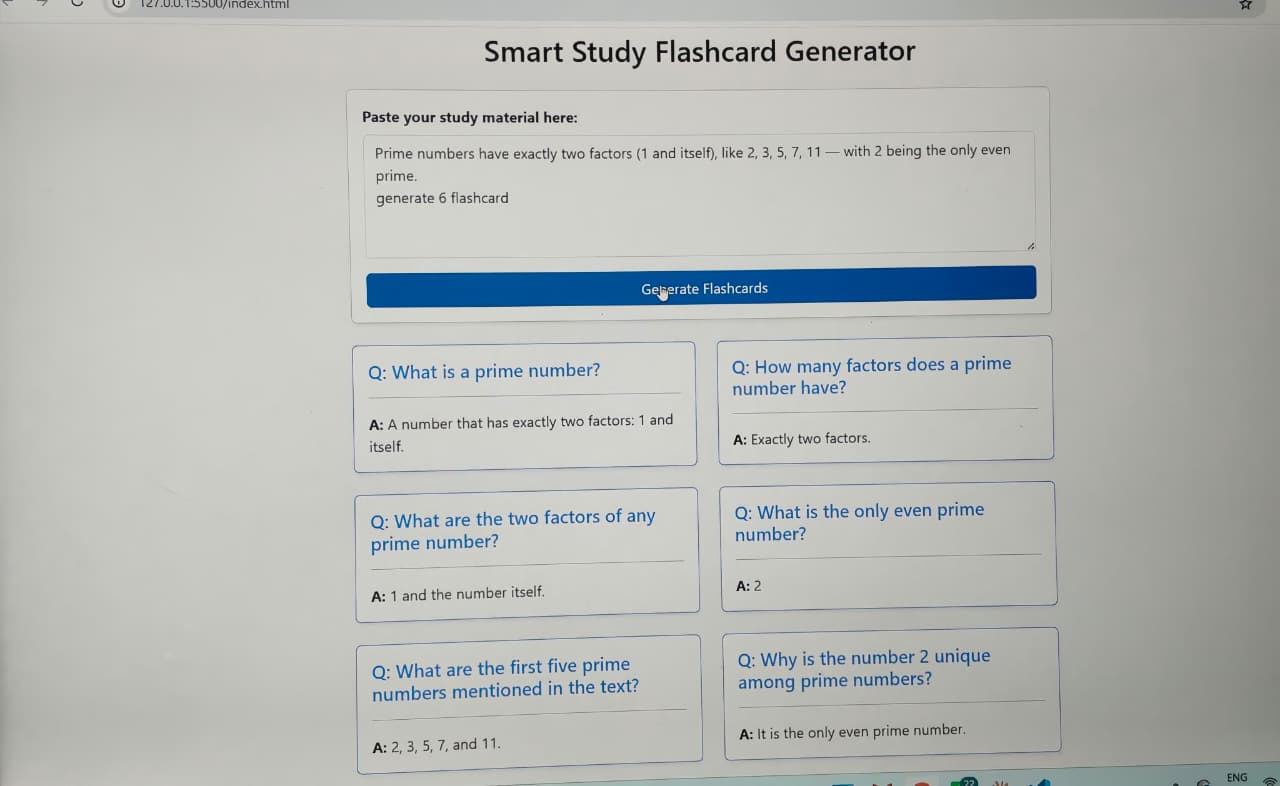
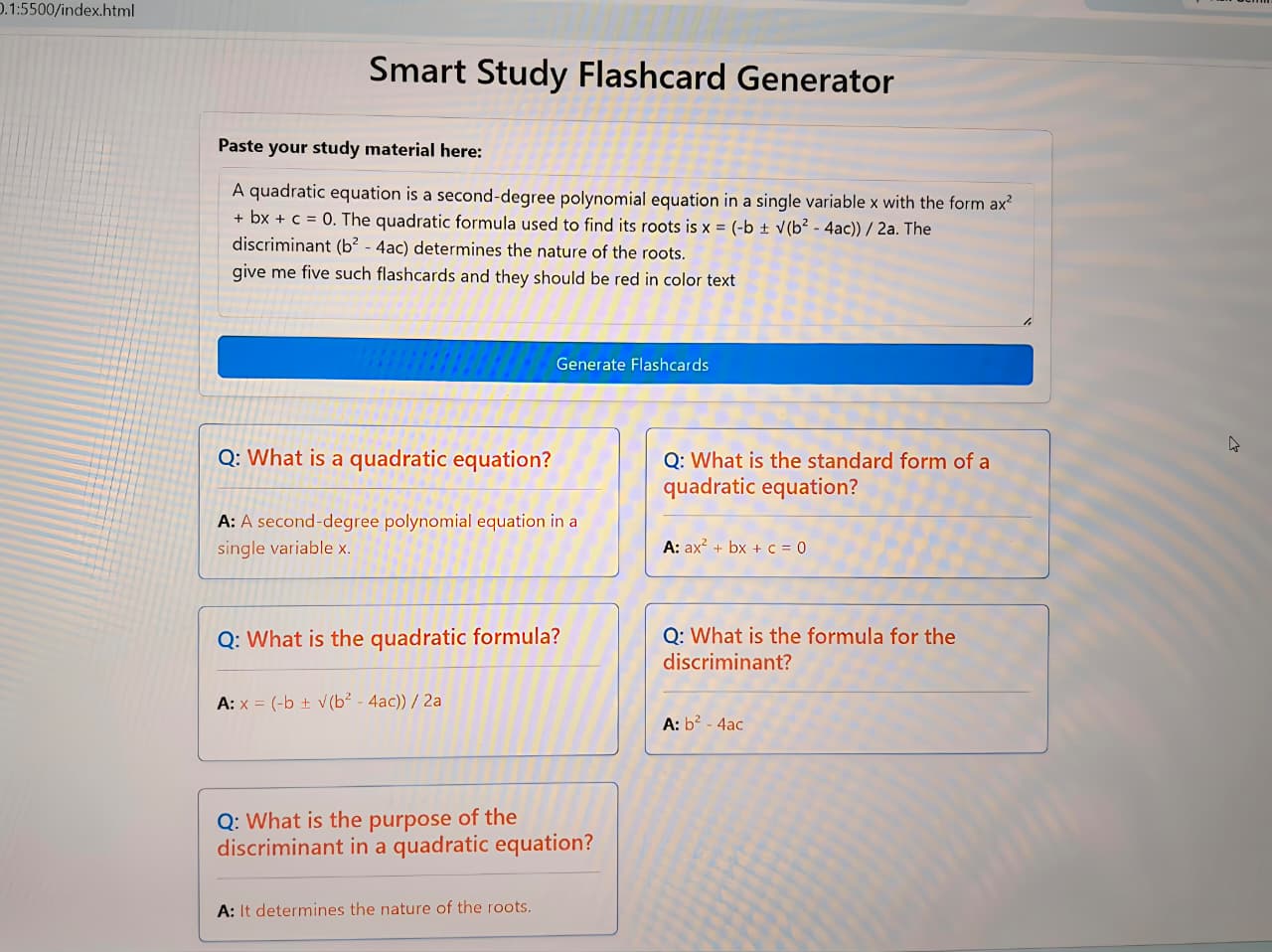
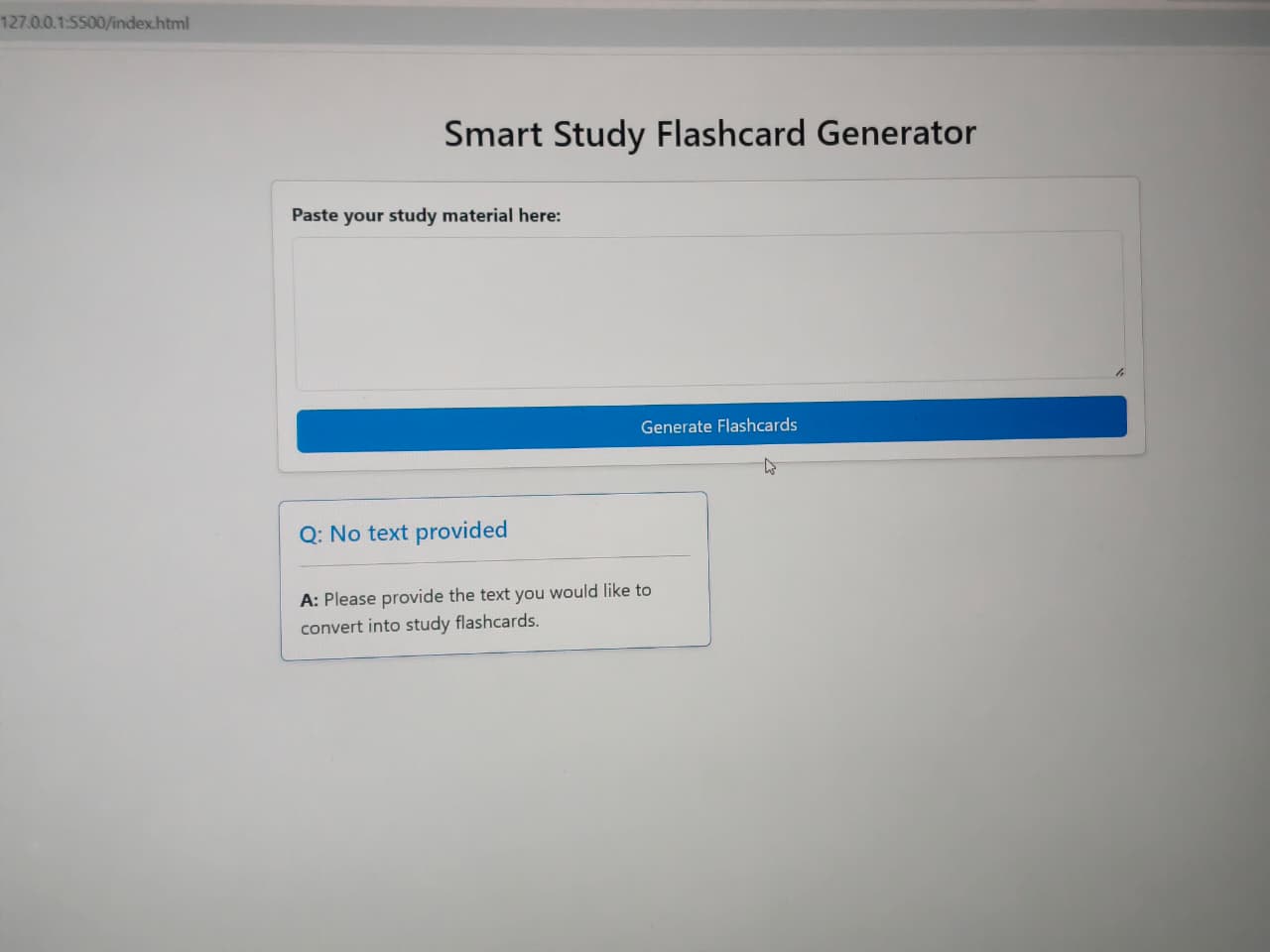
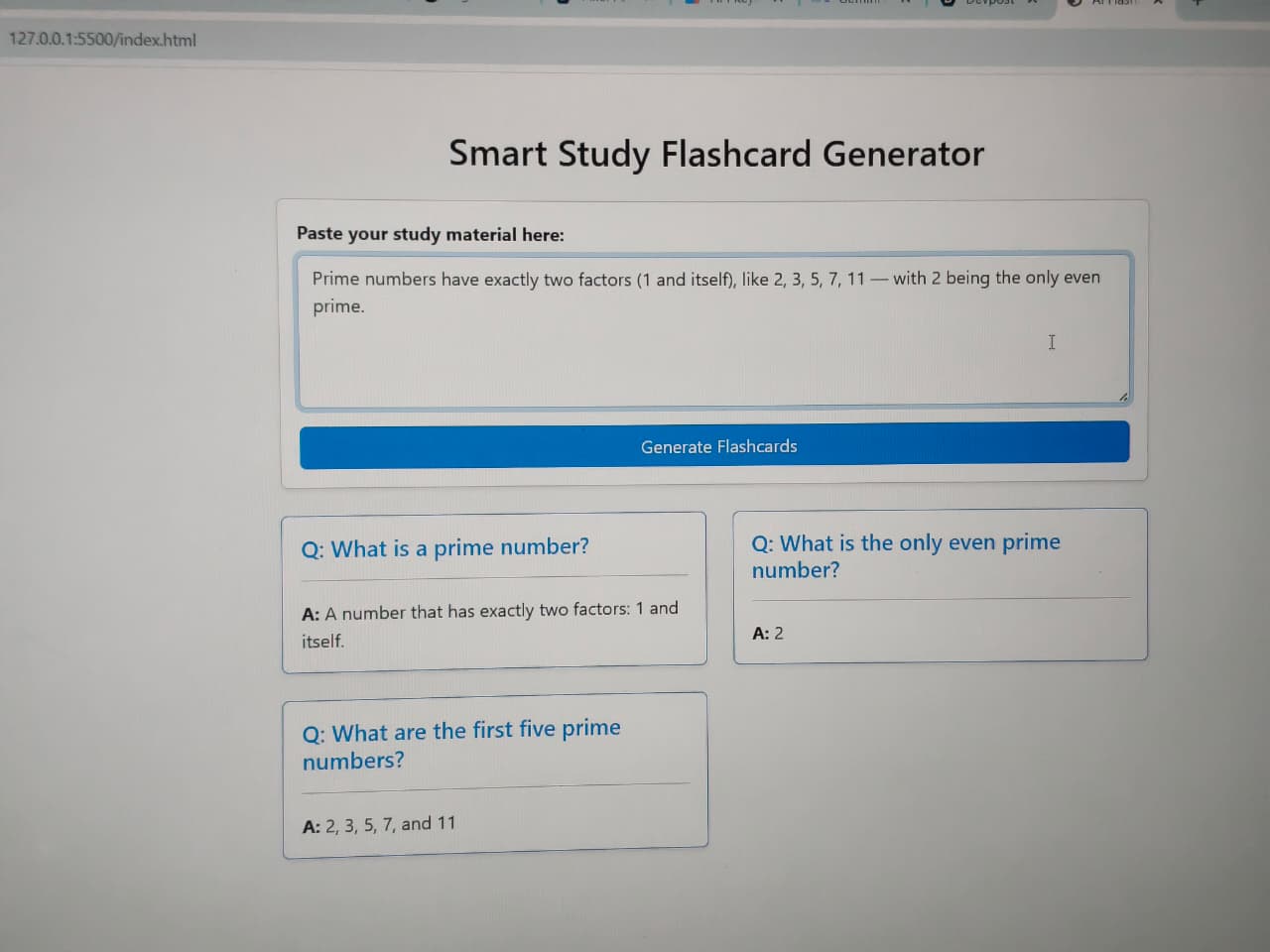
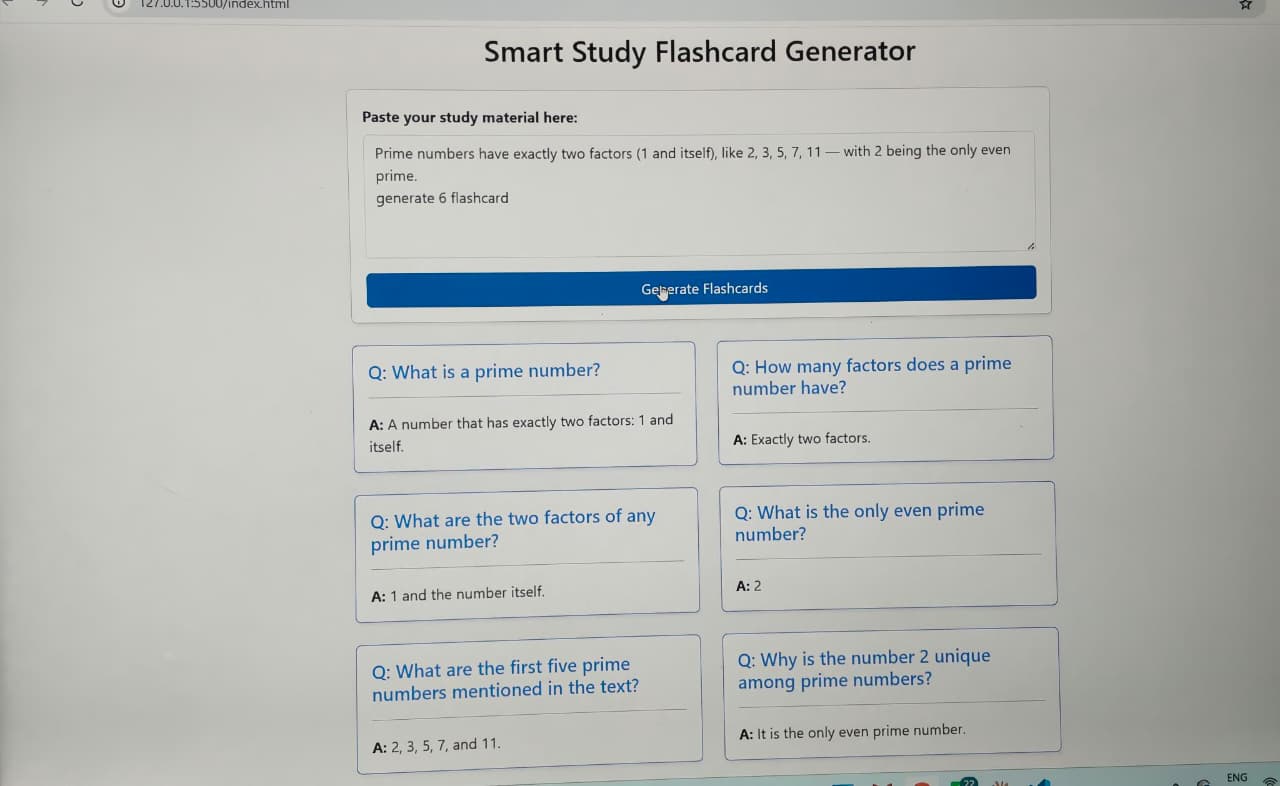
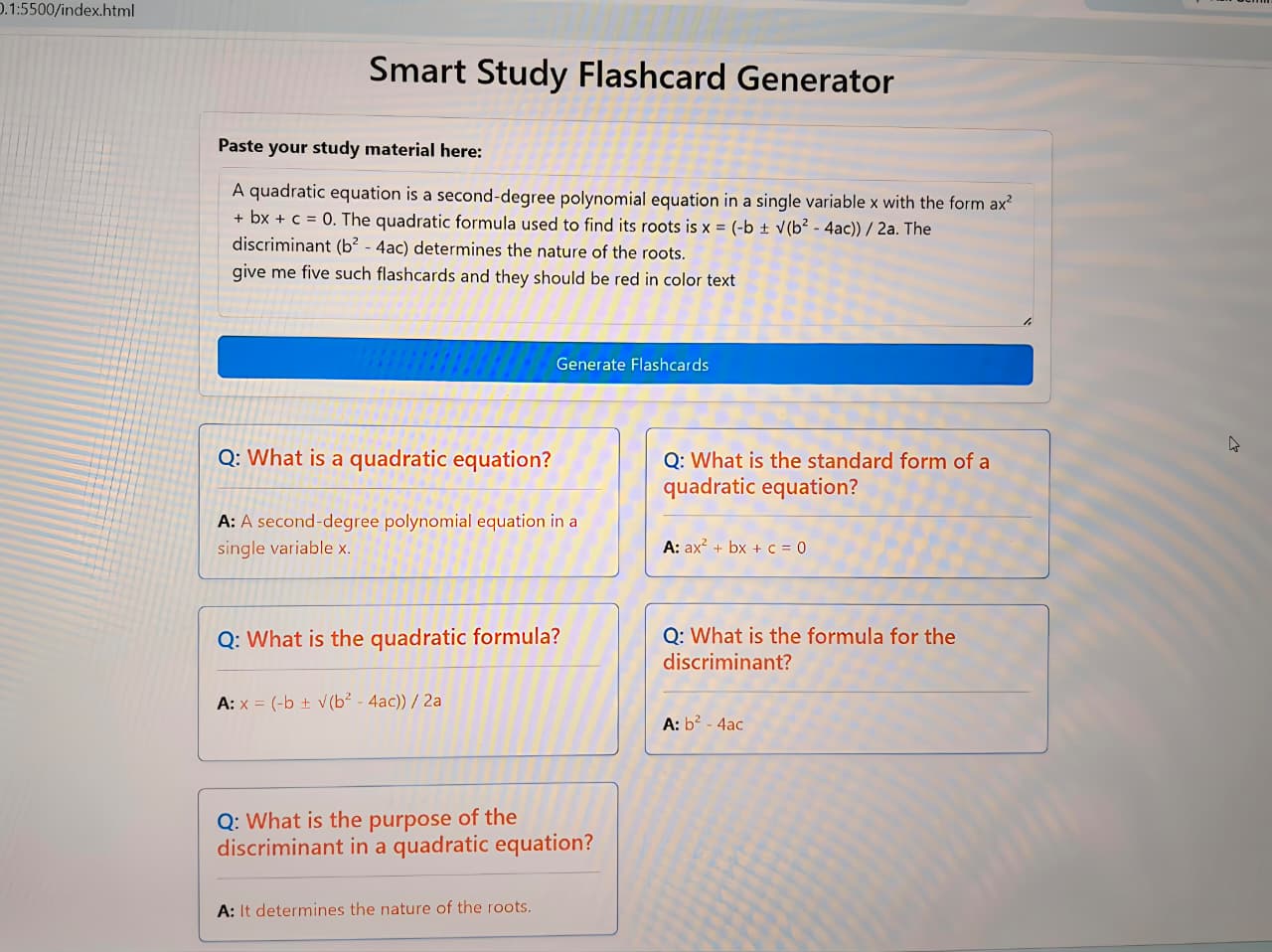
Inspiration : Working directly with students in my mathematics classes, I have seen firsthand how overwhelming large walls of text and complex formulas can be when studying for exams. Students often struggle to extract the core concepts from their study materials. To solve this, I built the Smart Study Flashcard Generator.
What it does : Smart Study Flashcard Generator—an AI-powered web application that instantly transforms any pasted notes, articles, or formulas into a clean, interactive deck of question-and-answer flashcards to make active recall studying effortless.
How we built it : The application was designed as a lightweight, lightning-fast Minimum Viable
                                 Product (MVP) using the following tech stack
    1. Frontend: HTML5 and Bootstrap for a clean, responsive, and mobile-friendly user interface.
    2. Backend Logic: Vanilla JavaScript utilizing the Fetch API to securely handle asynchronous web
          requests without requiring a heavy backend server.
   3. AI Integration: The core engine is powered by the Google Gemini 2.0 Flash API via the Generative
        Language REST endpoint.
Challenges we ran into : The primary challenge was managing the strict authentication protocols and versioning requirements of the Google Gemini API. Initially, the API requests were rejected due to unauthorized access errors. Resolving this required navigating the Google Cloud Console to explicitly generate a classic API key, bind it to a specific service account, and ensure the Generative Language API was fully enabled for the project. Additionally, I had to troubleshoot endpoint model availability, successfully migrating the code to target the stable gemini-1.5-flash endpoint rather than deprecated or experimental versions.
Accomplishments that we're proud of : I am incredibly proud of designing a robust zero-shot prompt that successfully dictates the AI’s output format. By strictly instructing the model to return a raw JSON array and explicitly forbidding markdown or conversational text, the application can seamlessly parse the AI's response and dynamically render the user interface without crashing. Successfully engineering this handshake between natural language processing and strict frontend rendering logic is a major win for the MVP's stability.
What we learned : Building this project emphasized the importance of secure API key management and understanding cloud console architectures. I also learned a great deal about prompt engineering for structural control—specifically how to write instructions that force an LLM to behave like a strict data API rather than a conversational chatbot.
What's next for Smart Study Flashcard : The next phase of development will focus on user retention and expanded input capabilities. Planned features include adding user authentication so students can save their generated flashcard decks to an account, as well as implementing OCR (Optical Character Recognition) so users can simply take a photo of their physical textbook pages or handwritten notes to instantly generate study materials.
Built With
- bootstrap
- css
- gemini-api
- html
- javascript

Log in or sign up for Devpost to join the conversation.