-
-
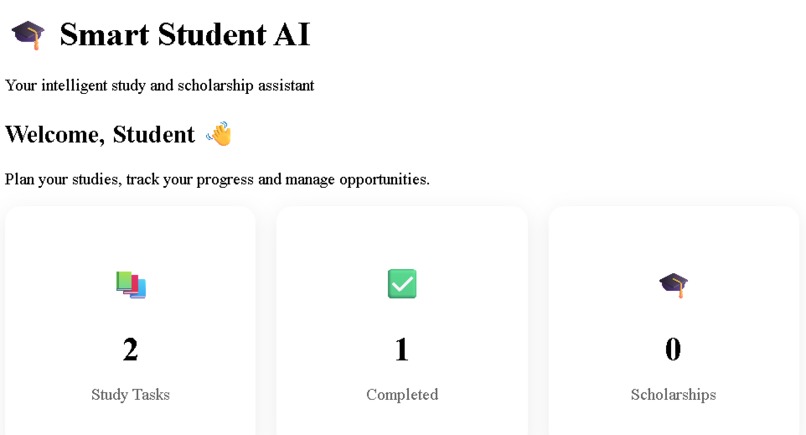
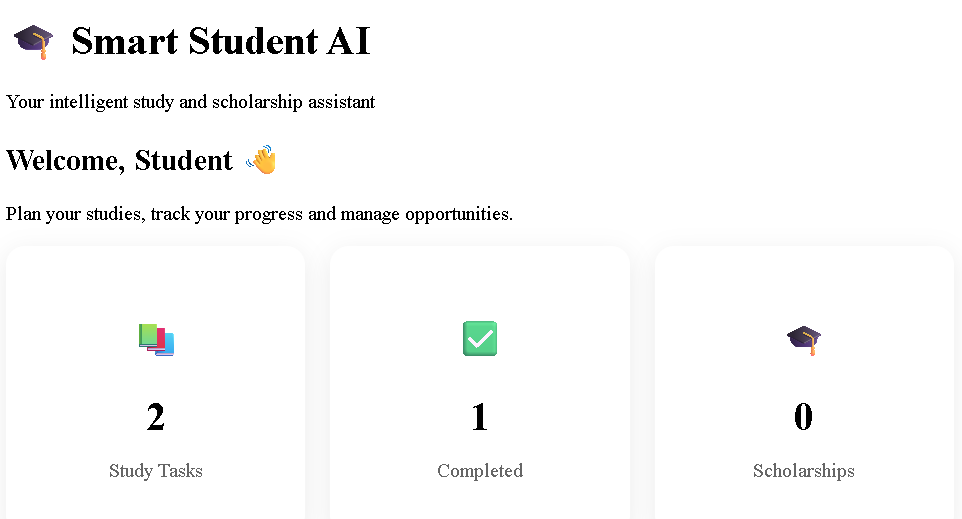
Central hub for managing study plans, scholarships, AI assistance, and student progress.
-
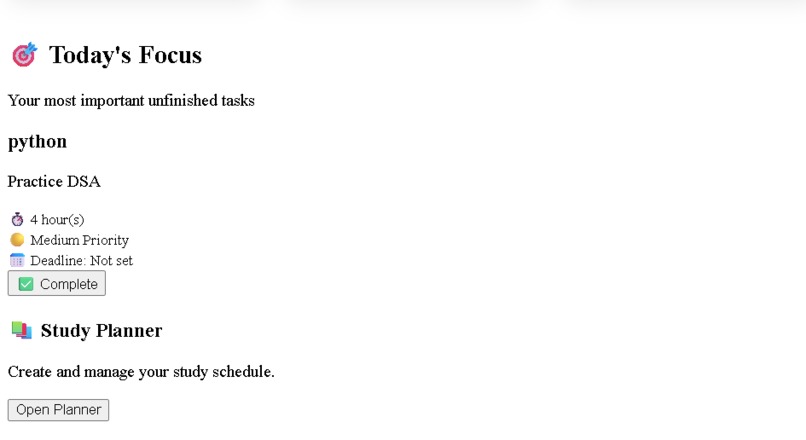
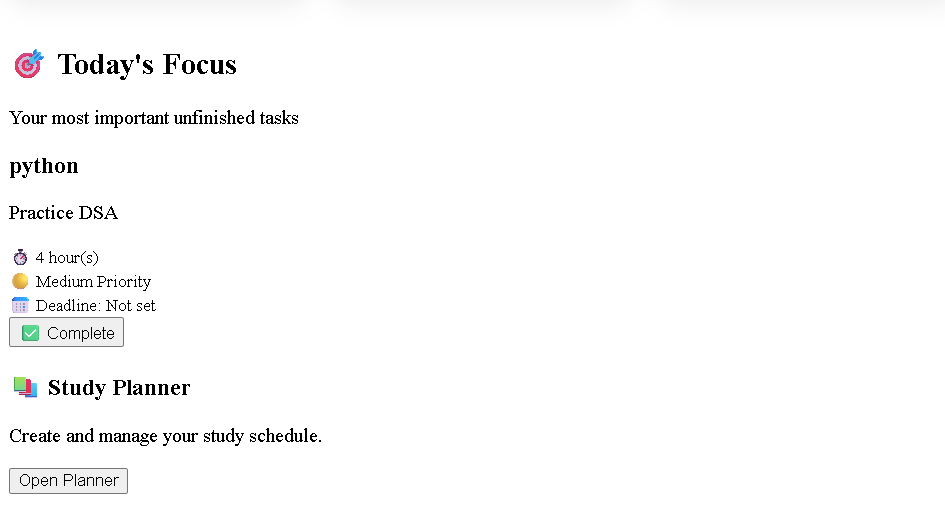
Organize academic tasks and create a structured study workflow.
Inspiration
Students often have to manage many things at once: studying, assignments, skill development, exams, and finding scholarships or other opportunities. Information is scattered across different websites, and it can be difficult to know what to focus on next.
I wanted to build something that acts like a personal academic assistant — not just answering questions, but helping students organize their goals and take practical next steps.
This idea led to Smart Student AI, an AI-powered study and scholarship assistant designed to bring planning, learning support, and opportunity discovery into one place.
What the Project Does
Smart Student AI is designed to help students:
- Create and manage study plans
- Organize academic tasks and goals
- Get AI-powered guidance while learning
- Discover scholarship opportunities
- Track their progress
- Receive personalized suggestions based on their goals
The goal is to make the process of planning a student's academic journey simpler and more actionable.
How We Built It
The project was built as a web application using Python and Flask.
The application uses a lightweight database to store information such as study tasks and scholarship opportunities. The interface provides separate areas for study planning, scholarships, AI assistance, and progress tracking.
The AI assistant is designed to provide students with contextual guidance instead of simply returning generic answers.
The main technologies used include:
- Python
- Flask
- SQLite
- HTML/CSS
- JavaScript
- AI/LLM APIs
- python-dotenv for environment configuration
What I Learned
Building this project helped me understand how an AI-powered application can be connected to a real web application rather than existing only as a chatbot.
I learned more about:
- Designing an AI-assisted user workflow
- Building Flask routes and application logic
- Managing data with SQLite
- Connecting APIs to a web application
- Structuring an application around real user problems
- Handling API errors and configuration issues
- Thinking about personalization and user experience
One important lesson was that building an AI application is not only about the AI model. The surrounding product experience — data, interface, workflows, and useful actions — is equally important.
Challenges We Faced
One of the biggest challenges was integrating AI functionality reliably into the application. API configuration, environment variables, and usage limitations required careful debugging.
Another challenge was deciding how to make the assistant genuinely useful to students instead of creating another generic chatbot.
I focused on connecting the AI experience with practical features such as study planning, scholarship discovery, and progress tracking so that students can move from asking a question to taking an action.
What's Next
There is a lot of room to expand Smart Student AI.
Future improvements could include:
- More personalized study schedules
- Deadline and application reminders
- Better scholarship matching
- Document-based scholarship guidance
- Learning-resource recommendations
- AI-generated revision plans
- Progress analytics
- More advanced AI agents for different student needs
The long-term vision is to turn Smart Student AI into a personal AI education companion that helps students make better decisions throughout their academic journey.
Why It Matters
Students shouldn't have to spend hours searching through disconnected sources just to figure out what they should study, which opportunities they qualify for, or what they should do next.
Smart Student AI brings these workflows together and uses AI to turn information into actionable guidance.

Log in or sign up for Devpost to join the conversation.