Inspiration
We started looking into problems that many could find around the home and we discovered some surprising statistics. It turns out that over 170,000 home structure fires per year are caused by cooking activities. Also, 61% of home fires are due to cooktops. We decided since the average US household has about 11 smart devices in their homes, we wanted to utilize these to increase safety, energy consumption and ease of use of the common household stove and oven
What it does
Using user input from an Amazon Alexa or provided UI, the device activates a servo which then changes the temperature to the stove accordingly. The UI also allows the user to set a timer for any time and for each individual stovetop. There is also a favorites page that is programmable by the user that allows them to set automatic timers for their favorite dishes so they don't have to think twice about it. This can be used for preheating the oven or heating oil before sautéing some vegetables. On the safety side of things, there is also a thermal camera and a motion sensors working together to determine if a stovetop has been left on. The thermal camera consistently checks temperature and if it receives notice from the motion sensor that no one has walked by in 15-20 minutes, it will turn off the stovetop and alert the user. There is also a smoke detector sensor that activates if it senses smoke (that is not due to the cooking).
How we built it
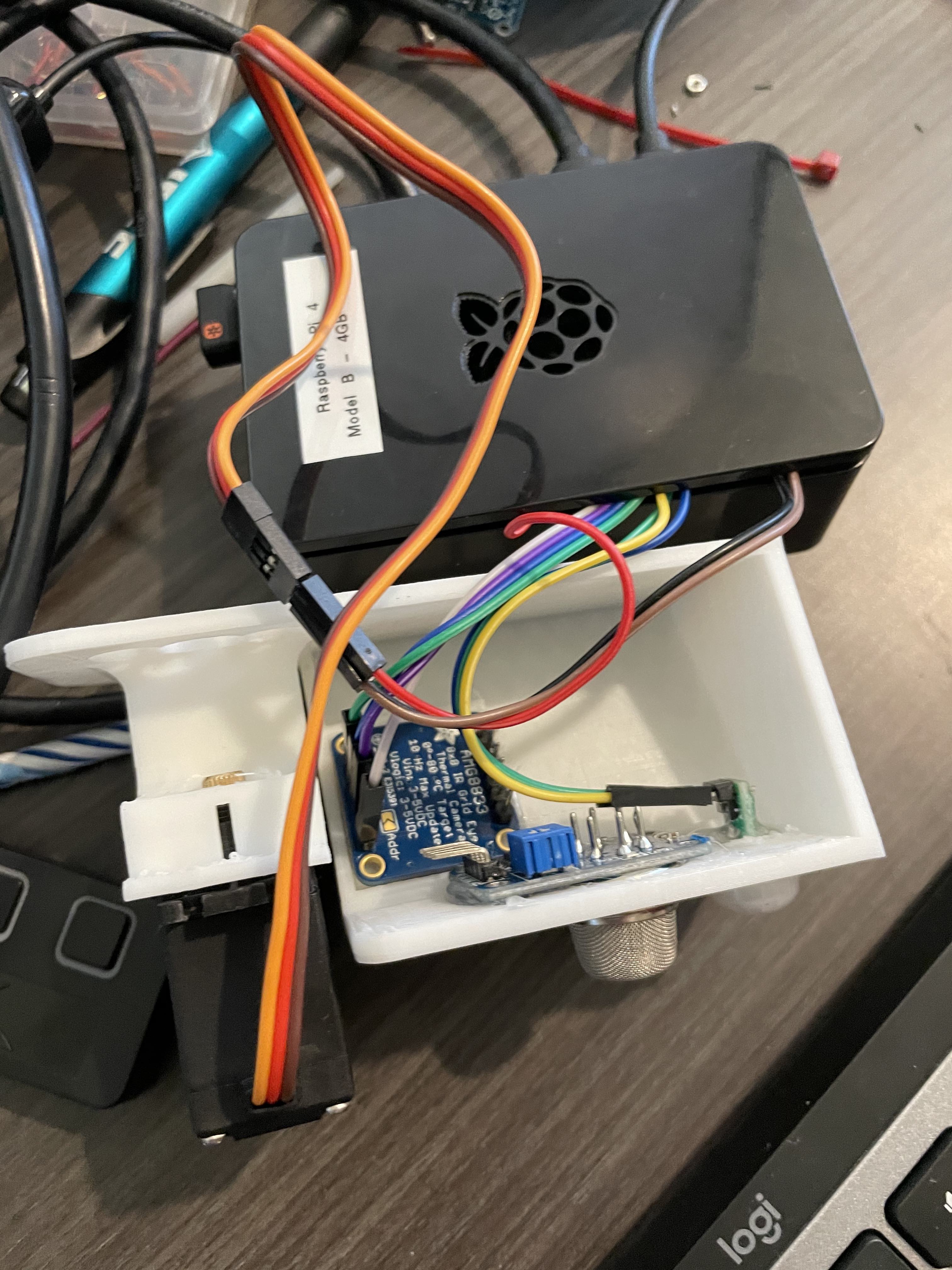
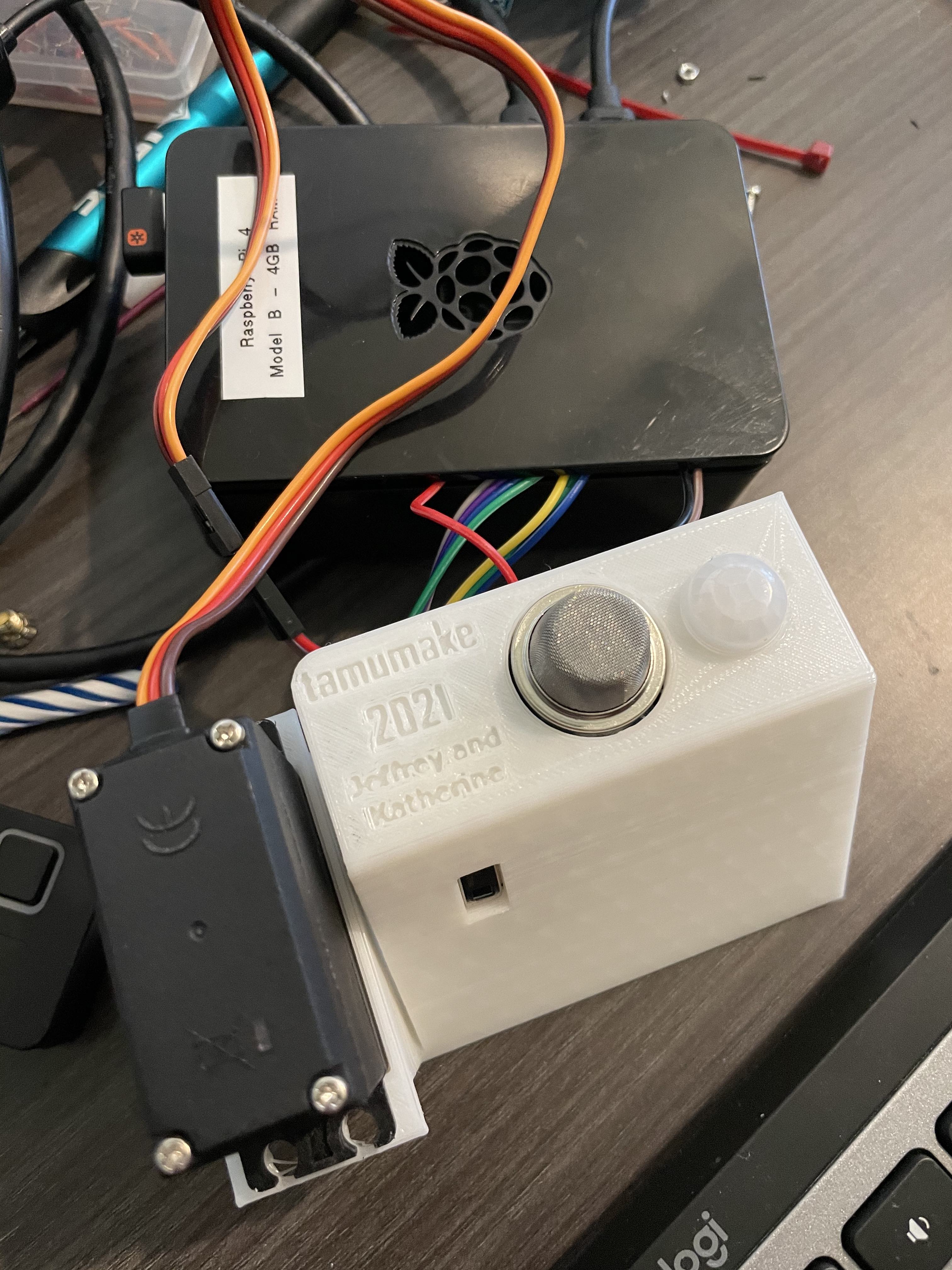
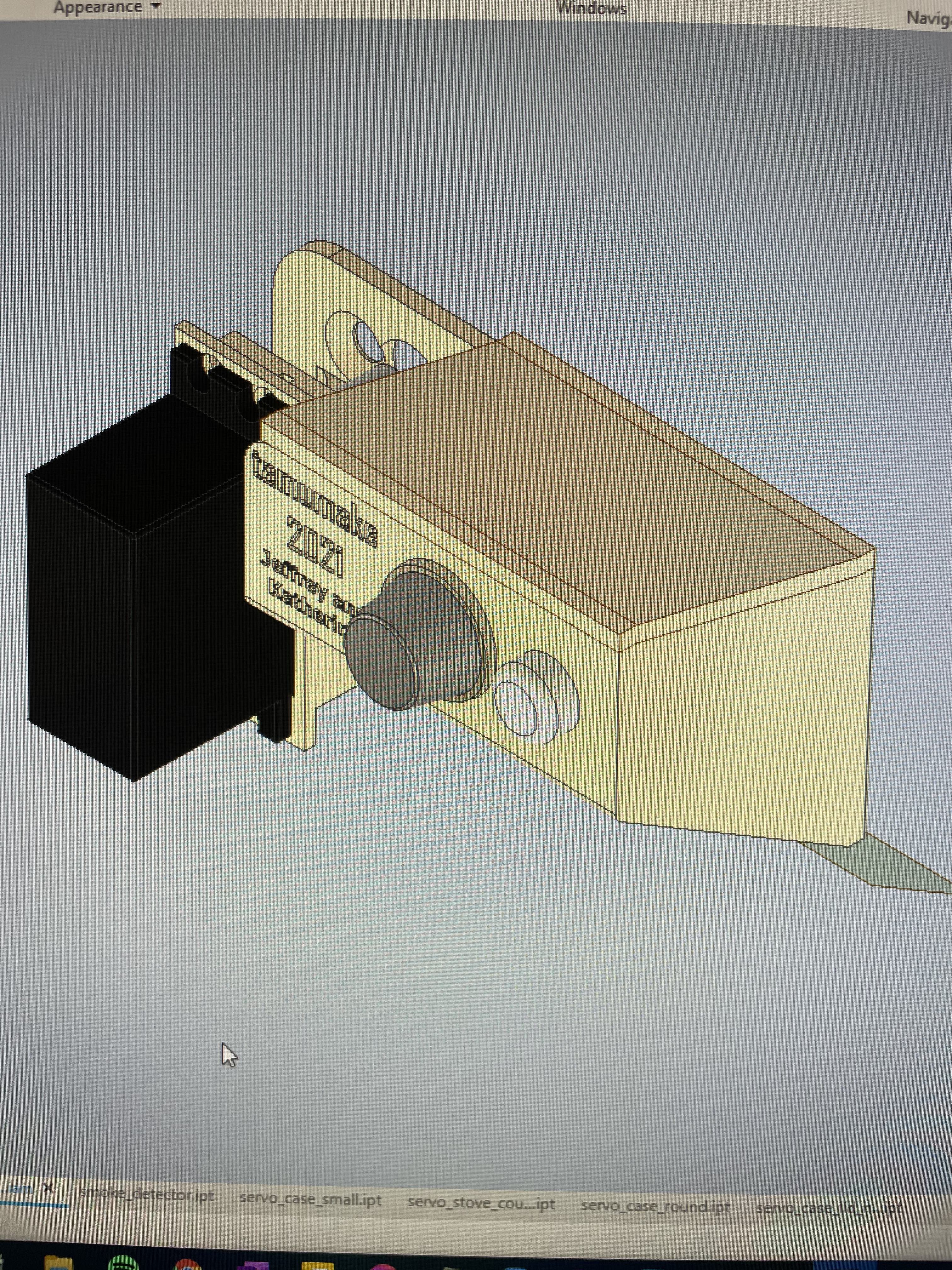
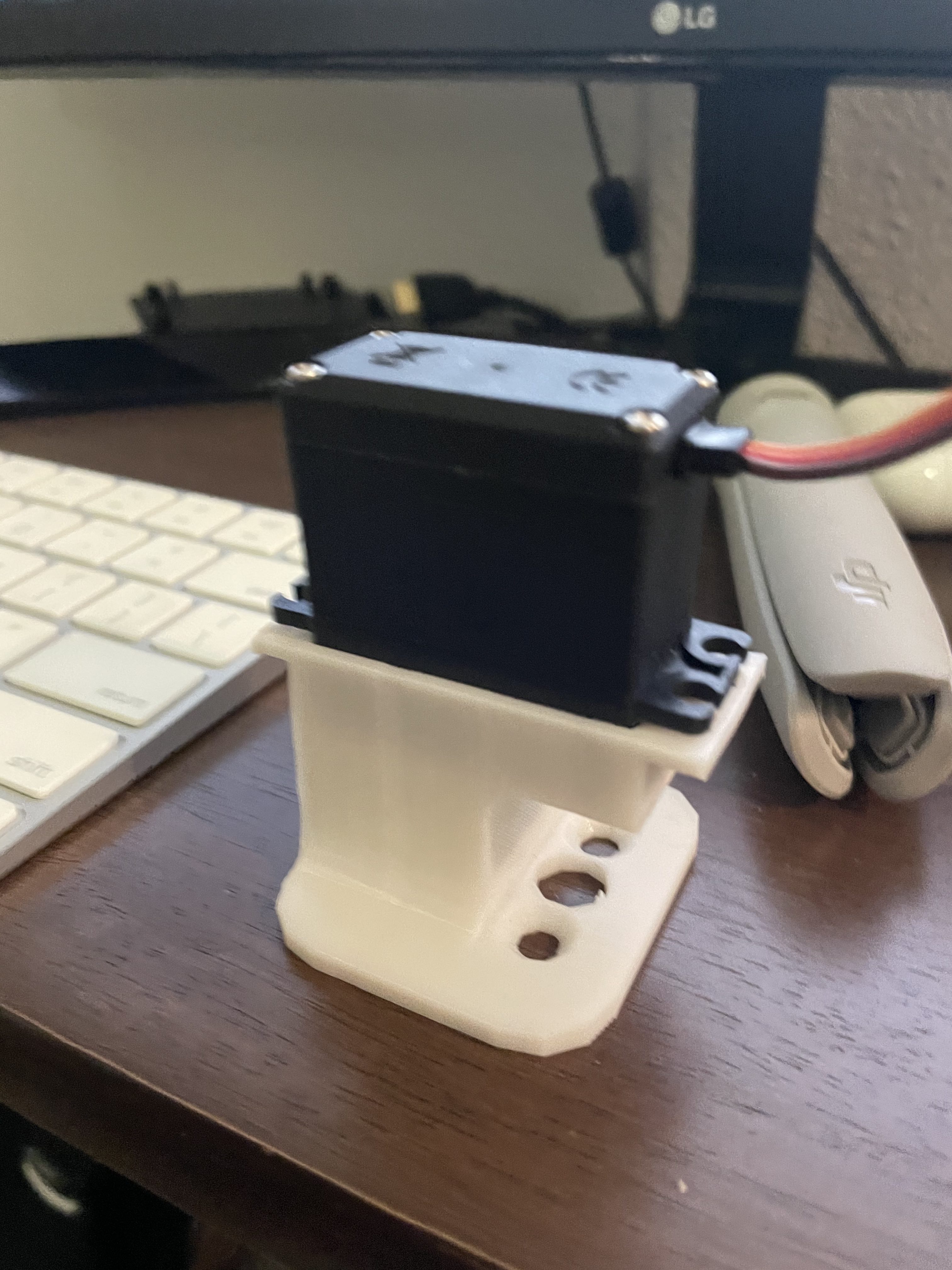
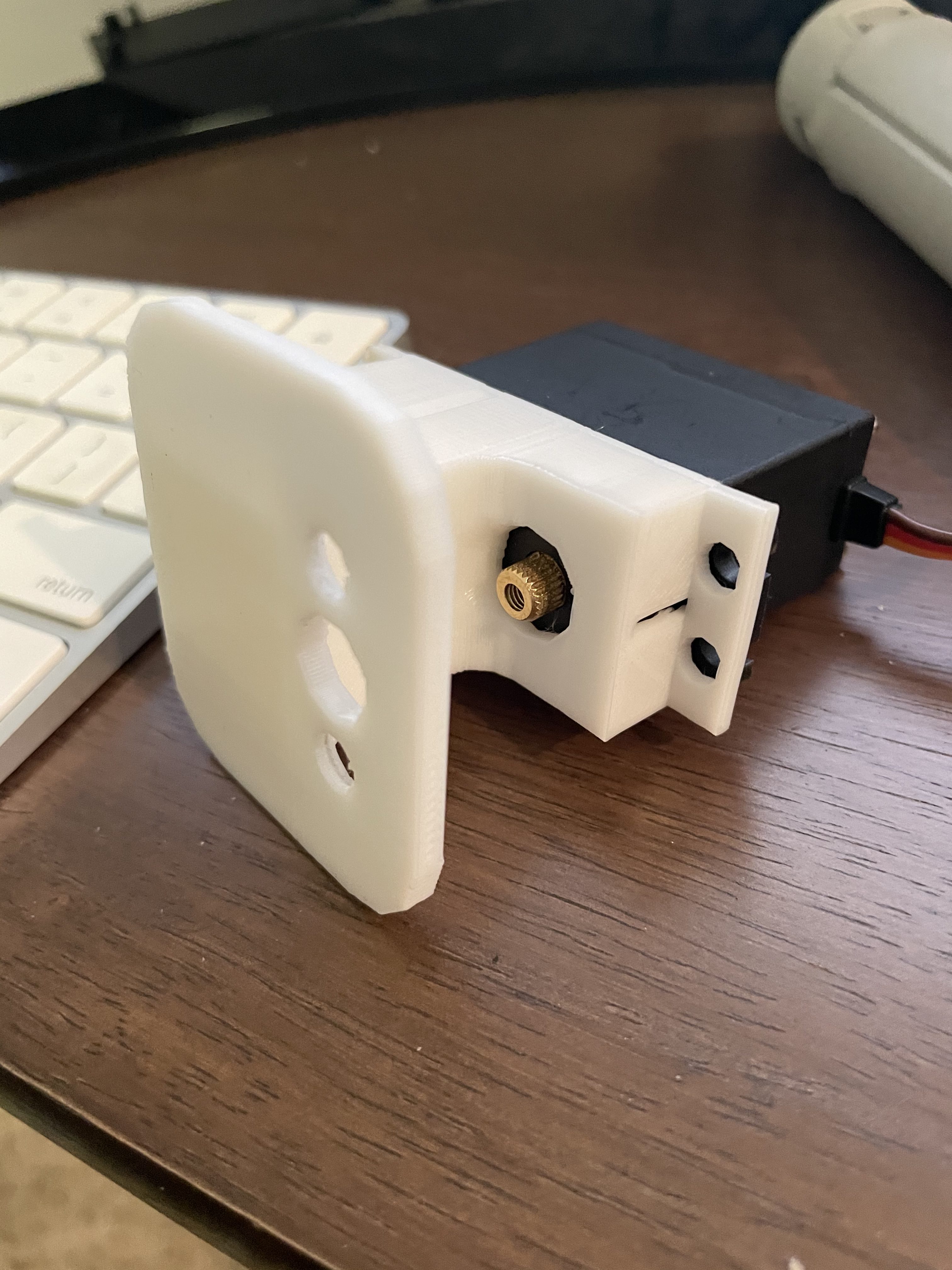
The base of the project is a Raspberry Pi 4. Using this, we are able to control each sensor individually and interface them together as well. Specifically we used a combination of Python and Node Red to develop for the UI and to integrate the Amazon Alexa controlled features. For the 3D printed casings, we used Autodesk Inventor and an Ender 3. This casing was then screwed onto the stove and using a 3D printed coupler, we attached the servo to the knob arm and could rotate to the desired degrees.
Challenges we ran into
We first had some trouble with integration. We tried to use a Raspberry Pi Nano so it could fit inside the casing but ultimately resorted back to the Raspberry Pi 4 to finish up the project.
Accomplishments that we're proud of
We are proud that we were able to combine the servo control with the UI and the thermal camera. I was a struggle at first but we were able to get it all to come together.
What we learned
How to use Node-Red, integrating Amazon Alexa, the thermal camera, stove safety,
What's next for Smart Stove
The rest of the stove knobs, and oven / Better software integration / Updated UI


Log in or sign up for Devpost to join the conversation.