-
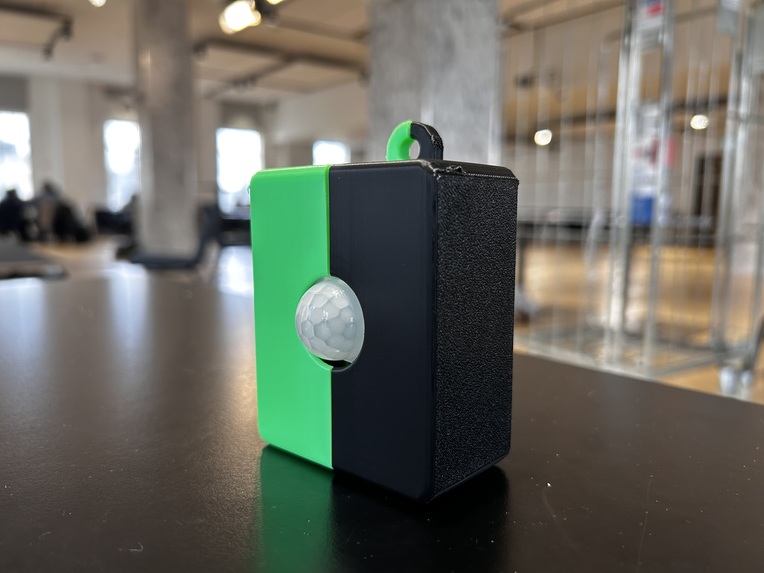
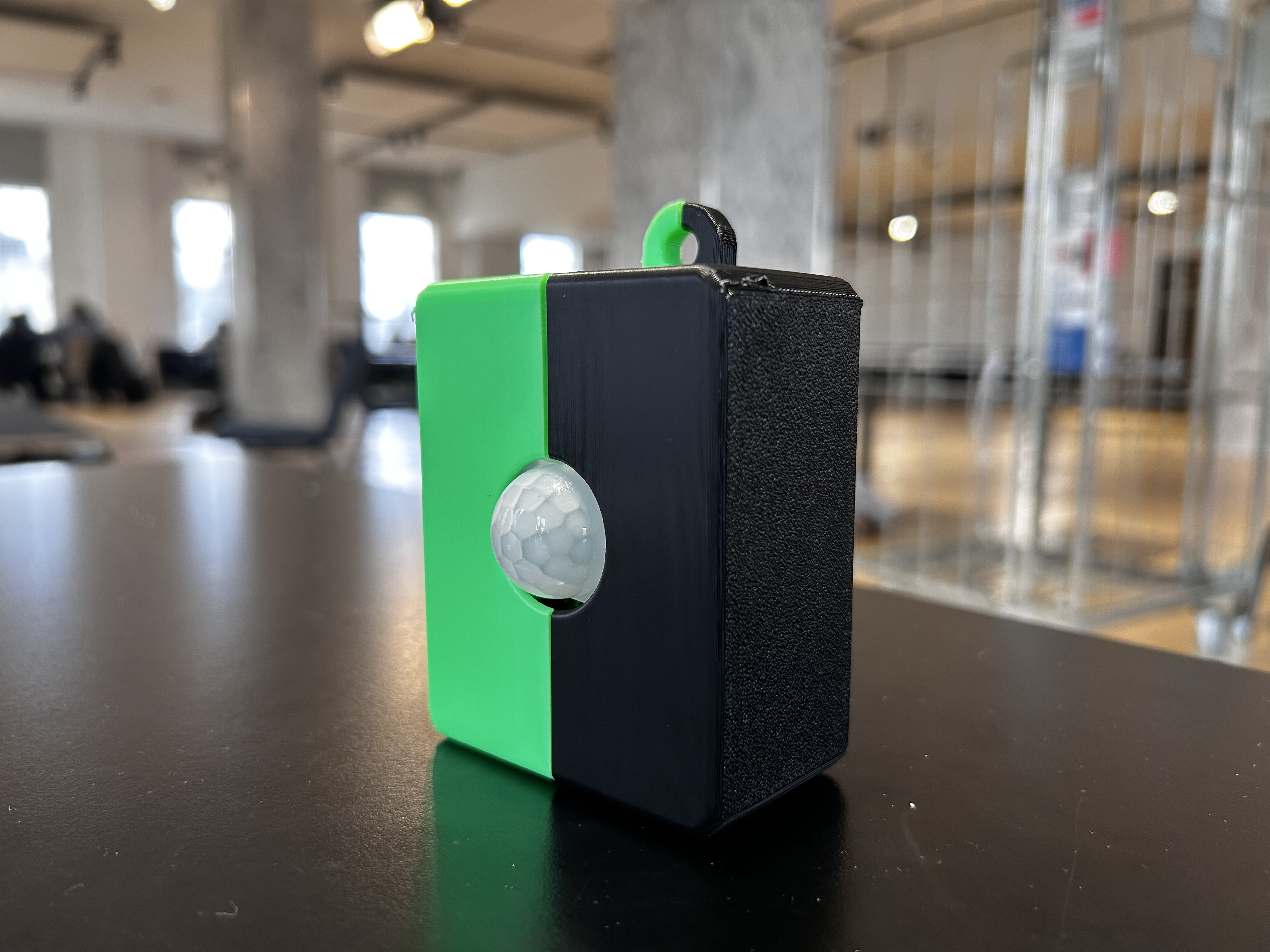
Smart Space Hardware device
-
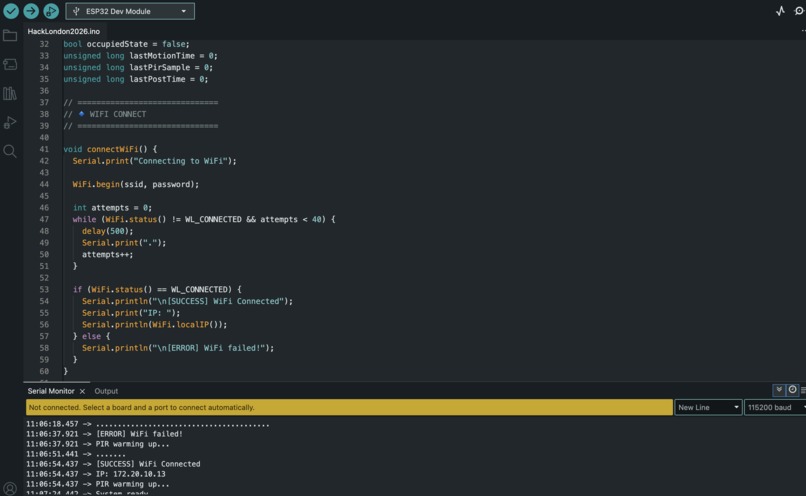
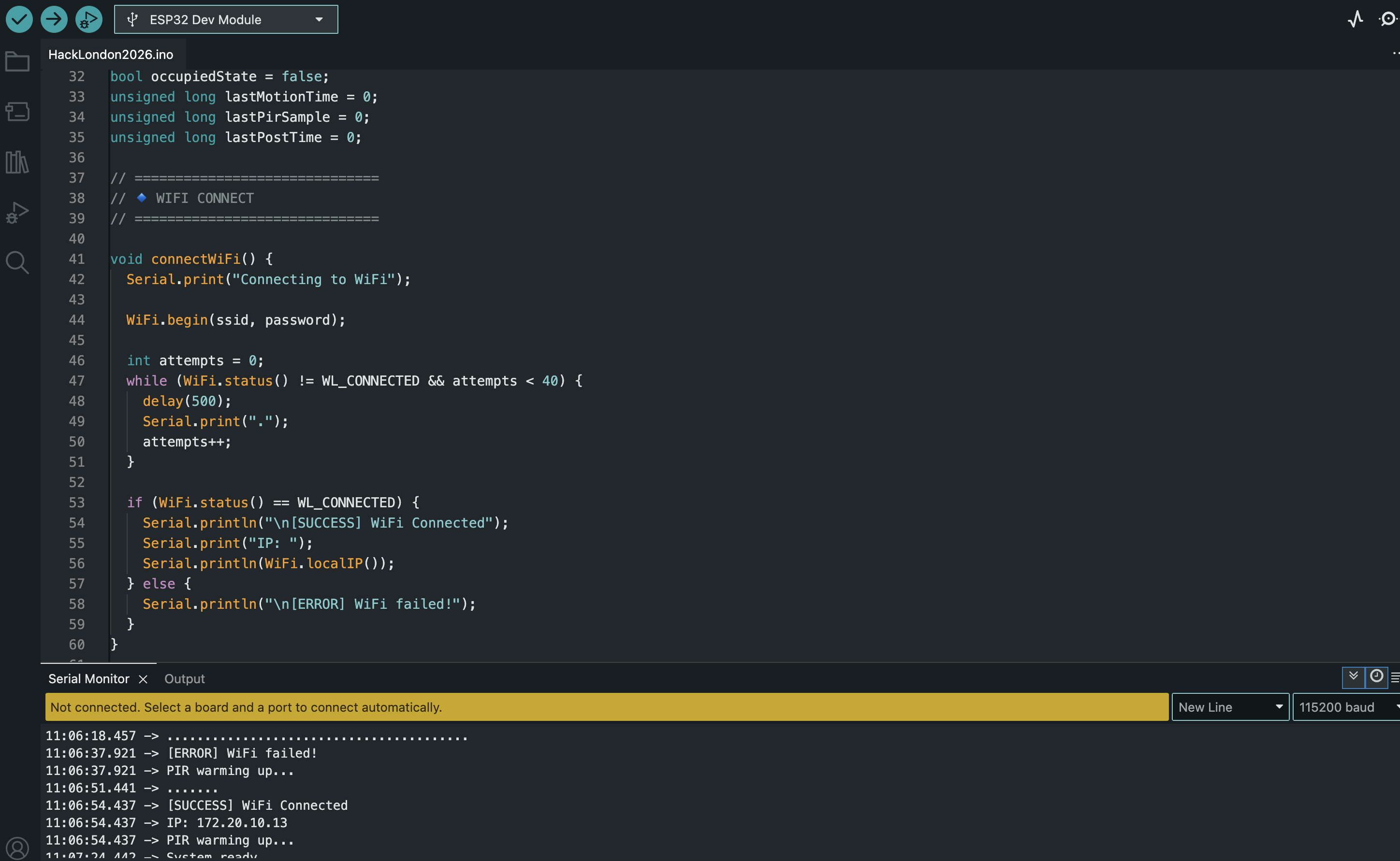
Esp32 Code on the IDE
-
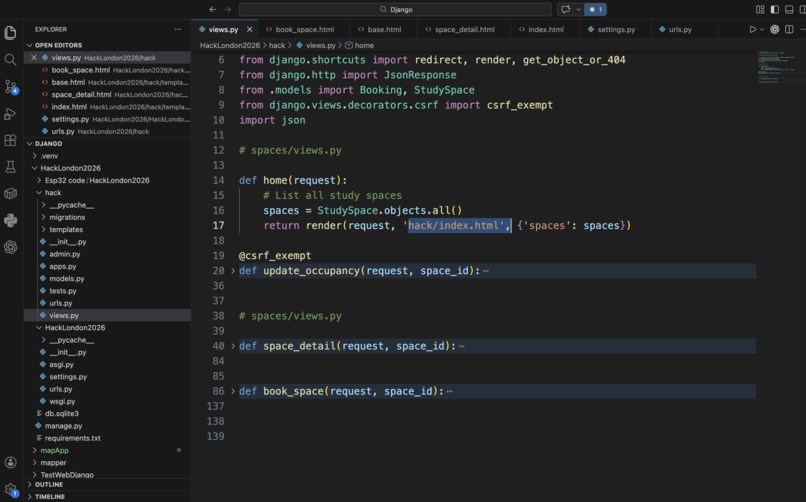
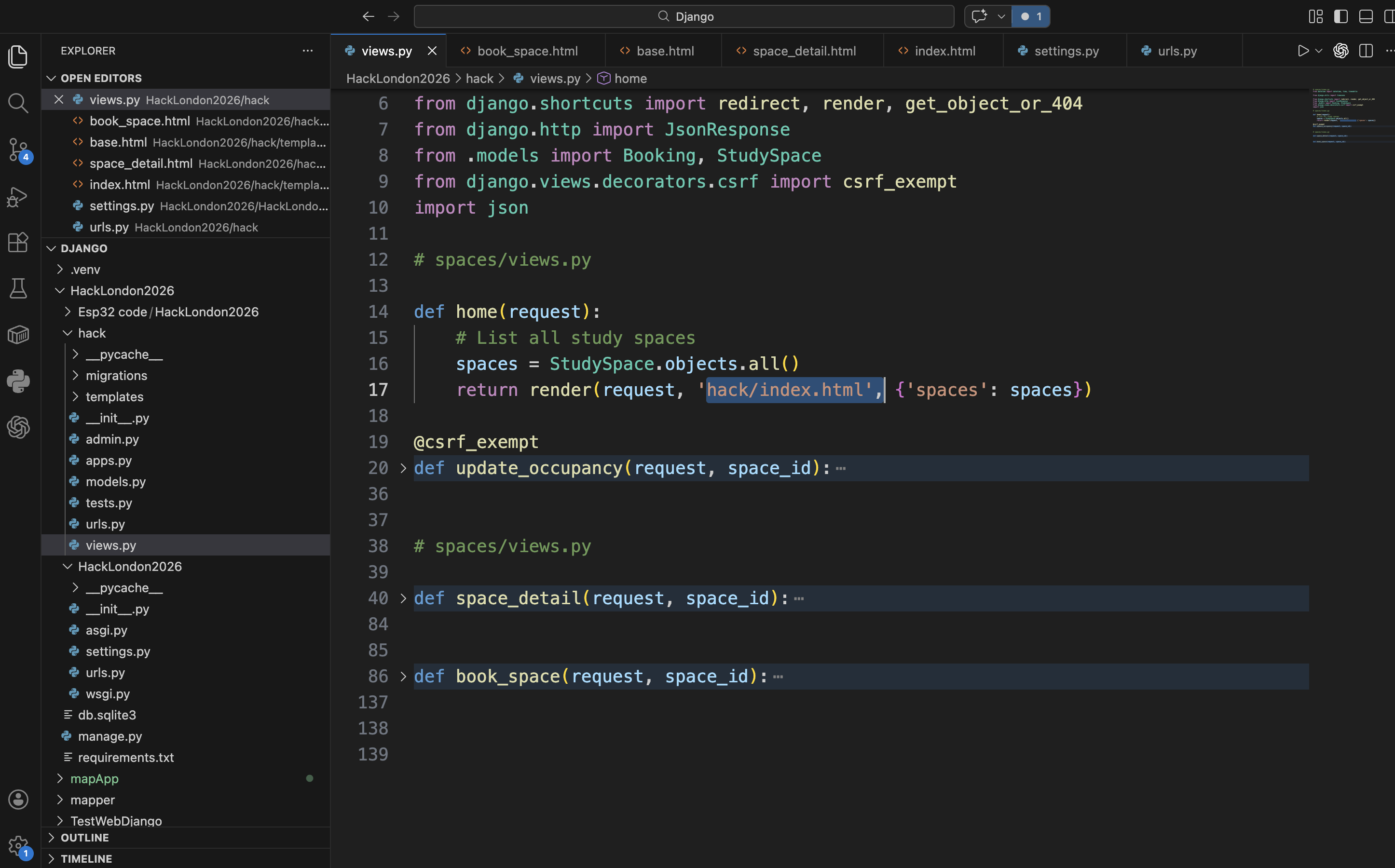
Django project Code on VS Code
Inspiration
Being both students in busy universities that struggle with space allocation, tackling the issue of managing study spaces sounded like a meaningful idea to tackle. Especially with exam season coming up, how to smartly spread students across campus particularly resonates to save students precious time at this critical time of the year.
What it does
Our product detects motion at desk to determine real-time availability of each study space. It uses a PIR motion sensor to detect motion and sends its records to the database. The database allows students to track real-time availability and can book the availabilities online. If the sensor doesn’t detect any motion for a few minutes, the status of the study space is directly released to available.
How we built it
We used a PIR sensor and an Esp32 to connect via wifi to our django server and update the availability of the device's space. We build a full stack Django website where students can consult availability of spaces as well as book them for future time. Together, we are able to provide a system that offers real-time availability information of spaces as well as auto-release function when people don't show up to their bookings.
Challenges we ran into
The main challenge was in the hardware side, first, we had trouble making the arduino UNO Q work with the serial monitor and had to make a workaround, then we had issues working with the distance ultrasonic sensor and we had to pivot our idea, and then because of wifi we had to change to an Esp32. In the end time was very tight but we were able to deliver our product.
Accomplishments that we're proud of
We are product that we were able to actually build a functional, fully fleshed hardware+software system in less than 24 hours, which for us, was the first time we participated in a hardware hackaton.
What we learned
We learned about how to connect hardware and software seamlessly to make them work as a unit and provide a unified experience to the user, utilizing the capabilities of each to achieving a common goal.
What's next for Smart Space
The product and database are ready for small rooms applications. We aim to perfect calibration of the sensor for bigger rooms applications, in order to guarantee accuracy of availability status, even in hinge passages. Our long-run objective is to implement this design at each seat at university to track the availability everywhere on campus, at all times. The price of this device will be kept under £1/month/device as we expect universities to buy it in large batches and we are conscious this is a major, yet useful, investment for universities.
Built With
- arduino
- autodesk-fusion-360
- django
- esp32
- python
- render
- sqlite

Log in or sign up for Devpost to join the conversation.