-
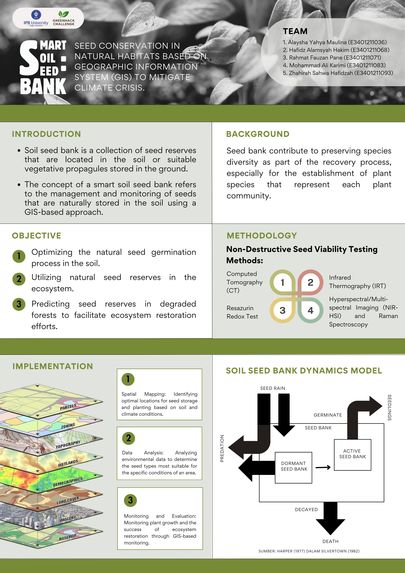
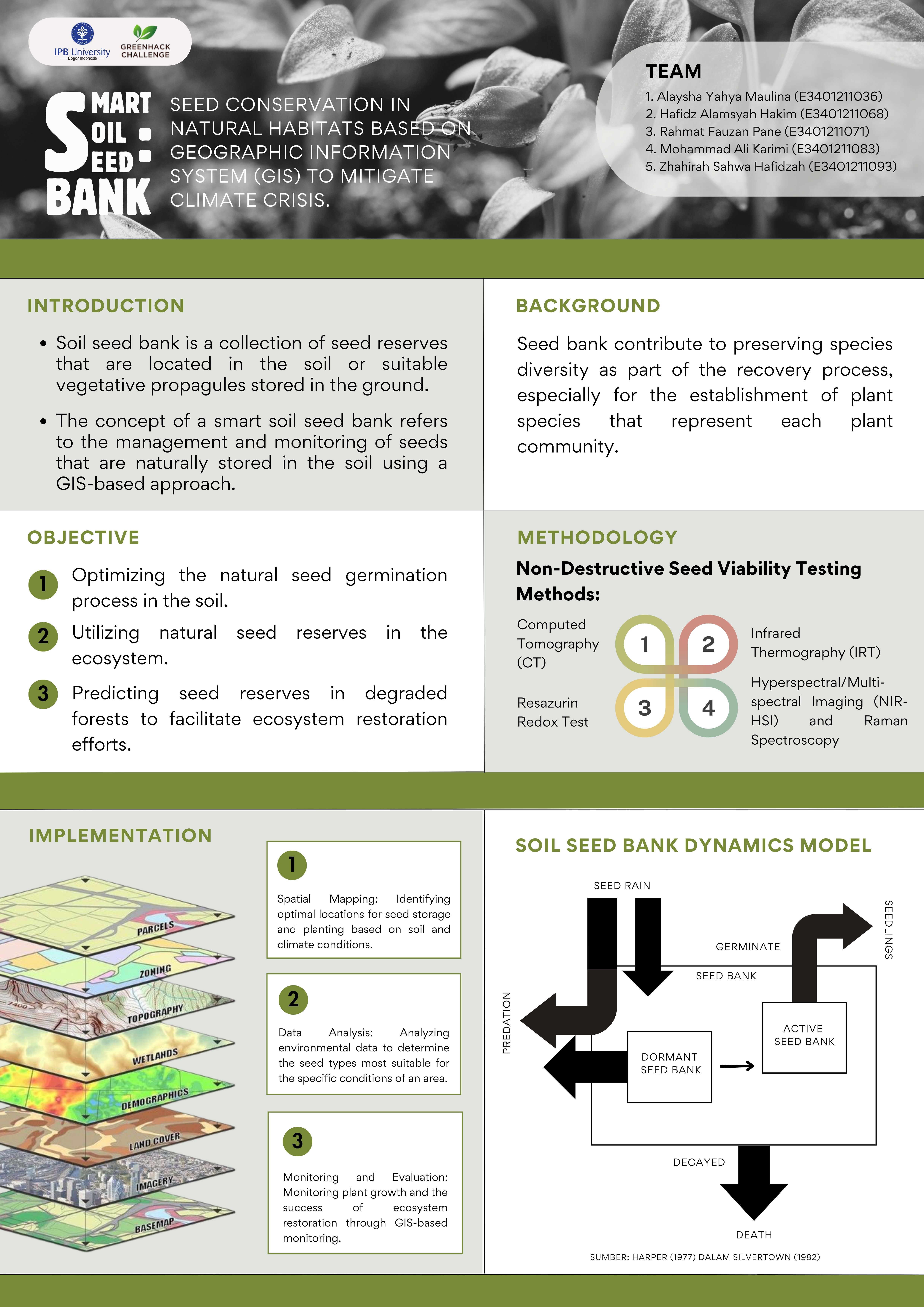
Soil seed banks are crucial for vegetation dynamics and may aid ecological restoration.
Inspiration
The project was inspired by the need to conserve natural seed reserves in the soil as part of climate crisis mitigation efforts. With the increasing threat to ecosystems, especially forests, preserving biodiversity through natural regeneration became a key focus.
What it does
The Smart Soil Seed Bank project monitors and manages soil seed banks using Geographic Information Systems (GIS) to track seed storage locations and environmental changes, such as temperature and soil quality, in real time. It also assesses seed viability through non-destructive testing methods, ensuring that the quality of seeds is maintained without damaging them.
How we built it
We developed this project using GIS technology for data mapping and analysis. We incorporated non-destructive seed viability testing techniques, such as Computed Tomography (CT), Infrared Thermography (IRT), and hyperspectral imaging, to evaluate seed health. These tools allowed us to observe environmental factors and seed viability effectively.
Challenges we ran into
collecting accurate environmental data continuously, especially in forest areas that are difficult to access. Additionally, interpreting the results from non-destructive testing required precise equipment and careful analysis.
Accomplishments that we're proud of
This will helps support efficient ecosystem restoration efforts.
What we learned
We gained a deeper understanding of the role of soil seed banks in ecosystem regeneration
What's next for Smart Soil Seed Bank
Moving forward, we plan to enhance data accuracy and expand the project to cover more diverse ecosystems. We also aim to collaborate with conservation organizations to implement this technology in large-scale forest restoration efforts.
Built With
- canva
- google-schoolar
- indonesian

Log in or sign up for Devpost to join the conversation.