-
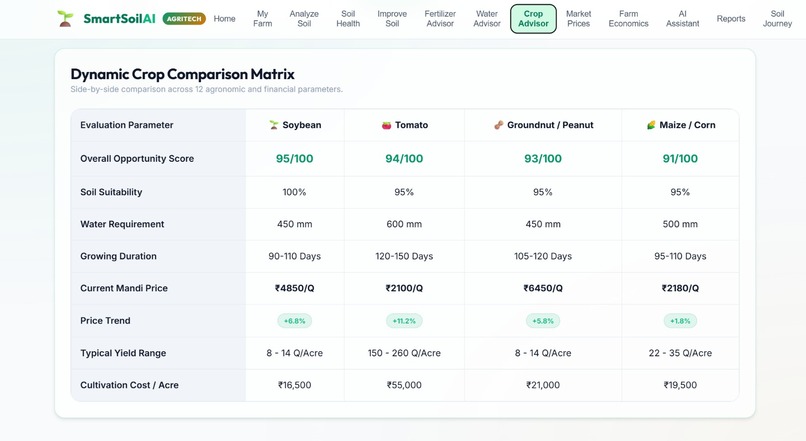
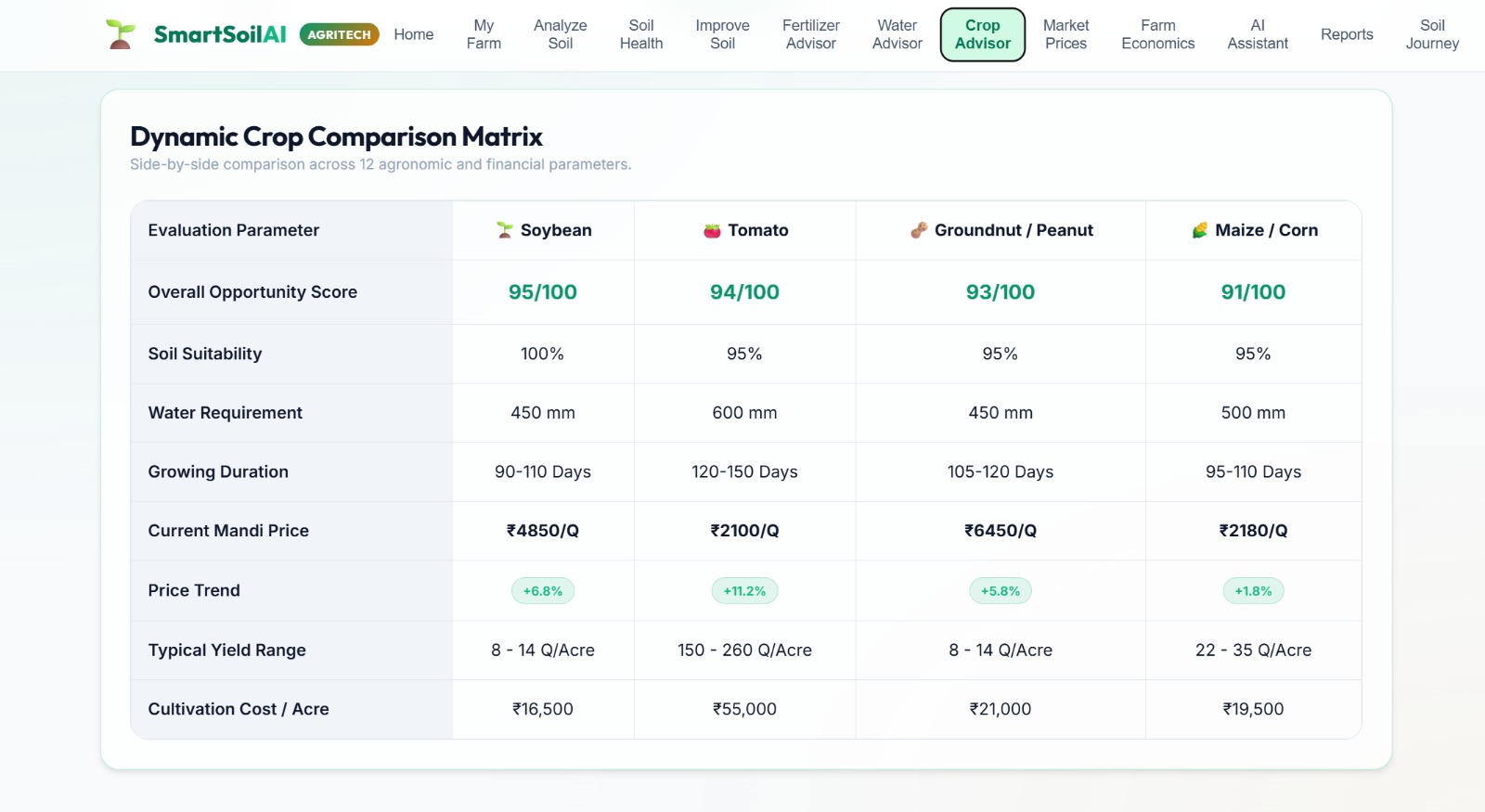
crop comparison
-
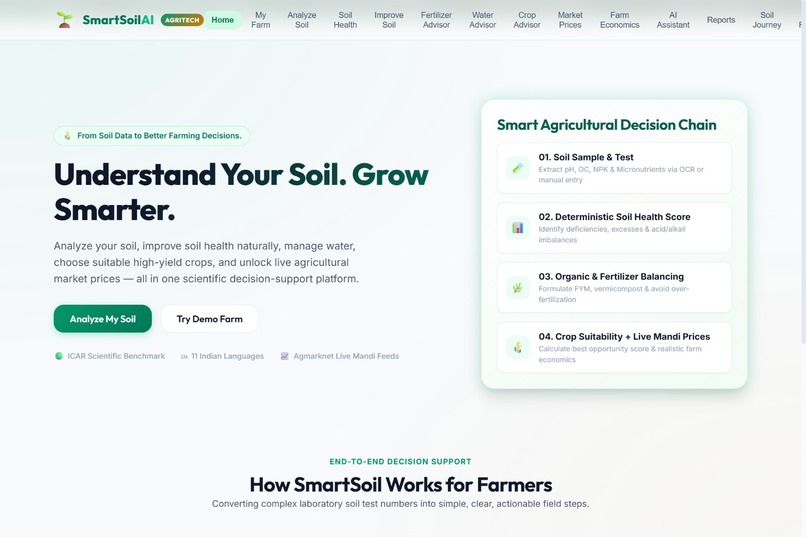
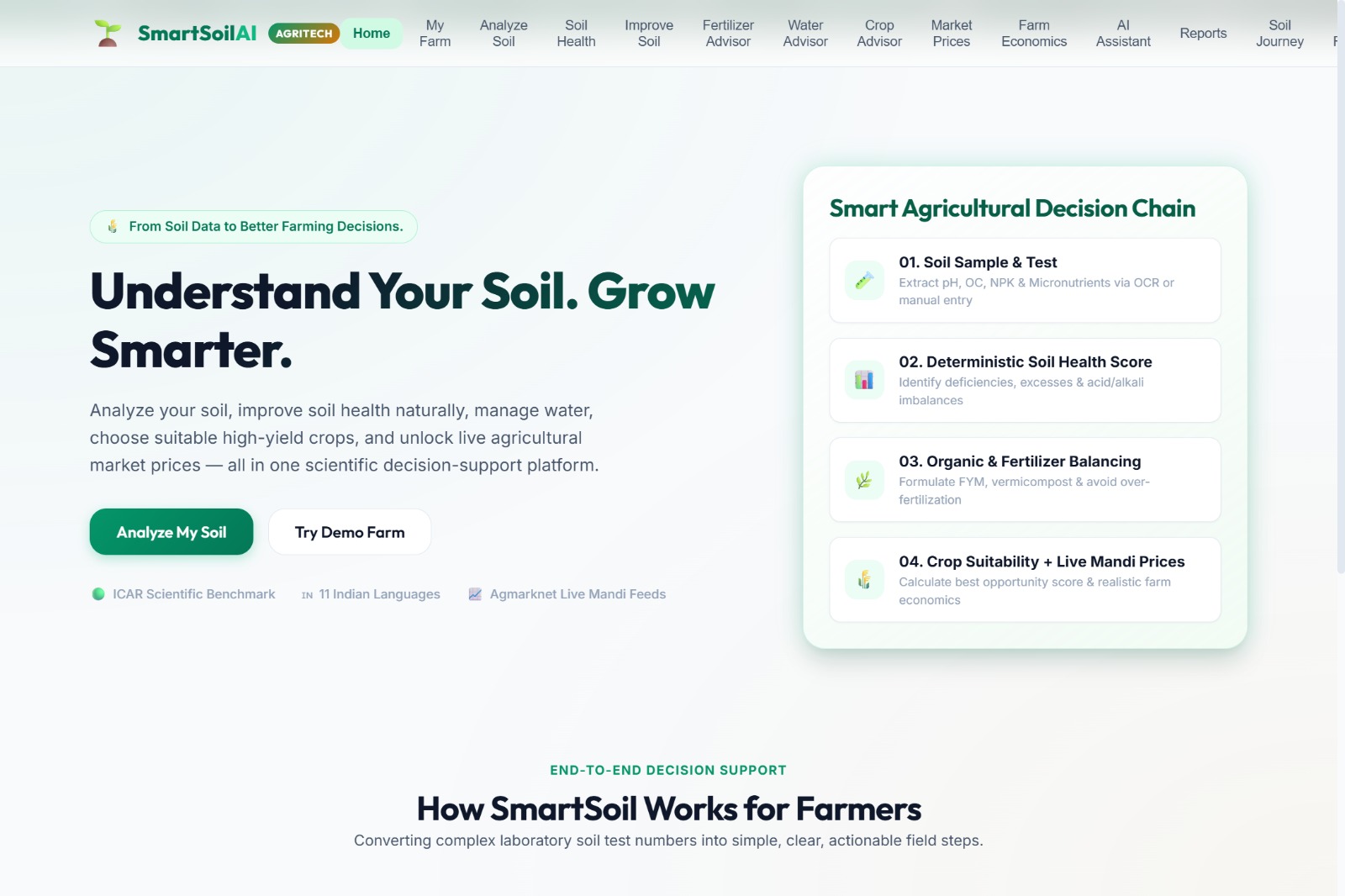
UNDERSTAND YOUR SOIL
-
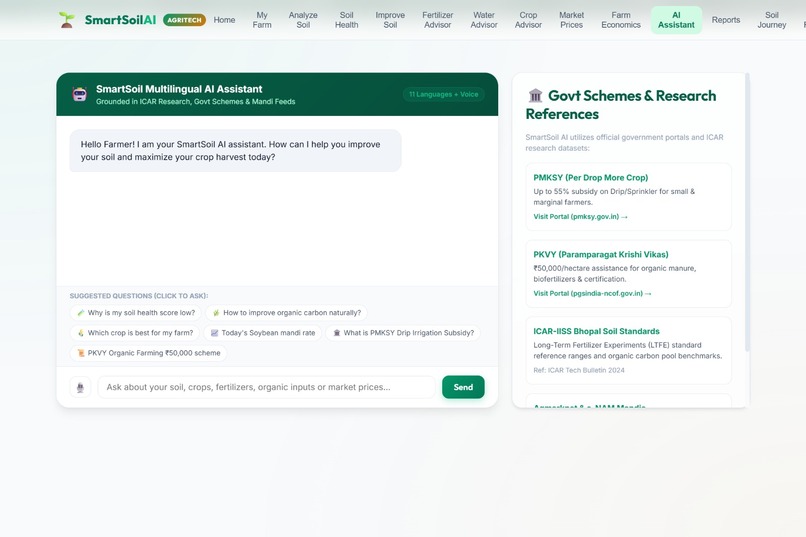
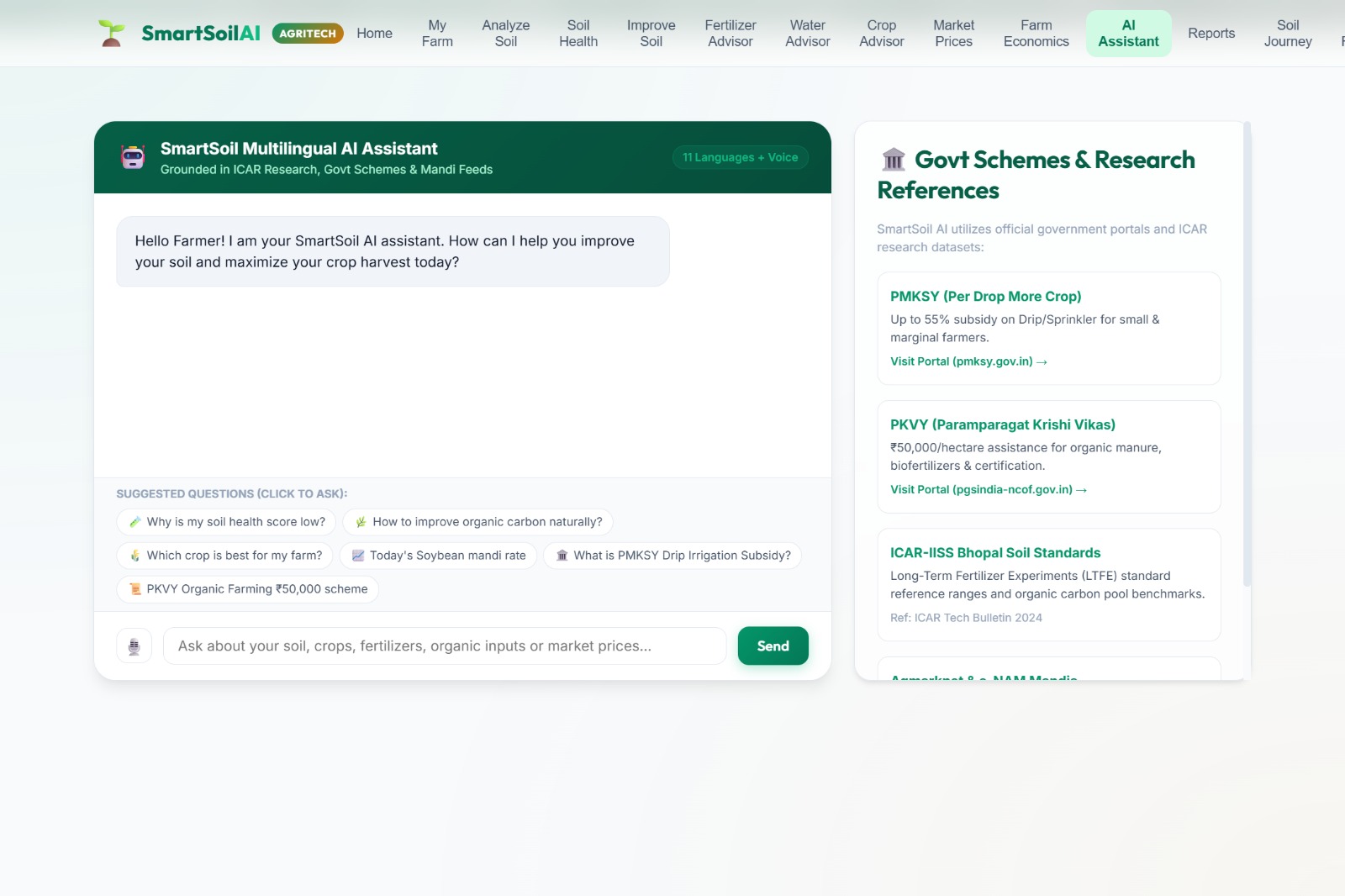
ai assistant
-
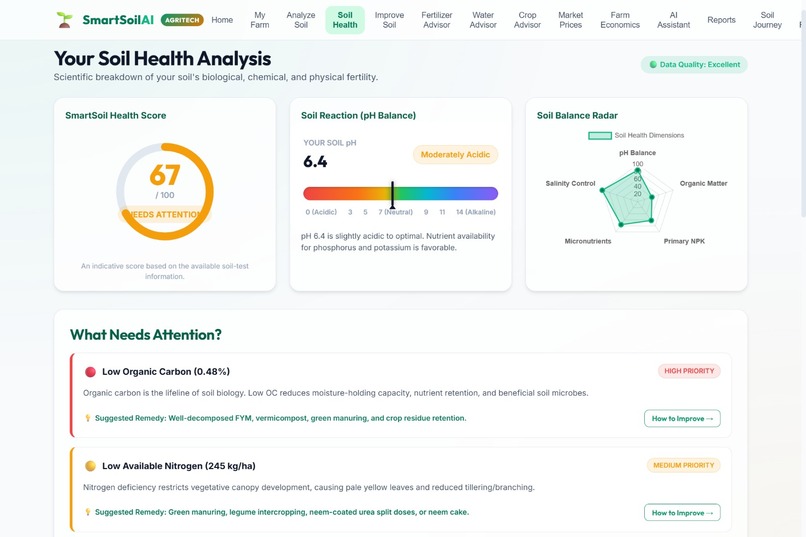
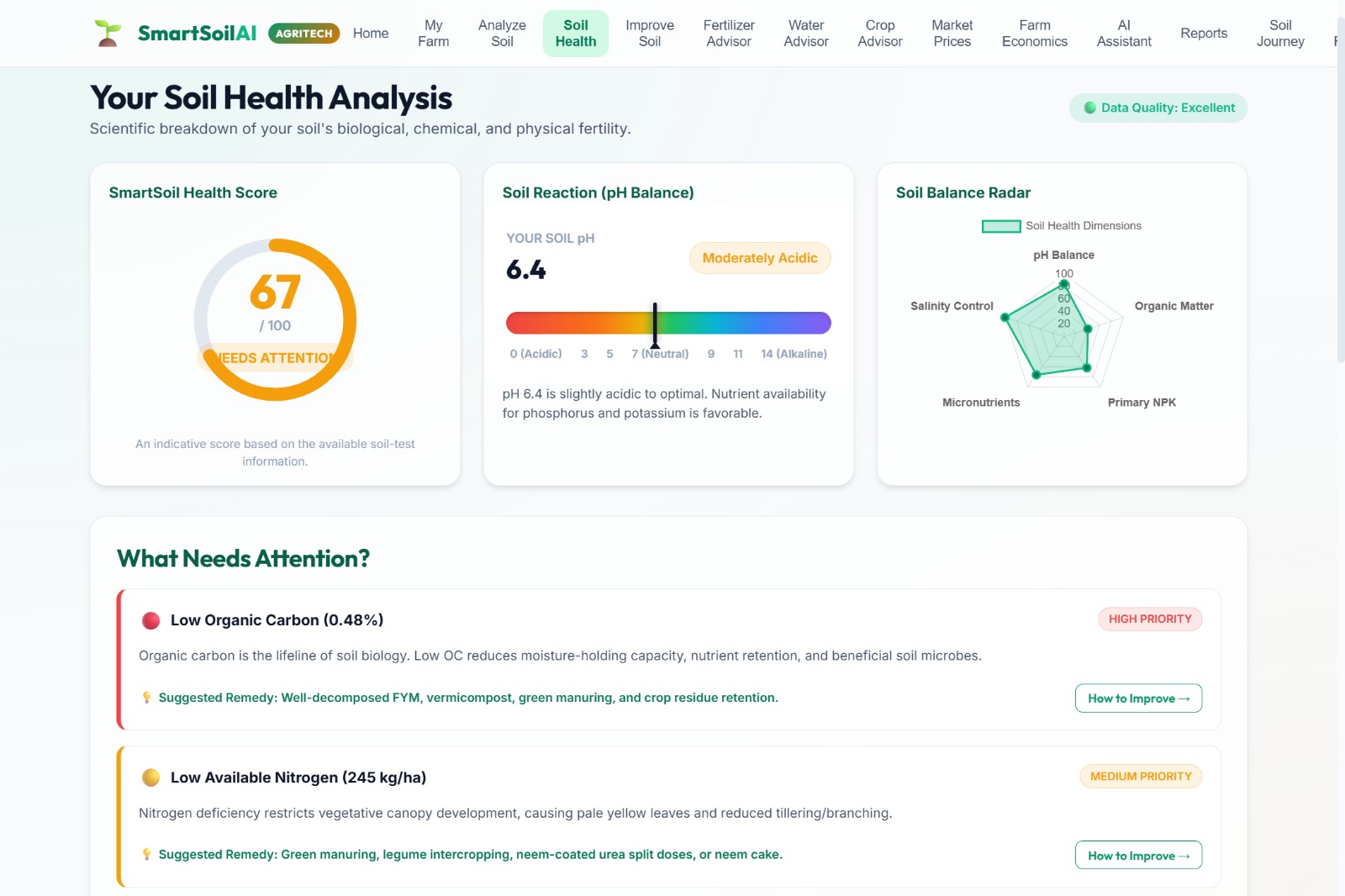
your soil analysis
Inspiration
India has handed out 25 crore+ Soil Health Cards, yet most small farmers still can't use them. The card is a table of pH, N, P and K with no plain-language meaning, lab results take weeks, and helplines can't see the caller's soil data. Small and marginal farmers (86% of ~146 M holdings) are hit hardest, especially feature-phone and low-literacy users. The data exists, but the understanding gap remains. We wanted to close it with a phone call.
What it does
Smart Soil Health & Farming Assistant links a farmer's own soil reading to a voice call:
- ESP32 soil reader: a colour sensor reads the test strip and gives pH, N, P and K in minutes.
- Farmer app: a report card with every value labelled, which works offline.
- AI voice call: the farmer taps "Talk to assistant" or dials from any phone and hears, in Marathi or Hindi, what the results mean, organic and chemical soil fixes, suitable crops, today's mandi price, expected profit and break-even yield. An SMS summary follows.
How we built it
Every layer uses a free, open-source, no-code tool:
- ESPHome for the ESP32 firmware (TCS34725 colour sensor)
- Node-RED for colour maths, prices and weather flows
- Supabase for farmer records, login and consent
- MIT App Inventor for the Android app, connected over Bluetooth (BLE)
- NocoDB for crop and organic-practice tables
- Flowise + Ollama for the AI assistant on open LLMs
- AI4Bharat for Hindi and Marathi speech models
- Vapi / Twilio trial credit for the call demo
All numbers come from rules or live data, never from the AI's guesses. Profit is computed as:
$$\text{Profit} = (\text{Yield} \times \text{Mandi price}) - \text{Cost of cultivation}$$
$$\text{Break-even yield} = \frac{\text{Cost of cultivation}}{\text{Mandi price}}$$
If the assistant doesn't have a verified value, it says "I don't know" instead of inventing one.
Challenges we ran into
- Kit accuracy vs. the lab: colour-based readings can drift. We plan to calibrate on ~100 lab-tested samples.
- Speech errors in dialects: the assistant reads back key values so the farmer can confirm them.
- AI inventing facts: we separated the language layer from the numbers layer, so prices and doses come only from rules or live data.
- Real phone calls need a paid SIP line: for the demo we use Vapi or Twilio trial credit.
- Cost: hardware is about ₹1,200-2,460 per reader, reagents about ₹131 per test, and calls about ₹6.45/min before the AI model.
What we learned
- Farmers don't need more data, they need it explained in their own language.
- Voice-first design reaches users that apps and text never will.
- No-code and open-source tools let a small student team build a full hardware, app and AI pipeline quickly.
- Grounding the AI in rules and live data matters more than model size when the advice affects someone's livelihood.
What's next
- Build the reader and calibrate pH and N/P/K on ~100 lab-tested samples
- Launch the App Inventor app and the Flowise voice assistant in Marathi and Hindi
- Run a 40-farmer pilot with a KVK or FPO, comparing the card with the call
- Aim for 5,000 farmers in year 1 through 1-2 FPOs/KVKs in Maharashtra, with pay-per-test pricing (~₹150-200) and calls bundled
We're looking for a soil-science mentor, a KVK/FPO partner and soil-lab access.

Log in or sign up for Devpost to join the conversation.