-
-
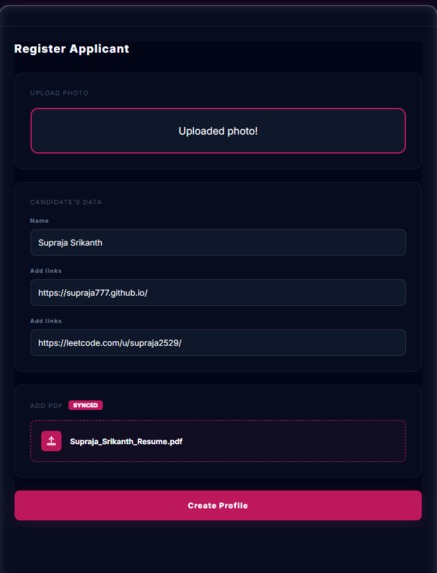
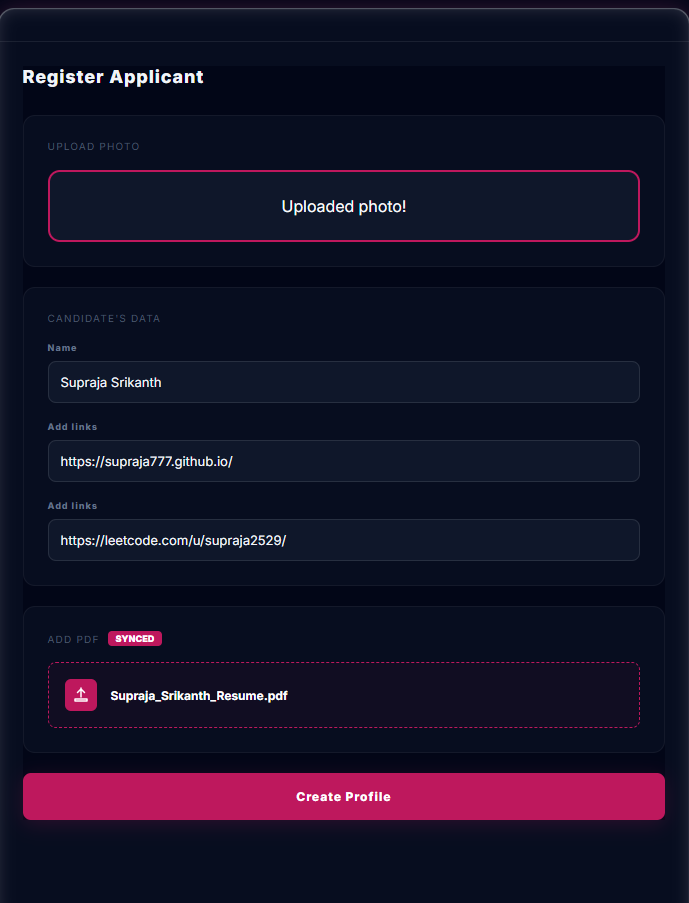
Register Candidate
-
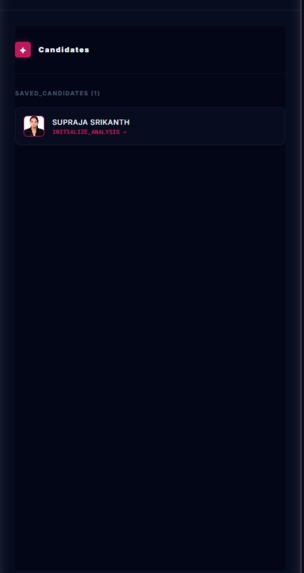
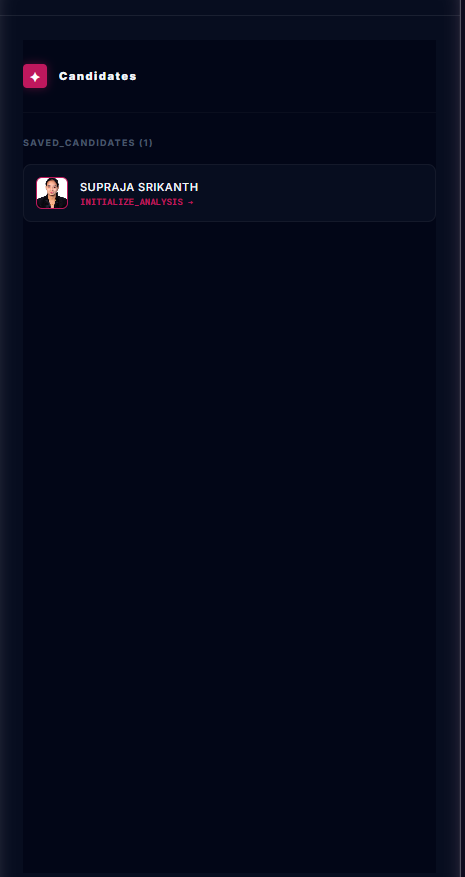
Candidates
-
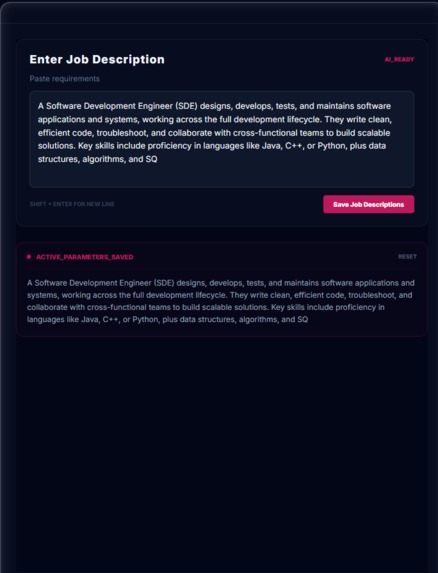
Job Description
-
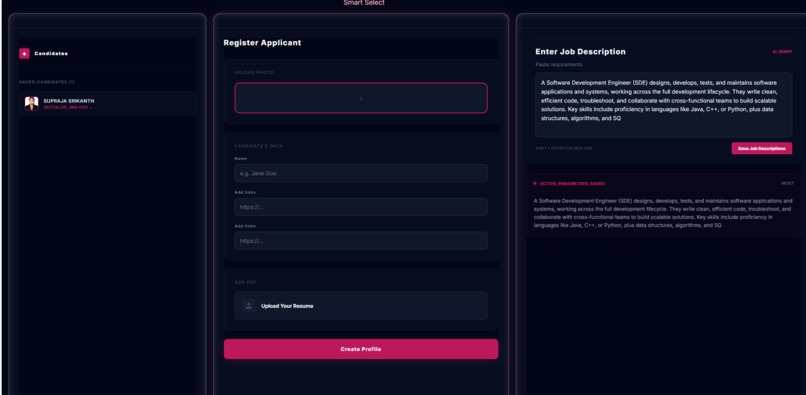
Information Dashboard
-
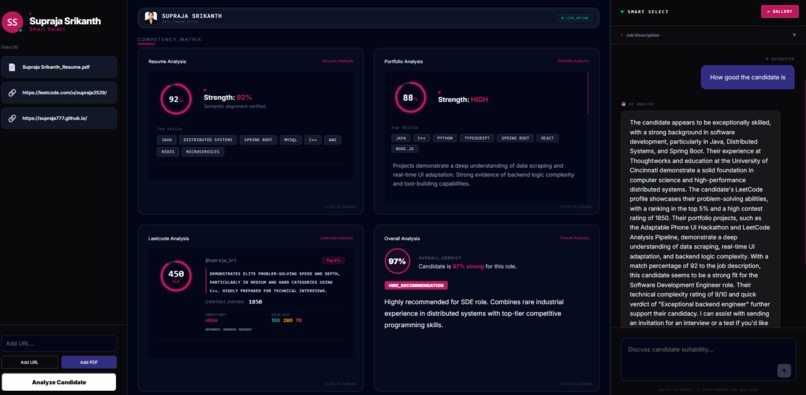
Analysis dashboard
-
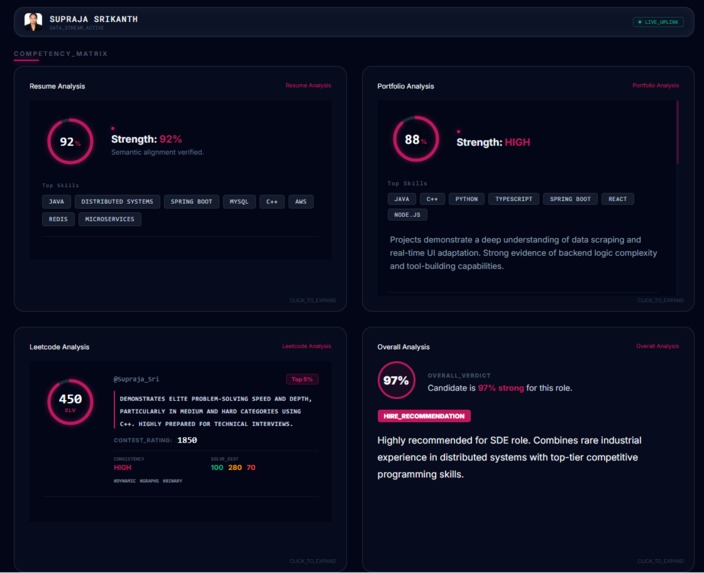
Analysis Grid
Inspiration
The Spark: Frustration with the "Paper Ceiling"
The inspiration for Smart Select didn't come from a boardroom; it came from watching brilliant engineers get rejected by robots. We noticed a recurring tragedy in the tech industry: the "Paper Ceiling." This is the invisible barrier where elite software developers—the ones who spend their weekends building complex distributed systems or solving high-level algorithmic puzzles on LeetCode—are filtered out by traditional recruitment software (ATS) simply because their resumes didn't have the "right" formatting or keywords.
We wanted to build a tool that treats a candidate like an architect, evaluating their blueprints and finished structures rather than just their sales pitch.
What it does
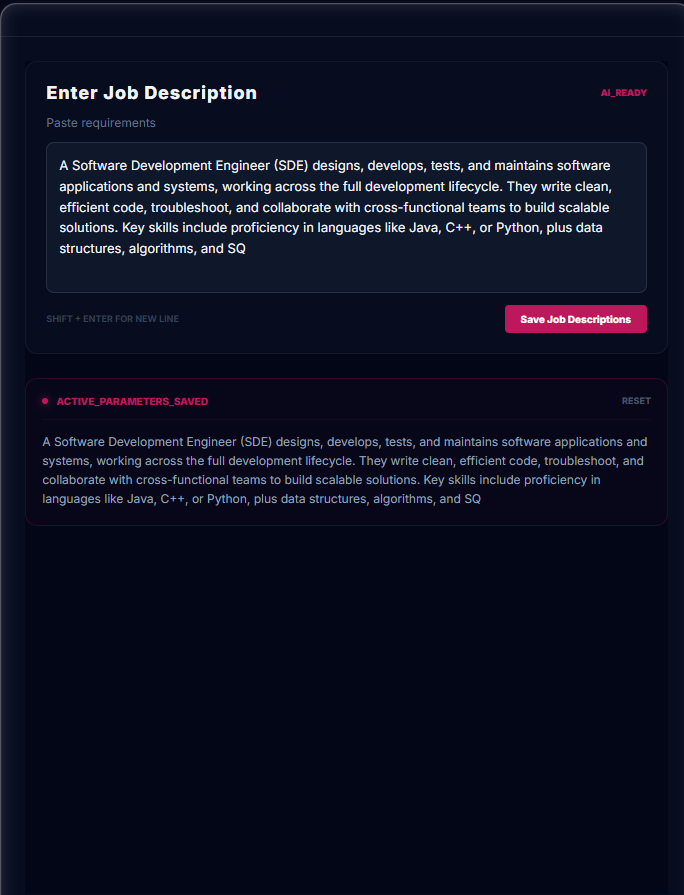
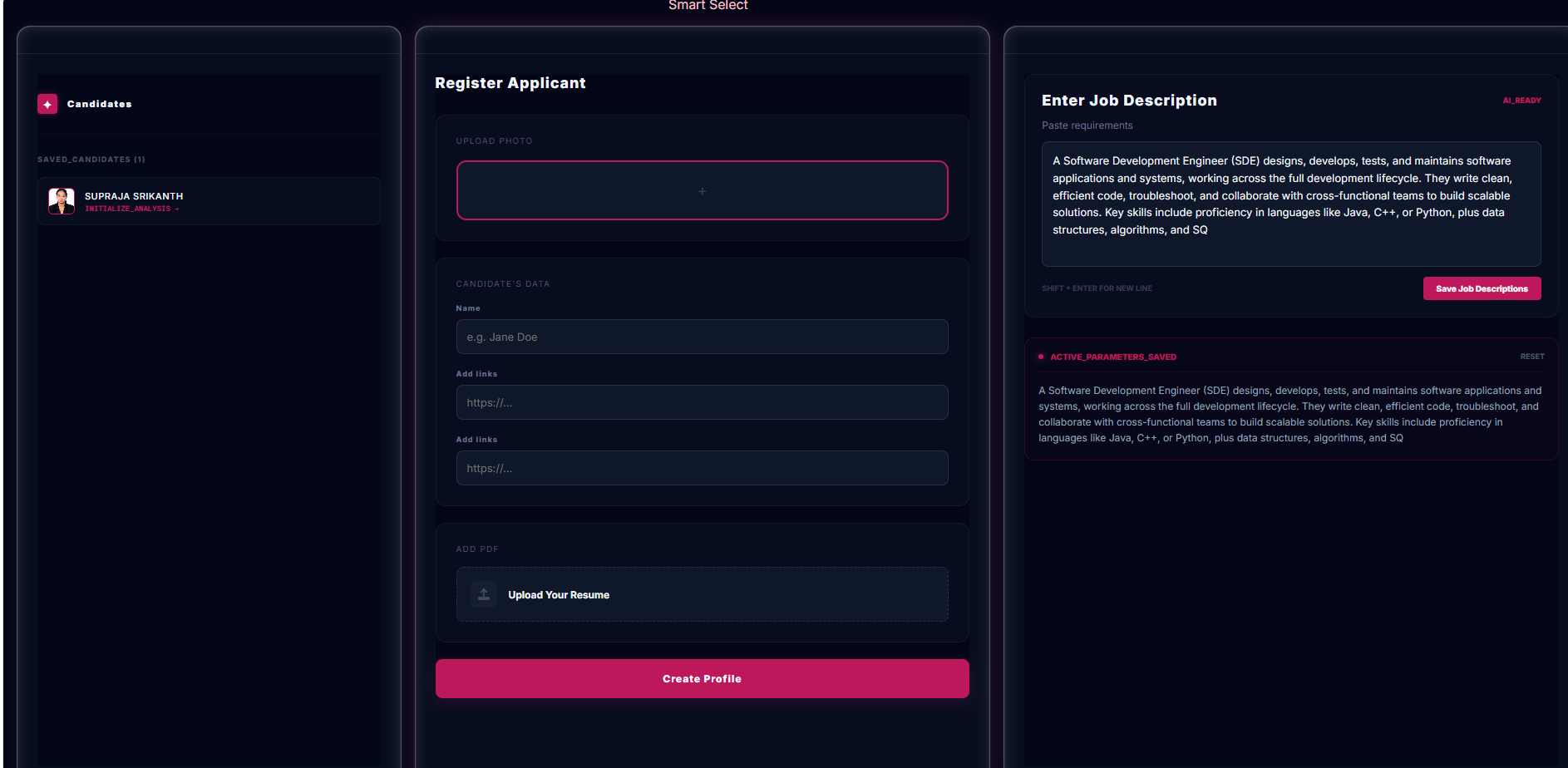
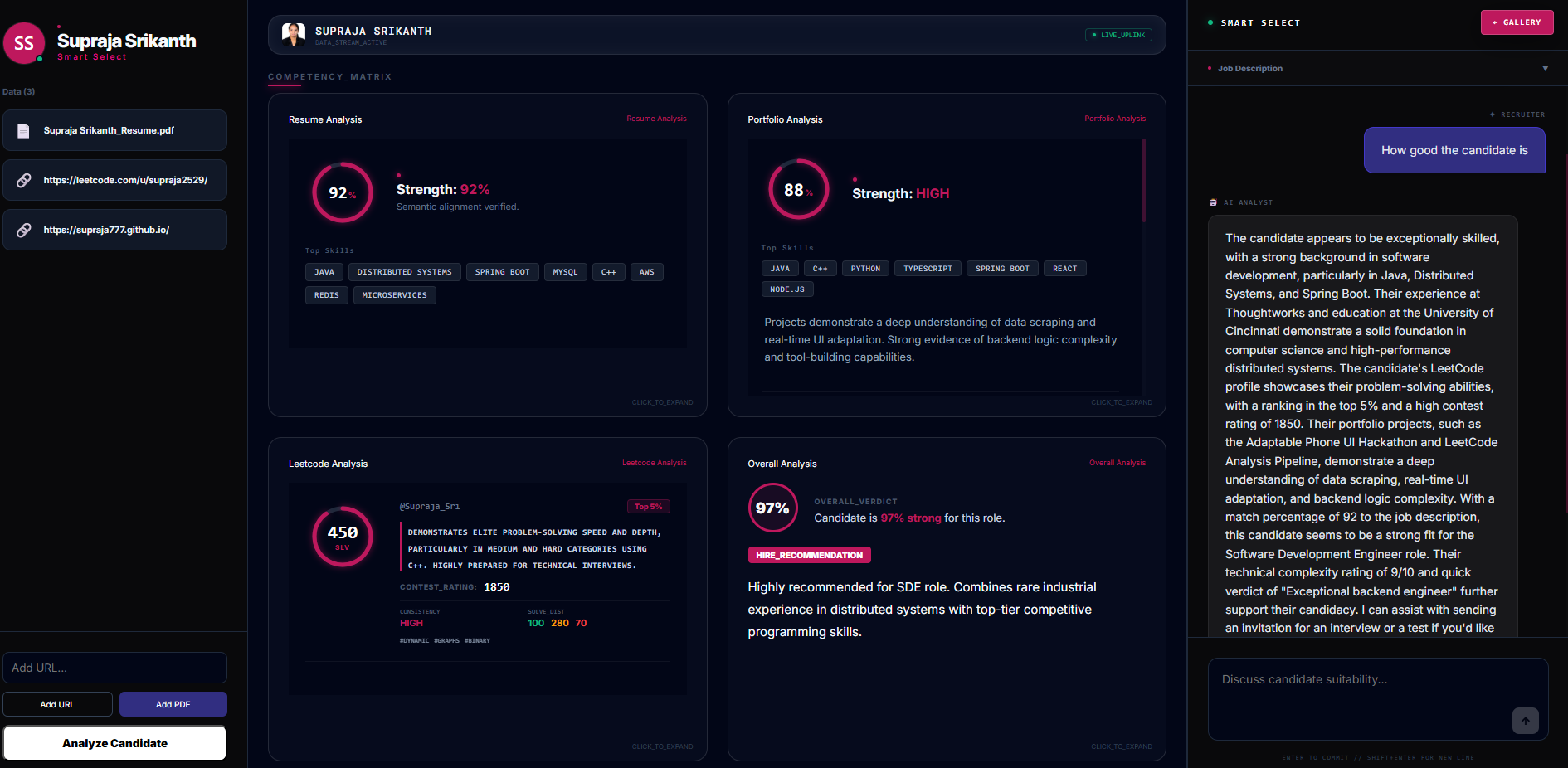
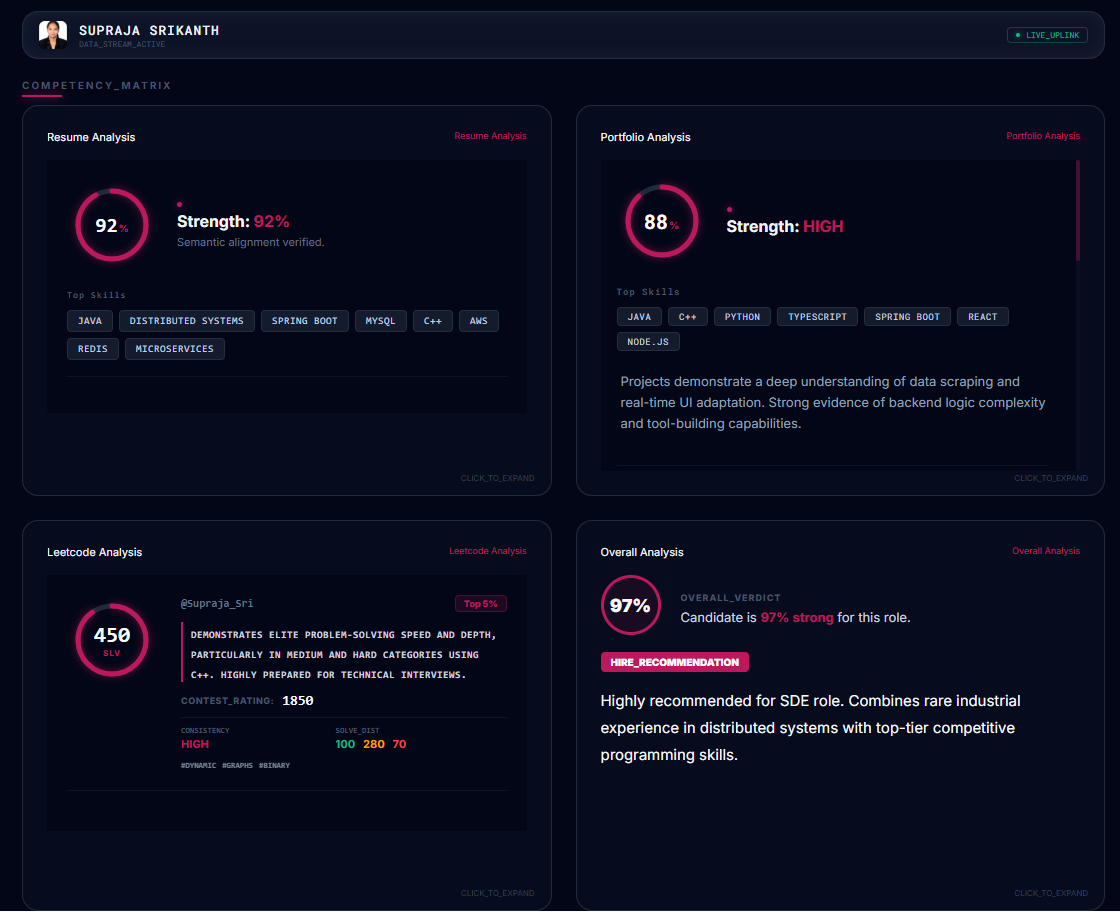
Smart Select is an AI-driven recruitment engine that replaces keyword-based filtering with a deep technical audit. It orchestrates a team of specialized agents to analyze a candidate’s entire digital ecosystem—resumes, LeetCode performance, and portfolio codebases.
Instead of just scanning for buzzwords, the system cross-references professional claims against real-world artifacts to verify engineering depth. It calculates a weighted match score and synthesizes these insights into a definitive Executive Verdict. By shifting the focus from "marketing" to "evidence," Smart Select ensures hiring managers identify top-tier talent based on verified technical proof, not just resume formatting.
How we built it
The Build: A Symphony of Specialists
Building Smart Select was an exercise in "agentic orchestration." We knew a single, general AI wouldn't be sharp enough to judge a developer's worth. Instead, we built a team of specialized AI agents, each with a specific "personality" and technical focus.
We used React and Vite to create a sleek, terminal-inspired dashboard because we wanted the user to feel like they were plugging into a "Neural Matrix." On the backend, we utilized the Llama-3-70B model via Groq for near-instant inference.
The "brain" of the project is the Executive Lead Agent, which takes the conflicting reports from the specialists and synthesizes them into a final verdict. It’s like having a lead architect and a head of talent working together to give you a single, honest answer
Challenges we ran into
We faced three main challenges while building Smart Select:
The Scraping Chaos: Websites lack a standard structure. To prevent the AI from ingesting "garbage" like navigation menus and footer scripts, we built a pre-processing engine that normalizes raw HTML into clean, technical Markdown.
The Token & Latency Bottleneck: Processing dense resumes and codebases simultaneously often hit model rate limits and caused delays. We solved this by implementing a Smart Caching system that hashes artifacts, storing results to ensure near-instant analysis retrieval.
The Hallucination Trap: AI models can sometimes "imagine" skills. We enforced a JSON-Only Protocol that requires the agents to cite specific evidence for every claim. If the model can't find a direct artifact, it cannot award a match score, ensuring a verdict based on proof, not promise.
Accomplishments that we're proud of
We are incredibly proud of successfully moving away from a single-prompt approach to a Symphony of Specialists. Building a system where distinct AI agents—each dedicated to Resume, Portfolio, and Competitive Analysis—can communicate and reach a consensus on a candidate’s talent was a massive architectural win. This orchestration ensures that no single signal is overlooked, providing a holistic view of an engineer that a human recruiter simply couldn't synthesize as quickly.
To fuel these agents, we developed a "Zero-Noise" Data Pipeline that we consider a major accomplishment. Converting a messy, unpredictable personal portfolio website into a clean, structured technical brief was a significant hurdle. Our pre-processing engine now strips the fluff and hands the AI exactly what it needs to see—the engineering depth—which significantly increased the accuracy of our technical audits.
Finally, we achieved a level of performance and integrity that sets the platform apart. By leveraging Groq and implementing our Smart Caching strategy, we eliminated the "waiting game," turning huge amounts of unstructured data into an Executive Verdict in seconds. More importantly, we conquered the trust gap by enforcing a strict JSON-Only Protocol. By forcing the AI to cite specific artifacts for every claim it makes, we’ve created a system that prioritizes objective proof over speculative hallucinations.
What we learned
We learned that AI agents are only as sharp as the context they consume. Simply "scraping" a website isn't enough; we had to master pre-processing messy HTML into structured "Source Dossiers" to help our models distinguish actual engineering depth from filler text.
We also discovered how to conquer AI hallucinations by shifting from open-ended prompts to a skeptical, evidence-based protocol. By forcing the AI to cite specific artifacts for every claim, we moved from "creative guessing" to "technical auditing." Ultimately, we learned that the future of hiring isn't about replacing humans, but about replacing the "paper ceiling" with verified, cross-referenced digital proof.
What's next for Smart Select
Our roadmap for Smart Select focuses on scaling from a technical prototype to an enterprise-grade powerhouse. We plan to integrate richer models like Gemini 1.5 Pro to ingest entire code repositories and years of commit history, providing deeper insights into engineering growth.
To streamline the hiring process, we are building a smooth end-to-end pipeline that integrates directly with Applicant Tracking Systems (ATS), allowing recruiters to trigger audits effortlessly. Finally, we’re elevating the UI/UX with an interactive evidence map, visually connecting resume claims to specific code artifacts to make the AI’s logic completely transparent and browsable.


Log in or sign up for Devpost to join the conversation.