Inspiration
January 2025 was meant to be a fresh start, but not for everyone. In Orazi community, Port Harcourt, a gas explosion happened while someone was refilling a cylinder. Three people died. Over 20 were badly injured. Shops and a taxi nearby caught fire. Families lost their loved ones, their homes, their shops, and their way of living. This was not the first time this kind of thing happened in Nigeria, and sadly, it might not be the last.
We were tired of hearing stories like this. We kept thinking: what if there was a way to warn people early enough before the gas even catches fire? What if a system could help save lives and homes before it’s too late? That’s why we built this project. It’s personal. It’s painful. And we knew we had to try.
What It Does
We made an automated system that checks for gas in our environment all the time. It doesn’t wait for you to perceive it. It can find even small amounts of gas that the nose can’t pick up. Once it finds a leak, it does many things:
- It shows the gas level on a small screen.
- It makes a loud sound using a buzzer to alert anyone nearby.
- It sends a message to your phone through SMS, Email, or a mobile app.
- The app also shows you how serious the leak is.
- It turns off the electricity in your house until the gas is gone. This helps stop things like fans or cookers from starting a fire.
You don’t have to be home to know there’s a gas problem. The system will tell you, and it will also act to help keep your place safe.
How We Built It
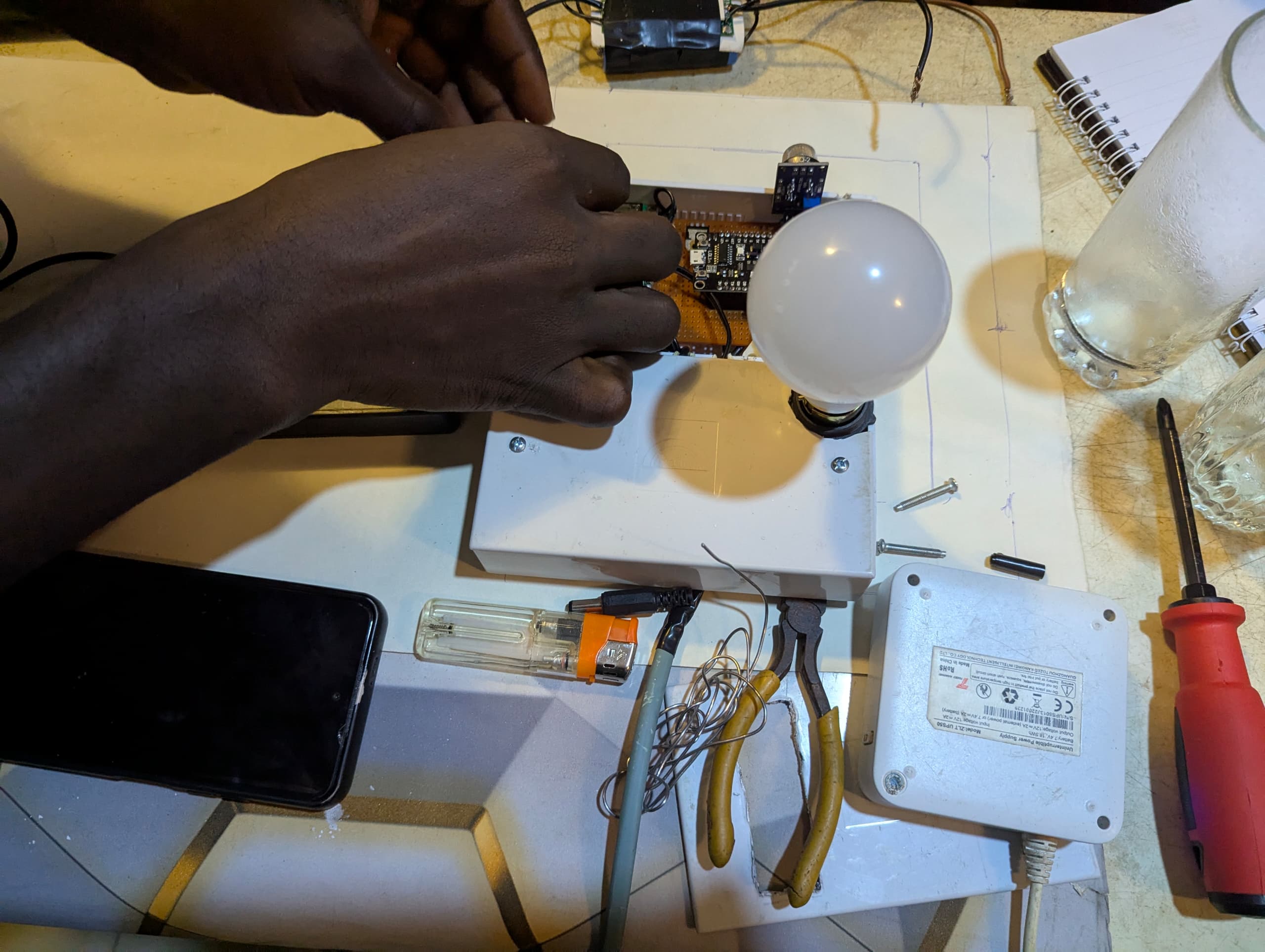
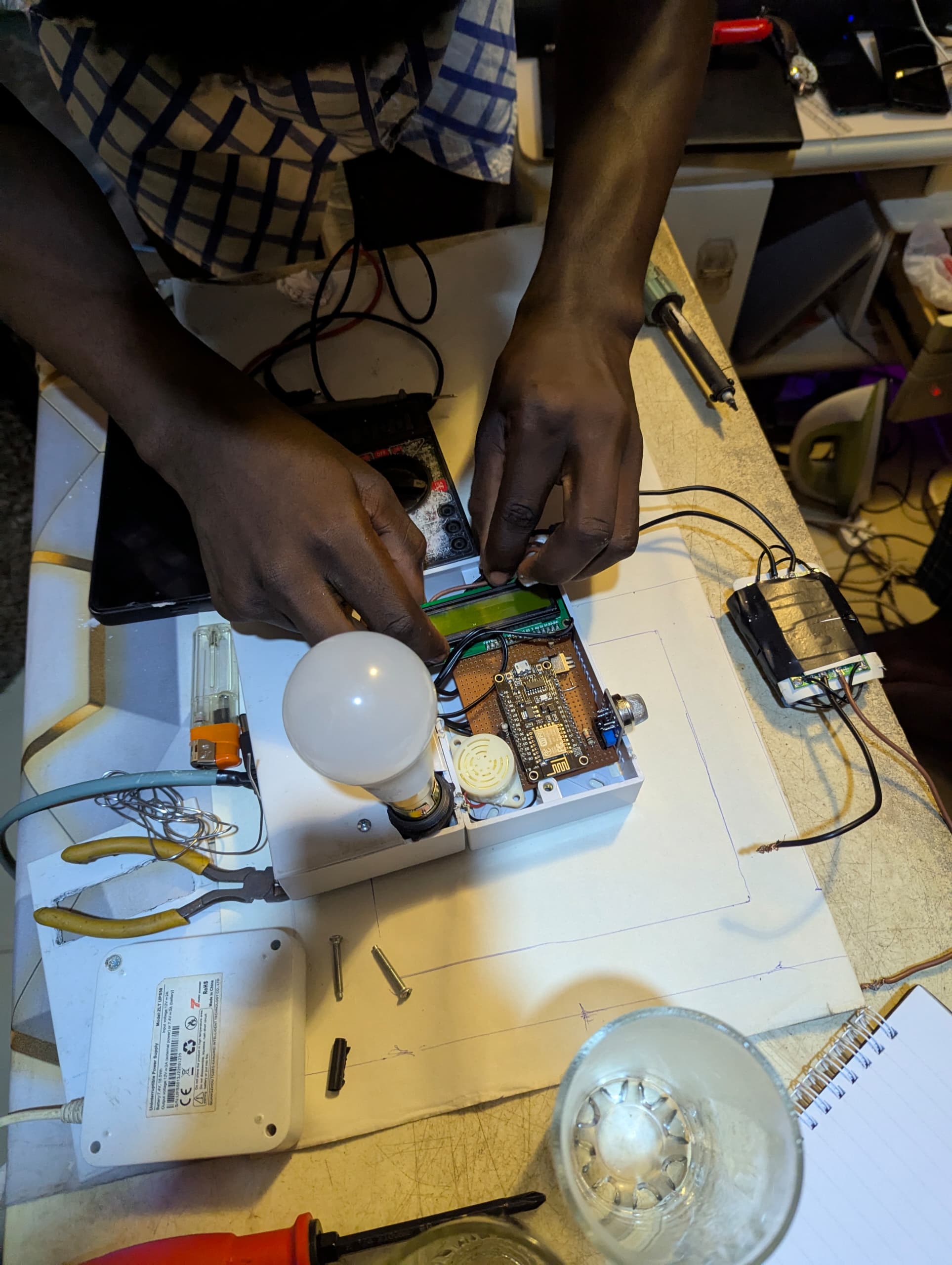
Once we knew the problem we wanted to solve, we started looking for what we would need. We are students, so we searched for things we could buy around us. We got a micro controller called ESP8266 that has Wi-Fi. We used a gas sensor called MQ2 for gas detection. We added a buzzer for loud sound alerts and a relay to automatically turn off the power whenever there's a leakage to prevent explosions.
This system integrates directly into the electrical system of your home/facility to enable power control incase of leakage. We added an LCD screen to show messages. We also used resistors, transistors, and an adapter that turns 240 volts from the AC mains into 5 volts for our device. We added support for solar and battery too, because electricity is not always steady in Africa.
We also connected everything to an IoT app so it could send messages to phones.
Challenges We Ran Into
First, we didn’t know exactly how to build the system, so we did a lot of research. Then we had to make sure we could get all the parts locally. As students, we had classes and other things to deal with. Money was also a problem, but we raised funds among ourselves and joined a competition in our faculty to get feedback and support.
Our codes didn't run at first attempt. Some parts were damaged while testing. But all these things made us stronger as a team.
Accomplishments That We're Proud Of
In March 2024, we represented our school, the University of Benin, in a national contest for oil and gas solutions. It was called STSE, and it was organized by the Society of Petroleum Engineers. We made it to the final stage and got to show our idea.
Later, in 2025, we were one of the two teams that represented Edo State at the NextGen Innovation Challenge, organized by NBTI in Abuja. Some industry mentors saw our work and decided to support and guide us. That meant a lot.
What We Learned
You don’t need to have everything figured out before you start. Just begin. Be brave, even if you’re not sure. The right people will notice your efforts and help you grow if you stay focused and keep going.
What’s Next for SMART SAFE GUARD
Our next goal is to make people in Africa know about this device. We want it in homes, in shops, and even in small factories. Anywhere gas is used. If more people have this, maybe we can stop more tragedies before they happen. We hope one day this device becomes something every home sees as necessary, just like a lock on a door.


Log in or sign up for Devpost to join the conversation.