-
-
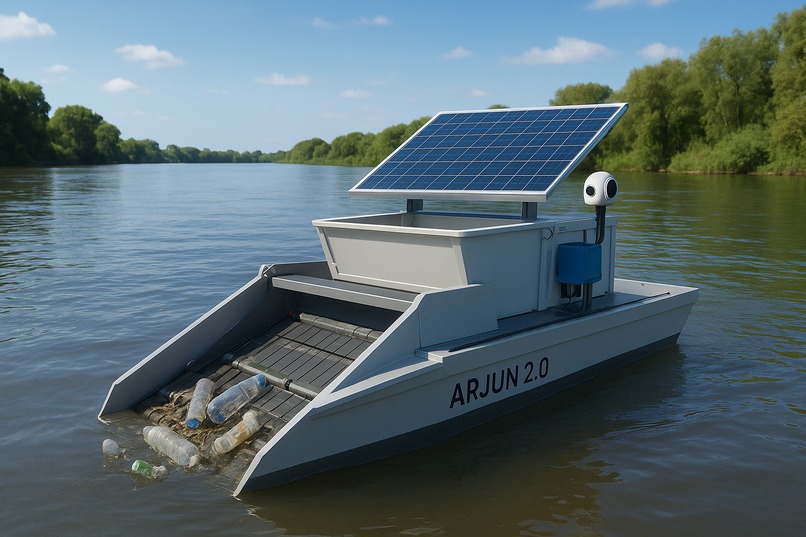
Smart autonomous river cleaner
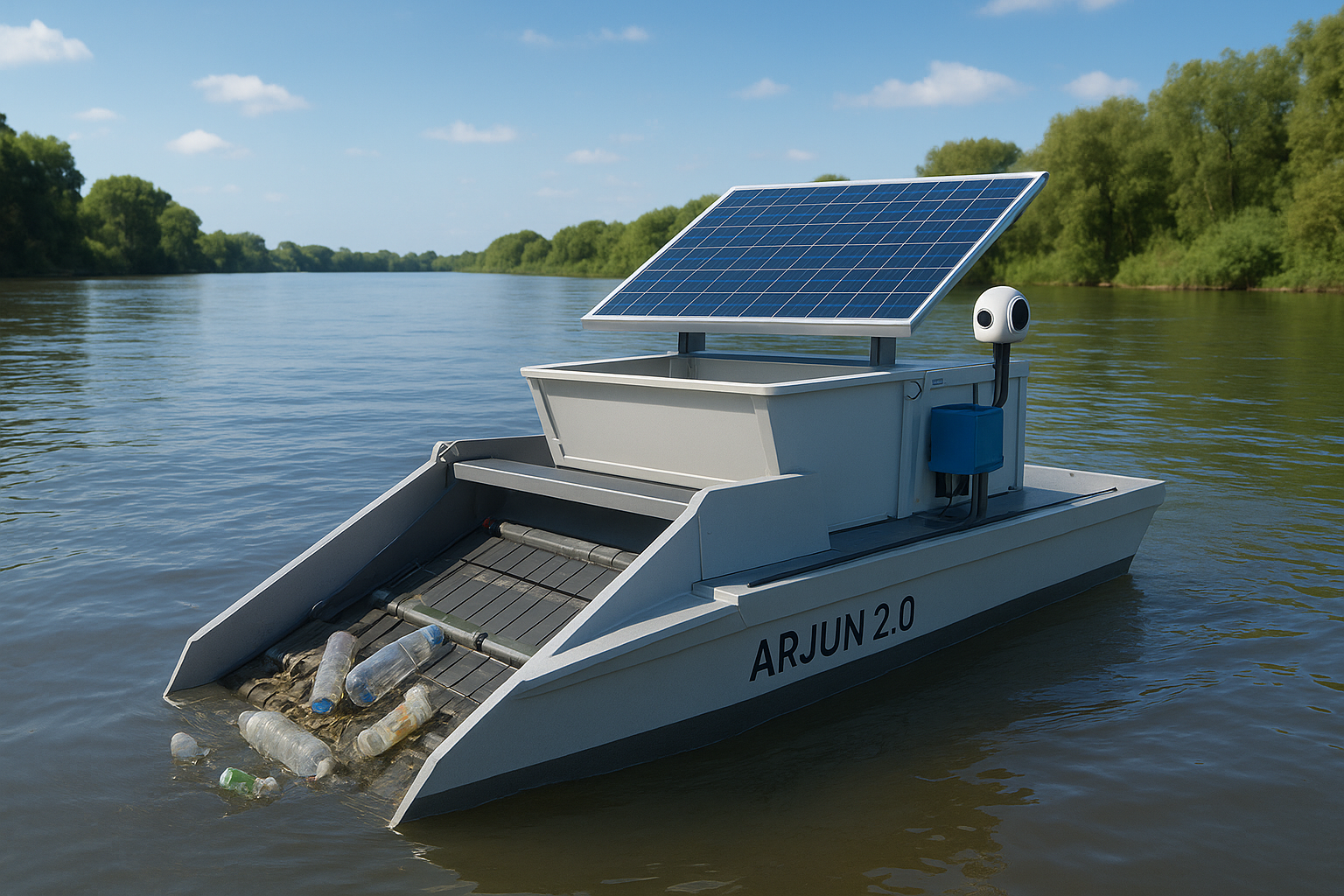
Inspiration
Pollution in rivers due to plastic and floating waste is a serious environmental problem. Seeing polluted rivers around us and learning about their impact on aquatic life motivated us to create a technology-based solution that can help clean rivers efficiently and support environmental sustainability.
What it does
The River Cleaner Robot collects floating waste from the surface of rivers. It navigates on water, gathers plastic and other floating debris, and stores it in a container for safe disposal. The system can be remotely controlled and monitored using onboard sensors and a camera.
How we built it
The project is built using a Raspberry Pi 4 as the main controller and programmed using Python. Motors and propellers are used for movement, while a mechanical collection system gathers floating waste. Sensors, GPS, and a camera module help in navigation, monitoring, and control of the robot.
Challenges we ran into
We faced challenges such as maintaining stability on water, protecting electronic components from water exposure, managing battery power, and integrating hardware with software. These challenges were solved through repeated testing and design improvements.
Accomplishments that we're proud of
- Successfully designed a working prototype
- Achieved stable movement on water
- Integrated hardware and software effectively
- Created an affordable and scalable solution
What we learned
This project helped us understand robotics, embedded systems, and real-world problem solving. We also learned the importance of teamwork, testing, and designing solutions that address environmental challenges.
What's Next for Smart River Cleaner {ARJUN 2.0}
The next phase of Smart River Cleaner {ARJUN 2.0} focuses on improving autonomy, efficiency, and scalability. We plan to enhance AI-based waste detection using computer vision for better identification of plastic and debris. Solar charging support will be added to increase operational time and reduce dependency on batteries.
Future versions will include real-time water quality monitoring, live GPS tracking, and cloud-based data storage for analysis and reporting. We also aim to improve the mechanical design to handle higher waste loads and operate in stronger water currents.
In the long term, the project can be deployed in multiple units to work collaboratively, supporting smart city initiatives and helping government bodies maintain cleaner rivers and water bodies.
Built With
- iot
- pi
- python
- raspberry

Log in or sign up for Devpost to join the conversation.