Inspiration
As a practicing clinician in a rural health facility, I’ve seen far too many referrals go unanswered — not because patients didn’t need care, but because the system didn’t follow up. Patients referred to higher-level hospitals often disappear into the system. No feedback. No updates. No way to know if they even got help.
This personal and clinical experience inspired me to build a Smart Referral Tracking and Feedback System — a tool designed to close the loop and ensure no patient falls through the cracks.
What it does
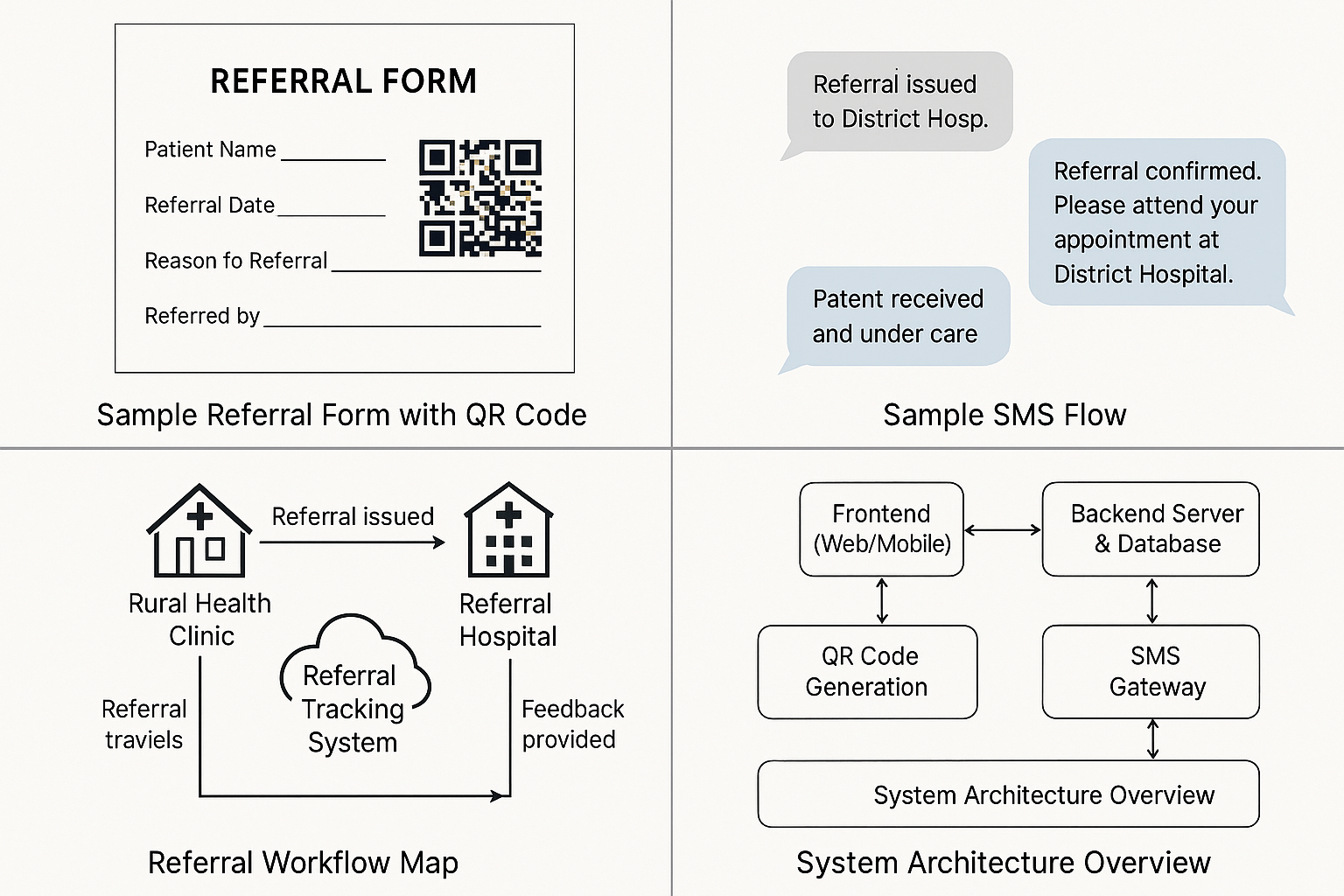
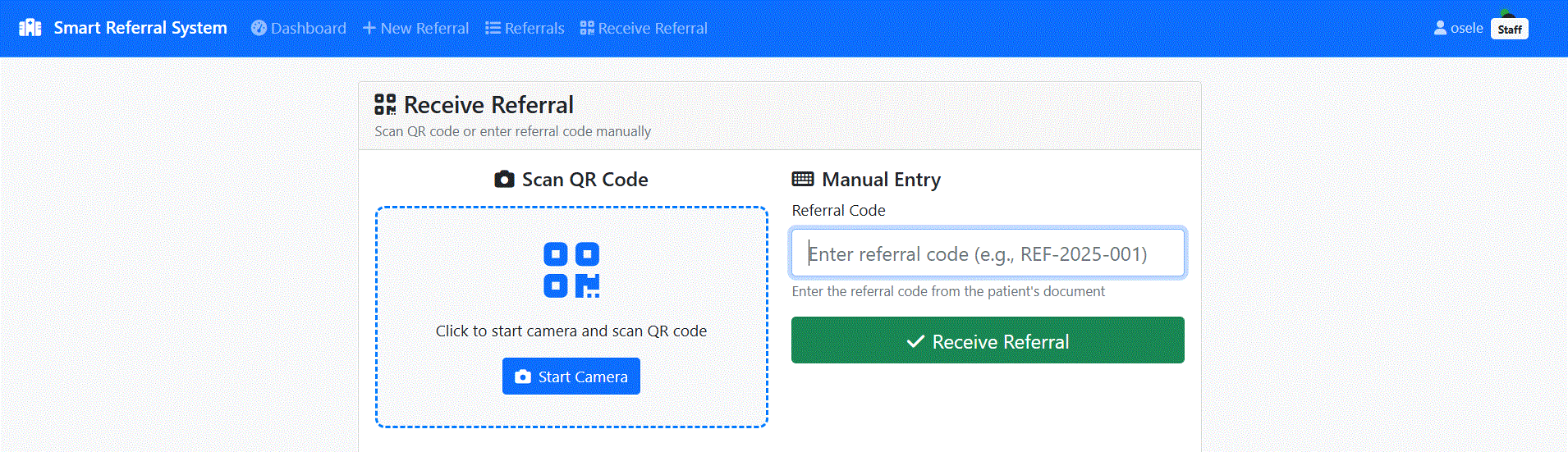
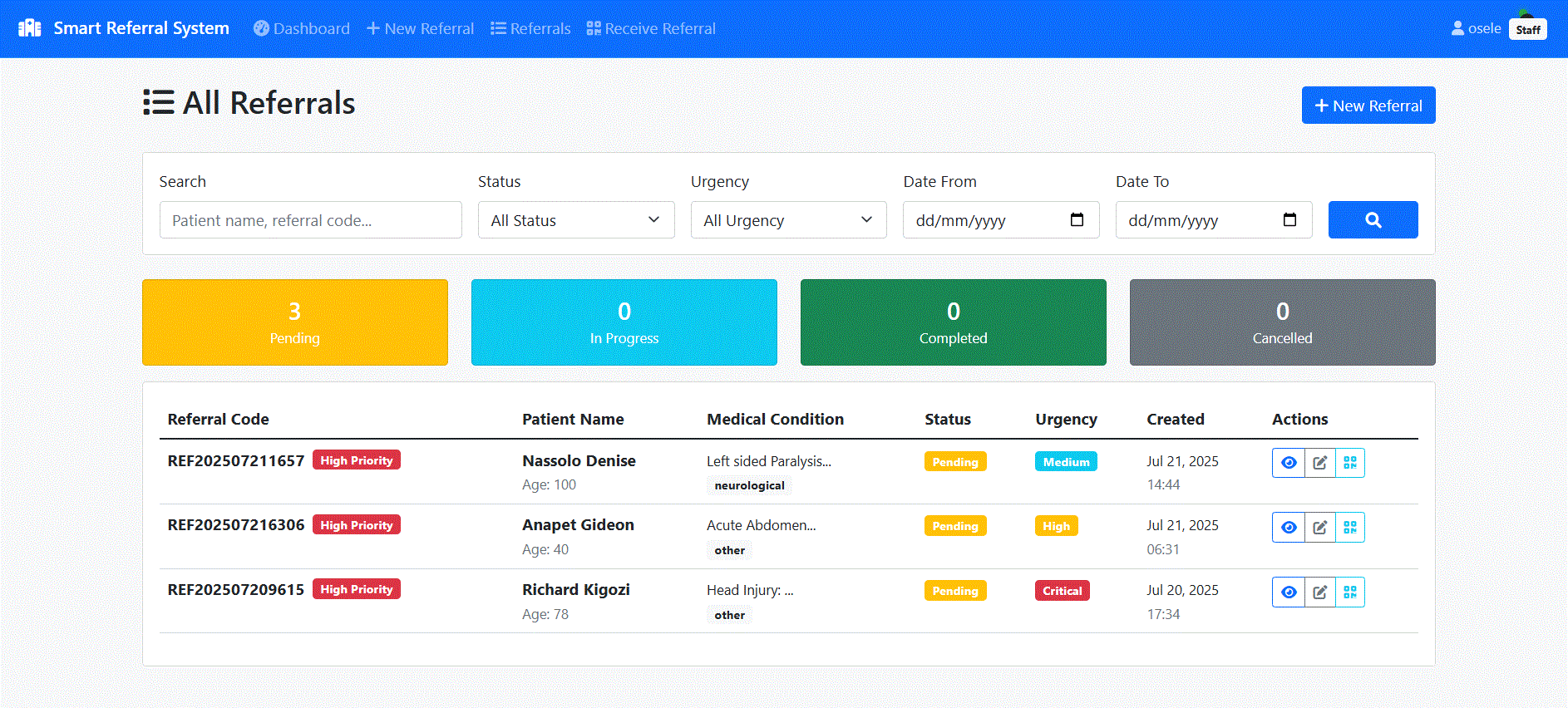
The system allows clinics to generate QR-coded referral slips and send SMS updates to both patients and receiving hospitals. Once a patient reaches the referral facility, the QR code can be scanned or data sent via SMS, enabling the referring clinic to:
Get notified when a referral is completed
Receive feedback on the diagnosis and treatment
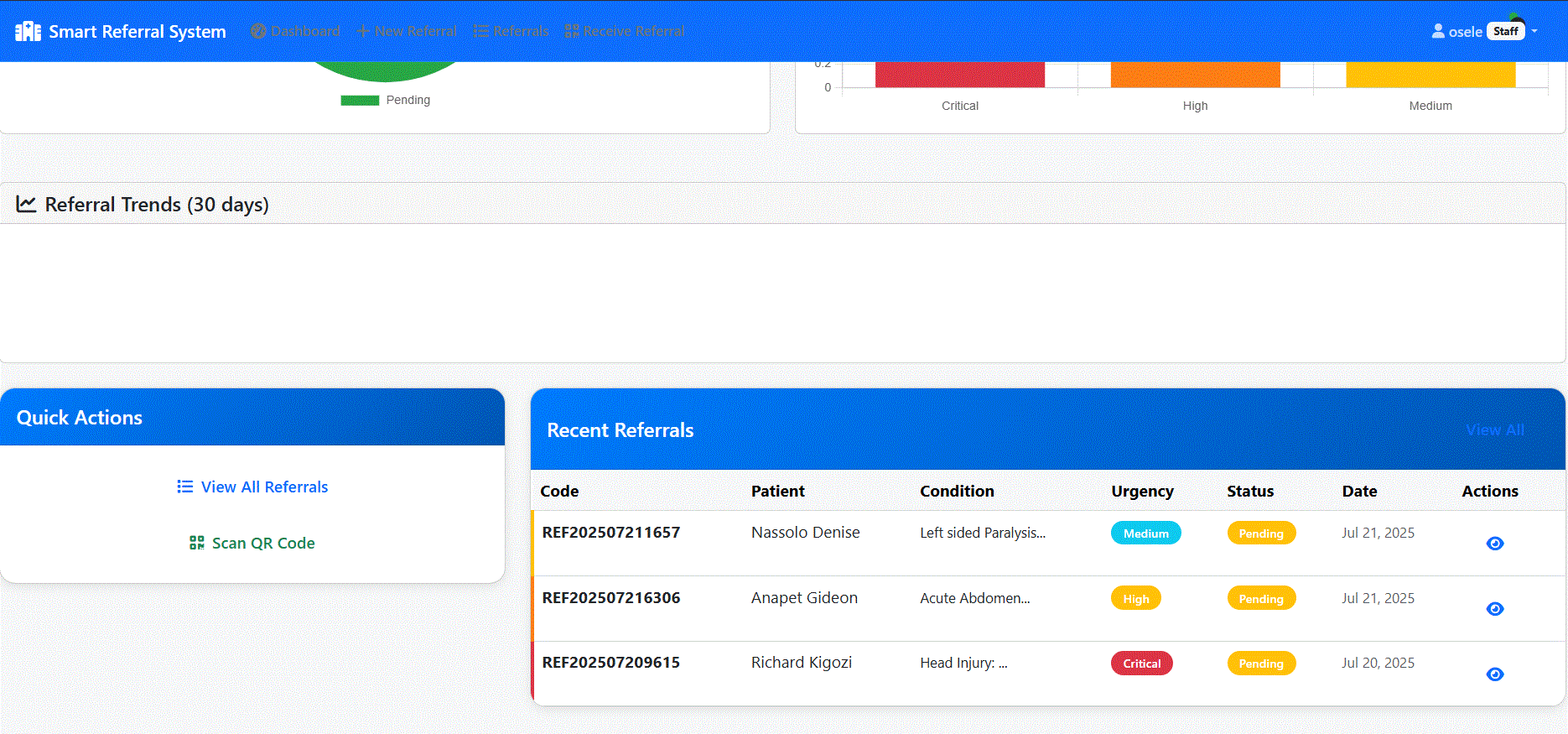
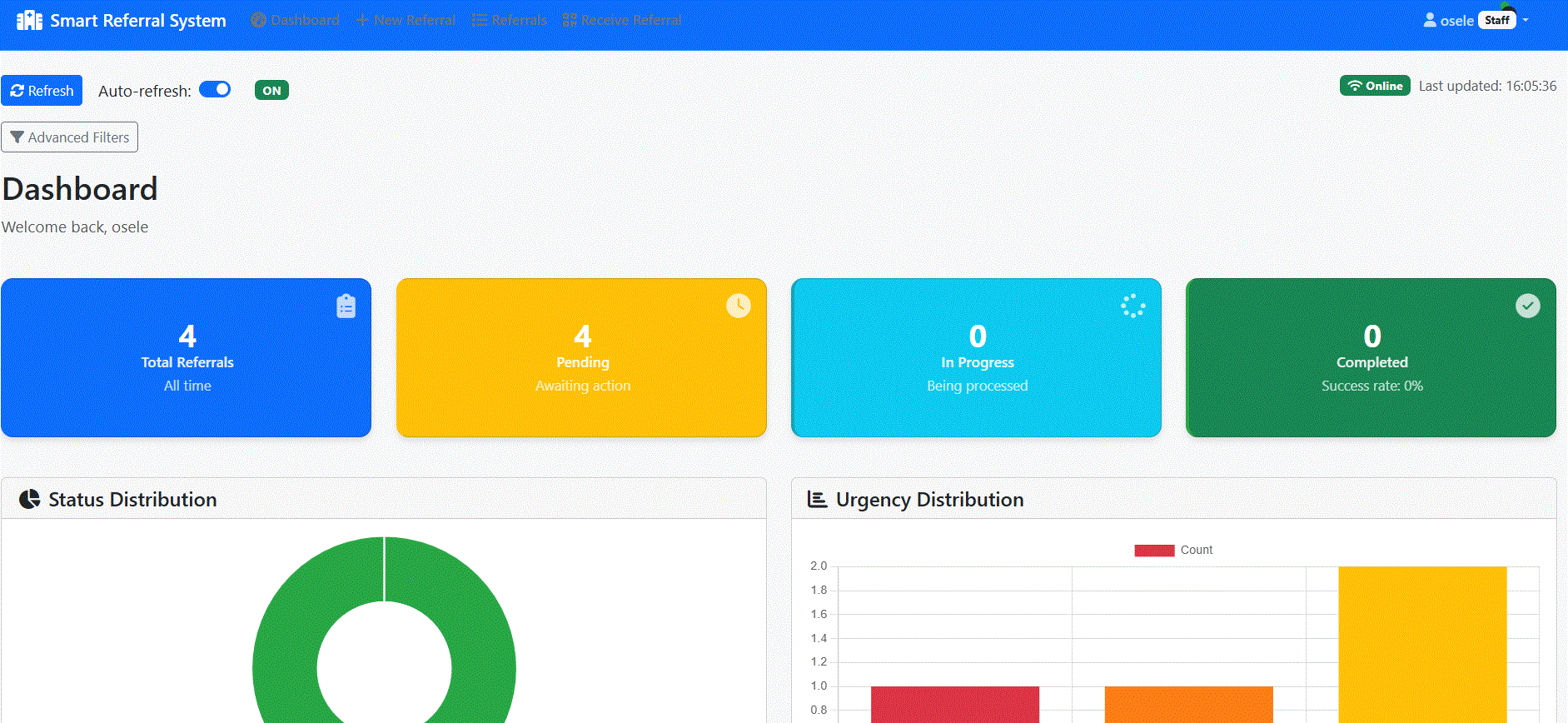
Track referral outcomes in a dashboard
Ultimately, it ensures continuity of care between facilities.
How we built it
While still under development, here’s the plan:
Backend: PHP + MySQL
SMS API: RapidPro (Free, supported by UNICEF)
QR Codes: Will explore PHP libraries for generation
Frontend Dashboard: Custom HTML/CSS dashboard
Workflow: Clinic issues referral → patient receives QR + SMS → hospital confirms visit → clinic gets feedback
It’s a solo project right now, but designed with potential for collaboration and scale.
Challenges we ran into
Although I’m still building the system, I anticipate several key challenges:
System integration with existing clinic/hospital workflows
Resource limitations (devices, training, data costs)
Data capture in facilities with limited internet or tech-savvy staff
Ensuring real-time communication using affordable, low-bandwidth tools like SMS
Accomplishments that we're proud of
Took a real clinical problem and turned it into a viable tech solution
Mapped out a referral tracking flow that’s simple enough for rural clinics
Identified tools like RapidPro that support low-cost deployment
Framed the project for potential expansion and integration with national systems
What we learned
Even during planning and design, I’ve learned a lot:
How referral systems actually work (and fail) on the ground
The value of open-source and low-tech tools like RapidPro and QR
That even solo developers can make impact-driven tools in healthcare
How to design with constraints, not around them
I’m also learning to ask the right questions: How do we track care without overcomplicating it? How do we support clinicians without adding burden?
What's next for Smart Referral Tracking and Feedback System
Finalize backend and dashboard
Integrate SMS using RapidPro API
Choose and implement a QR code solution
Conduct a pilot test in a real clinic
Collect user feedback and improve the system
Possibly integrate AI tools like Kiro AI for decision support or automation
Share results with stakeholders and the Ministry of Health for potential scale-up
Built With
- and-suitability-in-low-resource-settings:-*-**languages**:-*-`php`-?-for-backend-development-*-`html/css`-?-for-building-a-simple
- bootsrap
- chosen-for-their-accessibility
- clean-frontend-dashboard-*-**database**:-*-`mysql`-?-for-storing-patient-records
- cost-effectiveness
- css
- html
- kiroai
- mysql
- php
- phpqrcodegenerator
- rapidpro
- referral-data

Log in or sign up for Devpost to join the conversation.