-
-
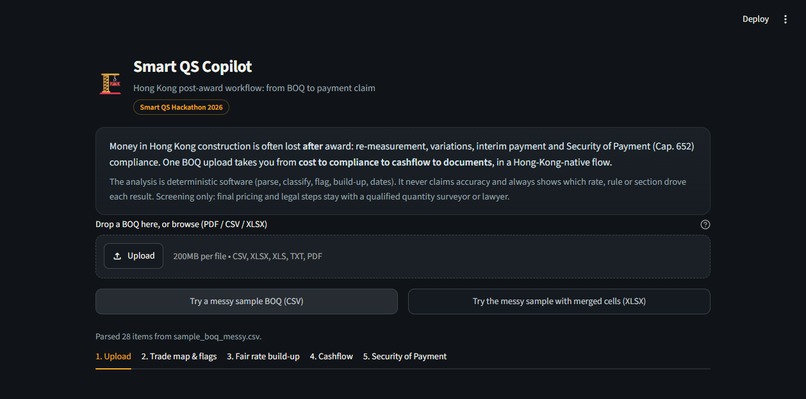
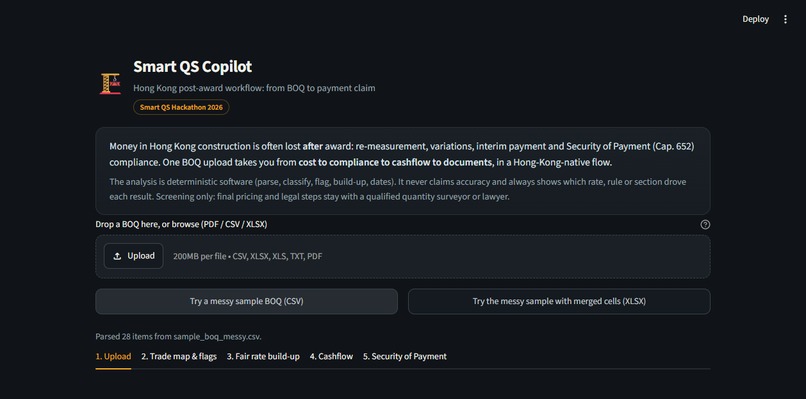
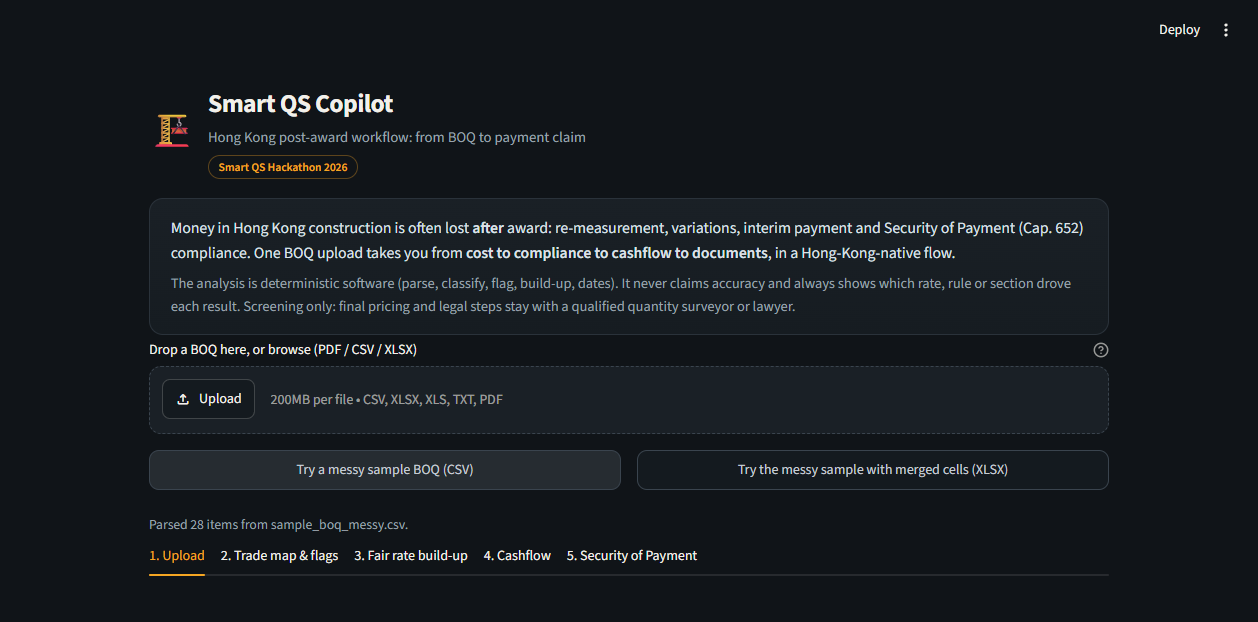
Home Page / Upload Page
-
-
-
-
-
-
-
-
-
The problem
In Hong Kong construction, disputes rarely start at the tender BOQ. They start after award: variations valued slowly, payment claims that do not satisfy the Security of Payment Ordinance (Cap. 652), cashflow gaps nobody modelled. Subcontractors feel this first and are served by software last.
What it does
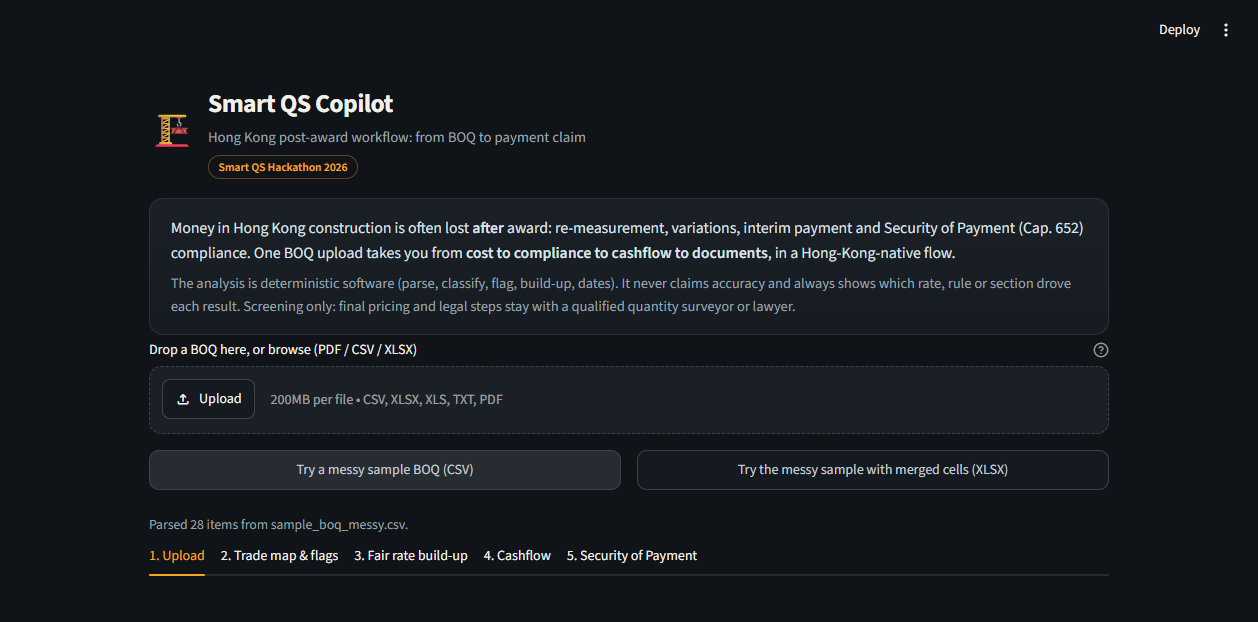
One BOQ upload runs a five step post-award workflow:
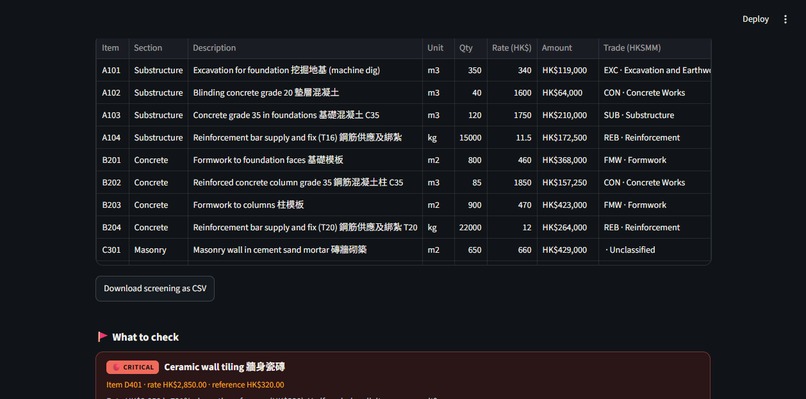
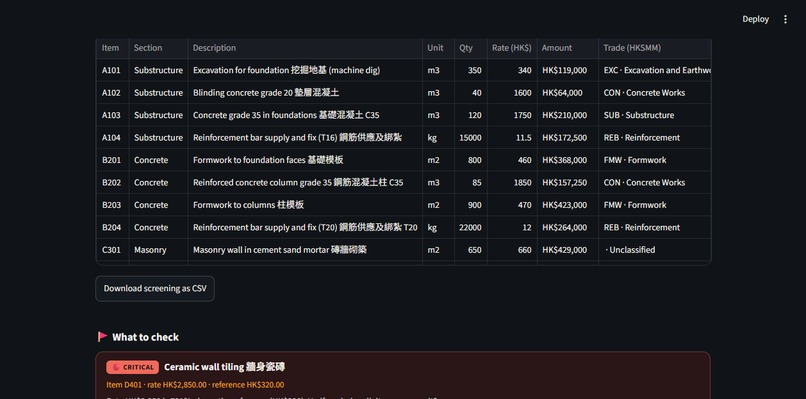
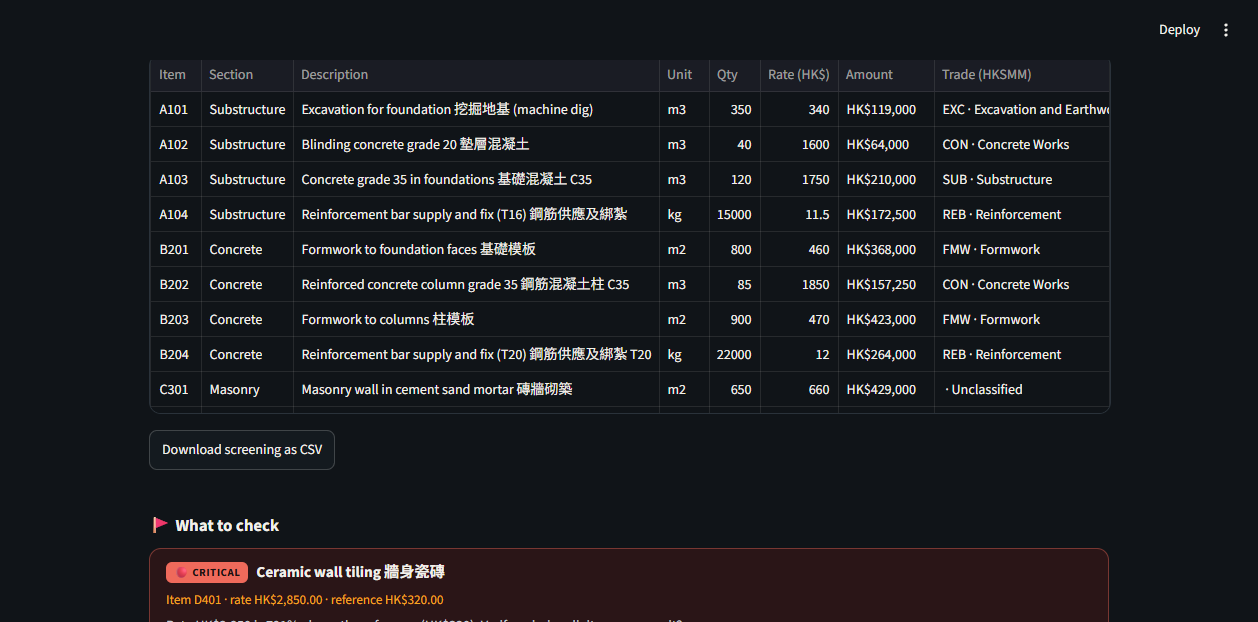
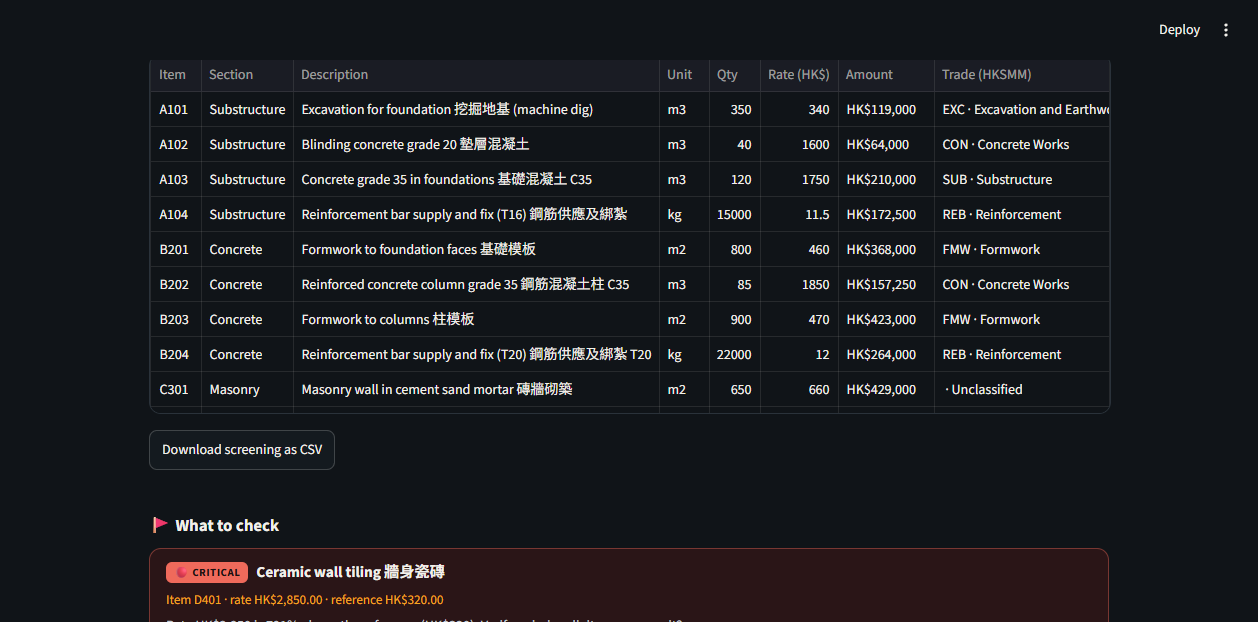
- Parse messy bilingual HK BOQs that defeat naive tools: stray title rows, merged cells, mixed English and Chinese descriptions.
- Map every line to an HKSMM style trade and flag what a reviewer would flag, with the item, the number and the reference cited.
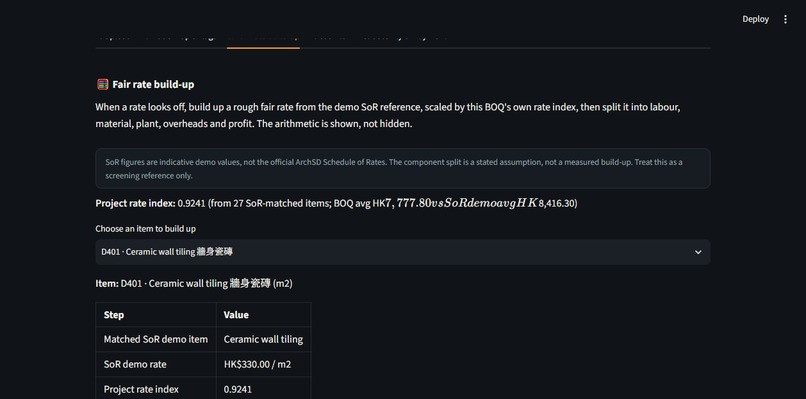
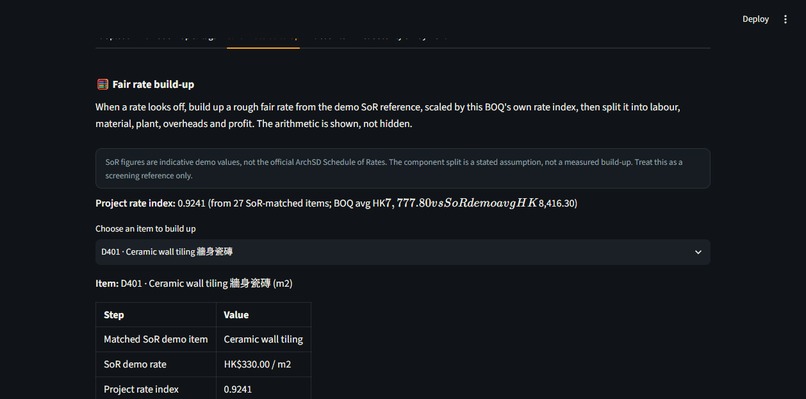
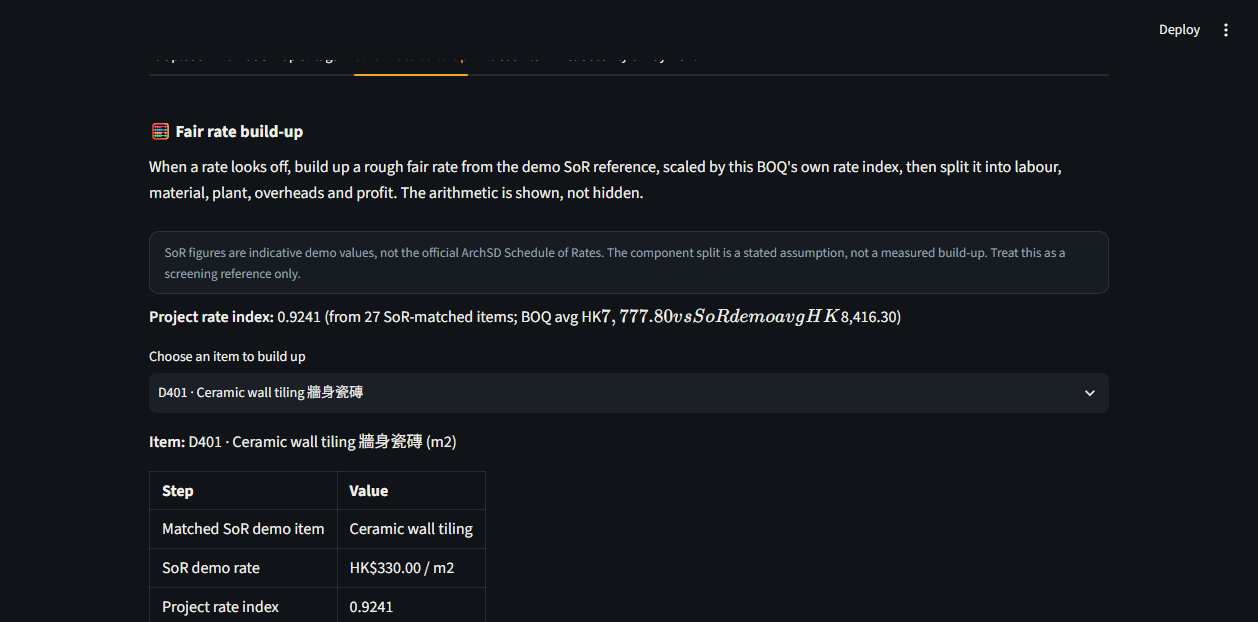
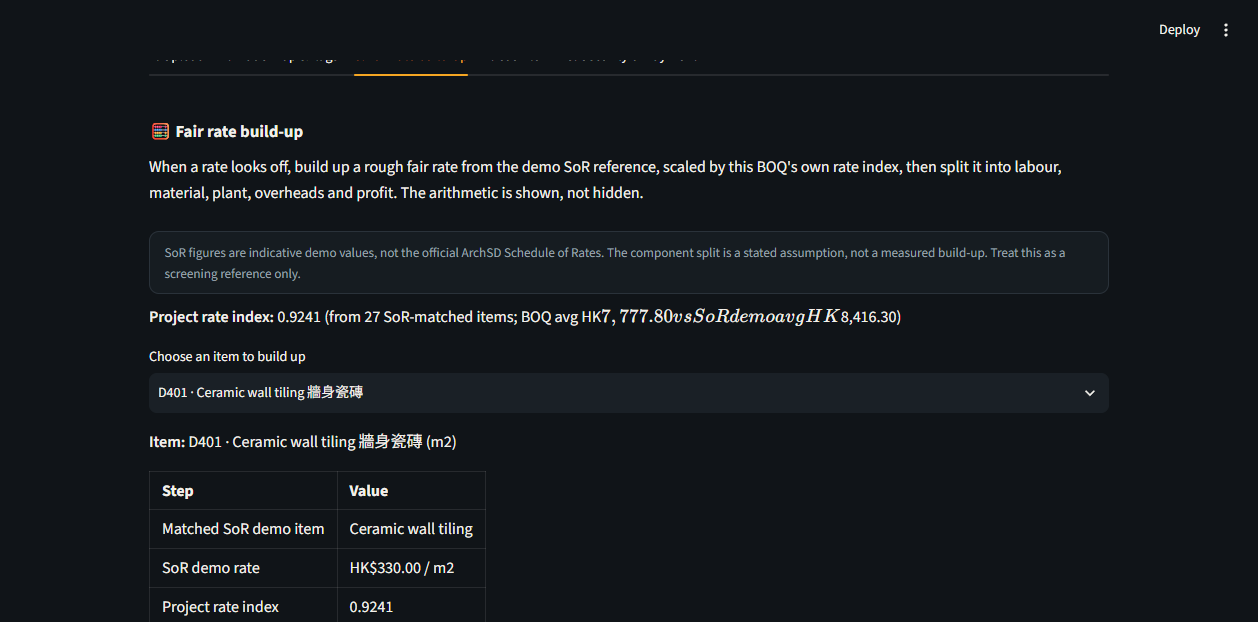
- Build transparent fair rates for odd or new items: labour, material, plant, overheads and profit, anchored to ArchSD Schedule of Rates style figures scaled by the project own rate index.
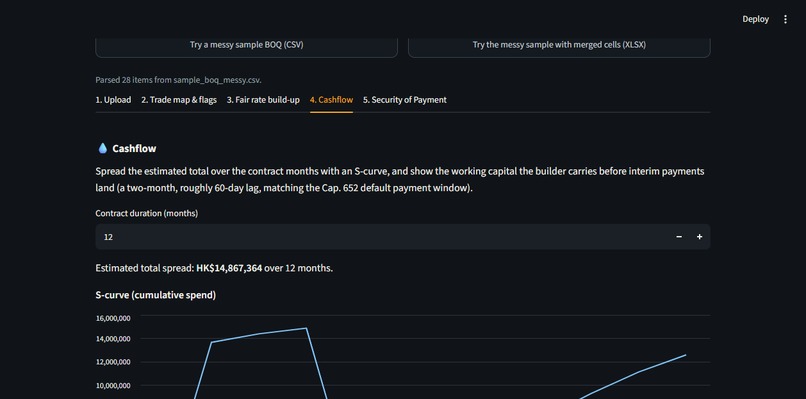
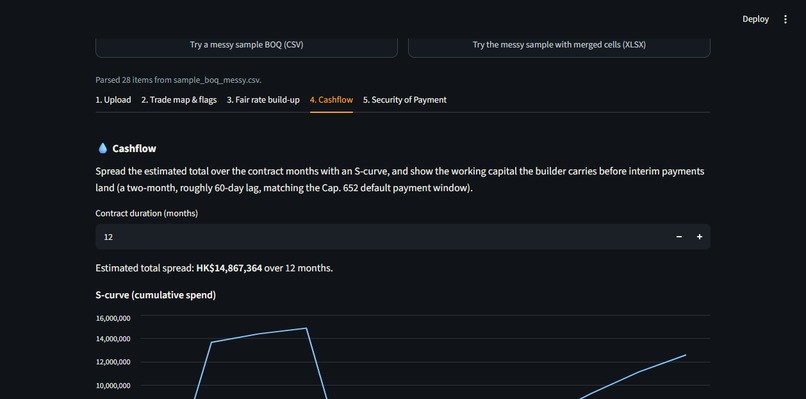
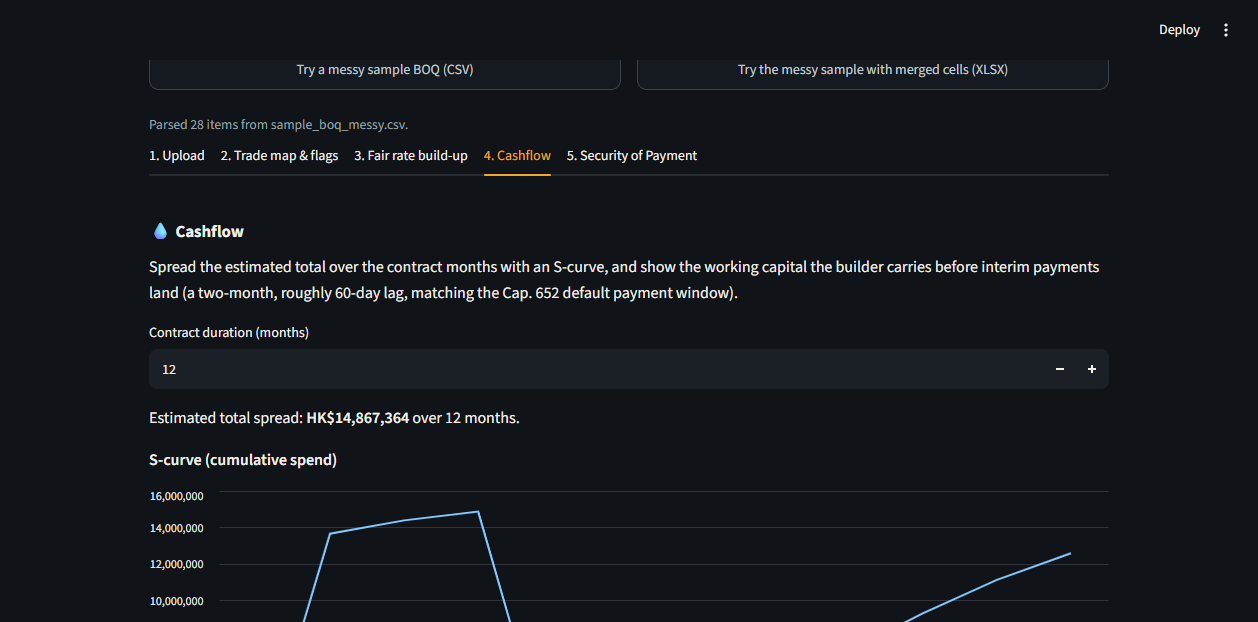
- Show the cashflow S-curve and the months a 60 day payment lag leaves a working capital gap.
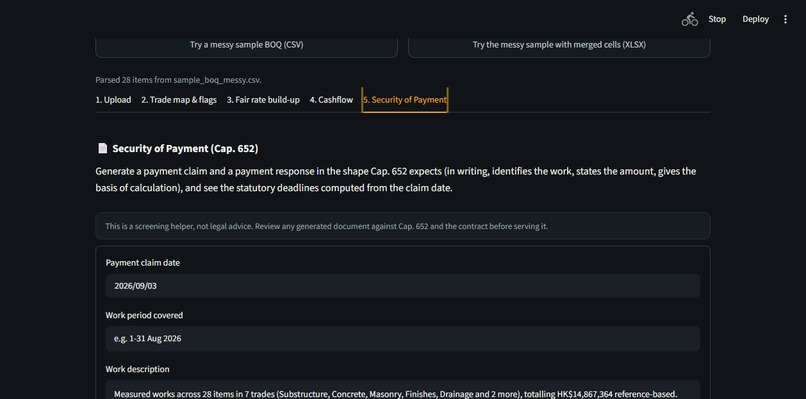
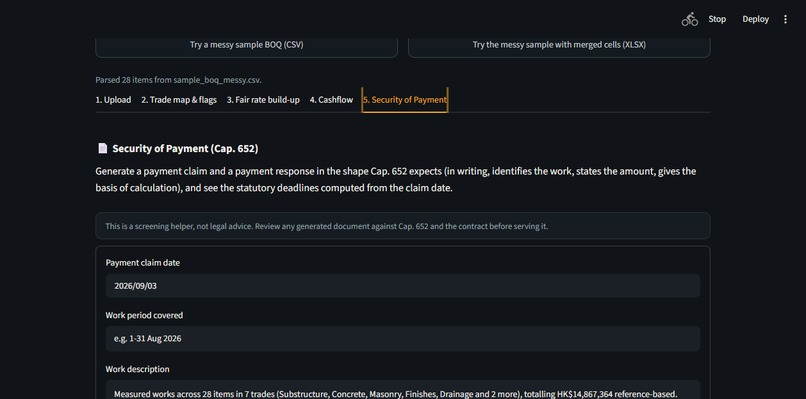
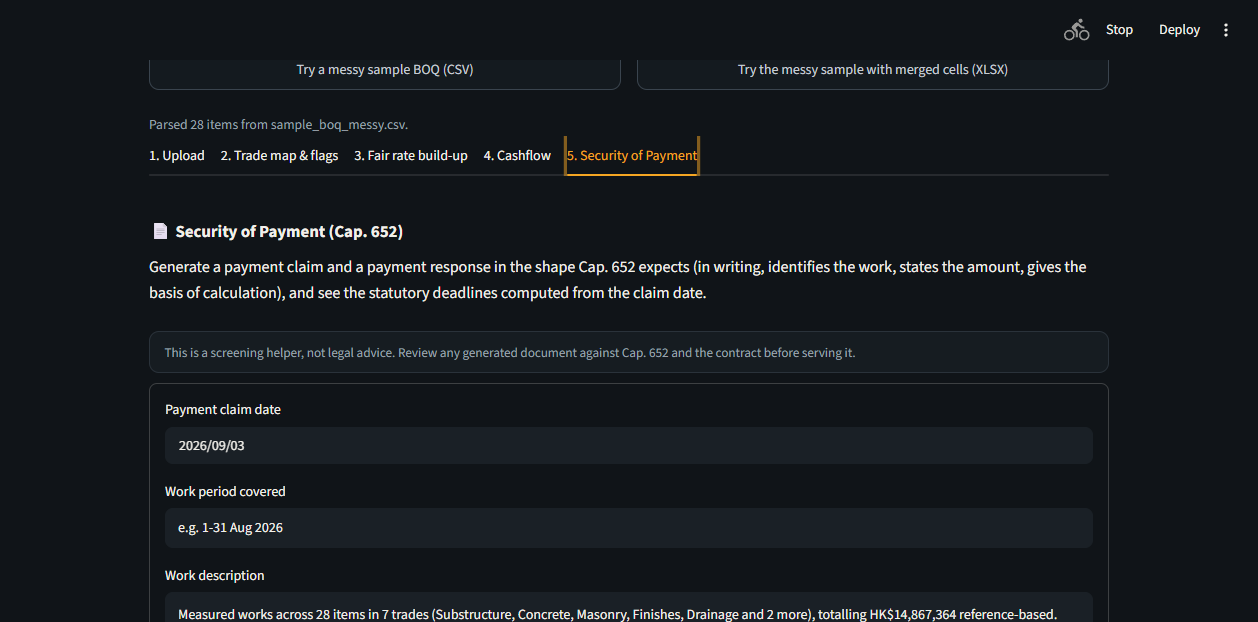
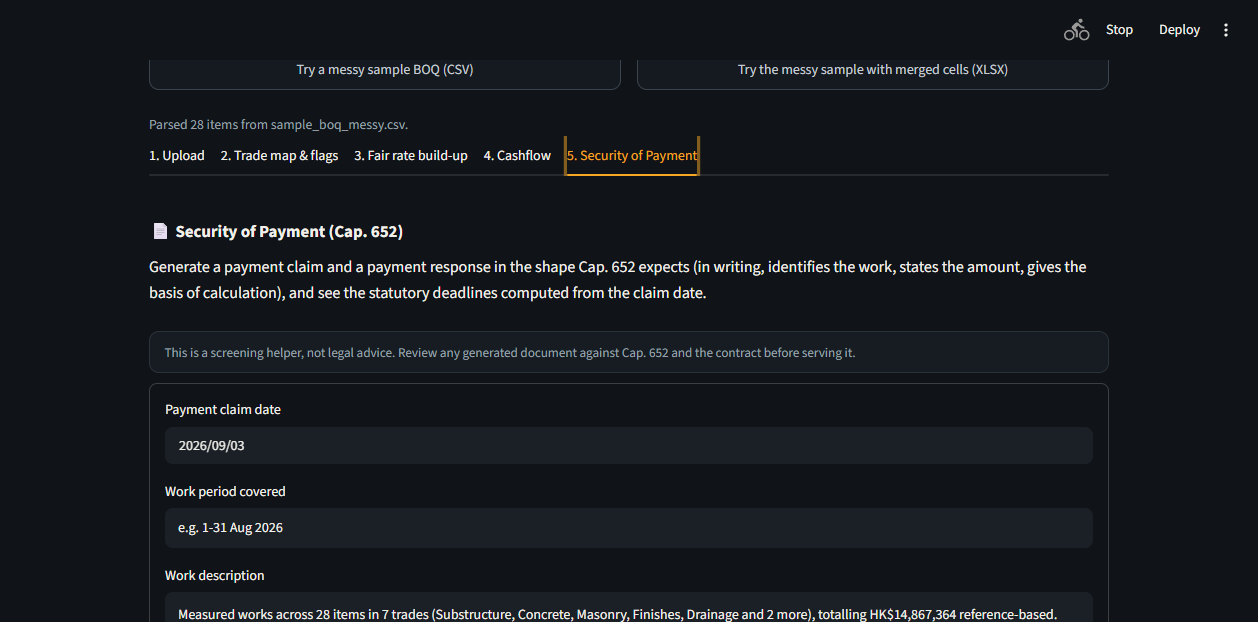
- Generate payment claims and responses that carry the content Cap. 652 expects, compute statutory deadlines, and scan subcontracts for banned pay when paid clauses in English and Chinese.
How it is built
Python and Streamlit. Parsing, trade mapping, rate build-up, cashflow and the statutory engine are deterministic local logic with 40+ tests. The LLM is used only for an optional plain-language review through a fallback chain that needs no key to keep the app working.
Honest limits
Rates are an indicative demo subset, not the official Schedule of Rates. This screens for a qualified reviewer. It does not measure work, certify payments or give legal advice, and it says so in the app.


Log in or sign up for Devpost to join the conversation.