-
-
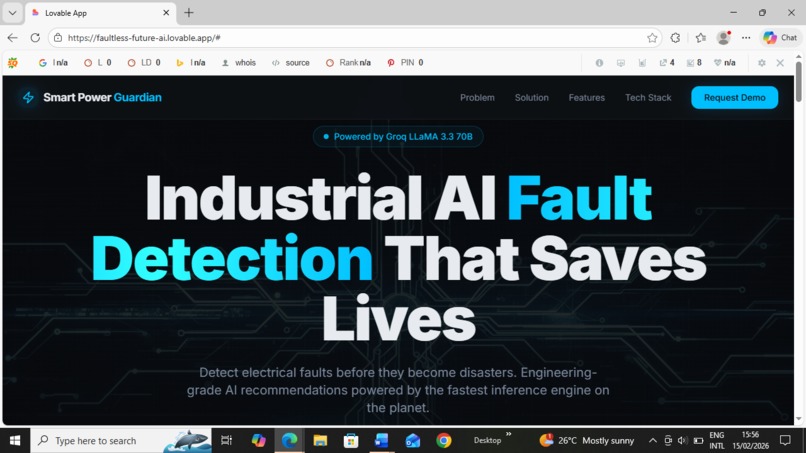
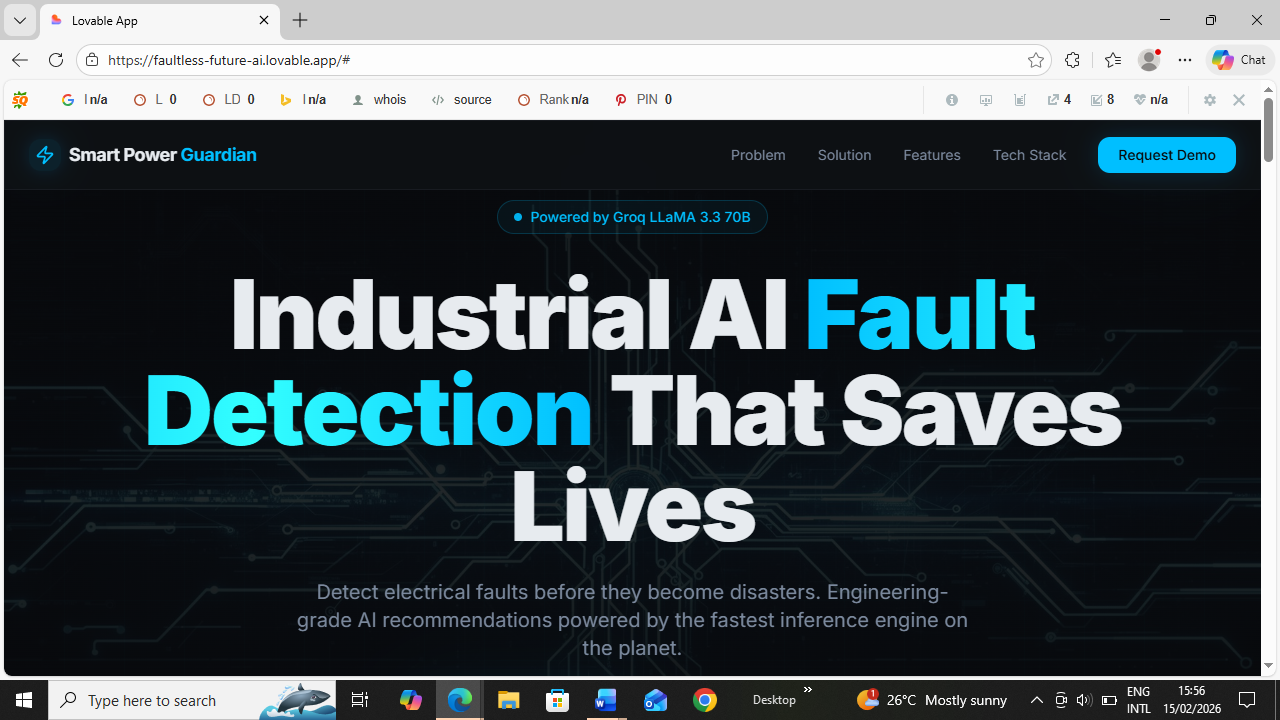
Industrail AI Fault Detection That Saves Lives
-
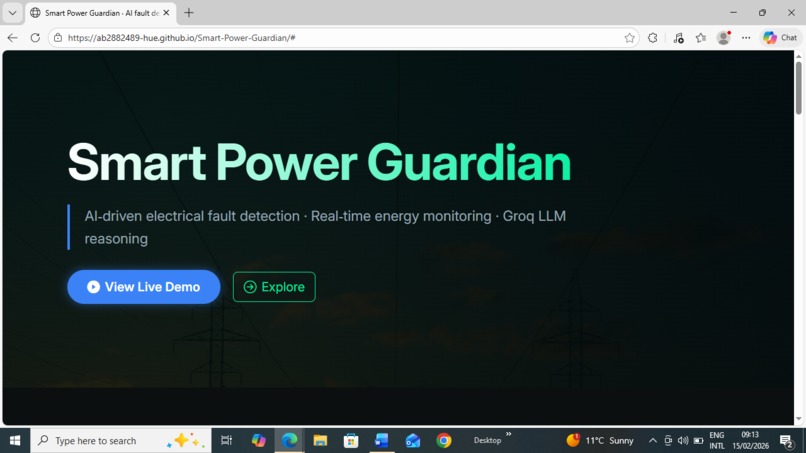
-
Inspiration
Electrical failures such as overloads, overheating, and short circuits are among the leading causes of industrial downtime, equipment damage, and safety hazards. In many environments, monitoring systems are reactive rather than predictive — faults are detected only after significant damage has occurred. We were inspired to build a solution that transforms raw electrical sensor readings into actionable intelligence using artificial intelligence. The goal was to demonstrate how large language models can move beyond chat applications and into real-world industrial safety systems. Smart Power Guardian was created to bridge the gap between electrical monitoring and AI-powered decision support.
What it does
Smart Power Guardian is an AI-powered electrical fault detection and advisory system. The system: Analyzes voltage, current, and temperature readings from uploaded CSV files
Calculates power consumption Detects abnormal conditions such as: Overload Short circuit risk Overheating Normal operation Assigns severity classifications Generates structured, engineering-style safety recommendations using Groq LLaMA 3.3 70B Displays results in an industrial dashboard format with graphs and tables It converts raw sensor data into real-time diagnostic intelligence.
How we built it
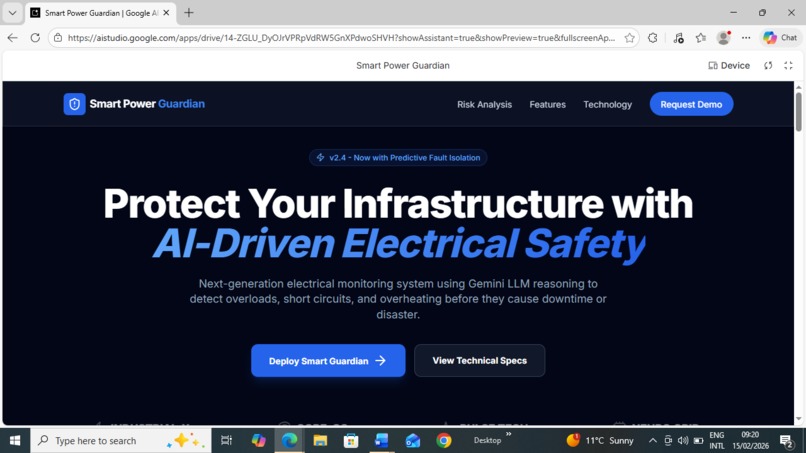
The system was built using a modular AI pipeline: Data Processing Layer Python and Pandas for sensor data handling Rule-based detection logic for fault classification AI Reasoning Layer Groq API for high-speed LLaMA 3.3 70B inference Structured prompts to generate engineering-grade recommendations Frontend & Deployment Gradio for interactive UI Hugging Face Spaces for cloud hosting HTML, CSS, Bootstrap, and JavaScript for product landing page Google AI Studio (Gemini) for prompt refinement and UI structuring System Flow: Sensor Data → Fault Detection Engine → Severity Classification → AI Reasoning → Dashboard Visualization
Challenges we ran into
Designing reliable fault detection logic Creating threshold-based logic that mimics real industrial scenarios required careful tuning to avoid false positives.
Integrating LLM output into structured engineering responses Large language models tend to generate conversational text. We had to refine prompts to ensure structured, technical recommendations.
Ensuring smooth deployment Configuring API keys securely and deploying to Hugging Face Spaces required debugging environment variables and dependency management.
Designing a professional dashboard Balancing clean UI design with industrial aesthetics was a challenge, especially while keeping everything responsive.
Accomplishments that we're proud of
Successfully integrated Groq LLaMA 3.3 70B into a functional industrial safety prototype
Built a full-stack working application with live deployment
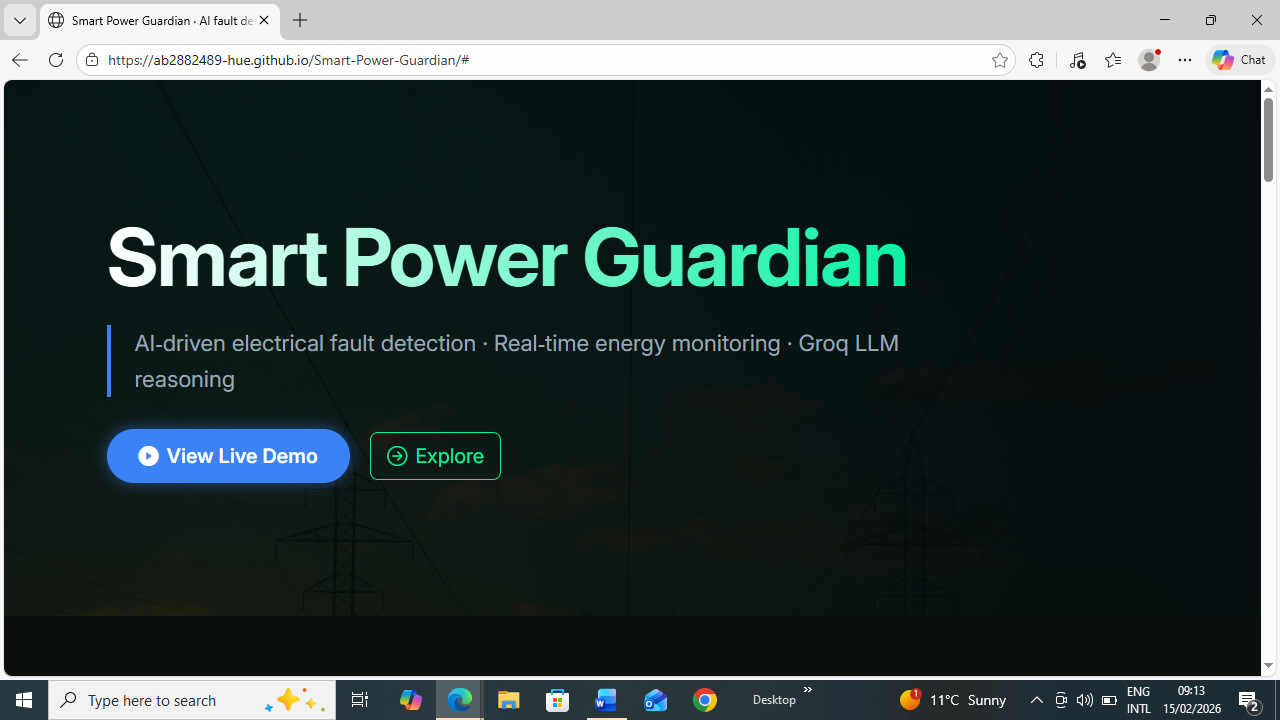
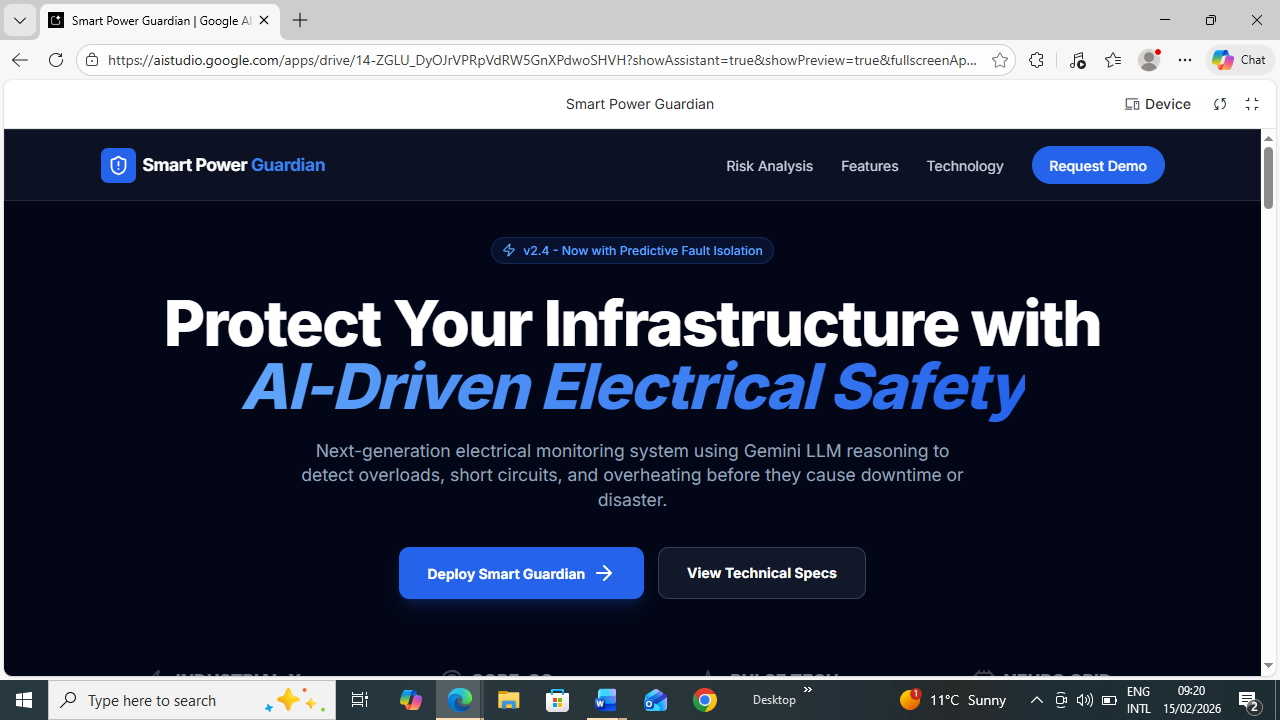
Created a professional product website and demo video
Demonstrated real-world application of AI in electrical engineering
Designed a scalable architecture suitable for IoT and smart factory expansion
Most importantly, we moved AI beyond theory and into a practical industrial safety use case.
What we learned
Large language models can be adapted for structured technical domains with proper prompt engineering Industrial applications require clarity, precision, and reliability — not just AI creativity Deployment and system integration are as important as model performance Clear UI/UX significantly improves perceived system intelligence We also learned how to structure AI systems in a modular way for scalability.
What's next for Smart Power Guardian – AI Fault Detection System
The current version uses simulated CSV data. Future development includes:
Real-time IoT sensor integration
Edge deployment on microcontrollers
Predictive maintenance modeling using time-series forecasting
Real-time streaming dashboards
Cloud-scale analytics for industrial plants
Automated alert systems via SMS or email
The long-term vision is to evolve Smart Power Guardian into a full-scale industrial AI monitoring platform for smart factories and energy systems.


Log in or sign up for Devpost to join the conversation.