-
-
-
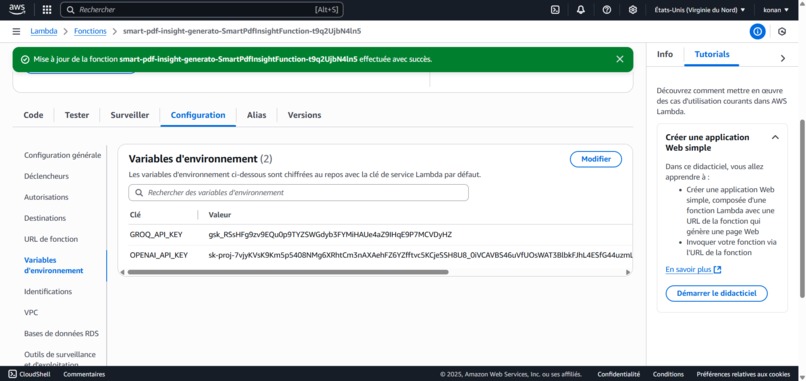
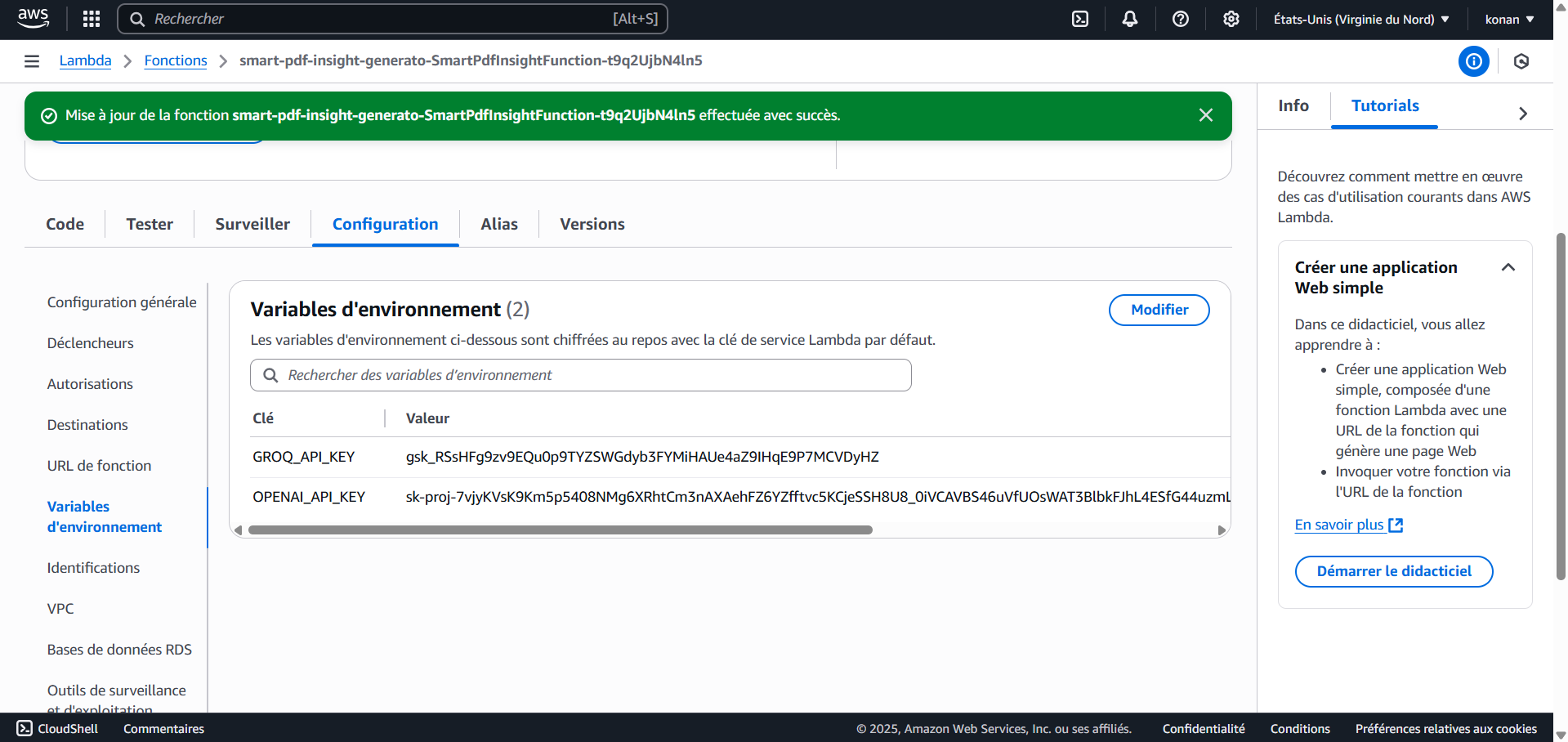
Api keys
-
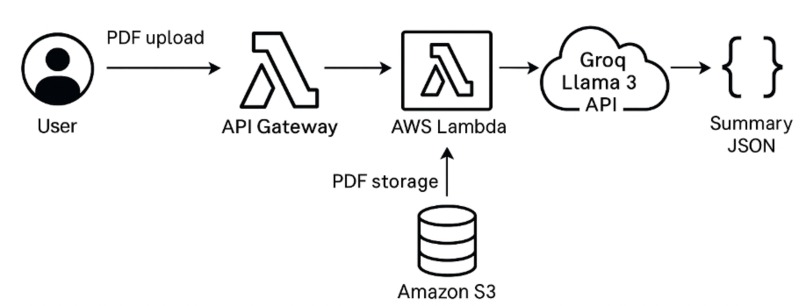
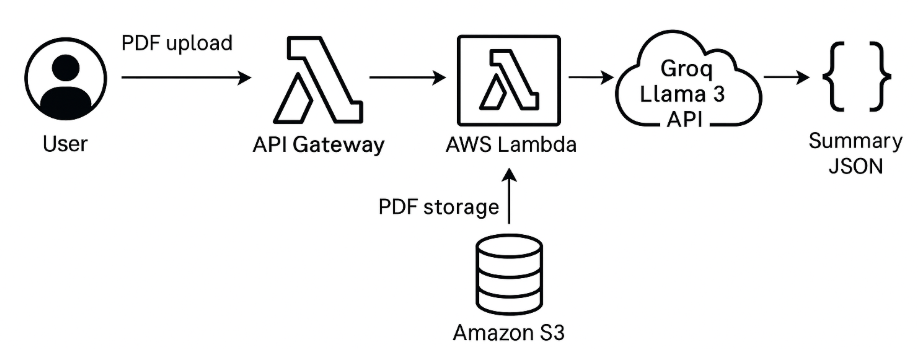
Architechture
-
-
-
-
-
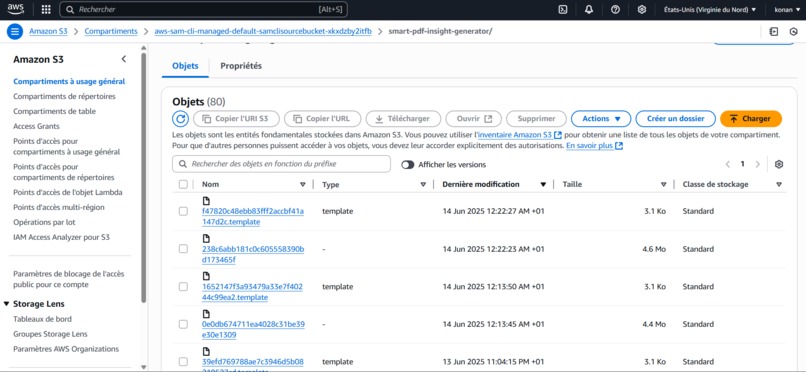
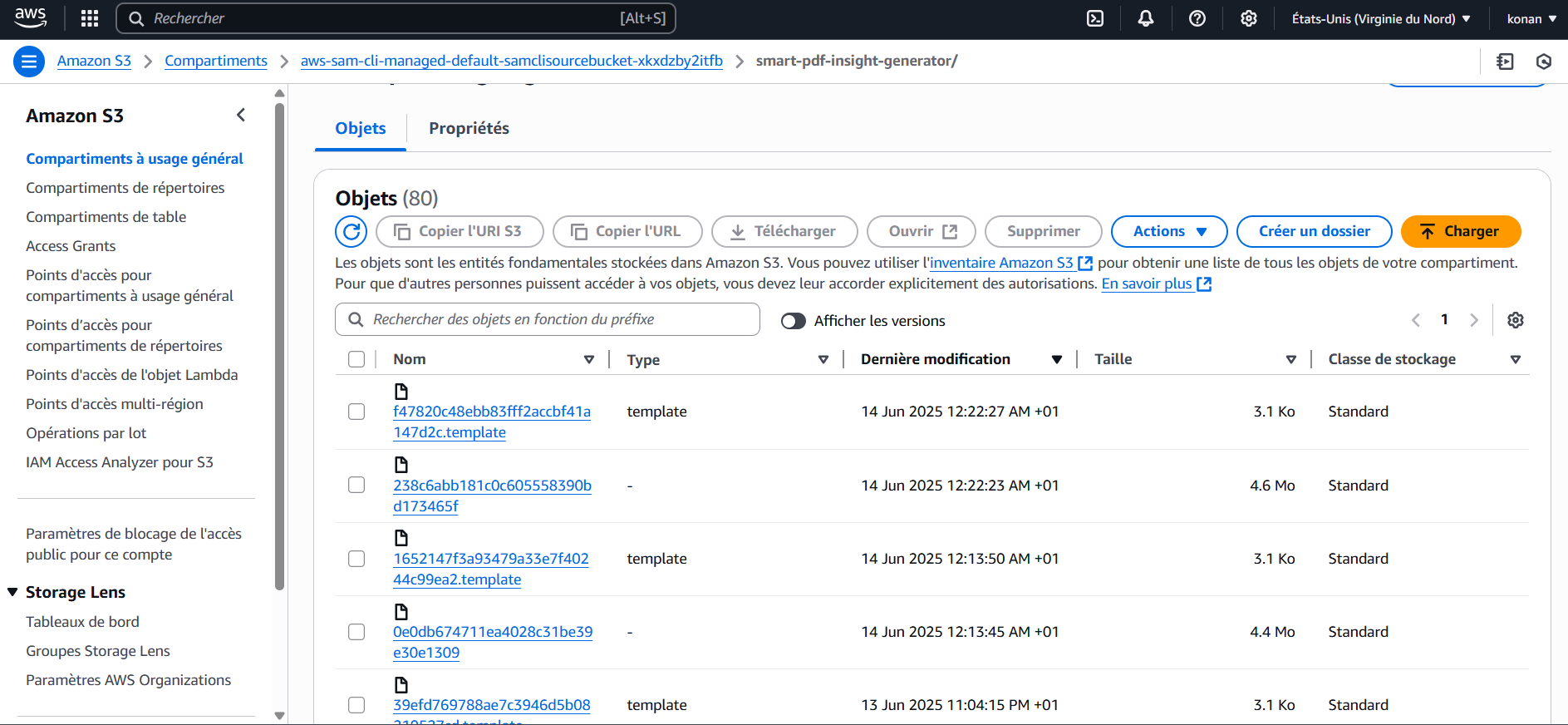
S3
Inspiration
Picture this: vital information hidden in stacks of PDFs—contracts waiting to be signed, invoices needing review, research papers packed with data. For professionals everywhere, turning those documents into clear, actionable insights remains a daily struggle. Manual processing is slow, draining, and outdated. We imagined a future where you upload any PDF, and in seconds, get not just a summary, but an actionable, structured insight ready for decision-making. That’s the spark behind our project—a smarter, serverless approach to document intelligence.
Inspired by this pain point, we wanted to create a tool that would automatically summarize the core information from any PDF, with zero infrastructure to manage, and instant scalability. Recent advances in serverless cloud and generative AI finally make this possible.
What we learned
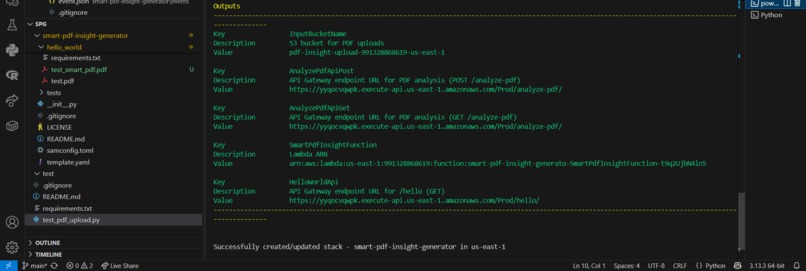
How to combine AWS Lambda, S3, and API Gateway to build a truly serverless AI-powered workflow.
The potential of Groq’s Llama 3 model for ultra-fast, cost-free, high-quality AI summaries, even without a credit card or enterprise account.
How to robustly extract text from both structured and complex PDFs using PyPDF2.
Best practices for prompt engineering with open-source LLMs.
The importance of clear API design and a smooth user experience in cloud-based document automation.
How we built it
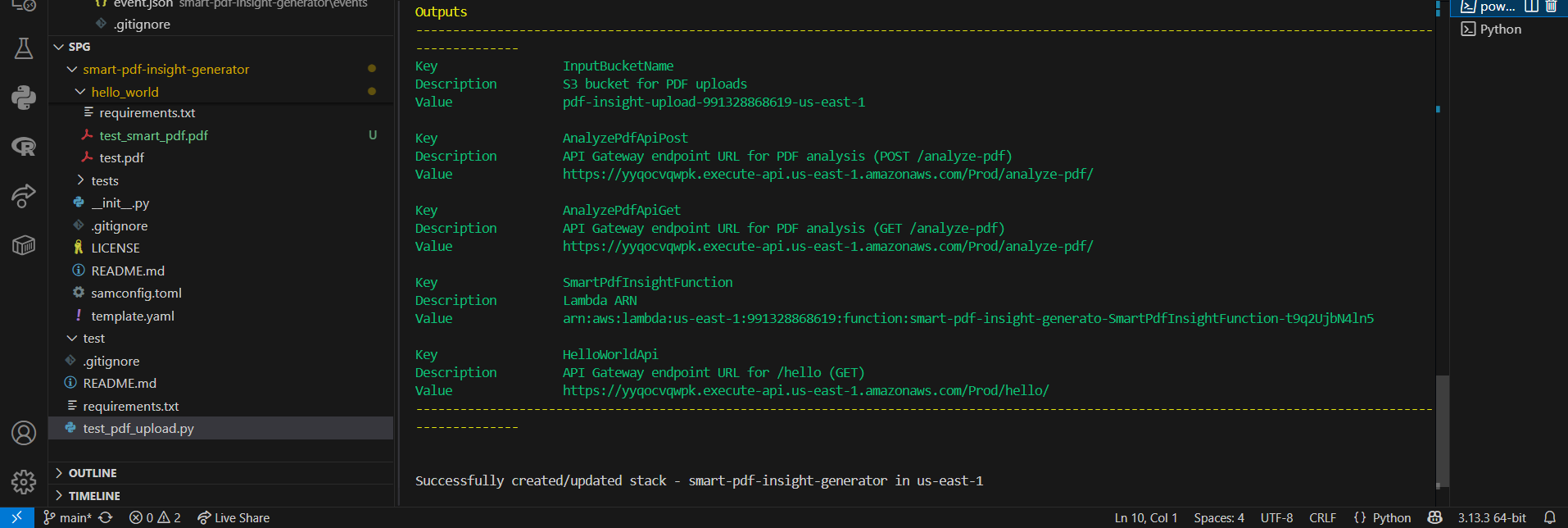
API Gateway receives PDF uploads from users (as base64).
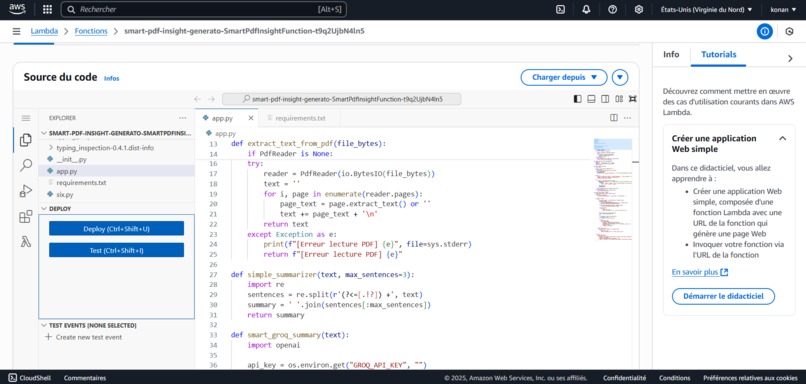
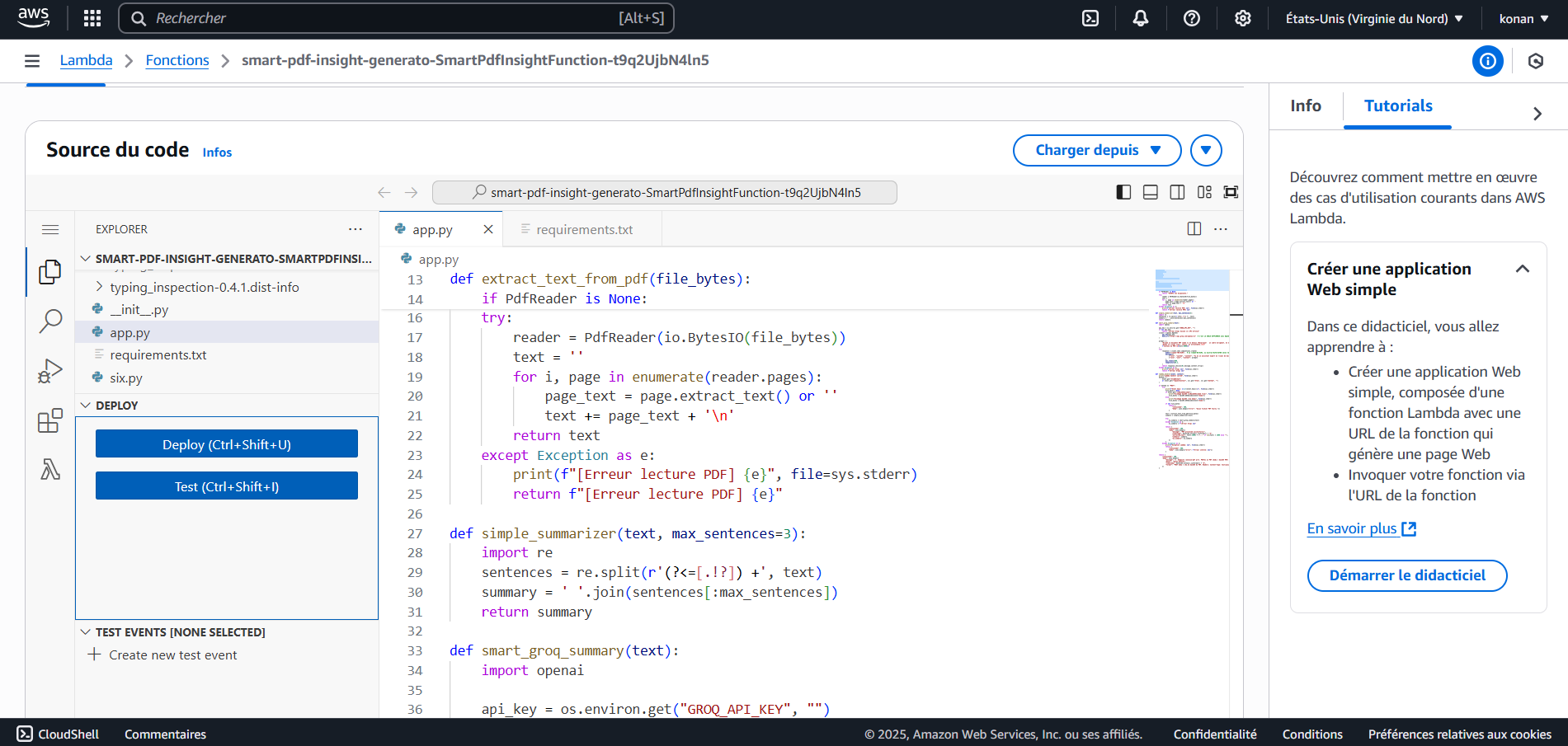
Lambda extracts the PDF text (via PyPDF2), generates a quick baseline summary, then calls the Groq API (Llama 3 70B) to create a professional, business-ready summary in seconds.
Results (raw text and AI summary) are returned as a JSON response—ready for dashboards, workflows, or direct use.
The entire workflow is managed with AWS serverless services, ensuring high scalability and almost zero maintenance.
No billing or vendor lock-in: Any developer can deploy and extend it—no AWS Bedrock or OpenAI quota required!
Challenges we faced
Extracting clean text from a wide variety of PDF formats, including scanned documents and multi-language content.
Finding an AI provider (like Groq) that didn’t require credit card billing, and integrating it for robust, real-time summarization.
Prompt engineering for clear, concise, and actionable summaries.
Optimizing Lambda cold start and memory usage for fast, reliable API responses.
Testing with real-world PDFs to ensure reliability and broad use-case support.
What's next?
We see huge potential for even broader use-cases:
Integrating more advanced analytics (keywords, entities, etc.)
Supporting more file types (Word, images…)
Batch processing and web dashboard uploads
Plug-and-play API for third-party platforms (Slack, Teams, Google Drive…)
Custom visualizations and insights cards
Built With
- amazon-api-gateway
- amazon-web-services
- aws-lambda
- cloud-native
- groq-llama3
- pypdf2
- python
- serverless


Log in or sign up for Devpost to join the conversation.