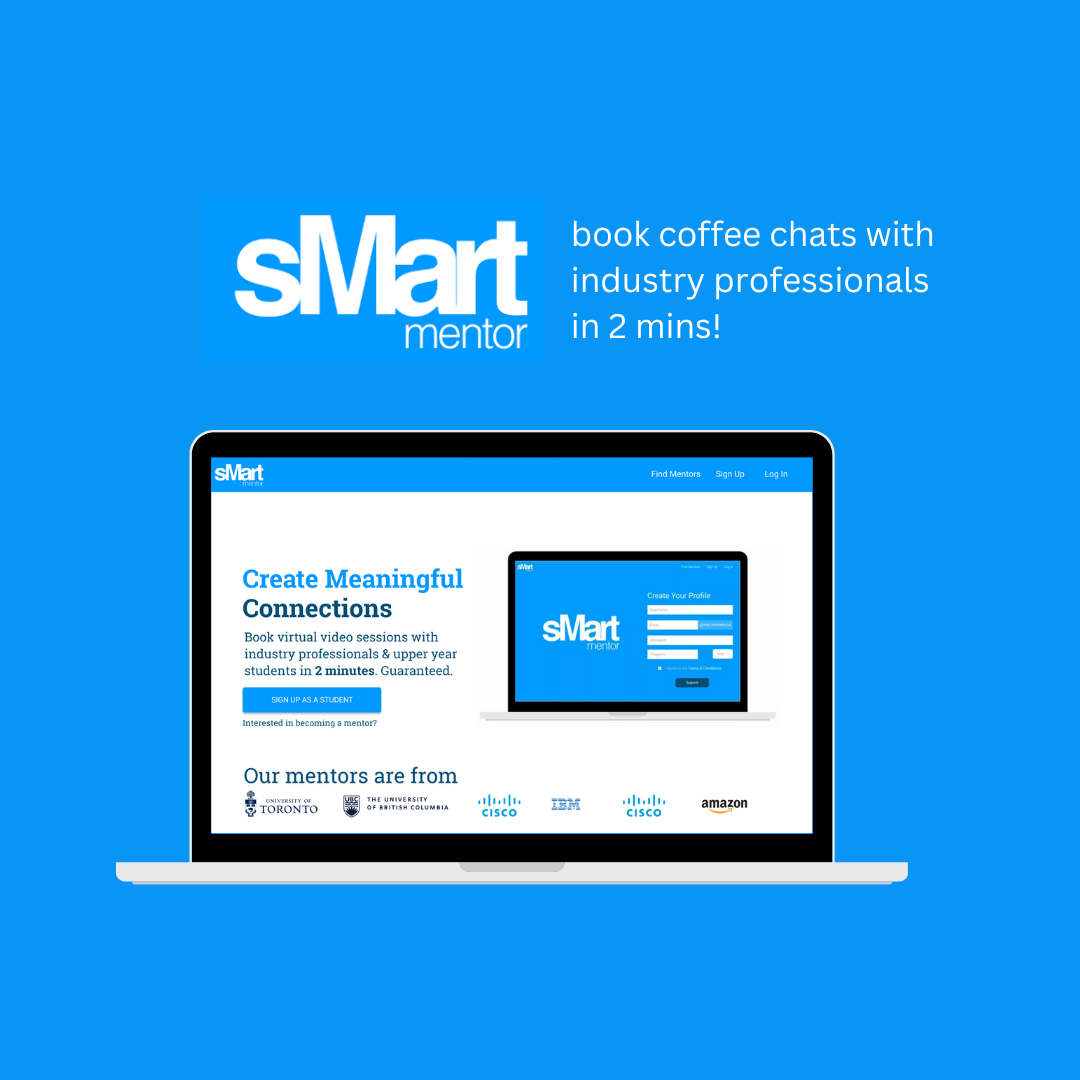
sMart Mentor
Product Overview
sMart Mentor is a C2C mentorship platform that helps students book virtual coffee chats with industry professionals. The experience is designed to be judgement-free, relatable, and emotionally safe. Students receive mentor recommendations based on background, experiences, and industry interests, allowing them to book a meaningful 1:1 conversation in under two minutes.
Problem Space
Students struggle to access mentorship for three major reasons:
- 60–70 percent of students report difficulty finding mentors or professionals willing to speak with them.
- First-gen & international students are disproportionately affected, lacking networks needed for early career exploration.
- Cold outreach has <10 percent response rates, making informal mentorship nearly inaccessible.
Outcomes
- Led a team of 4 to deliver a mentorship experience that enables students to book a mentor in under two minutes
- Grew member base to 500+ potential users in 2 months.
- Delivered a recommendation system using student background + interest inputs
- Designed a platform emphasizing psychological safety and authenticity
- Enabled meaningful 1:1 mentorship moments that feel “like talking to a friend”
- Positioned the platform to support scalable student–mentor matching
My Role
I defined the product narrative, experience principles, and recommendation logic that power sMart Mentor. My role focused on articulating the emotional value proposition — a safe, human environment for students — and structuring how the platform guides users from profile creation → mentor recommendations → booking. I shaped the storytelling, UX framing, and matching logic shown in the diagrams.
Product Ownership
- Defined the core value proposition and user promise
- Structured how mentor recommendations are generated from student inputs
- Designed the matching and booking flows to minimize friction
- Created emotional framing emphasizing safety, relatability, and support
Execution
- Designed the full mentor-matching journey shown in the diagrams
- Crafted product messaging and UX tone (“Make your consultation feel like talking to a friend”)
- Built the visual storytelling that connects inputs → recommendations → meaningful conversation
- Refined the experience to ensure booking is fast, intuitive, and welcoming
Leadership
- Established the narrative foundation and emotional differentiators
- Advocated for a mentorship model based on relatability and shared experience
- Ensured the platform felt psychologically safe for all student segments
4. Discovery
- Explored emotional barriers students face when trying to connect with professionals
- Identified what creates trust and relatability in mentorship contexts
- Mapped user needs to platform components: profile inputs, mentor attributes, booking flow
- Validated that students prefer mentors with shared backgrounds or culturally relevant experiences
5. Solution
Core Features & Deliverables
- Mentor recommendations based on student background + aspirations
- Clear mentor profiles highlighting experiences, skills, and story
- Booking flow that allows students to schedule 1:1 sessions quickly
- Emotional framing and UX writing that reduce fear and pressure
Workflow Simplification
- Condensed the mentorship journey into three simple steps: Input → Match → Book
- Eliminated cold outreach, long search time, and high-pressure networking
Decision Logic
- Matched students to mentors based on shared experiences, not just job titles
- Prioritized psychological safety and approachability as core design constraints
6. System / Architecture View
Components Worked With
- Recommendation Engine: Student background, experience, and interest inputs
- Mentor Profiles: Experience summaries, personal background, skill tags
- Booking Flow: Time selection, confirmation, and conversation setup
My Role Across Components
- Defined inputs that drive recommendation matching
- Designed the end-to-end flow represented in the diagrams
- Ensured the system leads students toward a meaningful, personalized session
7. Execution & Delivery
- Produced the diagrams showing the matching logic and flow
- Built the narrative that ties mentor recommendations to emotional outcomes
- Designed the experience to be welcoming, frictionless, and human
- Defined the UX principles supporting trust and comfort
9. What I Learned
- How to design for emotional safety, not just functional usability
- How shared background and identity shape mentorship quality
- How to structure matching logic for simplicity and speed
- How to articulate a product narrative grounded in psychological insight

Log in or sign up for Devpost to join the conversation.