-
-
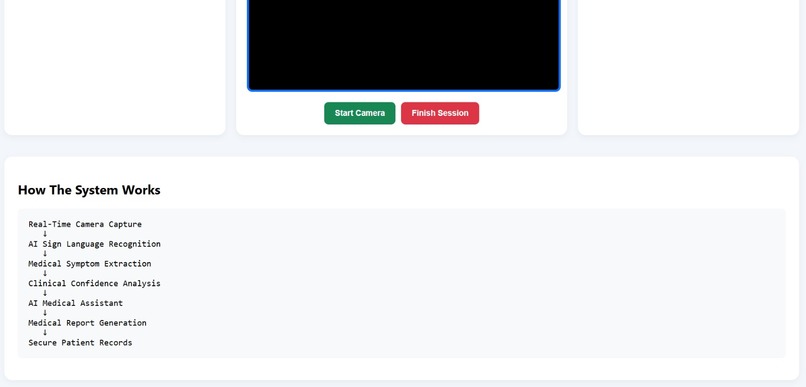
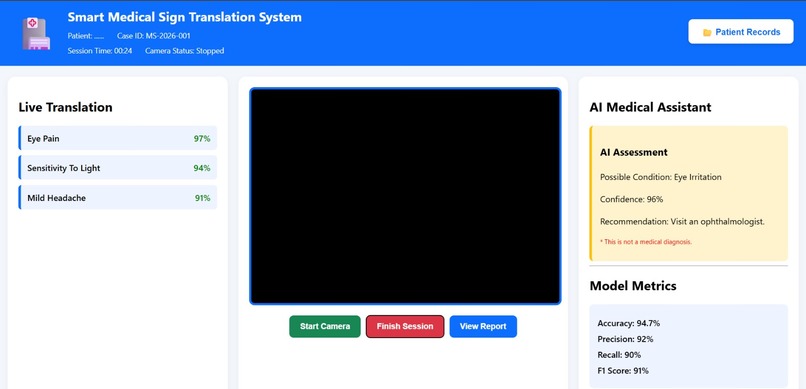
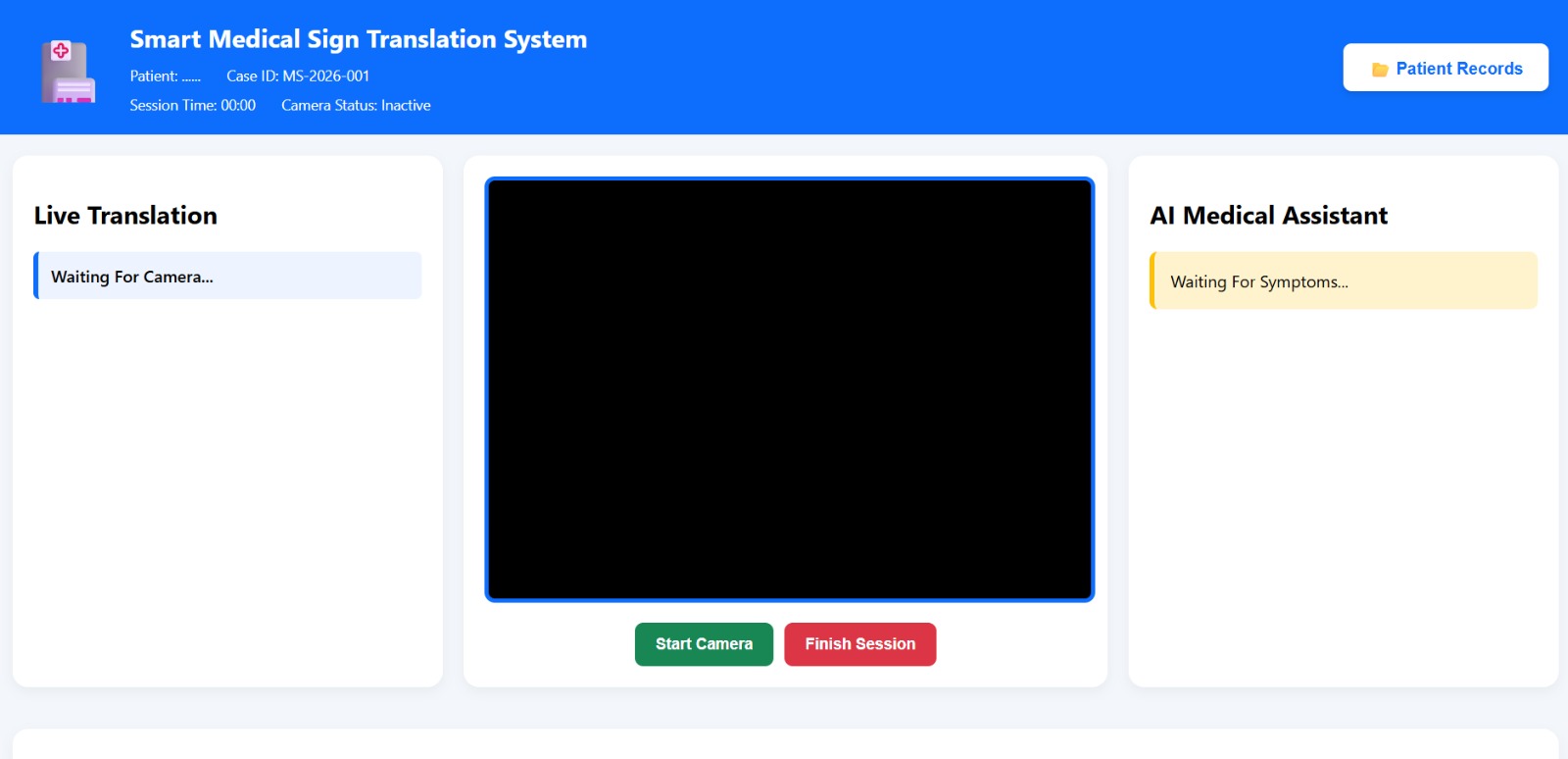
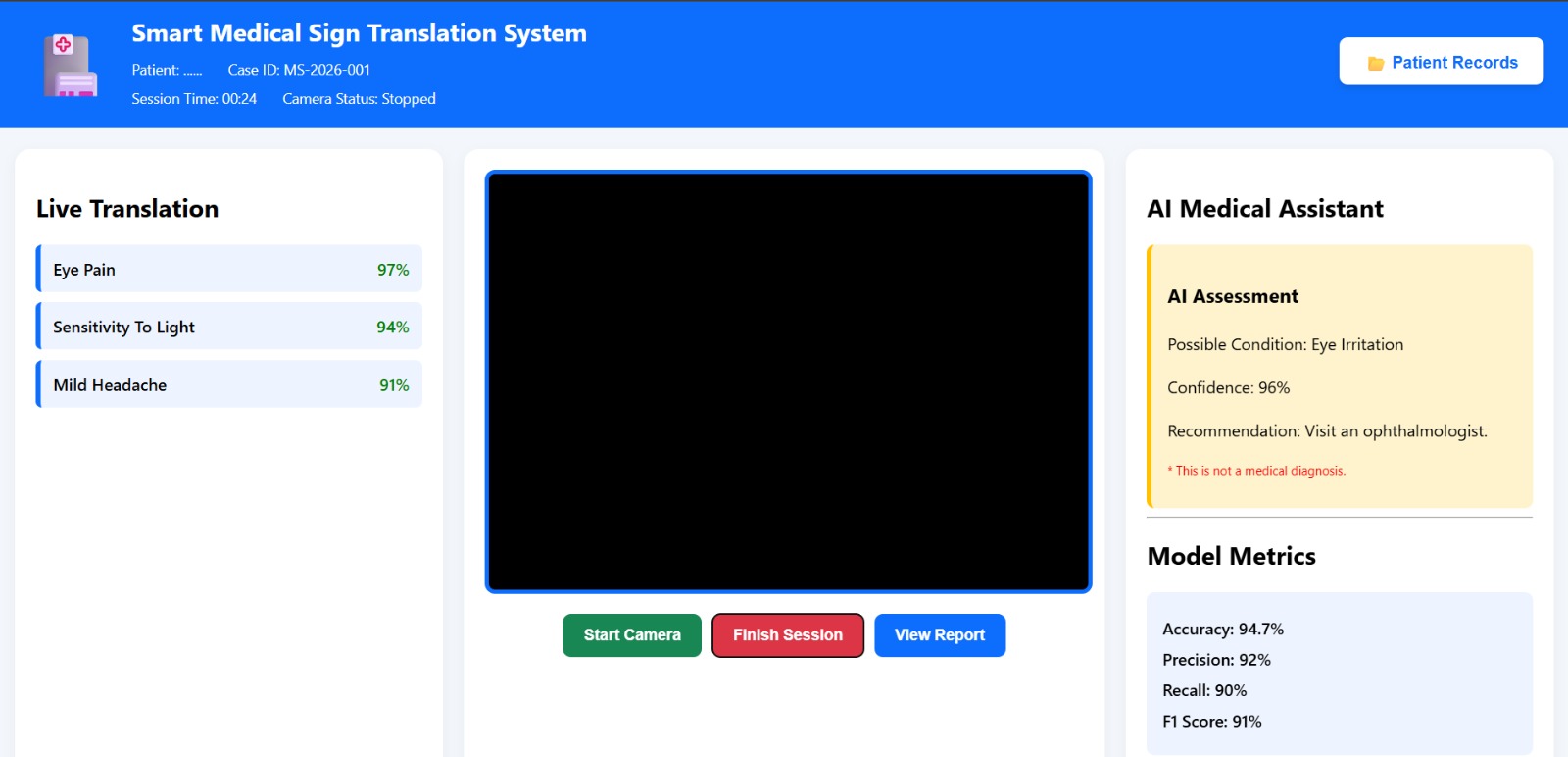
Live Translation Interface
-
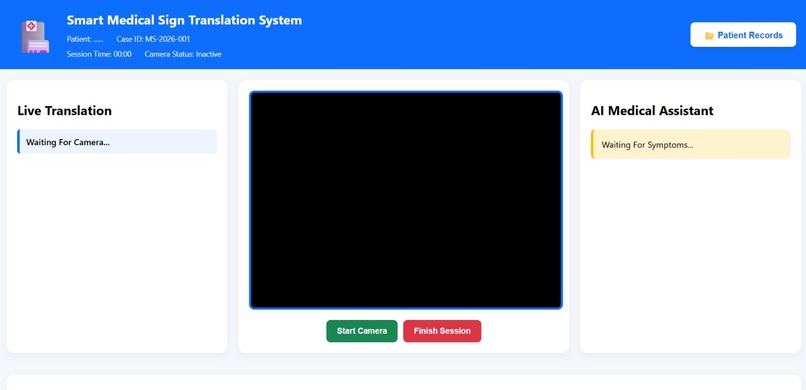
-
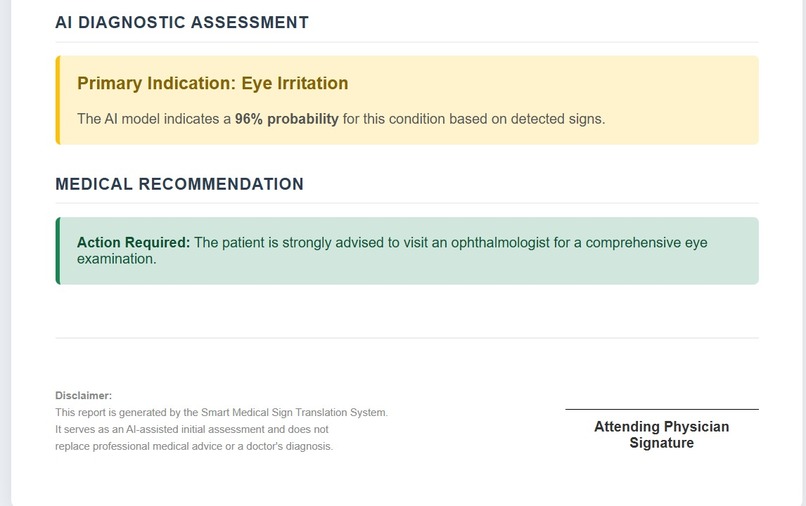
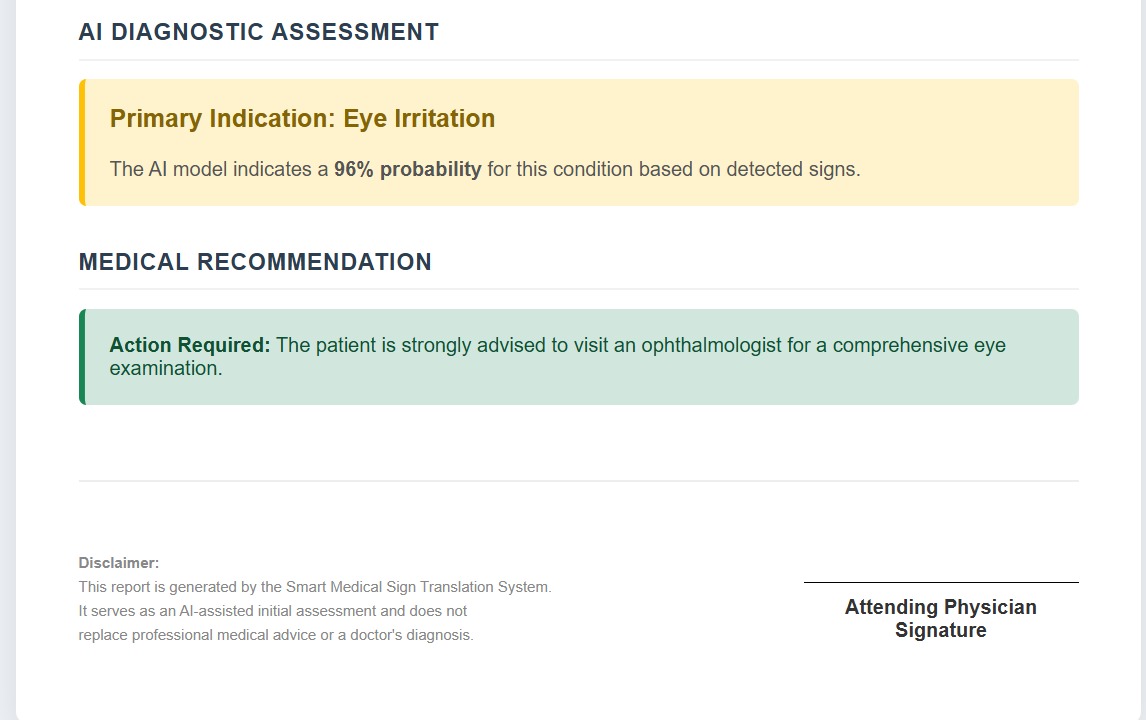
Medical Assessment Report
-
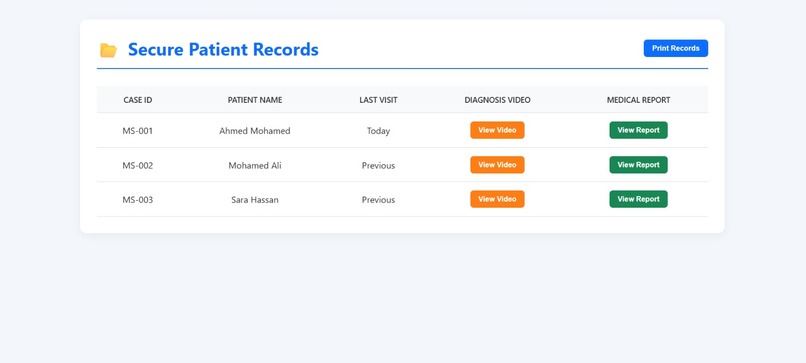
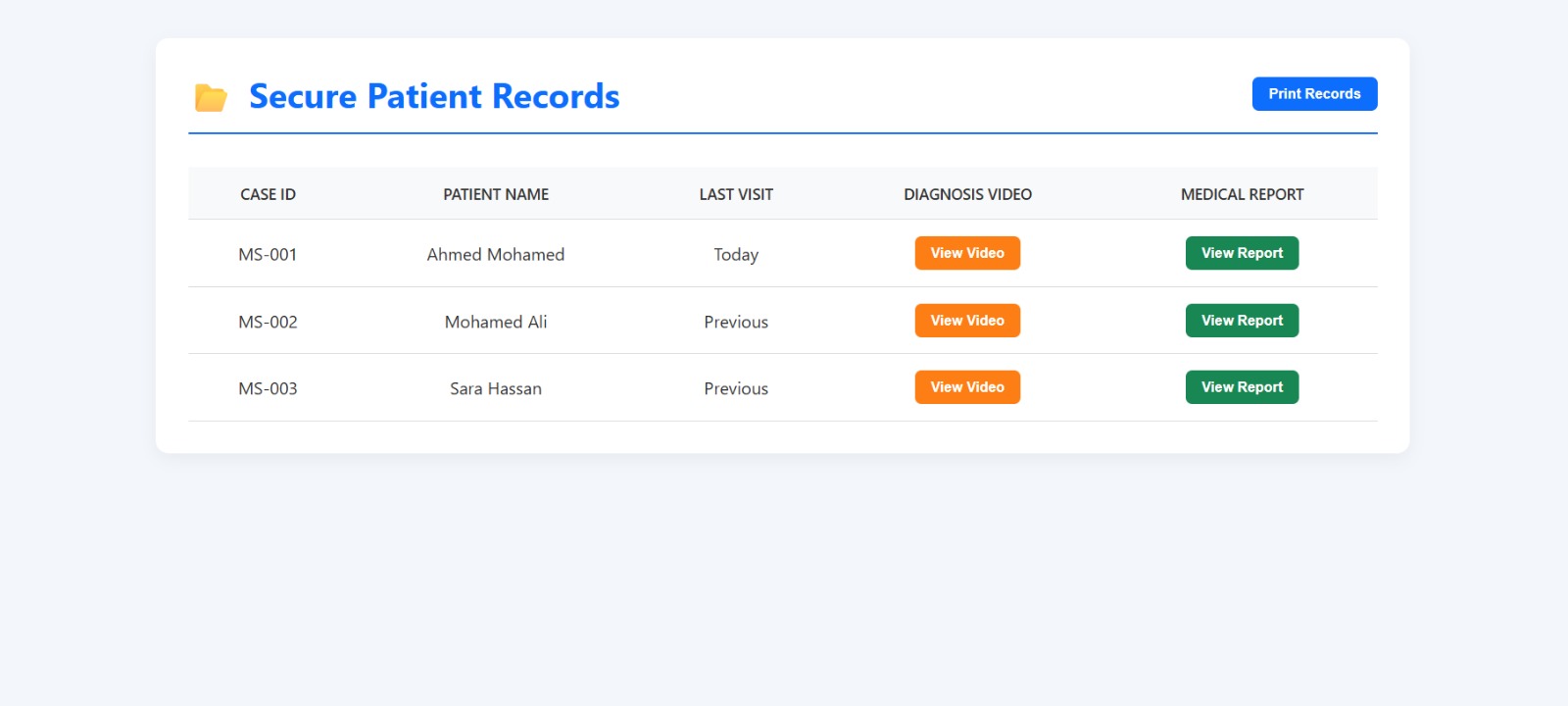
Patient Records Dashboard
-
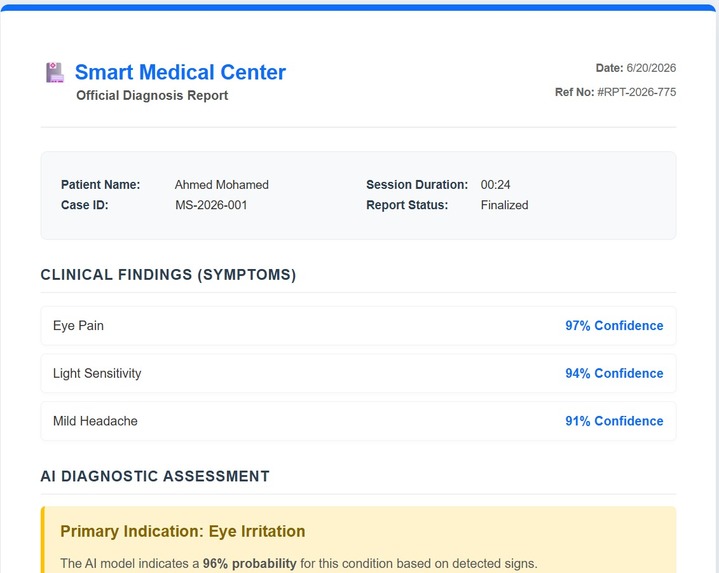
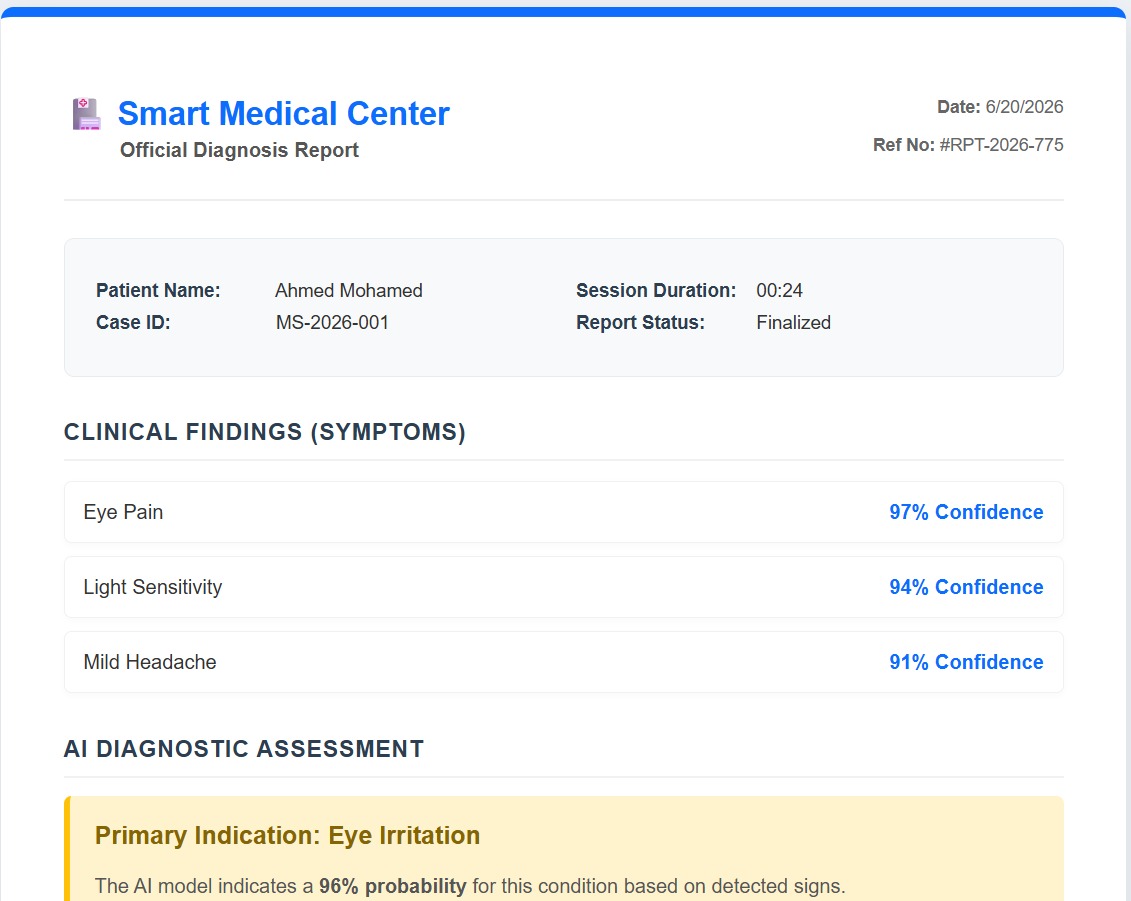
PDF Report
-
Home Page
Smart Medical Sign Translation System
Inspiration
Millions of deaf and hard-of-hearing individuals face significant communication barriers when seeking medical care. In many healthcare settings, professional sign language interpreters are unavailable, making it difficult for patients to accurately communicate symptoms and for doctors to understand their needs.
We wanted to create an AI-powered solution that enables deaf patients to communicate naturally through sign language while helping healthcare professionals receive structured medical information quickly and efficiently.
What it does
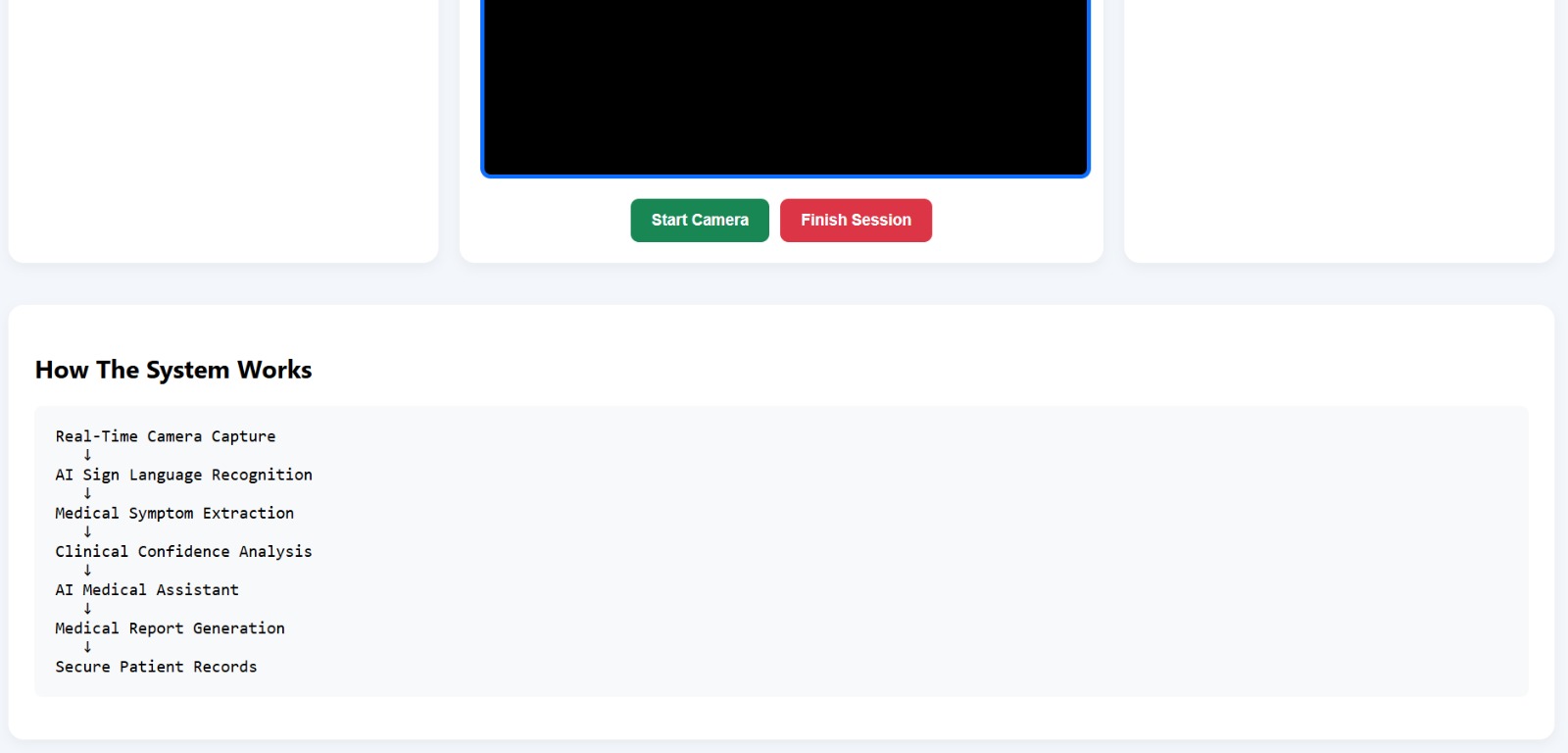
Smart Medical Sign Translation System translates medical sign language into structured clinical information in real time.
The platform captures sign language through a camera, sends video frames to an advanced multimodal AI model, translates signs into text, extracts symptoms, generates confidence scores, creates AI-assisted medical summaries, and automatically produces PDF medical reports.
The system also maintains secure patient records and supports healthcare professionals through a Human-in-the-Loop workflow.
How we built it
Frontend:
- React.js / Next.js
- JavaScript / TypeScript
- HTML5
- CSS3
- Tailwind CSS
- MediaRecorder API
Backend:
- Python
- FastAPI
- OpenAI API
- Uvicorn
- Pydantic
Infrastructure:
- REST APIs
- JSON
- Docker
Challenges we ran into
One of the biggest challenges was the complexity of sign language interpretation in medical contexts. Medical signs can vary between users, and environmental factors such as lighting conditions, camera positioning, and gesture clarity can affect recognition accuracy.
Another challenge was designing a safe healthcare workflow that keeps medical professionals in control while still benefiting from AI-powered assistance.
Accomplishments that we're proud of
- Real-time medical sign language translation
- AI-powered symptom extraction
- Confidence-based interpretation system
- Automated PDF medical reports
- Secure patient record management
- Human-in-the-Loop clinical workflow
- Improved healthcare accessibility for deaf patients
What we learned
Through this project, we learned about multimodal AI systems, healthcare accessibility challenges, responsible AI design, and the importance of human oversight in high-stakes environments such as healthcare.
What's next for Smart Medical Sign Translation System
Future improvements include:
- Support for additional sign languages
- Improved medical sign language coverage
- Enhanced patient record management
- Integration with hospital information systems
- More advanced clinical decision-support capabilities
Built With
- api
- css
- css3
- docker
- fastapi
- html5
- javascript
- json
- mediarecorder
- next.js
- openai
- pydantic
- python
- react.js
- rest
- tailwind
- typescript
- vicorn


Log in or sign up for Devpost to join the conversation.