-
-
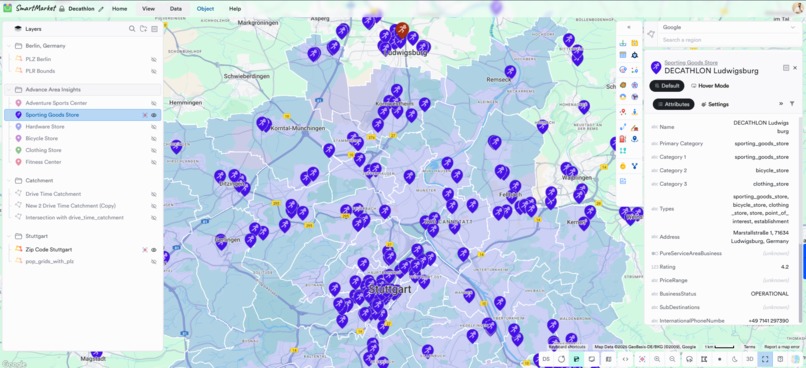
POIs Data
-
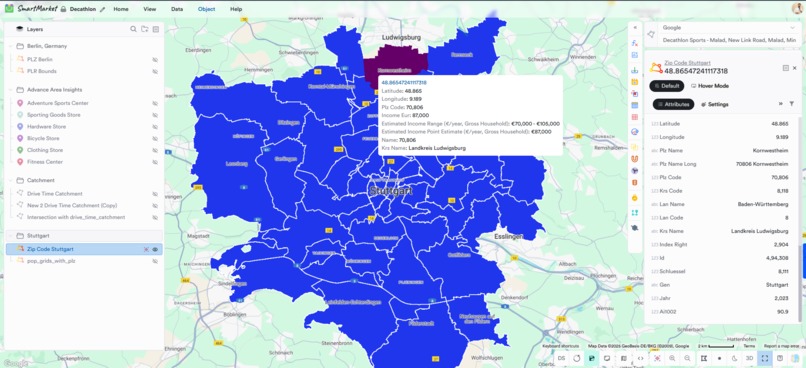
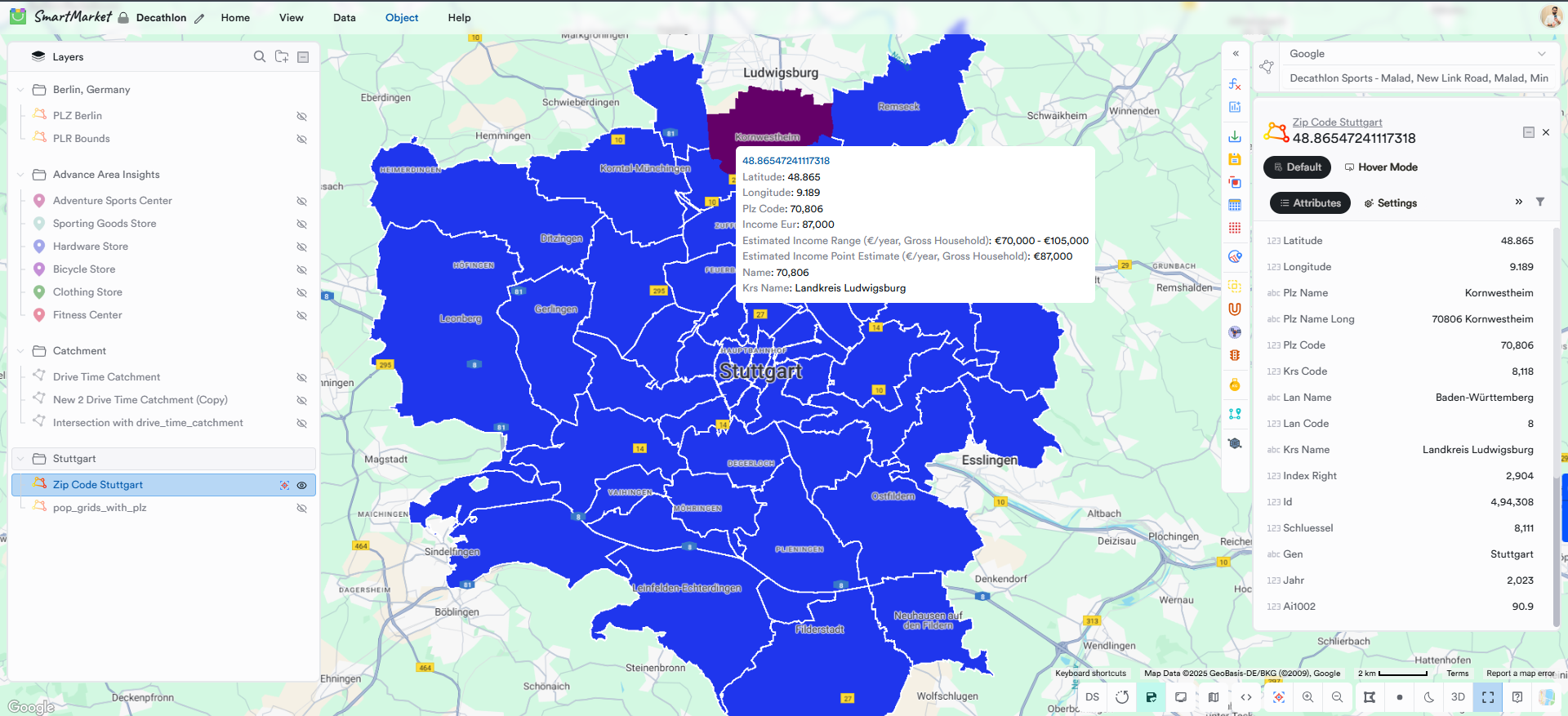
Zip Code and Demographic Data
-
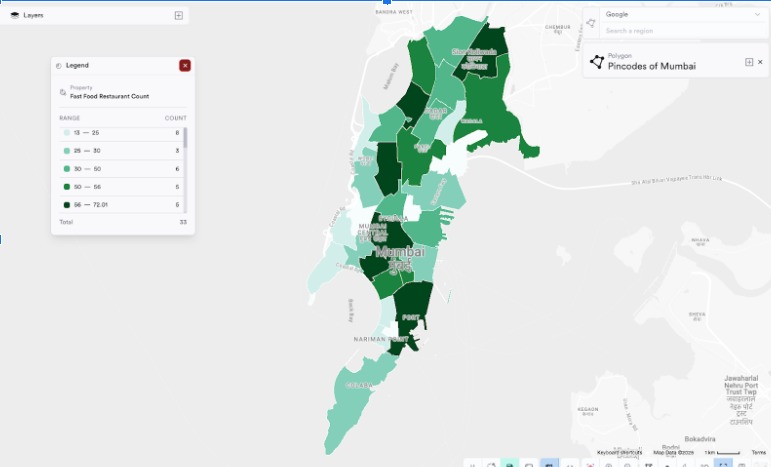

Inspiration
Retail expansion decisions have long been driven more by gut than data—and the costs are massive. Nearly 1 in 4 QSRs and retail outlets in India shut down within 3 years due to poor location choices. Despite having access to data, most businesses were still relying on static maps and siloed GIS teams, leading to underperforming stores and inefficient market strategies. At Lepton Software, we saw this as a clear opportunity: build a product that brings geospatial intelligence into the hands of strategy, marketing, and operations teams. That spark led to SmartMarket—a platform designed to turn location data into real business advantage.
What it does
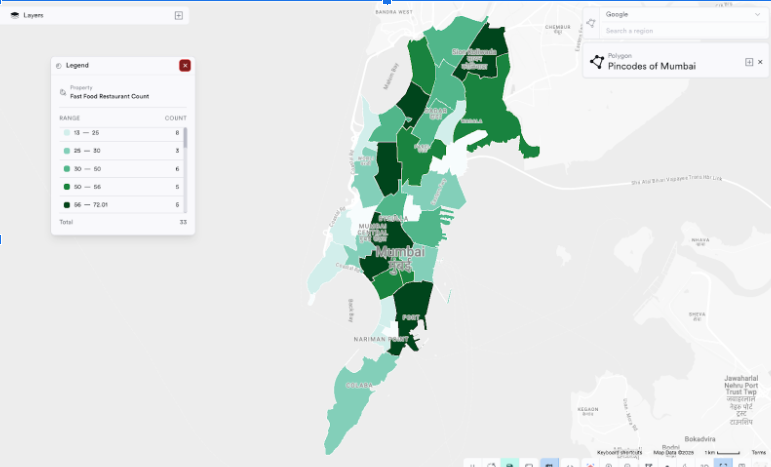
SmartMarket is an AI-powered location intelligence platform built on Google Maps. It helps businesses make smarter decisions about where to expand, how to define catchments, and how to evaluate commercial potential. It delivers predictive site selection, drive-time based catchment analysis, POI benchmarking, ROI simulations, and natural language querying—turning complex geospatial data into business-ready insights.
How we built it
We started by integrating Lepton’s proprietary data sets with foundational Google Maps APIs. As the platform evolved, we layered in AI/ML models, traffic and mobility data, and now generative AI for natural language queries. Every capability—from geocoding and drive-time analysis to POI enrichment—is deeply embedded with the Google Maps Platform, making SmartMarket not just map-based, but decision-ready. Today, it's a robust, scalable, and intuitive tool that’s transforming how businesses plan growth.
Challenges we ran into
One major challenge was overcoming the reliance on outdated location analysis methods—like static radius circles and manual GIS interpretation. Another was making complex geospatial logic usable for non-technical teams. Finally, building for scale across industries and geographies meant we had to ensure real-time performance, data accuracy, and UX simplicity—all while abstracting the backend complexity.
Accomplishments that we're proud of
We’ve moved enterprises from guesswork to AI-driven, location-led decision-making. SmartMarket users can now define true trade areas, not arbitrary radii. Generative AI now enables business users to ask complex location questions in natural language and get instant visual answers. We’ve successfully fused proprietary data with Google Maps to offer layered, deep-dive spatial intelligence—without requiring a GIS background. SmartMarket is already making a measurable impact for some of India’s most forward-looking brands: Croma uses SmartMarket to evaluate store potential, optimize catchments, and drive location-led expansion with confidence across urban markets. Ather Energy relies on our platform to identify high-ROI zones for EV charging stations by layering demographic, traffic, and accessibility insights. Tata 1MG leverages SmartMarket to fine-tune its retail and last-mile strategies—ensuring hyperlocal presence where demand actually exists. IOCL uses the platform to streamline planning for new outlets and optimize retail operations based on footfall and mobility data.
What we learned
Real-time data changes the game. Traditional tools weren’t built for today’s dynamic urban environments, but Google Maps’ live traffic, Places Insights, and mobility signals allowed us to build models that reflect reality. We also learned that the true power of location intelligence lies in accessibility—SmartMarket had to be intuitive enough for any business user, not just GIS pros. And finally, natural language is the future of BI—when users can talk to their data, adoption skyrockets.
What's next for Smart Market
We’re expanding into new verticals like BFSI, healthcare, and logistics. Our next frontier is deeper personalization—tailoring insights based on user roles, goals, and regional context. We’re also enhancing our Gemini AI capabilities to generate not just insights but actionable recommendations (e.g., “Launch campaign here with X reach potential”). And as we scale globally, our focus remains the same: make geospatial intelligence accessible, predictive, and indispensable.

Log in or sign up for Devpost to join the conversation.