-
-
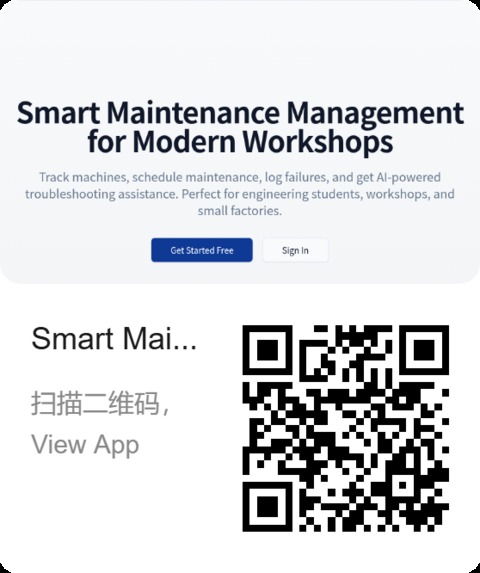
Smart Maintenance Assistant
Inspiration
As a final-year mechanical engineering student, I have always been fascinated by how automation, AI, and embedded systems can improve industrial efficiency and solve real-world engineering problems. My inspiration came from observing the challenges faced in traditional industrial monitoring systems, especially in thermal systems and smart automation processes. Many industries still rely on manual monitoring, which increases downtime, energy loss, and maintenance costs.
I wanted to build a solution that combines intelligent monitoring, automation, and real-time data analysis into a single smart platform. The vision behind this project was to create a scalable foundation for future industrial automation systems and eventually contribute toward my long-term goal of building a smart automation company focused on intelligent engineering solutions.
What it does
The project is a smart automation and monitoring platform designed to collect real-time sensor data, analyze system performance, and provide intelligent decision-making support. It can monitor parameters such as temperature, pressure, system efficiency, and equipment status while generating alerts and optimization recommendations. The platform enables: Real-time monitoring of industrial parameters Intelligent automation and control logic Predictive maintenance concepts Data visualization dashboards Remote system accessibility Improved operational efficiency and safety
How we built it
The project was developed using a combination of software development, embedded systems, and engineering design principles. The development process included: Designing the system architecture and workflow Integrating sensors and embedded hardware Building backend logic for data processing Creating dashboards and visualization tools Implementing automation and alert systems Testing system performance and reliability The mathematical modeling for system monitoring involved efficiency and performance calculations such as: η=Input Power Output Power×100 For thermal monitoring systems, heat transfer and efficiency equations were also used: Q=mc pΔT These calculations helped improve system optimization and predictive analysis.
Challenges we ran into
One of the biggest challenges was integrating hardware and software components into a stable and reliable system. Sensor calibration, communication delays, and real-time data synchronization required significant debugging and testing. Another challenge was optimizing the automation logic while keeping the system scalable and efficient. Balancing performance with limited hardware resources also required careful engineering decisions. Additionally, learning and integrating multiple technologies simultaneously — including embedded systems, AI concepts, backend development, and automation frameworks — was both challenging and highly educational.
Accomplishments that we're proud of
Successfully developed a working smart automation prototype Integrated real-time monitoring and intelligent control Built a scalable architecture for future expansion Improved understanding of AI-assisted industrial systems Combined mechanical engineering concepts with software and embedded development This project represents an important milestone in my journey toward smart industrial automation and intelligent engineering solutions.
What we learned
Through this project, I learned how multidisciplinary engineering projects require the integration of mechanical systems, electronics, programming, and problem-solving skills. I also gained practical experience in: Embedded systems integration Sensor communication Real-time data handling System optimization Automation logic Software development workflows Debugging and testing complex systems Most importantly, I learned how engineering innovation happens when theoretical knowledge is applied to real-world industrial problems.
What's next for Smart Maintenance Assistant
The next phase of the project includes: AI-based predictive maintenance IoT cloud integration Advanced analytics dashboards Mobile application support Energy optimization algorithms Industrial-scale deployment testing The long-term vision is to transform this project into a smart industrial automation platform capable of improving efficiency, sustainability, and intelligent decision-making across industries.


Log in or sign up for Devpost to join the conversation.