Inspiration
ICU patients can deteriorate rapidly, and early warning signs are often buried in continuous vital data. We wanted to assist clinicians with intelligent, proactive alerts instead of reactive monitoring.
What it does
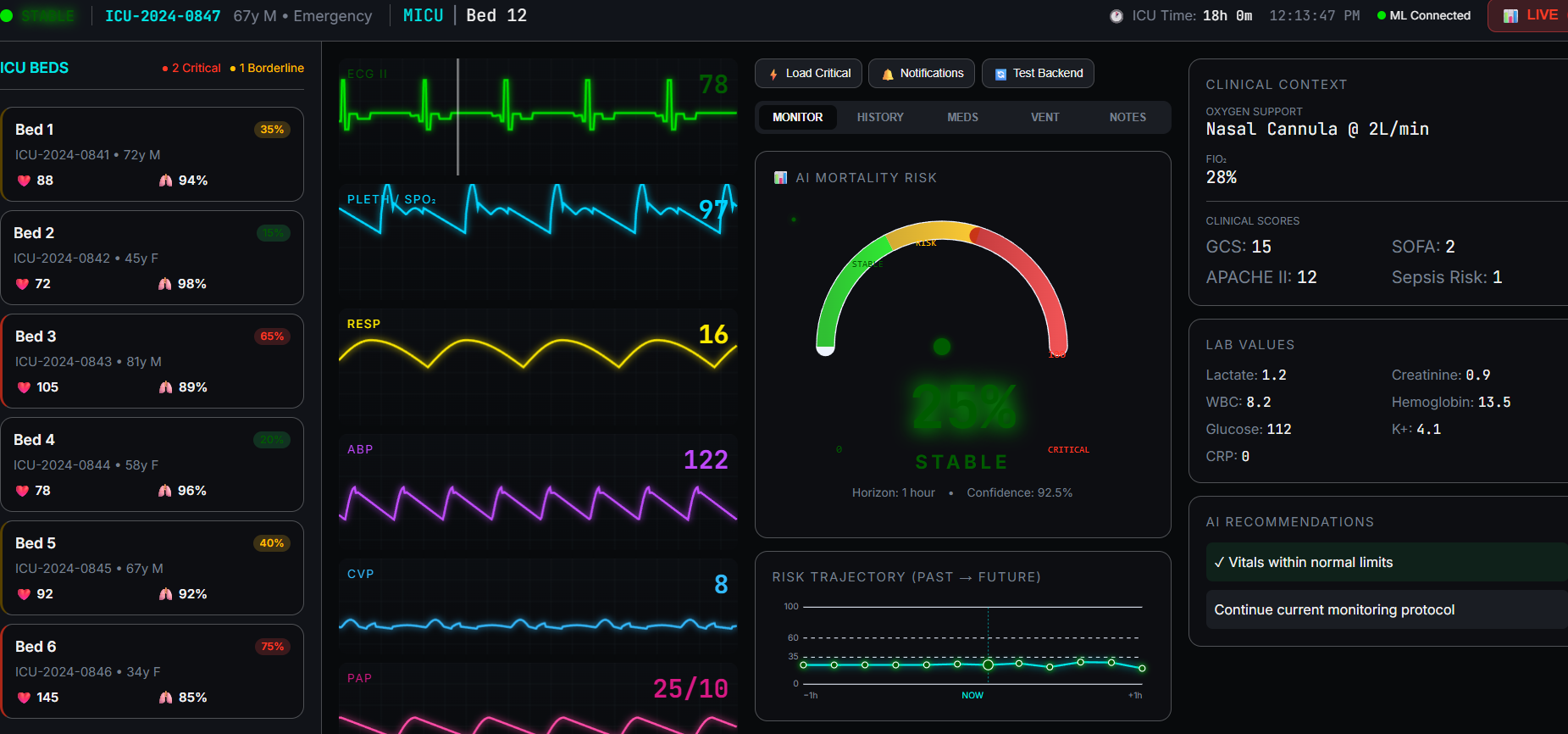
The system analyzes ICU patient vital data using machine learning to predict early signs of clinical deterioration and risk, enabling timely intervention.
How we built it
We used Python for data processing and model training, machine learning algorithms for prediction, and a web interface built with HTML, CSS, and JavaScript to visualize results.
Challenges we ran into
Handling noisy and incomplete medical data, selecting meaningful features, avoiding false alarms, and balancing prediction accuracy with real-time usability were major challenges.
Accomplishments that we're proud of
We successfully built an end-to-end ML-powered ICU monitoring prototype that demonstrates early risk prediction with a functional and user-friendly interface.
What we learned
We gained hands-on experience in healthcare ML, data preprocessing, model evaluation, and integrating machine learning systems into real-world applications.
What's next for smart machine learning ICU project
We plan to improve model accuracy with real ICU datasets, add real-time sensor integration, clinician dashboards, explainable AI, and deploy it as a scalable healthcare system.
Built With
- css
- flask
- html
- javascript
- pandas
- python-(machine-learning)
- scikit-learn

Log in or sign up for Devpost to join the conversation.