Inspiration
As a homeowner juggling multiple smart devices from different brands, I grew frustrated with the endless setup hours to create simple routines like "Lights On When I Arrive." I realized many in my community faced the same issue – smart homes were supposed to simplify life, not complicate it. That’s when I set out to build a library of pre-built, ready-to-use automation scenes that work across brands, so anyone could unlock their devices’ potential without tech expertise.
What it does
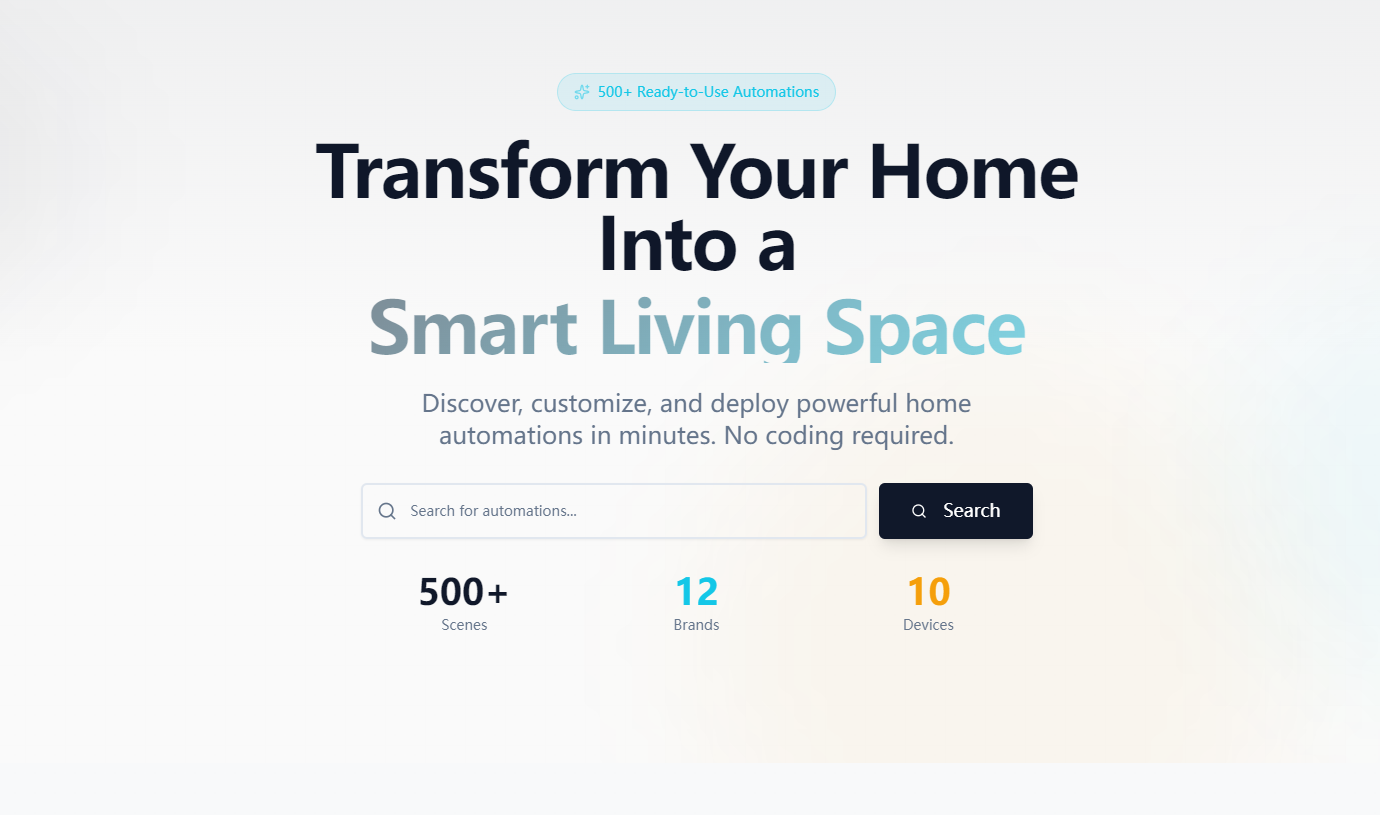
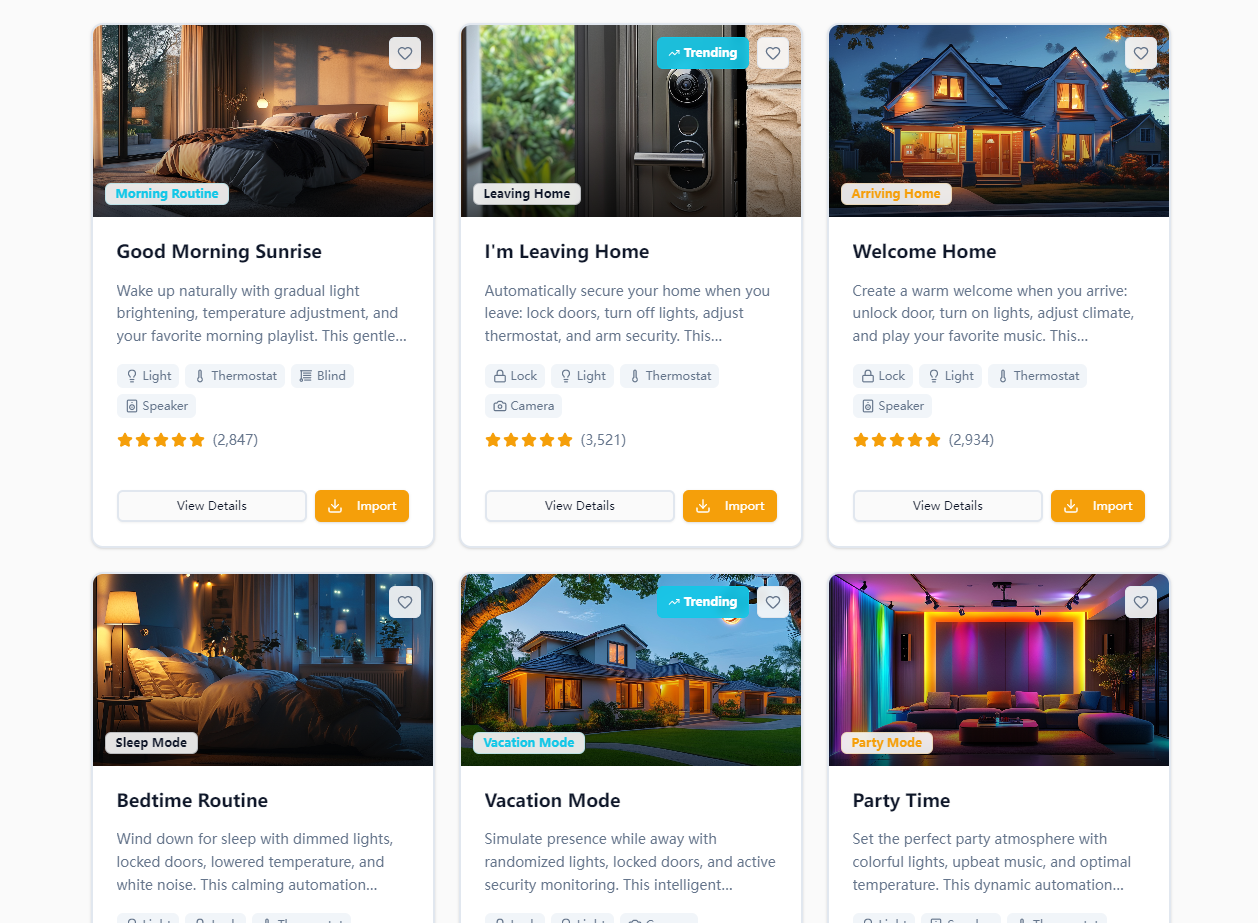
HomeAutomation Recipes is an all-in-one hub for smart home automation. It offers 500+ pre-built scenes (Morning Routine, Vacation Mode, etc.), filters by brand compatibility, lets users import scenes to their systems in one click, explore community-created ideas, and get AI-powered personalized recommendations. Users can also preview scene effects to see exactly how routines work before implementation.
How we built it
We started by mapping core user needs (discovery, compatibility, ease of use) and structuring pages for intuitive navigation. We built the frontend with React and TypeScript for responsiveness across devices, used Node.js for backend logic, and MongoDB to store scene/community data. We integrated brand-specific APIs for direct config exports and AI plugins to analyze device inventories for recommendations. The UI was designed in Figma, with minimal icons and card-based layouts for clarity.
Challenges we ran into
The biggest hurdle was device compatibility – different brands use unique configuration formats, so we had to build a flexible matching system to flag full/partial support. We also struggled with making AI recommendations feel truly personalized with limited device data, and ensuring smooth animation previews across all browsers. Additionally, moderating community content while keeping submission flows simple was a balancing act.
Accomplishments that we're proud of
We built a library of 500+ fully categorized scenes that work with major smart home brands, and the one-click import feature reduces setup time from hours to seconds. The AI recommendation engine now prioritizes relevant, underutilized device combinations, and the platform loads in under 3 seconds on standard broadband – meeting all our performance goals. We’re most proud of creating a space where casual users and enthusiasts alike can share and discover smart home ideas.
What we learned
We learned the importance of user-centric design – early testing revealed users cared more about brand compatibility than flashy features, so we pivoted to prioritize filter accuracy. We also gained insight into API integration limitations across smart home ecosystems, and how to create fallback experiences (like manual setup guides) for unsupported systems. Most importantly, we learned that simplicity beats complexity in smart home tools – users want results, not technical jargon.
What's next for this project
Next, we plan to expand brand support to include more regional smart home ecosystems, add interactive tutorials for manual setup, and introduce a lightweight editor for users to tweak pre-built scenes. We also want to integrate seasonal scene collections (holiday lighting, summer energy-saving) and enhance community features with collaborative scene-building. Long-term, we aim to partner with smart home brands to streamline direct API integration and make automation even more accessible.
Built With
- amazon-web-services
- figma
- mongodb
- rest-apis

Log in or sign up for Devpost to join the conversation.