-
-
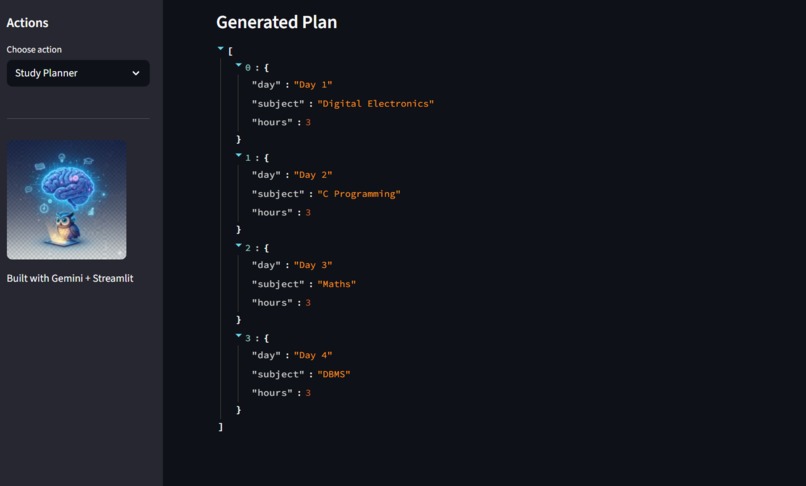
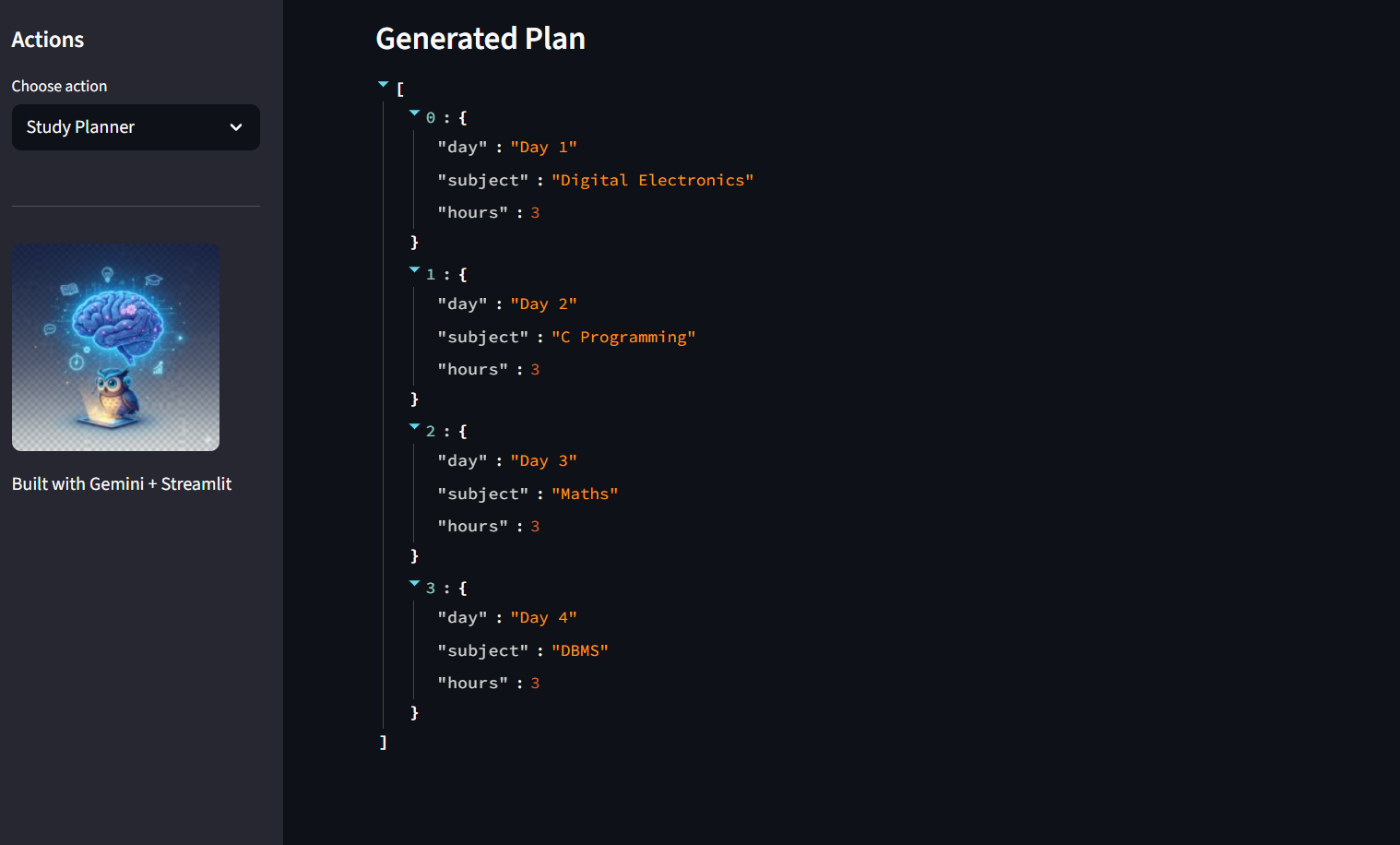
Study planner
-
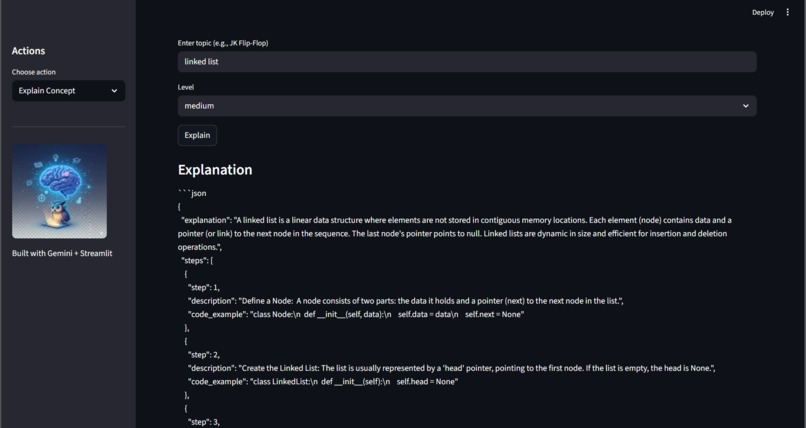
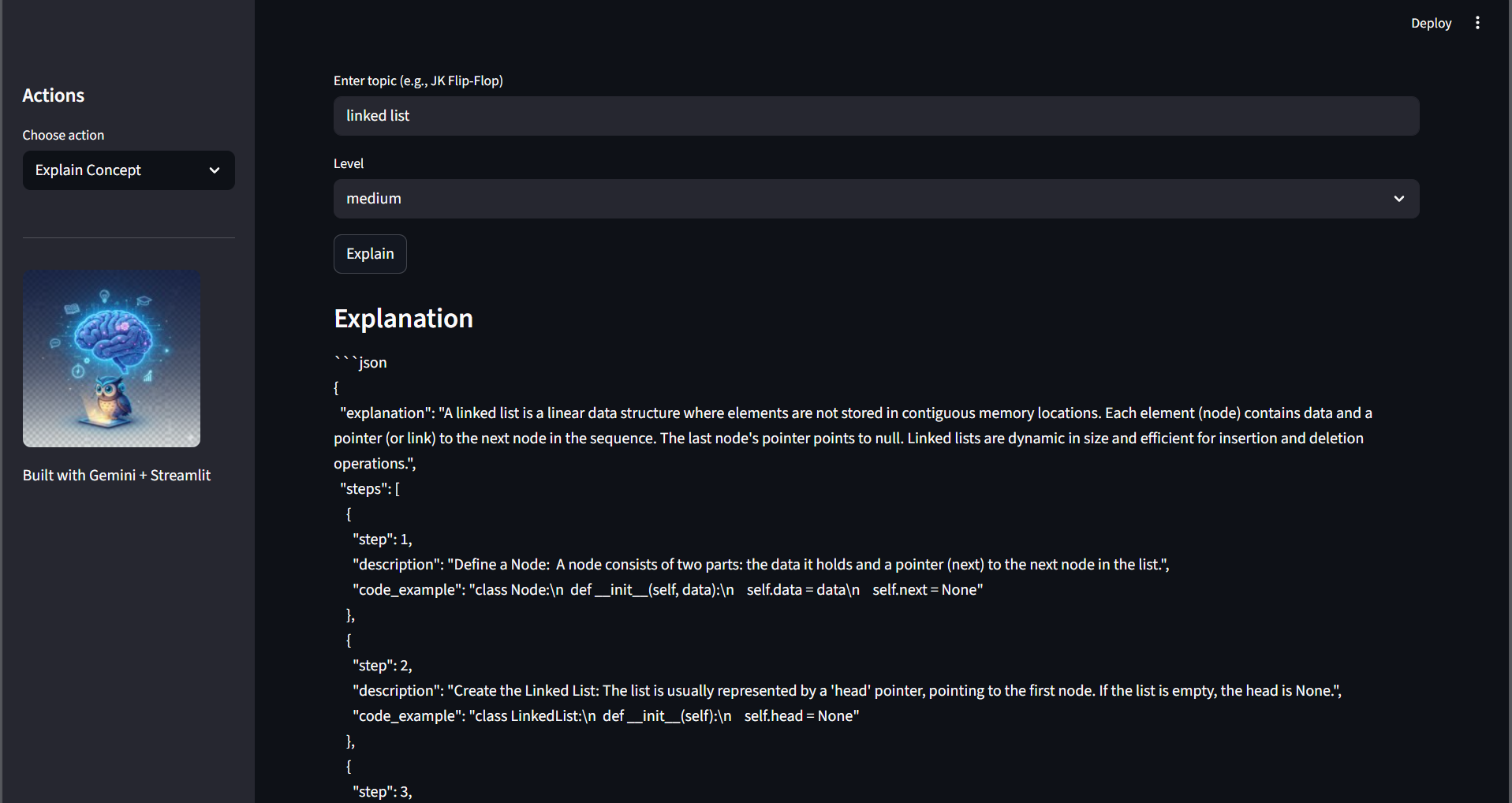
Concept Explainer
-
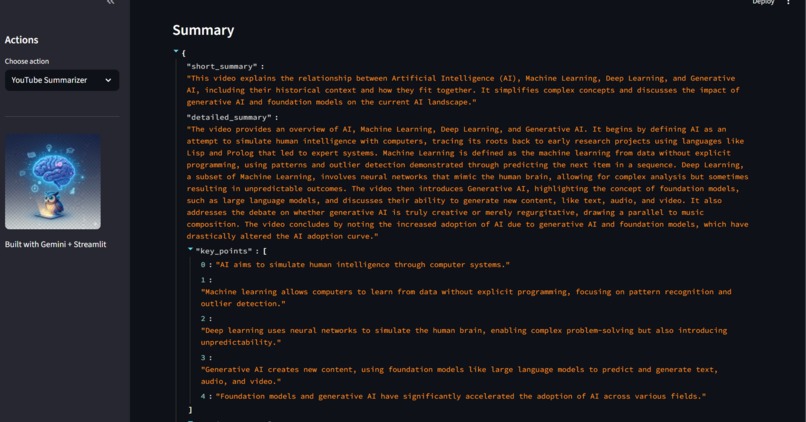
YouTube video Summarizer
-
-
Study planner (Main layout)
-
Inspiration
The inspiration for Smart Learning Coach came from my own experience as a student. While preparing for exams and learning technical subjects, I constantly faced the same problems: unstructured study routines, difficulty understanding complex concepts, long YouTube videos with no clear notes, and the extra effort required to create flashcards or quizzes for revision.
Although many AI tools exist, most of them solve only one part of the learning problem—summarization, explanation, or question generation—but not the entire learning workflow. I wanted to build a system that behaves more like a personal learning coach, guiding a student from planning -> learning -> revision -> assessment.
This project was also inspired by the Gemini course content, especially the idea of agents as specialized problem solvers. I wanted to apply those concepts to a real, meaningful student-focused problem.
What it does
Smart Learning Coach is an AI-powered study assistant built using Gemini 2.0 Flash, Python, and Streamlit. It uses a multi-agent architecture, where each agent focuses on a specific learning task.
The system provides:
Study Planner – Generates personalized, day-wise study plans based on subjects, exam date, and available hours.
Concept Explainer – Explains any topic at simple, medium, or advanced levels.
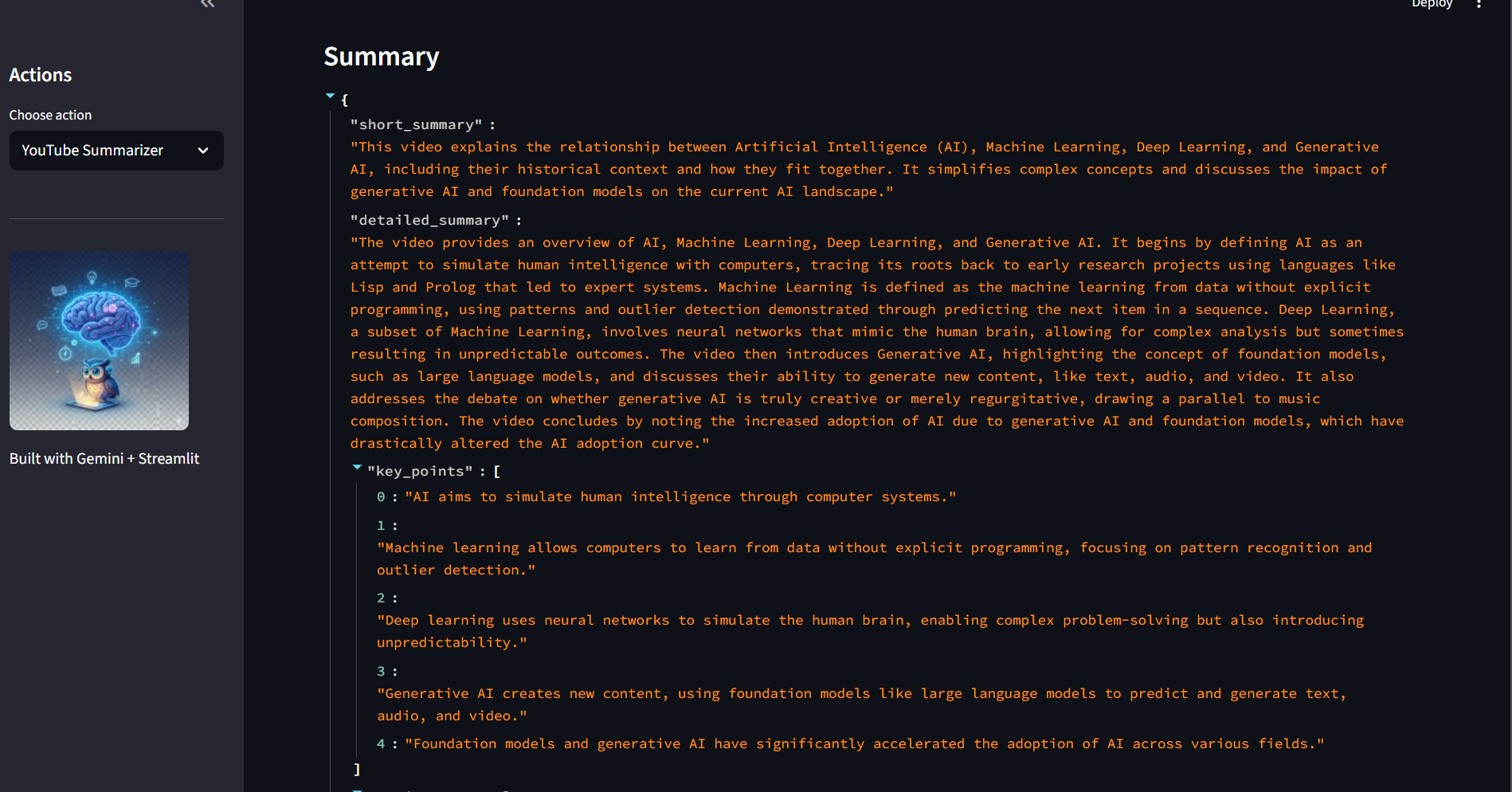
YouTube Video Summarizer – Extracts transcripts and converts long videos into structured summaries, notes, chapters, and tags.
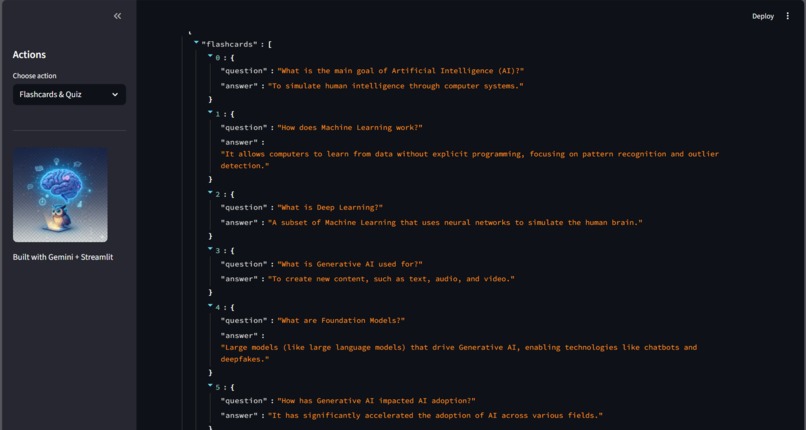
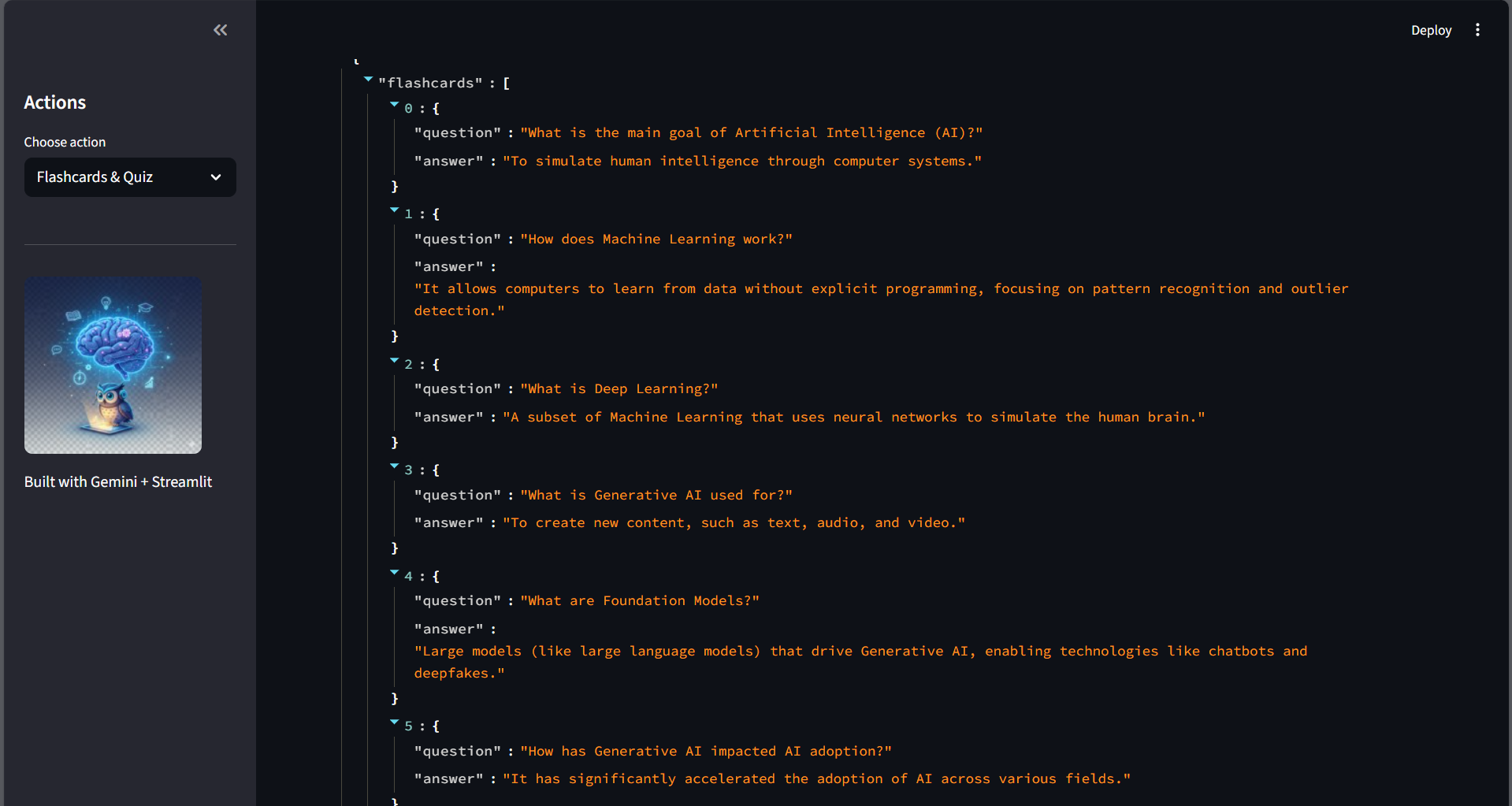
Flashcard Generator – Automatically creates revision-ready flashcards from summaries.
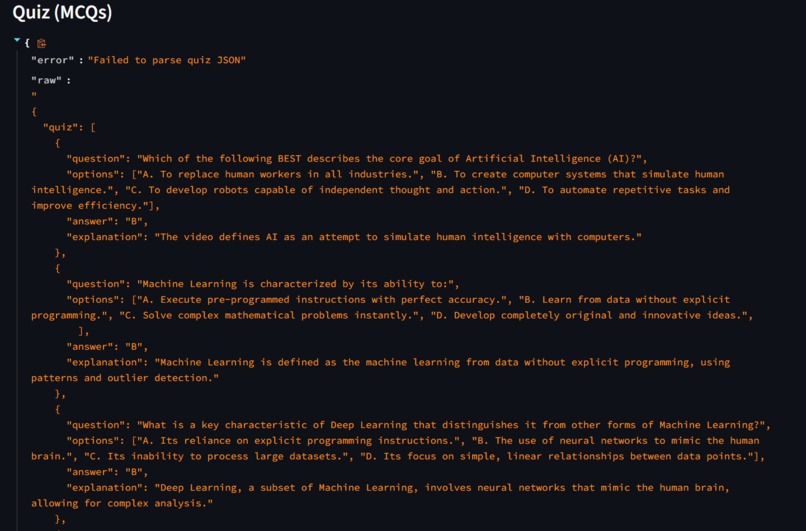
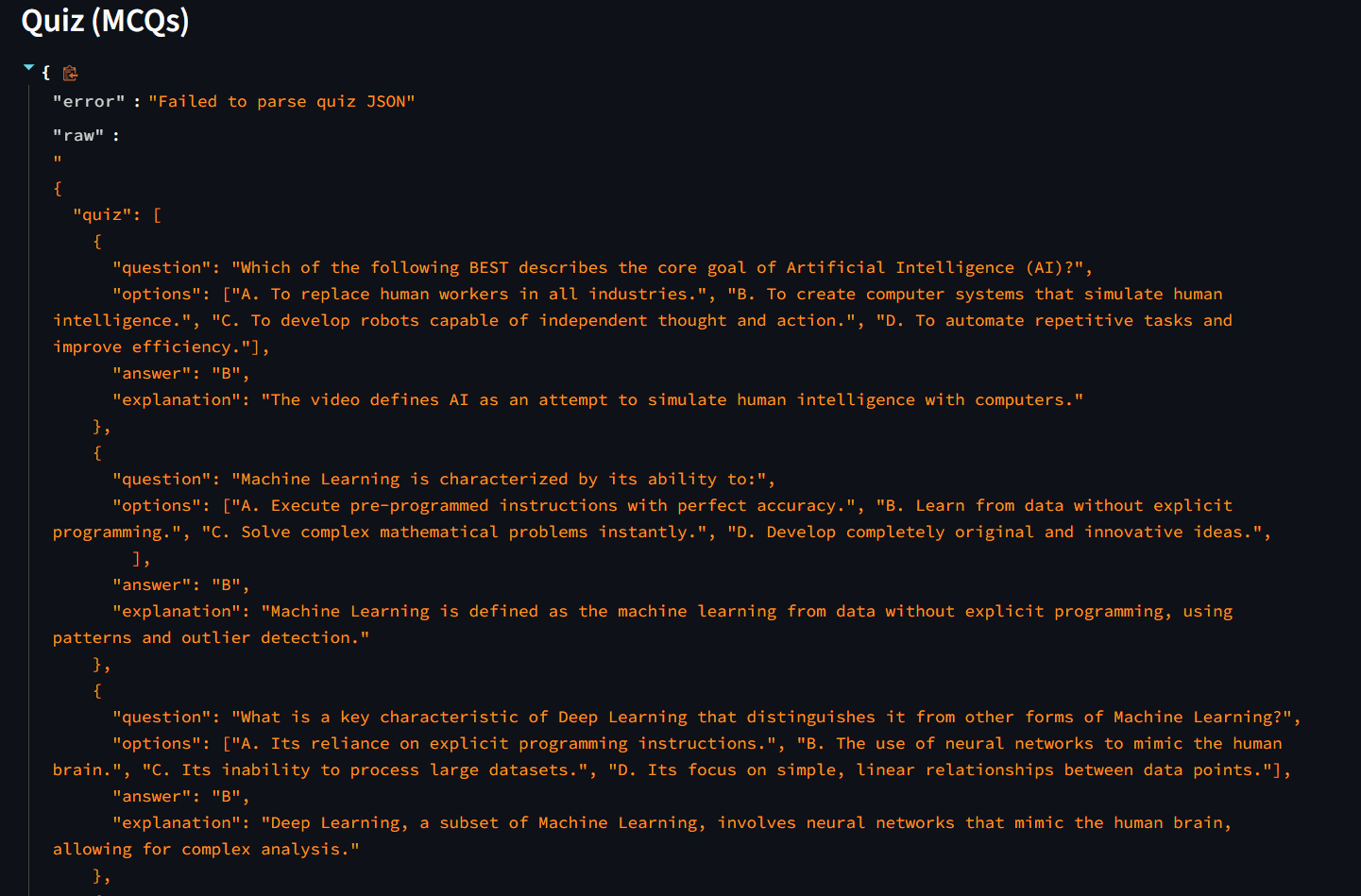
Quiz / MCQ Generator – Produces exam-oriented MCQs with correct answers and explanations.
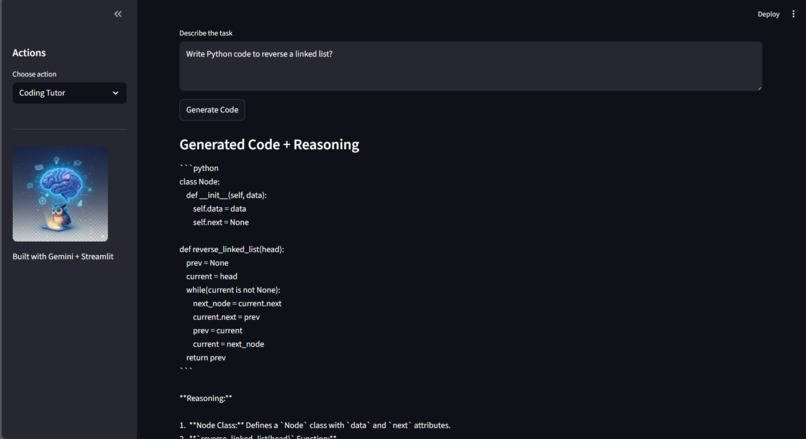
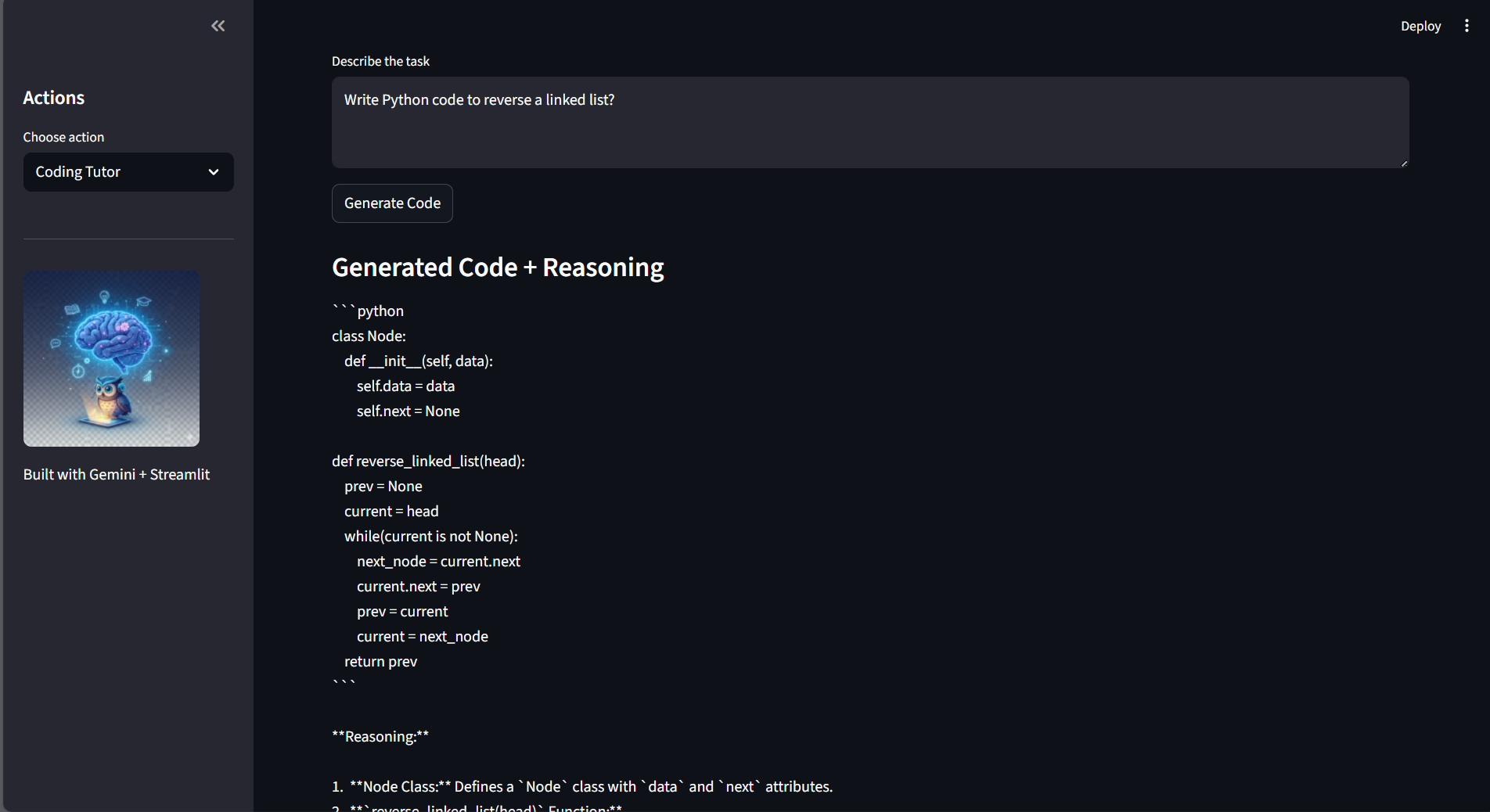
AI Coding Tutor – Explains code, helps debug errors, and generates code step-by-step.
PDF Export – Allows users to download summaries, flashcards, and quizzes as PDFs.
Together, these features form a complete learning pipeline instead of isolated tools.
How we built it
The project is built using a modular, agent-based design.
Architecture
Streamlit acts as the user interface and orchestration layer.
Each learning task is handled by a dedicated agent:
Planner Agent
Explainer Agent
Summarizer Agent
Flashcard Agent
Quiz Agent
Coding Agent
Each agent uses Gemini 2.0 Flash for reasoning and content generation, with carefully designed prompts and structured outputs.
Tools
YouTube Transcript API is used to fetch transcripts for video summarization.
ReportLab is used to generate downloadable PDFs.
A simple memory system stores session-level context for smoother interaction.
Design Principles
Separation of concerns (one agent = one responsibility)
Reusable and extensible code
Secure API handling using environment variables
Clear file structure and readable, commented code
This approach reflects real-world AI system design rather than a single monolithic prompt.
Challenges we ran into
Prompt design for agents: Ensuring each agent stayed within its role without overlapping responsibilities required careful iteration.
YouTube transcript availability: Not all videos have transcripts, so fallback handling had to be implemented.
Structured outputs: Generating consistent flashcards and quizzes required enforcing strict output formats.
Balancing simplicity and depth: Explanations needed to be helpful for beginners while still useful for advanced learners.
Performance considerations: Keeping responses fast while running multiple agent calls.
Each challenge helped refine both the technical design and my understanding of agent-based systems.
Accomplishments that we're proud of
Successfully designed and implemented a true multi-agent system
Meaningful integration of Gemini 2.0 Flash across multiple agents
End-to-end learning workflow in a single application
Clean, modular codebase suitable for extension and deployment
Practical usefulness for real students, not just a demo project
PDF export functionality for offline learning and revision
What we learned
Through this project, I learned:
How to design agent roles and responsibilities
Practical prompt engineering for structured outputs
How to integrate tools with LLM-based agents
Building scalable AI applications with modular architecture
Streamlit-based UI design for AI applications
Importance of documentation and code clarity
How theory from the Gemini course applies to real systems
Most importantly, I learned how agents can transform AI applications from simple chatbots into intelligent systems.
What's next for Smart Learning Coach
Planned future improvements include:
Text-to-Speech for audio-based learning
Long-term learning memory and progress tracking
Syllabus-based learning packs (NCERT / university)
Multi-language support
Interactive coding sandbox
Deployment on cloud platforms such as Cloud Run or Hugging-Face Spaces
Learning analytics and personalized recommendations
The long-term vision is to make Smart Learning Coach a truly adaptive, AI-driven personal tutor.


Log in or sign up for Devpost to join the conversation.