-
-
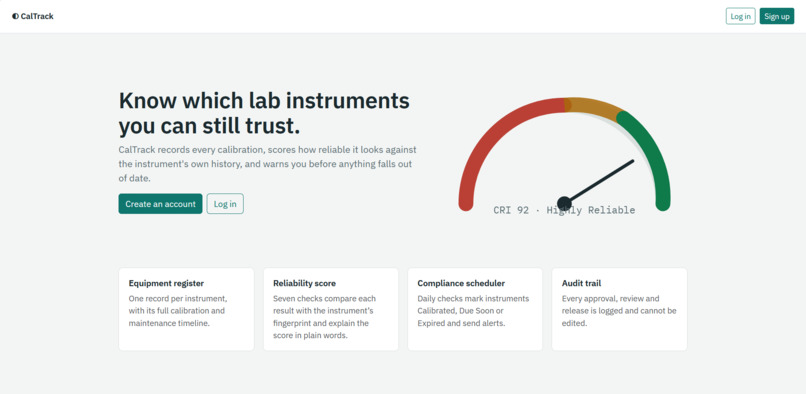
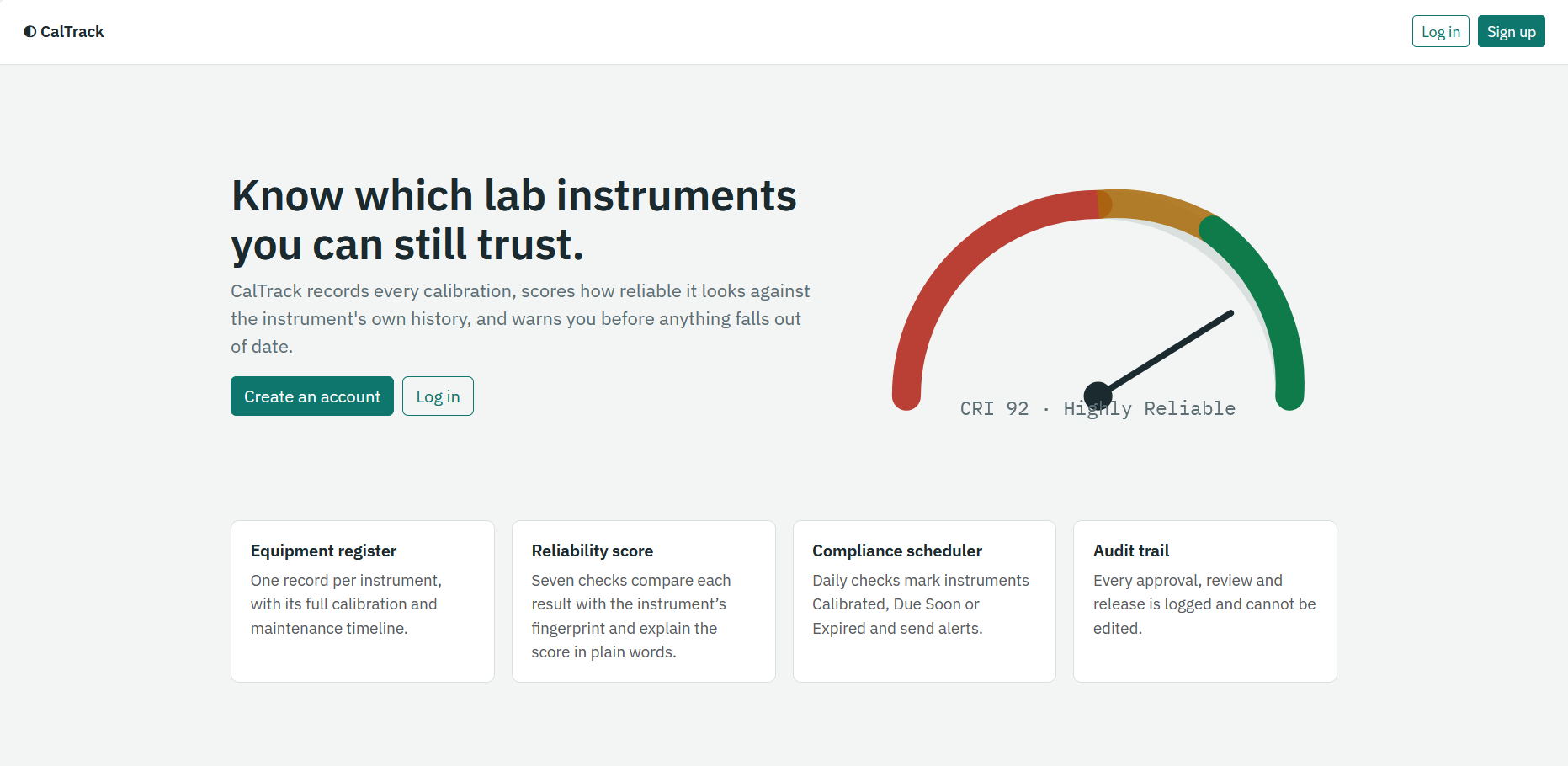
Landing Page
-
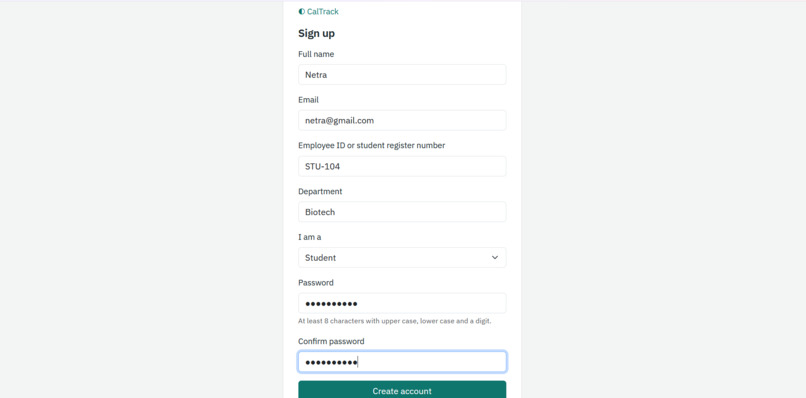
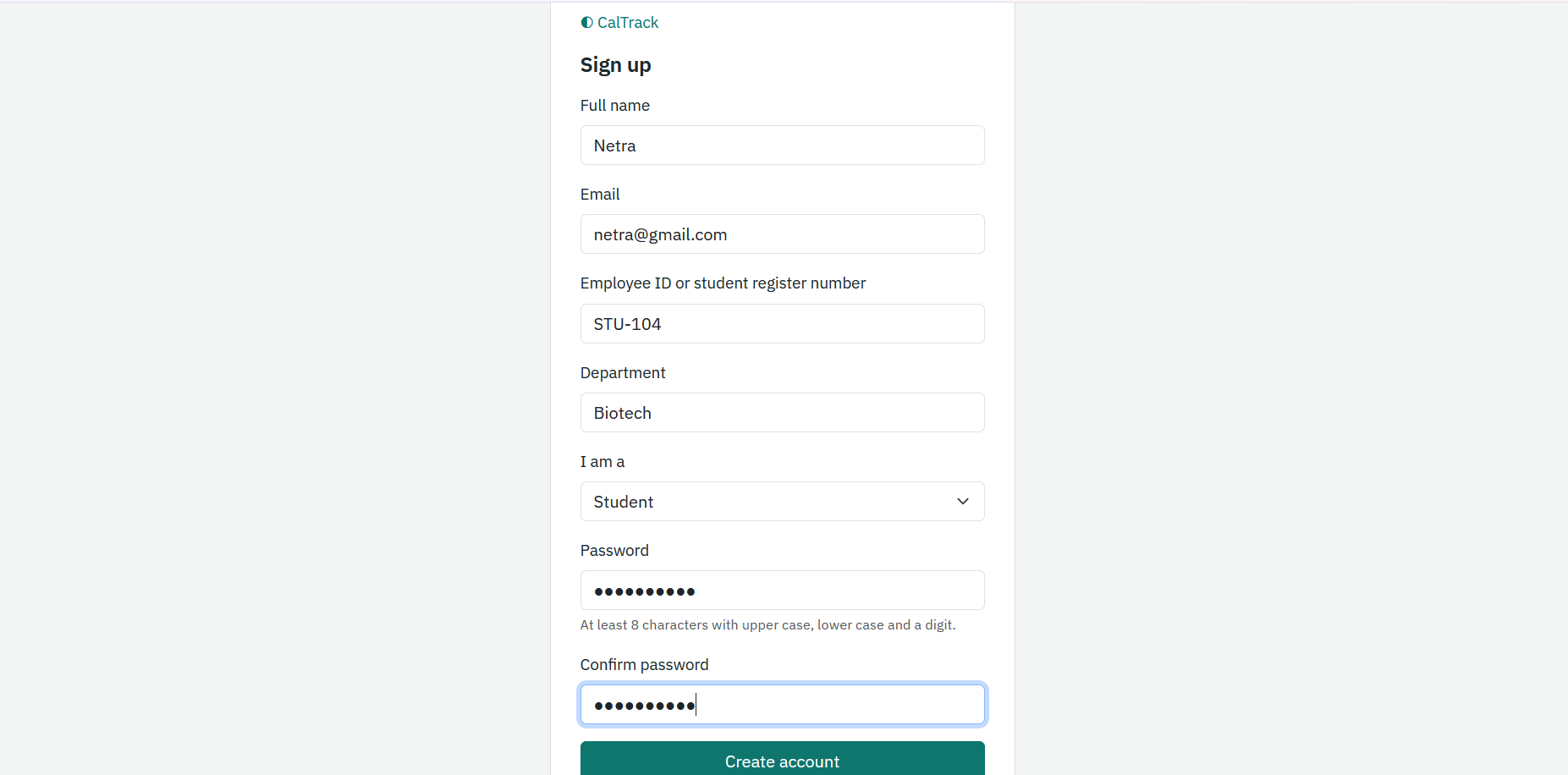
Registration page
-
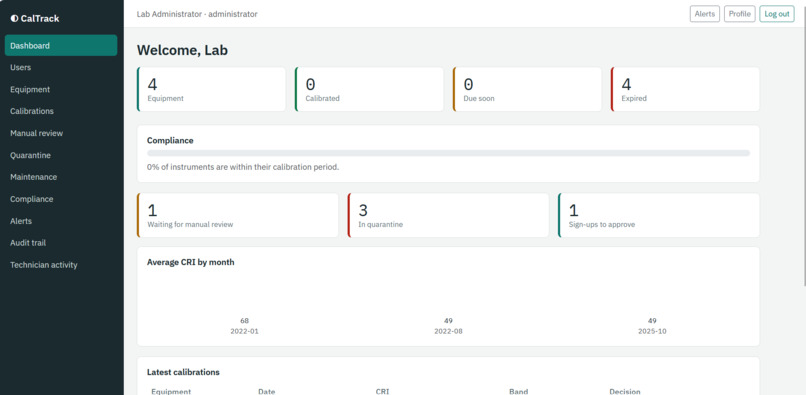
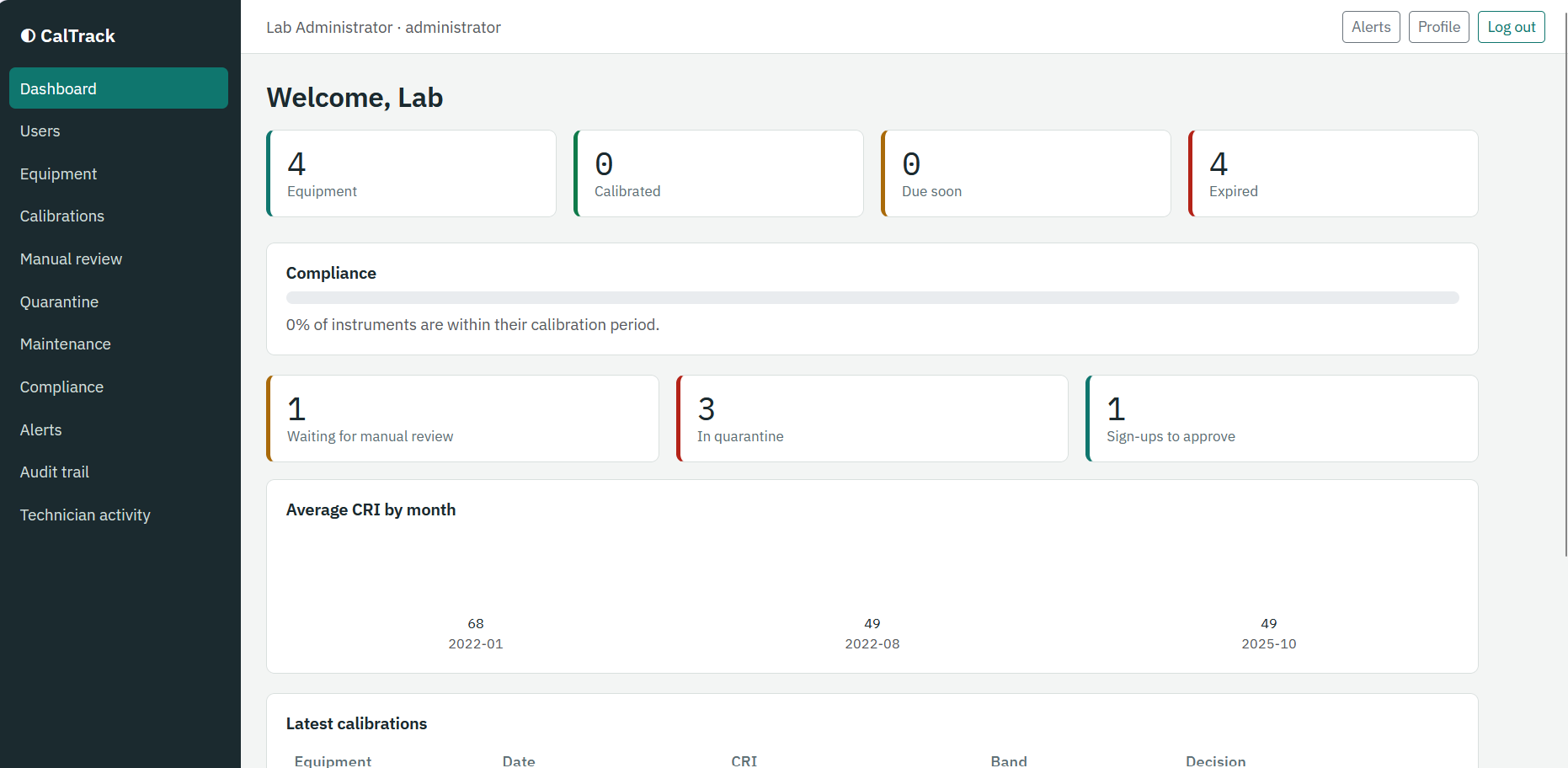
Dashboard
-
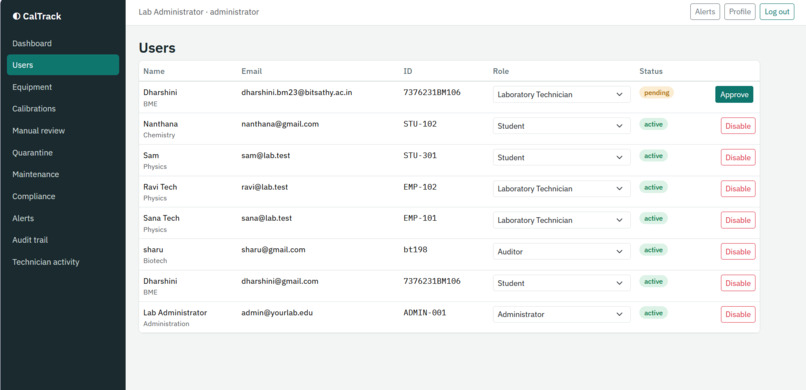
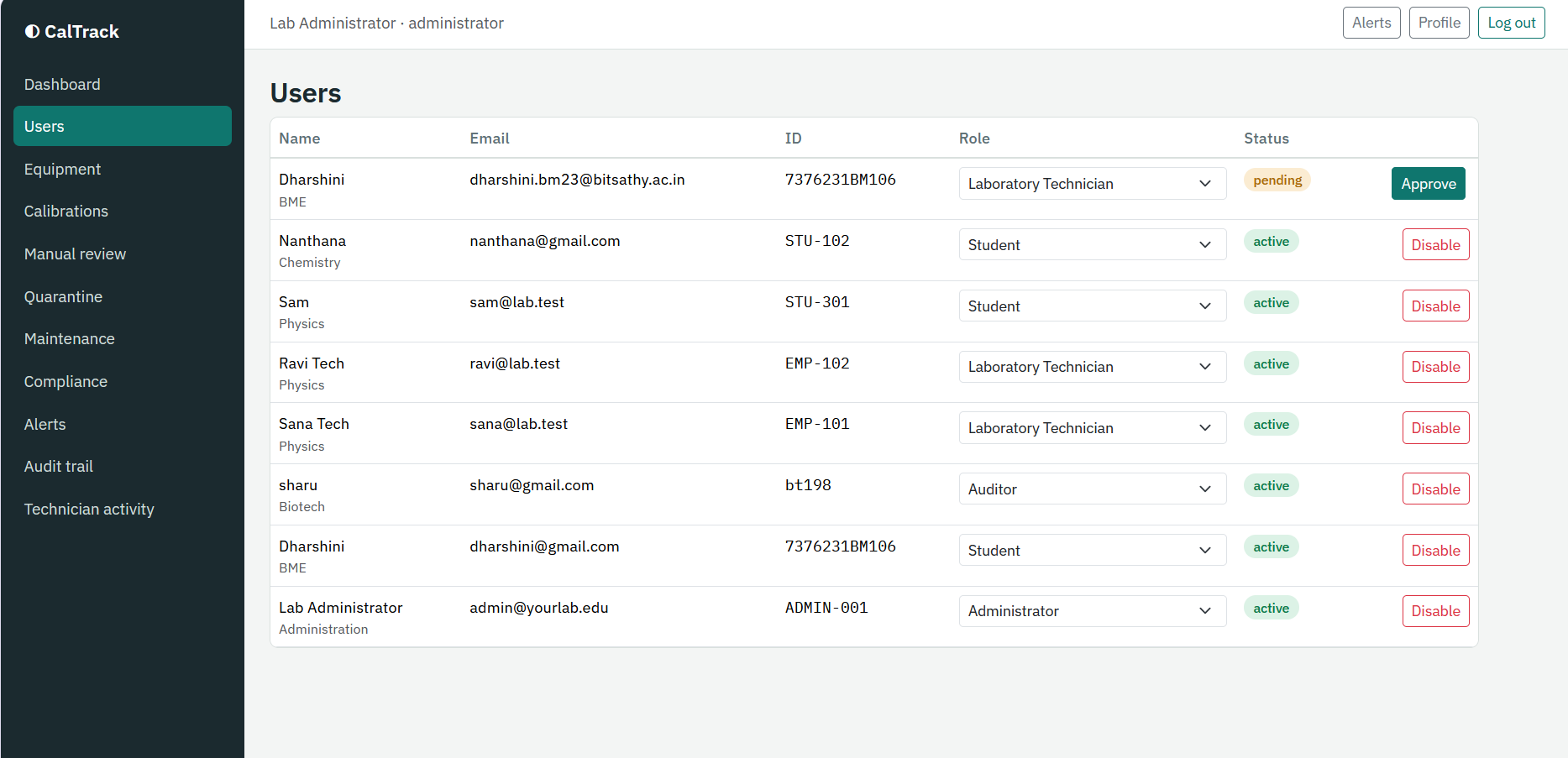
Admin approves user
-
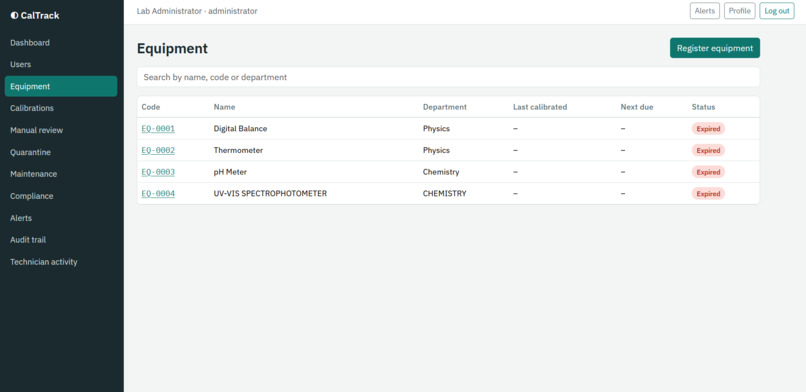
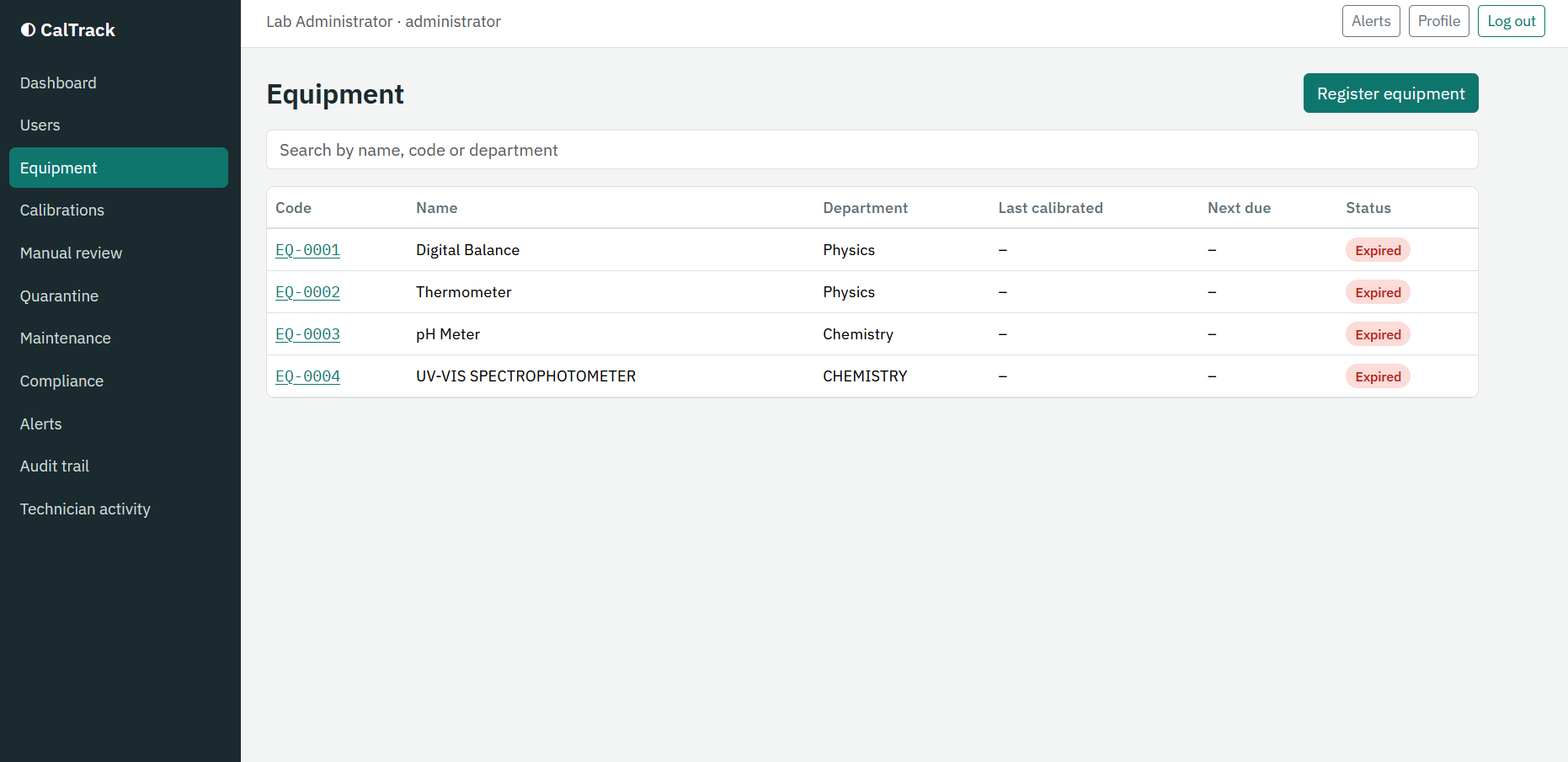
Details of Equipment
-
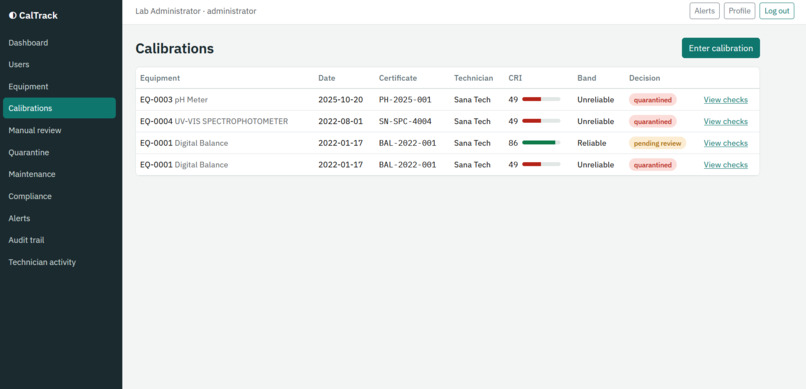
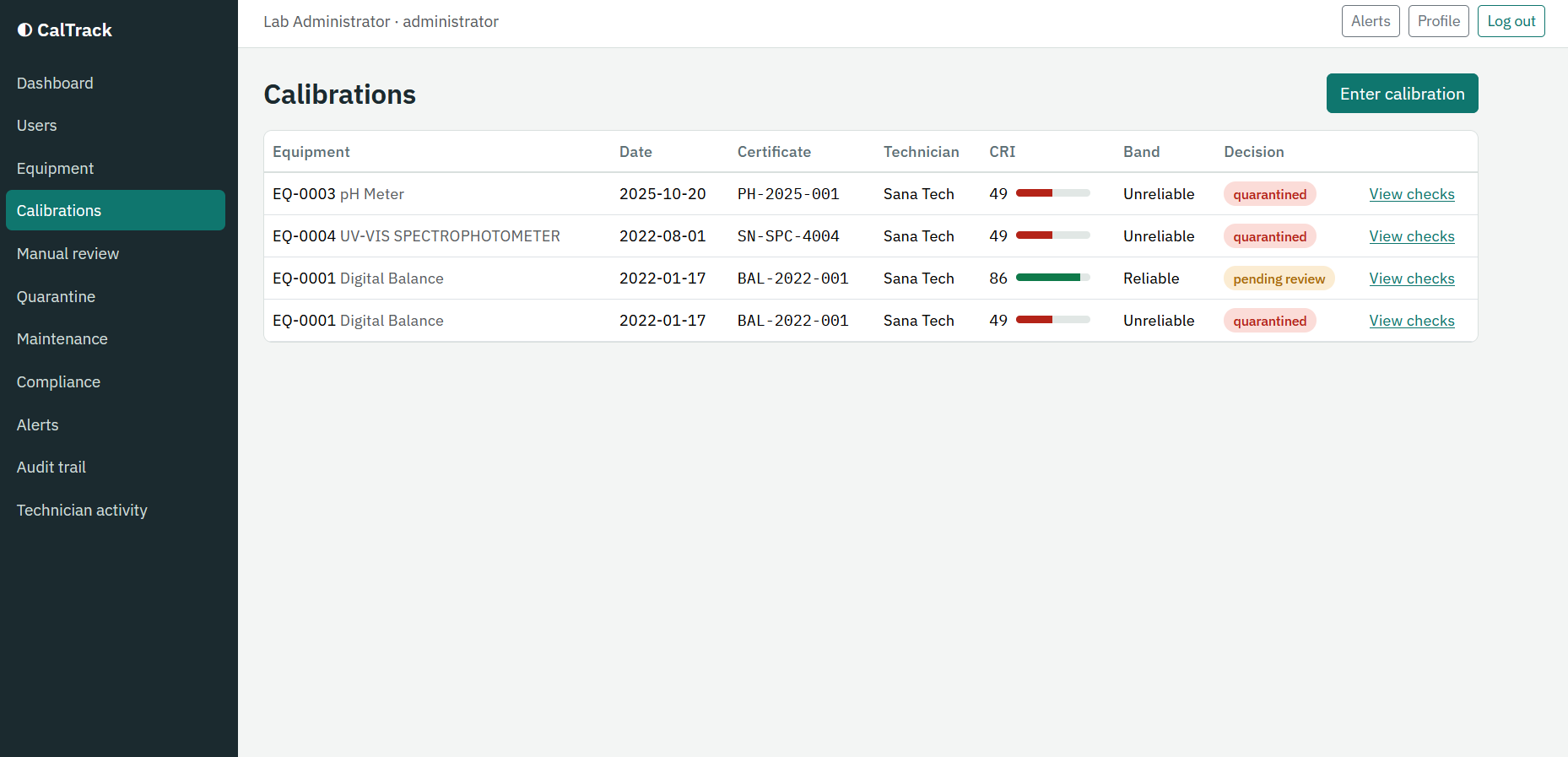
Details of Calibration
-
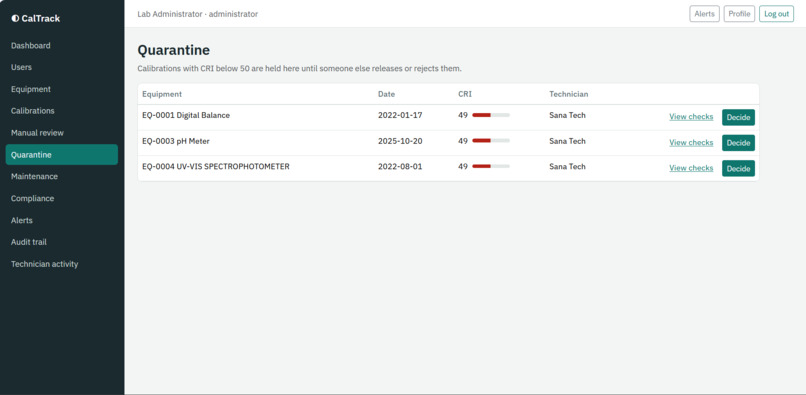
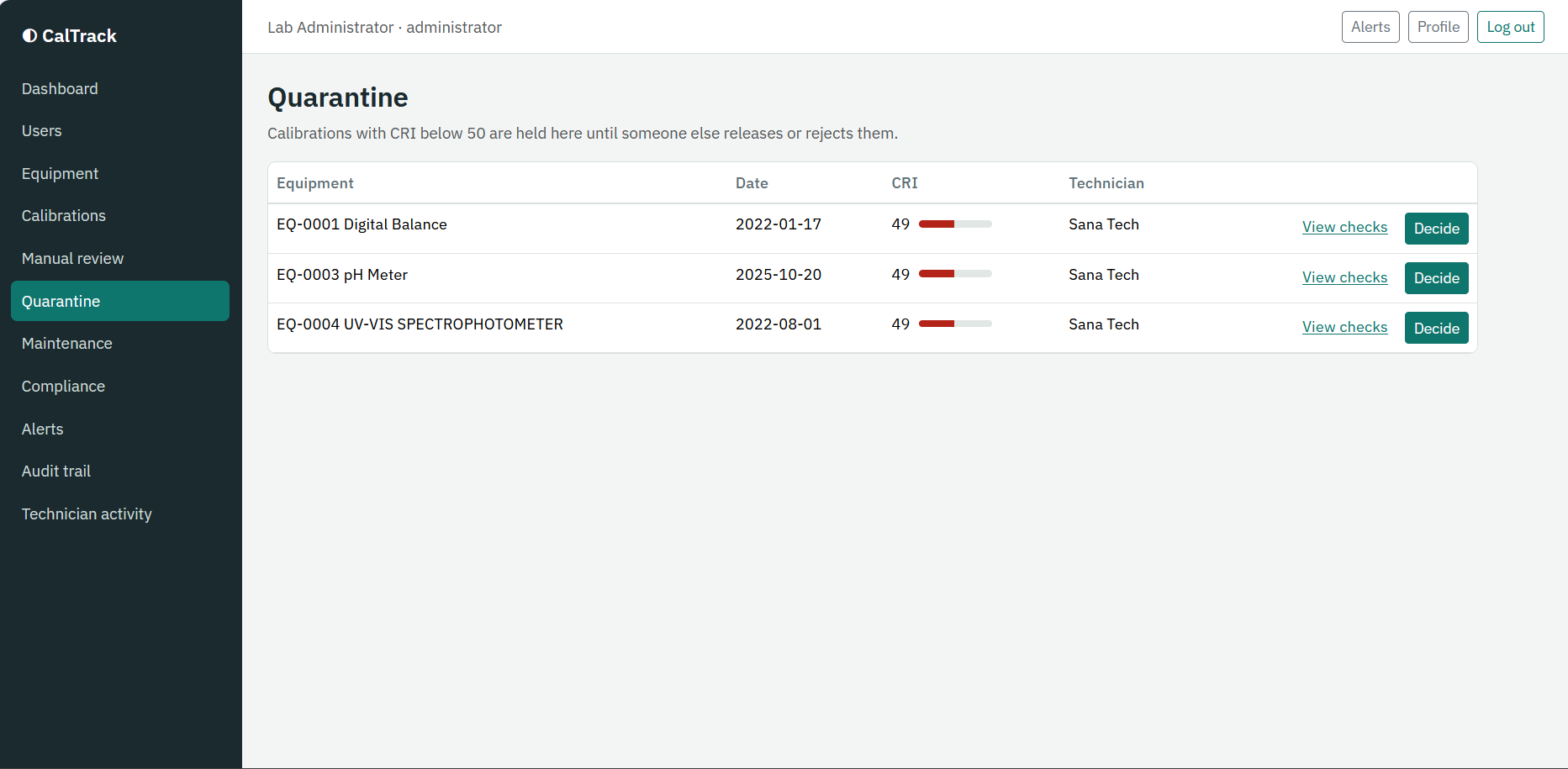
Details of Quarantine
-
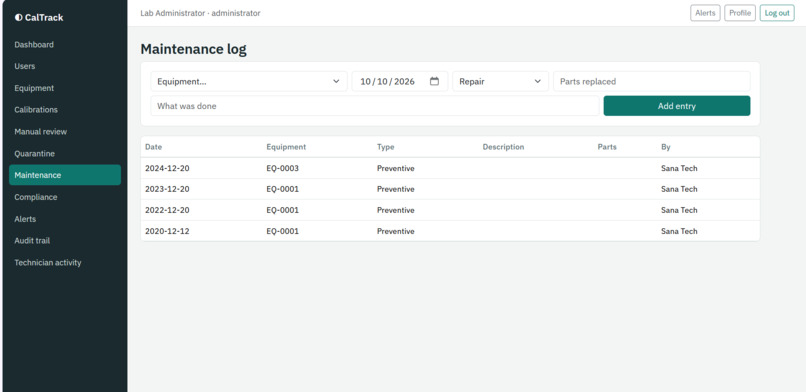
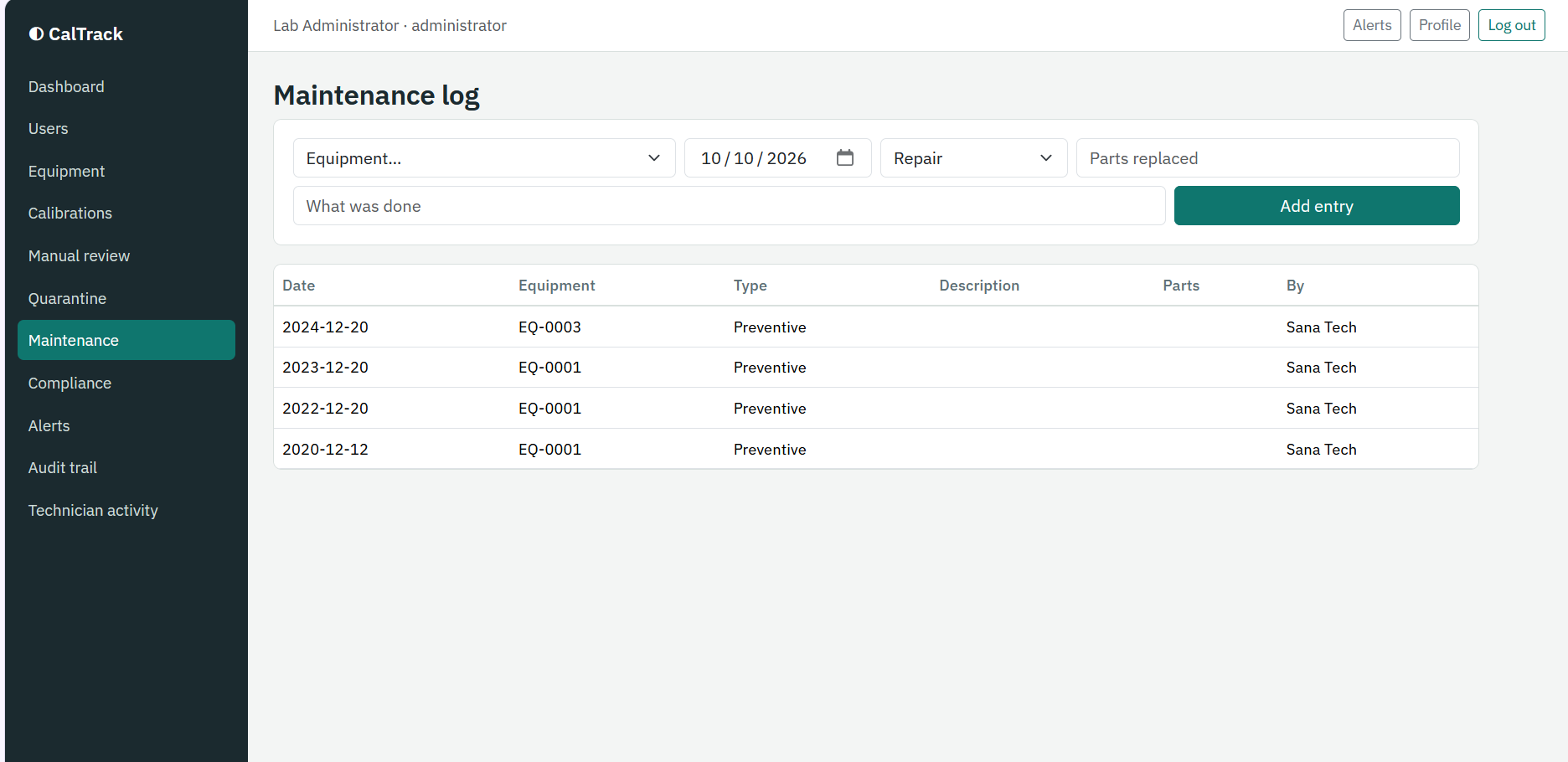
Maintenance Log
-
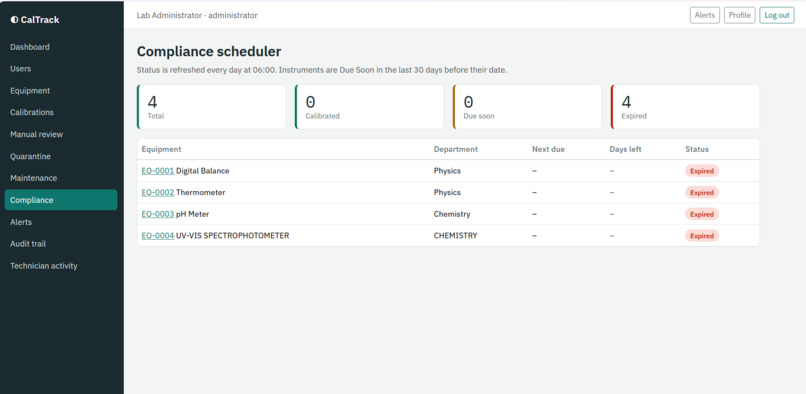
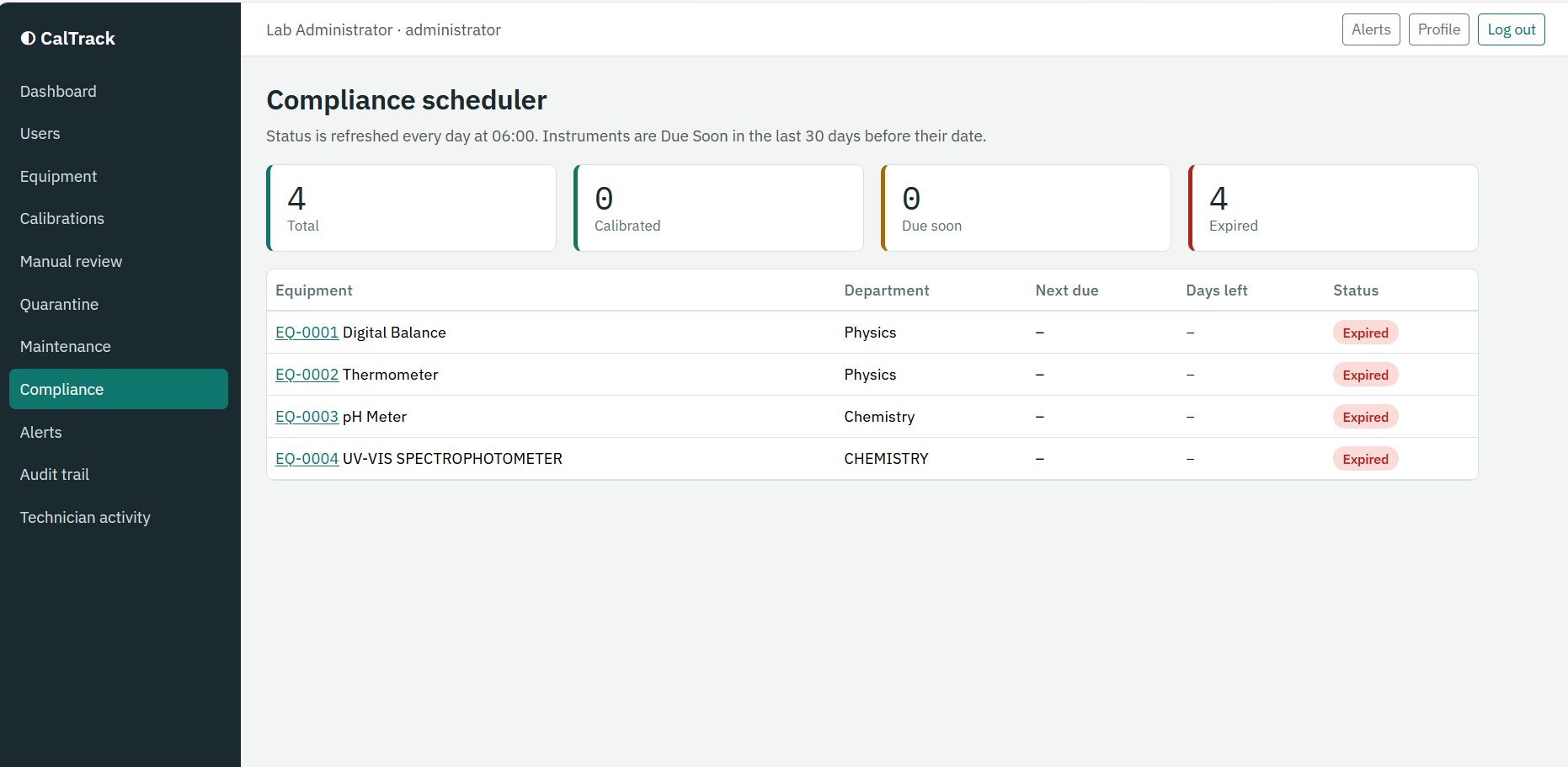
Compliance Scheduler
-
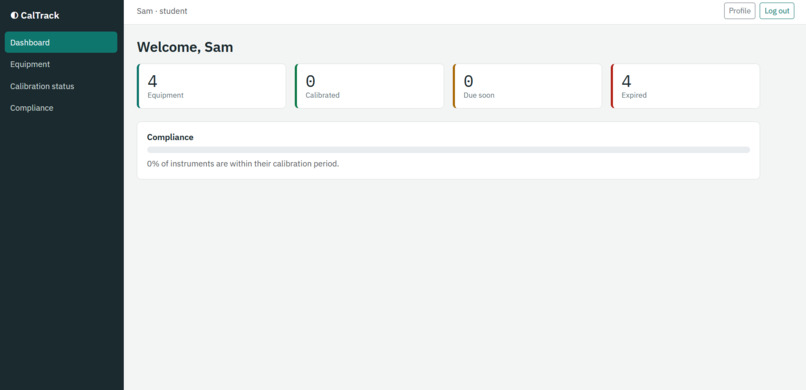
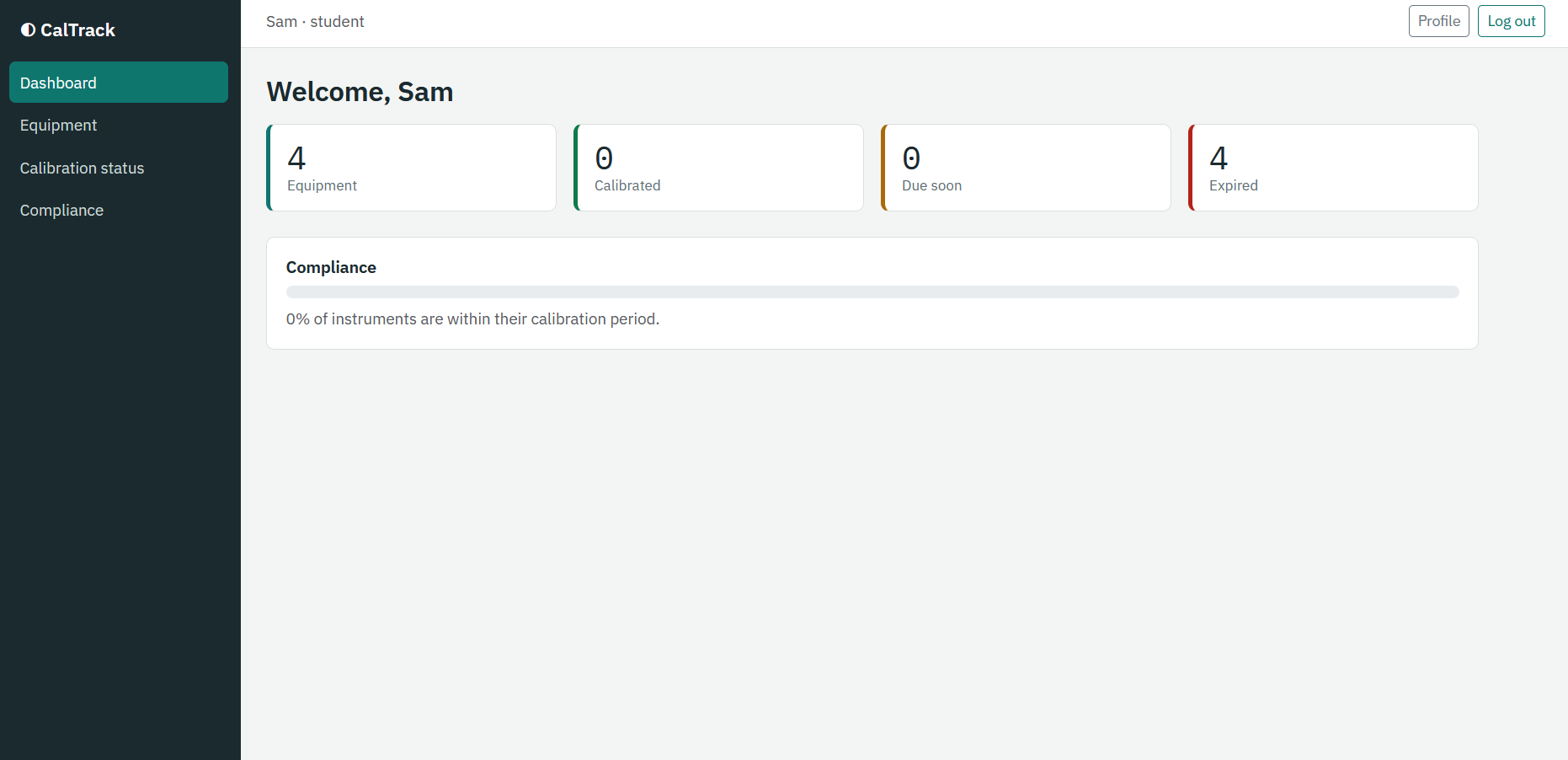
Student dashboard
Inspiration
Laboratories use different types of equipment that require regular calibration to maintain measurement accuracy and reliable results. Managing calibration dates, historical records, and compliance information manually can be time-consuming and may lead to missed schedules or difficulty identifying unusual calibration results. This inspired us to develop Smart Lab Calibration & Compliance Scheduler, a centralized platform designed to simplify laboratory equipment management, improve record traceability, and support calibration reliability assessment.
What it does
Smart Lab Calibration & Compliance Scheduler provides a structured way to manage laboratory equipment and its calibration lifecycle. Key features include:
- Role-based access: Separate access for Administrator, Laboratory Technician, Student, and Auditor.
- Equipment management: Organizes equipment by department and laboratory. Calibration history: Maintains previous calibration records for each instrument.
- Dynamic Calibration Fingerprint (DCF): Uses historical calibration data to represent equipment-specific calibration behaviour.
- Calibration Reliability Verification Engine (CRVE): Checks calibration records against defined validation rules and identifies unusual results.
- Calibration Reliability Index (CRI): Provides a project-defined reliability score to support record evaluation.
- Compliance scheduler: Tracks upcoming and overdue calibration dates.
- Reports and dashboards: Presents equipment status, calibration history, and flagged records in an organized format. The system can flag records for manual review by a Laboratory Technician when additional investigation is required.
How we built it
We designed the application around a simple workflow: equipment registration, calibration data entry, historical comparison, reliability verification, scoring, compliance scheduling, and reporting. The planned technology stack includes:
- React.js for the user interface.
- Node.js and Express.js for backend services and application logic.
- MySQL for storing user accounts, equipment information, calibration records, and evaluation results.
- JWT and bcrypt for authentication and password security.
- Recharts for visualizing calibration trends and dashboard information. The DCF, CRVE, and CRI components are designed around historical data, defined validation rules, and documented scoring logic rather than requiring a separate machine-learning model.
Challenges we ran into
One of our main challenges was designing a workflow that could handle different departments, laboratories, and equipment types without making the application difficult to use. Another challenge was determining how to evaluate calibration reliability consistently while keeping historical records available for comparison. We also needed to distinguish between a low reliability score, an unusual historical pattern, and an actual calibration failure. Designing permissions for four different user roles and ensuring that critical calibration failures could not simply be overridden by a high score were additional considerations.
Accomplishments that we're proud of
We developed a structured solution that brings equipment management, calibration history, reliability verification, and compliance scheduling into one application concept. We are particularly proud of the integration of the DCF, CRVE, and CRI workflow, which aims to make calibration records easier to evaluate and unusual results easier to identify. The project also emphasizes role-based access, historical record preservation, and a clear review process, making the proposed system relevant to the needs of educational and research laboratories.
What we learned
Through this project, we learned how to translate a laboratory management problem into a structured software workflow. We explored full-stack application architecture, relational database design, role-based authentication, historical data management, and rule-based validation. We also learned that a reliability score should not replace actual calibration requirements. Transparent rules, accurate records, and clear explanations are essential when building software that supports laboratory operations.
What's next for Smart Lab Calibration & Compliance Scheduler
Our next steps are to complete and test the application workflow, improve calibration trend visualization, strengthen validation and access controls, and refine the reliability scoring method using realistic test data. We also plan to improve dashboard reporting and compliance notifications so that laboratory personnel can identify upcoming calibration requirements more easily. Our long-term goal is to develop a practical, maintainable system that helps educational and research laboratories organize calibration records, monitor compliance, and make better-informed equipment management decisions.
Built With
- axios
- bcrypt
- css
- express.js
- git
- github
- html
- javascript
- jwt
- mysql
- node.js
- react-router
- react.js
- recharts
- rest-api

Log in or sign up for Devpost to join the conversation.