
Inspiration
The farmers in India face multiple problems which are as follow:
The farmers need to be physically present in order to prevent the unwanted entry of the water; this practice wastes manpower.
Sharing water between different fields using the same water sources results in tremendous risk of over irrigation.
High cost of maintenance and less field for agriculture. In transporting the water from one place to another a large amount of water is absorbed back into the ground which causes loss of electricity that is used to operate that particular pump.
In a scenario where water sources are being shared between farmers it is very difficult to keep track of that water being used by the different farmers, this leads to famers having a small field or a crop type which requires less amount of water to be irrigated paying a larger share of the total water and electricity bills.
We have developed this project keeping in mind all these problems and figured out a way to solve them all.
What it does
SOLUTION:
- We have used electronic solenoid valves to control the irrigation.
- The user can switch ON the valve at any time he desires by a click. Everything else has been fabricated to function automatically using feedback system.
- The entire network of irrigation canals would be streaming underground in order to avoid maintenance charges and ensure the utilization of the field.
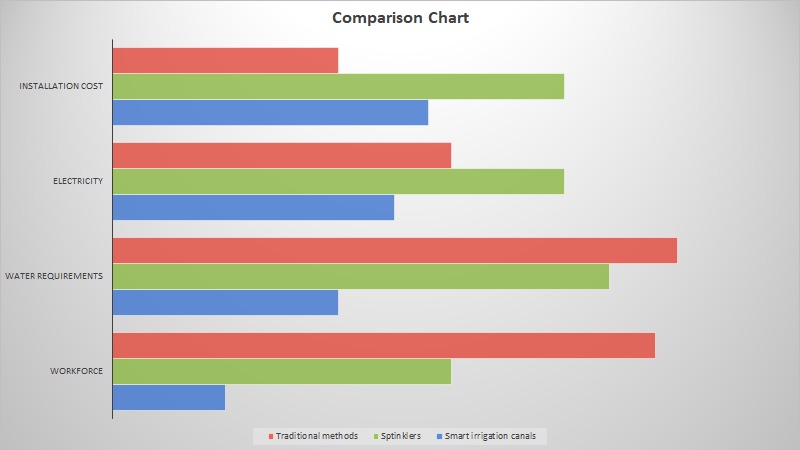
- We are conserving the water, electricity and manpower.
- Due to data base we are maintaining, amount of water and electricity can easily be tracked so that the sharing can be done judiciously. This whole setup can be further integrated with UPI system for ease of farmers.
ARCHITECTURE SOLUTION:
- We have replaced these water canals with an underground network of PVC pipes through which no water will be absorbed by the ground on its way to the desired field.
- Farmers can come up with their own flexible routines to irrigate different fields.
- Motive is to develop a system that encourages water conservation and reduces electricity consumption.
How we built it
Using different electronic modules and interfacing it using Internet of things. The entire connectivity flowchart has been attached.
Challenges we ran into
->Making a robust network that doesn't always depend on internet connection for scheduling the irrigation process in order to ease the same for the farmers.
Accomplishments that we're proud of
We're proud of the following features: FEATURES:
- Cost efficiency
- Effective water resource sharing
- Durability
- No prior knowledge required to operate the fields
- Multiple connectivity
- Efficient notification system
- Proper distribution of bill amongst the farmers
- Effective way of paying bills and real time tracking of the resources
What we learned
We learnt to interface NodeMcu with webpage and firebase along with using RF communication through arduino.
What's next for Smart Irrigation Assistant
Future scopes:
- Flexible schedules can be programmed for multiple users.
- Daily monitoring on the behalf of the farmer is not required.
- It removes the risk of over-irrigation or crop damage.
- We are storing the database observed in a csv file; values from which can be further extracted to make a machine learning model. Integrating this model with UPI will introduce the farmers with a more efficient way and less hectic way to pay their bills


Log in or sign up for Devpost to join the conversation.