-
-
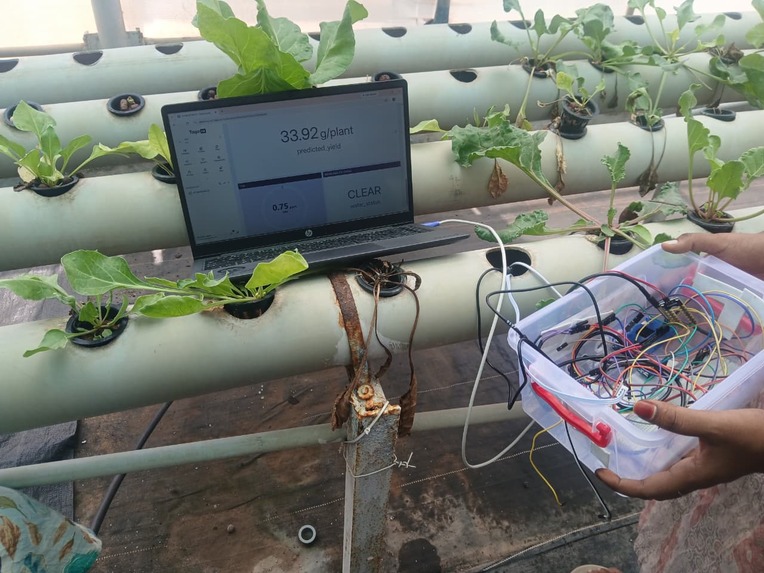
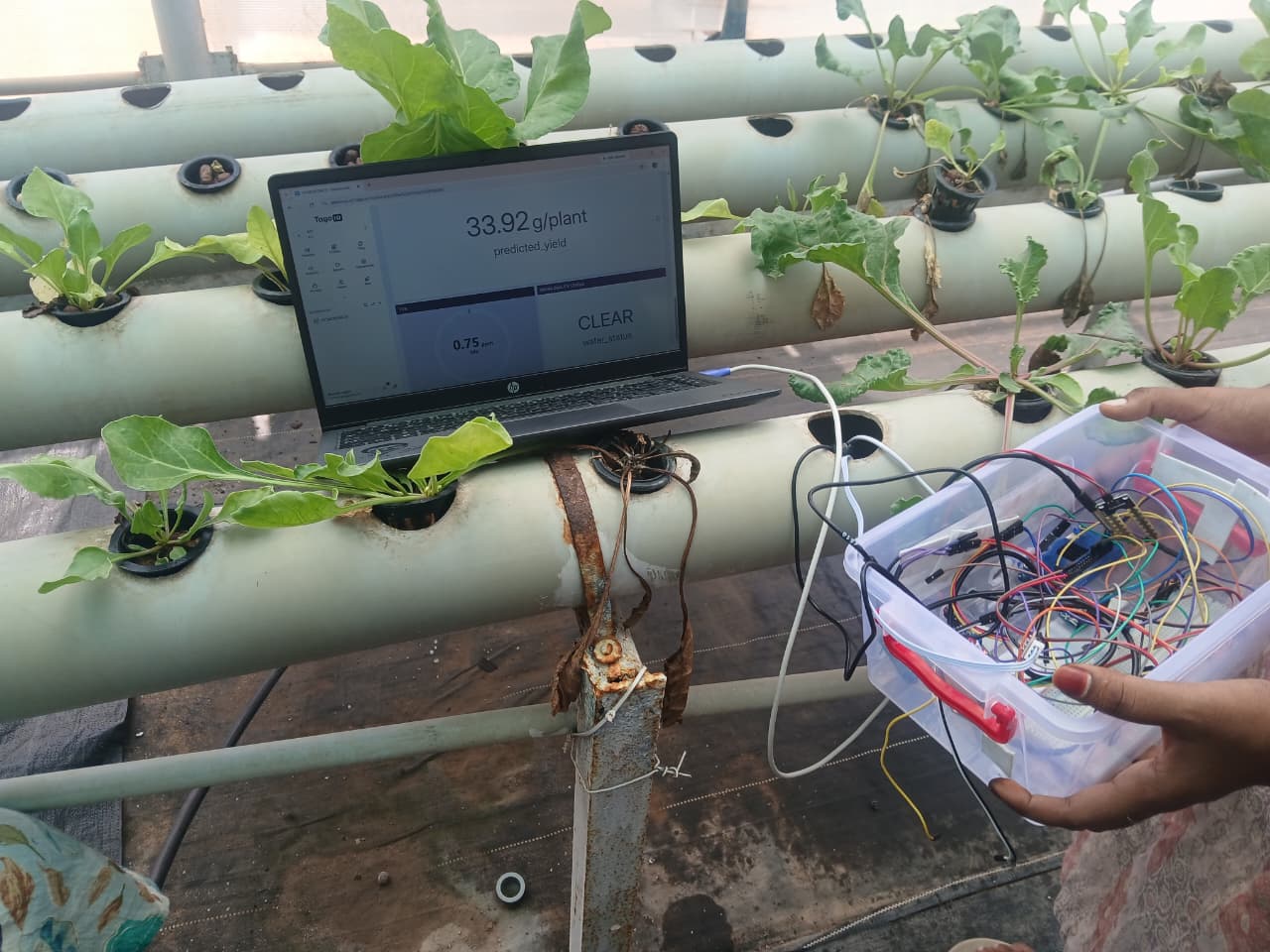
Field Test
-
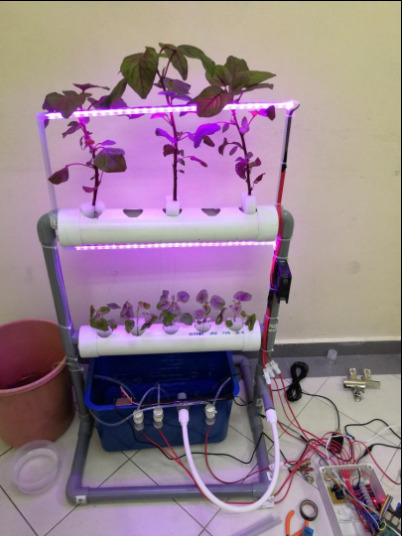
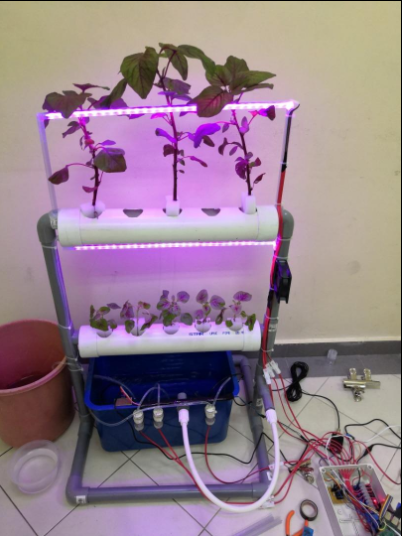
Hydropoincs Home setup for research
-
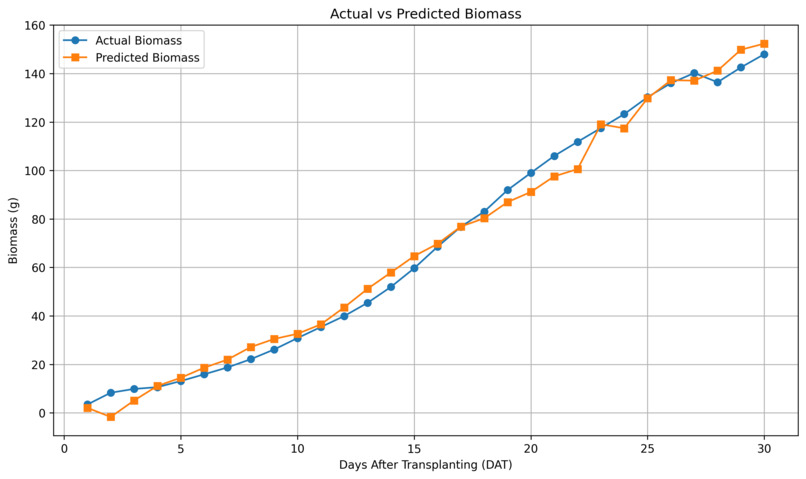
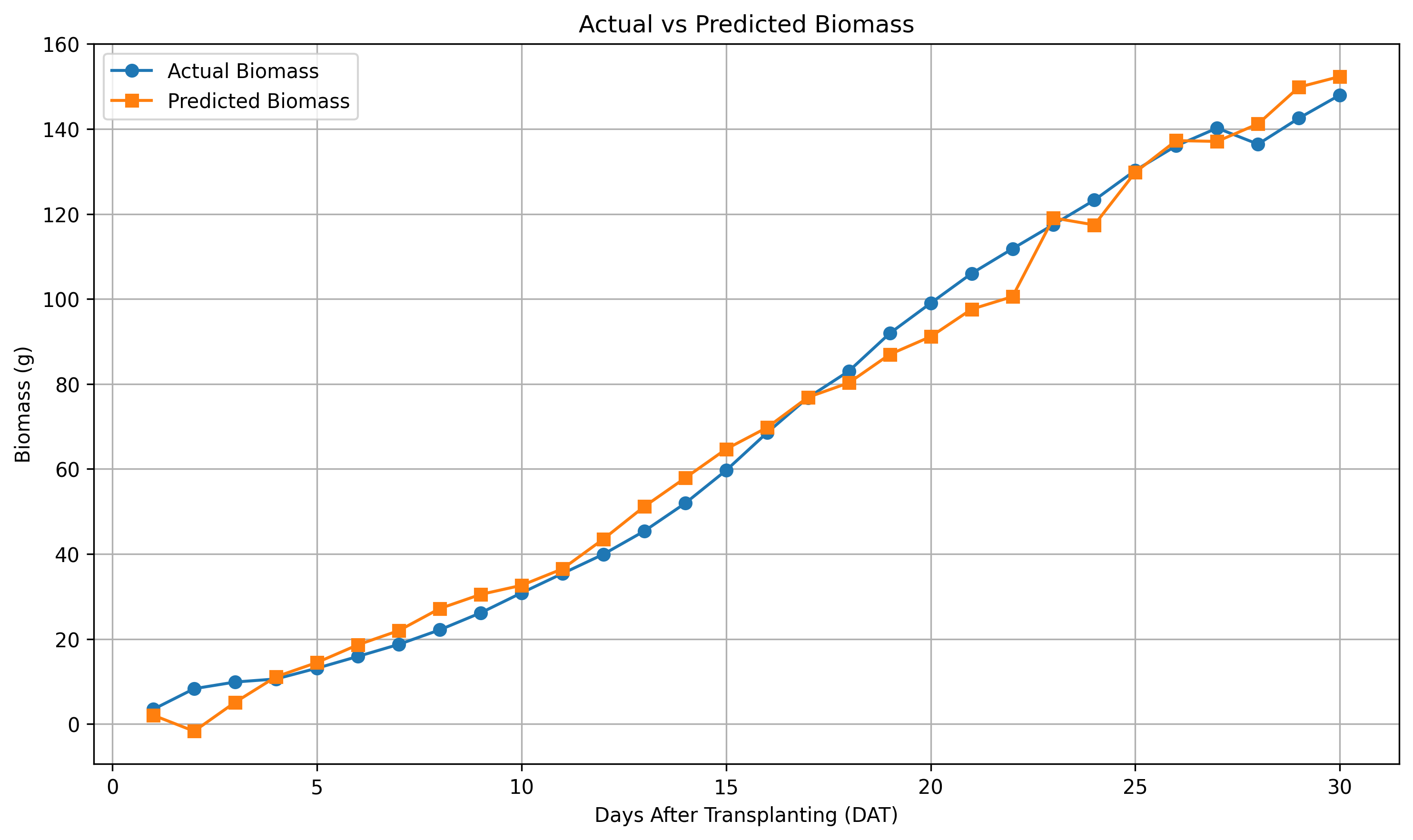
Linear regression model Graph
-
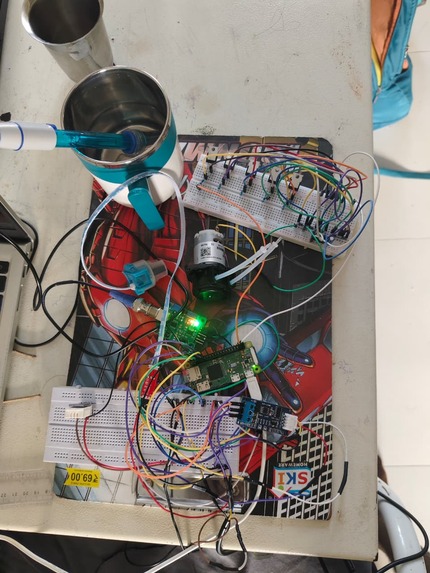
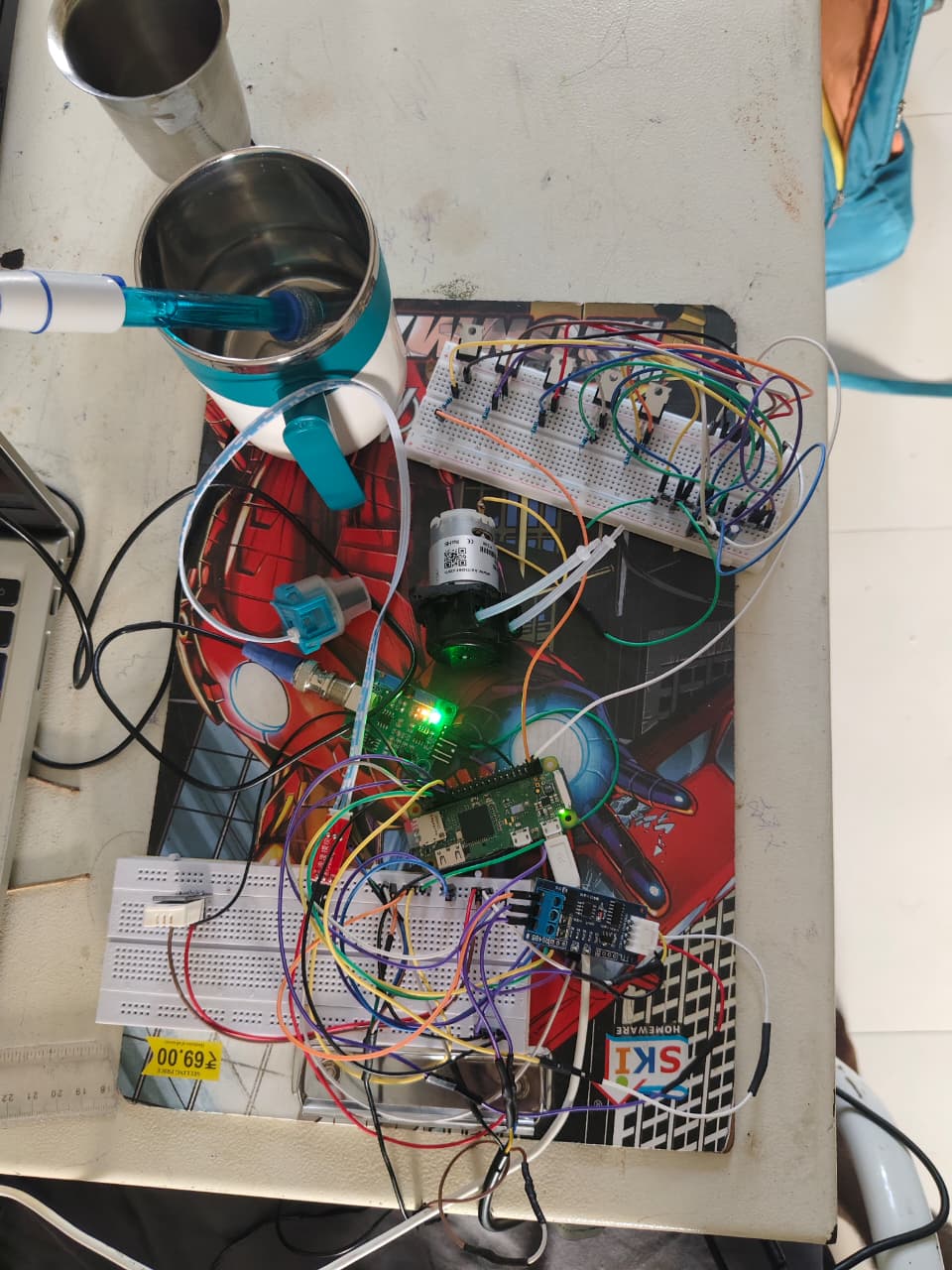
prototype
Inspiration
Agriculture faces growing challenges such as water scarcity, limited cultivation space, increasing resource requirements, and the need for efficient crop management. Traditional farming often depends on continuous manual monitoring, making it difficult to maintain consistent growing conditions. This inspired us to develop an IoT-based smart hydroponic system that combines agricultural engineering, IoT, and machine learning to support sustainable and data-driven farming. Our aim is to make hydroponic cultivation smarter, more accessible, and efficient.
What it does
Our project, titled "IoT-Based Smart Hydroponic System for Real-Time Water Quality Monitoring, Automated Nutrient Management, and Crop Yield Prediction," focuses on monitoring essential growing conditions in hydroponic systems. It measures pH, Total Dissolved Solids (TDS), turbidity, temperature, and humidity using integrated sensors. The collected data is processed and displayed on a cloud-based TagoIO dashboard for real-time monitoring. Additionally, a machine learning-based Linear Regression model estimates lettuce crop yield using growth data. Automated nutrient management is identified as a key future enhancement.
How we built it
We developed the prototype using a Raspberry Pi Zero W as the central processing unit, an ADS1115 analog-to-digital converter, and sensors for monitoring water quality and environmental parameters. Python was used for sensor interfacing, data acquisition, and processing. The collected readings were transmitted to the TagoIO cloud platform for real-time visualization. For crop yield prediction, we used Google Colab and Scikit-learn to develop a Linear Regression model using lettuce growth data. The hardware, software, IoT dashboard, and machine learning components were developed and tested as separate but interconnected modules.
Challenges we ran into
Integrating multiple sensors with the Raspberry Pi was one of our major challenges. We encountered sensor calibration difficulties, inconsistent readings, hardware compatibility issues, and intermittent communication problems. Establishing reliable communication between the hardware and cloud dashboard also required repeated testing and debugging. Developing the machine learning model and understanding the relationship between crop growth parameters and yield estimates required additional experimentation. Working within a limited budget further challenged us to optimize the available resources.
Accomplishments that we're proud of
We successfully developed an IoT-based hydroponic monitoring prototype capable of collecting and displaying multiple water quality and environmental parameters in real time. We also developed a machine learning-based crop yield prediction model and integrated its concept into our overall system design. Presenting agricultural engineering challenges through a combination of hardware, software, IoT, and machine learning was a significant achievement for our team. This project helped us transform an agricultural problem into a technology-driven engineering solution.
What we learned
Through this project, we gained practical knowledge of Raspberry Pi programming, sensor interfacing, analog-to-digital conversion, Python programming, IoT communication, cloud dashboard integration, and machine learning. We learned how to collect, process, and interpret real-time agricultural data. Beyond technical skills, we improved our teamwork, research abilities, project management, debugging, and problem-solving skills.
What's next for Smart Hydroponics
Our future goal is to develop a more advanced and automated hydroponic system by integrating suitable nutrient sensors, automated dosing pumps, and intelligent control mechanisms. We plan to improve crop yield prediction using additional environmental and plant growth parameters, expand the system to support multiple crops, and conduct long-term experimental validation. We also aim to make the prototype more affordable, scalable, and suitable for practical applications in urban farming, small-scale cultivation, and smart agriculture.
Our vision is to make hydroponic farming smarter, more sustainable, and accessible through IoT and AI.
Built With
- cloud
- github
- http
- numpy
- python
- raspberry-pi
