-
-
Dashboard c
-
Dashboard a
-
Dashboard b
🚑 About the Project Smart Hospital AI
✨ Inspiration
During exams and deadlines, I realized how stress, poor time management, and lack of support can cause mental or physical crises. Hospitals face the same challenge at scale too many patients, too few resources, and delayed decisions. Inspired by this, I built Smart Hospital AI, a system that uses machine learning and vector search to help hospitals predict outcomes, recommend interventions, and optimize staffing. My guiding question was: What if hospitals could simulate crises before they happen and make smarter choices instantly?
🛠️ How I Built It
Data Preparation: Preprocessed hospital records, created embeddings using Sentence Transformers, and stored them in TiDB Server less with Vector Search for scalable, real-time querying.
Prediction Model: Trained a balanced XGBoost classifier to predict patient outcomes (High, Medium, Low risk).
AI Insights: Connected the model with an LLM integration layer that generates:
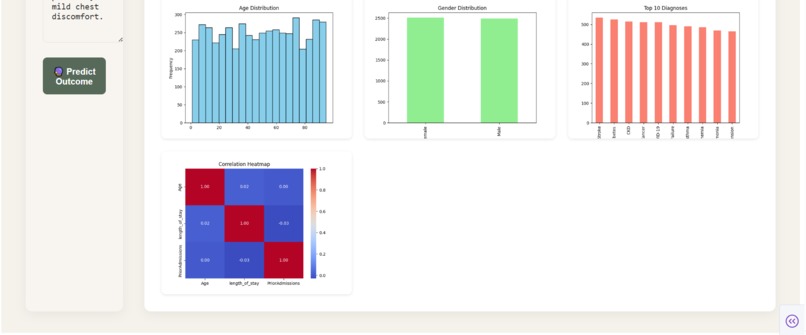
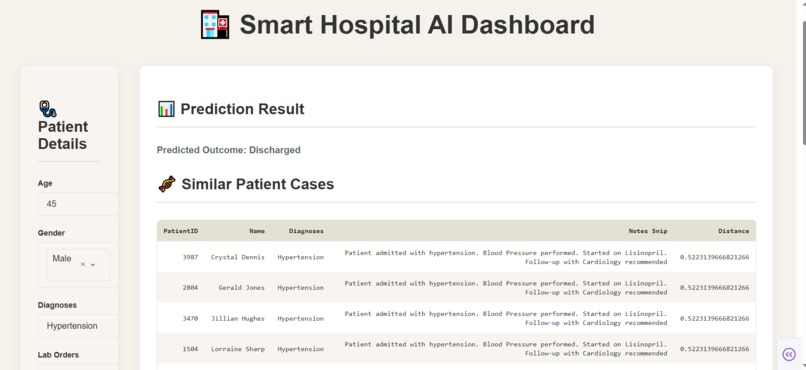
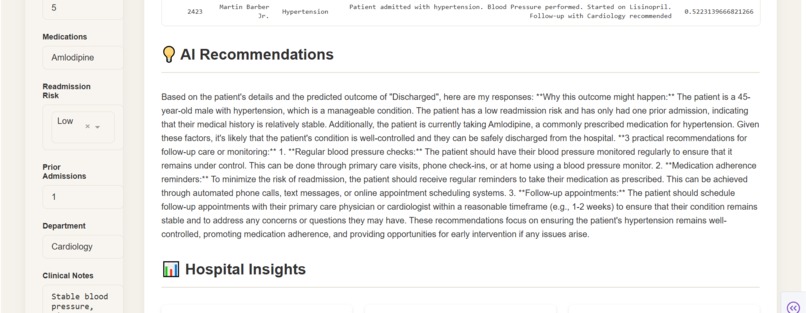
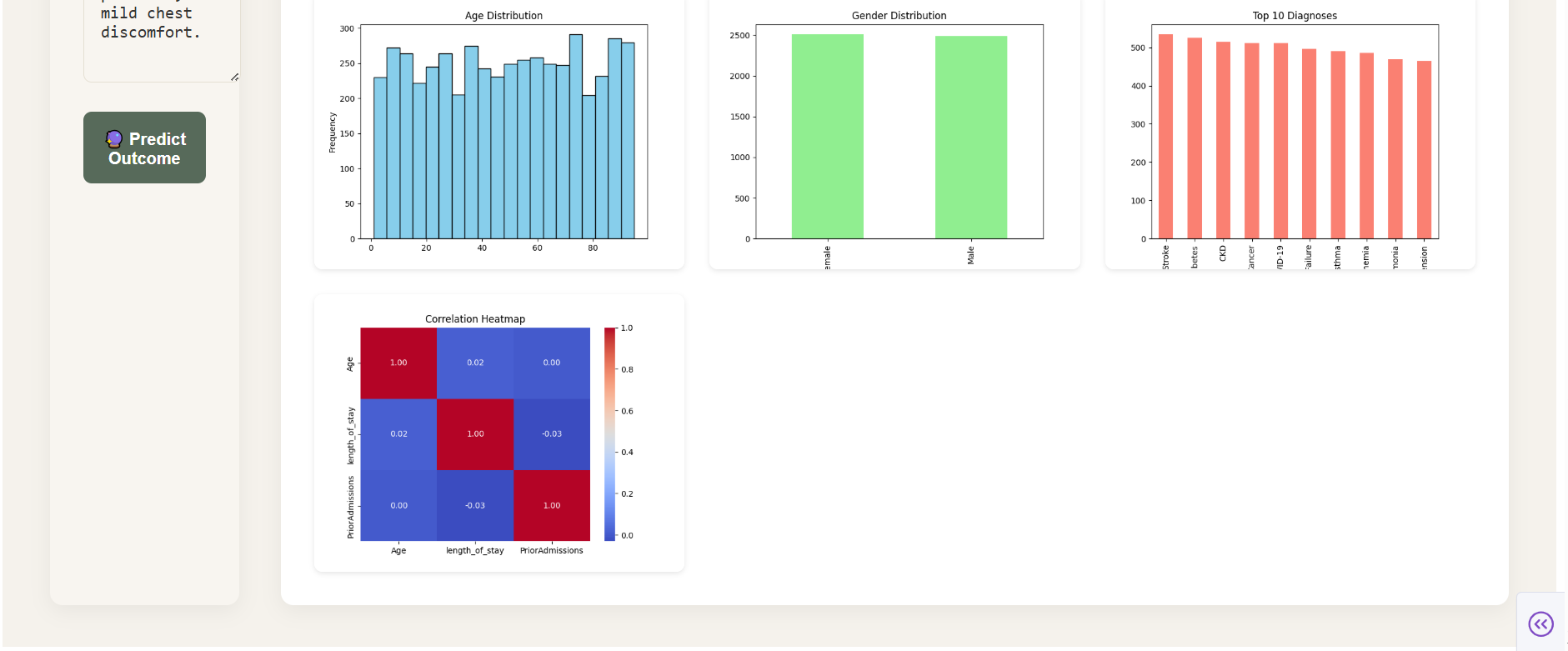
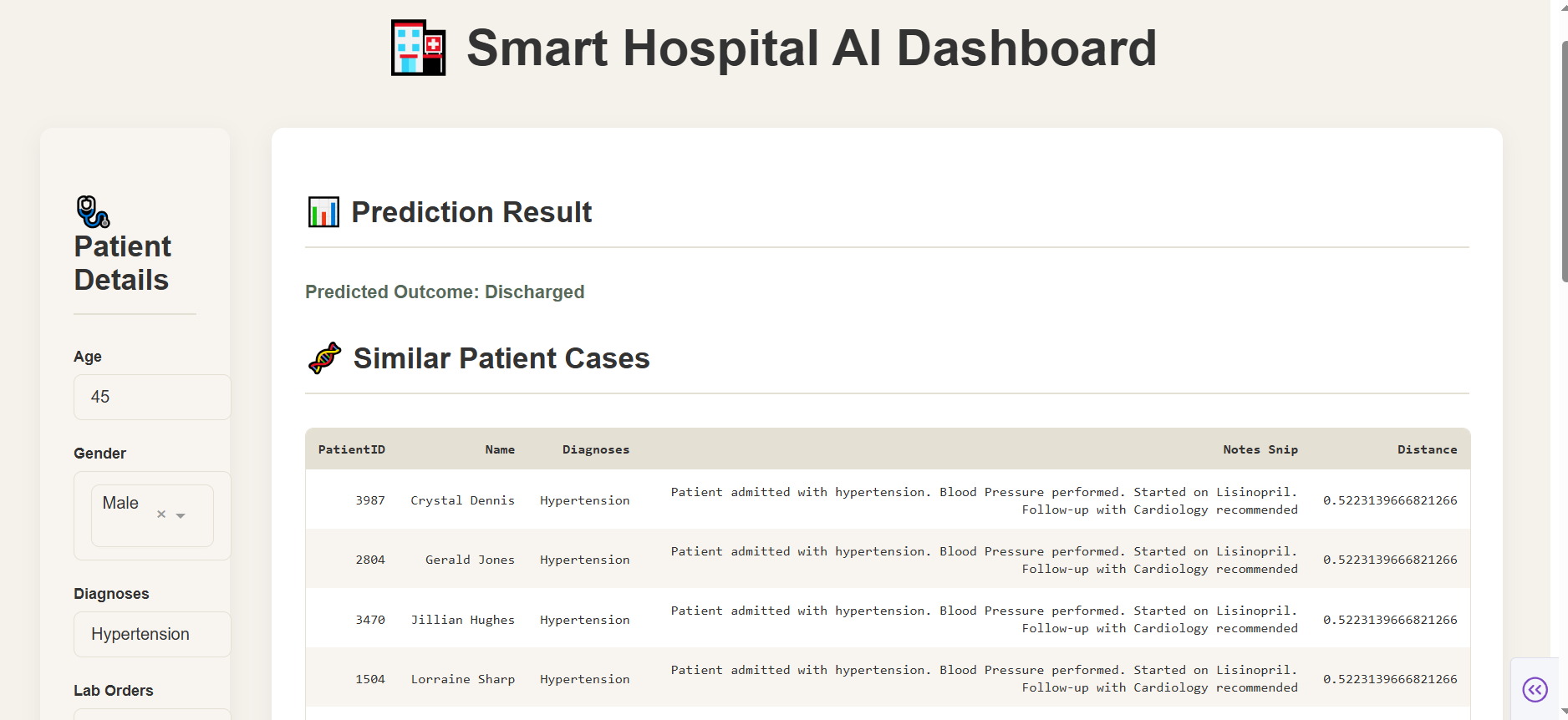
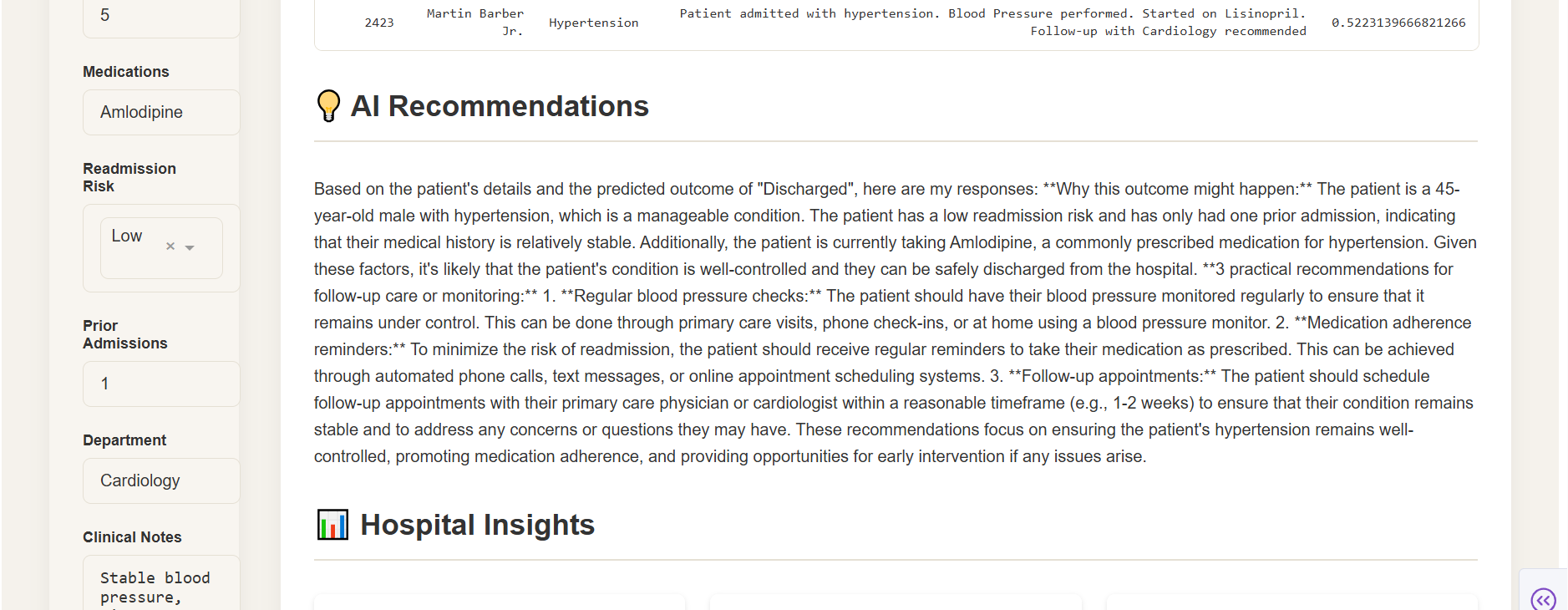
📊 Prediction Result 🧬 Similar Patient Cases(via TiDB vector similarity search) 💡 AI Recommendations (evidence-based suggestions) Patient outcomes (High, Medium, Low risk) Hospital Insights (aggregated metrics for decision-makers) Dashboard: Built with Dash + Plotly, designed for clarity and ease of use.
Workflow:
- Input patient details
- Model predicts outcome
- TiDB retrieves similar past cases
- LLM suggests interventions & hospital-level insights
⚡ Challenges I Faced
Data Bias: Real-world data isn’t balanced; we had to adjust with class weights. Integration Complexity: Connecting ML predictions, TiDB vector search, and LLM recommendations smoothly took multiple iterations. Edge Cases: Patients with unusual or missing values tested system robustness — but debugging these made the system stronger. Time Crunch: Balancing feature richness with hackathon deadlines was tough, but forced me to prioritize impact.
🌟 What I Learned
How to combine traditional ML models with vector search and LLMs into a seamless workflow. Importance of designing for user experience not just accuracy. Realized the power of scenario simulation in making my system stand out.
🚀 Impact & Creativity
While hospital dashboards exist, few combine predictions + similar patient retrieval + AI-driven recommendations + hospital-level insights in one place. This project extends beyond “just a model” by simulating real-world crisis management. I believe this concept can scale into a predictive command center for hospitals, potentially saving lives and optimizing resources.
✅ Evaluation Criteria Mapping
1.Technological Implementation : Leveraged TiDB Server less + Vector Search for embeddings, combined with ML and LLM for a hybrid system. Robust architecture, modular scripts, config-driven setup. 2.Quality/Creativity of the Idea : Unique “4-in-1” hospital intelligence dashboard. Goes beyond prediction to recommendations, insights, and simulations. 3.User Experience :Minimalist dashboard, clean UI, clear icons (📊, 🧬, 💡), easy to interpret outputs. Balanced backend (ML + TiDB) and frontend (Dash). 4.Documentation Quality: Comprehensive README, workflow diagrams, and evaluation report Demo Video : Walkthrough shows predictions, edge cases, and ER surge simulation
Vision: From a hackathon prototype → to a scalable AI platform that prevents crises, optimizes resources, and ultimately saves lives daily
TiDB Cloud account Email associated with the Project [email protected]

Log in or sign up for Devpost to join the conversation.