-
-
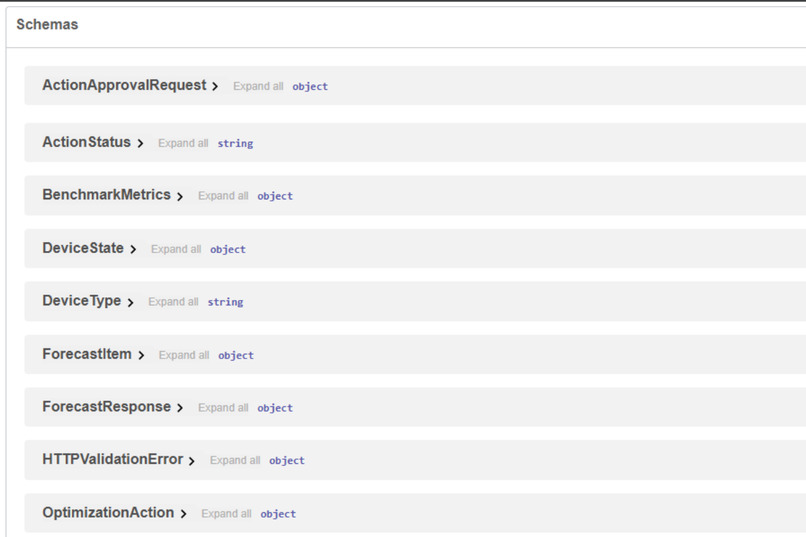
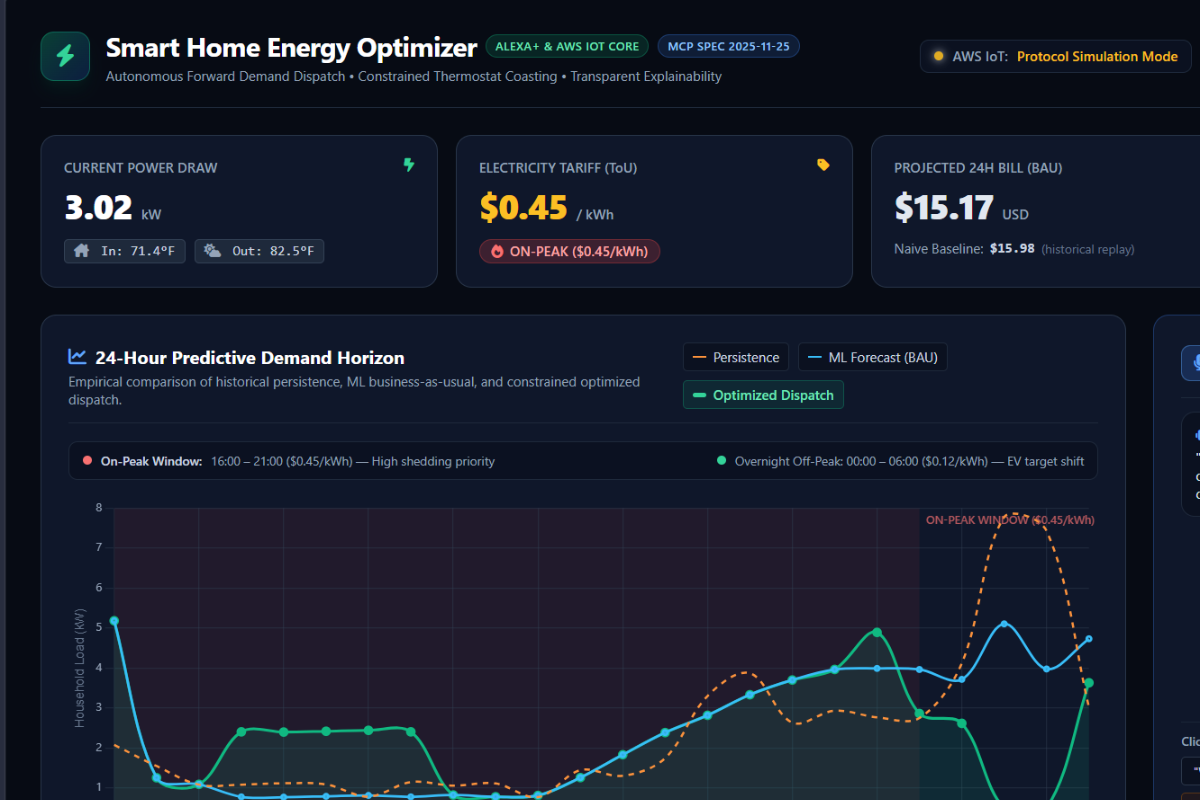
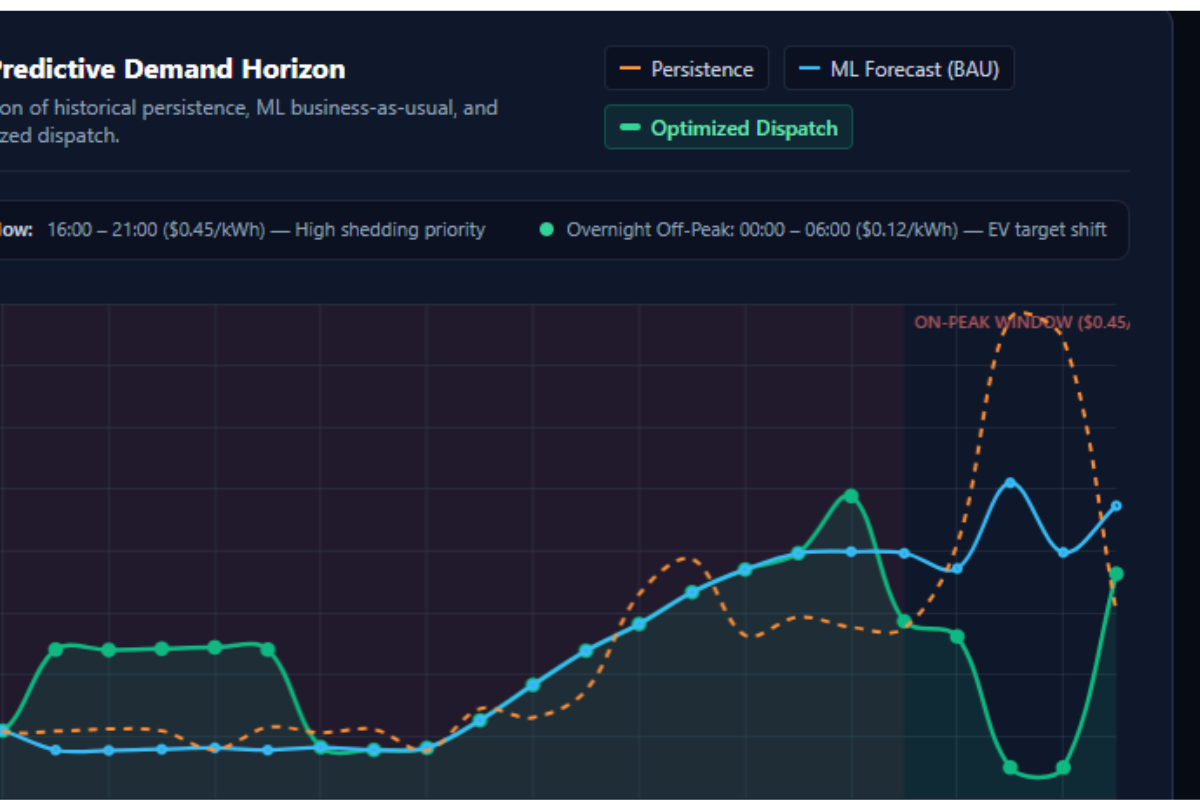
Main dashboard showing current power, electricity tariffs, projected bills, and 24-hour demand forecasts with optimized dispatch.
-
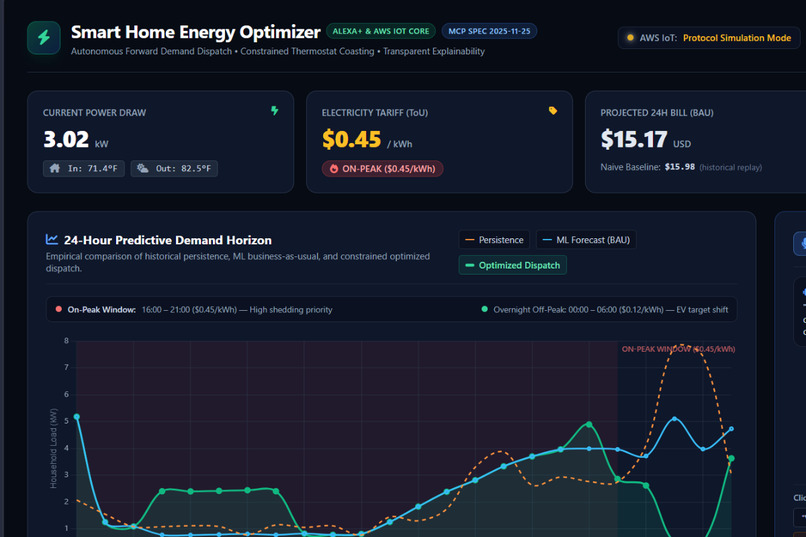
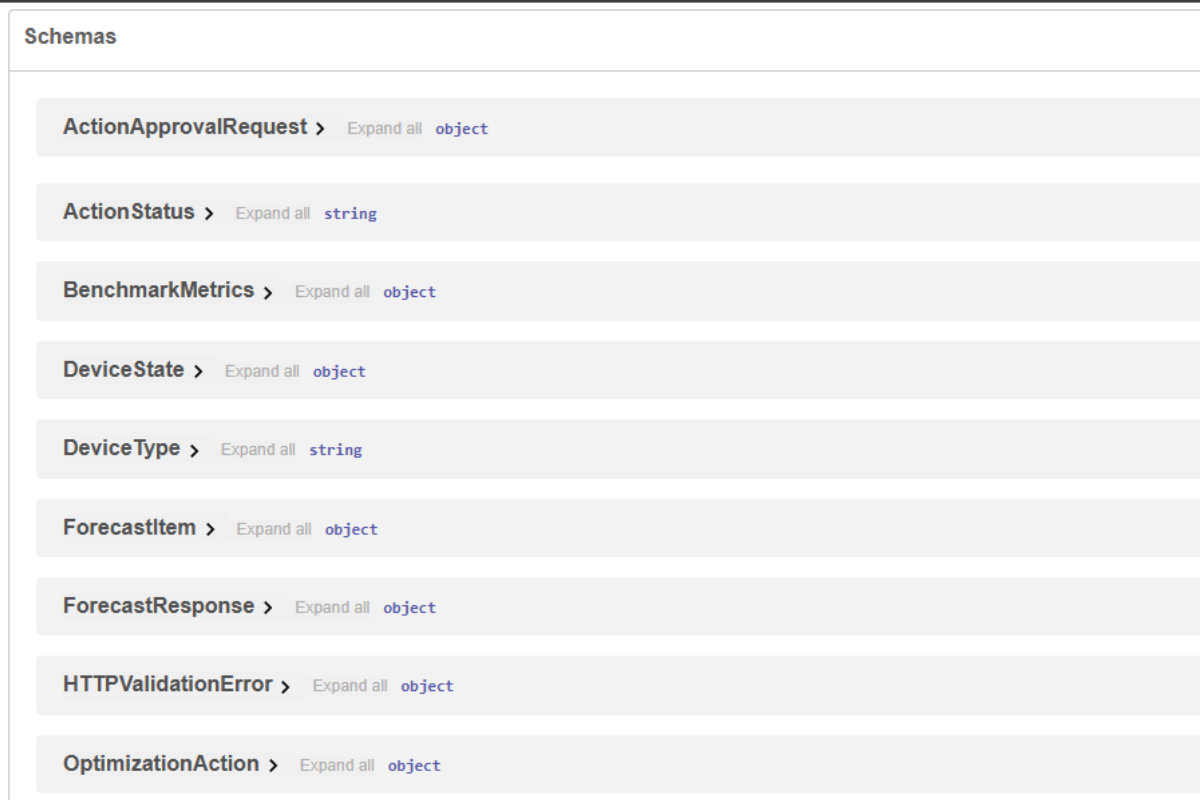
API data schemas define the structure of forecasts, optimization actions, device states, approvals, and benchmark metrics.
-
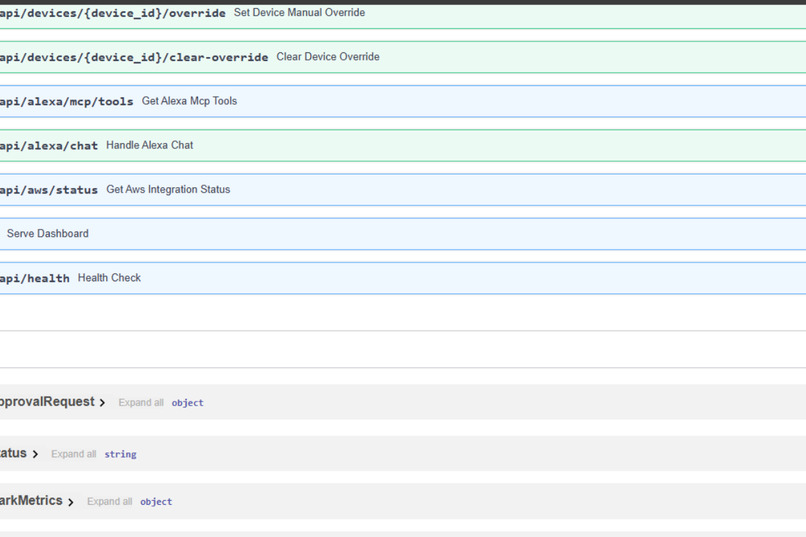
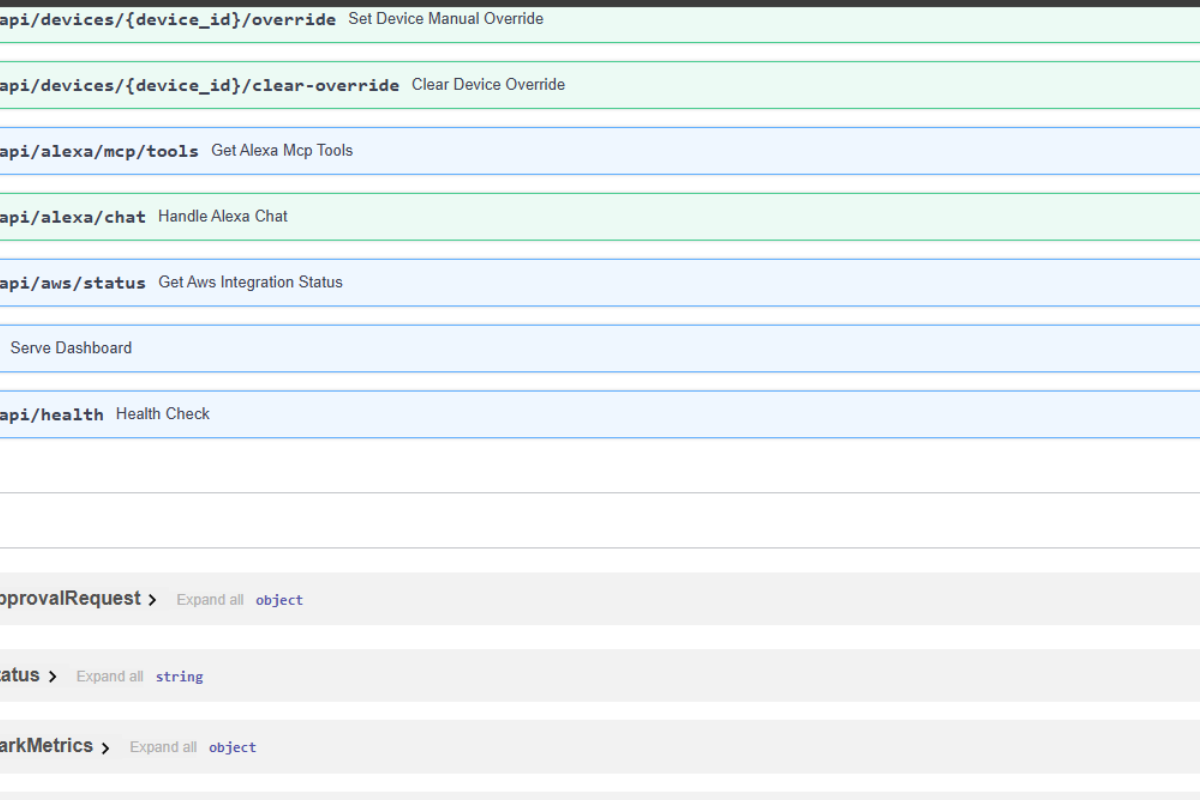
Backend endpoints support device overrides, assistant interactions, MCP tool discovery, automation restoration, and status checks.
-
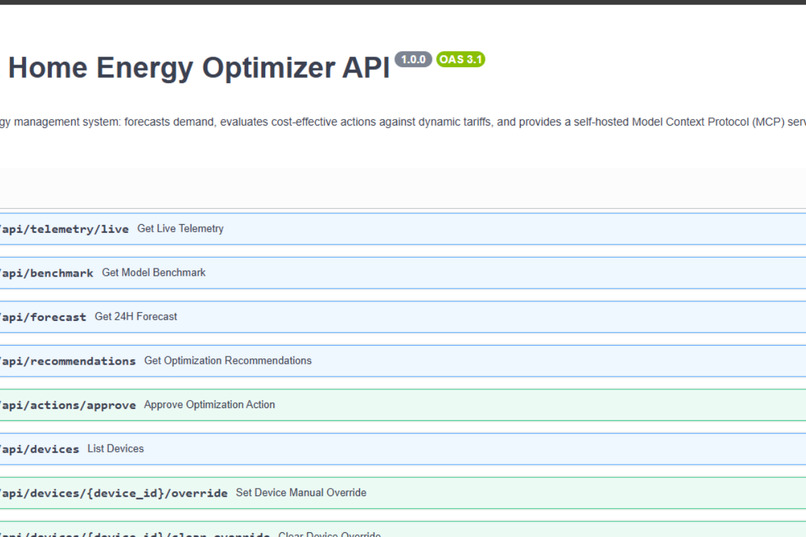
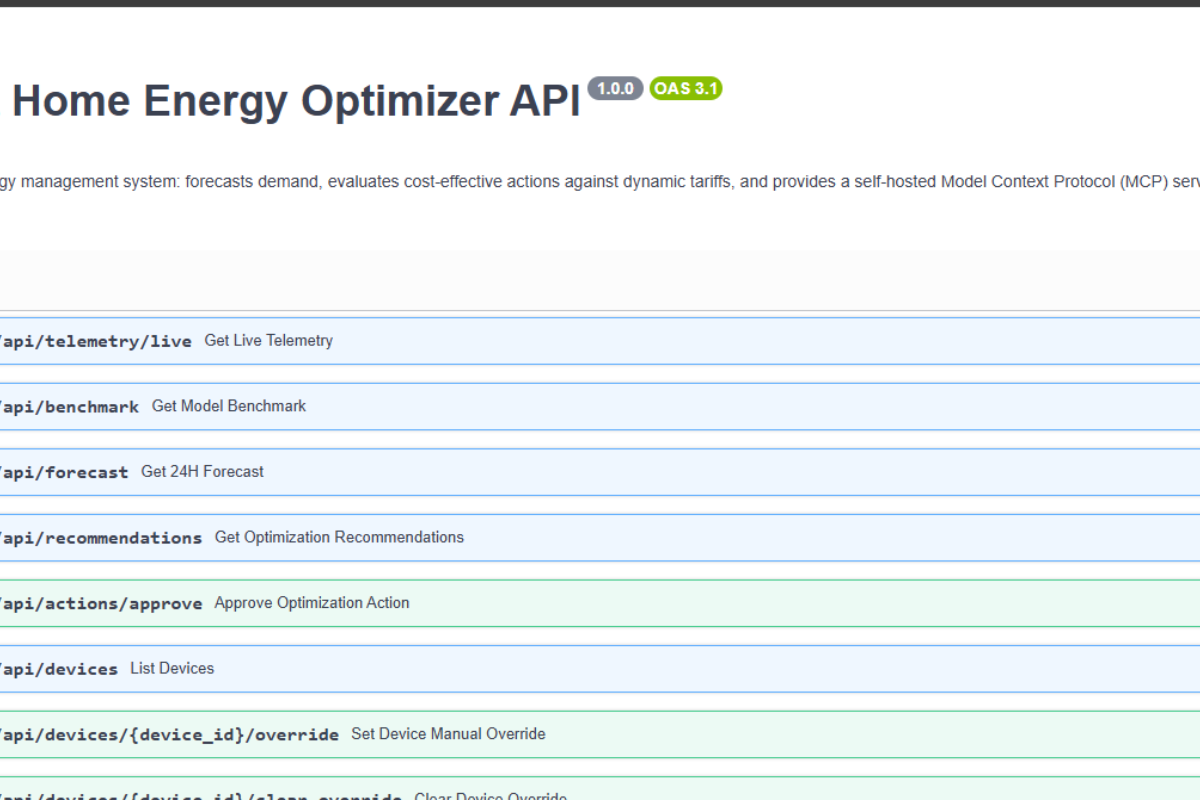
FastAPI's interactive documentation exposes endpoints for telemetry, forecasting, benchmarks, recommendations, approvals, and devices.
-
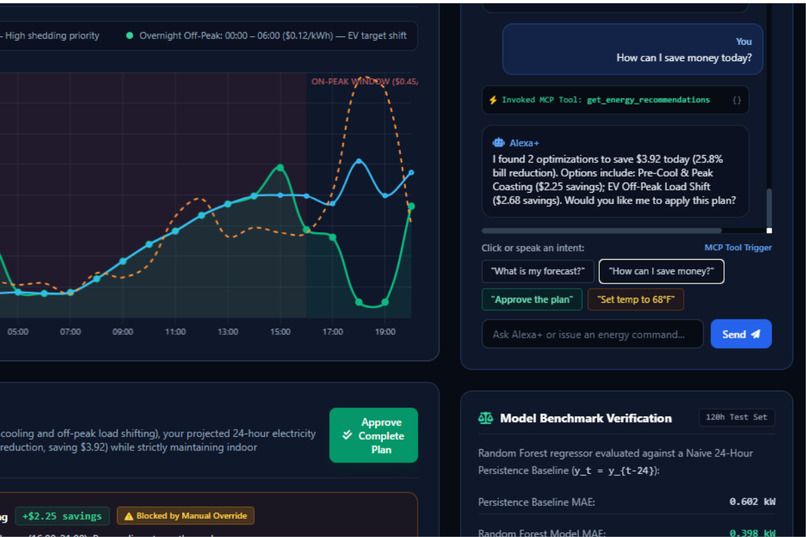
The dashboard combines demand forecasts, energy-plan approval, assistant interactions, and optimization insights in one interface.
-
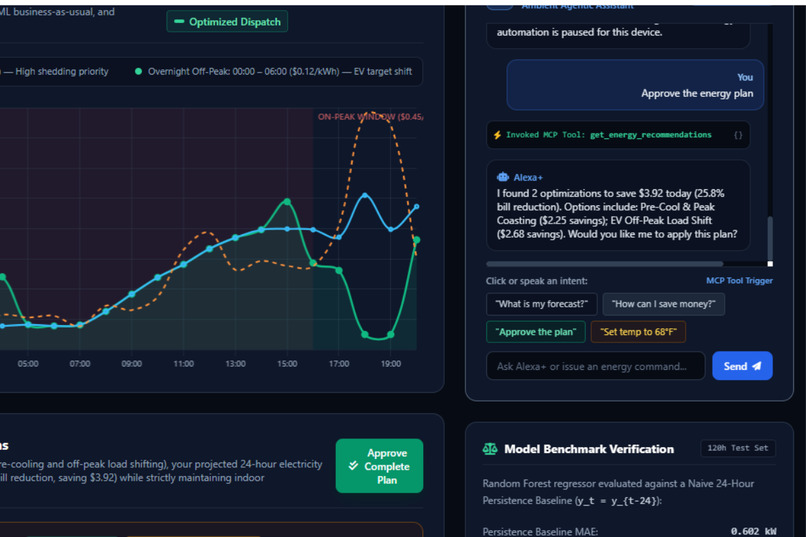
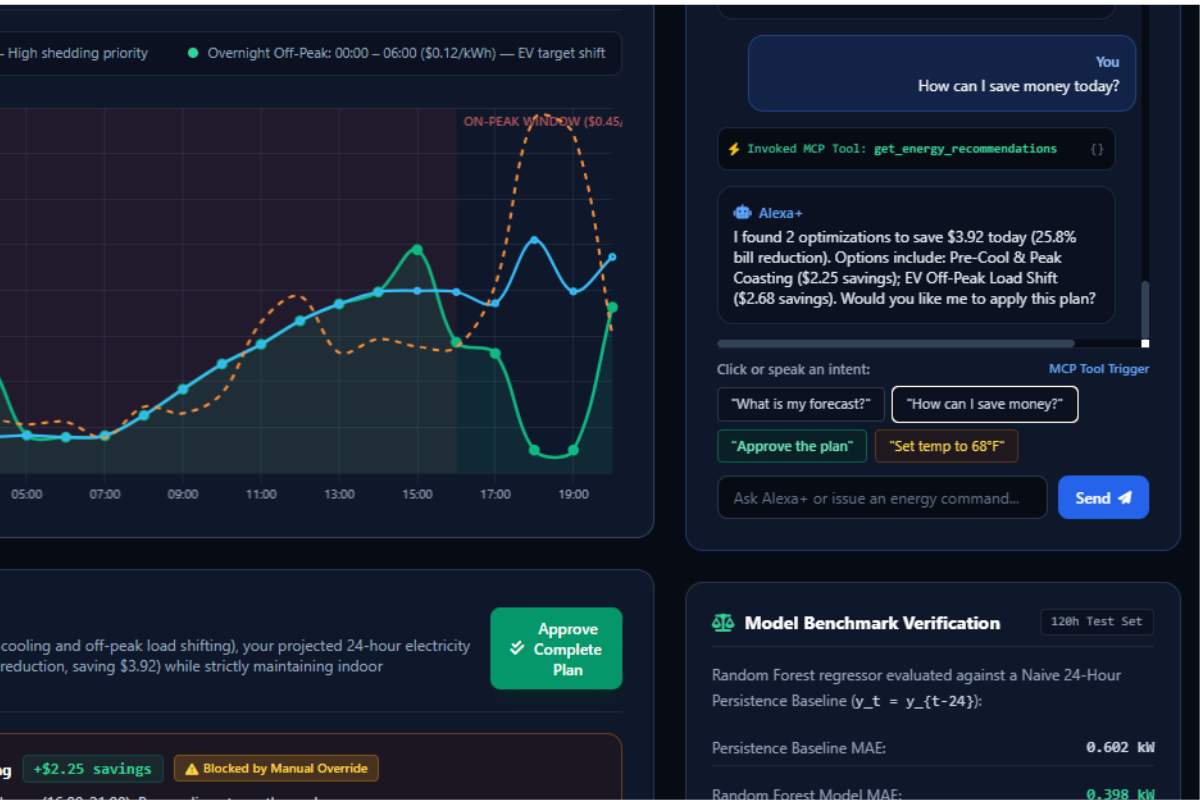
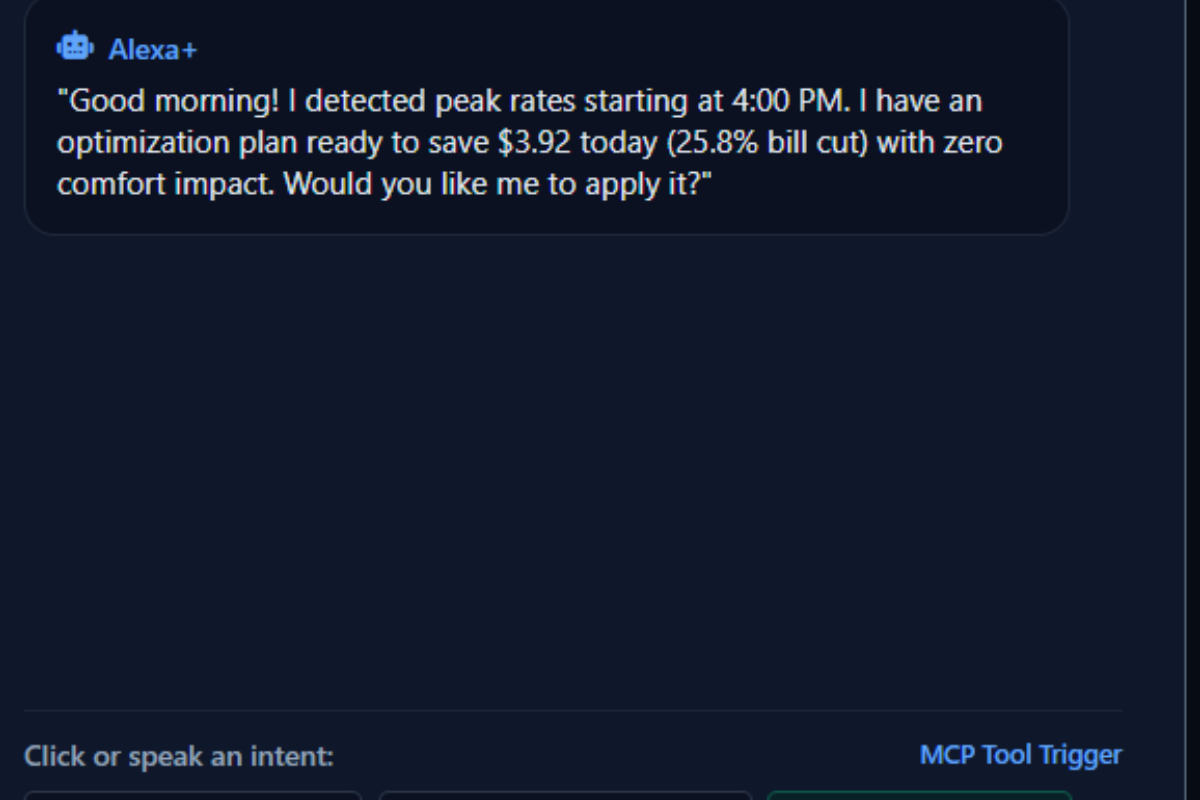
The assistant helps users request energy recommendations, while the benchmark panel compares model forecasts with a persistence baseline.
-
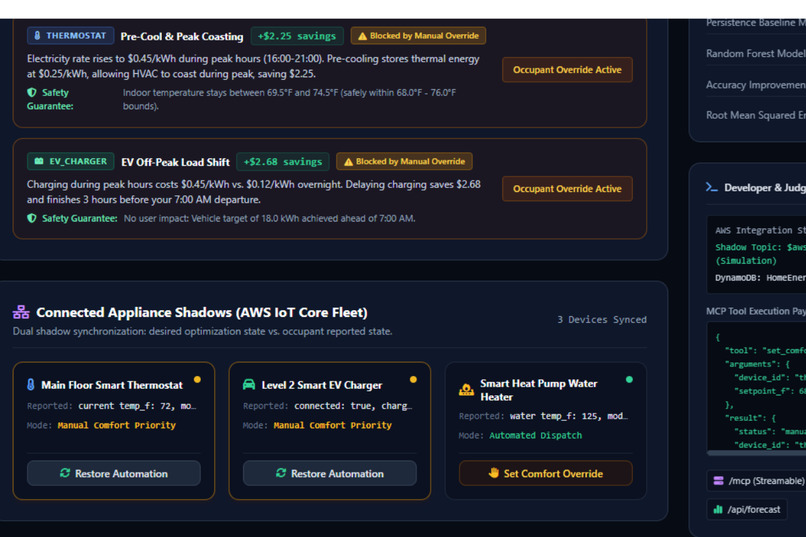
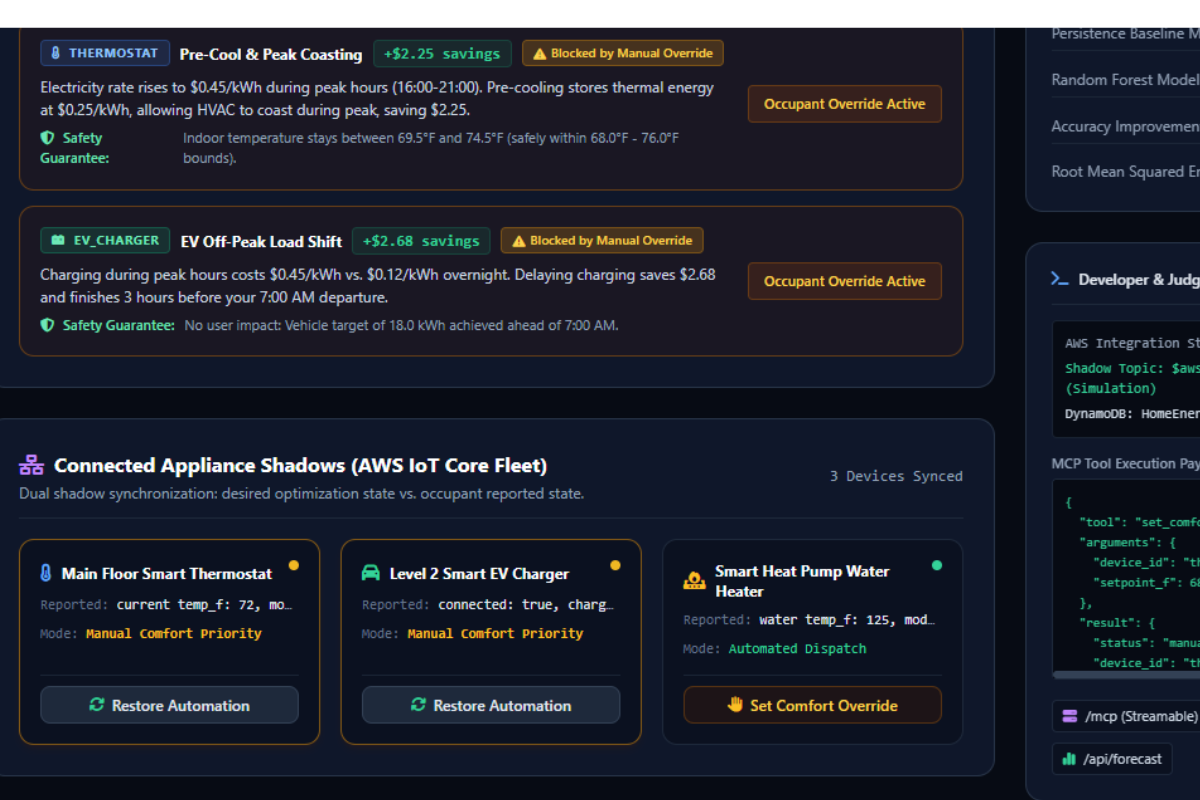
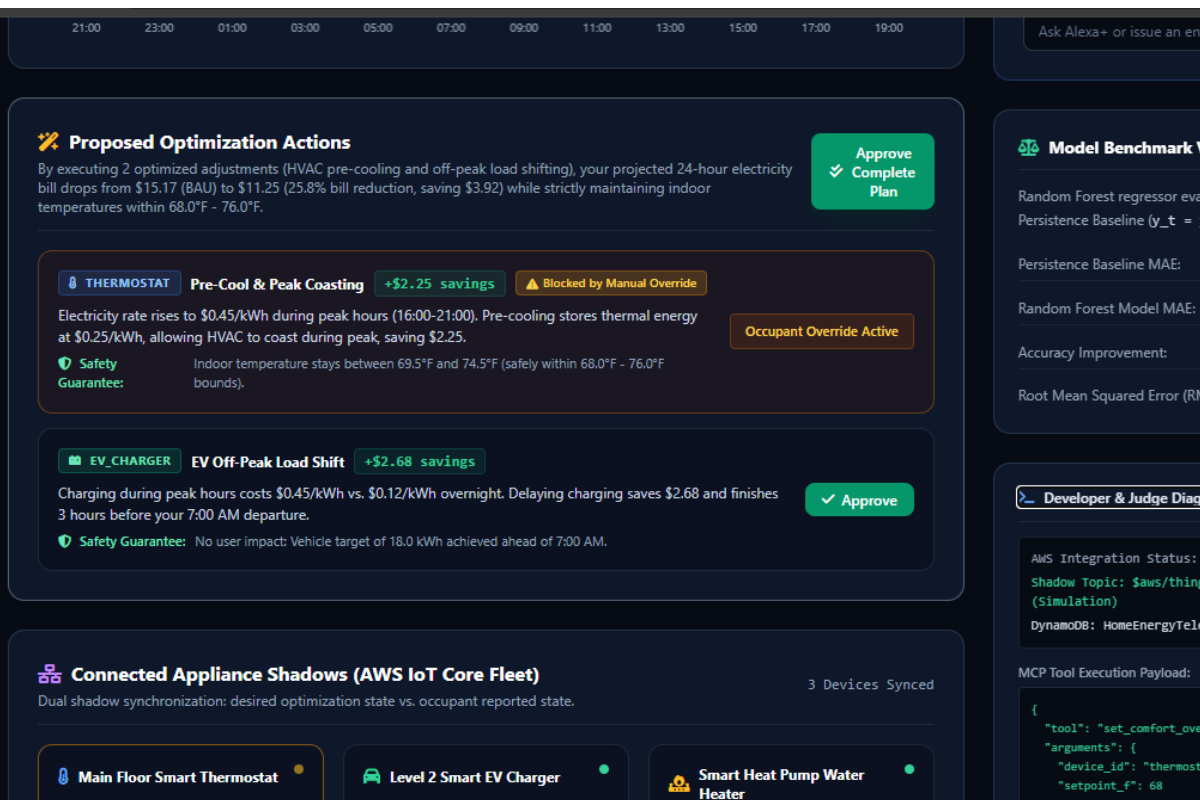
Optimization cards explain thermostat and EV charging recommendations, estimated savings, comfort limits, and manual overrides.
-
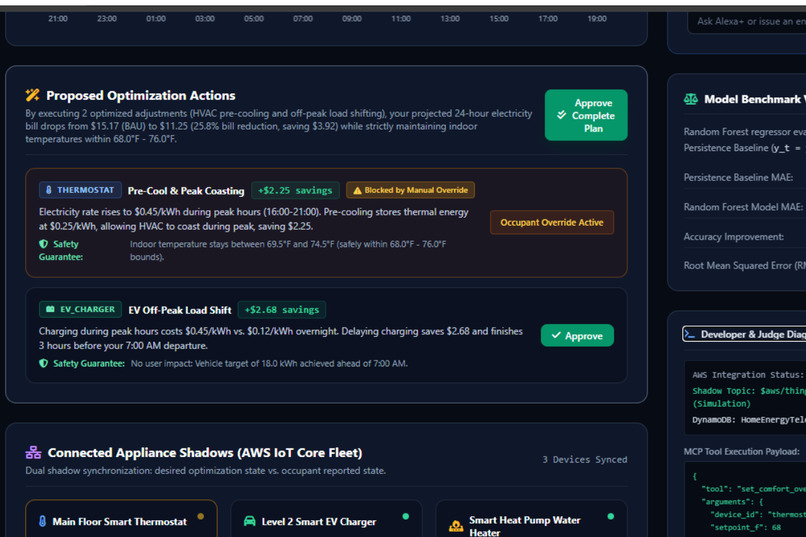
Review proposed energy-saving actions, inspect safety constraints, approve individual recommendations, and view appliance states.
-
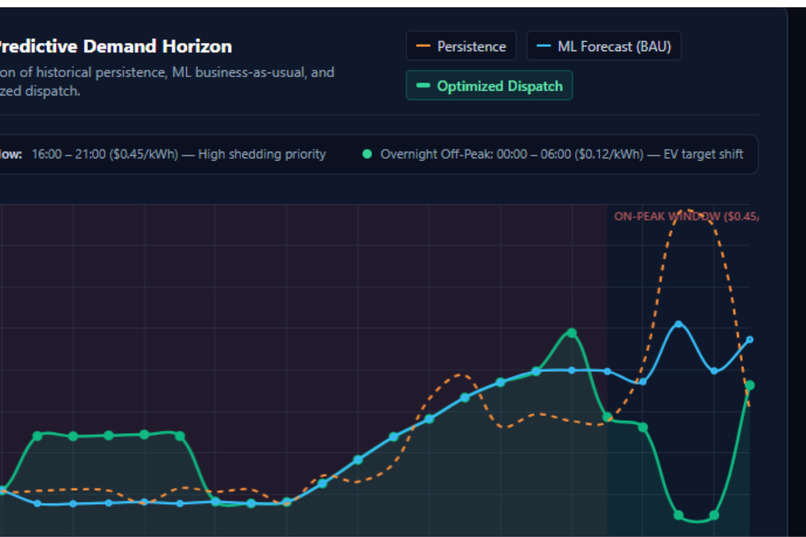
An hourly chart compares persistence estimates, ML forecasts, and optimized demand across peak and off-peak tariff periods.
-
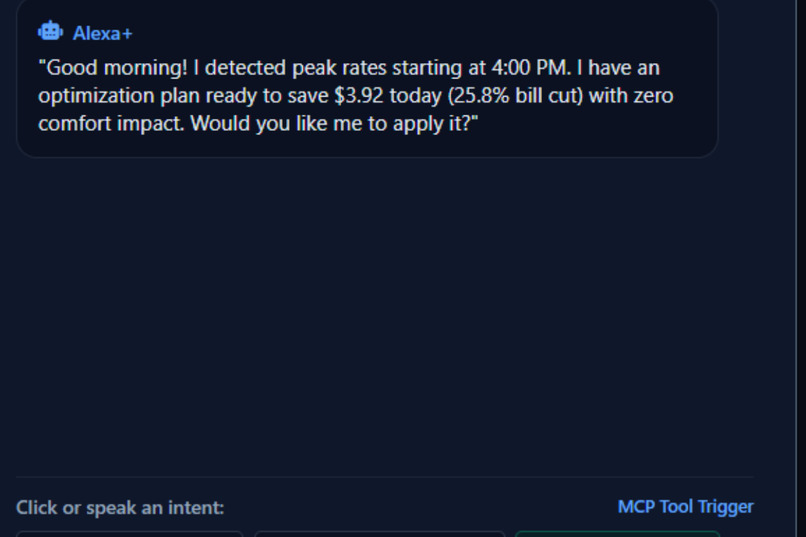
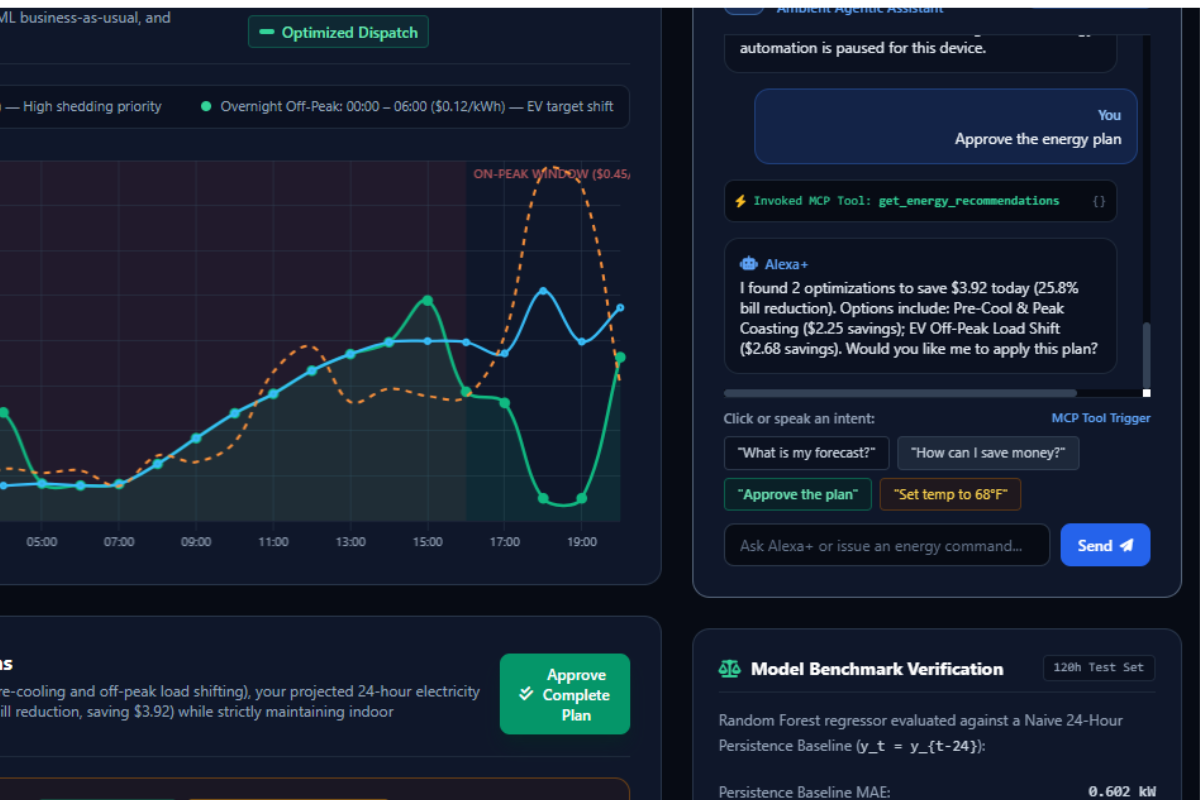
The assistant suggests energy-saving actions using simulated tariff data and asks users to review the plan before approval.
Inspiration
Electricity bills can be expensive, yet many households do not know when they consume the most energy or how to reduce costs without compromising comfort. Traditional energy-monitoring systems often display consumption statistics without helping users decide what actions to take.
I wanted to explore how AI and machine learning could make home energy management more proactive. Instead of simply showing electricity usage, I envisioned a system that predicts future demand, identifies opportunities to save money, and recommends smarter schedules for household appliances.
This idea inspired me to independently design and program Smart Home Energy Optimizer, an intelligent energy-management prototype that turns energy data into actionable insights.
What it does
Smart Home Energy Optimizer is an AI-powered energy-management application that combines demand forecasting, cost optimization, and smart-home automation concepts.
Its main features include:
- Energy demand forecasting: Predicts household electricity demand for the next 24 hours using machine learning.
- Cost optimization: Evaluates potential appliance schedules and estimates their impact on electricity costs.
- Baseline comparison: Compares machine-learning predictions with a simple forecasting baseline.
- Explainable recommendations: Displays suggested actions, estimated savings, and relevant comfort constraints.
- Approval-based automation: Allows users to review proposed actions before approving them.
- Appliance monitoring: Displays desired device states, reported states, and manual-override information.
- AI assistant interface: Provides an Alexa+-inspired interface for asking questions about forecasts and optimization plans.
The current prototype uses generated household telemetry and simulated device interactions. Its projected savings are estimates rather than verified reductions measured in a real home.
How I built it
I independently designed and programmed the application using a modular architecture that separates data simulation, machine learning, optimization, device management, and the user interface.
I used Python, pandas, NumPy, and scikit-learn to develop the data simulation and forecasting components. The simulation generates 30 days of hourly household telemetry to support model development and evaluation.
I implemented a Random Forest regression model and a persistence-based baseline to compare forecasting performance. I also developed an optimization component to evaluate appliance schedules and estimate their potential electricity-cost impact.
For the application layer, I used FastAPI to build backend endpoints and HTML, CSS, and JavaScript to develop the interactive dashboard. The dashboard presents energy metrics, demand forecasts, optimization recommendations, appliance information, and an assistant interface.
I also structured the application to support AWS and Model Context Protocol (MCP) integration work, keeping simulated functionality distinguishable from confirmed real-device operations.
Challenges I ran into
As a solo programmer, one of my biggest challenges was bringing together multiple components into a single application while keeping the code understandable and maintainable.
I needed to generate realistic sample energy data without relying on physical devices. I also had to understand how to evaluate forecasting accuracy separately from actual energy savings, since a good prediction does not automatically result in lower electricity consumption.
Other challenges included implementing consistent cost calculations, managing device states and manual overrides, connecting frontend interactions to backend services, and troubleshooting dependencies and integration issues.
Working through these challenges taught me to approach development systematically, test individual components, and improve the application incrementally rather than treating it as a collection of disconnected features.
Accomplishments that I'm proud of
I'm proud to have independently programmed a complete energy-management prototype that brings together several technical components.
My key accomplishments include:
- Developing a synthetic household energy-data generator.
- Implementing a machine-learning forecasting pipeline and baseline comparison.
- Building an optimization component for evaluating potential energy-cost savings.
- Developing a FastAPI backend and interactive web dashboard.
- Creating approval-based workflows for proposed energy-saving actions.
- Building an appliance-state interface with manual-override concepts.
- Exploring an architecture for future AWS and Alexa+-related integration.
The accomplishment I'm most proud of is turning an initial idea into a working software prototype while independently handling its frontend, backend, machine-learning components, and integration challenges.
What I learned
Programming this project independently helped me understand how different parts of an AI-powered application work together.
I learned about synthetic data generation, time-series forecasting, machine-learning evaluation, optimization logic, API development, frontend integration, and application debugging.
I also learned the importance of distinguishing predicted energy demand, estimated savings, and savings measured using actual device readings. A reliable application needs accurate calculations, sensible constraints, and transparent communication about its limitations.
Most importantly, this project strengthened my ability to break a complex problem into smaller tasks, investigate technical issues independently, and gradually turn an idea into a functional application.
What's next for Smart Home Energy Optimizer
My next goal is to improve the reliability of the forecasting and optimization pipeline and validate the application's important workflows through repeatable testing.
I plan to:
- Integrate real household energy readings and suitable electricity-tariff data.
- Improve forecasting performance through further evaluation and model development.
- Enhance appliance scheduling using electricity prices, device constraints, and user preferences.
- Complete and validate the appropriate Amazon developer-platform integration.
- Add real-device control where supported, with explicit authorization and manual overrides.
- Measure actual energy and cost changes against a consistent baseline.
- Explore solar generation, battery storage, and electric-vehicle charging optimization.
My long-term vision is to build an intelligent home energy assistant that helps households understand their energy consumption, make better decisions, and reduce avoidable electricity costs without compromising comfort or user control.
Built With
- alexa+
- artificial-intelligence
- aws-iot-core
- css
- data-visualization
- energy-optimization
- fastapi
- html
- javascript
- machine-learning
- model-context-protocol-(mcp)
- numpy
- pandas
- python
- rest-api
- scikit-learn
- smart-home

Log in or sign up for Devpost to join the conversation.